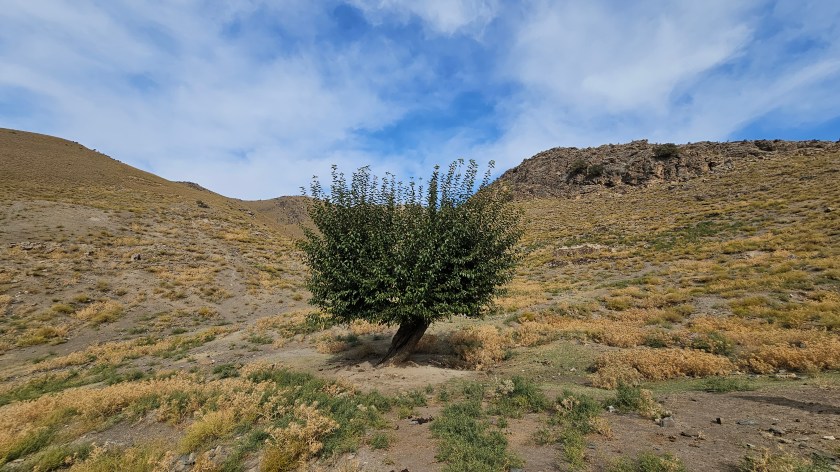
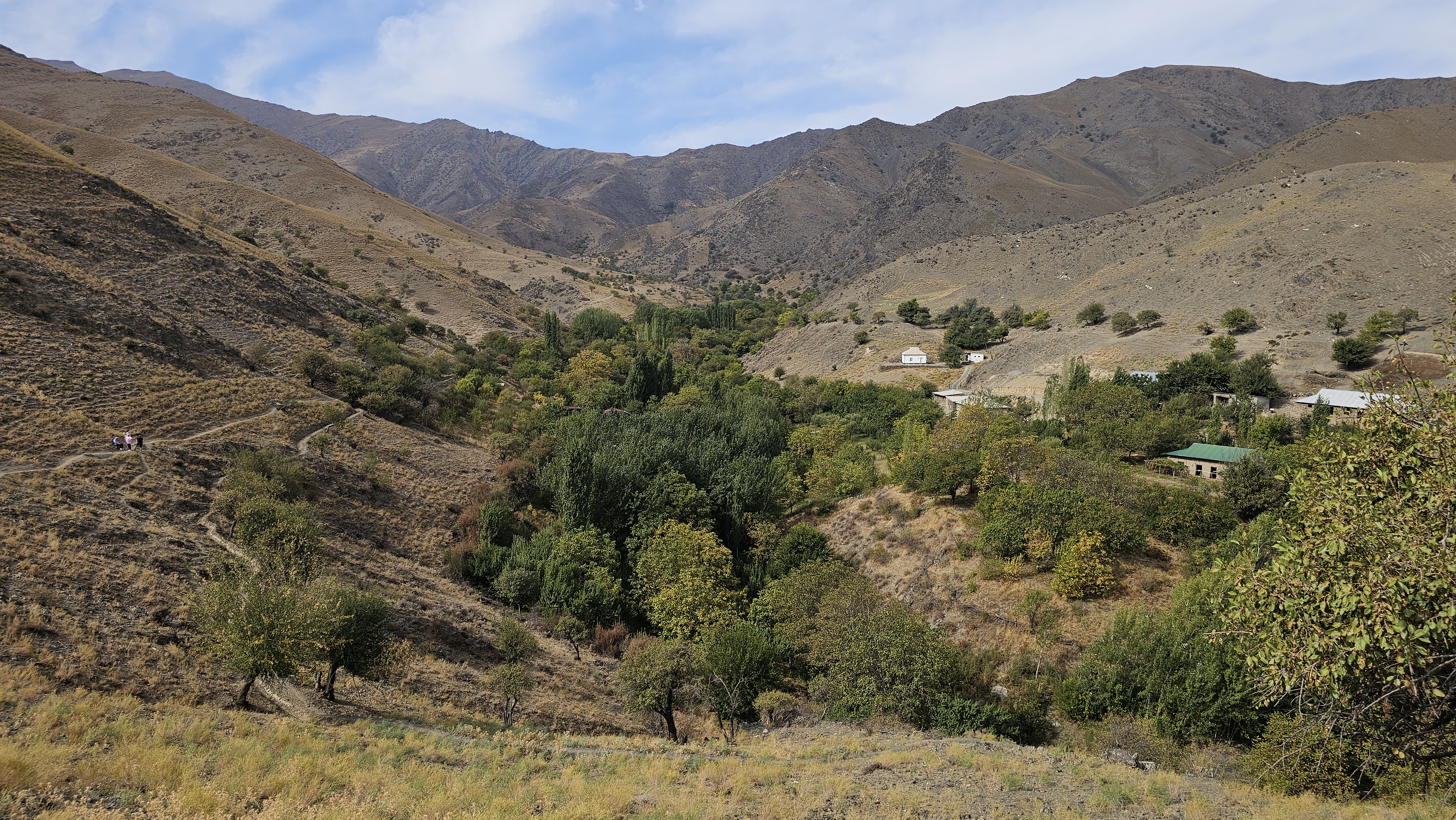
After exploring three incredible Uzbek cities—Tashkent, Khiva, and Bukhara—the next leg of our Explore trip offered the perfect chance to slow things down. We traded the grand minarets for a short stay in a traditional mountain village. We spent most of the day driving towards Hayat village, enjoying several interesting stops along the way that gave us an authentic, closer look at local life.
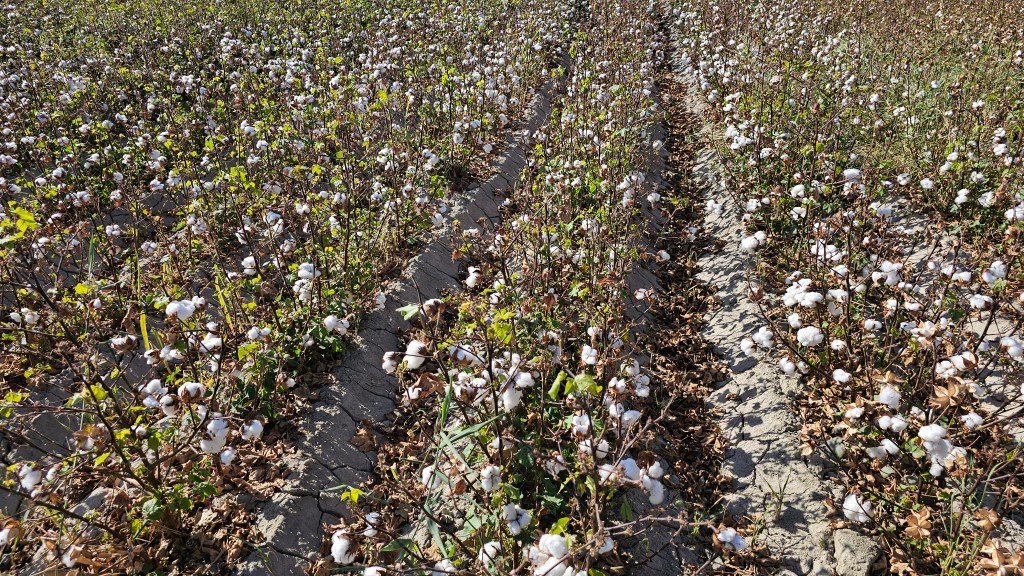
As Bukhara faded behind us, we settled in for the long bus journey towards the mountains. Looking out the window, the landscape quickly transformed into endless, flat green horizons dotted with bursts of white fluff. Our guide Sanjar stopped the bus alongside a sprawling cotton field so we could get out and take a closer look at the crop that has shaped this country more than any other.
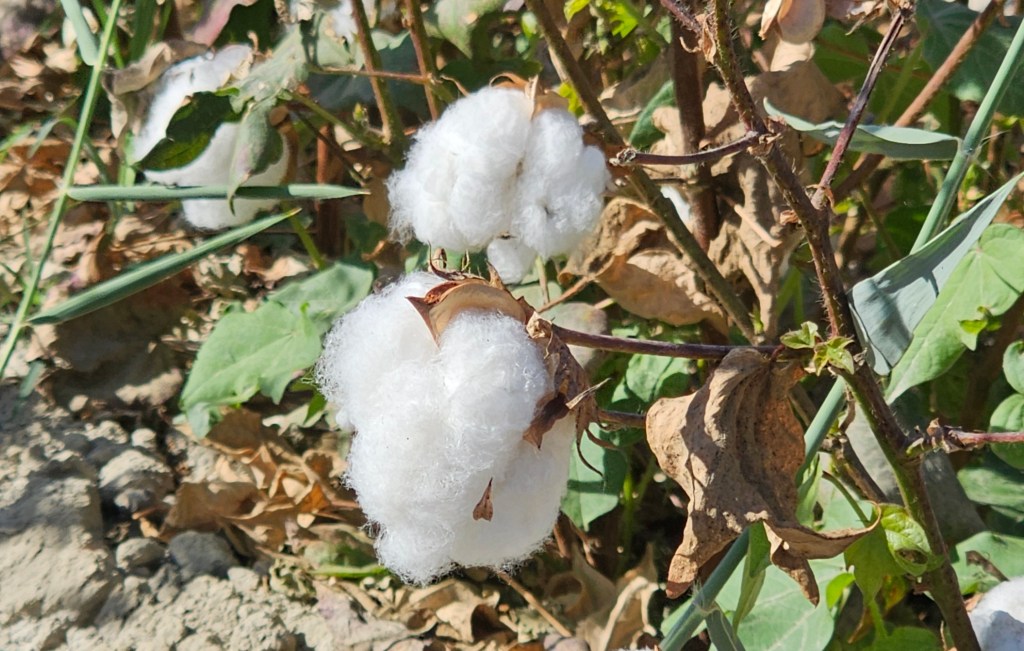
Standing among the cotton plants, Sanjar gave us an interesting lesson on the Uzbek cotton industry, historically known by locals as oq oltin—or “white gold.”
He explained that during the Soviet era, the USSR forced Uzbekistan into a massive agricultural monopoly to turn the region into a global cotton powerhouse. To feed these incredibly thirsty crops in the middle of a desert climate, engineers built massive irrigation networks, famously diverting the lifelines of the region—including the Oxus river. While it successfully turned Uzbekistan into a top global producer, it came at a devastating environmental cost, directly causing the near-total disappearance of the Aral Sea and drying up the very rivers we had crossed earlier on our trip.
Sanjar also shared some great news about the industry’s modern turnaround. While the harvest once faced global boycotts over forced labor, recent government reforms have changed everything—the International Labour Organization (ILO) officially declared the harvest completely free of systemic forced and child labour. Today, Uzbekistan processes its own fabrics domestically. It made looking at those white fields feel entirely different, knowing the beautiful textiles we saw in the bazaars are now part of a proud, ethical local economy.
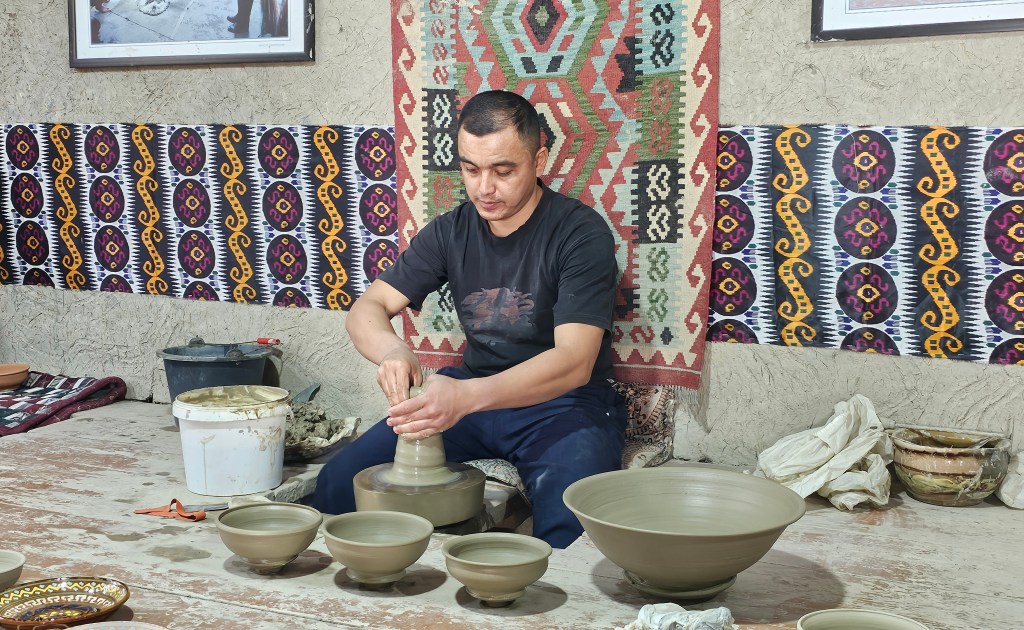
Next we stopped at a town called Gijduvan to visit a ceramic workshop where we got to watch the entire process from scratch. Foot-powered potter’s wheels are still used and we watched as a piece made from a unique mix of local clay was turned into a bowl by hand. They even mix their own earthen glazes using ishkor – a natural glaze made from local desert plants. We learned how the pieces are decorated by hand and fired in the huge oven.
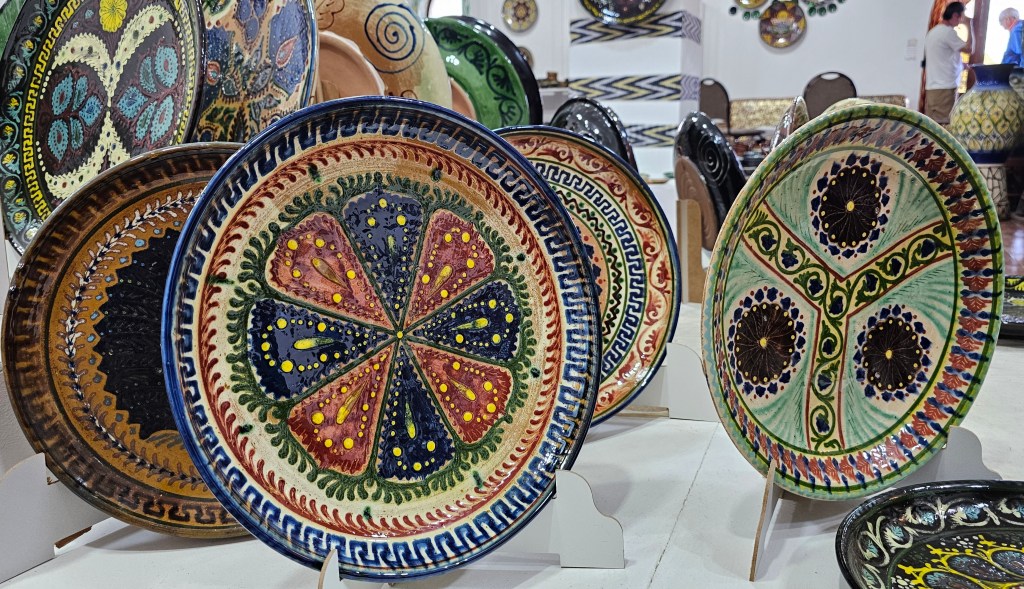
This family represents seven generations of master ceramicists who have been keeping their traditional, 2,000-year-old Silk Road techniques alive for over a century. Unlike the crisp, bright blues you see in Samarkand or Khiva, Gijduvan pottery is instantly recognizable for its rich, warm earth tones—defined by deep yellows, warm greens, and iron browns. These are available to purchase from the bright and airy gift shop.
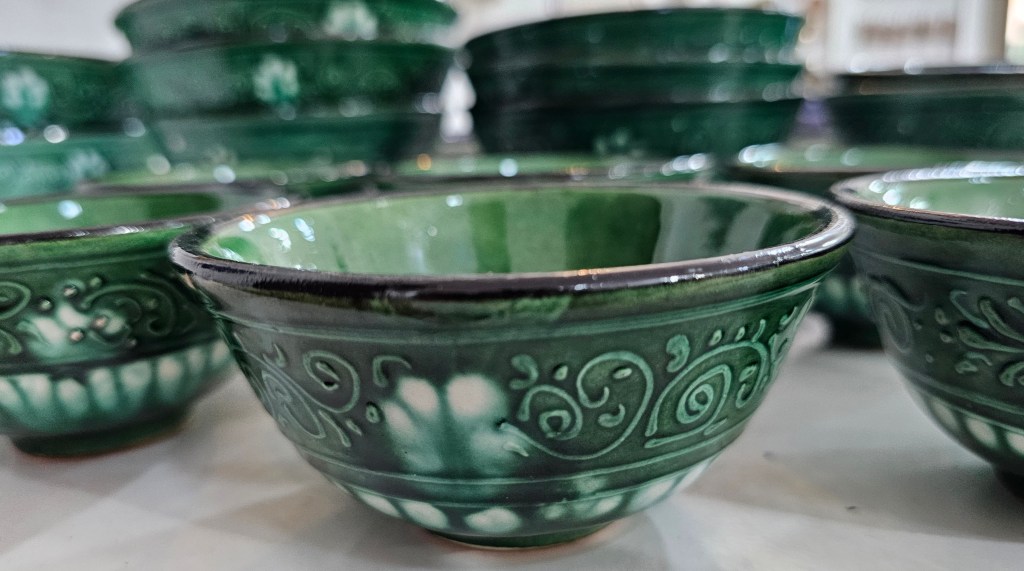
I brought one of these unique, hand made and hand decorated ceramic bowls, perfect for serving nuts! Although a reminder to self to hand wash and avoid the dishwasher.
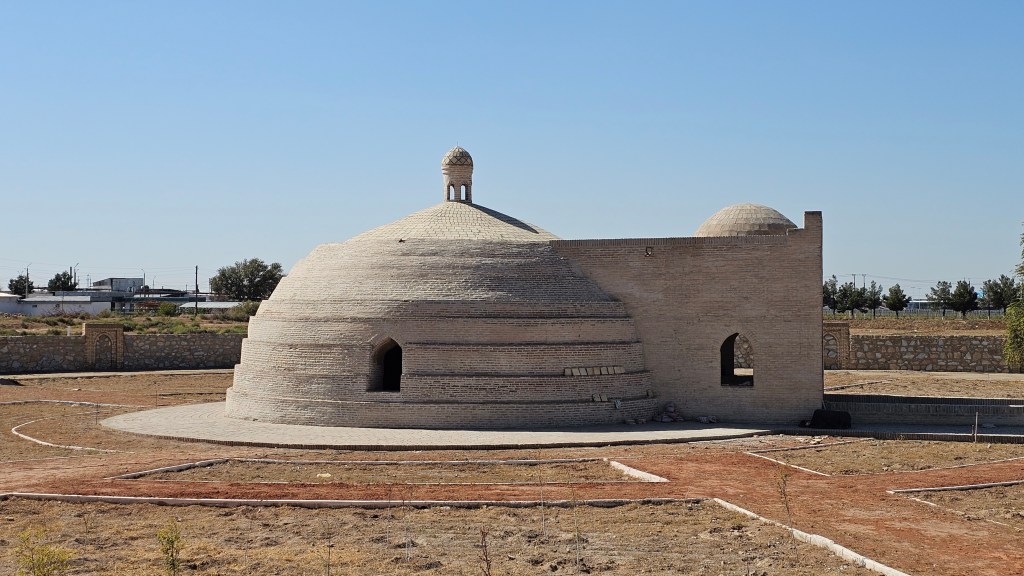
Further down the road, we pulled over to examine a lonely, beautiful brick dome rising from the landscape. This is a sardoba—which means “cold water” in Persian. Constructed in the 1070s, this ingenious reservoir acted as a crucial lifeline for the ancient Silk Road, collecting snowmelt and rainwater to provide a reliable source of chilled drinking water for traveling merchants and their camels.
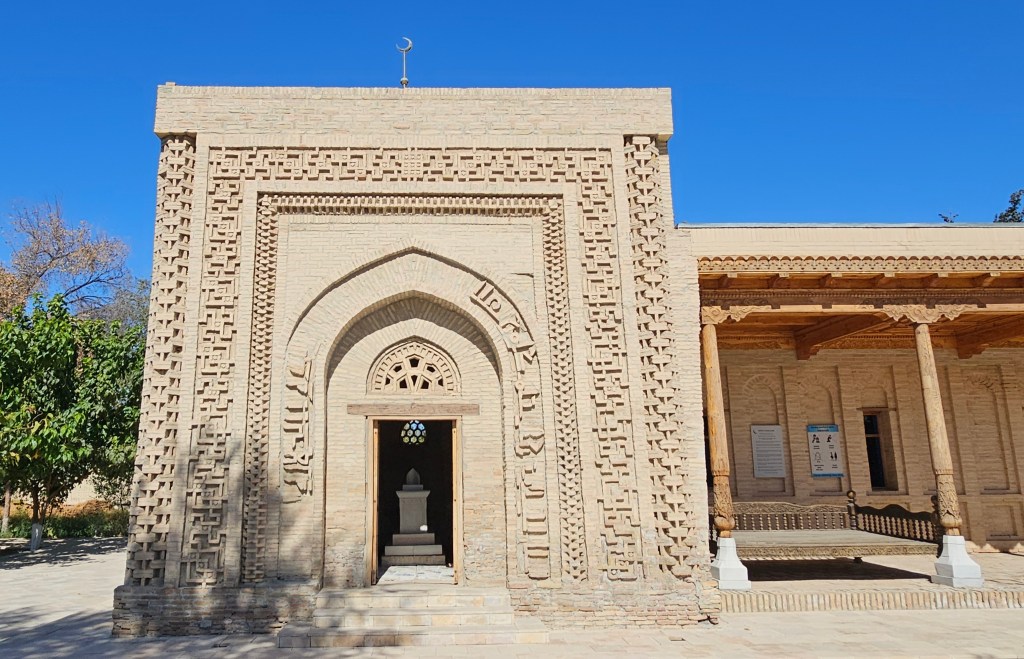
Before lunch we stopped in a town called Navoy for a short visit to the Mausoleum of Mir Said Bahrom. The building dates back to the 11th century and was restored in 1976. Mir Said Bahrom was a respected and spiritual figure of the Samanid Empire. The building has a small dome and is protected by UNESCO.
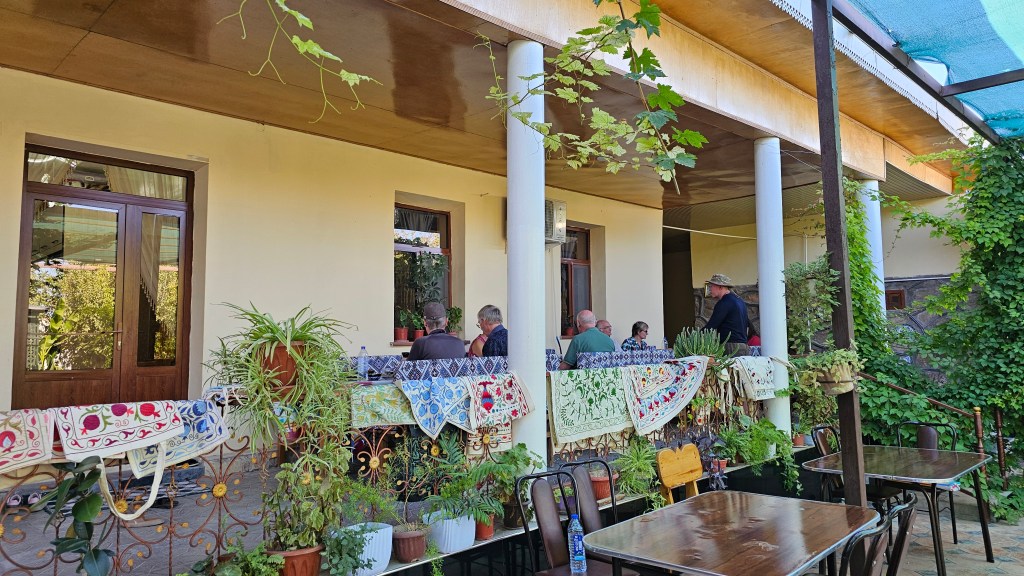
Our lunch stop was in the town of Nurota, where we dined in a guesthouse courtyard under a shady garden canopy.
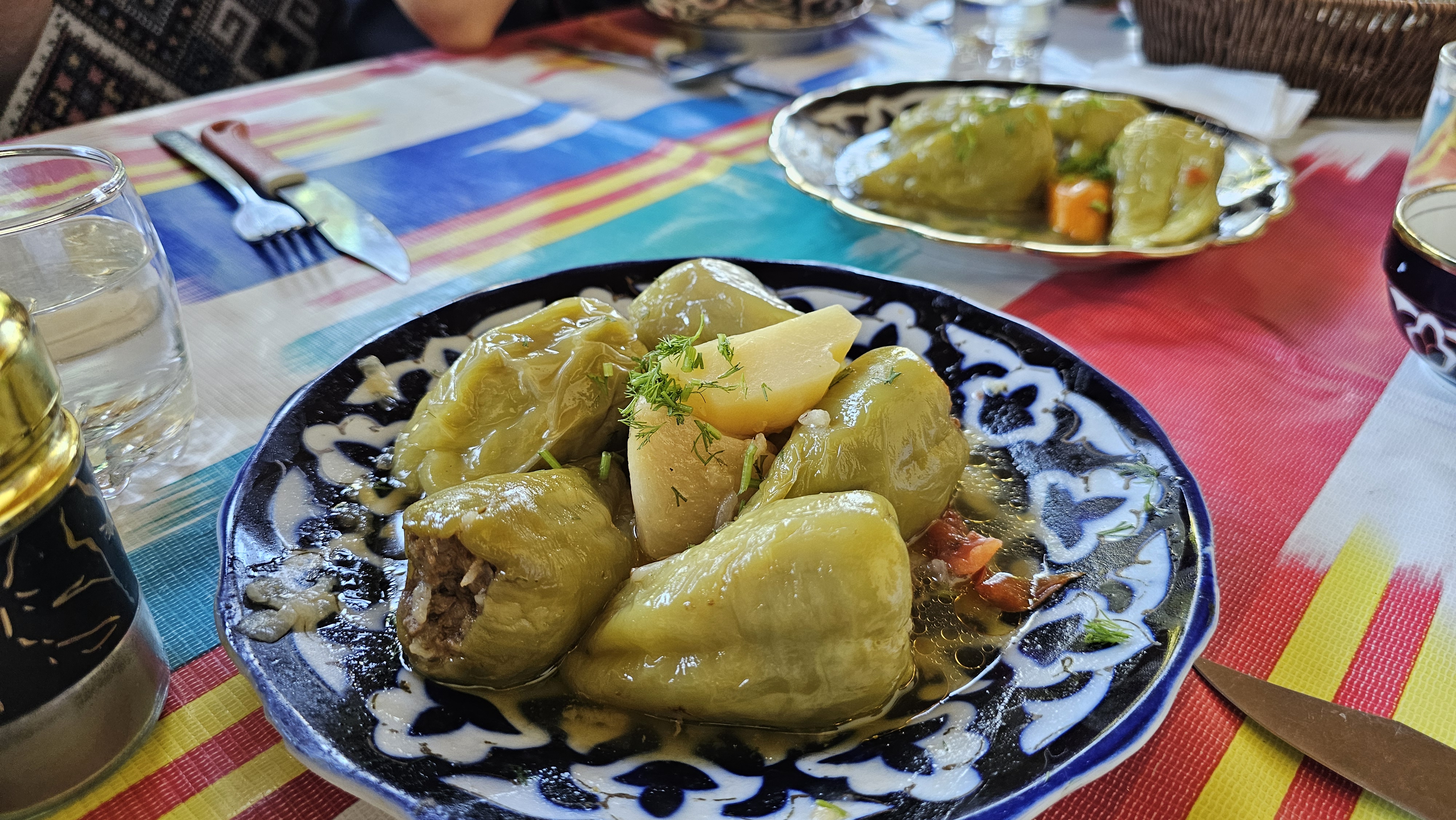
We were served a standard menu of local salads, soup, bread, and baked stuffed peppers which, frankly, turned out to be fairly ordinary. Having been spoiled by the wonderful food stops on my past Explore trip to Ecuador and the Galápagos, this particular meal fell a bit flat—a reminder that not every road trip lunch stop is a spectacular culinary affair!
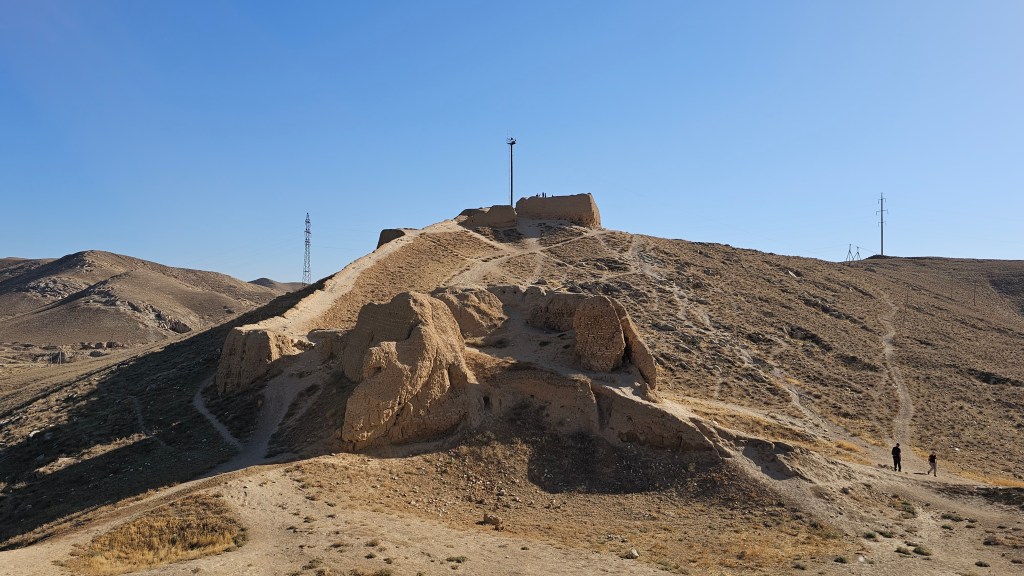
Chashma Complex
A few minutes after lunch we stopped at Chashma Complex, a historic pilgrimage site built around a sacred natural spring. This is also the location of the Fortress of Alexander the Great.
Nurota was founded in 327 BC by the then King of Greece, Alexander the Great. In his short reign before his death at the age of 32, Alexander the Great built one of the largest most widespread empires in history expanding from Greece and across to northwest India. In Nurota he developed a sophisticated water system still part in use today.
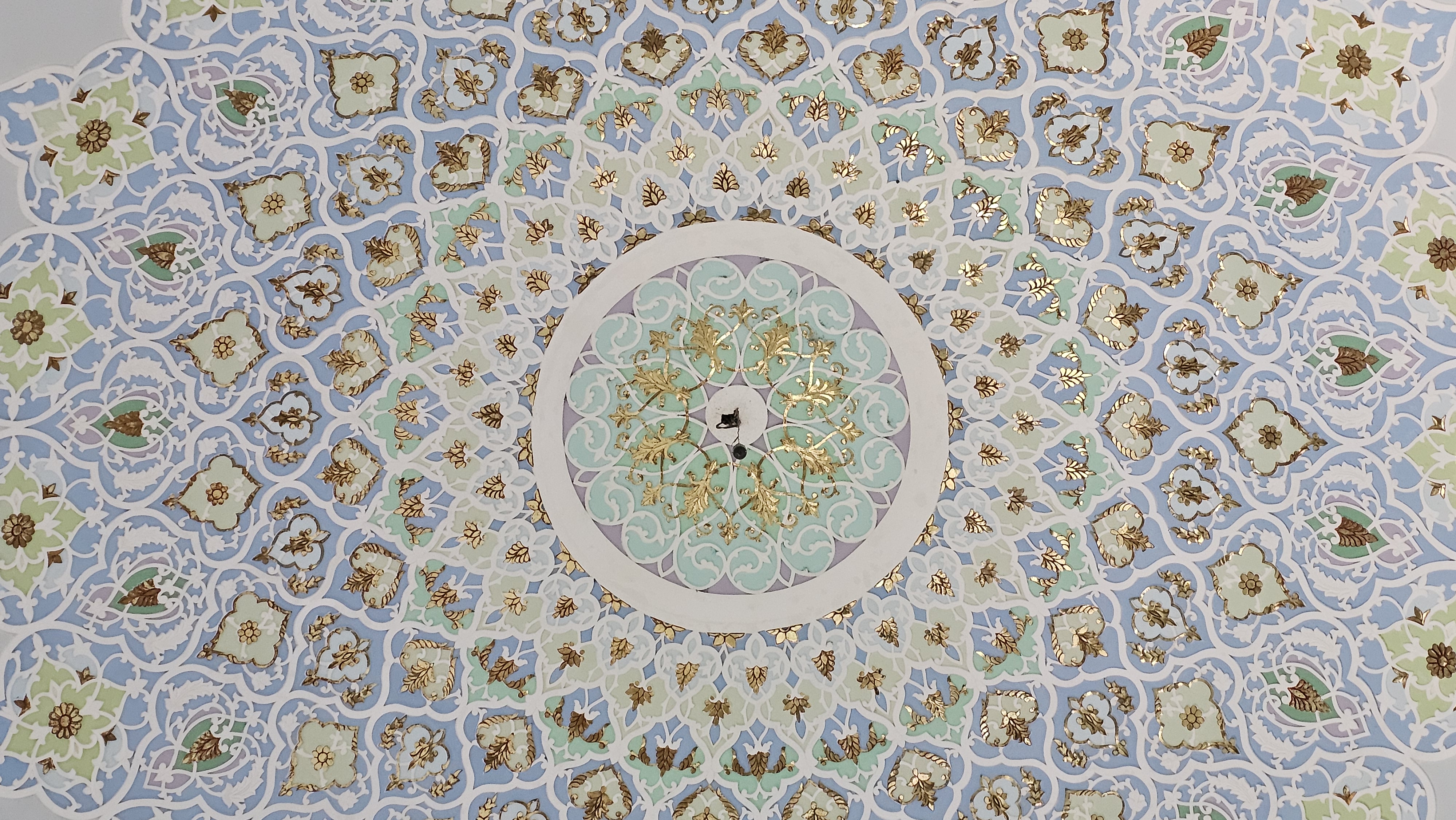
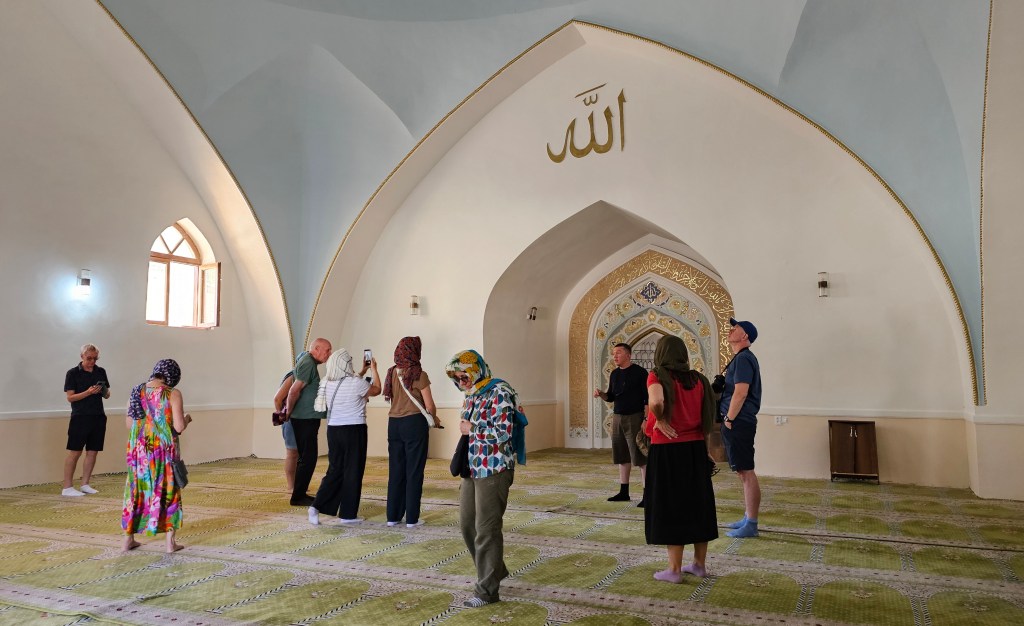
There are a couple of mosques at the complex and we had a look inside one of them.
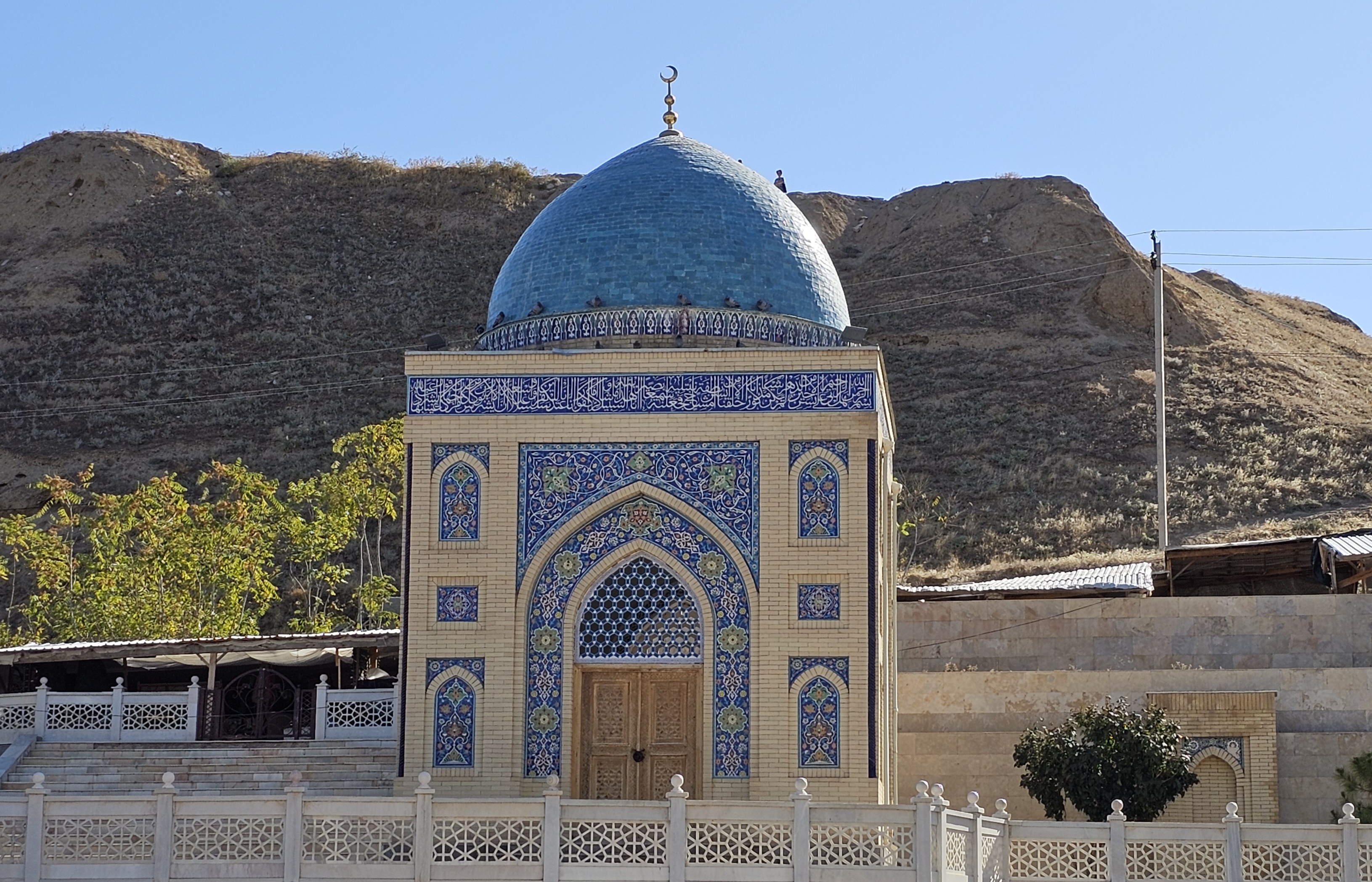
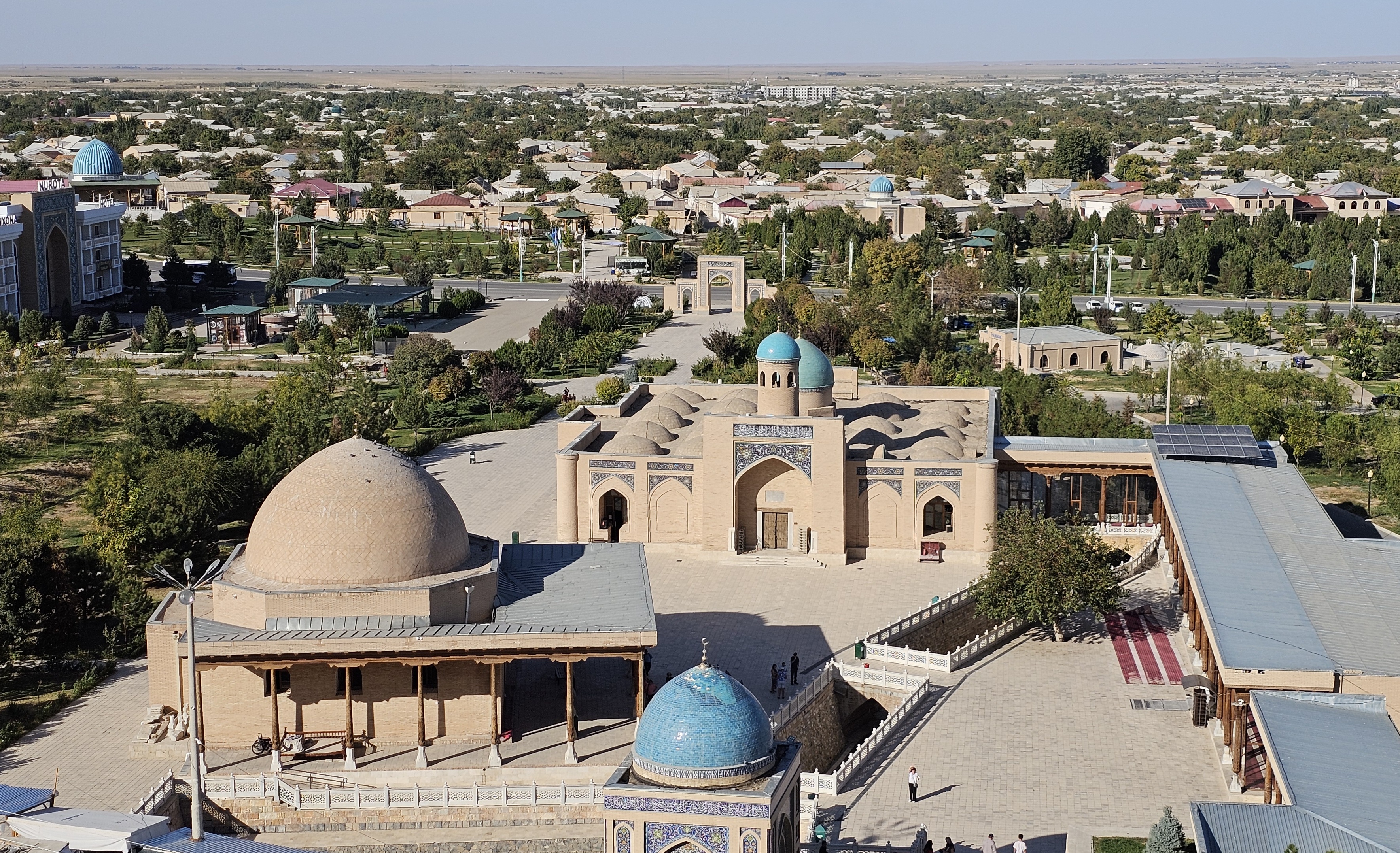
A few of us climbed a bit higher towards the fortress ruins which gave us a panoramic aerial view of Nurota.
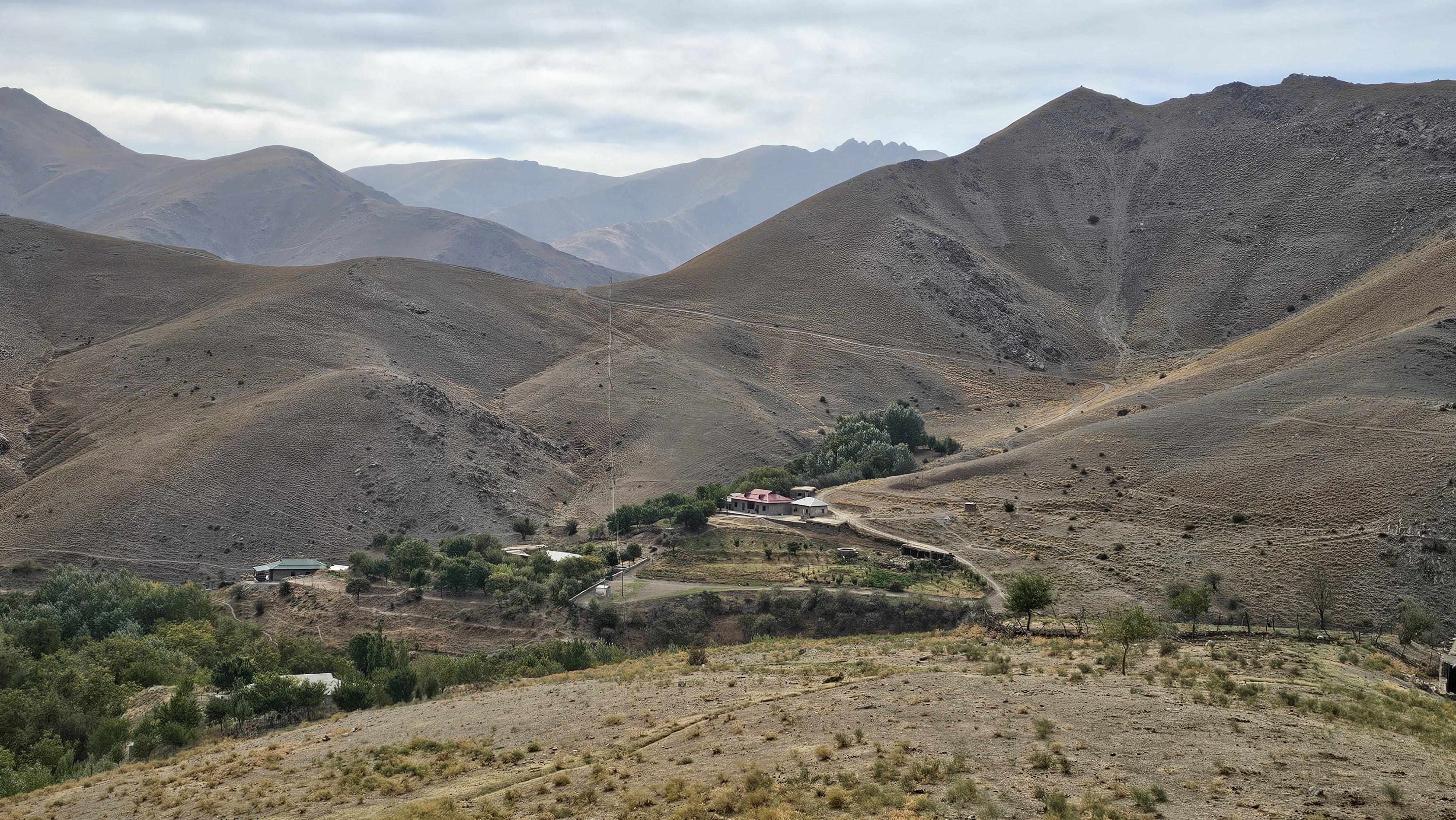
Hayat village
We arrived at the family run guesthouse at around 6 pm and after being allocated our rooms and settling in our first activity was dinner!
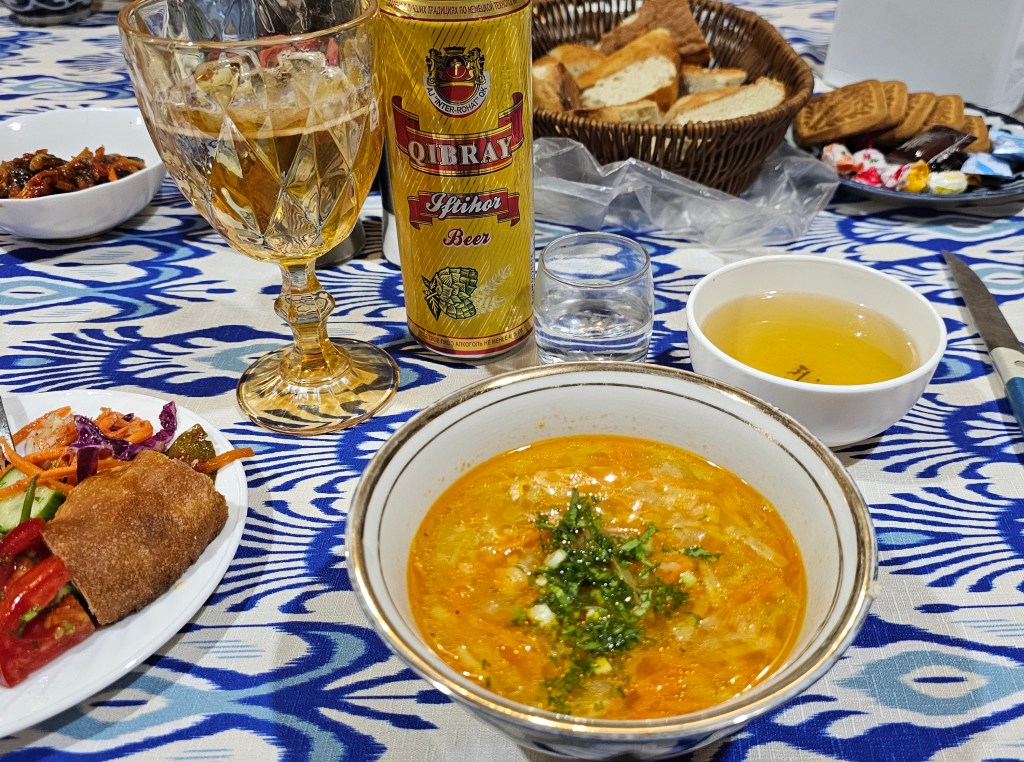
Our evening at the homestay in Hayat village completely made up for our earlier lunch, treating us to a, high-quality traditional dinner. We kicked things off with a vibrant spread of local salads, fresh bread, homemade soup, and hot local tea. And, in true traditional Uzbek hospitality manner, our hosts poured us each a welcoming shot of vodka!
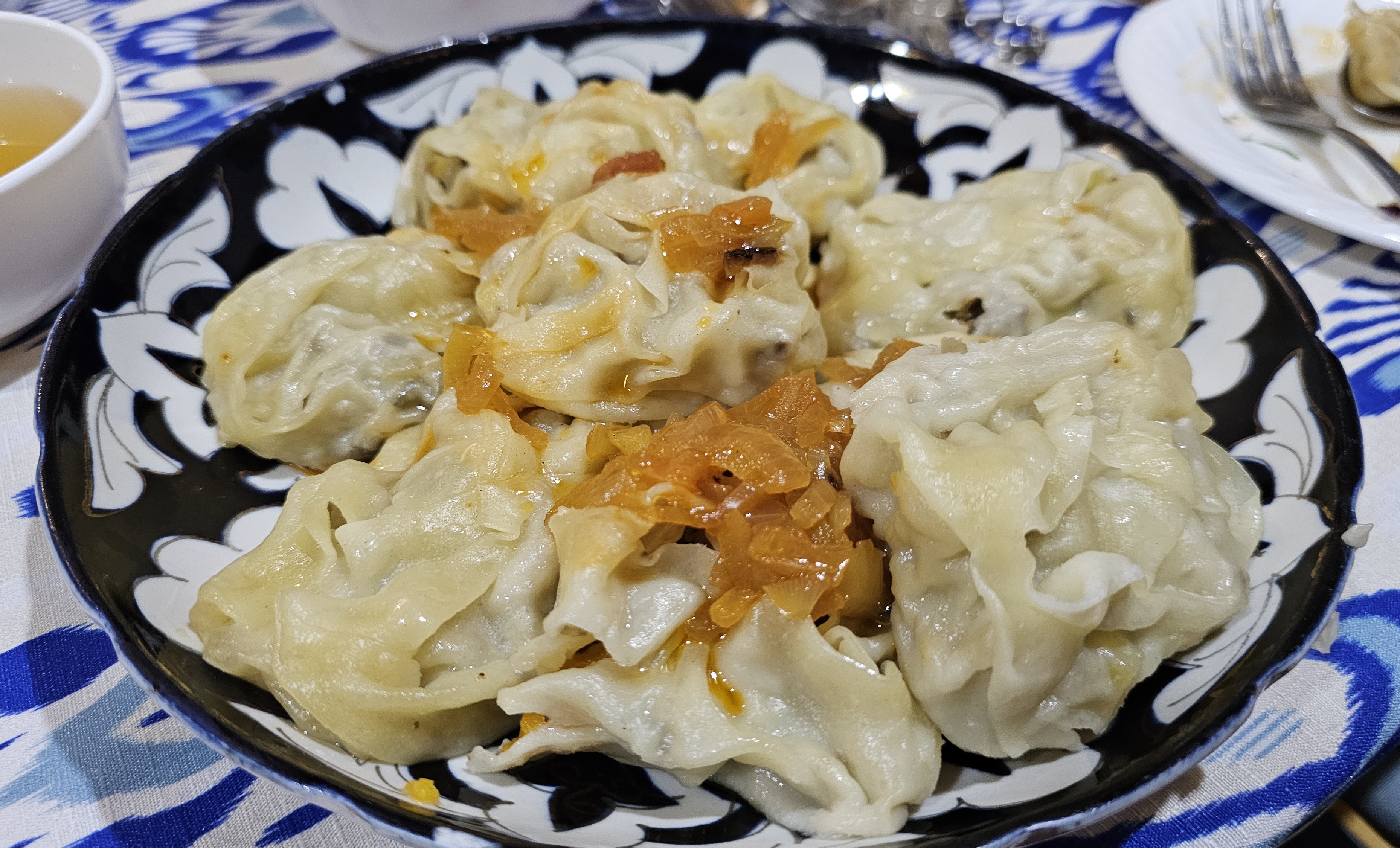
For the main course, they brought out massive platefuls of steaming manti. These large, hand-wrapped steamed dumplings were bursting with seasoned meat, and to be honest, they tasted a bit like Cornish pasties! It was a comforting, home-cooked and enjoyable feast.
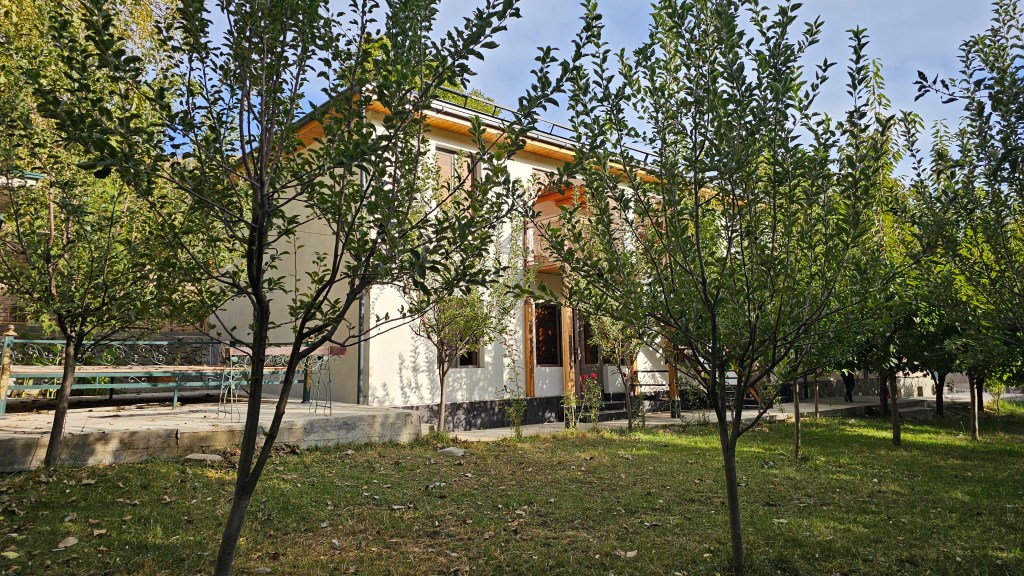
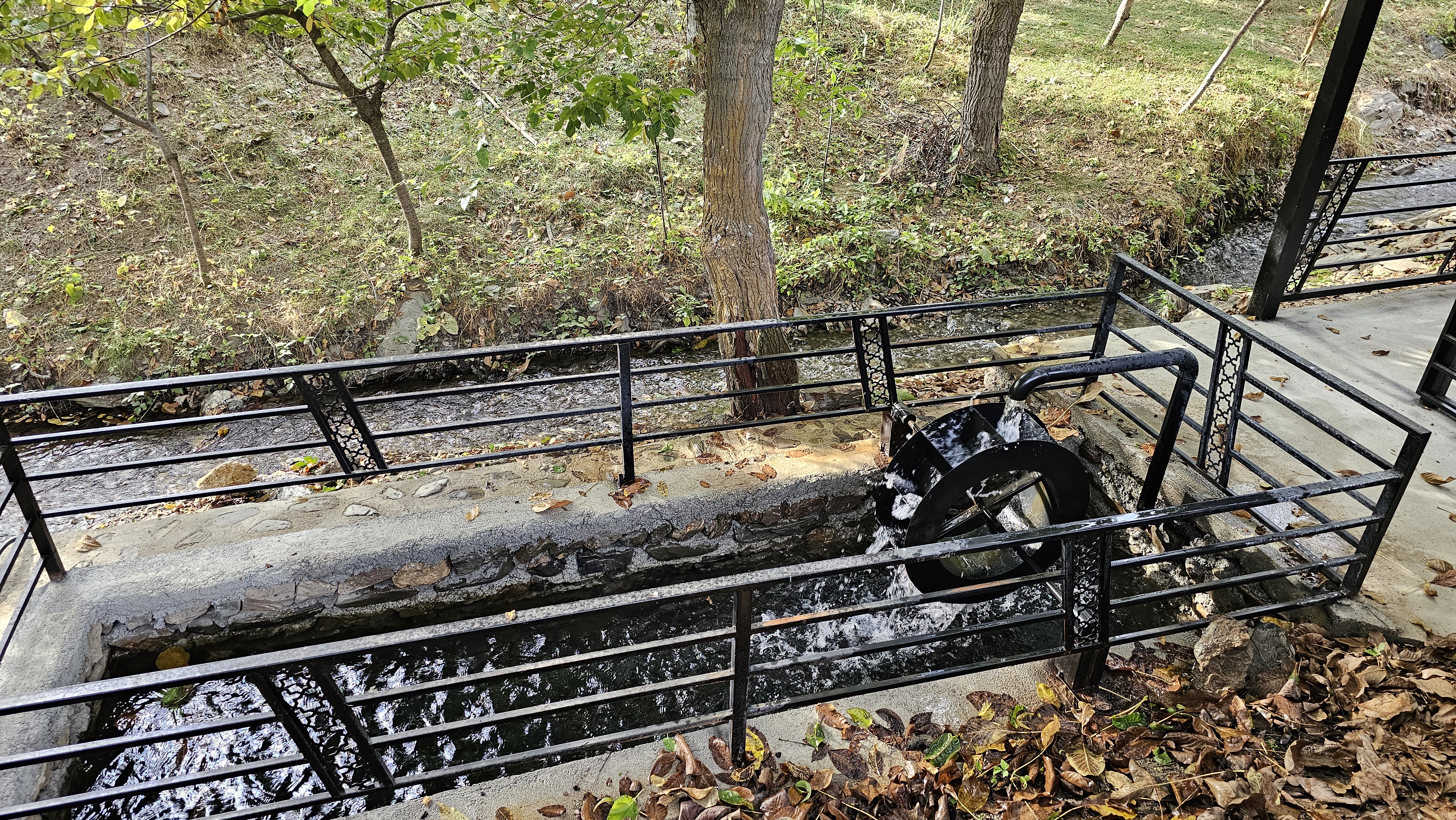
The following morning we woke up to a lovely sunny day. Bridget and my twin room was in this building (above photo), overlooking the gardens and a small stream.
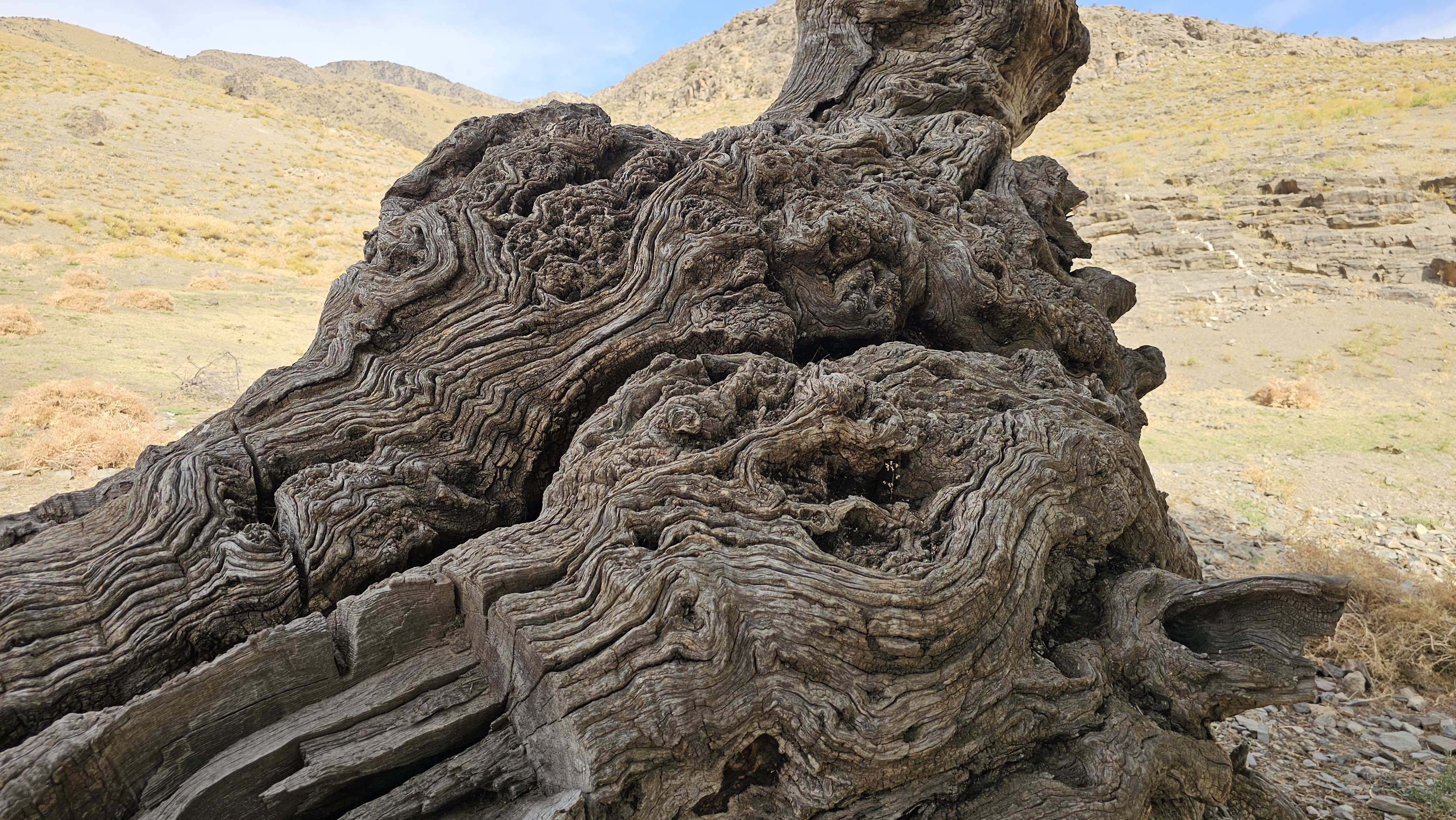
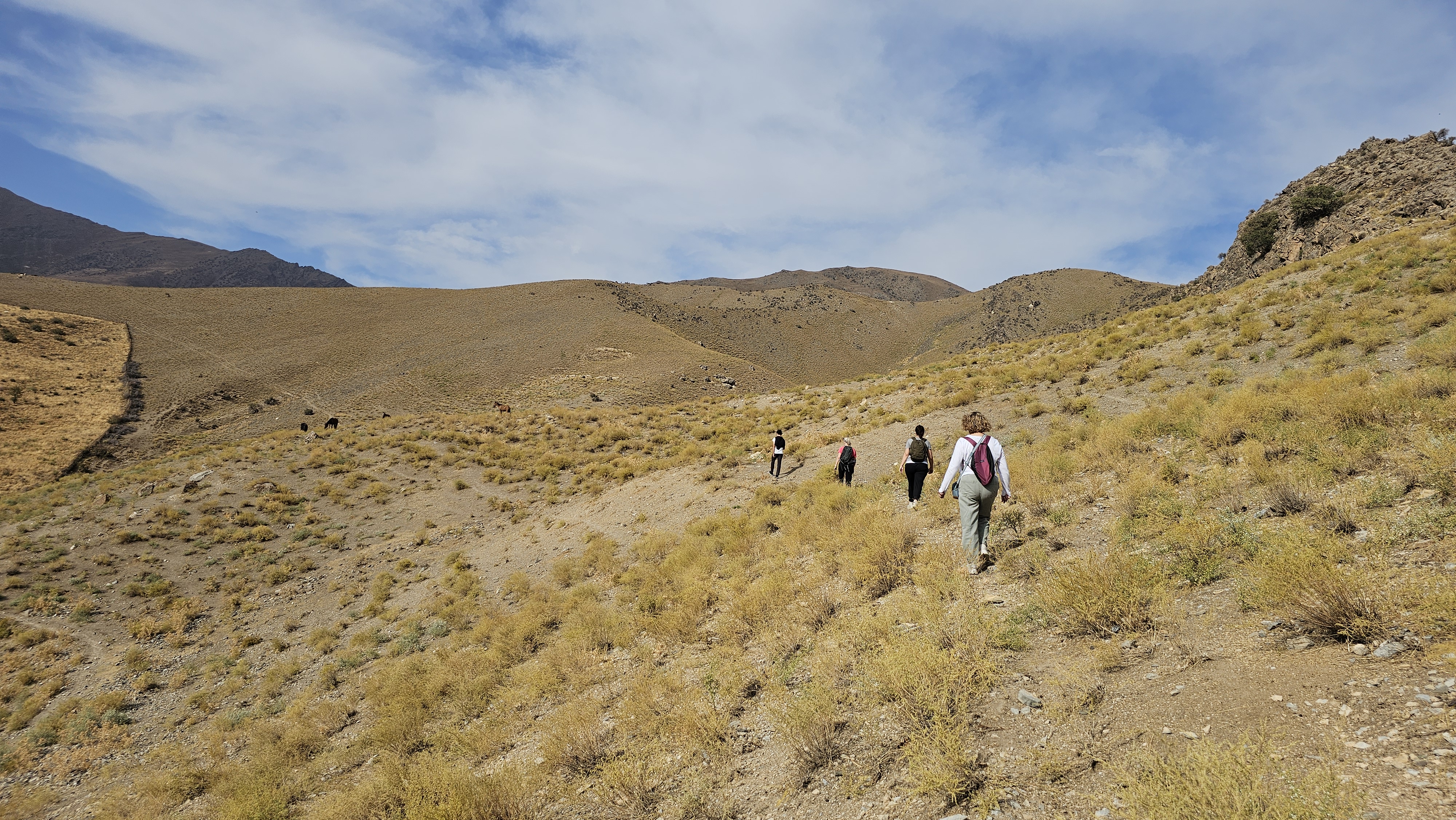
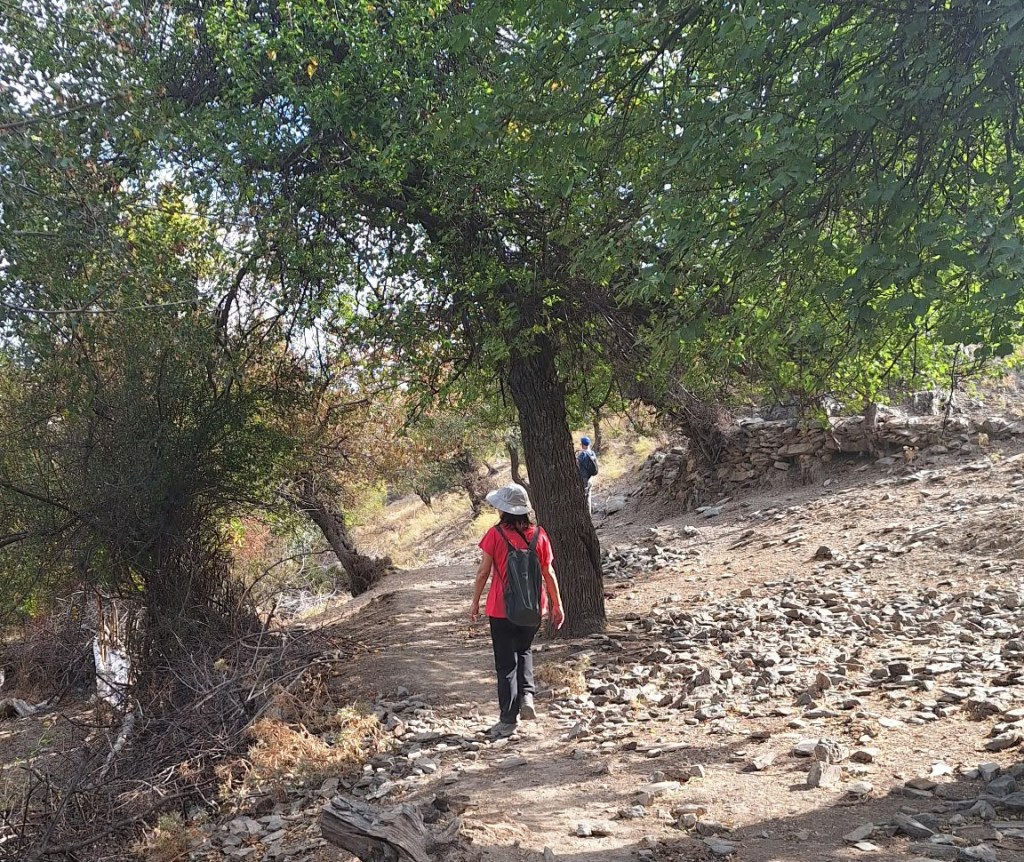
After a traditional breakfast of warm rice pudding, bread, cheese, hard boiled egg and grapes we set off for a short 2 hour hike into the mountains around the village.
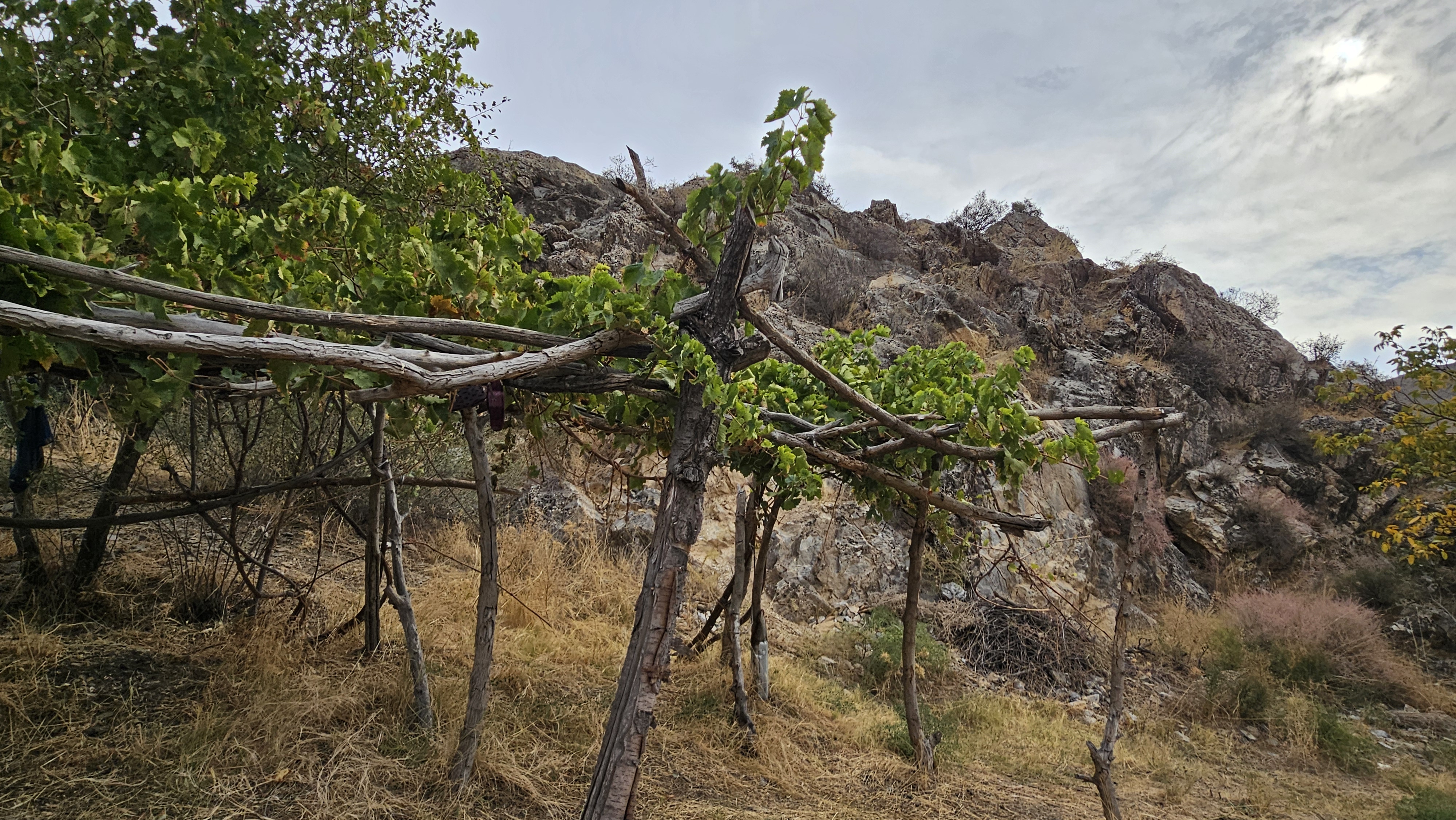
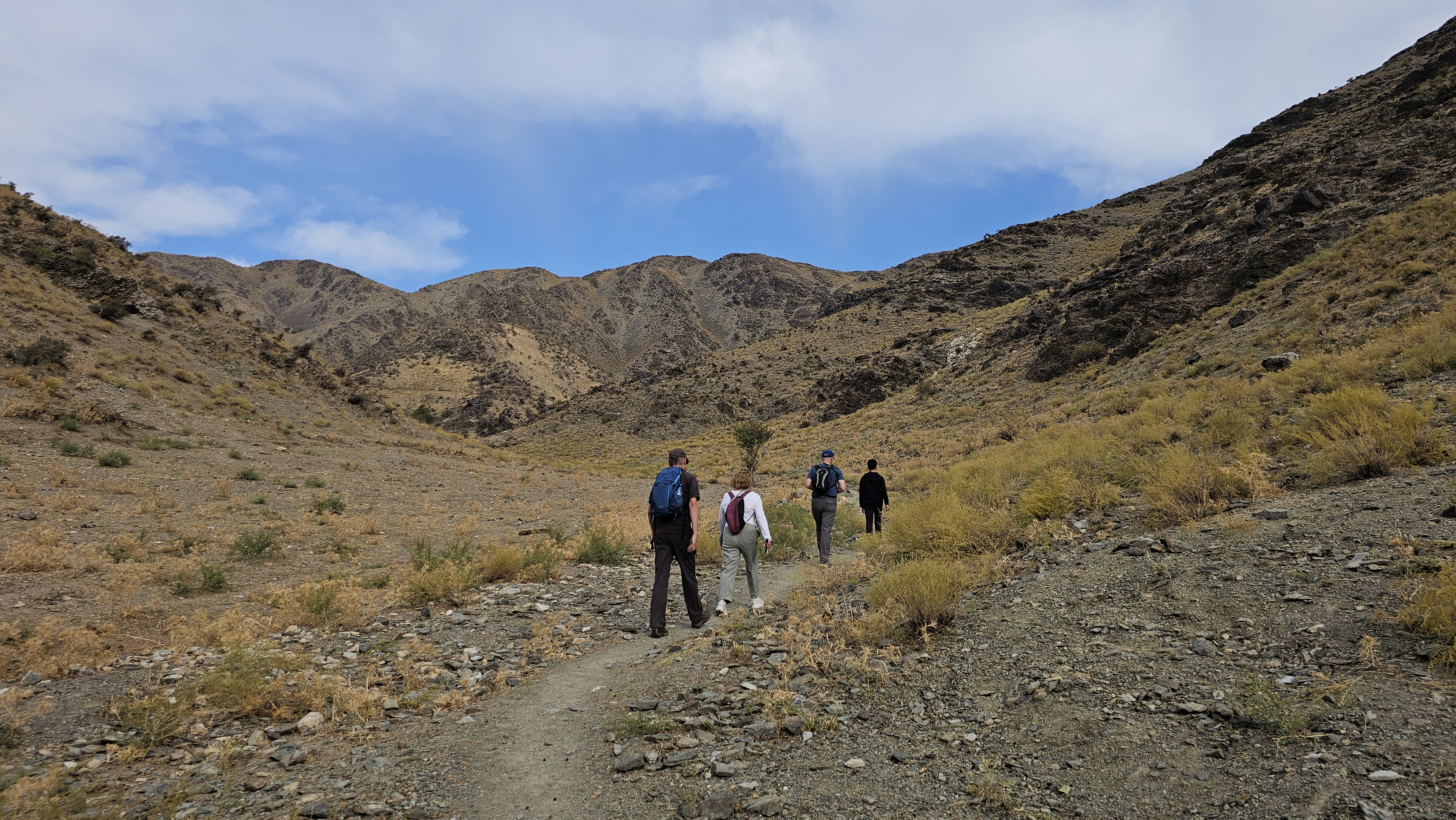
Led by a local lad (I can’t remember his name unfortunately) he took us out of the small hamlet and up into the mountains.
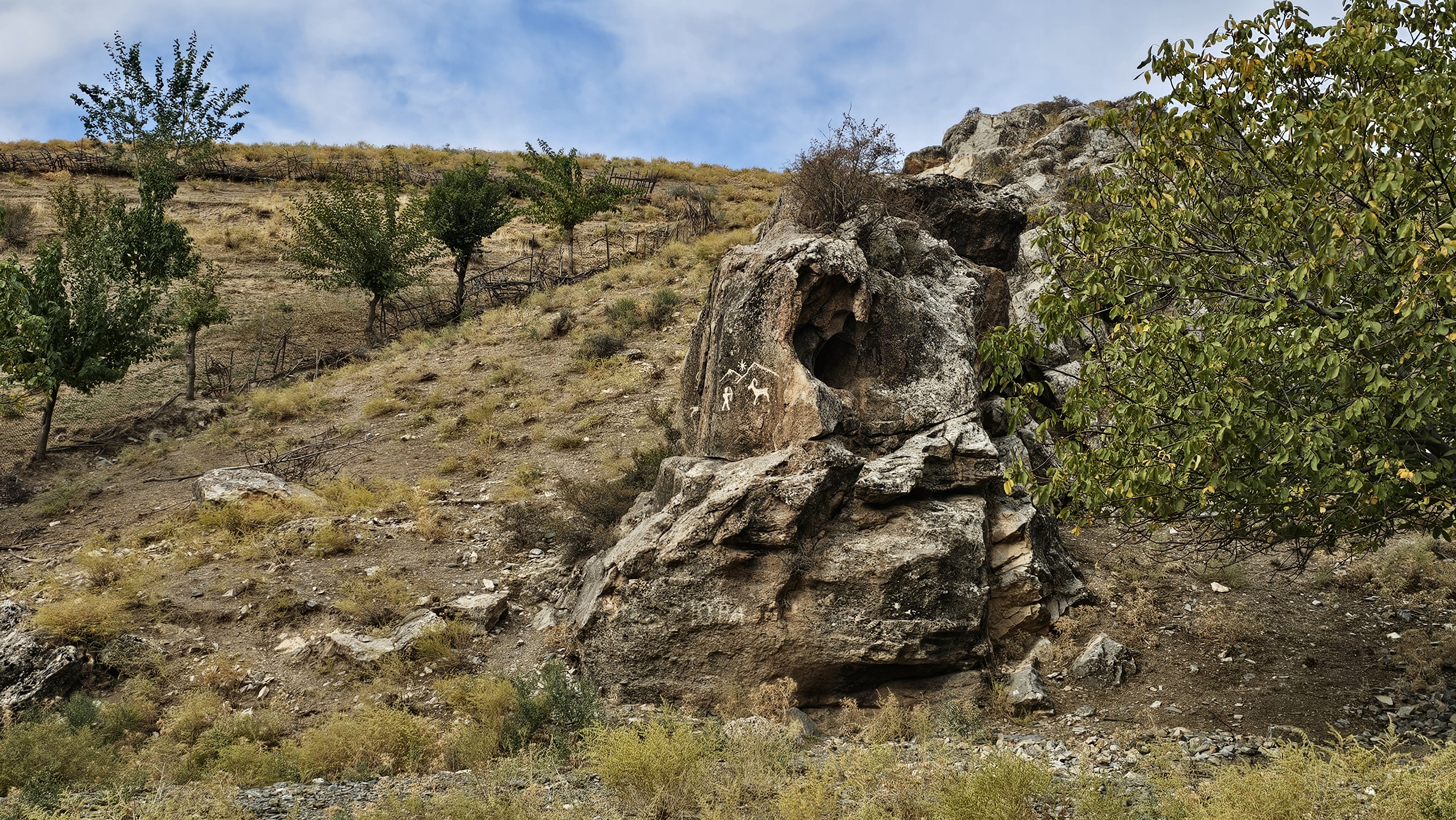
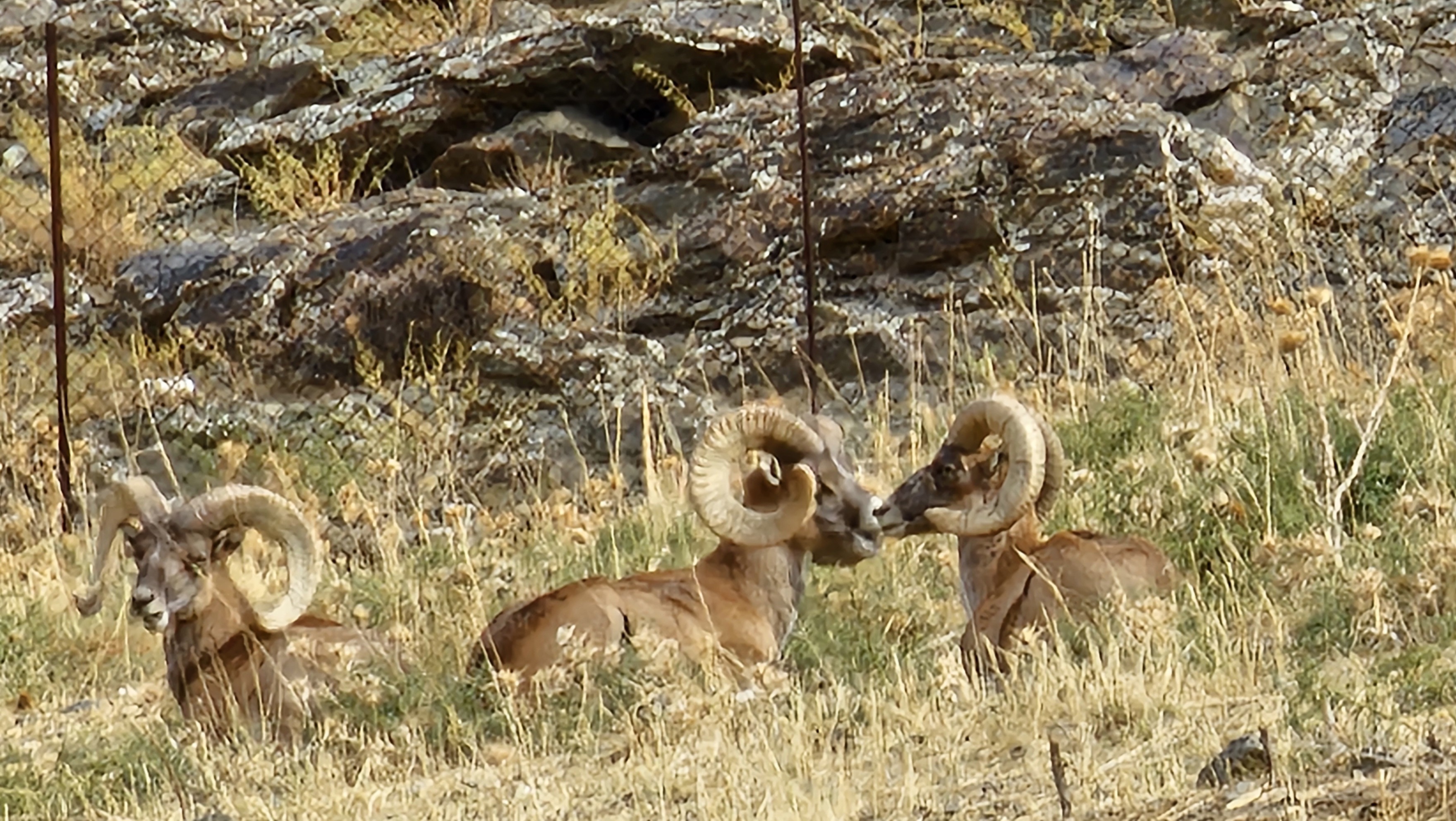
We passed a large breeding enclosure nestled in the valley. This is a vital conservation outpost for Severtsov’s wild sheep. The rugged Nuratau Mountains are home to roughly 95% of the entire world’s population of this rare species. This enclosure acts as a safe haven to boost their numbers before they are re-released into the wild crags above, protected by the surrounding Nurata State Nature Reserve.
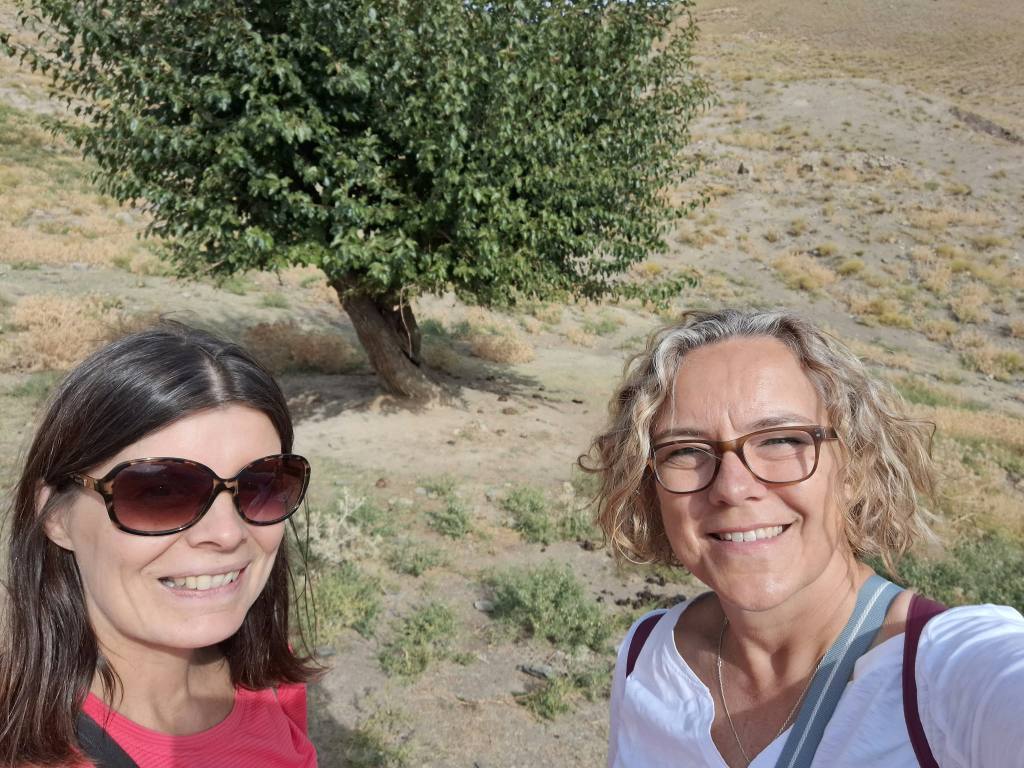
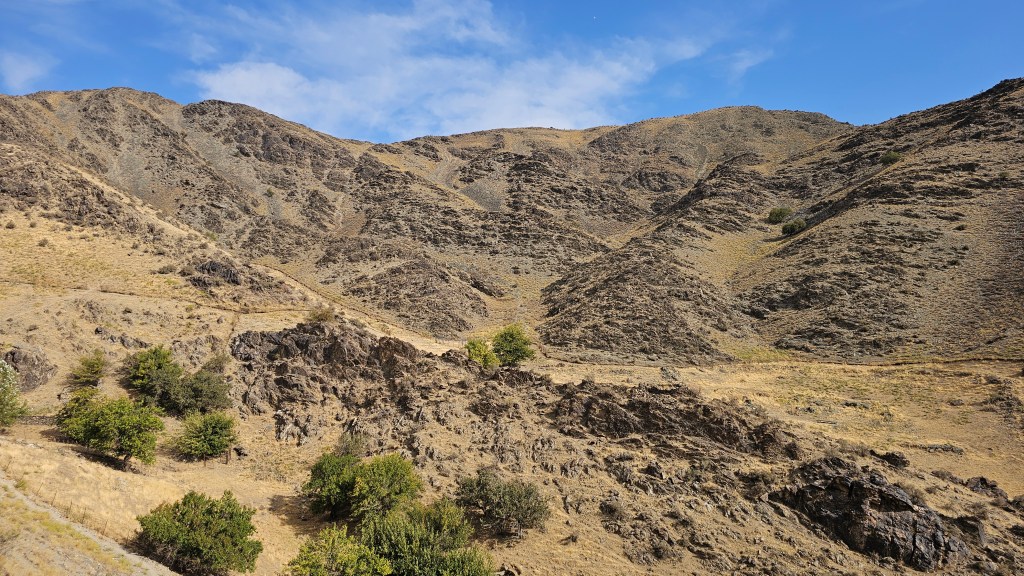
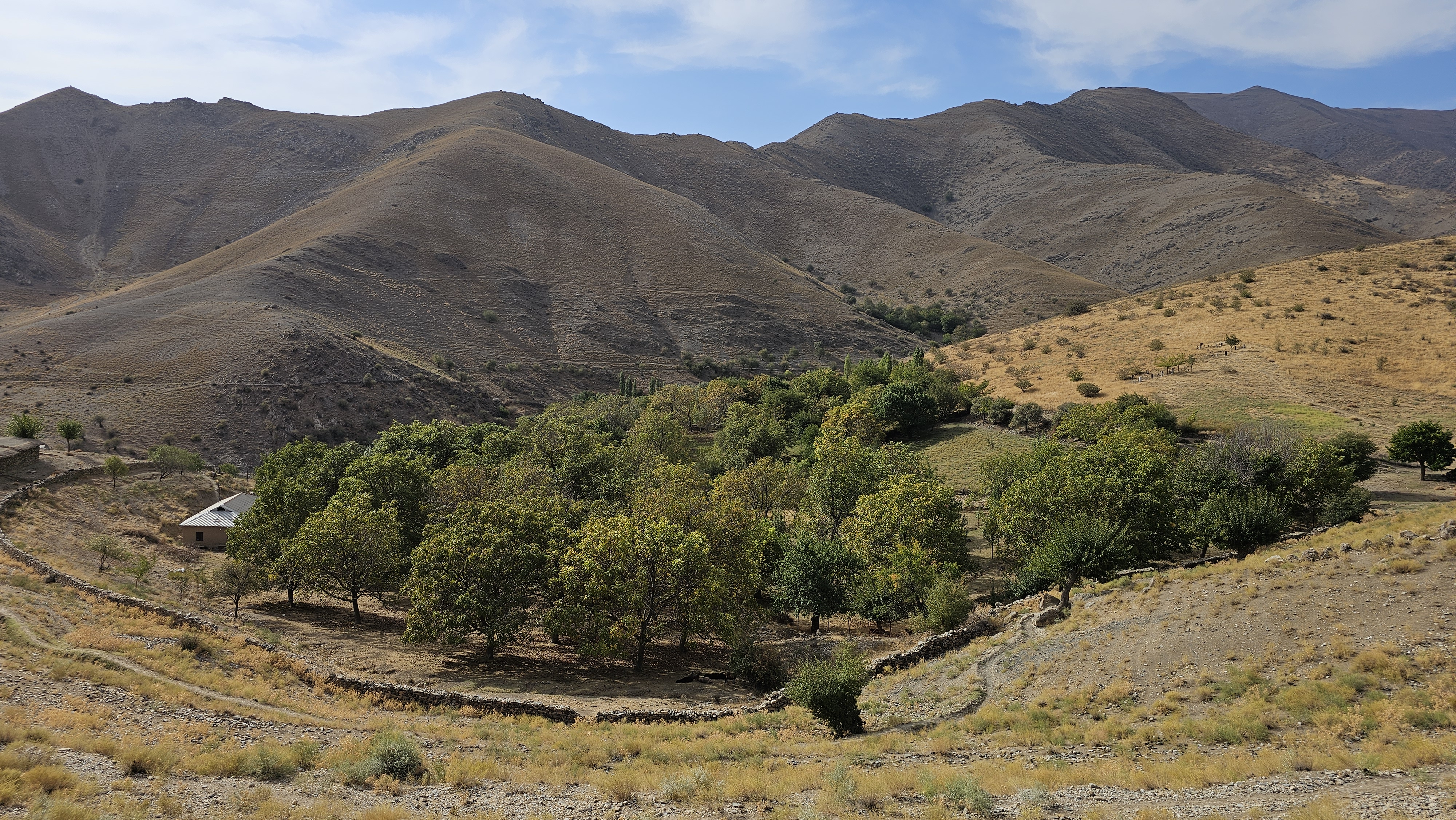
When back at the homestay we were able to return to our rooms, pack our bags and then have lunch.
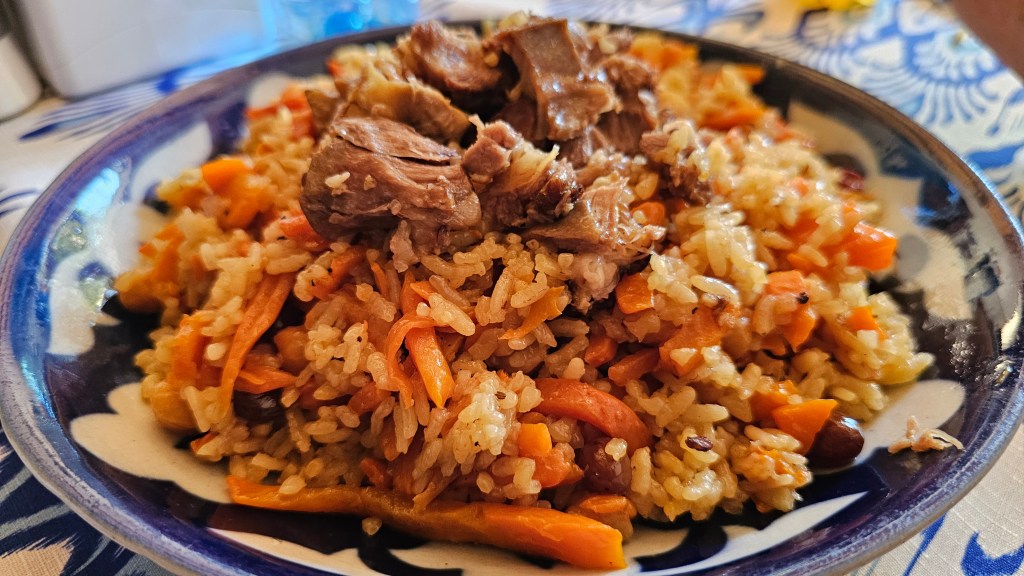
For lunch in the traditional village homestay we were served plov! By this mid-stage of the trip I had temporarily given up being a fish-eating-vegetarian and enjoyed the tender lamb which was served as part of the plov. This plov contained raisins and chickpeas mixed in with the rice and vegetables and was delicious.
Summary
Following our tasty plov we left the village after lunch to start our drive to the legendary jewel of the Silk Road – Samarkand!

