Following our tasty and varied breakfast our Explore group left the Feruzkhan hotel in Khiva and walked for a few minutes out of the city gates to our awaiting bus ready for our transfer to Bukhara, our next Silk Road destination.
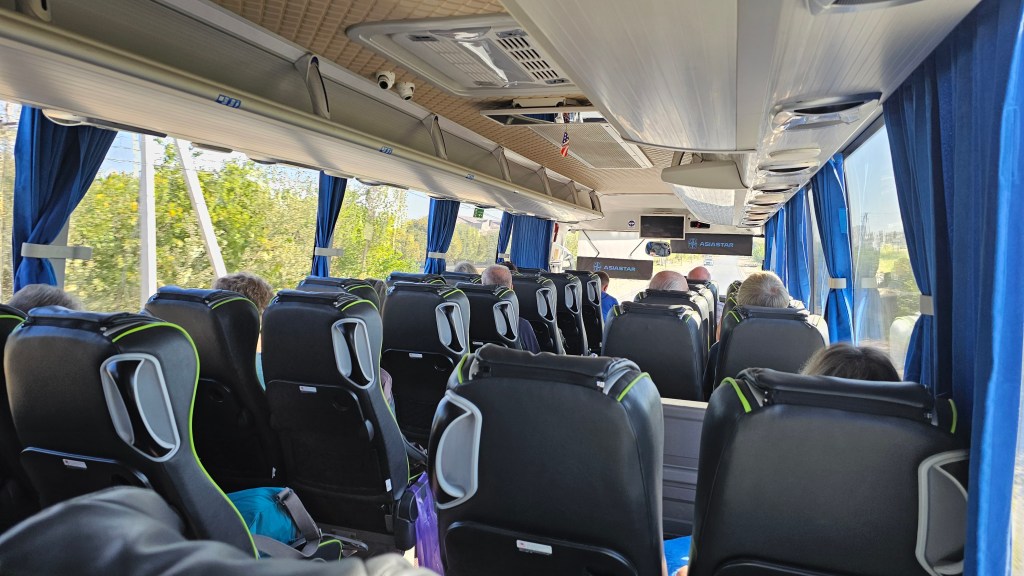
To everyone’s delight our transport was a comfortable full size 45 seater bus which meant our group of 15 had an abundance of room in which to spread ourselves around. In addition, the bus was equipped with fast USB charging points and decent wifi. With a 6 – 7 hour journey ahead of us this was all very much appreciated.
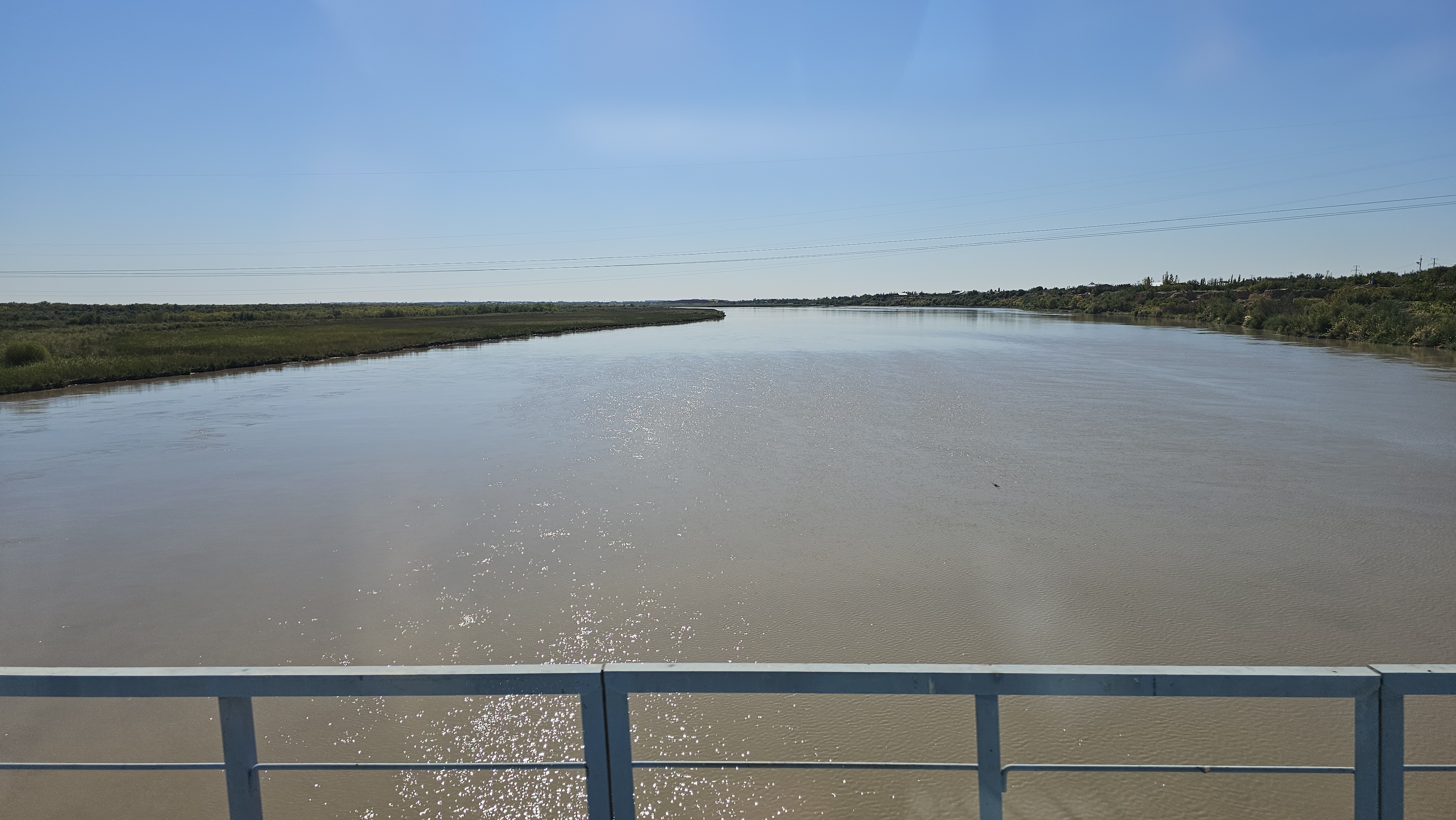
Shortly after crossing the famous ‘Blue Bridge’ over the historic Oxus River, we merged onto the A380. This massive international highway serves as a modern Silk Road, cutting across the desert to link Turkmenistan, Uzbekistan, Kazakhstan, and beyond into the heart of Central Asia.
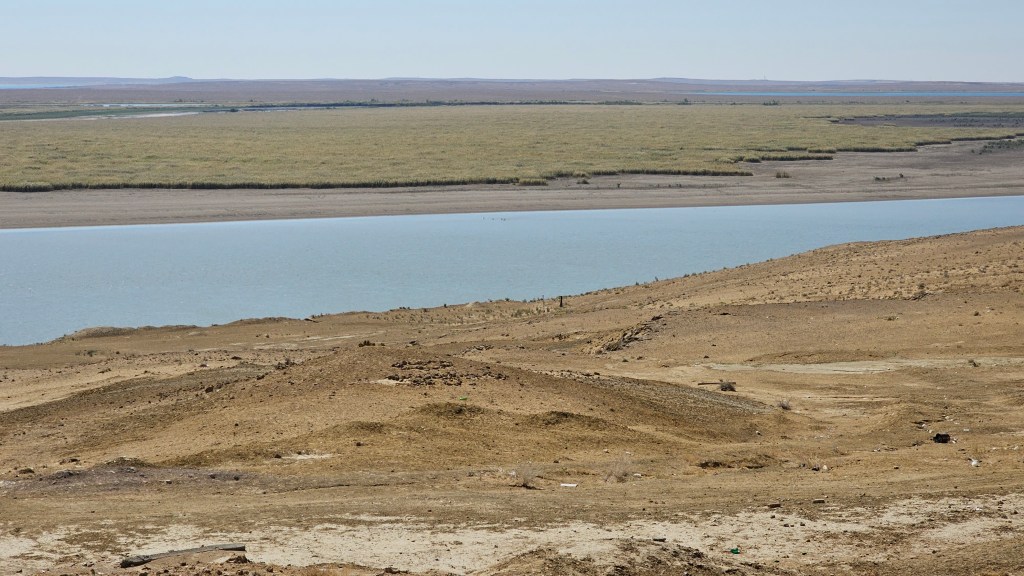
Our desert road trip included a stop at a scenic overlook with a sweeping view of the Amu Darya River, historically known as the Oxus. Our guide Sanjar explained that the river is a fraction of its former size, largely because neighbouring countries divert massive amounts of water upstream before it ever reaches this part of Uzbekistan. It was a powerful, unexpected lesson in how modern environmental changes are reshaping the historic Silk Road.
We watched the landscape shift as we traveled through the Kizilikum Desert into the Uzbek wilderness, trading one legendary oasis for another. Leaving the open-air museum of Khiva behind, we made our way to Bukhara, a city whose epic history spans over 2,500 years. For more than two millennia, it reigned as a critical crossroads for commerce, Islamic education, and Persian culture on the Silk Road. The entire historic centre is now a UNESCO World Heritage site. Interestingly, while 70% of the locals are Uzbek nationals, a vast number of residents speak both Uzbek and Tajik—a reflection of the city’s unique heritage, where Iranian urban roots and Turkic governance intertwined over centuries.
Exploring Bukhara
We spent 3 nights in Bukhara which included a full day guided tour, followed by a full day of free time. Below is a summary of our main activities.
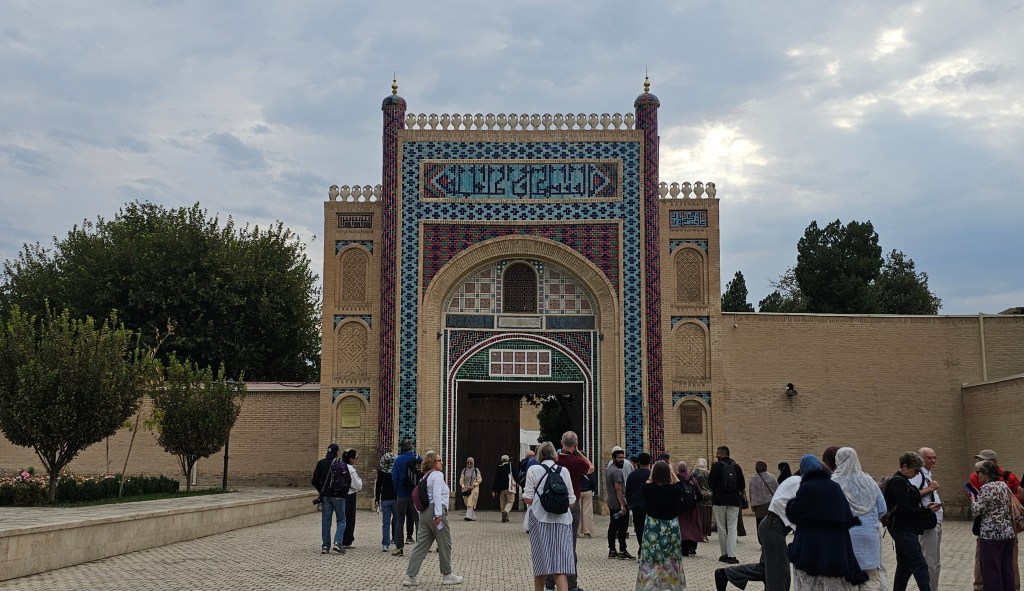
Day 1: sightseeing led by Sanjar, our guide
For the first time since arriving in Uzbekistan 5 days ago we woke up to dull overcast 17 degree weather, a big shift from the 26 degree blue skies we had become used to. Having reluctantly unpacked our rain jackets we were driven in our bus for 4 km to the Summer Palace which was busy with tour groups.
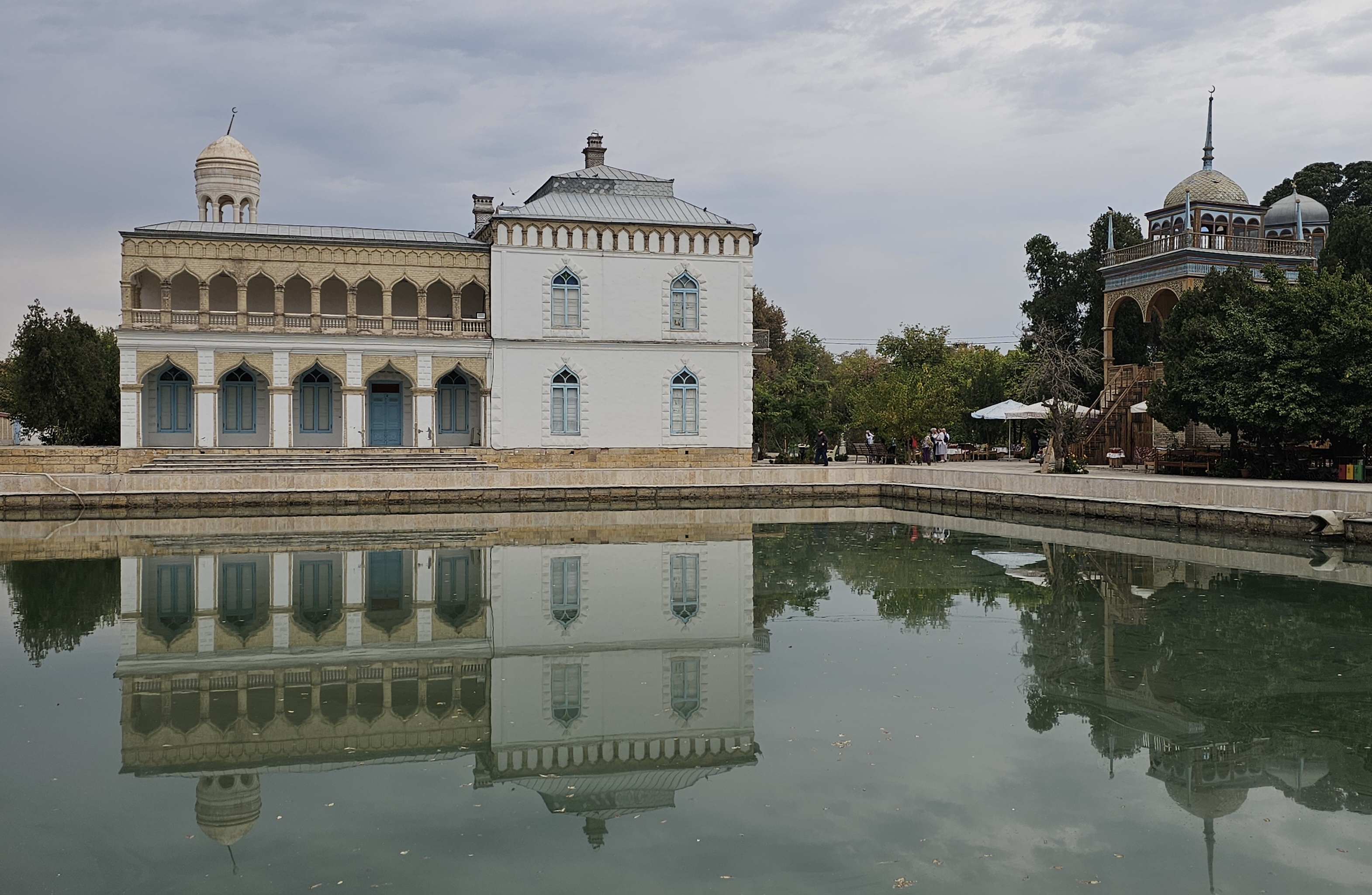
Summer Palace
Built between 1912 and 1918, the palace represents a collision of traditional Central Asian craftsmanship and Imperial Russian palace architecture. The ruler, Emir Said Alim Khan, had his master builders collaborate with Russian engineers to create this luxury retreat. Sadly this was completed just two years before the Bolsheviks overran the city in 1920.
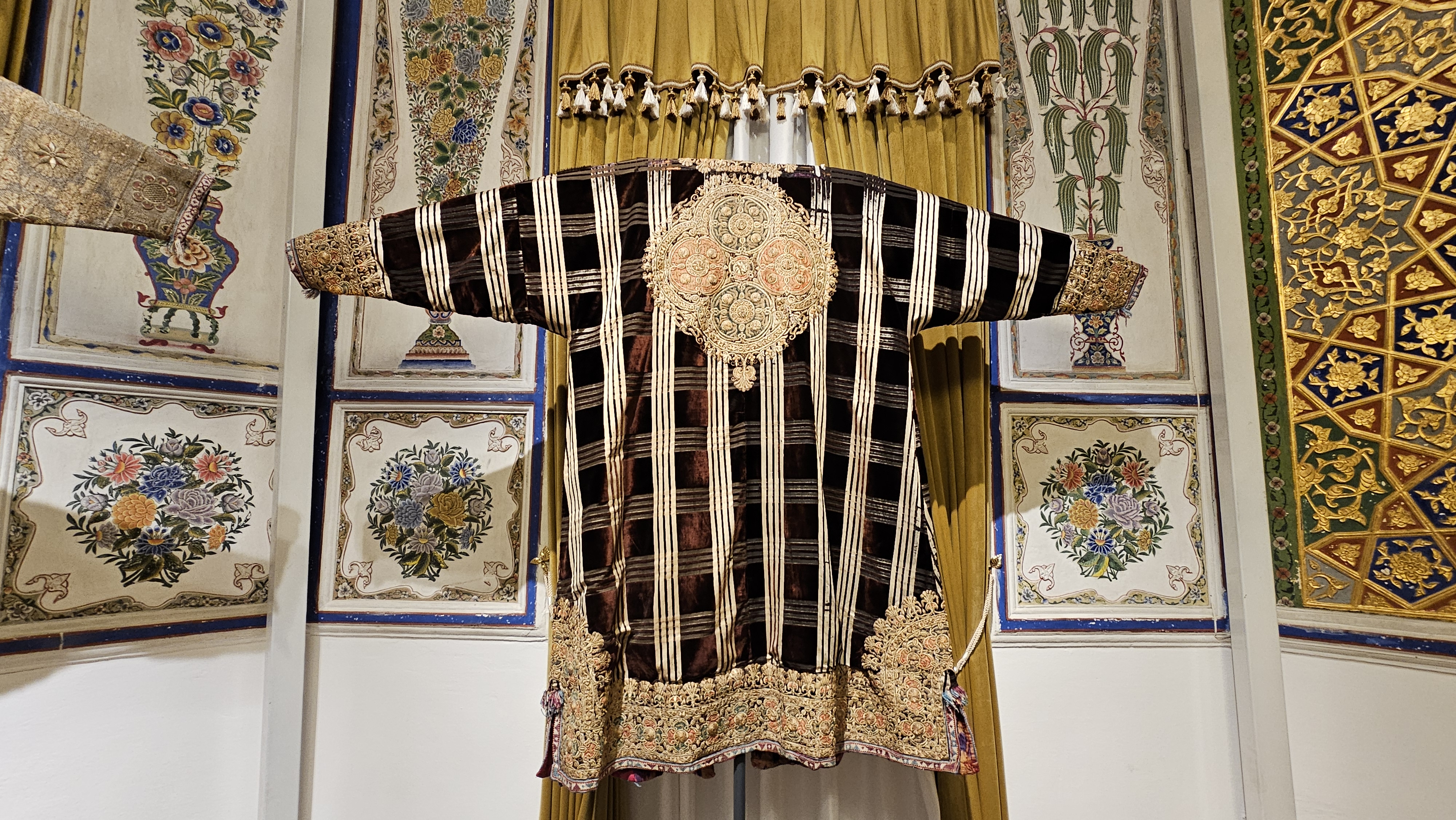
The palace buildings house a spectacular treasure trove of history, packed with opulent royal costumes, antique furniture, and rare porcelain.
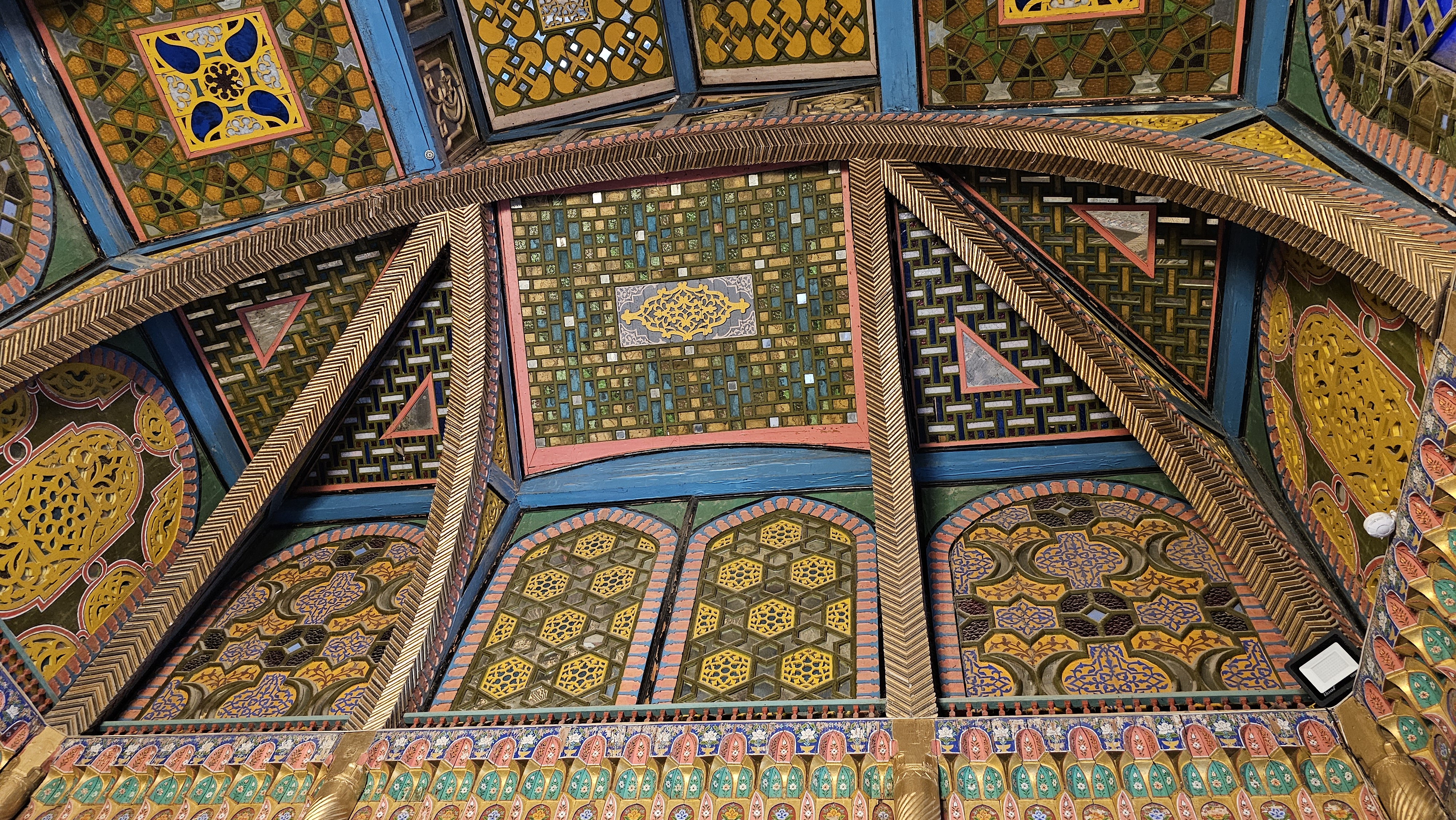
Every wall and ceiling is a work of art, covered in intricately carved plasterwork and lavishly painted geometric designs.
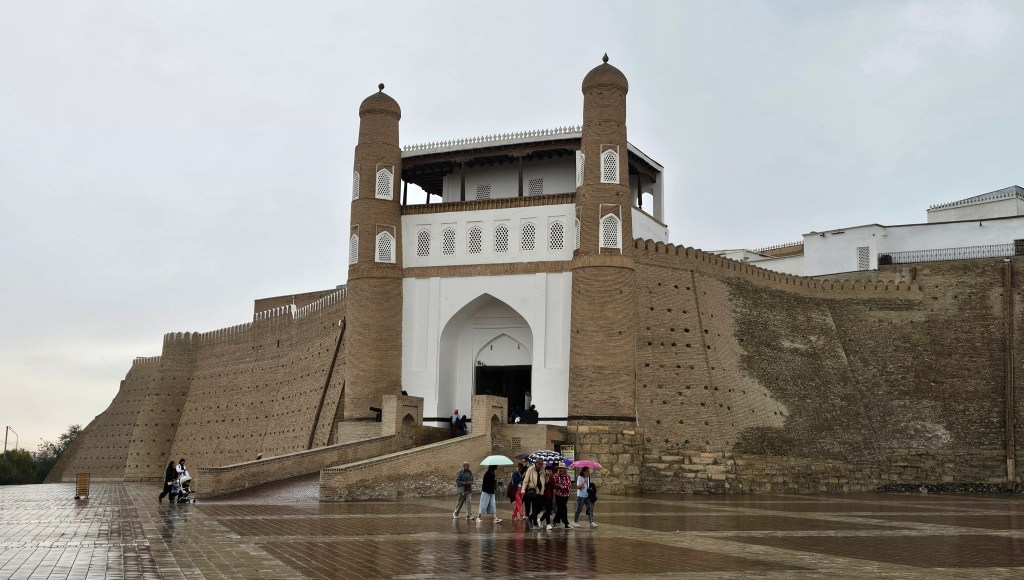
Ark of Bukhara
Light rain had started to fall while in the Summer Palace which continued during our short journey back to the city centre where our next stop was the imposing ‘Ark of Bukhara’. The Ark is a massive 5th century ‘city-within-a-city’ fortress with foundations dating back to the 3rd and 4th century BCE. For generations it was the main residence of the region’s rulers, weathering the rise and fall of empires.
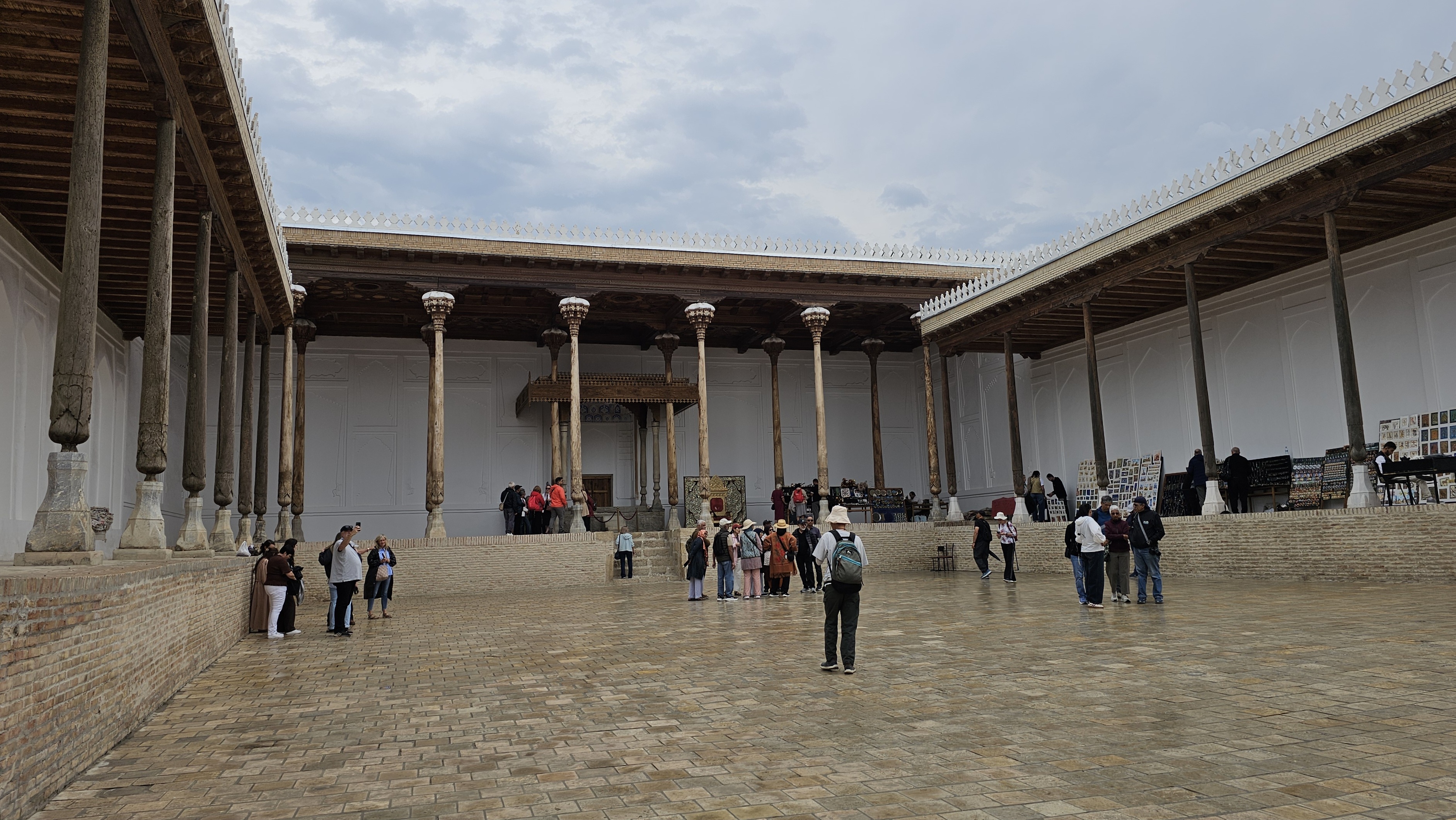
Inside the Ark of Bukhara several restored courtyards and rooms can be found. Above is the Throne Hall, a yard which contains a marble throne made in 1669. This was the place where the the Emirs of Bukhara held audience, greeted foreign dignitaries, and were formally coronated. (An Emir was the overarching monarch and supreme ruler of what was the Emirate of Bukhara, then a powerful Islamic state that covered much of modern-day Uzbekistan, Tajikistan, and parts of Turkmenistan between 1785 and 1920).
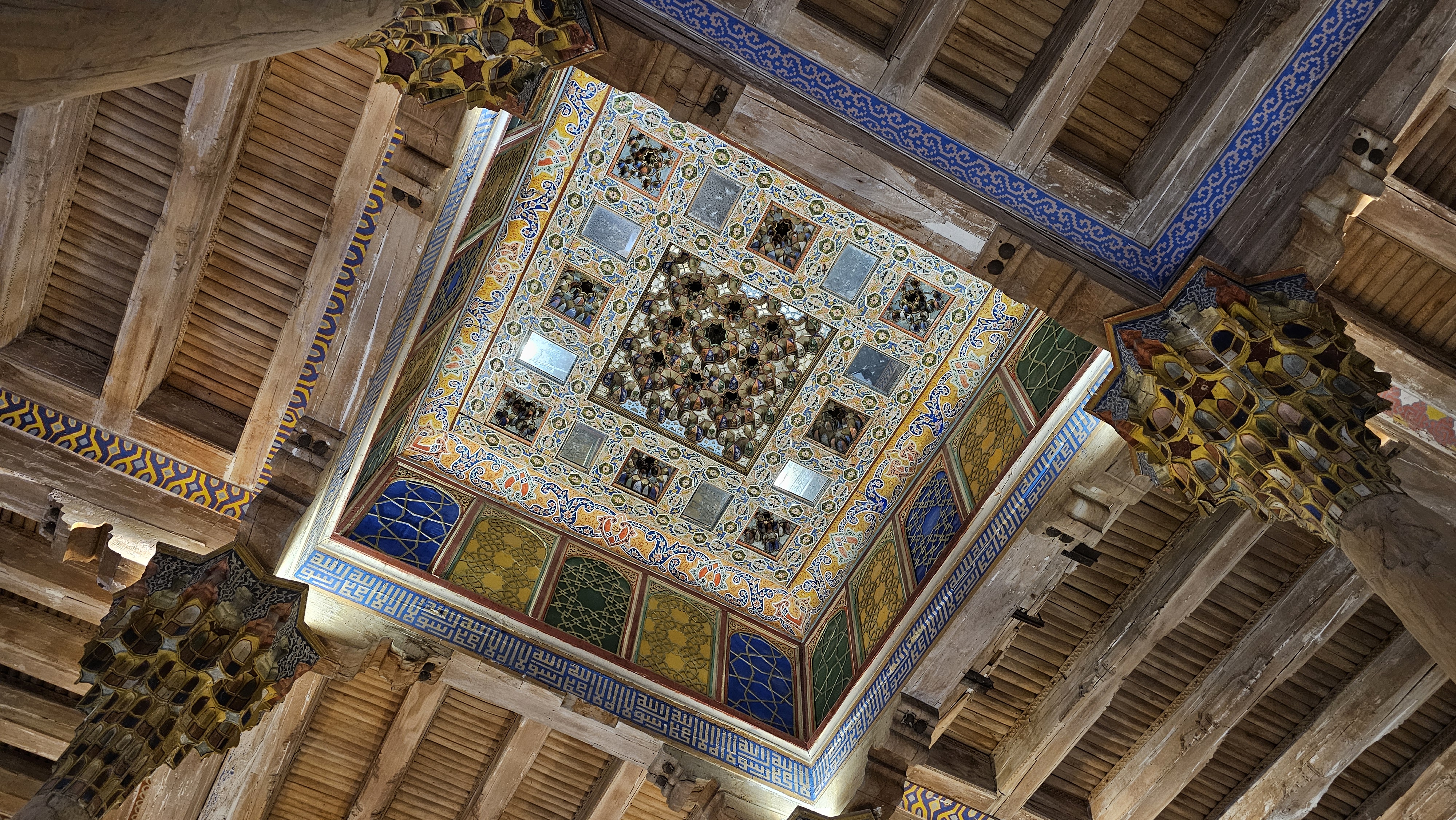
There is a mosque inside the Ark which served exclusively as the Friday mosque for the Emir of Bukhara, in sharp contrast to the Kalyan Mosque (which we visited later that day) where the general public gathered.
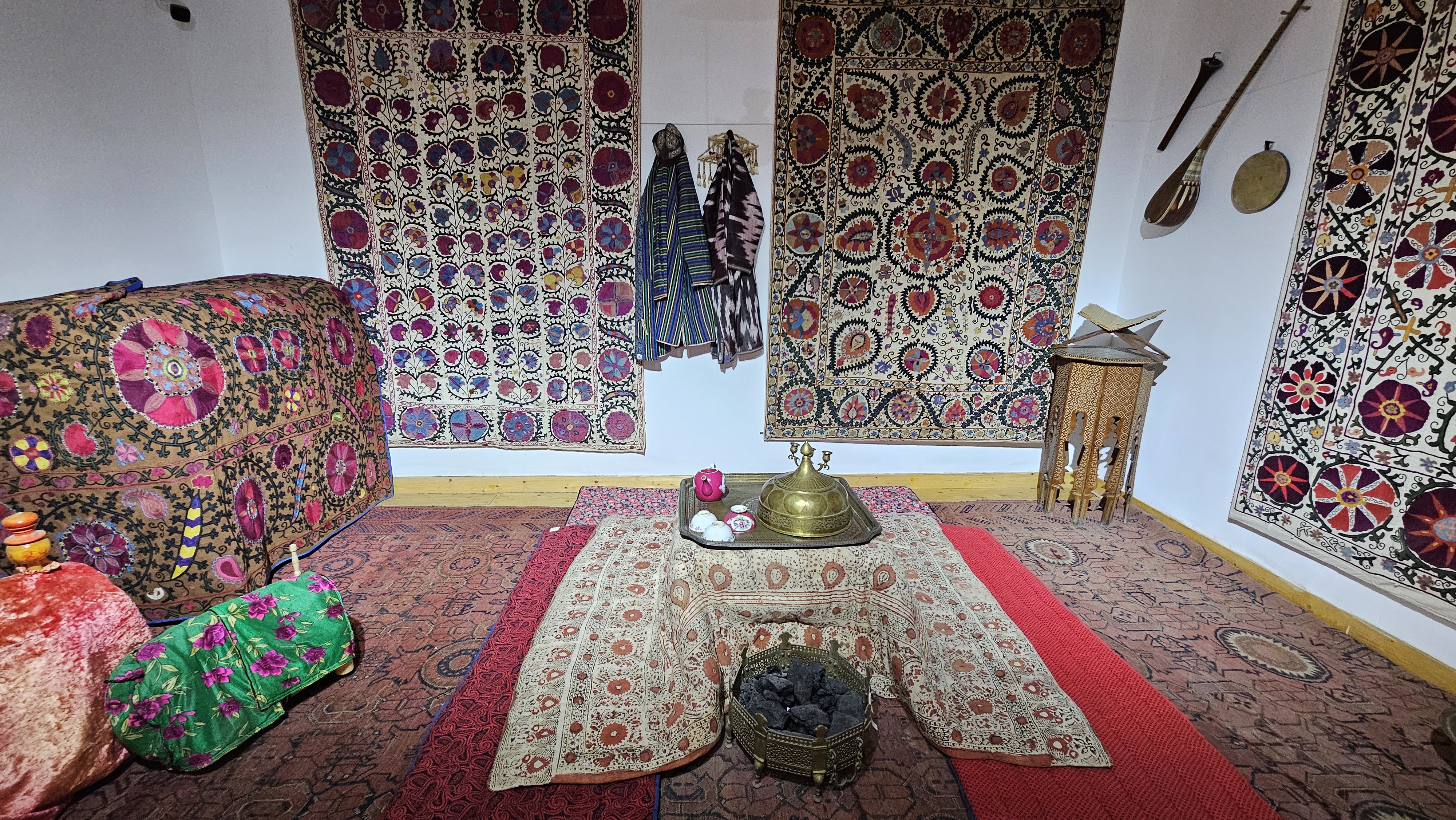
There are several museum buildings located within the Ark of Bukhara with displays of jewellery, costumes and ancient scripts. These are accompanied by written descriptions (in 3 languages including English) taking us on a full and fascinating historical Silk Road journey.
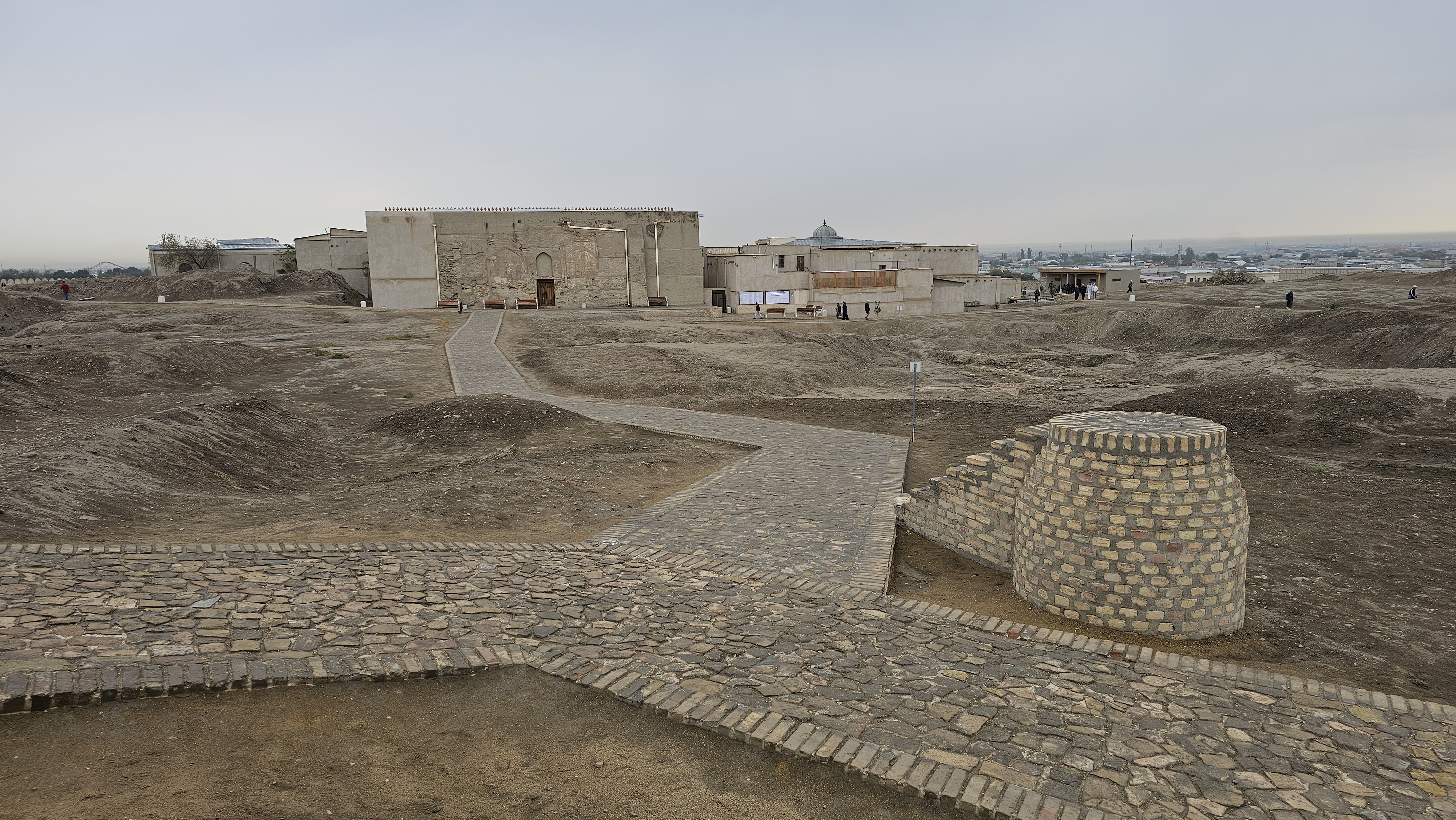
In 1920 the Soviet Red Army launched a brutal siege on the city. Under the command of Bolshevik general Mikhail Frunze, Soviet aircraft heavily bombed the Ark, sparking a massive fire that destroyed roughly 80% of the royal palace complex inside. The scarred remains stand as a powerful testament to the day the region finally fell to the Soviet Union.
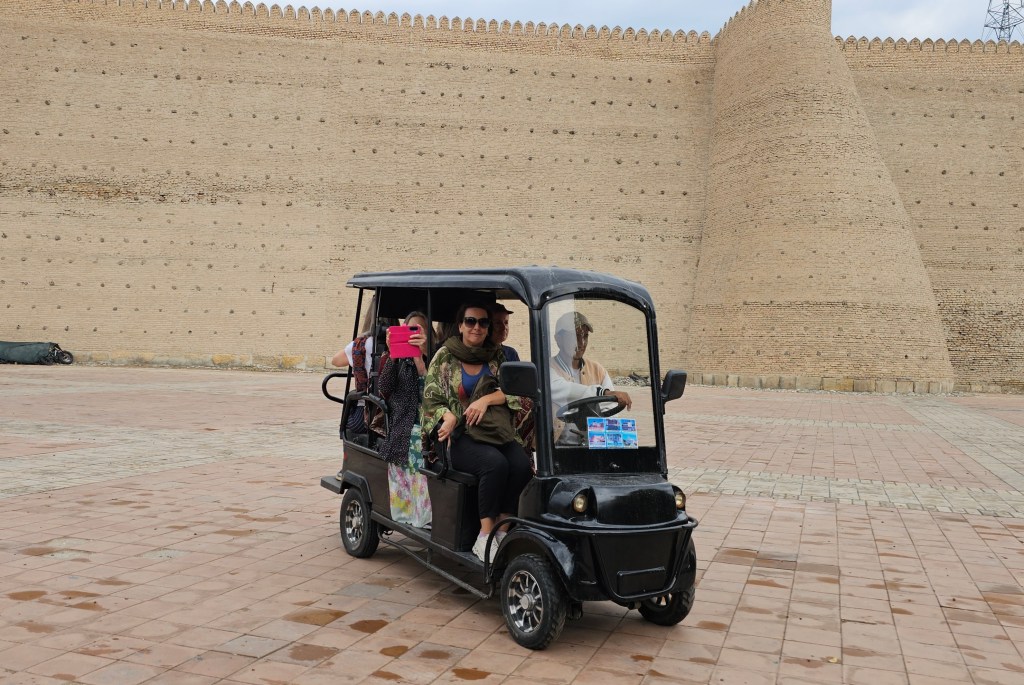
Golf carts are a quick and convenient taxi option and at the end of our visit, Sanjar organised 3 of them to transfer the group from the Ark to the Poyi Kalon Complex in the historic centre, a short distance away.
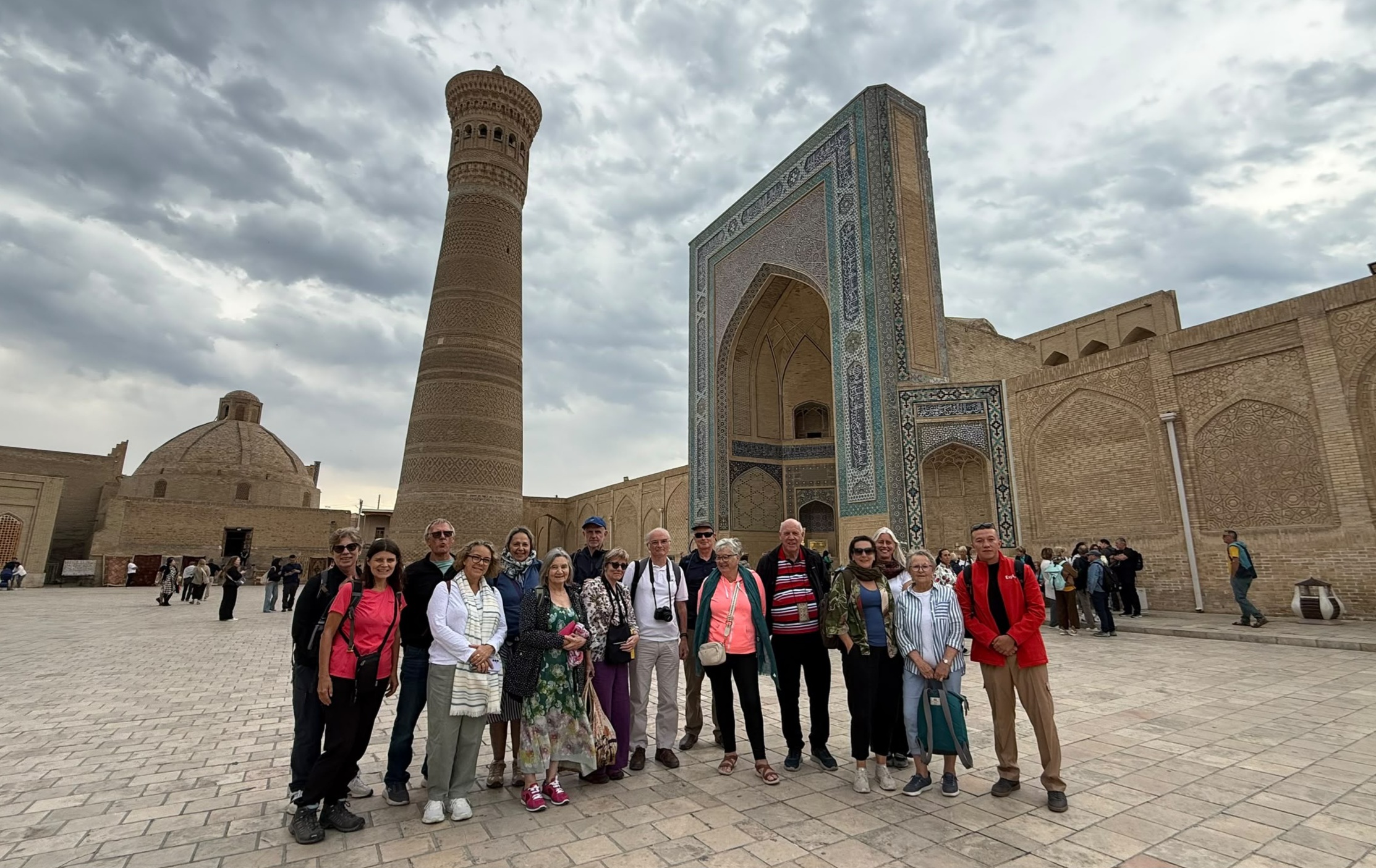
We had a group lunch up on the large top floor open terrace of the Kazan restaurant which overlooked Po-i-Kalyan square. In here I had pumpkin soup, another typical local snack. I also shared a pot of local herbal tea with Jayne, one of our new Explore friends. Overall, while the soup was tasty, this wasn’t the best dining experience due to the length of time it took for some of the food to randomly appear.
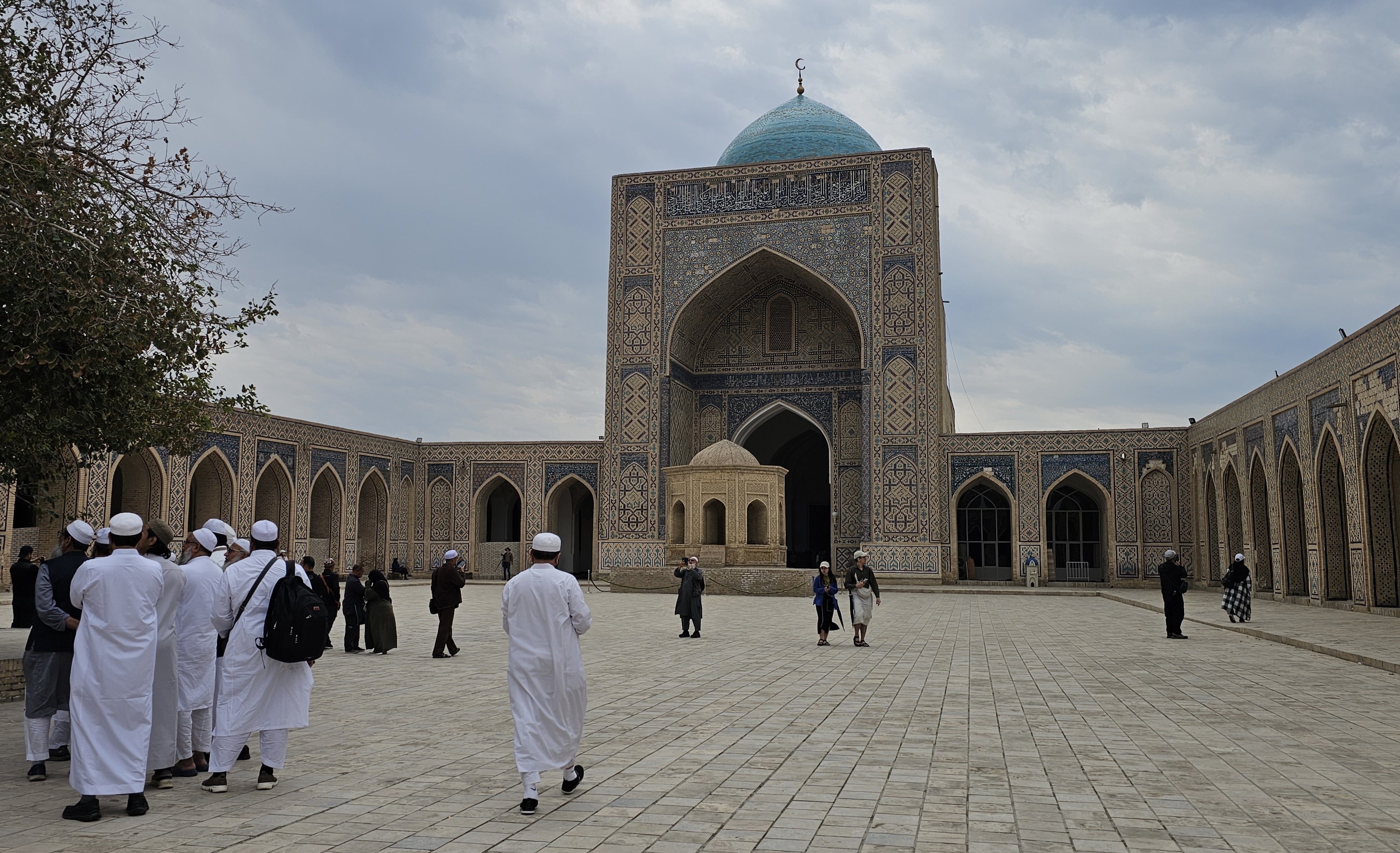
Kalan Mosque
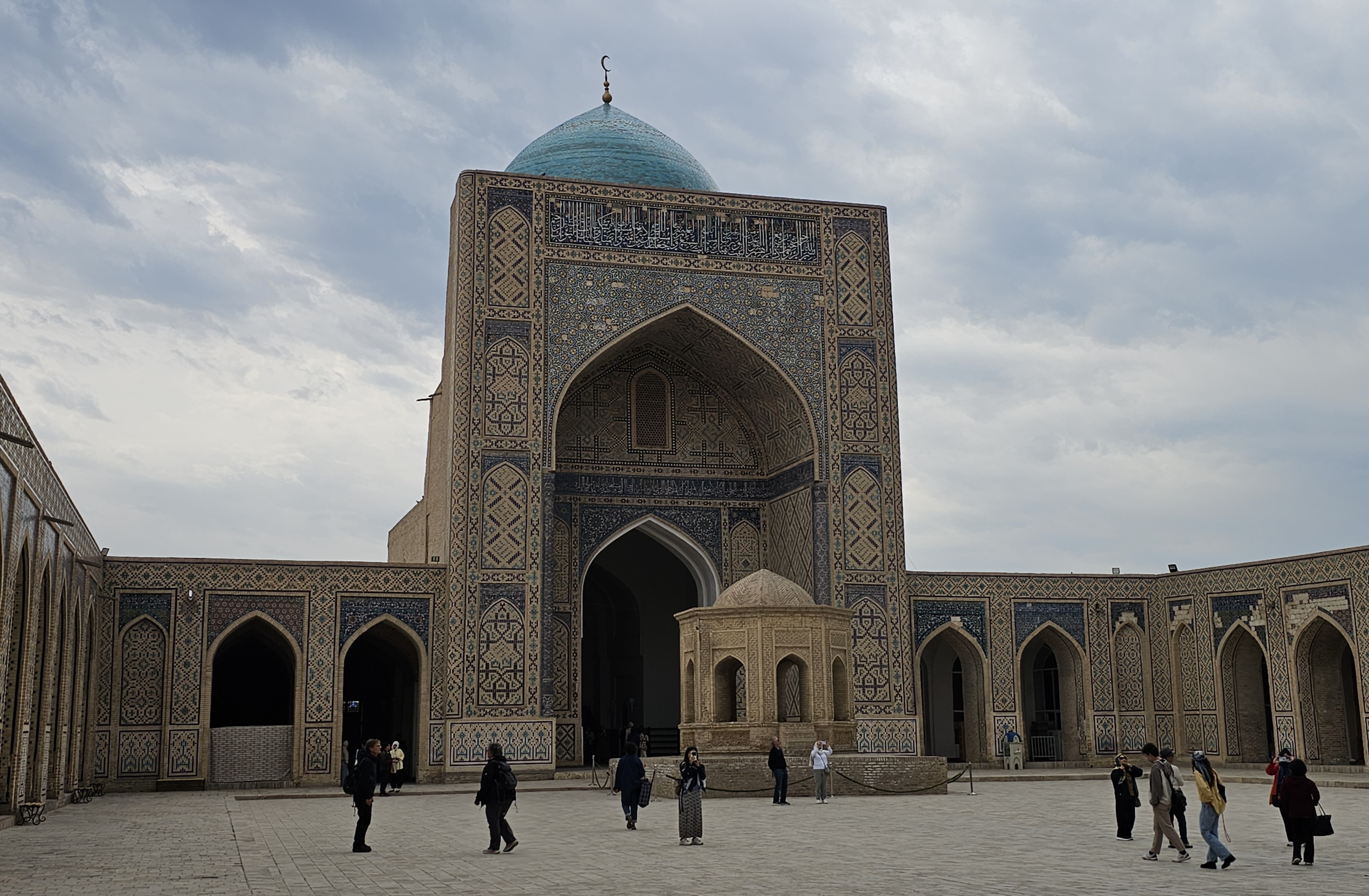
After lunch, just across the square we visited Kalan Mosque. Kalan Mosque is the second-largest mosque in Central Asia (surpassed only by the Bibi-Khanym Mosque in Samarkand). It was designed to accommodate the entire adult male population of the city—up to 12,000 worshippers—for Friday prayers.
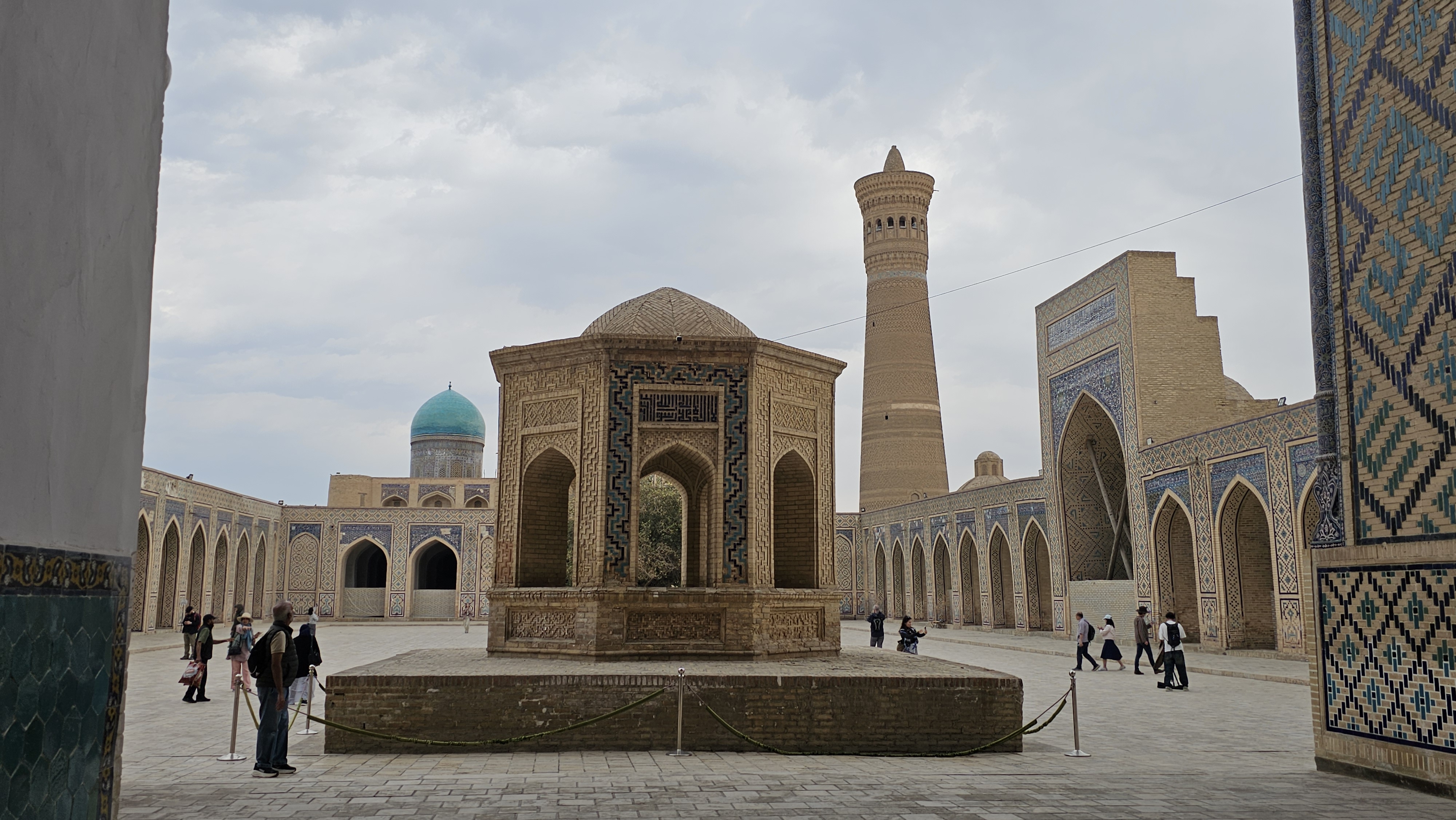
The original mosque on this site suffered a horrific fate in 1220. During his siege of Bukhara, Genghis Khan personally rode his horse right through the doors and into the courtyard. Mistaking the grand structure for the Emir’s palace, he ordered his soldiers to throw the Quran scrolls under the horses’ hooves and burn the entire complex to the ground.
The spectacular monument was completely rebuilt from the ashes in 1514 under the Shaybanid dynasty. Miraculously preserved through the Soviet era, it remains an active, sacred house of worship and a timeless masterpiece of Silk Road architecture.
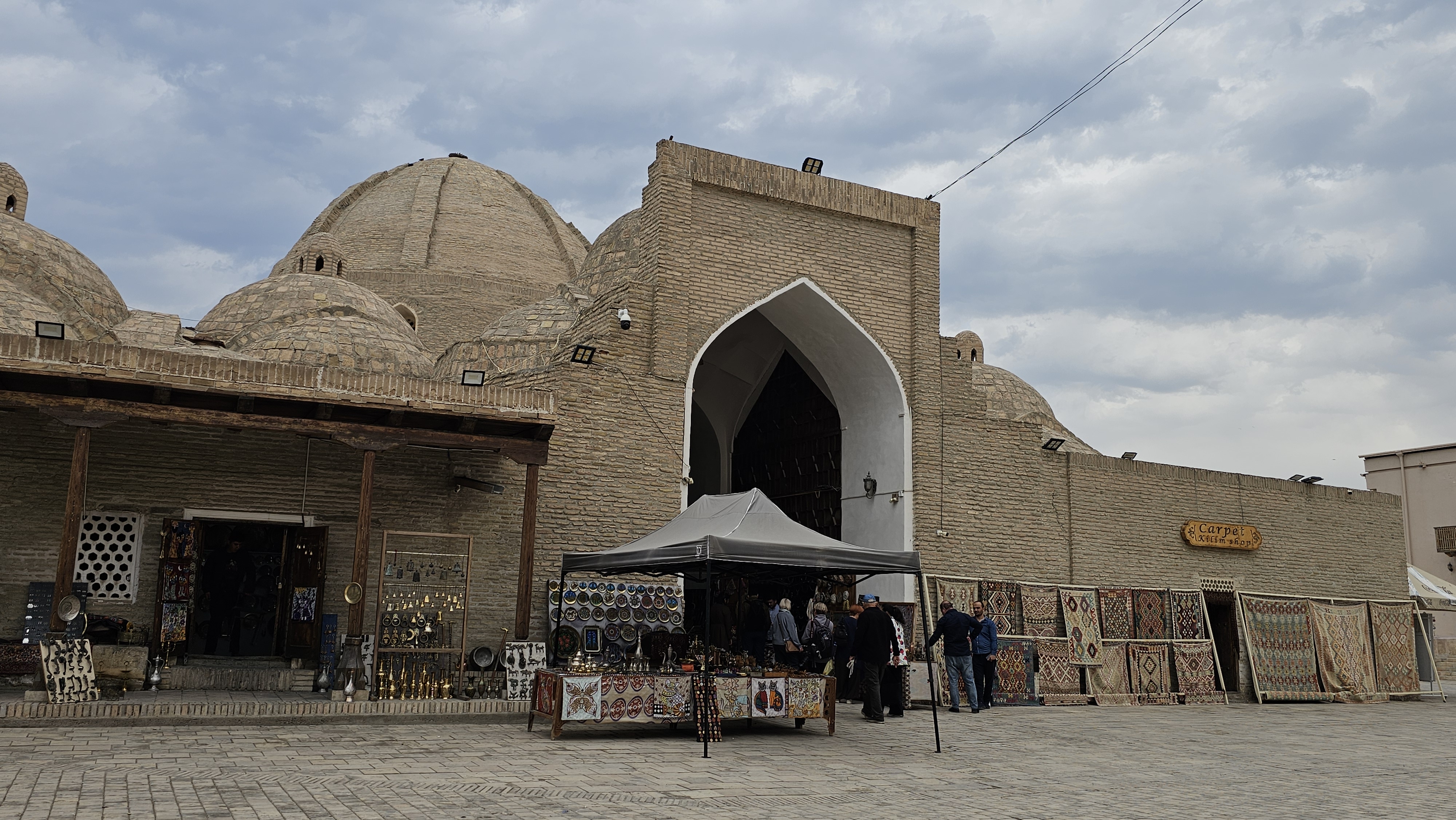
Trading Domes
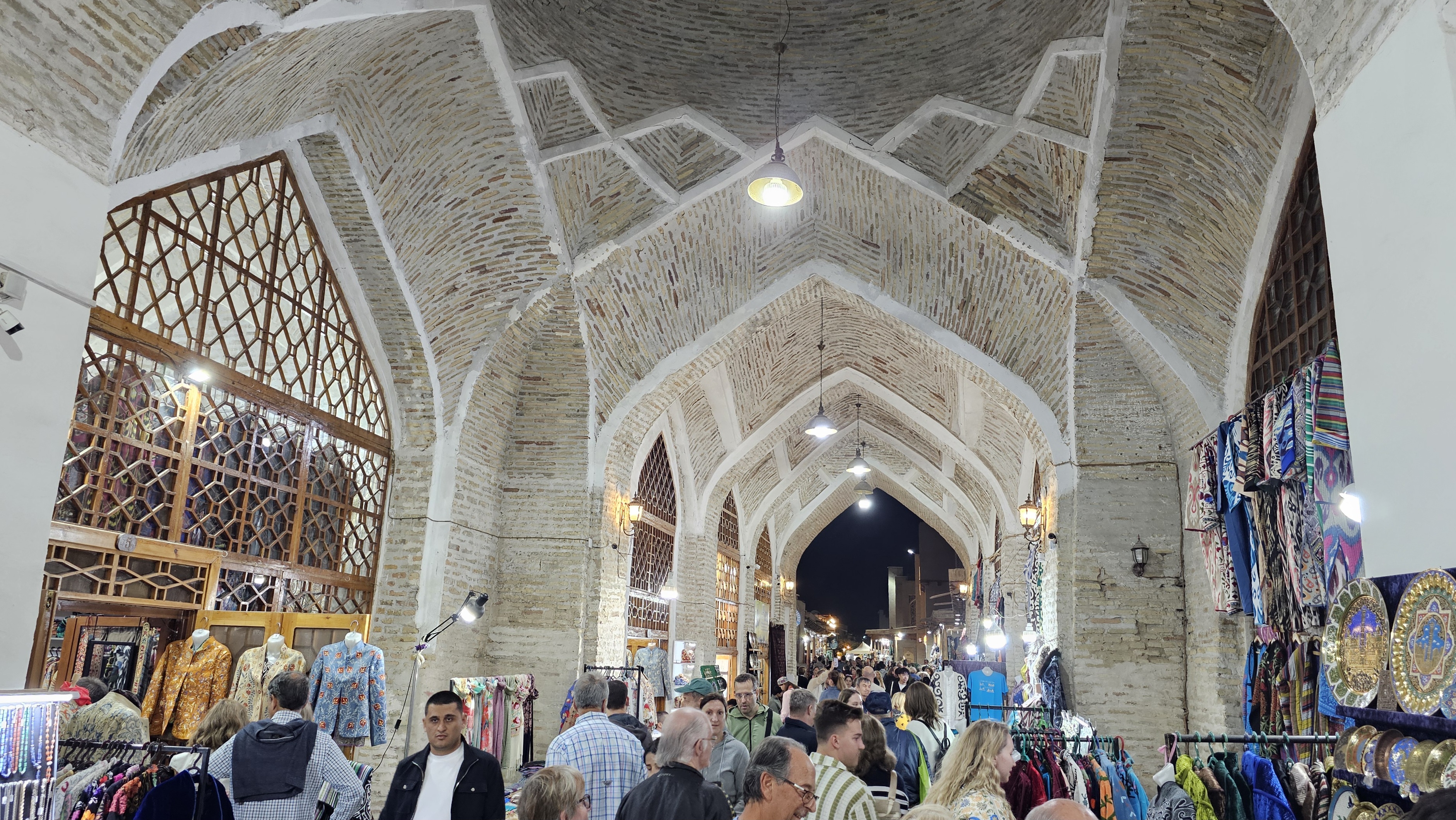
The historic old town of Bukhara is a very walkable and pedestrian friendly place. Leaving the grand mosque behind, Sanjar took us to the bustling trading domes. These mud-brick buildings are incredibly atmospheric, still packed with local artisans selling embroideries, hand-forged knives, and spices. It felt like stepping back into the ancient Silk Road, which is no coincidence as these domes are a direct result of Amir Timur (Tamerlane) and his successors.
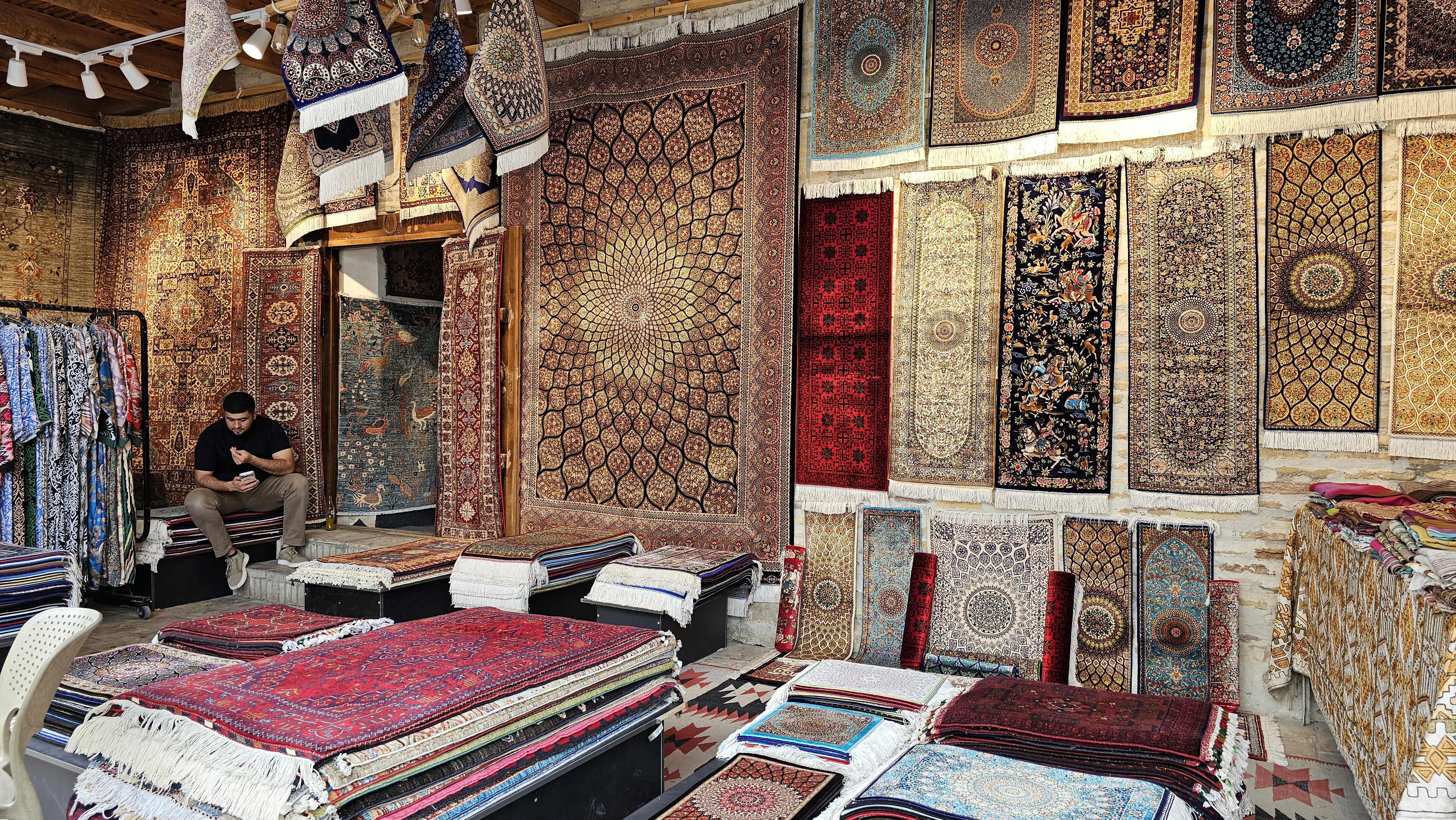
After the Mongols completely flattened the region, it was Amir Timur who pulled Bukhara out of the ashes starting in 1370. While Timur famously poured his treasures into his primary capital of Samarkand, his descendants revitalized Bukhara as a global capital of trade and Islamic education. They built these monumental, intersecting trading domes to shield international merchants from the desert heat. Shopping under these ancient ceilings today, you are walking through the exact economic engine that Timur built to put Uzbekistan back at the center of the global trade map.
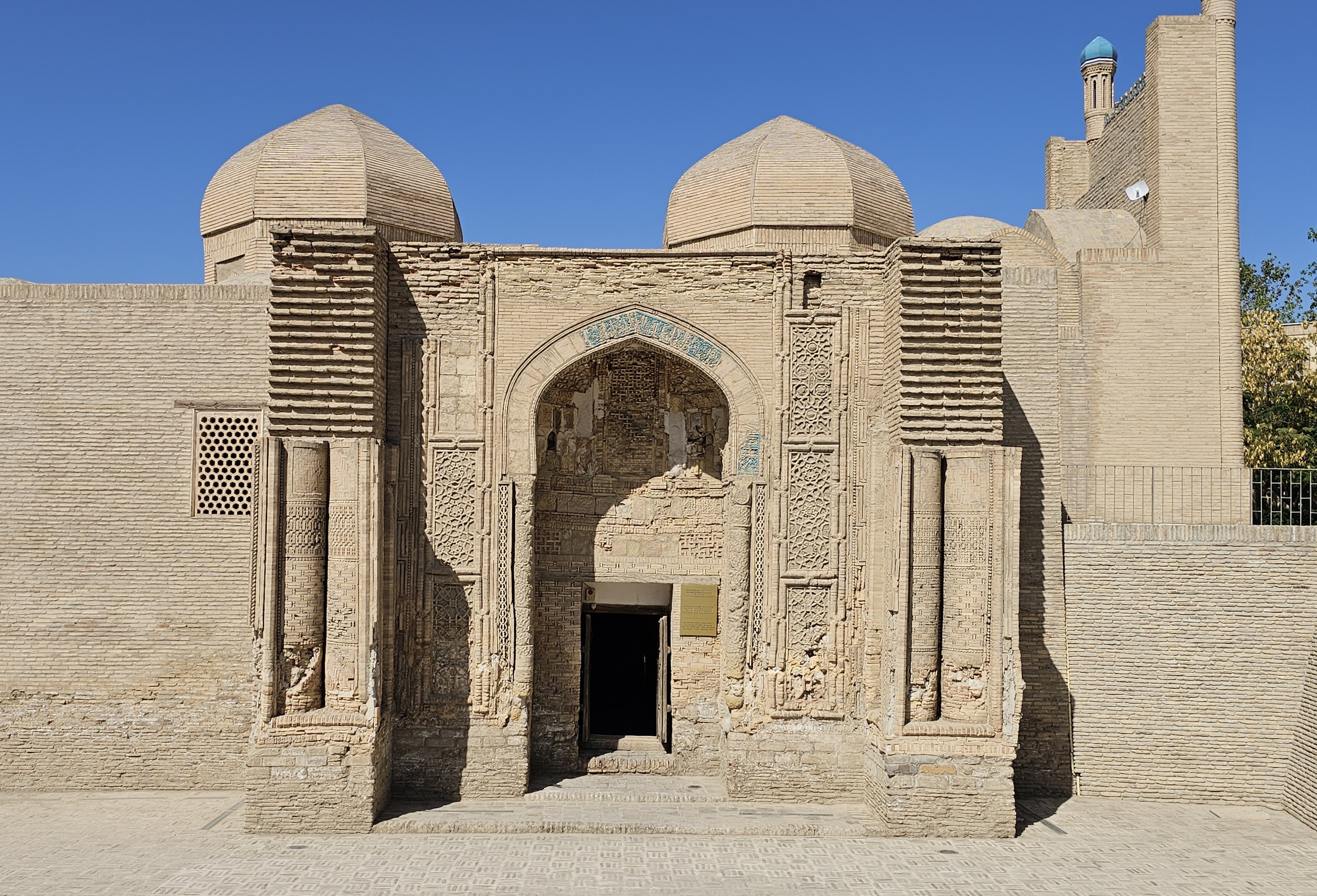
Near to the trading domes is the site of the Maghoki Attori Mosque, which is the oldest surviving mosque in Central Asia. This mosque lay buried after centuries of shifting desert sands and rising street levels until it was dug out by archaeologists in the 1930s.
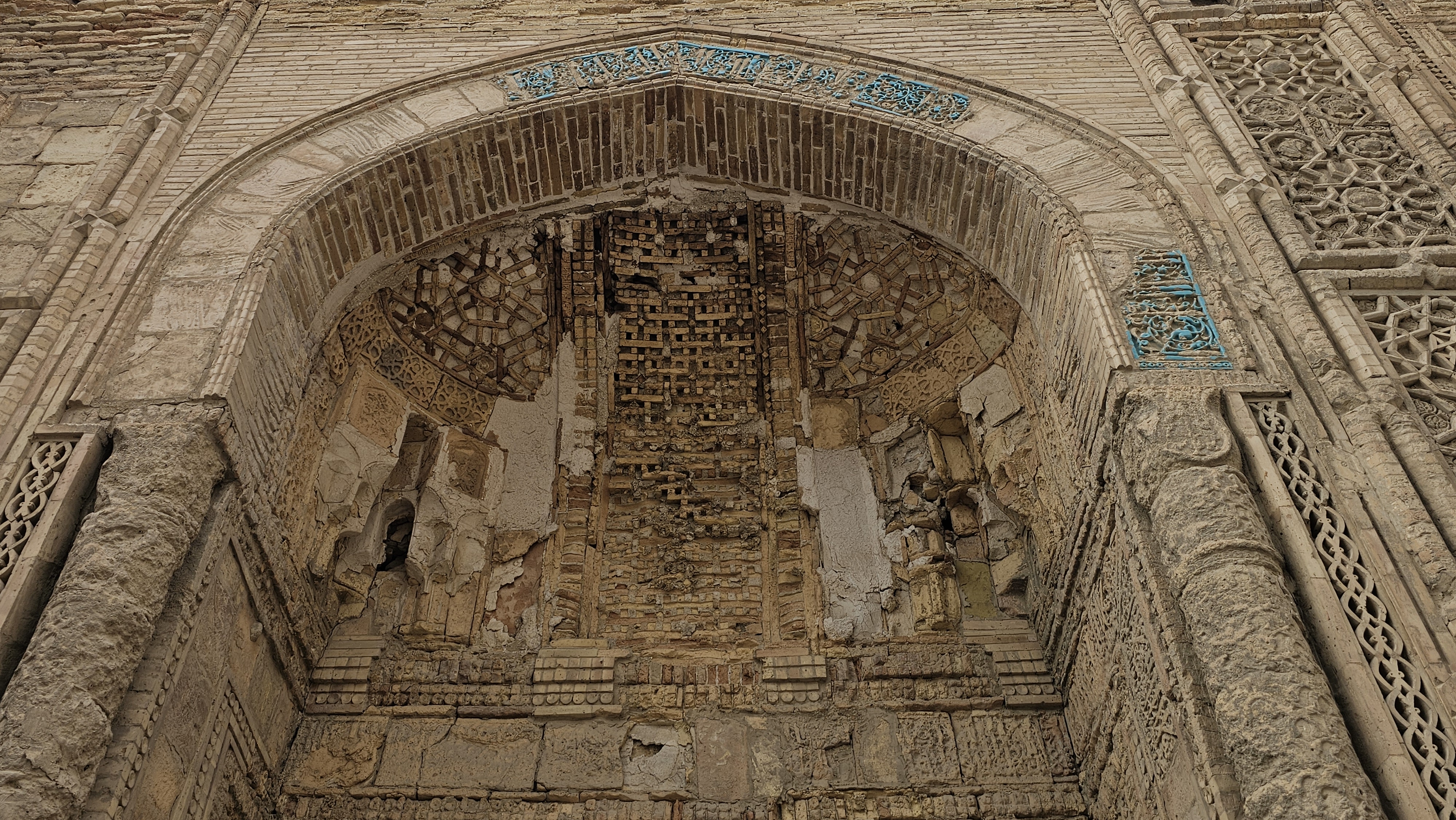
Maghoki-Attori is considered a masterpiece of early Islamic art which dates back to the 12th century. It features incredibly complex geometric brickwork, carved terracotta tiles, and elegant arches that completely survived Genghis Khan’s destruction. Because it was already partially buried in sand when the Mongols swept through in 1220, the main facade was miraculously shielded from being torn down.
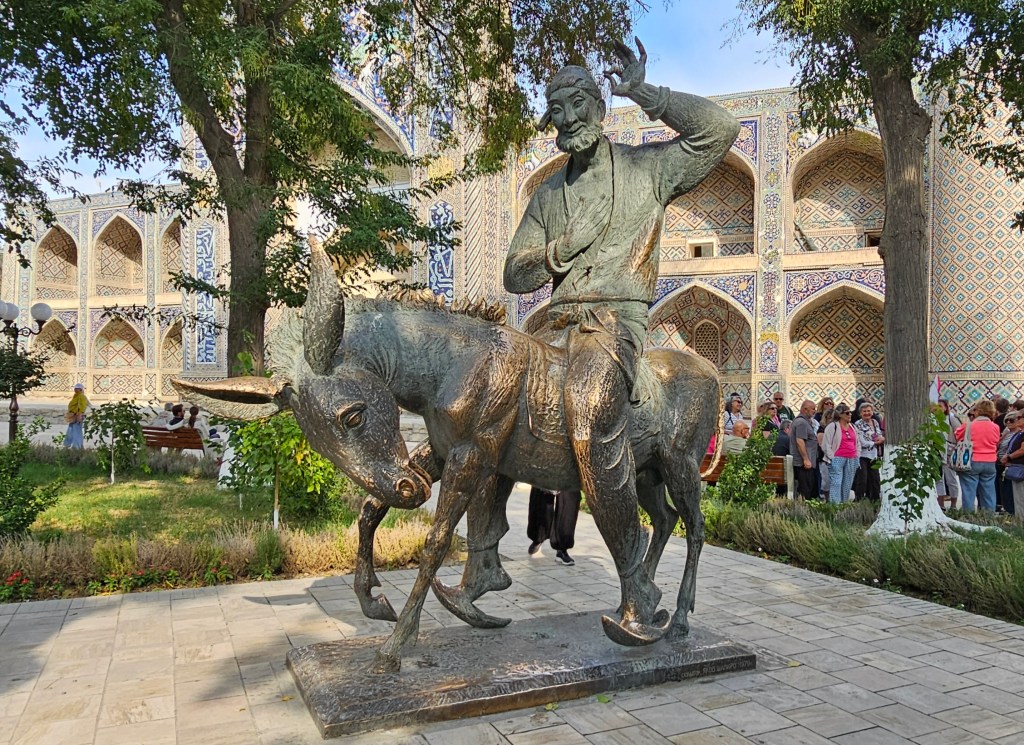
As we passed through Lyabi-Hauz Square, Sanjar took us to the Khoja-Nasreddin Effendi statue. Dressed in traditional attire, Nasreddin is shown with his donkey. Nasreddin is a famous satirical and philosophical character across the Middle East, Turkey, and Central Asia, known for using wit and humour to mock greed and foolishness.
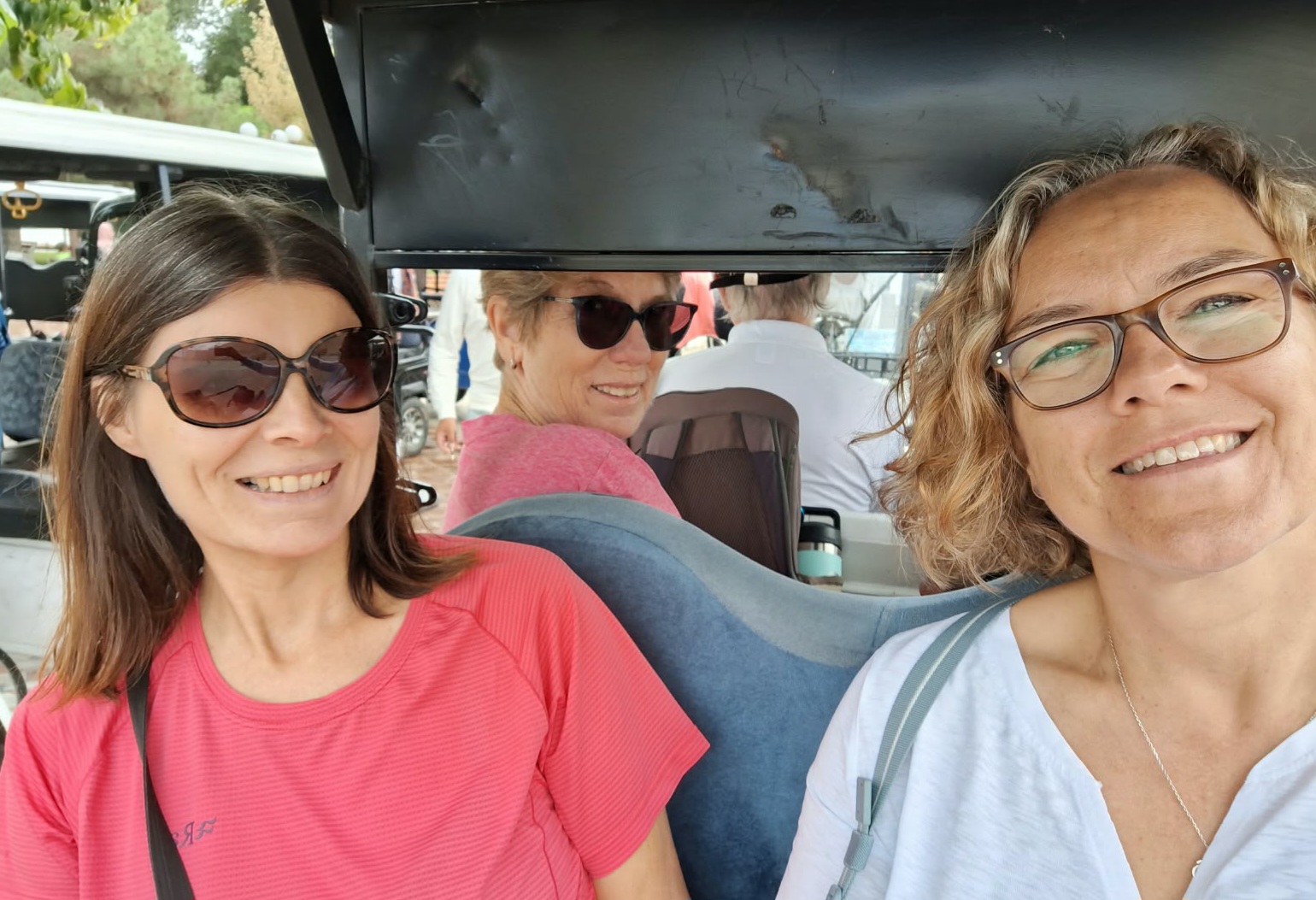
To round up the day, Sanjar organised our short group transfer with another golf cart ride from Lyabi-Hauz Square to Chor Minor.
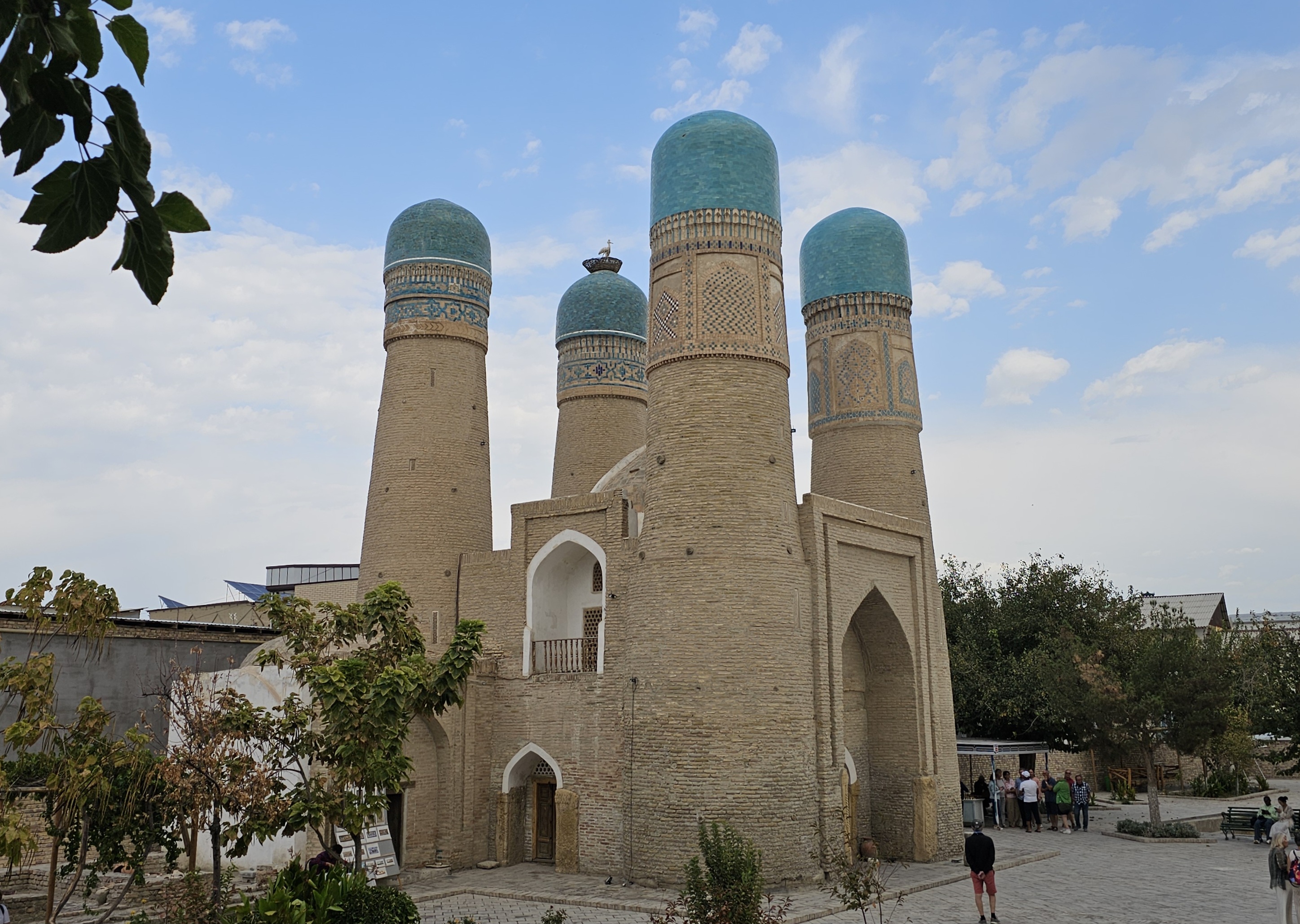
Chor Minor (which means ‘4 minarets’ in Tajik) was built in 1807 by a wealthy Turkmen merchant named Khalif Niyazkul, the building originally served as a grand gatehouse for a now-destroyed madrasah (Islamic school) complex. The building features a compact, square turquoise-brick structure crowned by four turquoise-domed towers. While they look exactly like minarets, they were actually purely decorative and functioned as architectural towers. Each of the four towers is styled with completely different geometric patterns made from turquoise, blue, and white tiles.
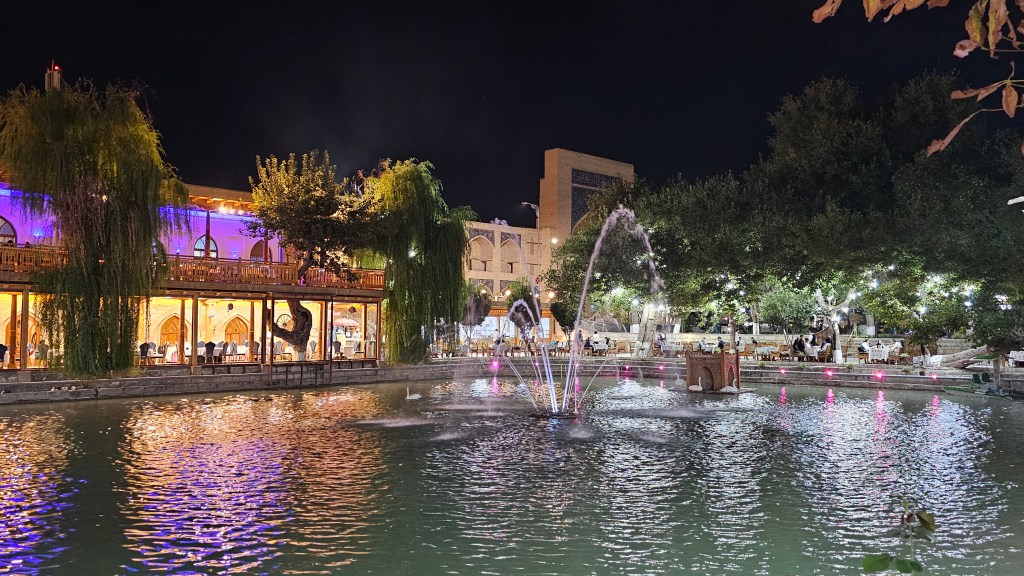
Later in the afternoon at the end of sightseeing with Sanjar on day 1, Bridget, our lovely new friend Marvilynn and myself made our way the short distance back to Lyabi-Hauz square. Translating from Persian as “by the pool,” Lyabi-Hauz is a peaceful, vibrant public square built around a massive, stone-stepped artificial reservoir excavated in 1620. Centuries ago, Bukhara was dotted with hundreds of these urban ponds, serving as the city’s primary water source. While most were filled in during the Soviet era to stop the spread of waterborne illnesses, this one miraculously survived. Shaded by ancient mulberry trees that date all the way back to 1477—making them older than the pool itself—it has been the city’s favorite gathering spot for generations.
Day 2: free time to explore more of Bukhara
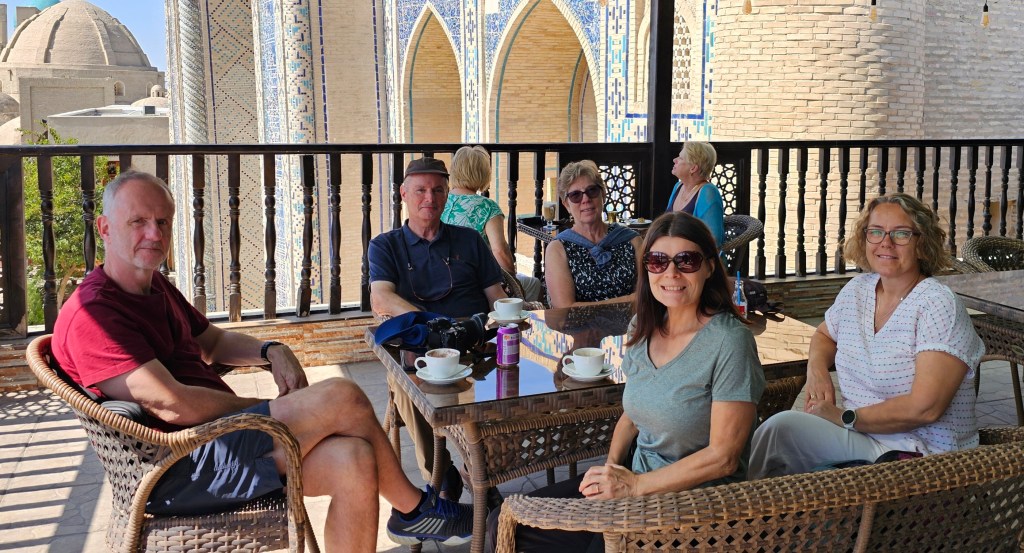
The second day, our free time day and we were back to perfect 26 degree sunny weather! Having seen the main attractions with Sanjar the previous day, a small sub group of 5 of us teamed up and spent the day meandering!
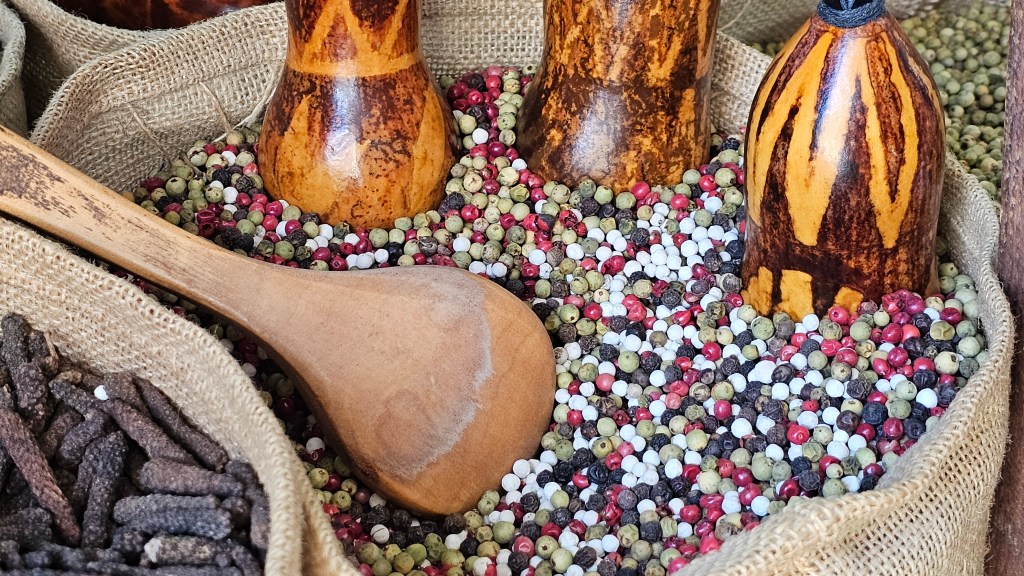
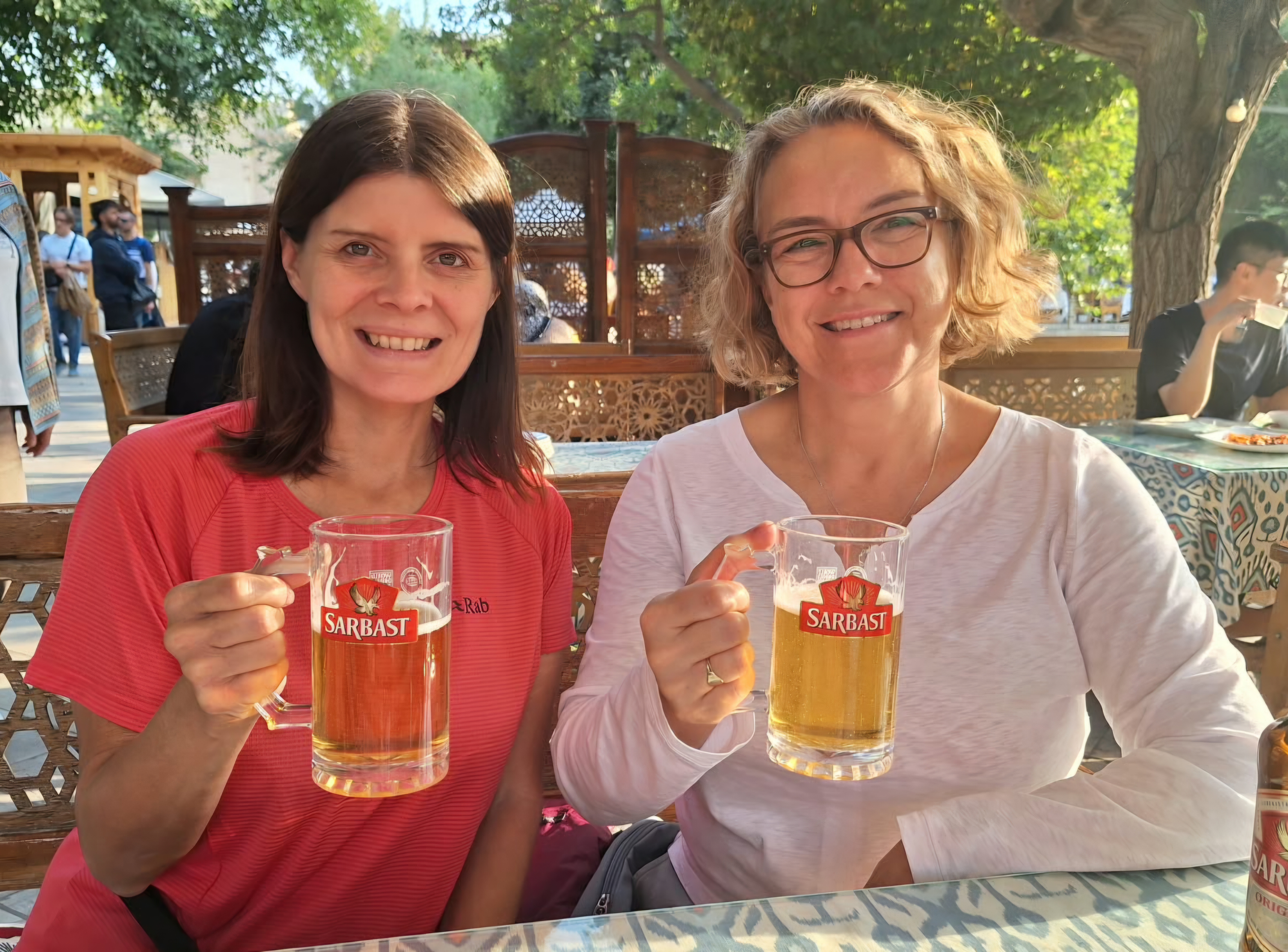
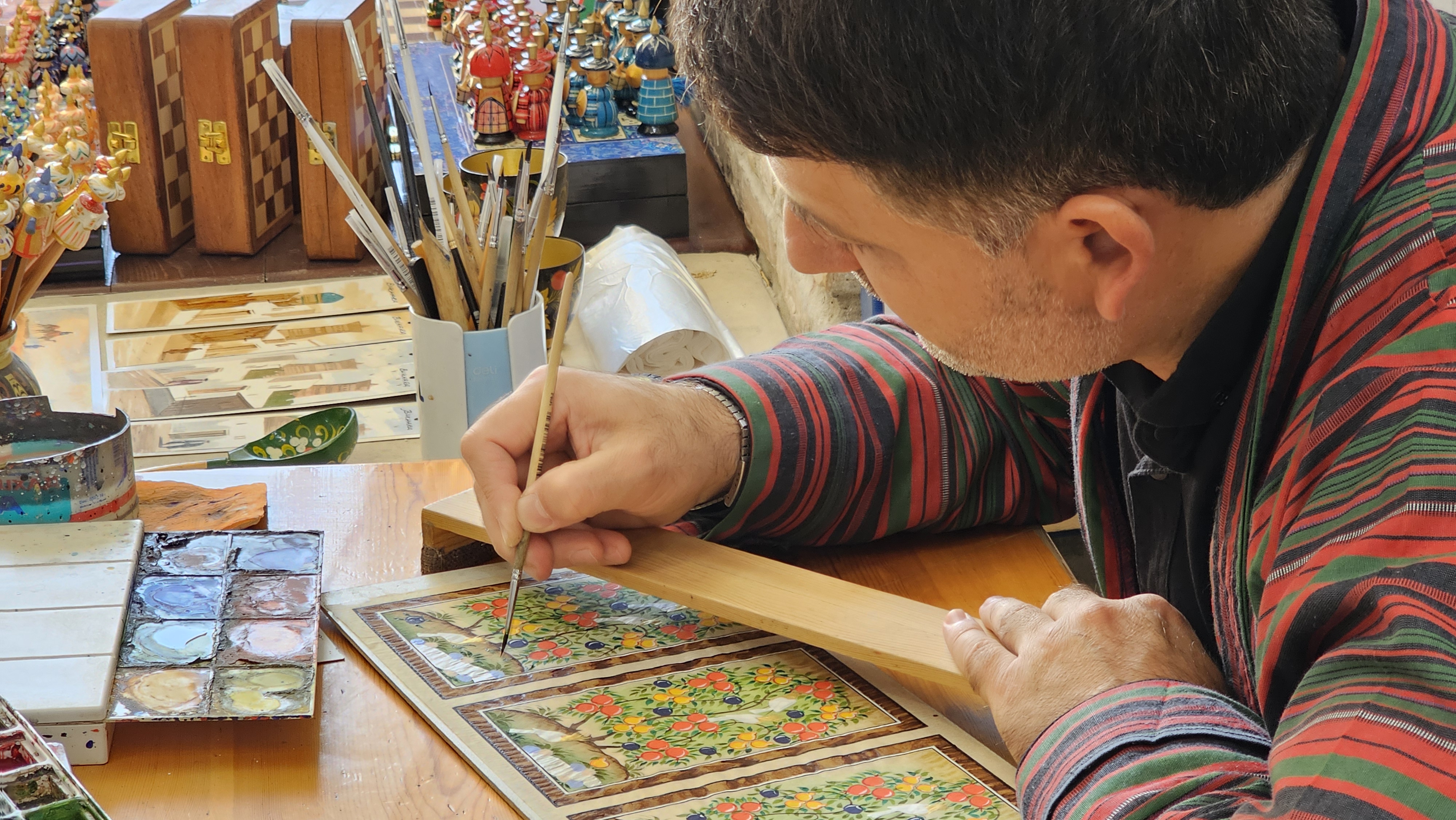
Meandering through the historic streets looking at stalls and handicrafts, meandering into a roof top coffee shop and meandering into a Lyabi-Khauz pond side bar at lunchtime.
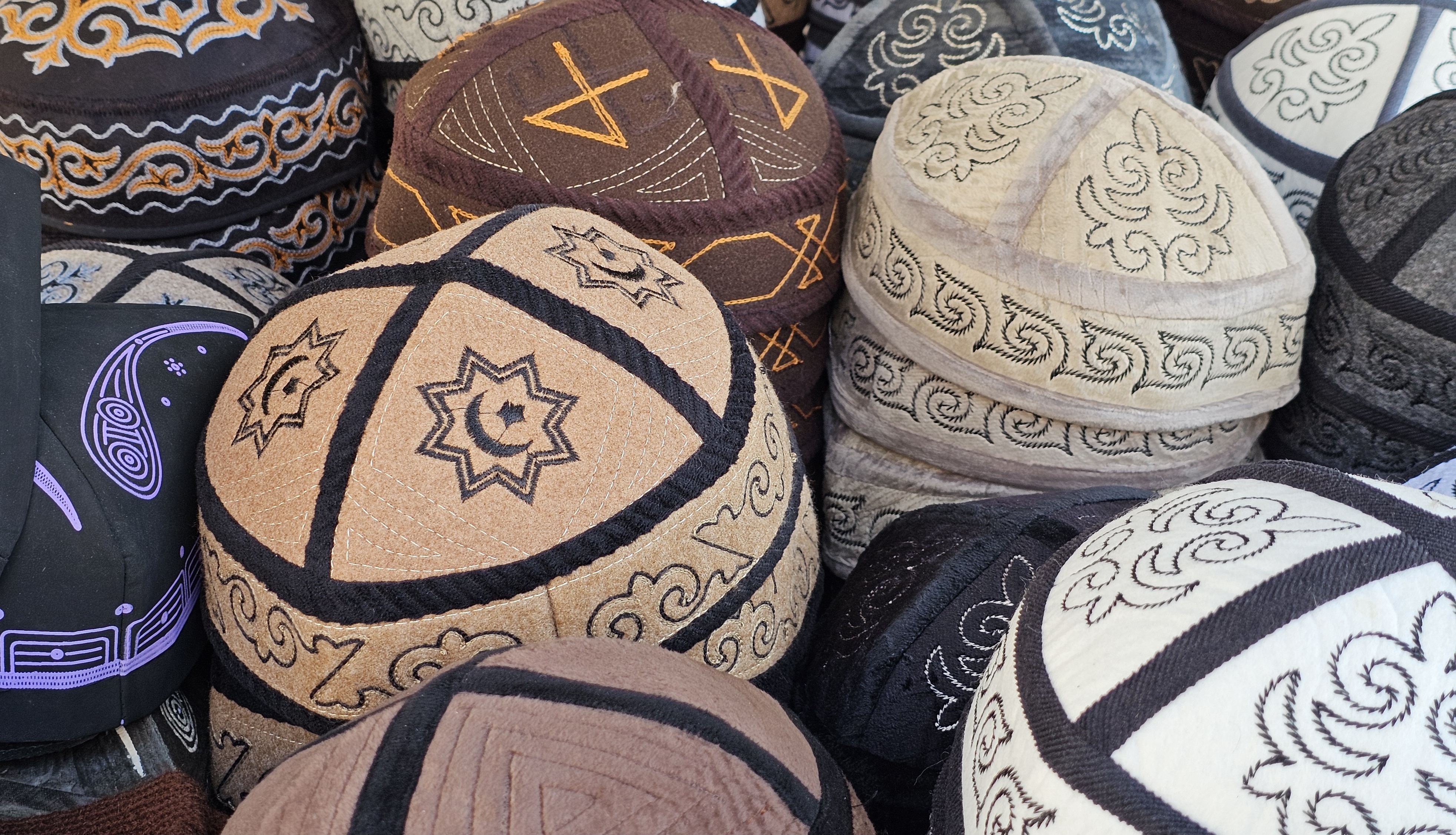
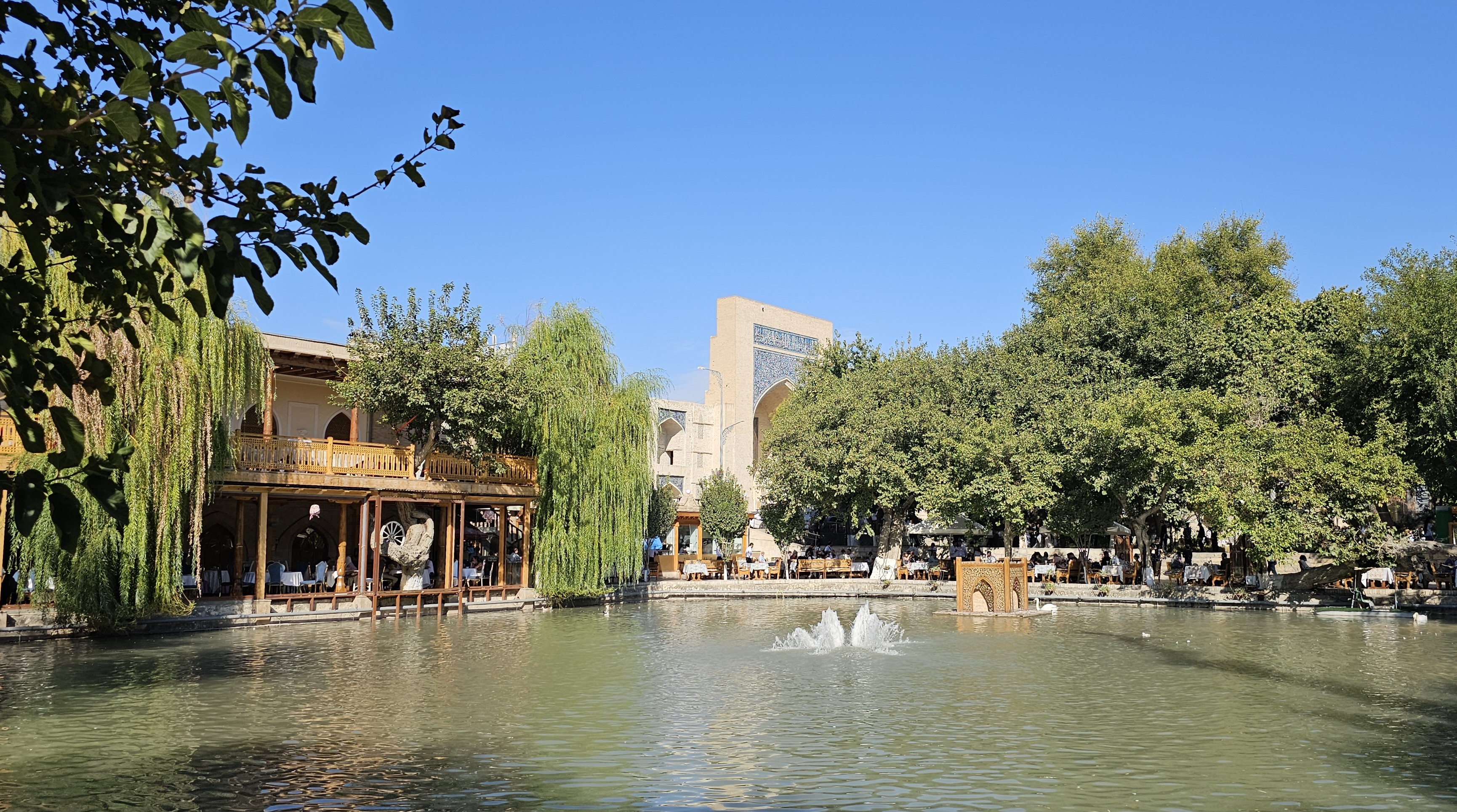
After a couple of lunchtime beers and a bite to eat, Dave and Richard went back to the hotel while Bridget, Marv and me indulged in some afternoon shopping.
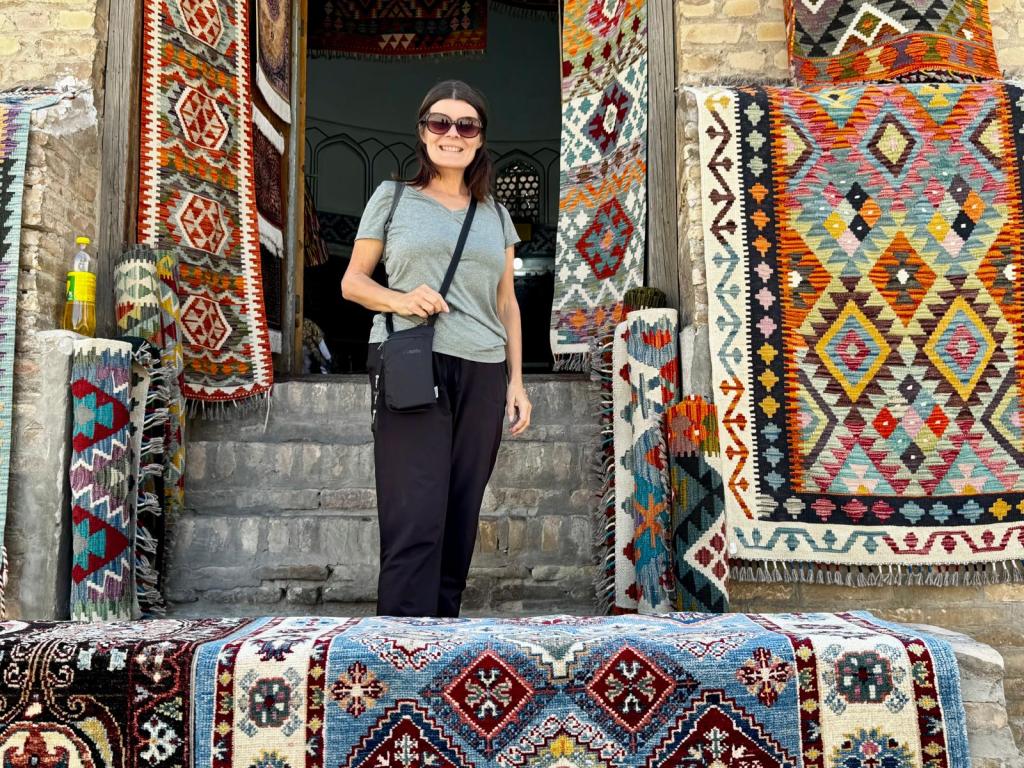
We looked at jackets, scarves and unusually for me, someone who doesn’t like shopping, I purchased some lightweight patterned ‘holiday’ trousers for just €10 per pair! And yes, cash payments in euros, USD, Uzbek som or card was generally possible.
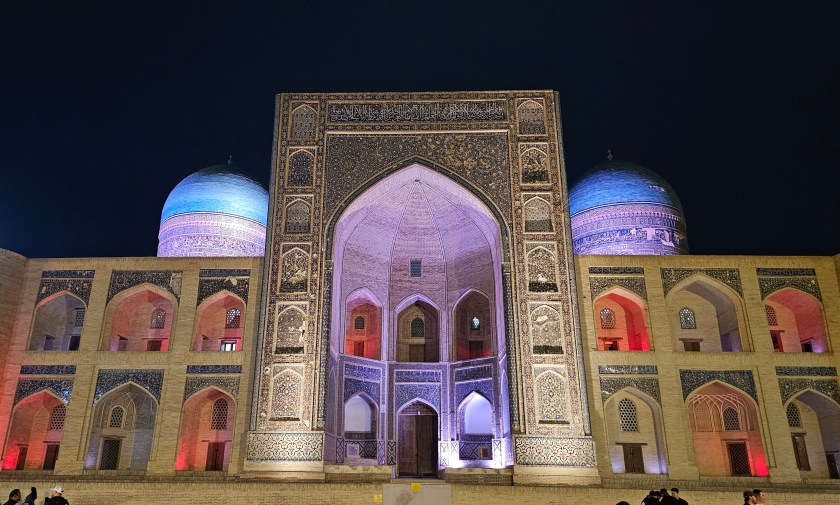
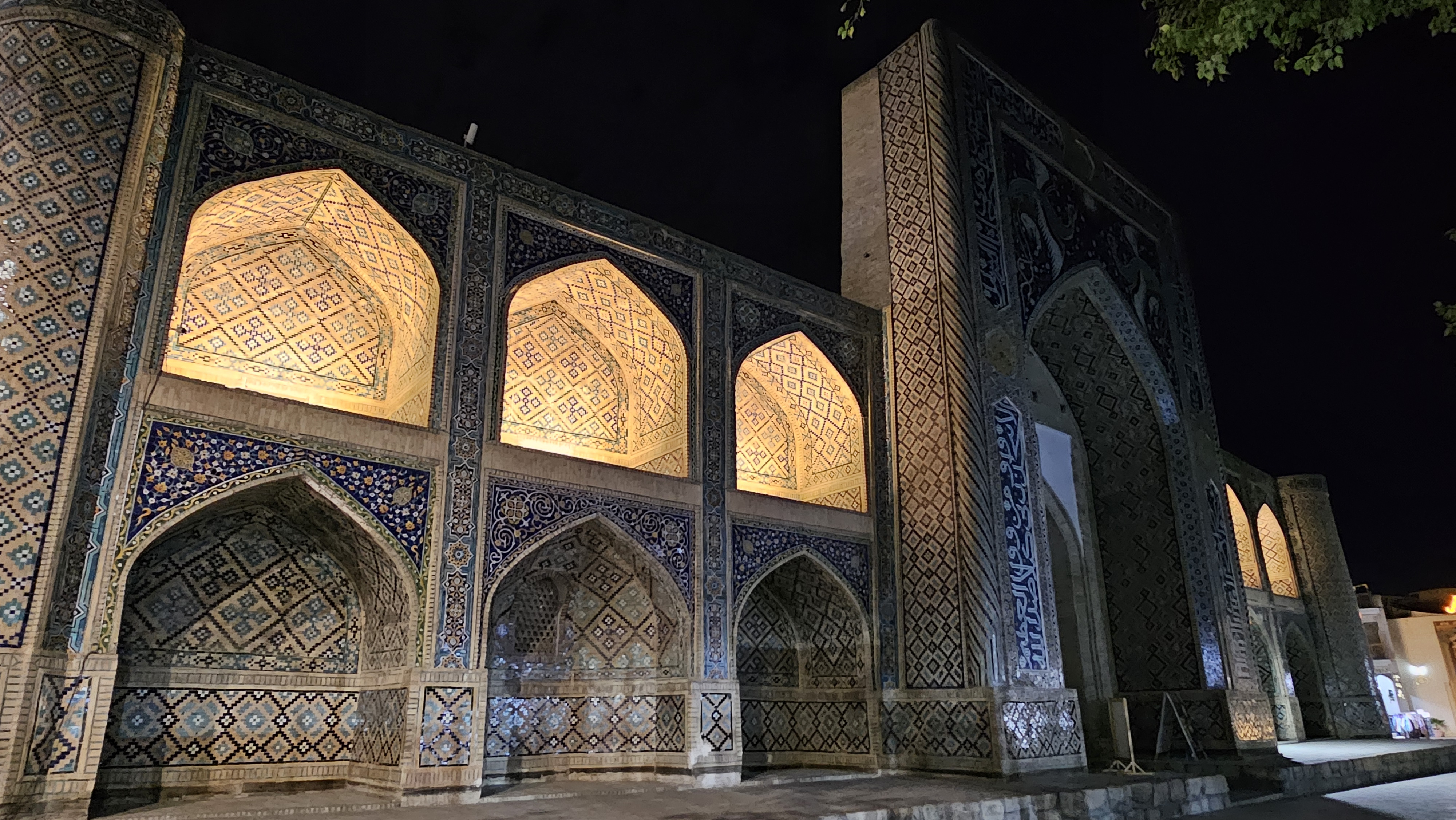
Bukhara by night…
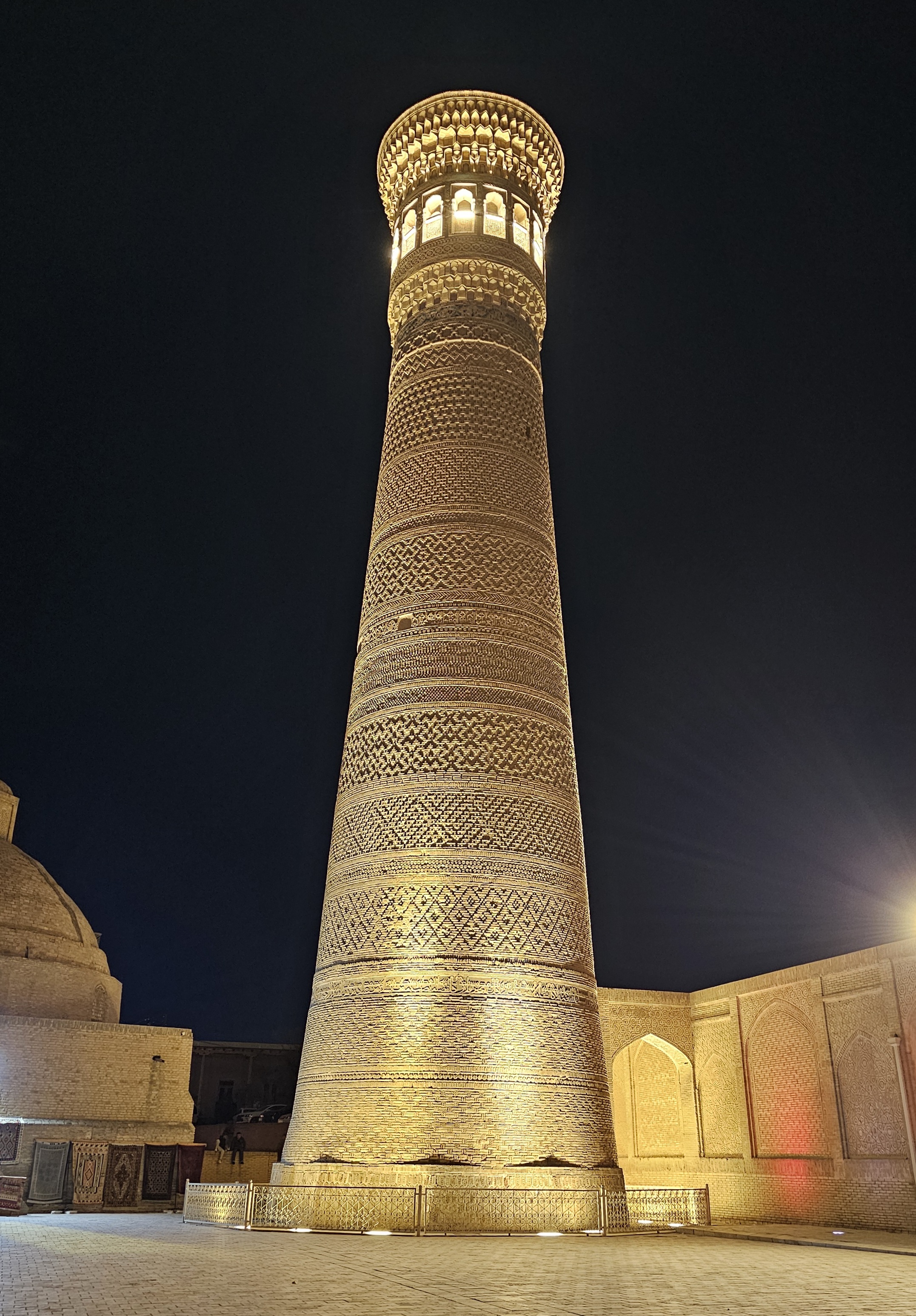
Constructed in 1127 and located in the historic Po-i-Kalyan Complex, the magnificent Kalyan Minaret holds one of the most incredible survival stories in the world. In February 1220, when Genghis Khan and his brutal Mongol hordes swept into Bukhara, they burned almost the entire city to the ground. Yet, when the warlord stood at the base of this 45-metre tower and looked up at its intricate, geometric brickwork, he was so awestruck by its beauty that he explicitly ordered his army to spare it. Because of its commanding presence in the heart of the city, it stands today as one of the very few pre-Mongol structures left in Central Asia.
Three Bukhara evening meals
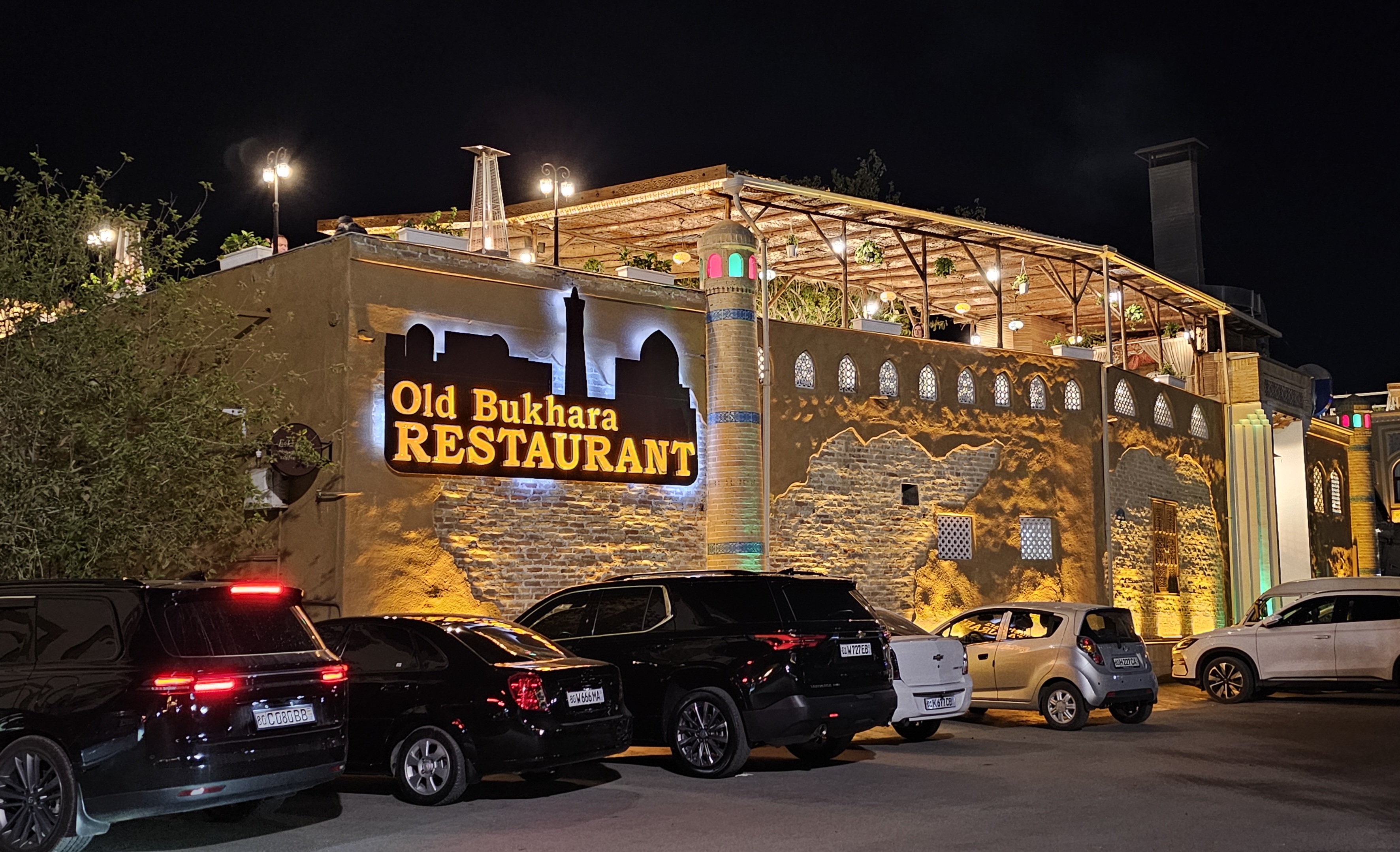
Upon our initial late afternoon arrival in Bukhara Sanjar organised our first meal, a group dinner in the popular Old Bukhara restaurant.
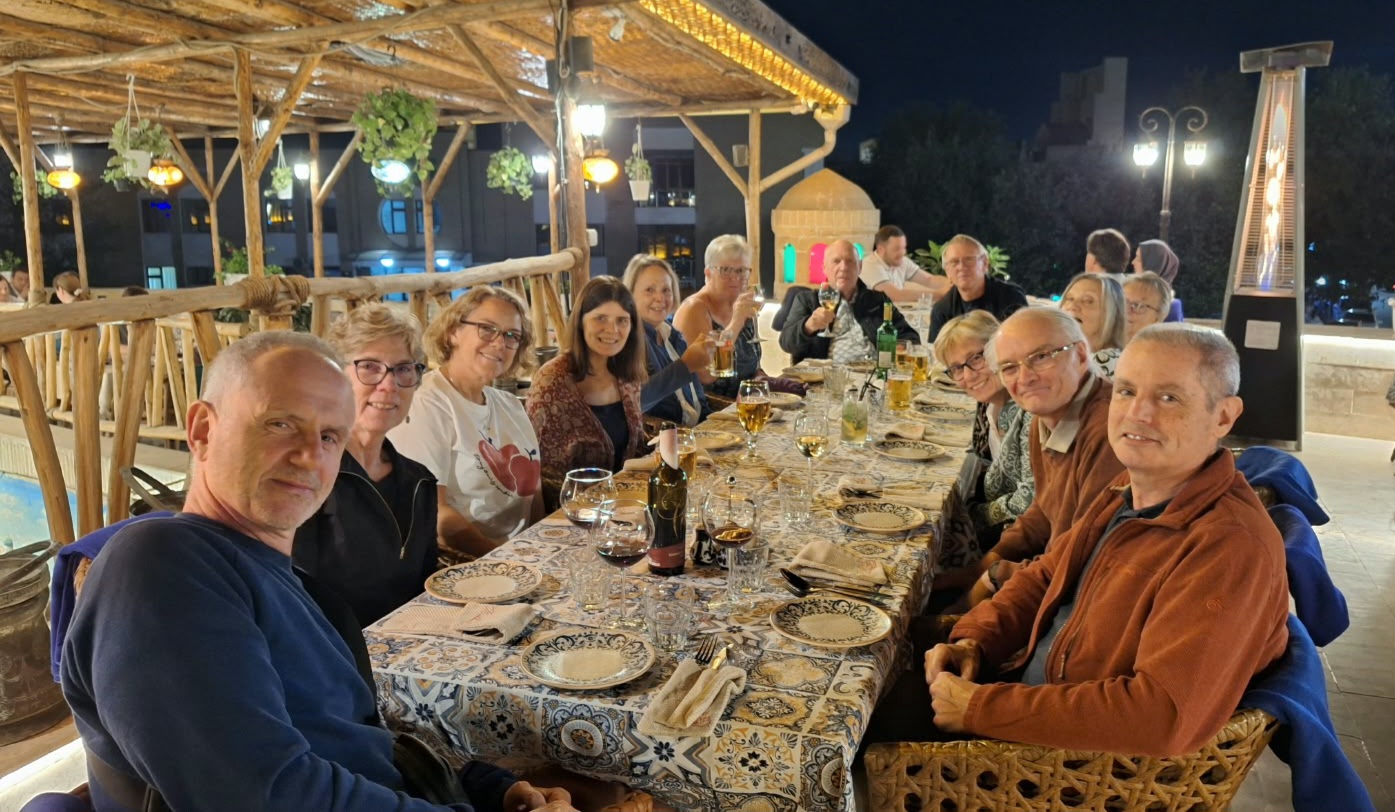
We had a table on the roof terrace dinner and tonight I had Langman with vegetables, a local Uzbek fried noodle dish.
For our second meal, a sub group of 7 of us set out in the evening in search of a restaurant and came across Zargaron with its upstairs terrace overlooking the Kalan Minaret. We hadn’t made a booking however the restaurant team made us very welcome as they hastily re-arranged indoor tables to accommodate us.
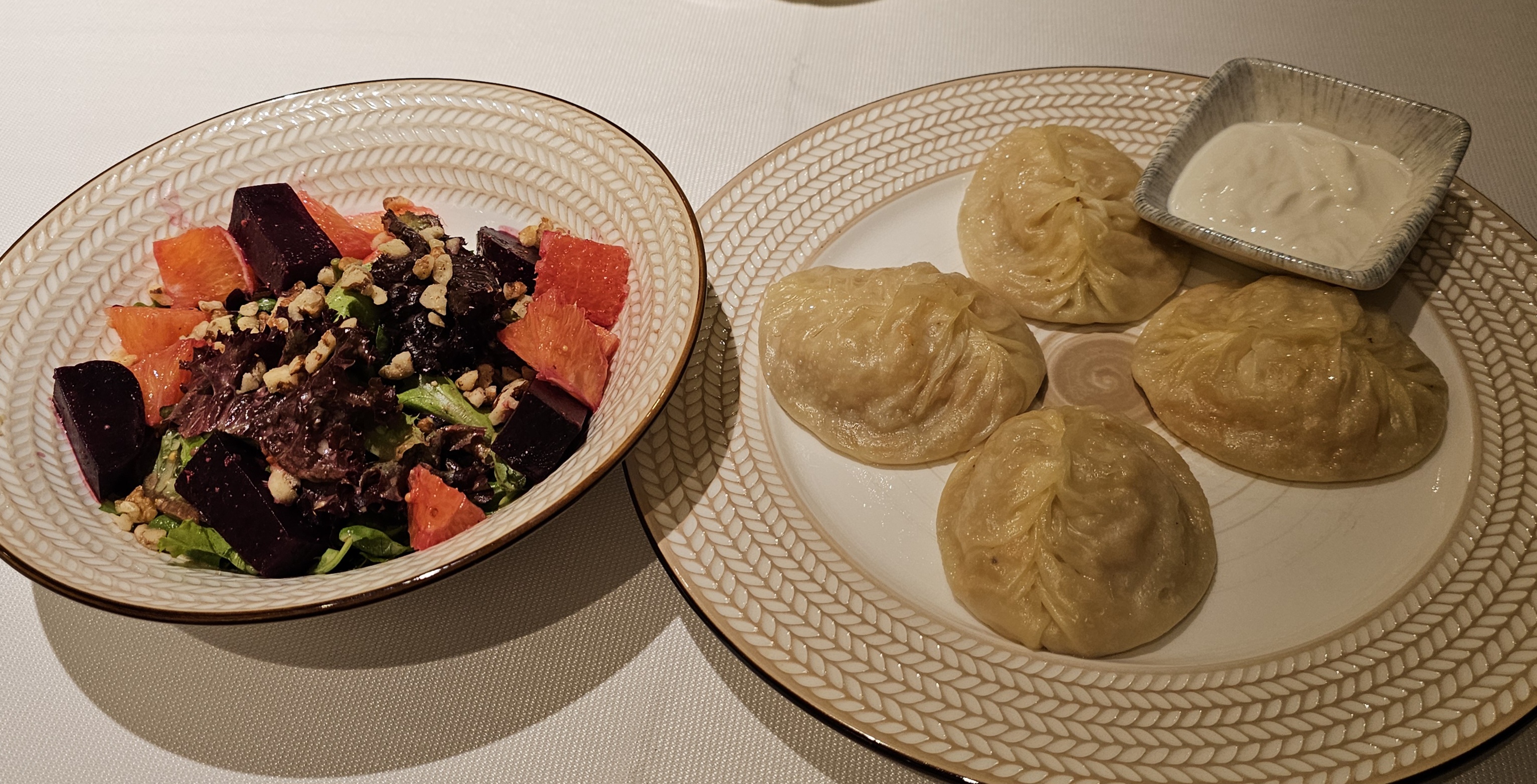
I enjoyed a glass of of delicious Saperavi red wine from Georgia, recommended by Marv who had recently visited the country – by far the best wine of the trip! I also enjoyed a fabulous salad which was called ‘Devon bagi’ consisting of baked beetroot, aromatic oil, lettuce, orange, walnuts, sun dried tomatoes, cream cheese and balsamic sauce. This was together with amazing pumpkin manti, the Uzbekistan favourite snack!
For the first time so far in the trip, all drinks arrived simultaneously and then everybody’s food arrived together, all hot and with not a single delay. The bill at the end had already been separated so everyone paid for what they ordered and you could pay by cash or card. My bill came to just £14.38 for the salad, the dumplings and a glass of wine and this included a tip. Everything about this restaurant was perfect, my favourite meal in Uzbekistan so far.
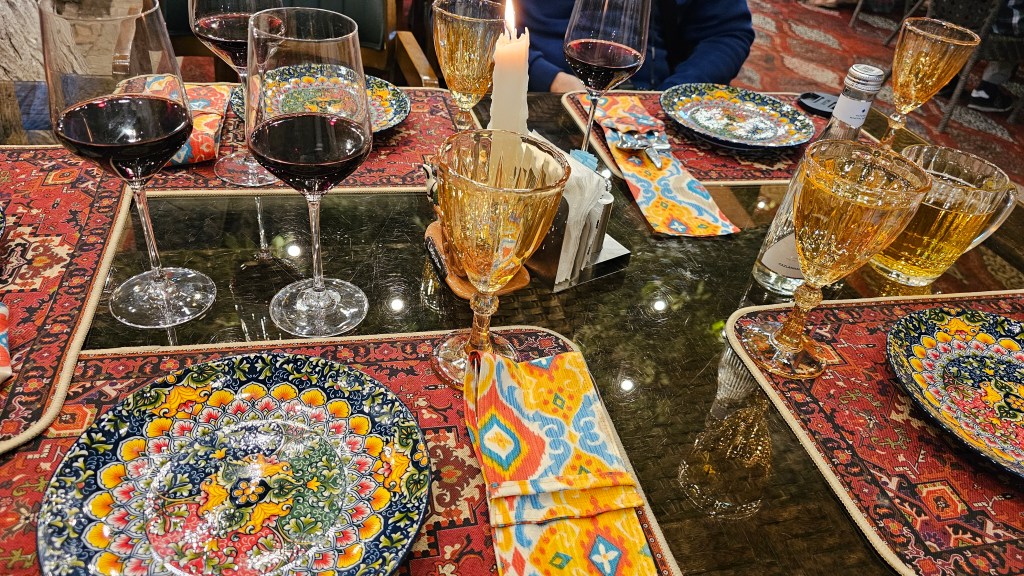
For our third evening 5 of our group (Bridget, Marv, Richard, Dave and me) visited the colourful and atmospheric Aladdin’s Lamp restaurant. Tonight I had Fried Langman, the traditional Uzbek noodle dish again, and grilled vegetables. 4 of us shared a bottle of local red wine which wasn’t too bad.
Throughout the meal in Aladdin’s Lamp, we experienced traditional Uzbek music and dancing.
Accommodation
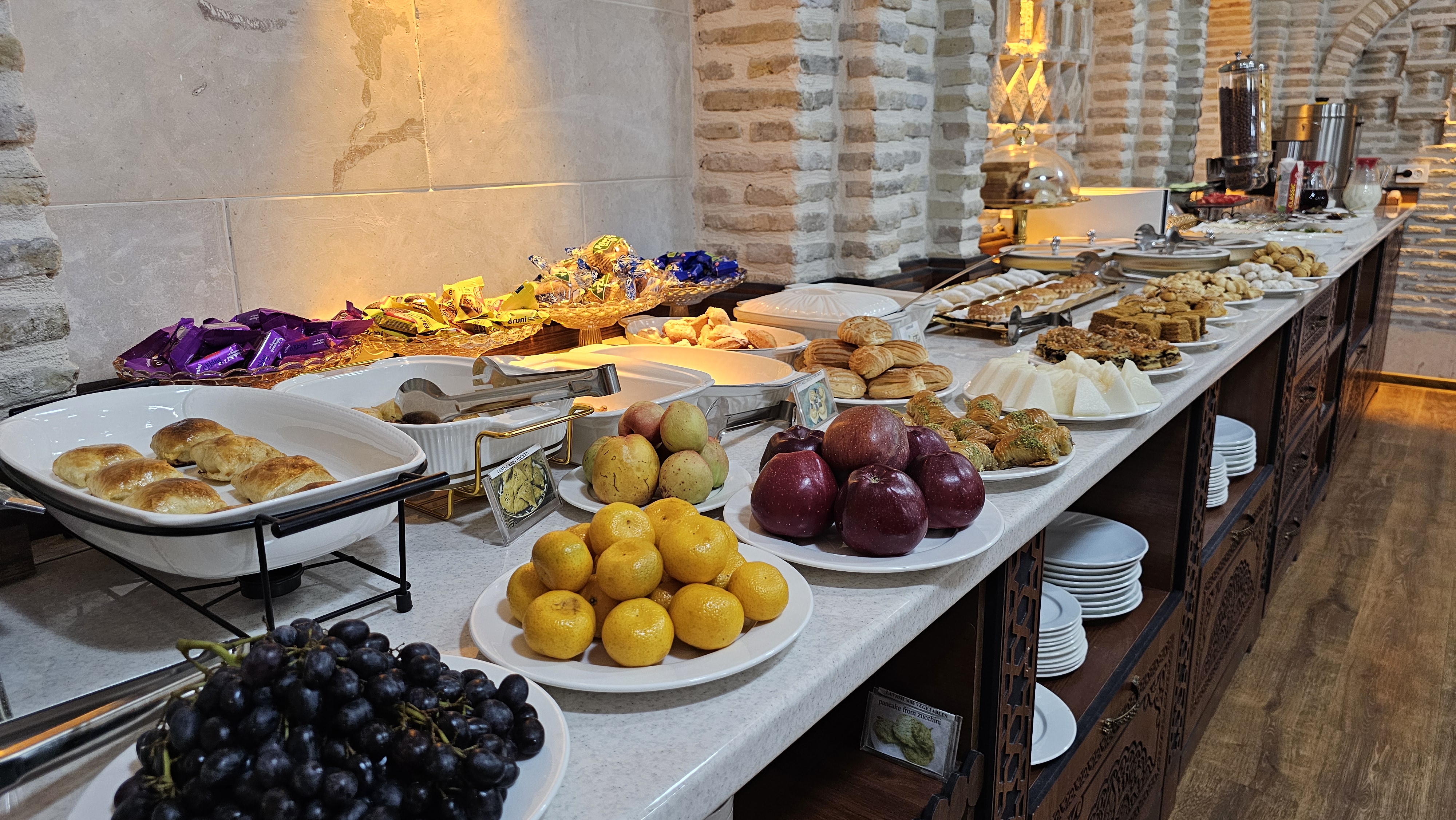
We spent 3 nights in the Royal Bukhara hotel which had a boutique feel. Upon arrival we were warmly welcomed with drinks and a range of snacks, all set out along the reception desk. Bridget and I shared a large and comfortable twin room and for each of the 3 mornings, the fresh and varied breakfast was delicious.
Summary
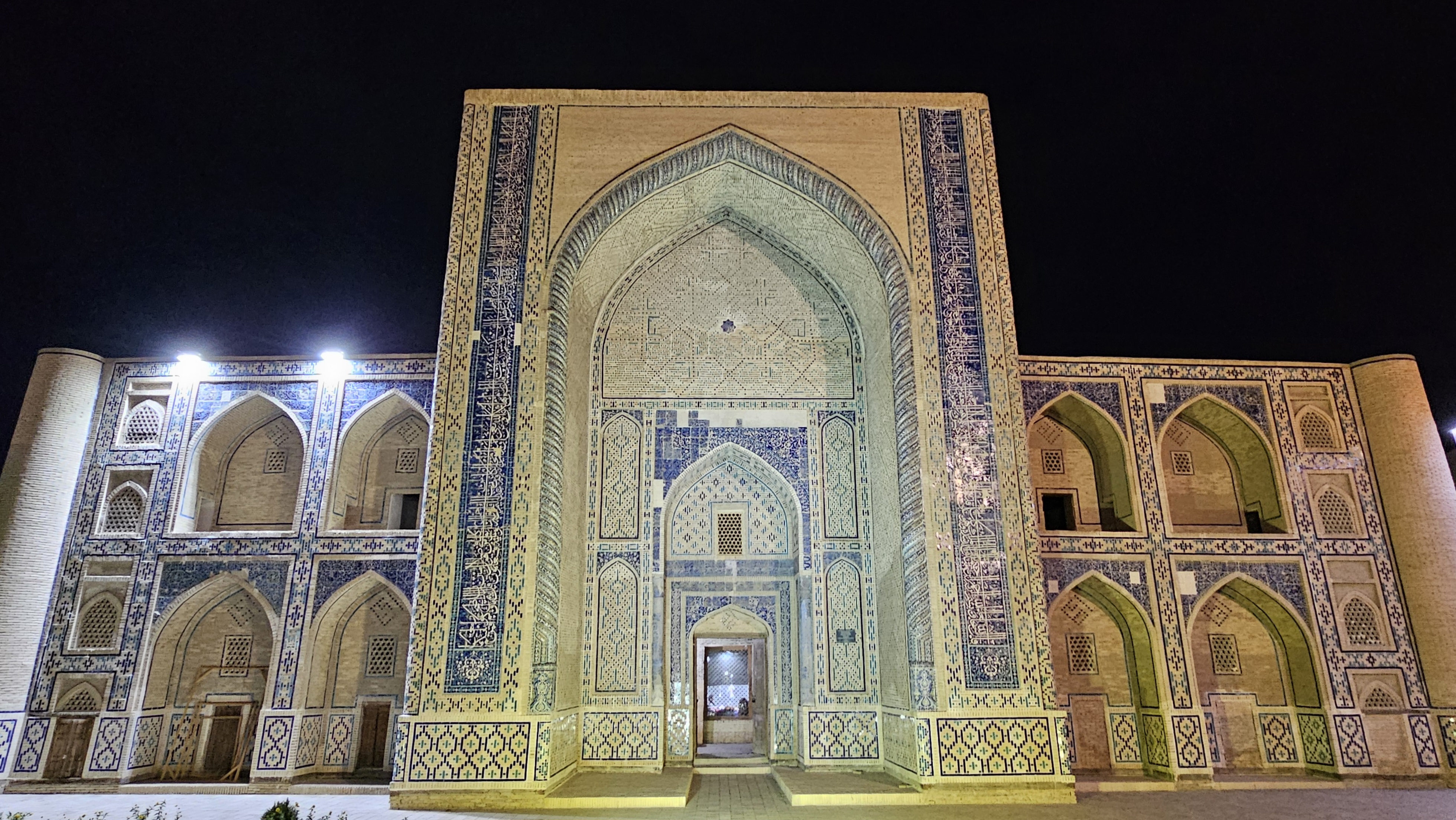
Wow—it was truly incredible to see such a rich and turbulent history brought to life in yet another spectacular city! As a larger, more sprawling destination, Bukhara had a completely different feel to the compact, walled oasis of Khiva. While Khiva felt like an intimate, open-air museum frozen in time, Bukhara successfully balances its ancient 2,500-year-old soul with the hum and energy of a living, breathing city. Its UNESCO-protected historic centre is a wonderfully walkable maze where majestic turquoise domes rise directly over bustling local neighbourhoods.
Now, however, I am looking forward to escaping the urban hustle with a couple of days tucked away in the mountains at a family homestay. It does mean gearing up for another long bus journey, but it’s the perfect opportunity to sit back, sort through my mountain of photos, and continue drafting these Uzbekistan blog posts!

