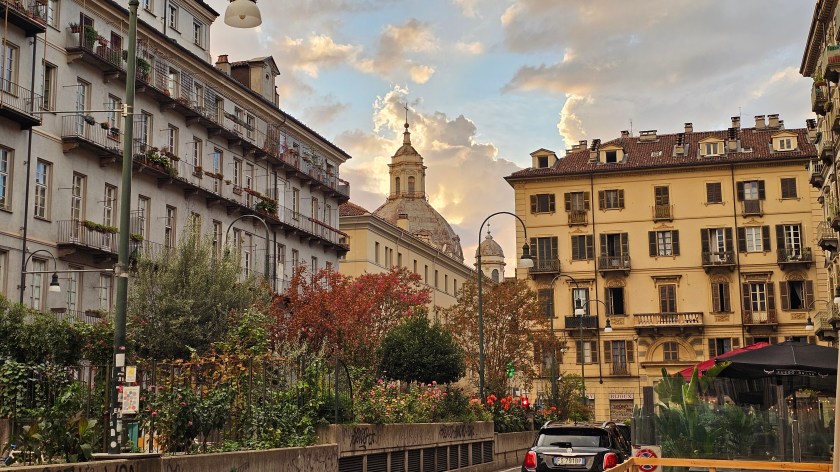
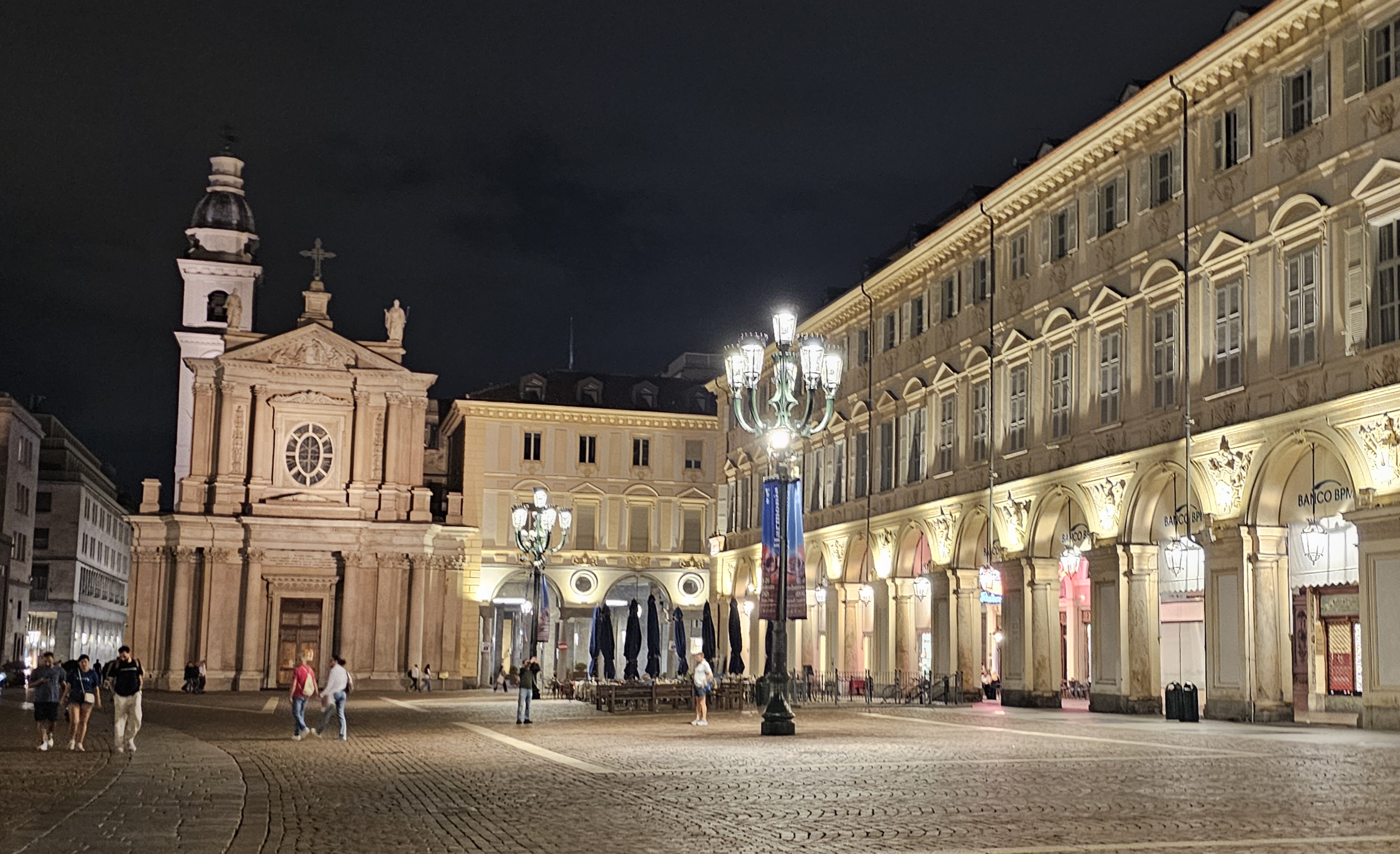
Located in north-west Italy, the city of Turin (or Torino, as the locals call it) boasts a fascinating legacy as the nation’s original capital before the seat of government moved to Florence and then Rome. Now the primary cultural and business centre of the Piedmont region, it is a city rich in history, architecture, and vibrant local life.
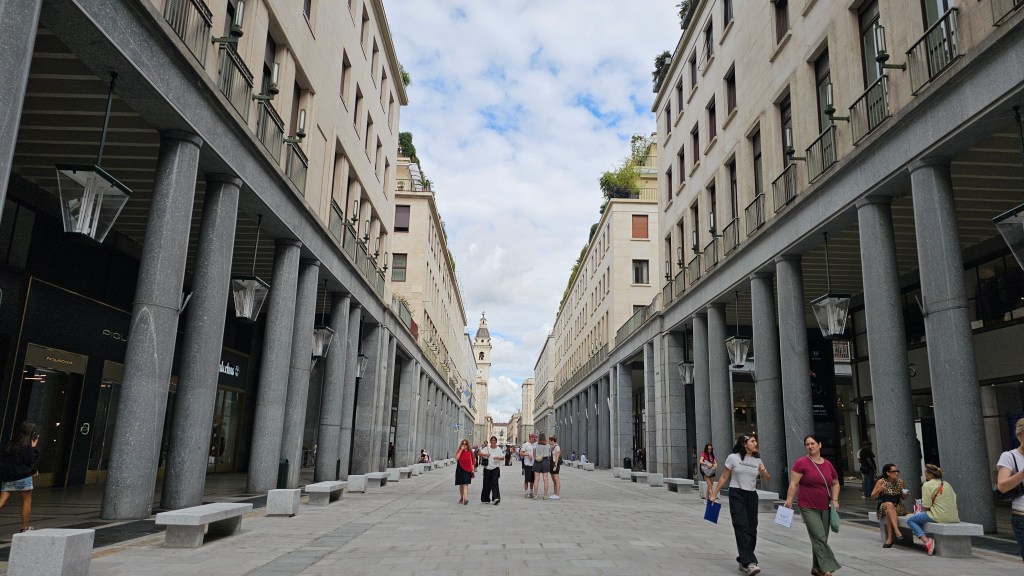
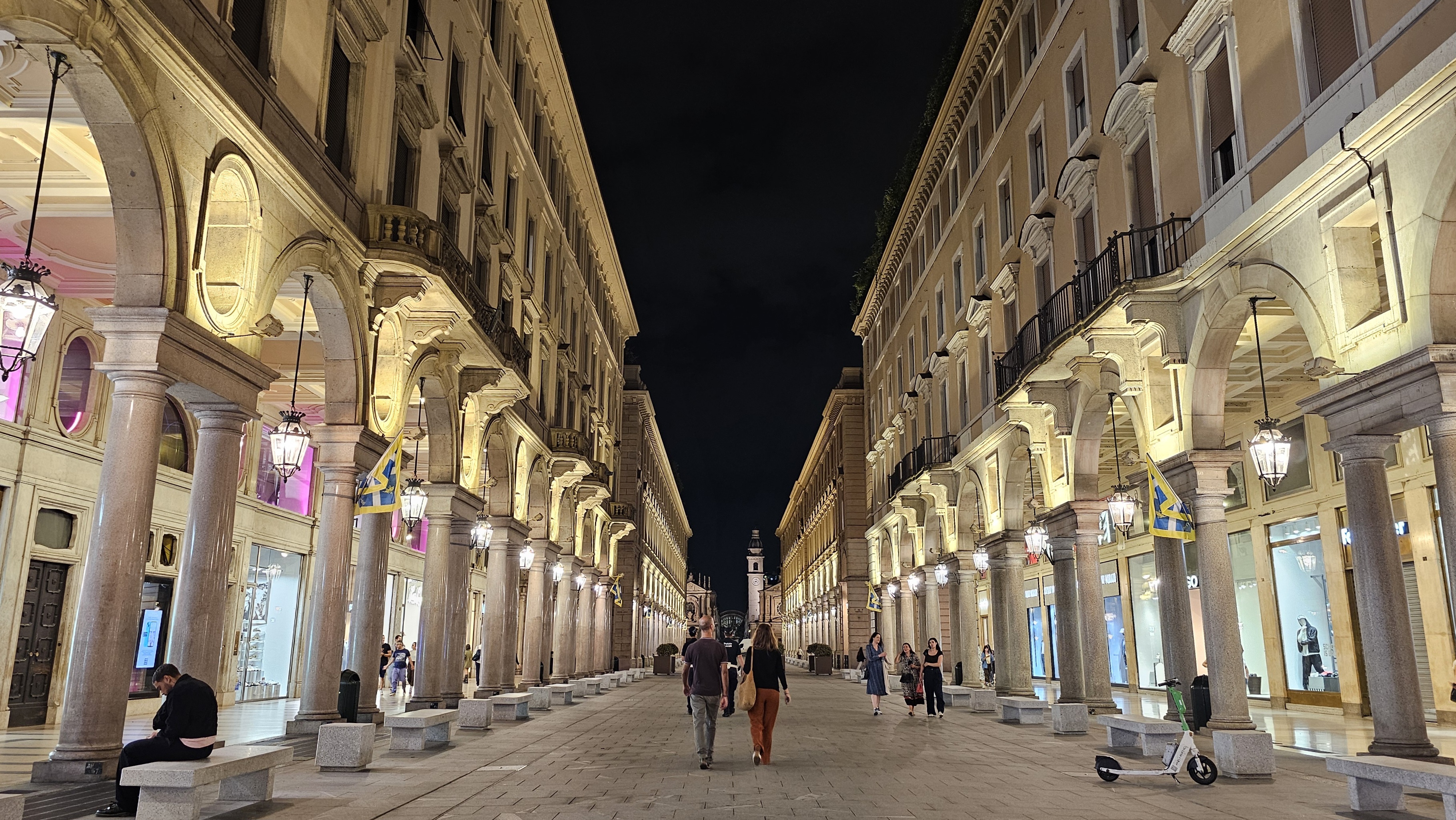
As Italy’s fourth-largest city, Turin is a treasure trove of art galleries, world-class museums, lush gardens, and historic theatres. Much of its grand architecture and expansive public squares, or piazzas, were constructed during the 17th and 18th centuries. Strolling through the city was a breeze thanks to the magnificent, elegant porticoes lining Via Roma, which perfectly design the streets to provide welcome shade from the sun and shelter from the rain!
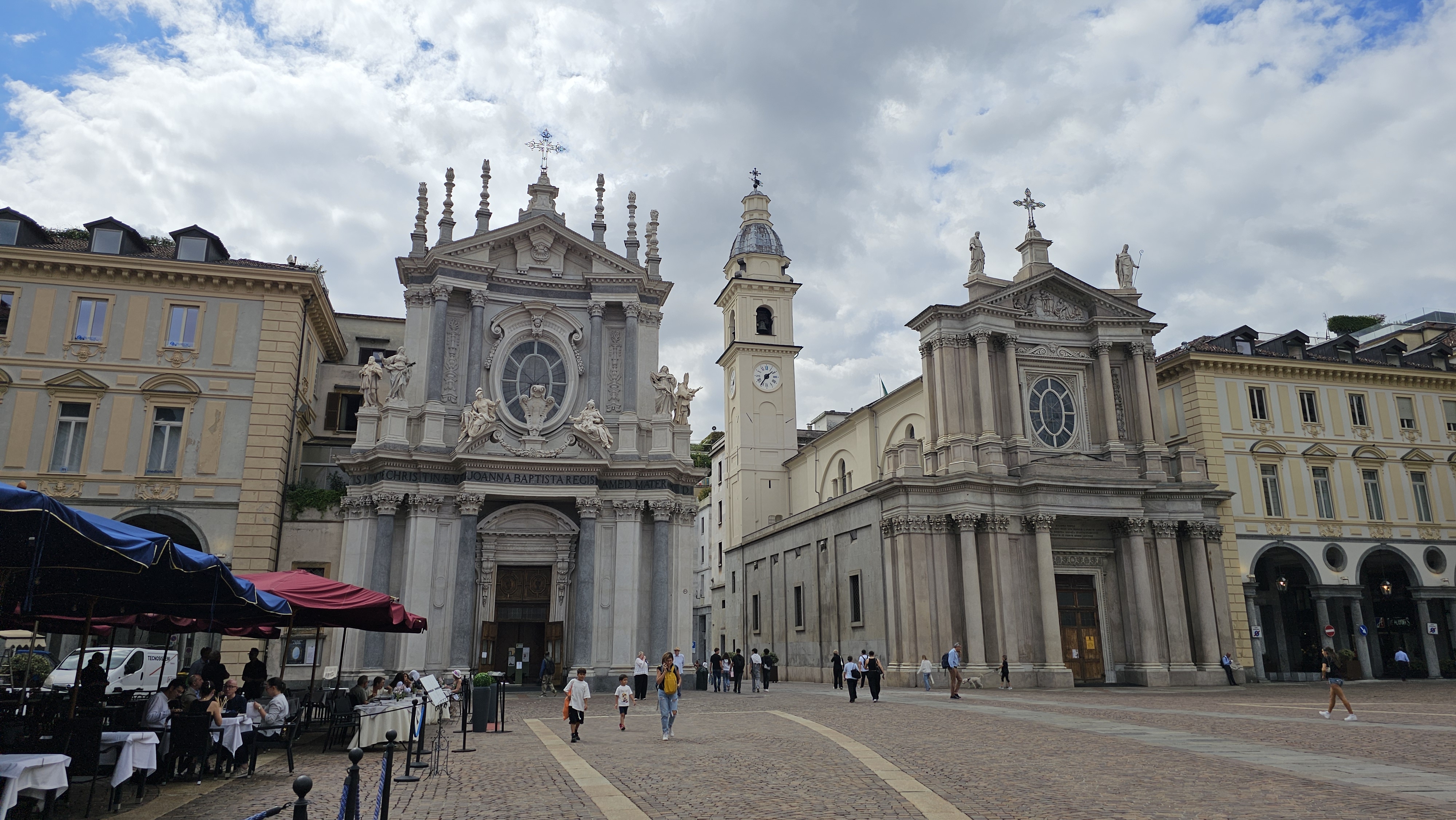
Our most recent stint on the Via Francigena—a spectacular 208 km journey beginning in Lausanne, Switzerland, climbing over the Great St Bernard Pass, and winding into northern Italy—concluded with a wonderful two-night stay in Turin.
We made our way into Turin from Châtillon using a combination of a train and a replacement bus, travelling alongside our friends Roza and Russell. Since we had just arrived, we mutually decided to part ways for the rest of the day, the evening and the following morning so everyone could enjoy some independent exploring.
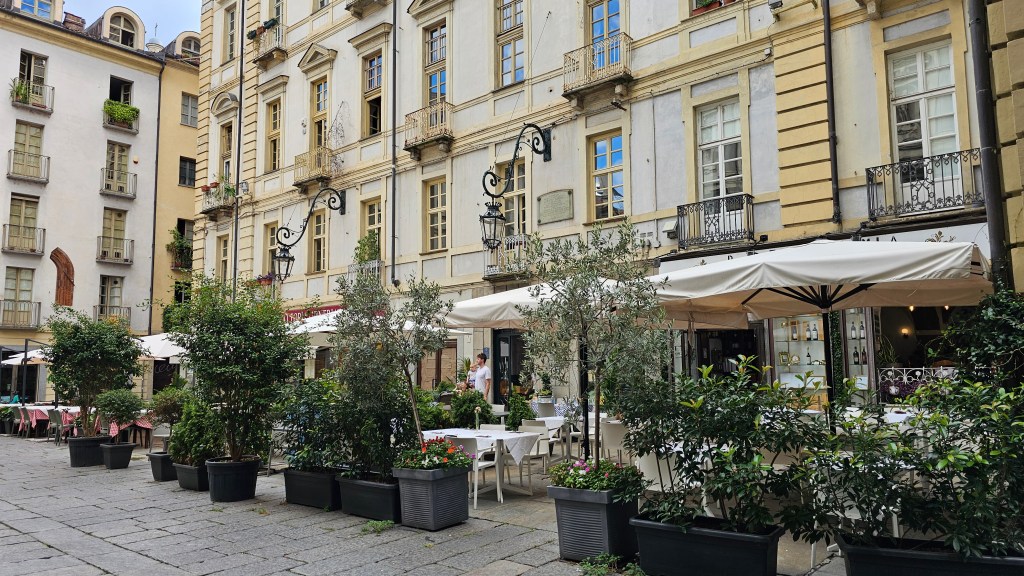
As we had arrived in Turin at lunchtime we were too early to check into our hotel. Chris and I got ourselves oriented with a quick ‘near me now’ google, left our main backpacks in the hotel left luggage and set off for a short walk in search of some food.
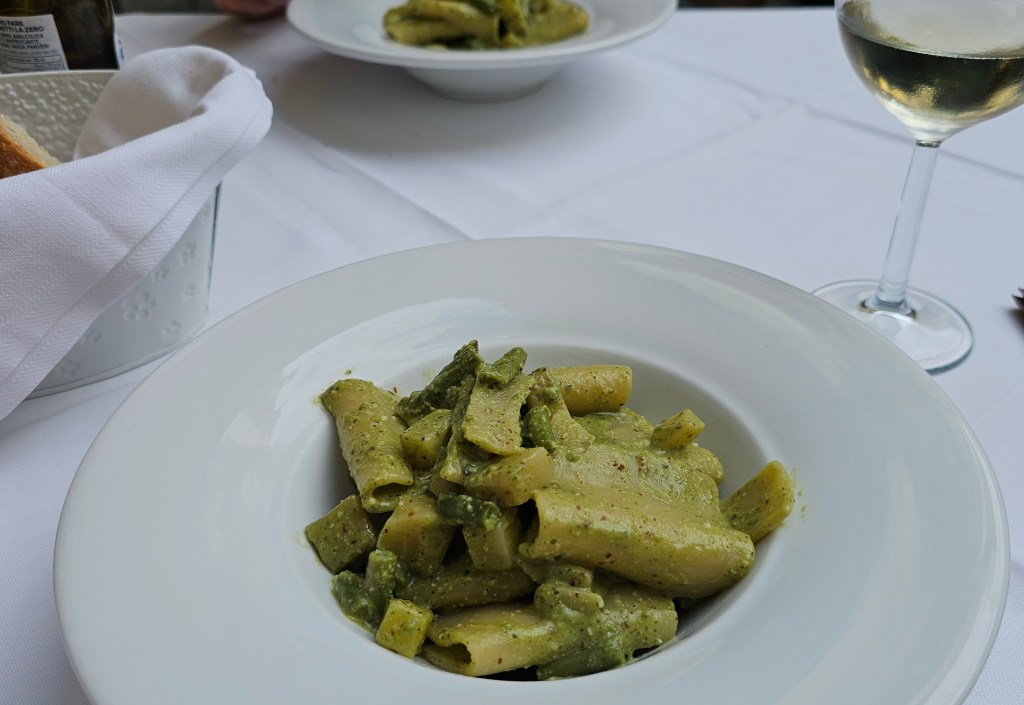
From our centrally located hotel we walked straight through Via Roma, the main wide pedestrian street which cuts through the heart of the city. Before reaching the Royal Palace we turned towards the Quadrilatero Romano district and came across a charming little restaurant called Bottega Mia.
We both selected ‘Paccheri with pesto, potato and green beans’ which was delicious and a perfect amount for lunch. I enjoyed this together with a dry white wine called ‘Calice Arneis’ from the local Piedmont region of northern Italy. We had not tried Paccheri pasta before. It is like a large flat tube and comes from the Campania region of Italy.
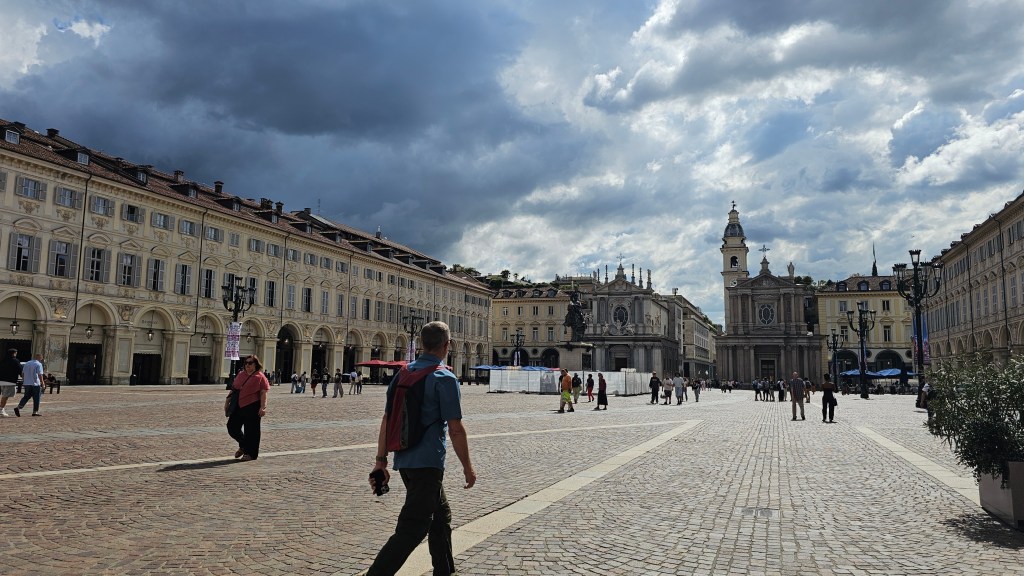
After lunch Chris and I walked back to the hotel to check into our room at 3 pm. Chris stayed in the room resting while I set out to explore a bit more of the city.
Despite some dark clouds looming, the weather remained dry and sunny and around 24 degrees for the rest of the afternoon.
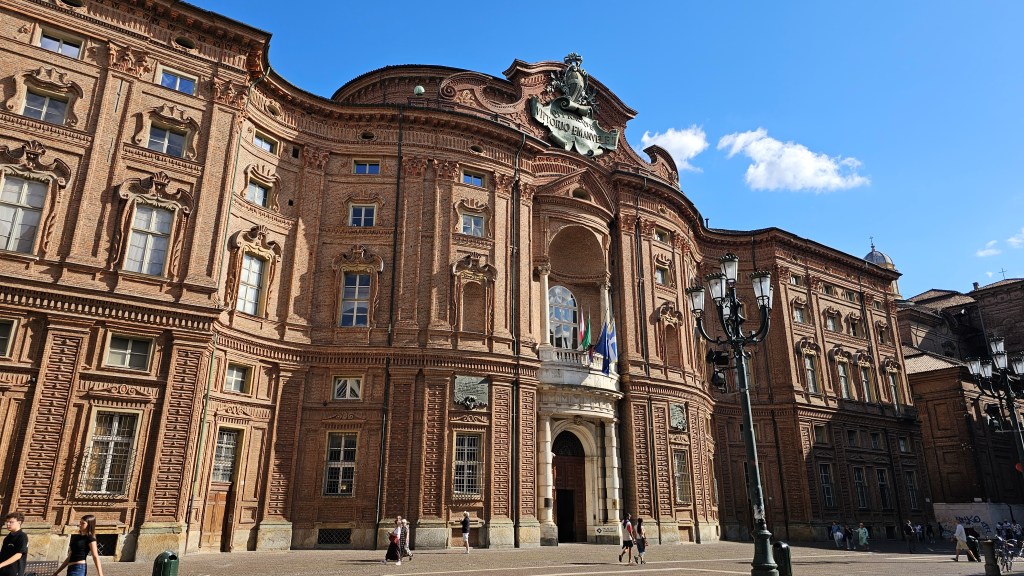
Piazza Carignano is an elegant baroque pedestrian square where the Palazzo Carignano can be found. Its unique brick facade was designed in 1679 and was the location of the first parliament of Italy in 1861.
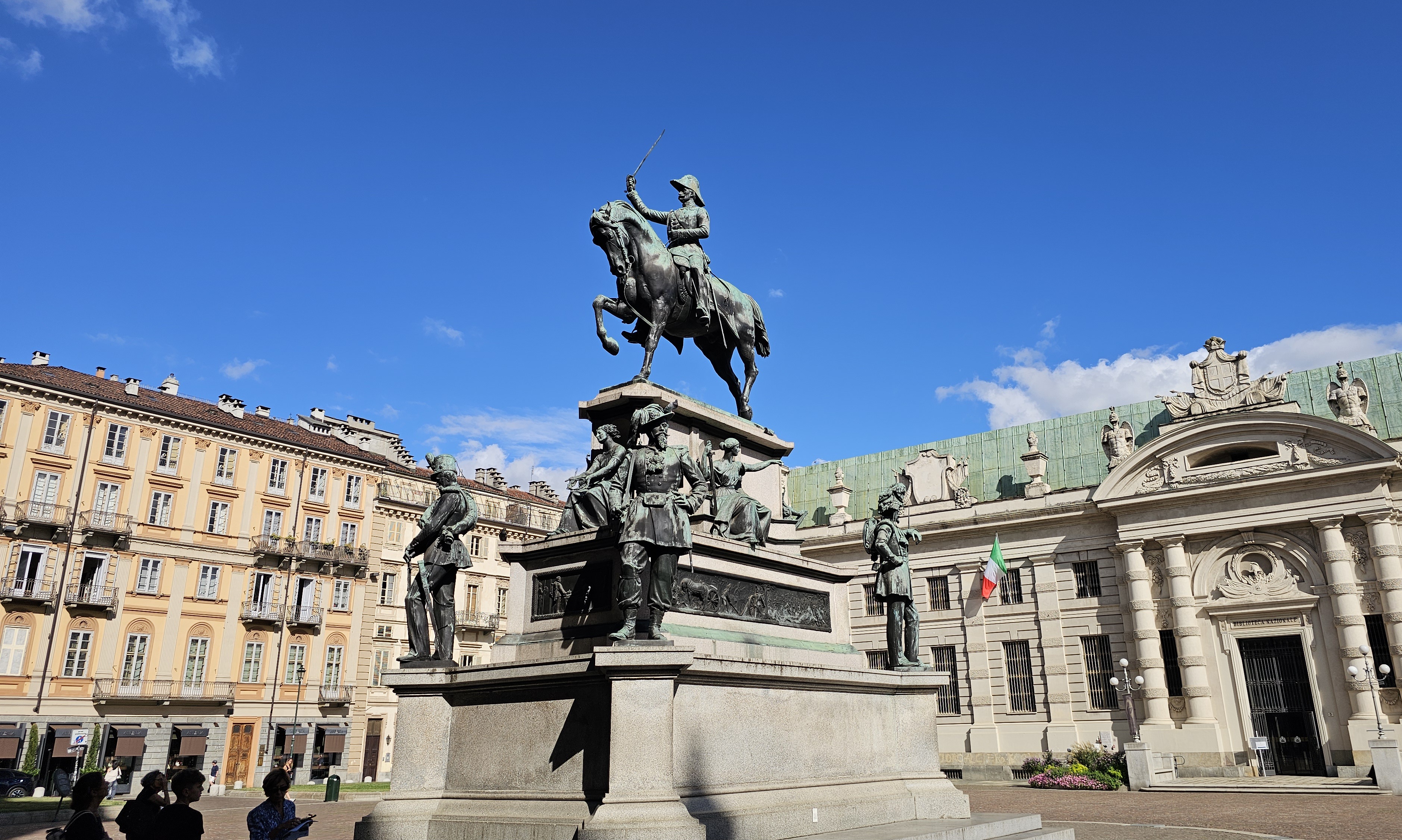
The Piazza Carlo Alberto contains a monument of King Carlo Alberto who ruled the Kingdom of Sardinia from 1831 to 1849. Also known as ‘Charles Albert’ Chris and I went on to learn more about him during our tour of the Royal Palace the following day.
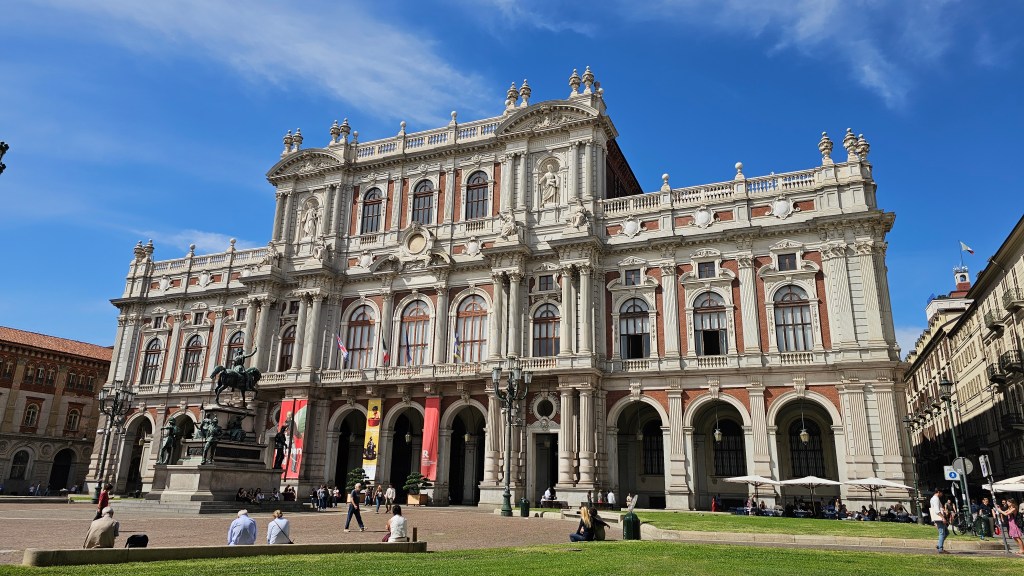
The grand building above is the National Museum of the Italian Risorgimento which means the Italian Unification. This refers to the 19th century political and social movement which united separate states of the Italian peninsula to become one Italy (more on this tomorrow too…)
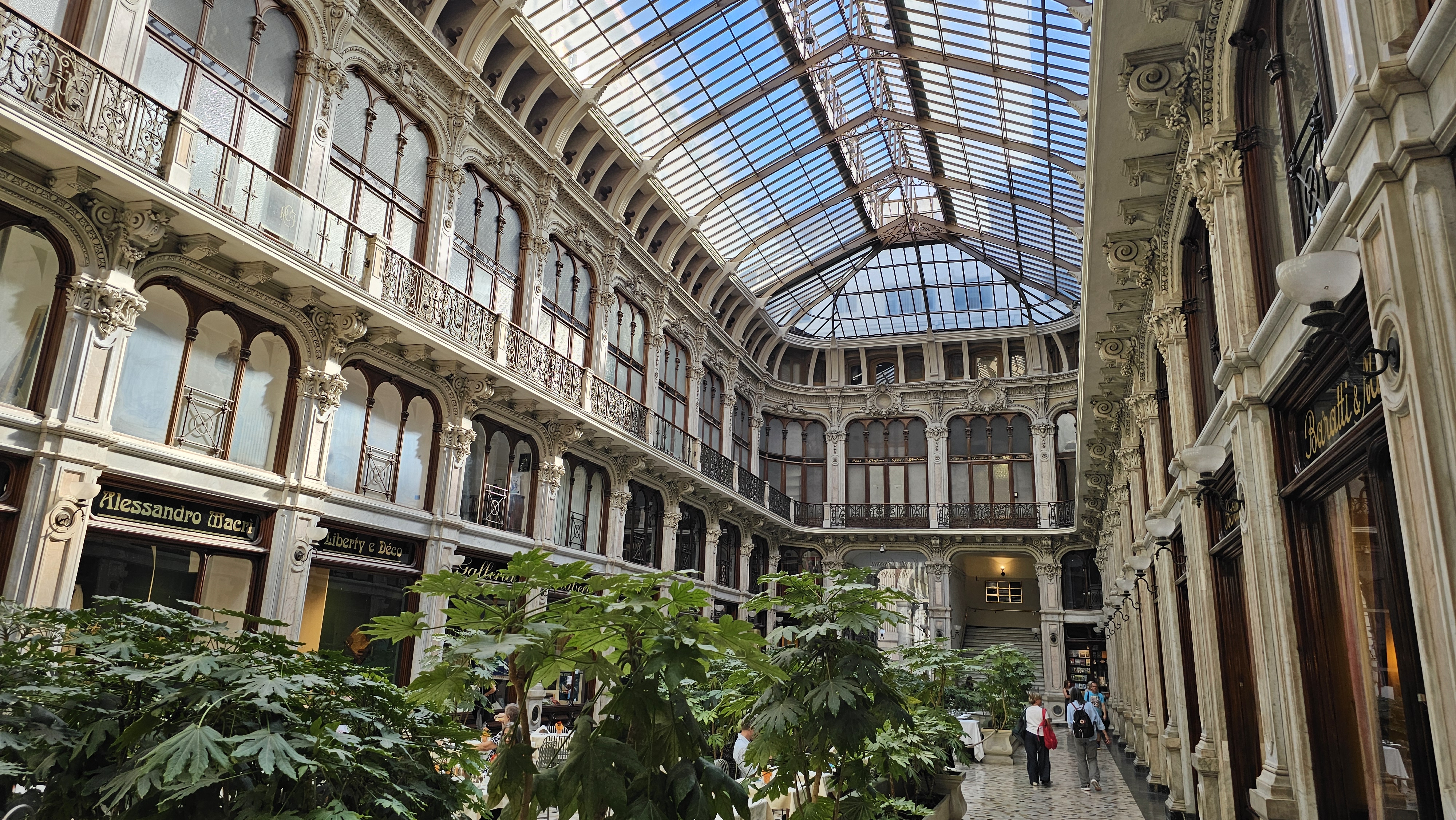
Featuring a high glass-and-iron vaulted ceiling the historic Galleria Subalpina was opened in 1874 as a shopping arcade. Today it contains a famous café and pastry shop called Baratti & Milano which sells a local speciality drink called ‘bicerin’. Bicerin is made with layers of hot chocolate and espresso coffee and topped with whipped cream and originates from the local Piedmont region of Italy. This is something we didn’t get to try while in Turin.
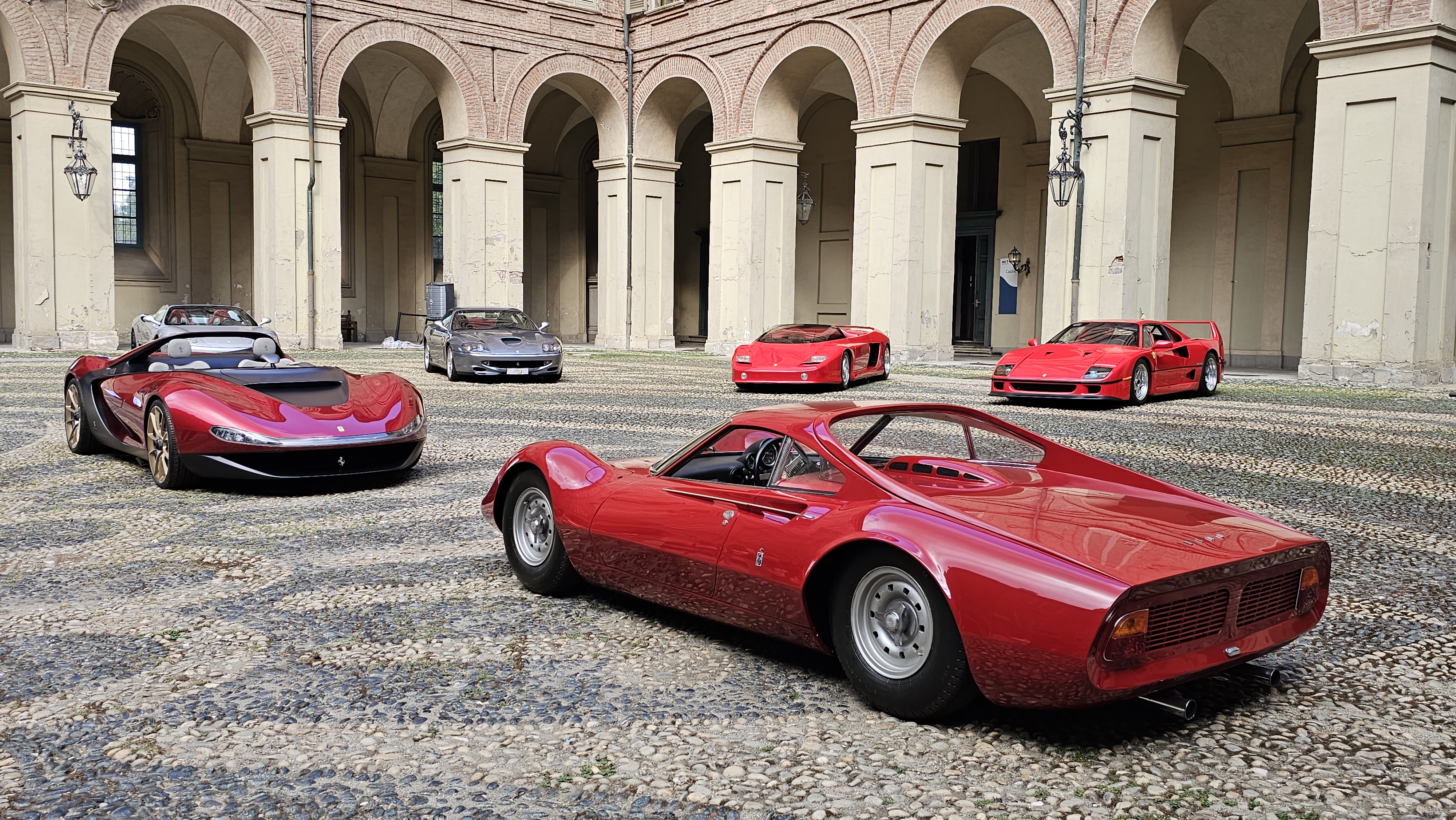
Our time in Turin coincided with the Turin Motor Show! While on my solo walkabout, I wasn’t aware of this until I approached the large palace square and the inner courtyard and came across a significant exhibition of expensive, flashy cars which included Ferraris, Lamborghinis, Porsches and others.
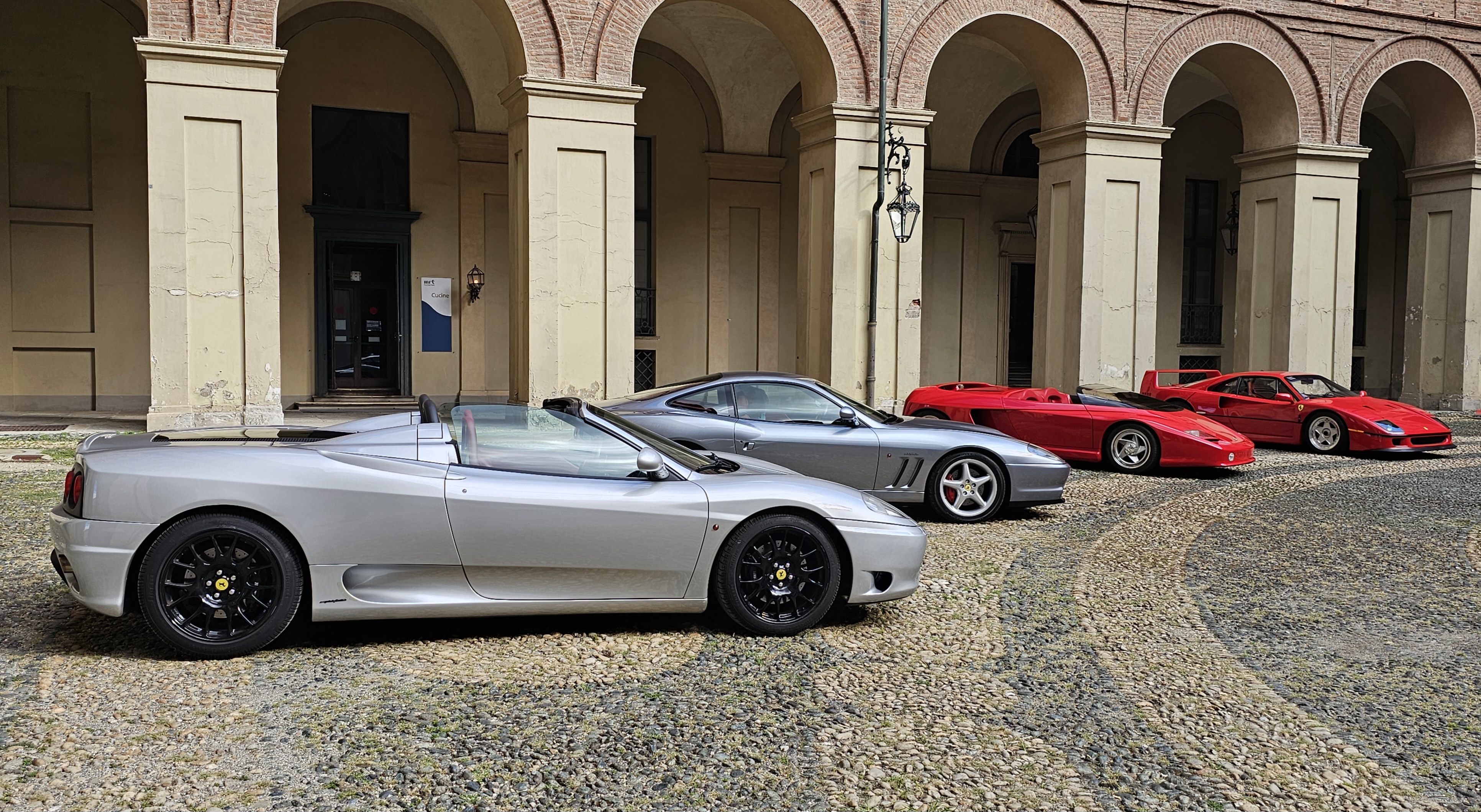
The Turin motor show is a free, open air exhibition and on this Thursday afternoon things were well under way in preparation for the weekend.
I noticed lots of public interest combined with a good deal of security as the cars were being arranged.
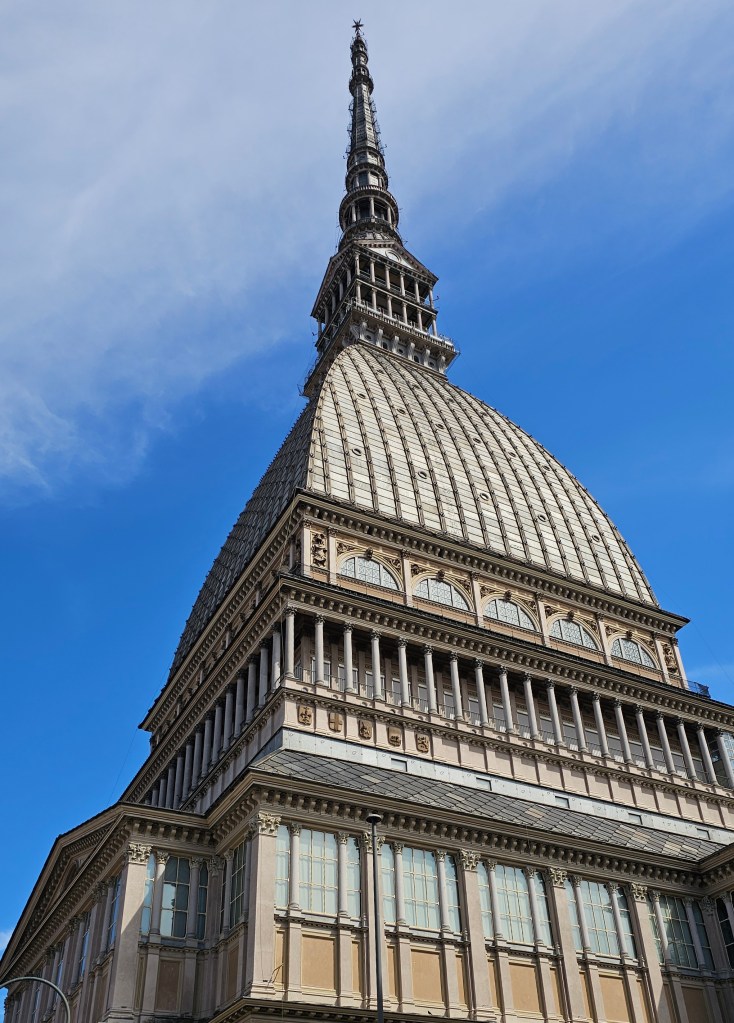
One of the most popular tourist attractions of Turin is Mole Antonelliana. This is a cinema and movie museum and it also contains a tall spire with a viewing platform! You can purchase either combined or separate tickets.
For the following day, a Friday, Chris and I pre-purchased tickets to the viewing platform of the spire only, thus excluding the museum.
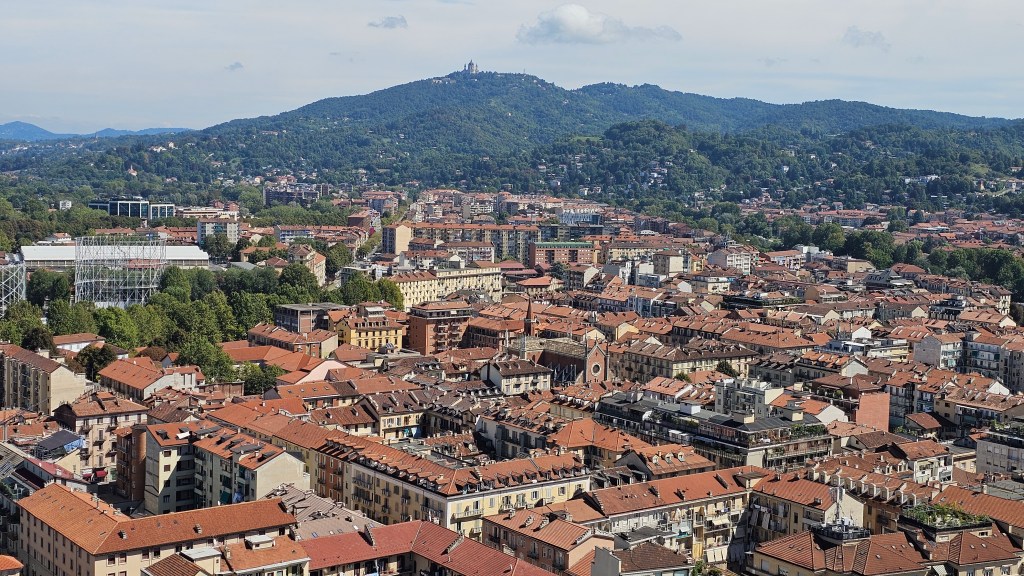
‘Mole’ in Italian means ‘massive building’ and after travelling up through the centre of museum in the glass elevator we found ourselves on the viewing platform. From the top of this 85 meter high panoramic vantage point we had 360 degree views of Turin and the surrounding countryside.
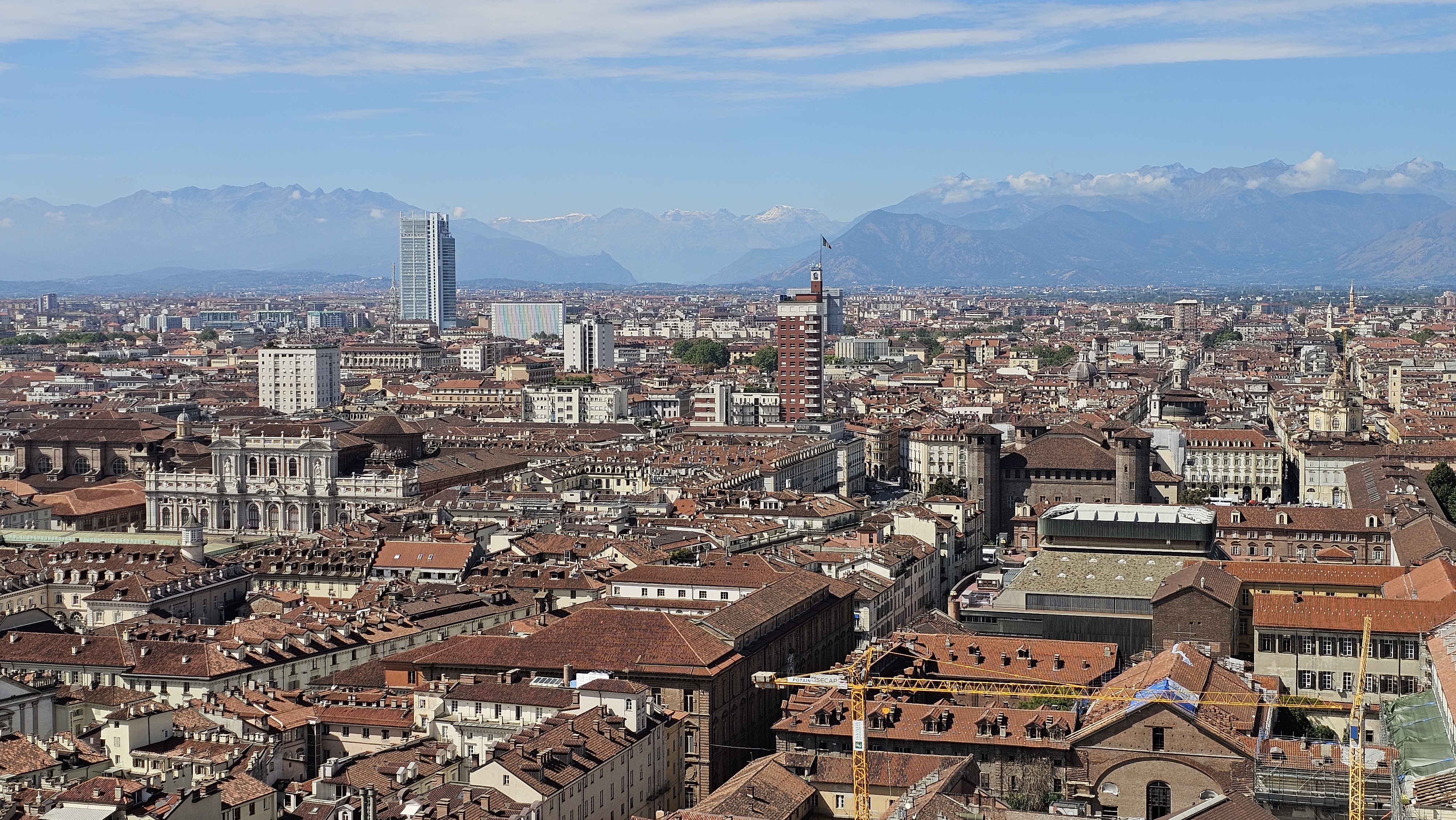
We had a clear day so were fortunate to have good views of the distant snow-covered Alps.
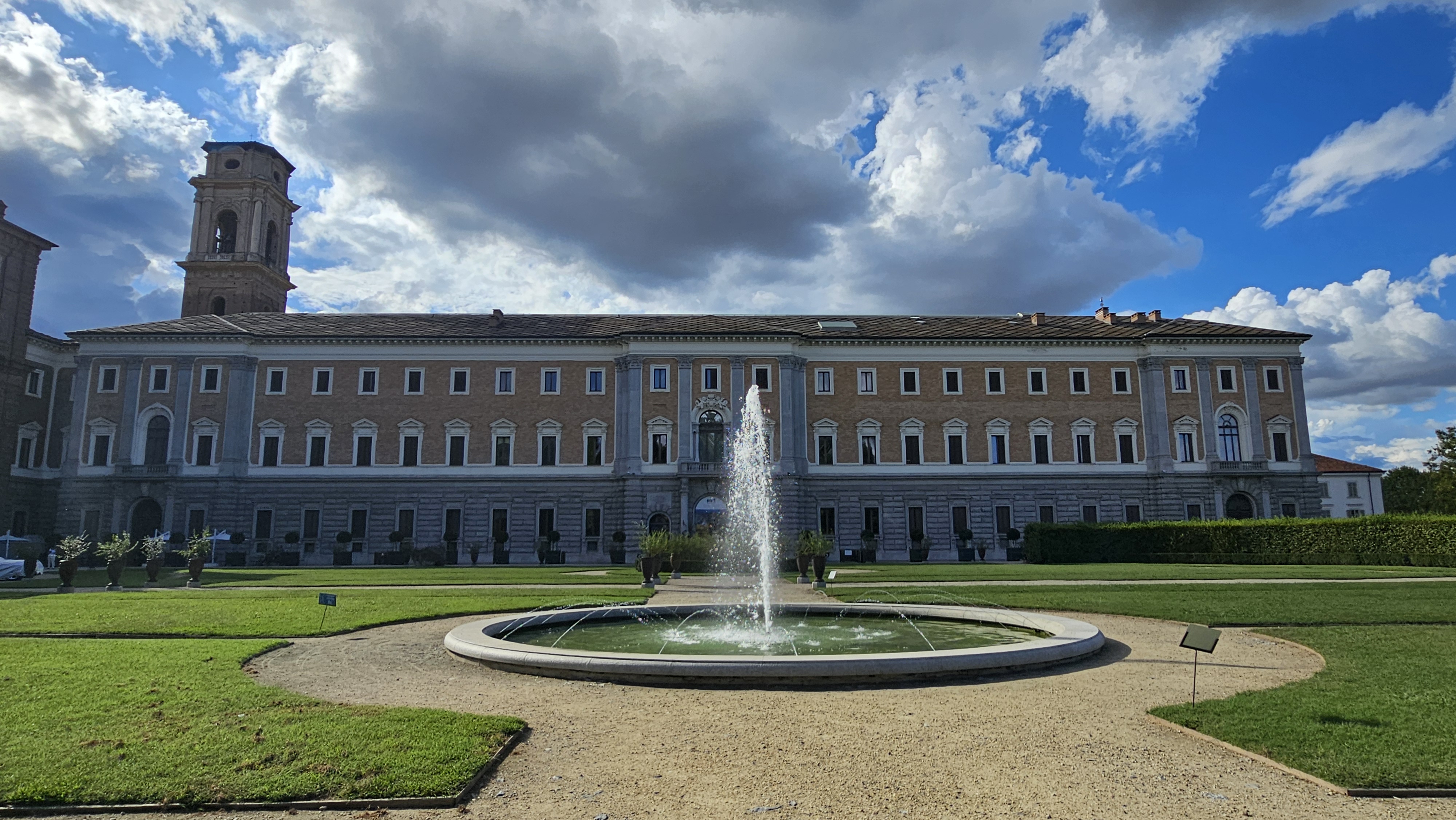
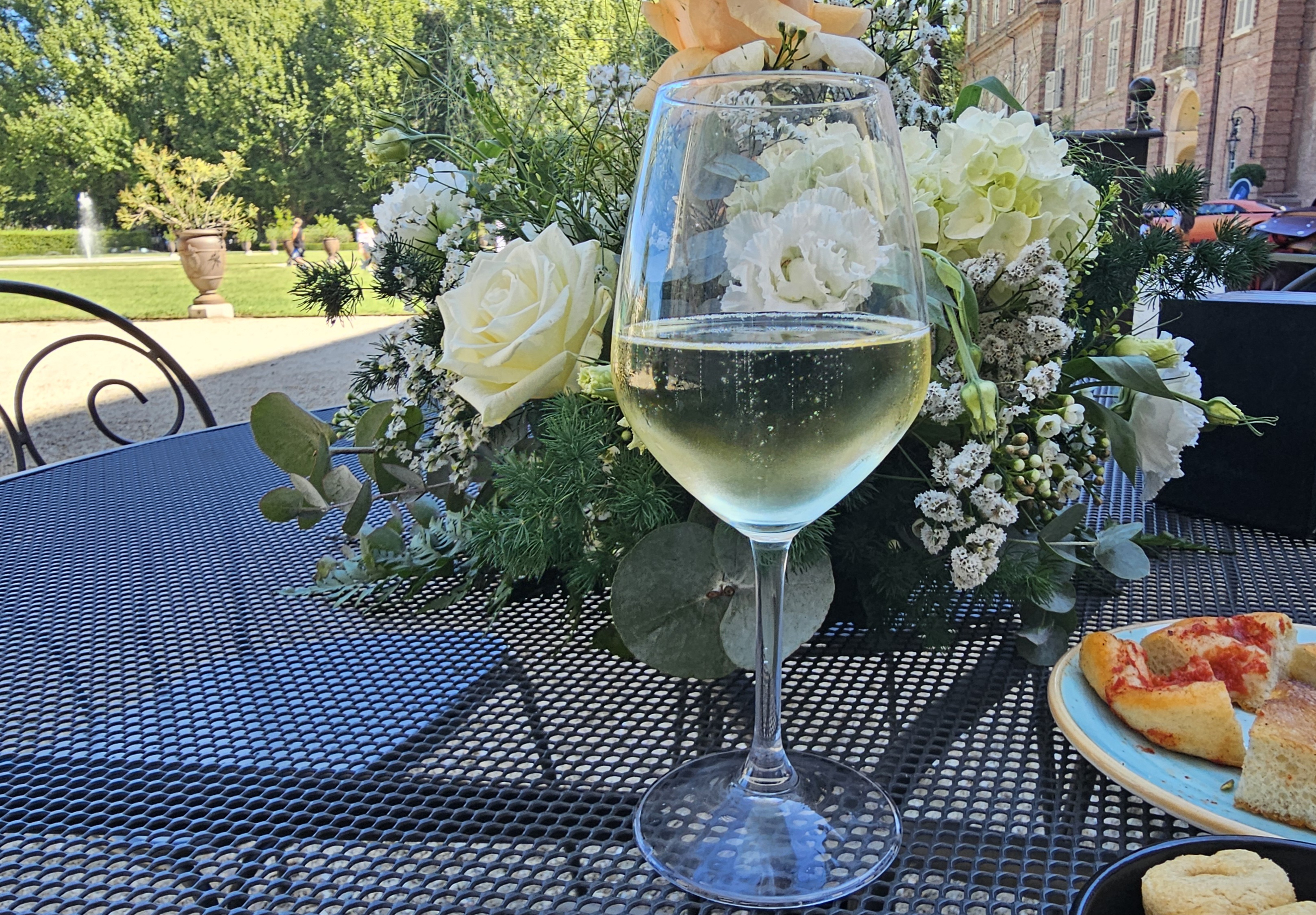
From our panoramic views of Turin, Chris and I had an hour or so before our next pre-booked activity so we enjoyed a pleasant drink sitting at the outside cafe of the Royal Gardens.
Royal Palace tour
Next, it was time for some history and culture as we met up with Russell and Roza in the Piazzetta Reale ready for our pre-booked tour of the Royal Palace of Turin. Months in advance, Chris had done some excellent research and booked a private guide, Luisa, to lead us through the palace. She gave us a fascinating look into the rich history of the city, the royal residence, and, of course, the legendary Shroud of Turin.
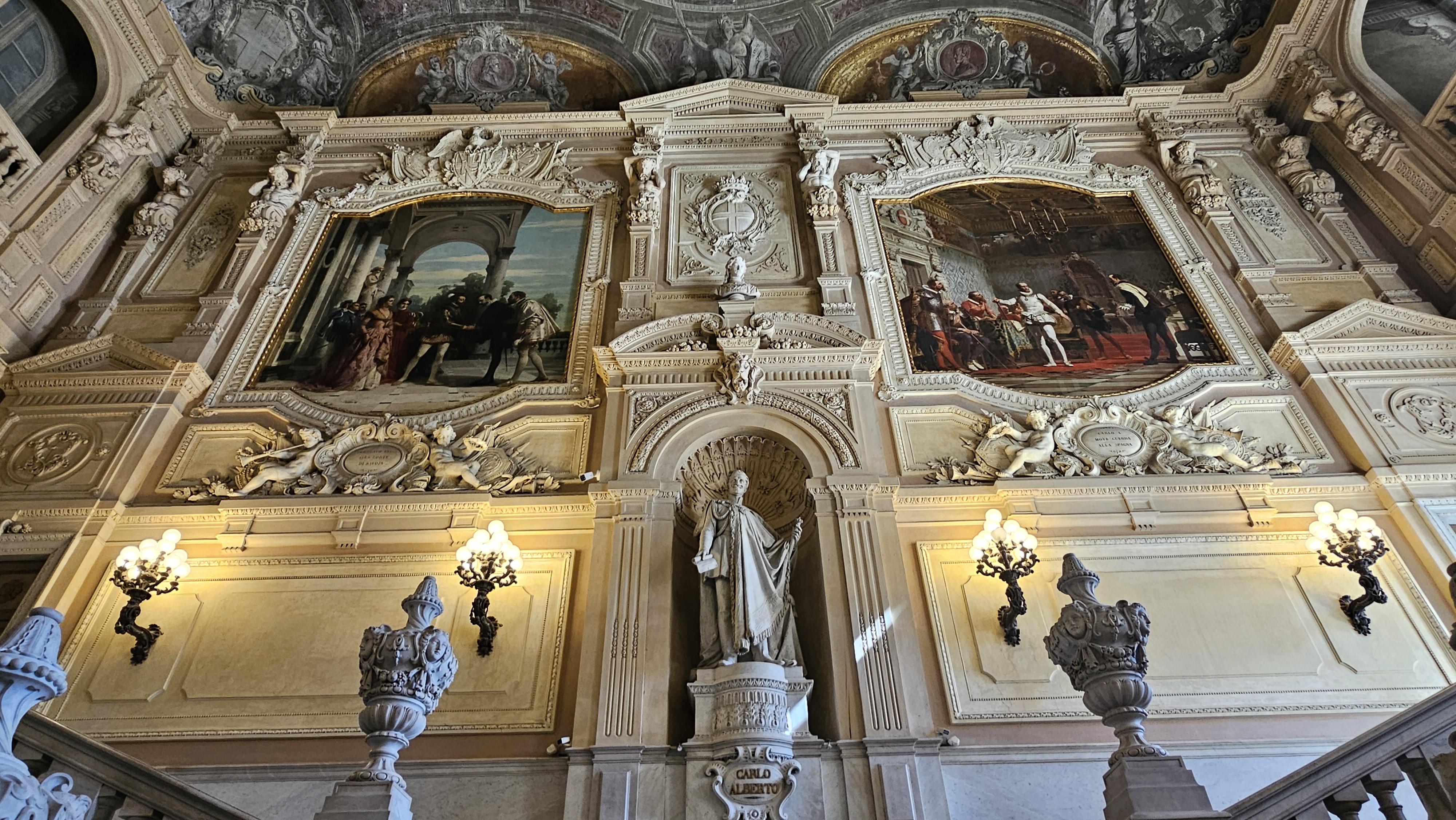
Our tour began at the Grand Staircase of Honour which was completed in 1862 following the reign of King Charles Albert. This ornate Neo-Baroque style marble staircase led from the ground floor up to the state rooms.
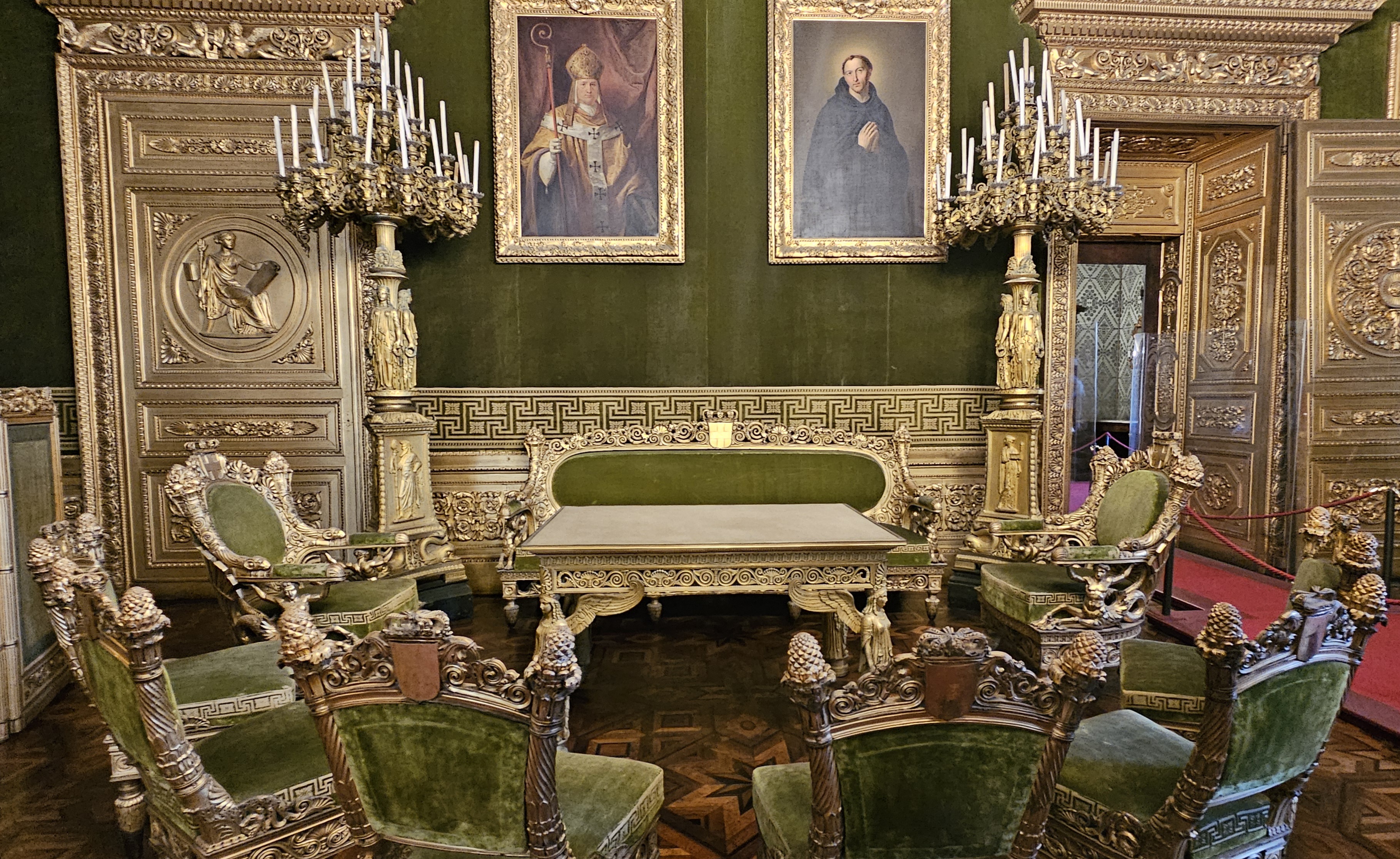
We passed through various ornate state rooms including the Council of the Ministers Hall. Luisa explained that this room features the historic table where King Charles Albert signed the Albertine Statute (Statuto Albertino) on 4 March 1848. This monumental document served as the constitution that paved the legal framework for the Unification of Italy.
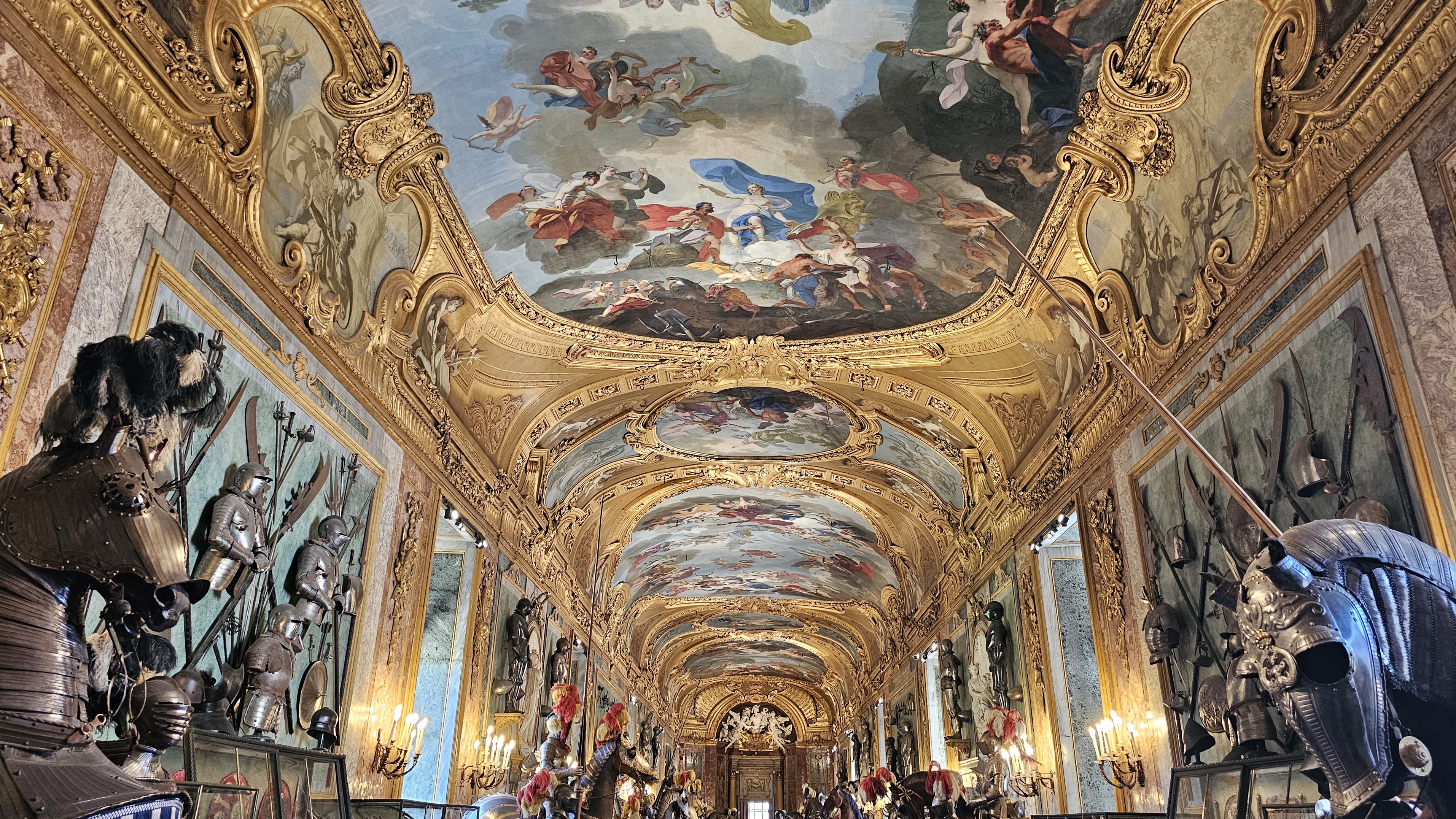
One of the most spectacular rooms was the Royal Armoury with its vibrant ceiling frescoes. This gallery is set up like a guard of honour, featuring two rows of life size horses, all kitted out in full battle gear. Within this gallery alone, there are over 5,000 pieces of historic weapons and armour which makes it one of the most significant collections in Europe.
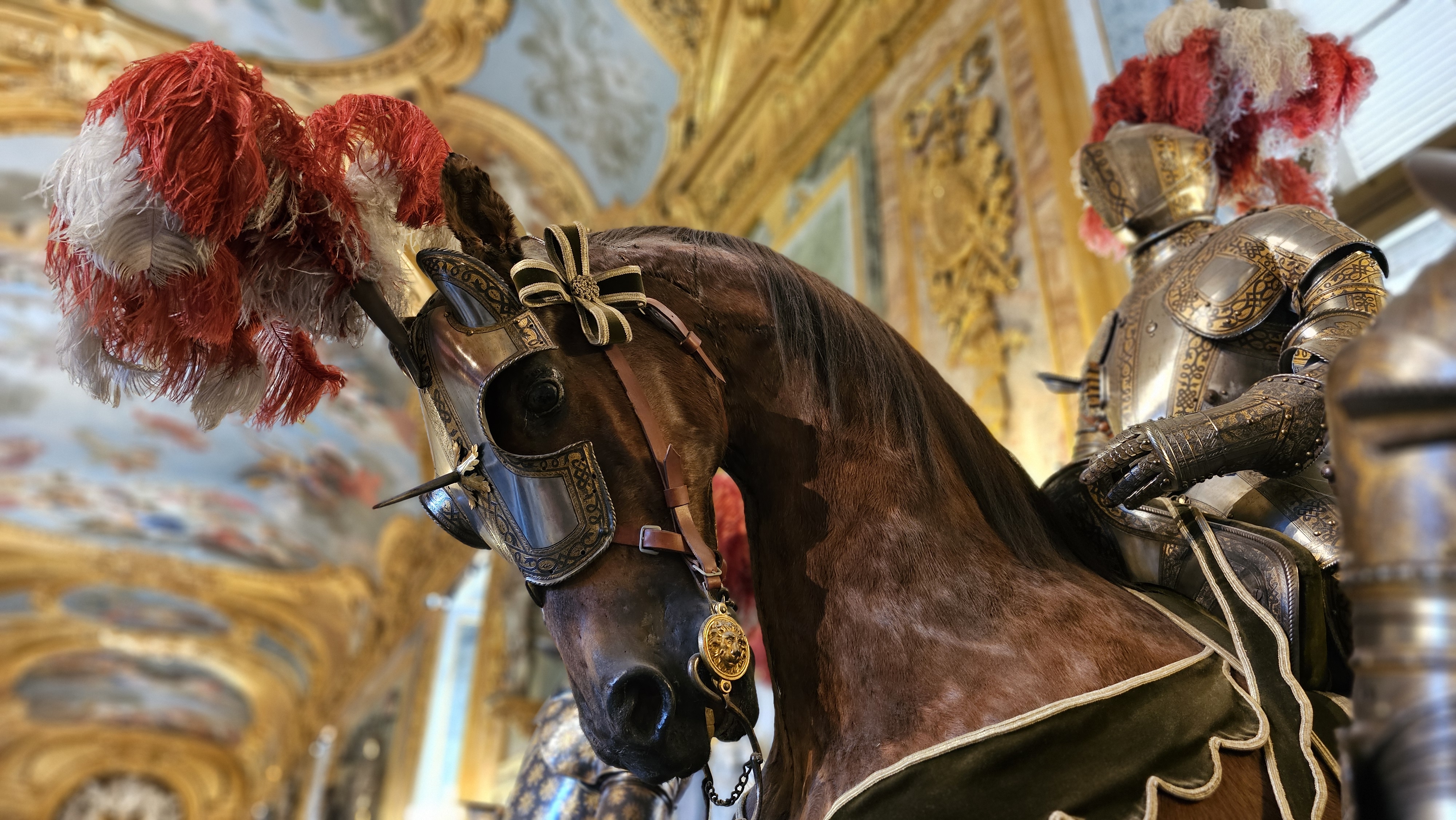
As we toured the palace, our knowledgeable guide, Luisa, brought the dramatic history of the House of Savoy to life. We learned about King Charles Albert, who made history by signing the Albertine Statute. He married the deeply religious Maria Theresa of Tuscany, who preferred to retreat from the spotlight while her husband transformed the palace with grand spaces like the opulent State Dining Room and its priceless Parisian silverware (below).
Charles Albert and Maria Theresa had a son, Victor Emmanuel II. Thrown onto the throne at age 29 after his father was forced to abdicate following a crushing military defeat, Victor Emmanuel used the legal blueprint created by his father to successfully establish the Kingdom of Italy, of which he was proclaimed the first King in 1861.
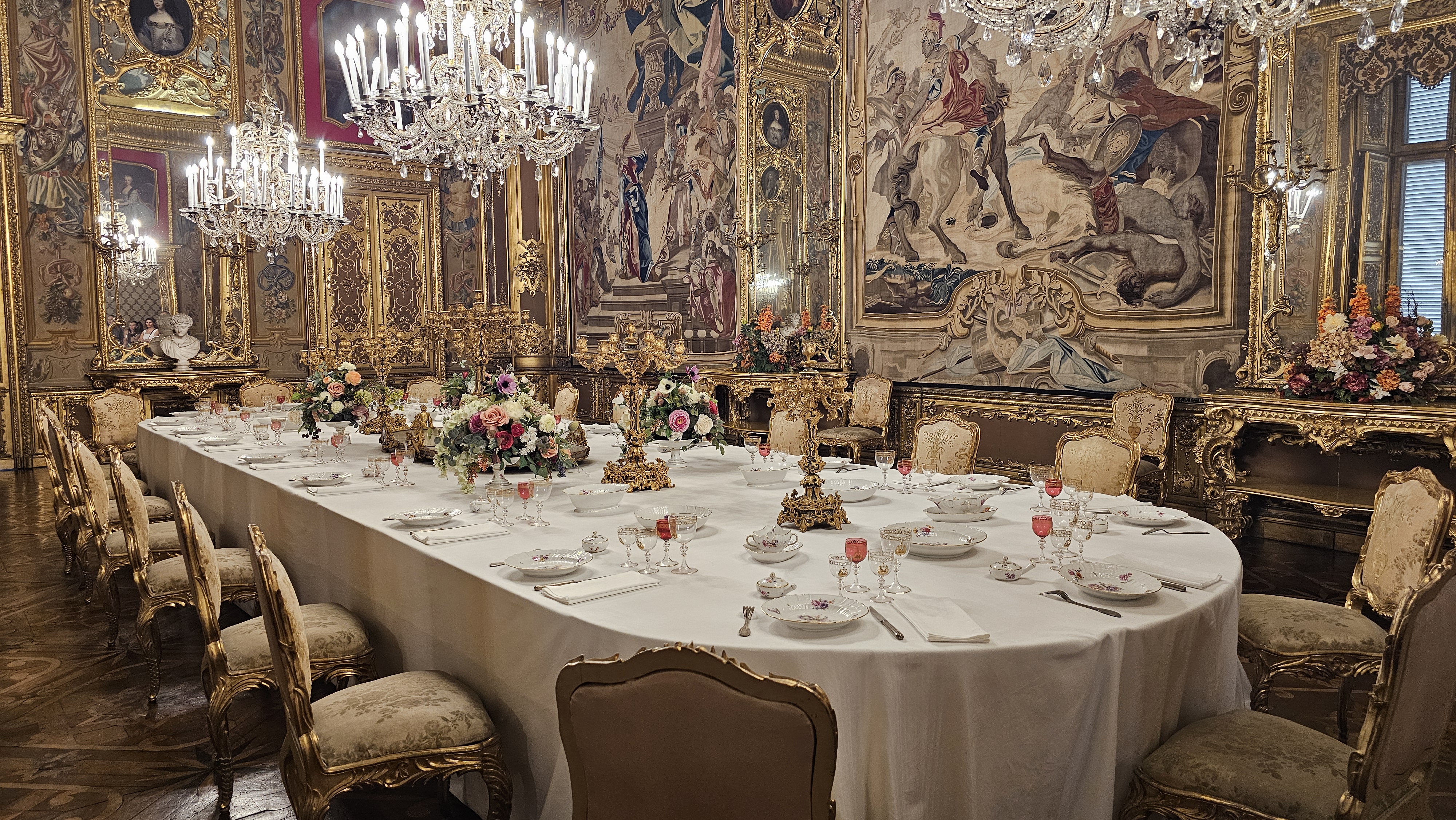
Commissioned in 1837 by King Charles Albert, the State Dining Room was transformed into a grand ceremonial hall designed specifically to host lavish state dinners. The centrepiece is the long majestic mahogany dining table which is set out ready for a formal royal feast. It is beautifully dressed in white linen cloths and showcases fine porcelain, crystal glassware, and towering, gilded candelabras. Decorating the room are enormous and dramatic 18th-century tapestries.
The Shroud of Turin
This is an ancient linen cloth which bears a feint image of a crucified man. Over the centuries, many Christians believe this is the authentic burial cloth of Jesus of Nazareth.
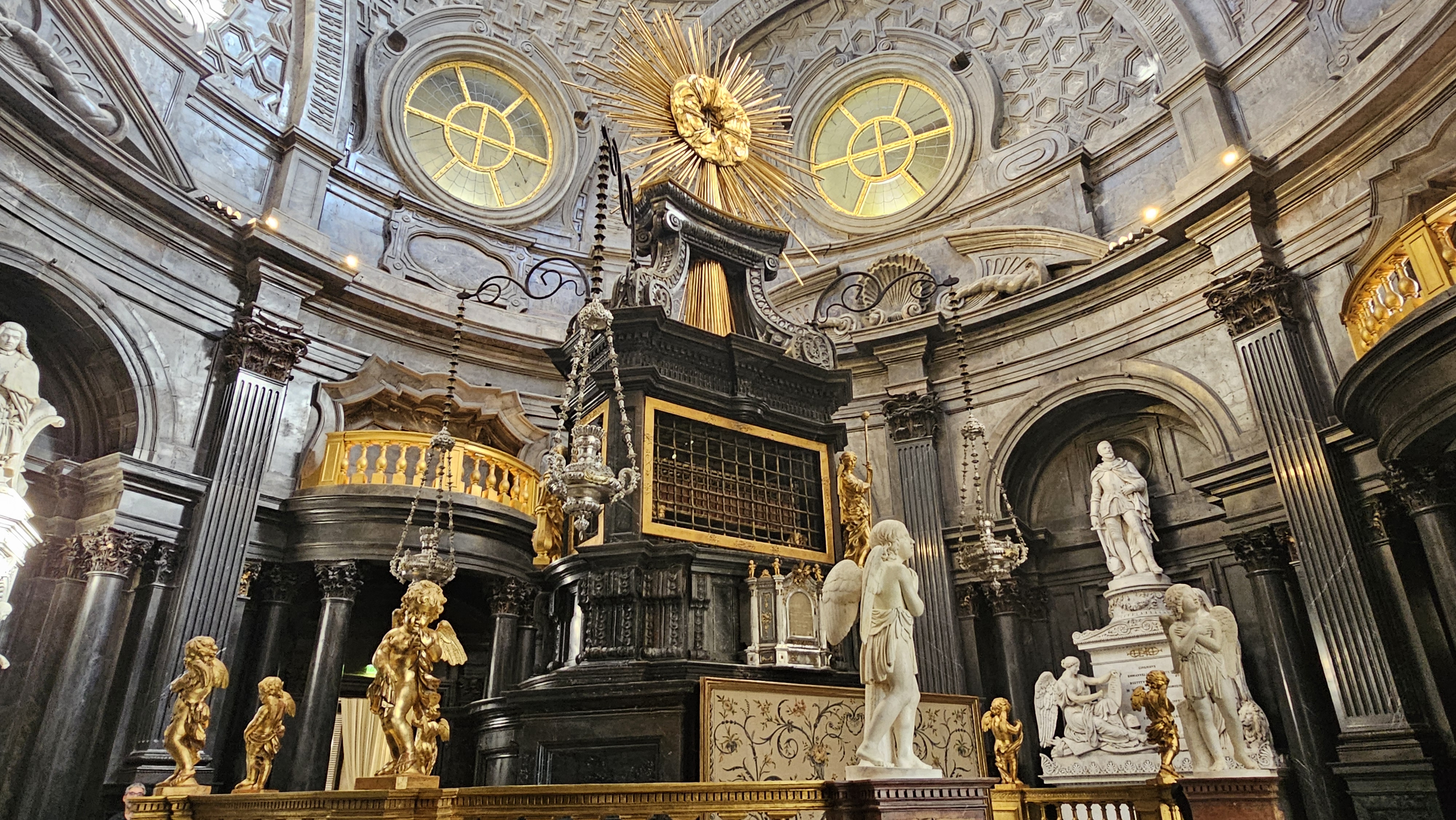
The splendid Chapel of the Holy Shroud is located next to the Royal Palace. Built in the late 17th century, Luisa explained this was designed specifically to house the legendary Shroud of Turin. The lower half of the chapel contains striking black marble, a deliberate choice to create a sombre atmosphere.
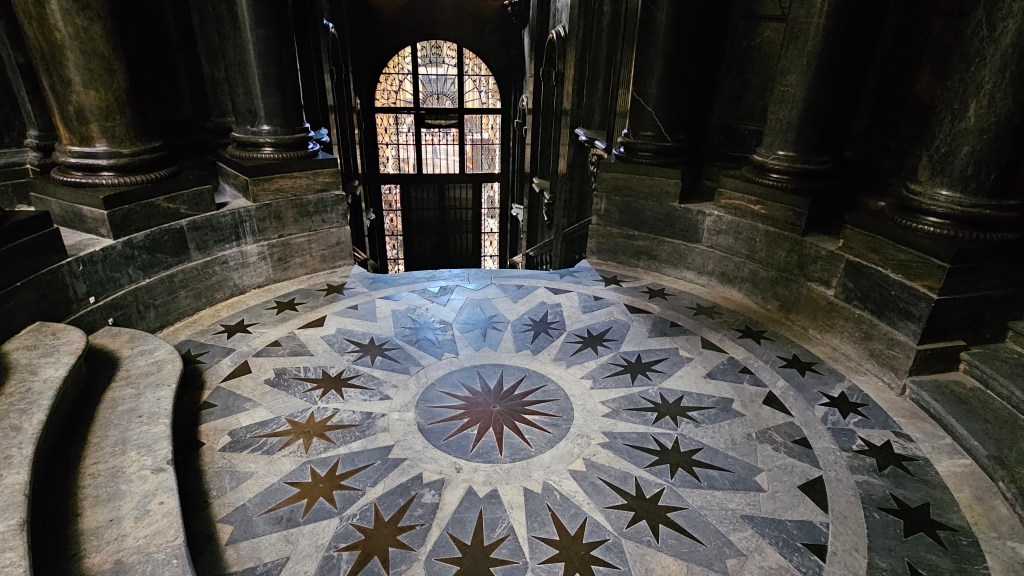
The chapel was almost completely destroyed by a catastrophic fire in April 1997. The intense heat caused the ancient marble to crumble, requiring a monumental, highly complex 21-year restoration project. It finally reopened to the public in 2018, completely restored to its original, splendid glory.
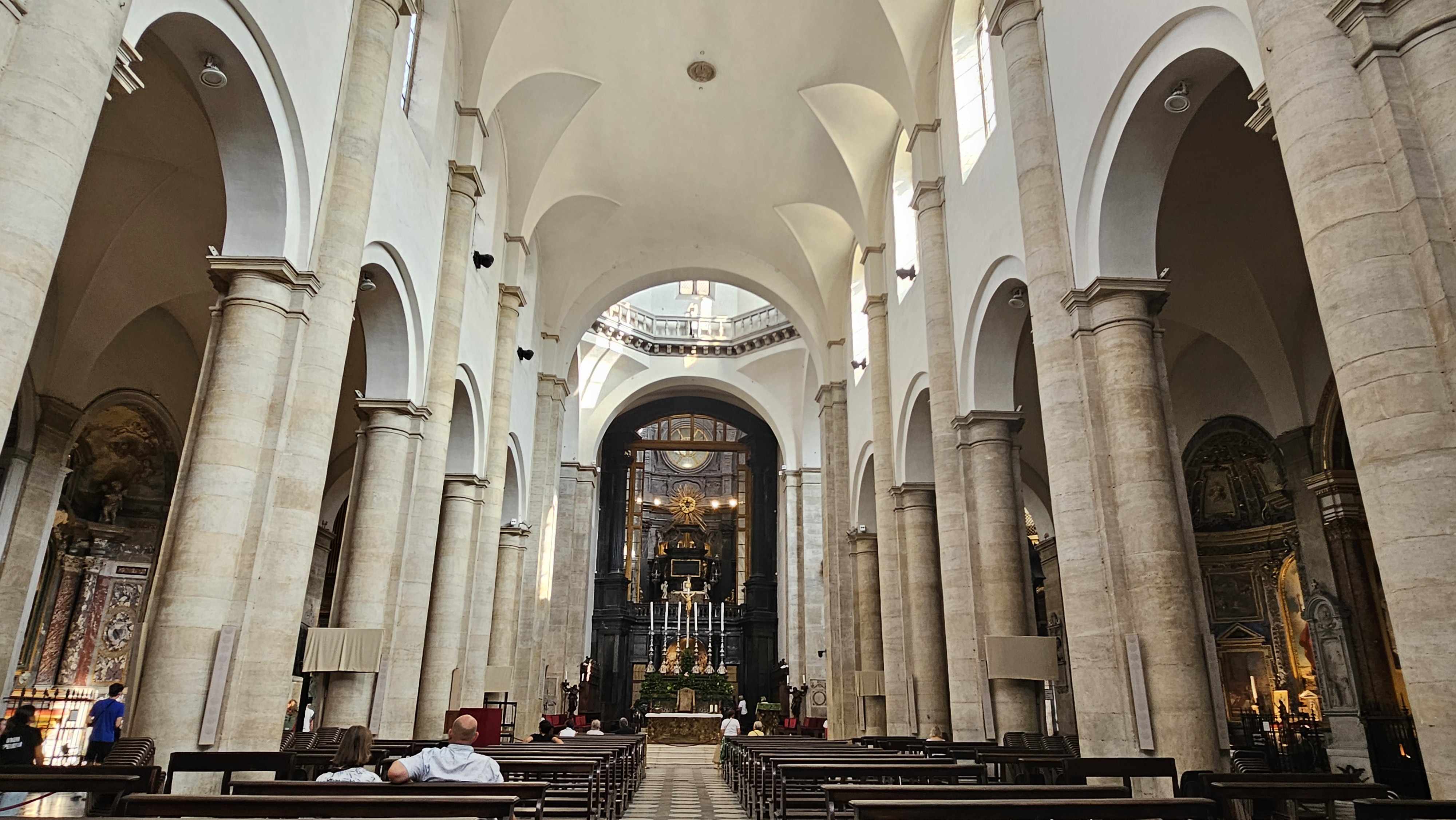
While the majestic central altar still stands as the focal point of the chapel, the actual Shroud is no longer kept inside it due to preservation and security reasons. Today, the precious relic is kept safely in a climate-controlled case inside the adjoining cathedral below, though the chapel remains its spiritual home.
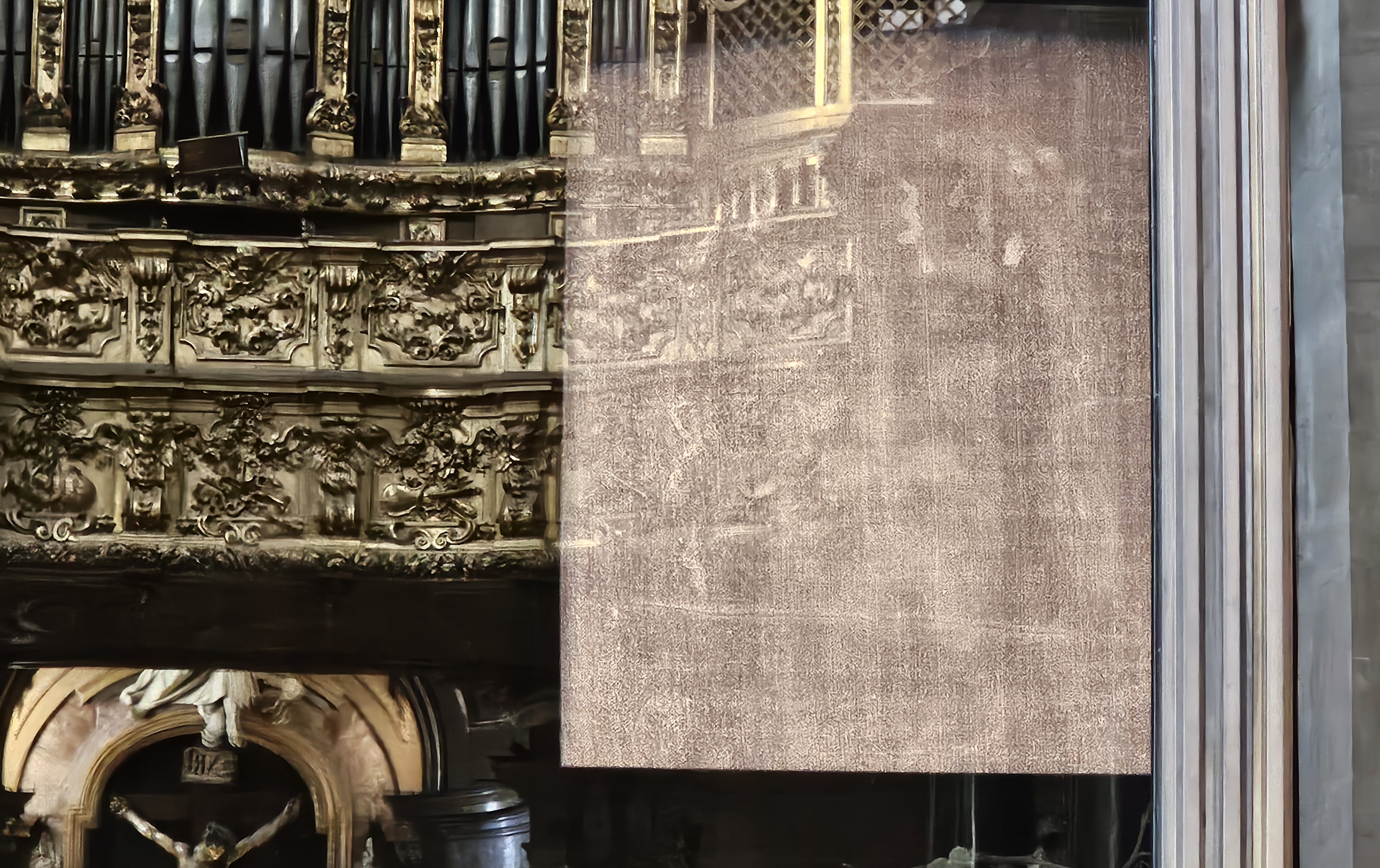
As mentioned, the real ancient Shroud of Turin is highly fragile and is locked away which means you can’t see it. However, at the back of the cathedral you can see a back-lit, life-sized image of the Shroud, which features the face of Jesus.
This final piece of history was saved by Luisa for the grand finale of the tour. A big thanks goes to Luisa for such a detailed and fascinating insight, and thanks to Chris for organising it for us – a big wow factor for the last day of our fabulous two week trip!
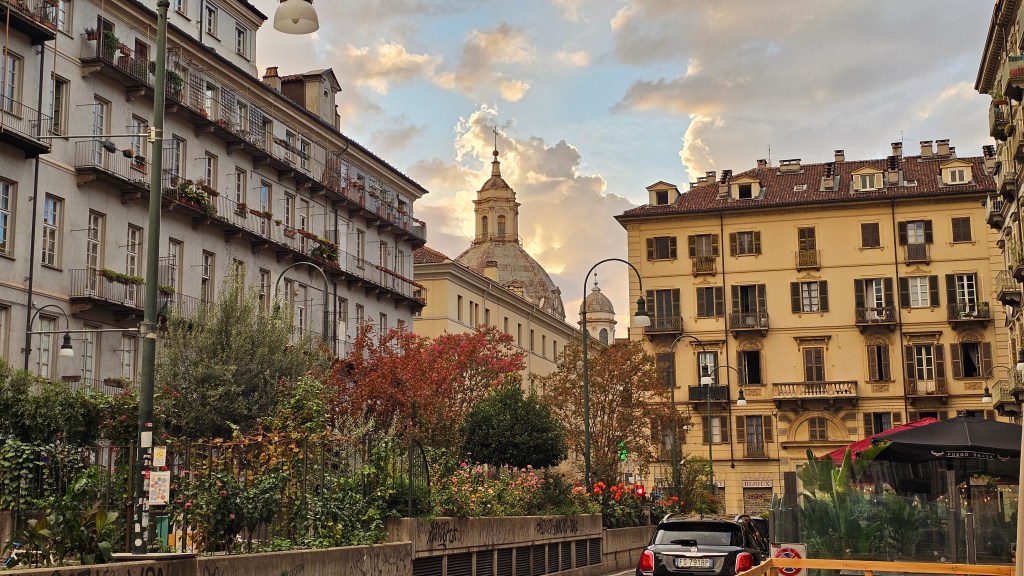
Evenings in Turin
For our first evening Chris found and booked a fabulous vegan restaurant called ‘Mezzaluna’ which was located in the heart of the historic and vibrant ‘Quadrilatero Romano’ part of the city which dates back to the First Century BC.
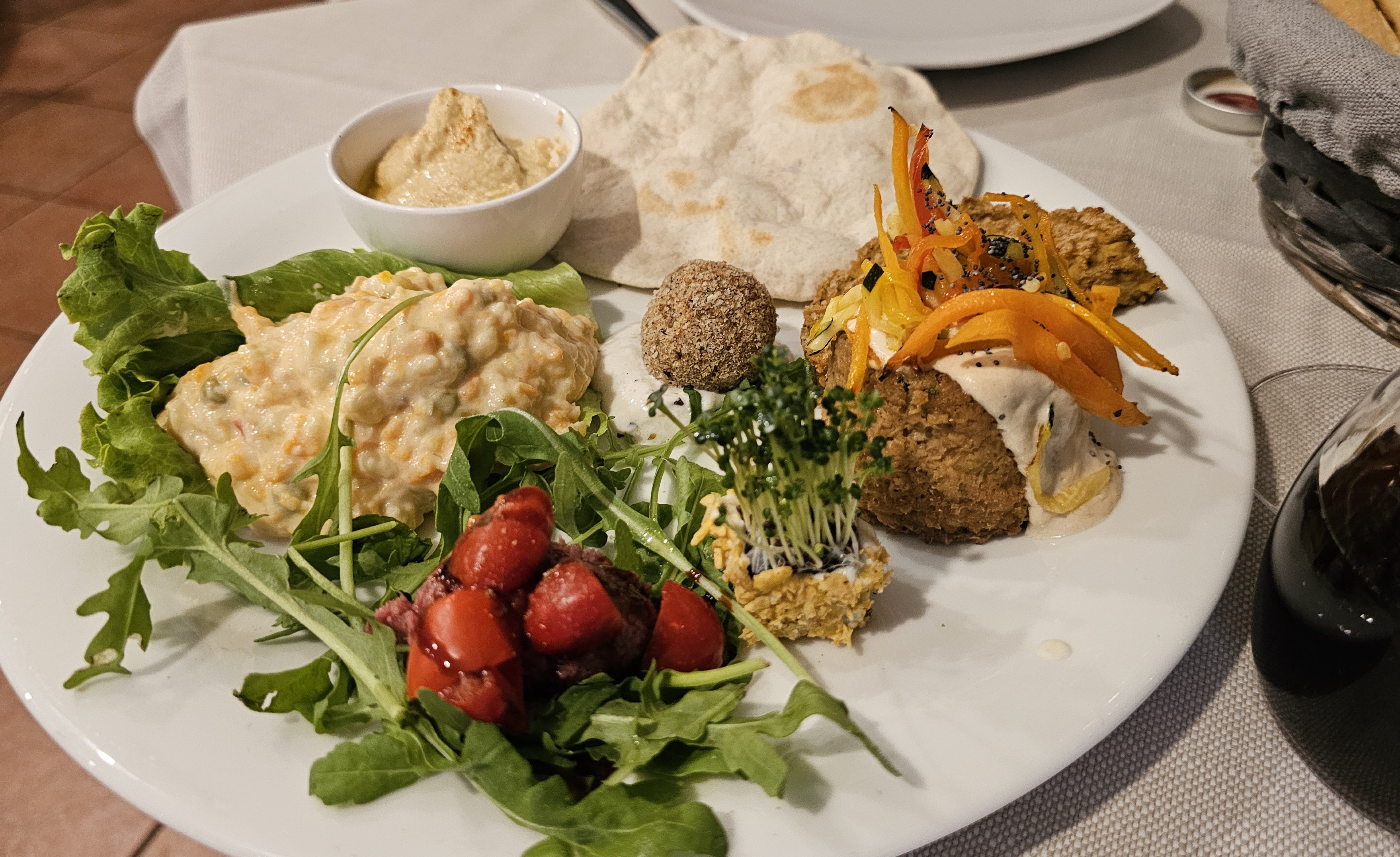
We shared an antipasto starter which enabled us to try a range of mouthwatering vegan starters. To accompany our meal, I had a quarter litre jug of local red wine and Chris had a tasty organic blueberry juice.
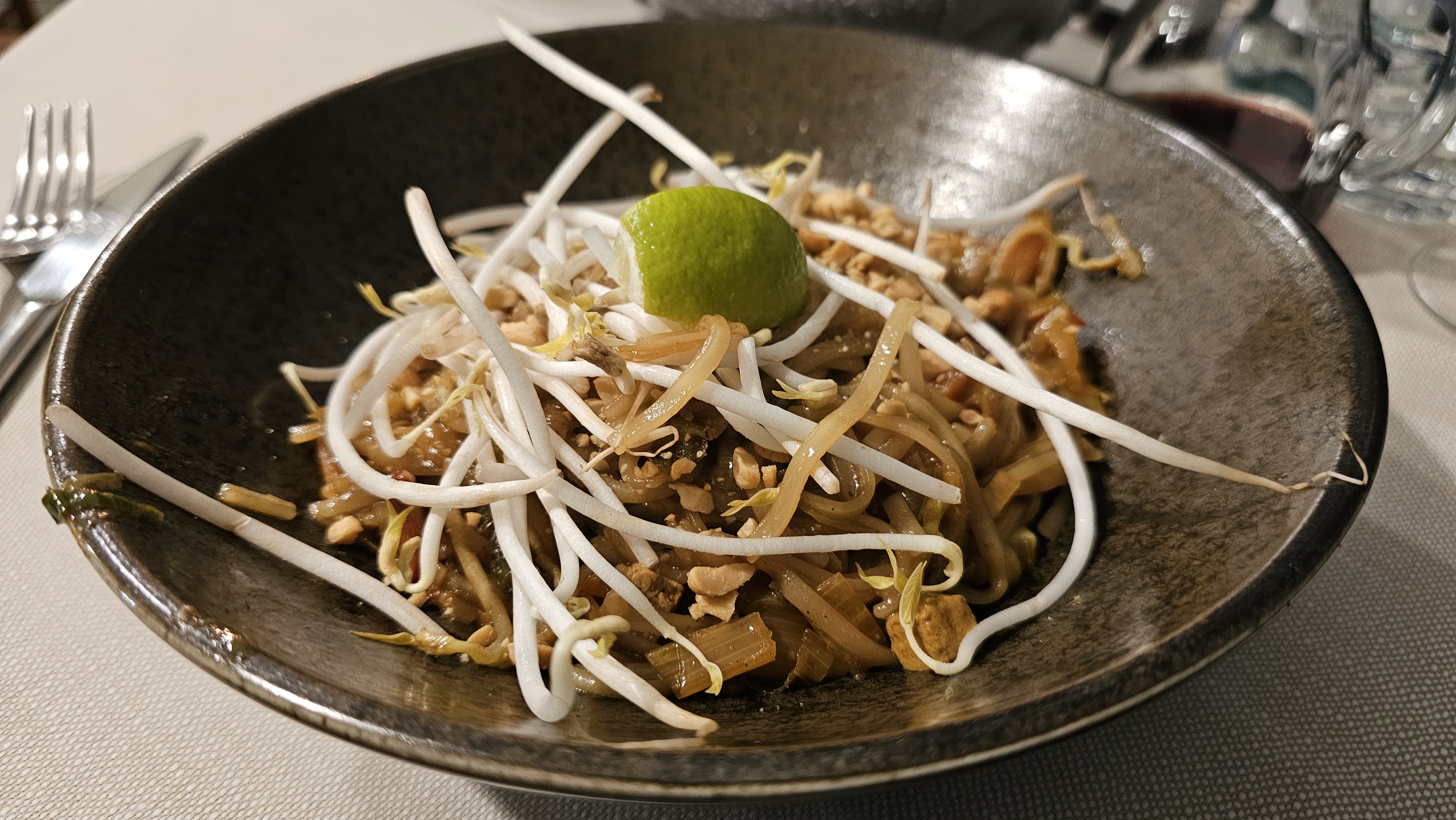
We both ordered the Pad Thai for our mains, and it was tasted incredible. We agreed that, combined with the starter, this delicious, healthy meal was one of the best of the trip. The service was excellent, the staff were welcoming, and the relaxed dining room was buzzing with people—definitely book a table in advance if you plan to visit!
We enjoyed it so much that we went back the next night with Roza and Russell. The food was still good, but I made the mistake of switching to the vegan paella.The meal was pleasant overall, but my choice of the vegan paella fell a bit flat compared to the previous nights Pad Thai causing this second visit to slide down my personal ranking of the trip’s best meals.
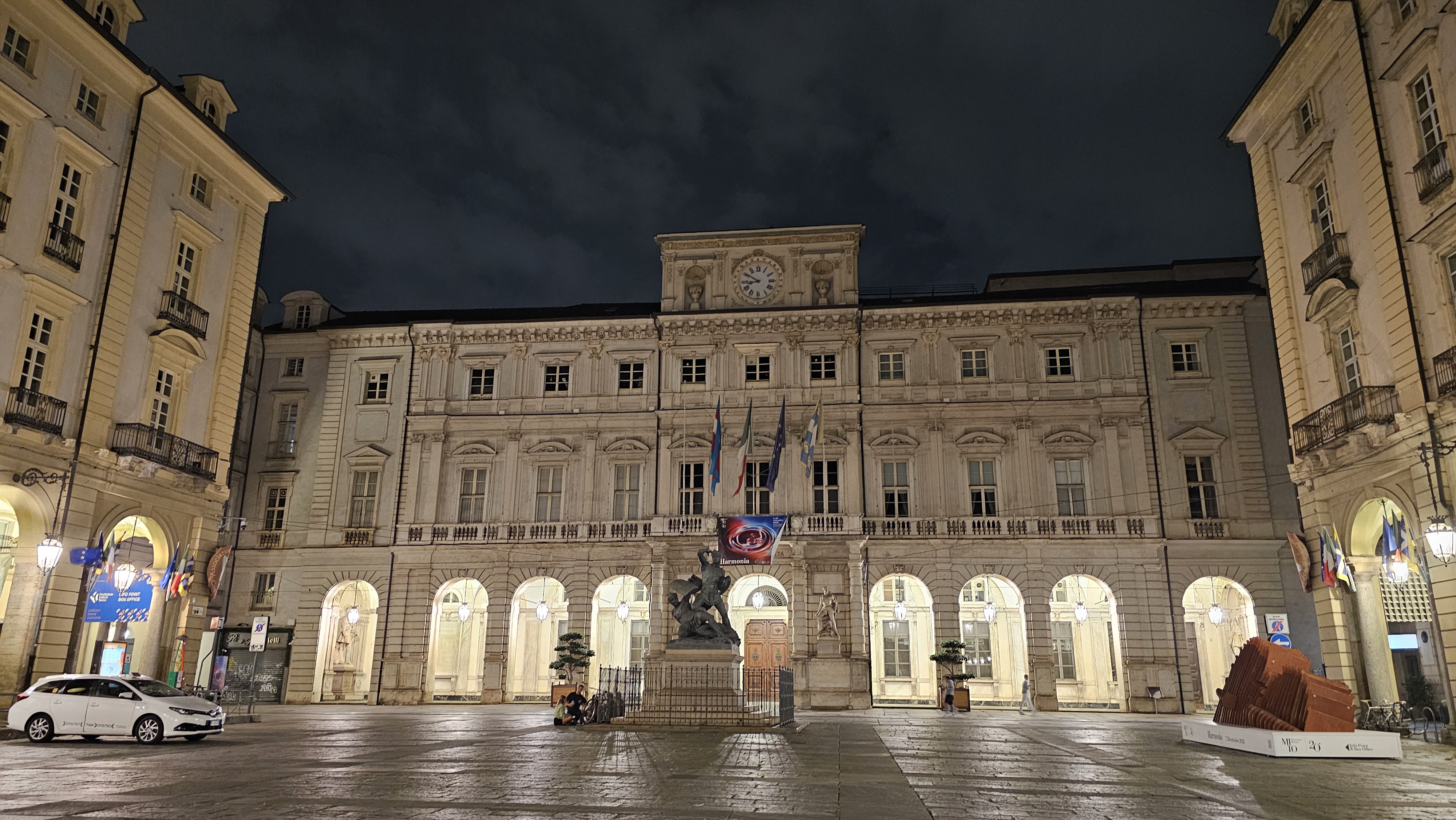
We walked for 25 minutes back to our hotel both nights, navigating quiet streets under the watchful eye of a strong police and security presence. We assumed the extra security was tied to the bustling motor show taking over the city center that weekend.
Accommodation
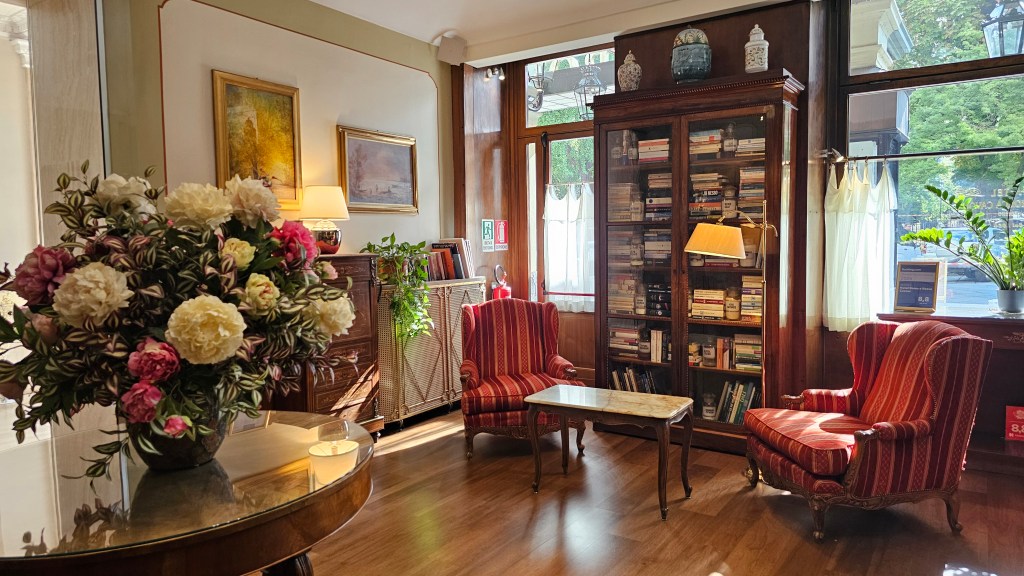
We spent 2 nights in the Roma e Rocca Cavour hotel which was a 2 minute walk from the main Porta Nuova railway station of the city which made it very convenient when we arrived in Turin by train from Chatillon.
The hotel occupies a historic mid 19th century building and our comfortable room had a high ceiling and an ornate headboard. A reasonable breakfast was included and coffee, water and croissants were available in the reception area from about lunchtime, if further snacks were required.
Airport transfer
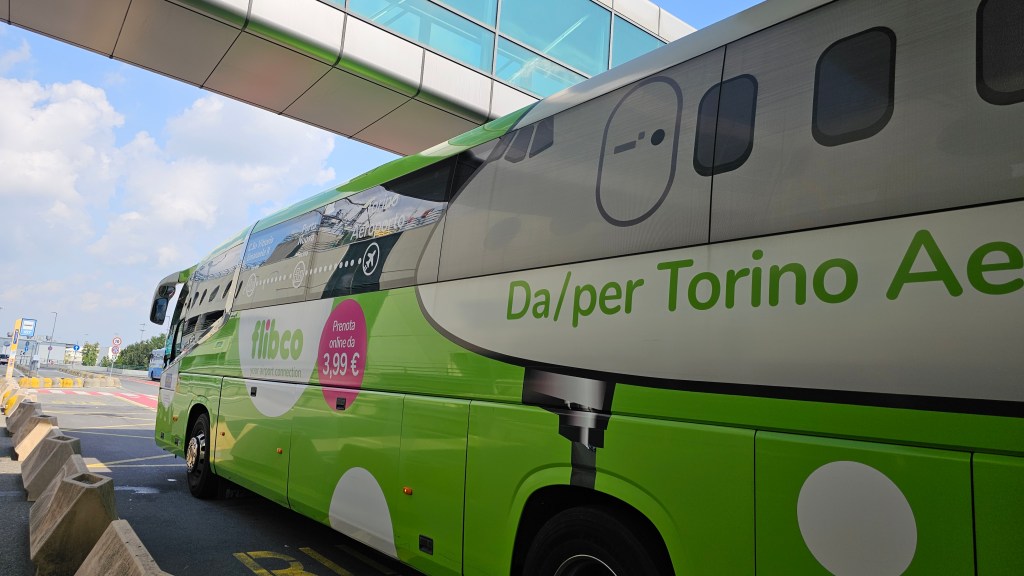
Heading home to catch our Wizz Air flight back to Luton, we took a direct Flibco bus to Turin Airport, which took just 30 minutes. Conveniently, the stop was only a few metres from our hotel and cost just €7 each. We were able to buy our tickets directly from the driver paying by card as we boarded.
Summary
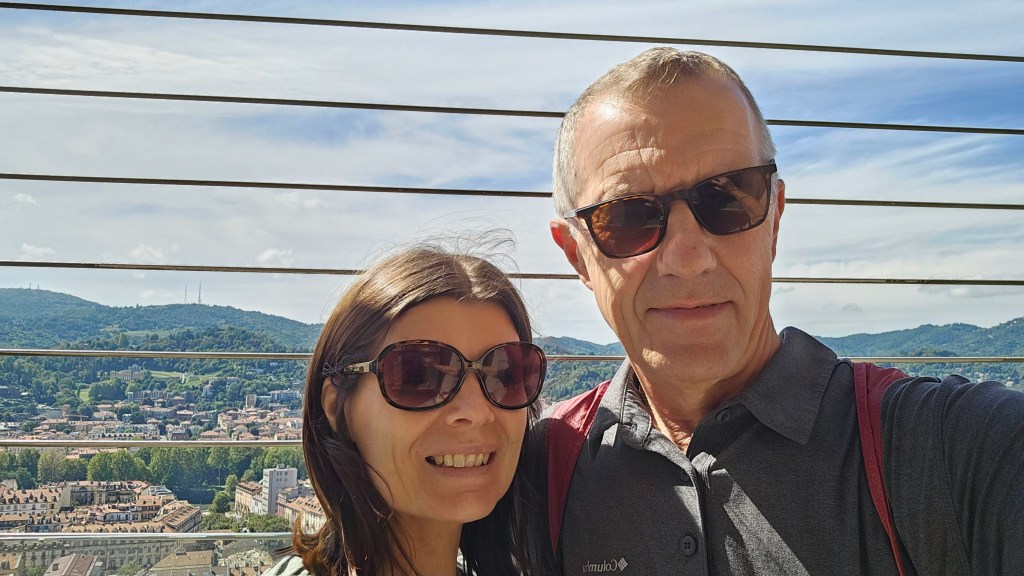
After completing nine more stages of the Via Francigena and winding down with a couple of nights in Turin, Chris and I are back in the UK. We feel fitter, relaxed, and completely stress-free after another fantastic trip filled with happy memories—most of which were brilliantly organised by our lovely friends, Russell and Roza.
Next up on the blog, I’ll be sharing a comprehensive ‘preparing for a multi-day trek’ guide to help you plan your own hiking adventure. Stay tuned for practical tips, packing essentials, and everything we learned along the way!

