Our first full 33.5 km day in Italy was the toughest of this two week trip; as well as it being long it also involved a total descent of 2347 m.
We had two nights in Aosta so, as well as capturing our trek down to the city, this post also covers a relaxing day of Aosta sightseeing before continuing our way on the Via Francigena.
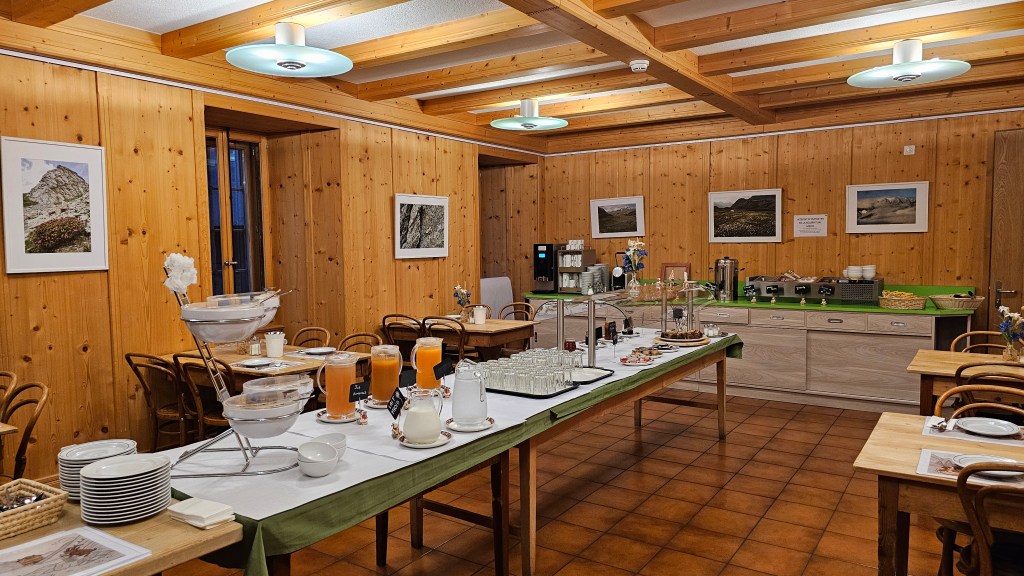
We began our day with breakfast in the auberge which was plentiful and tasty which included coffee pods, (very) fresh fruit salad and banana bread.
My heavily packed backpack sat next to me and as it was raining as we ate breakfast I was unsure whether I should keep my raincoat handy.
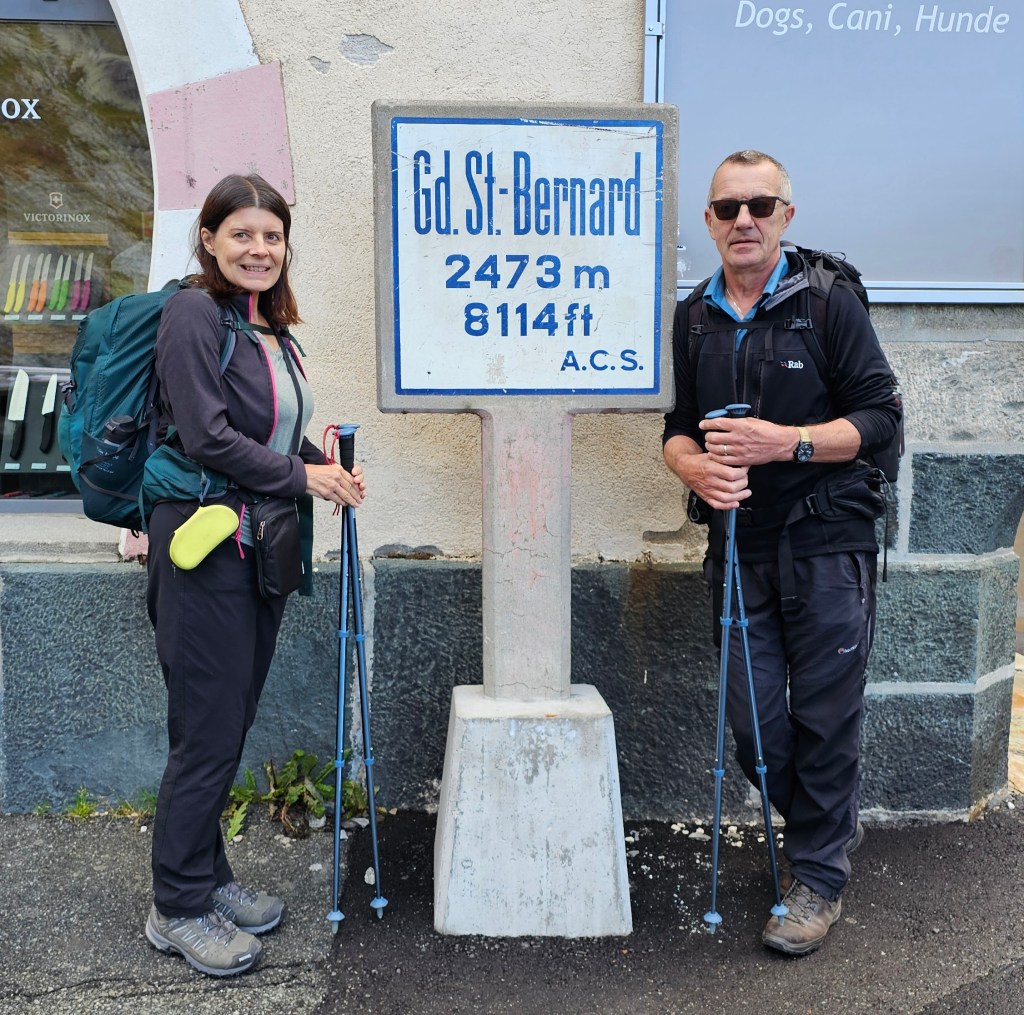
Thankfully the rain had stopped and the skies were clearing as we set off to begin our long hike today. It was around 11 degrees so just a lightweight fleece was needed for the first 15 minutes or so.
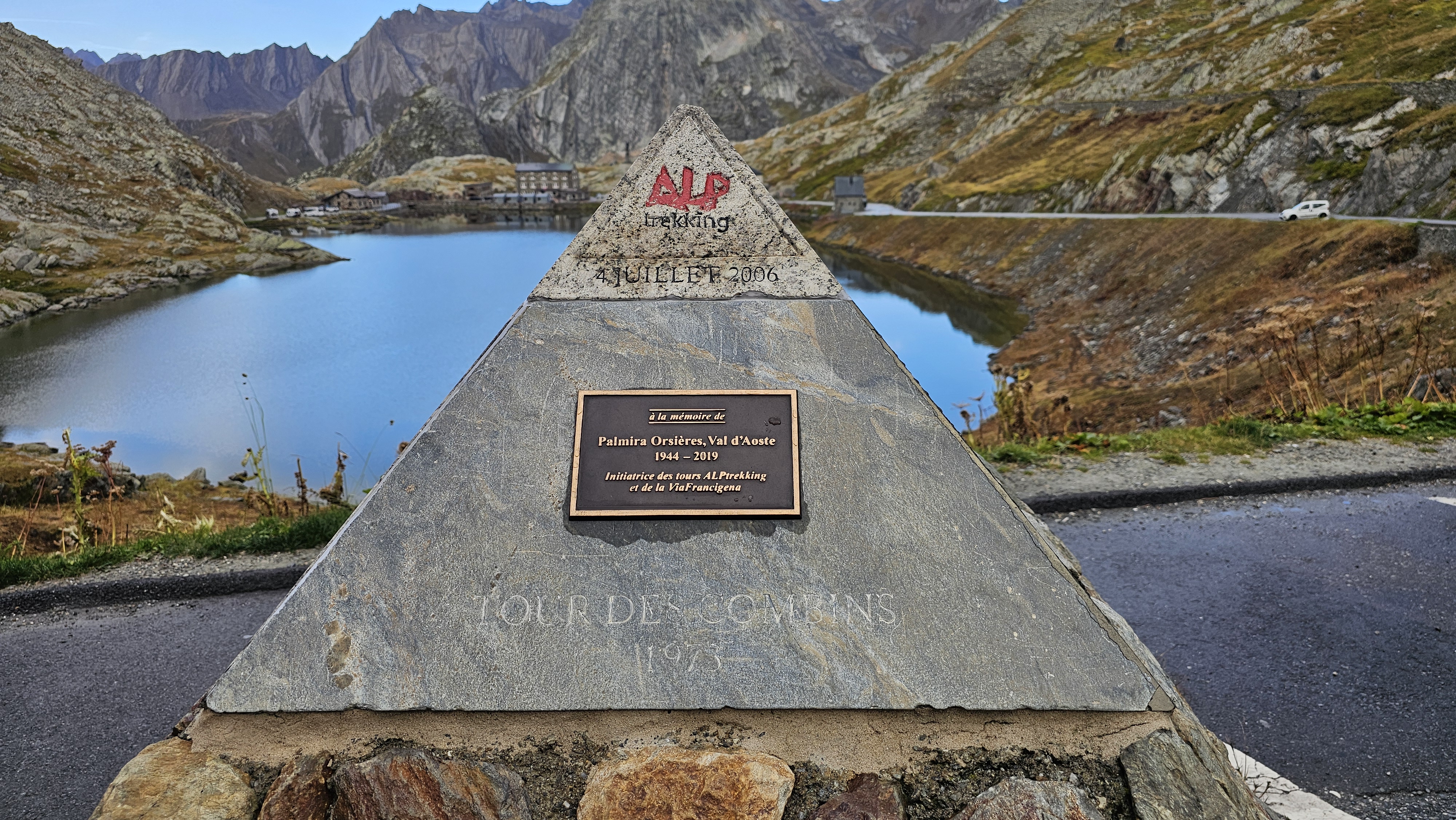
This was a memorial for Palmira Orsières who was an alpine guide and major promoter of the Via Francigena. She also wrote several hiking books and guides.
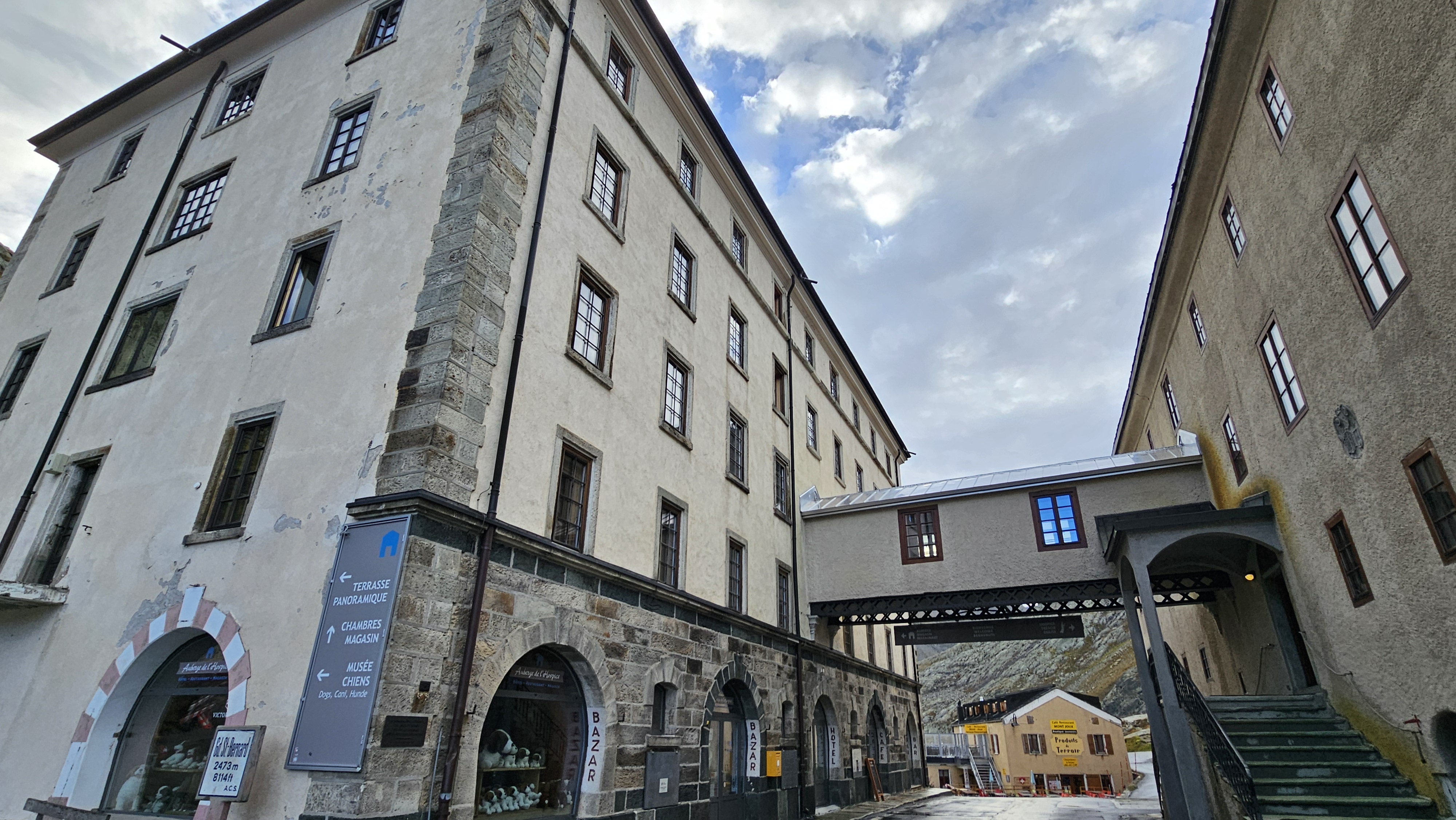
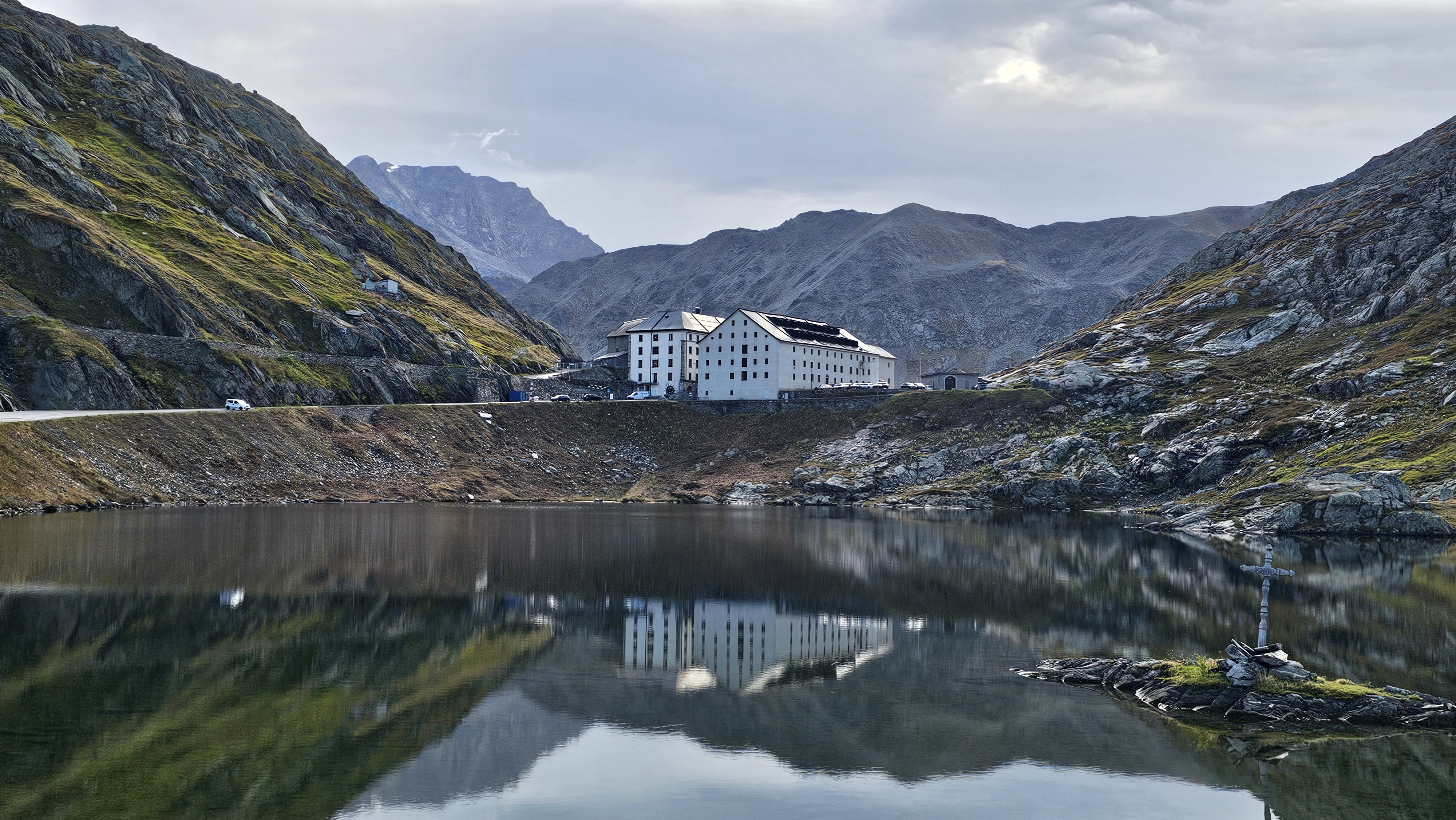
We left the auberge at around 08.30 and walked back down towards the border, passing the lake to our left and straight into Italy.
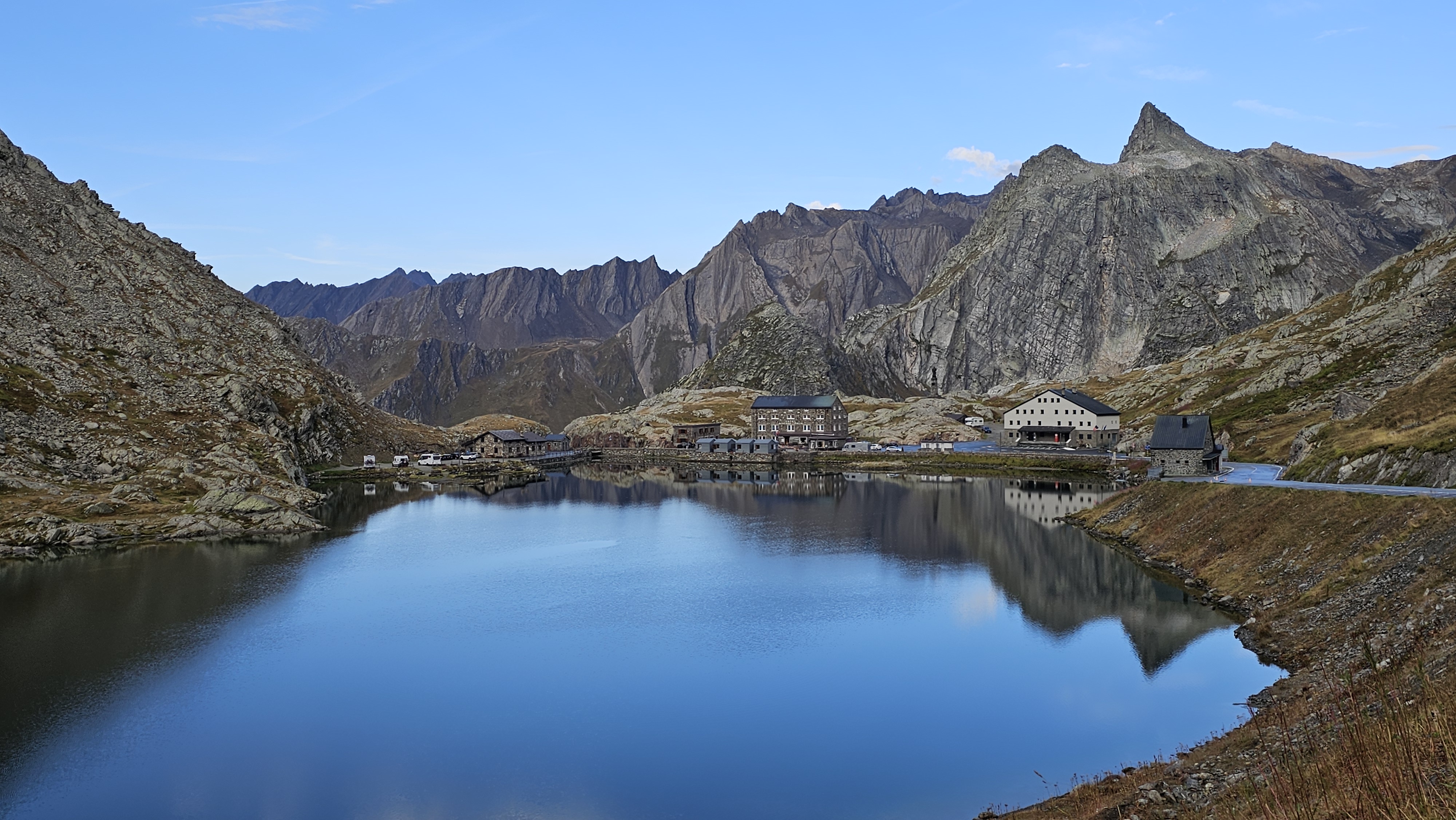
Unlike yesterday afternoon we had a peaceful lakeside walk with no motorbikes roaring past and no cars lining the lake at this time in the morning.
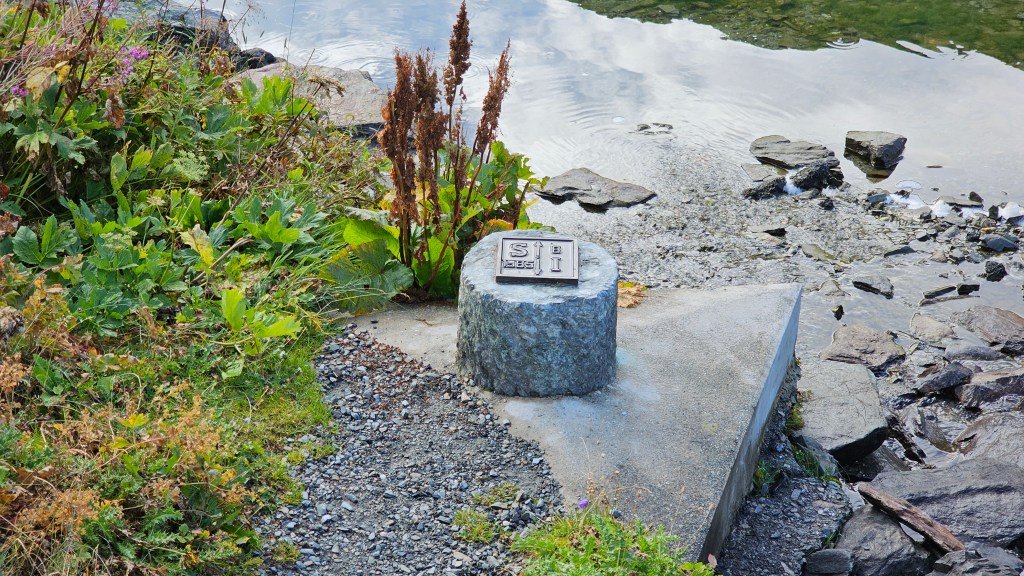
Swiss and Italian border stone at the edge of the lake.
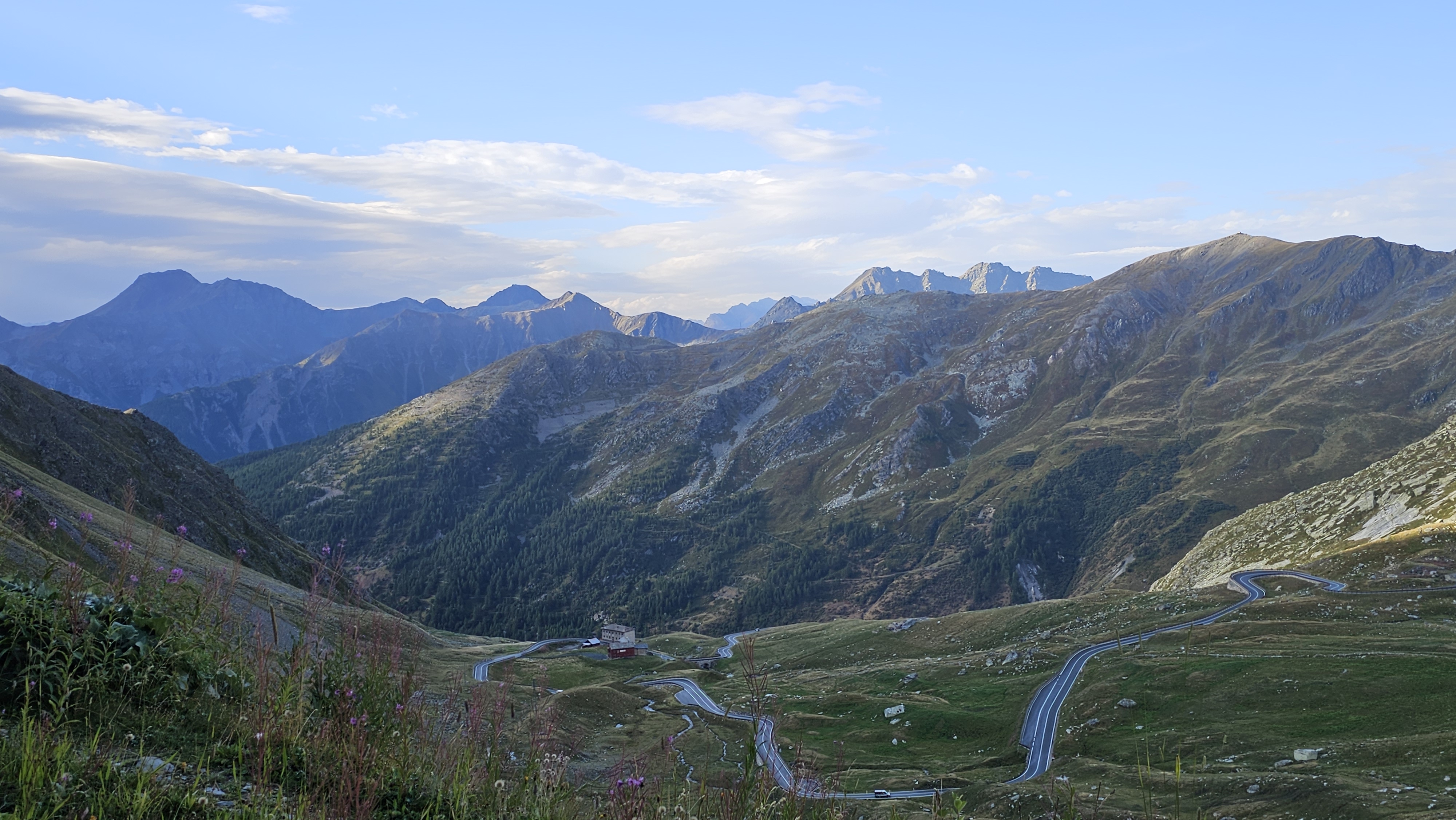
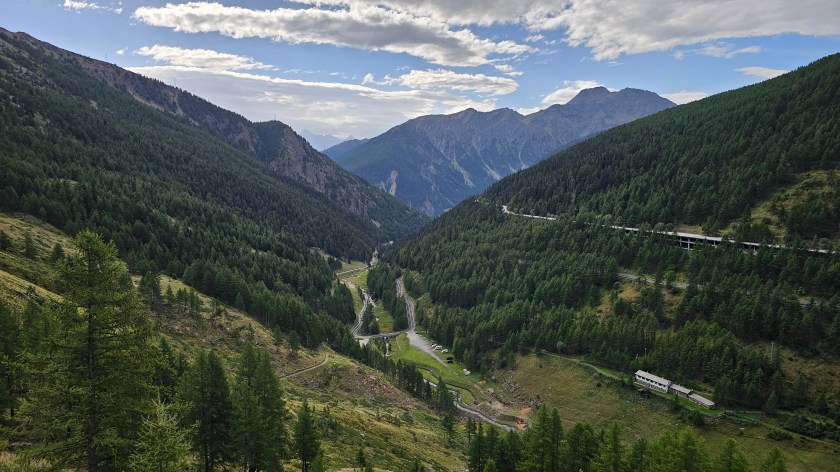
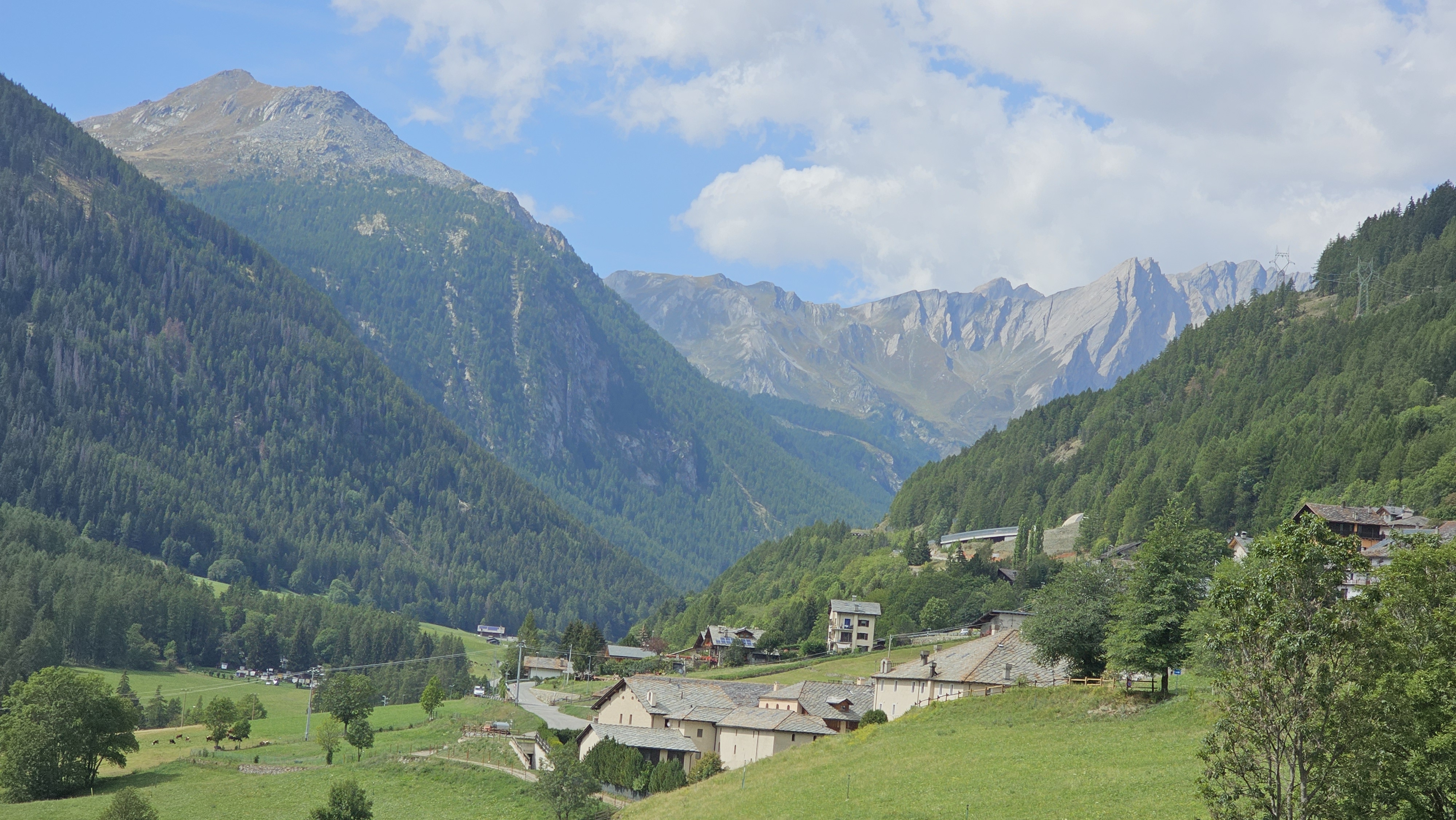
We walked past the Great St Bernard statue and had great views looking forward down the Aosta valley.
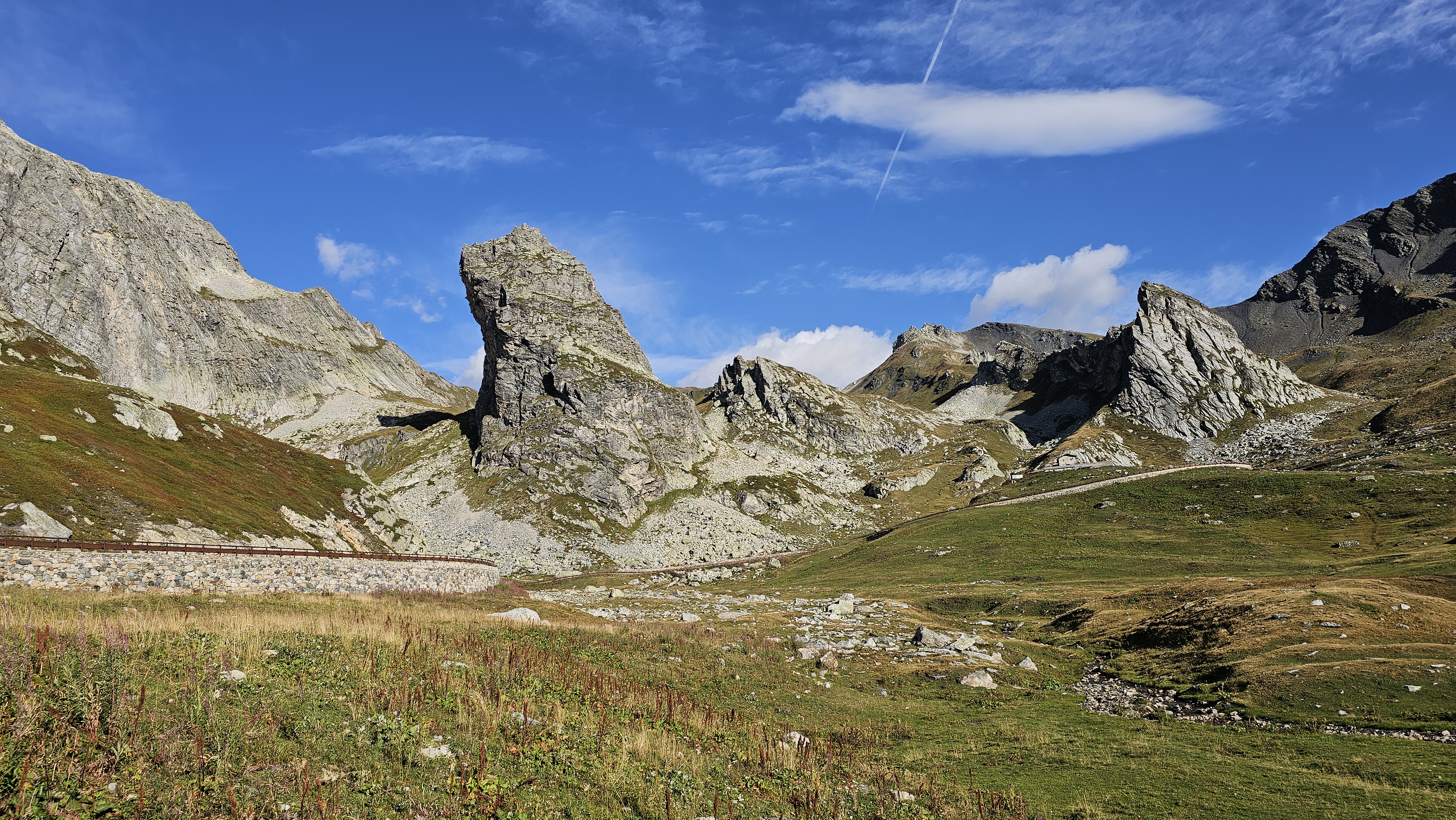
The first section of the downhill path was steep as we followed the mountain trail but was not too difficult.
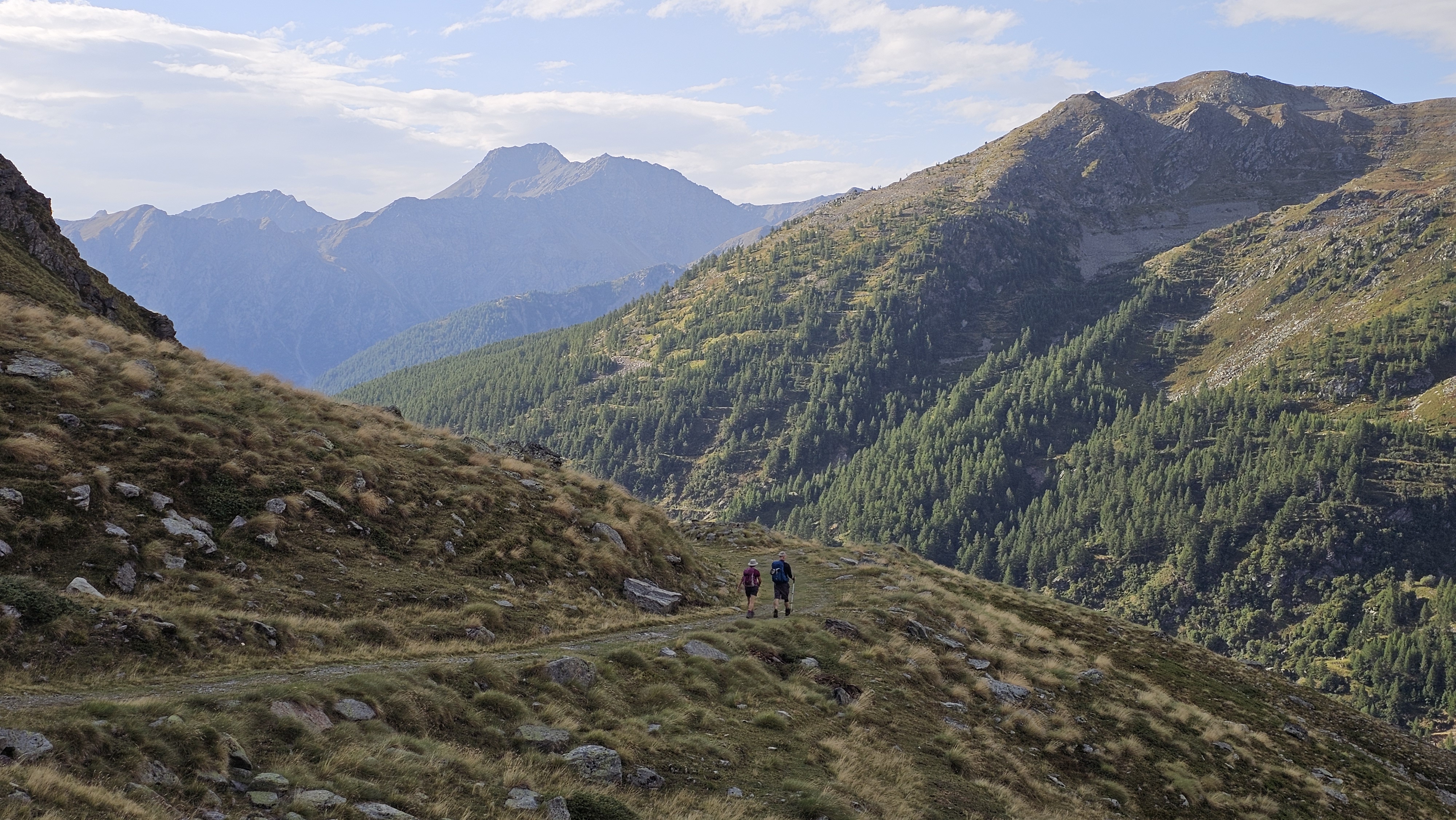
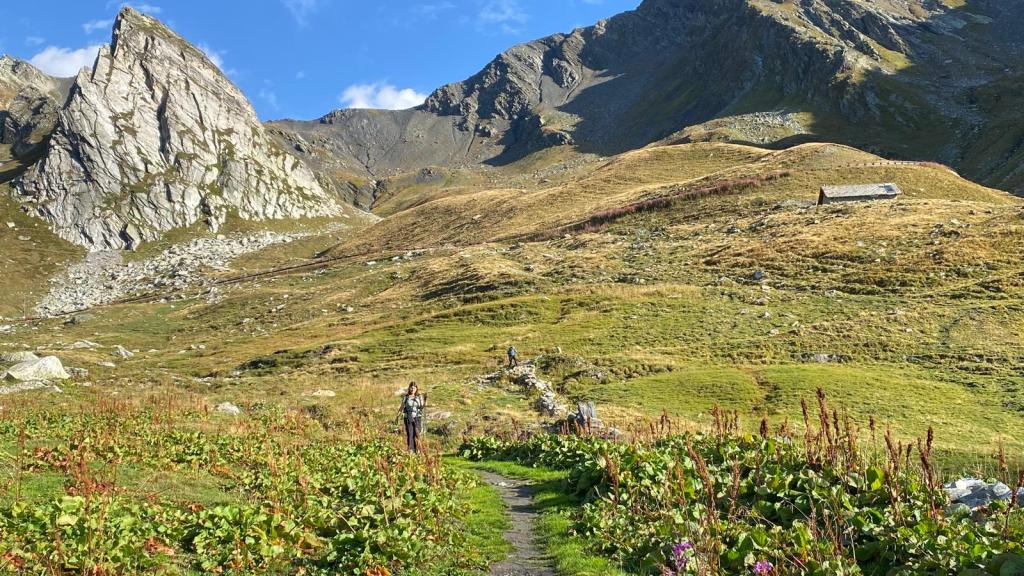
The next section had a wide grassy slope but it was still steep and tough on the knees.
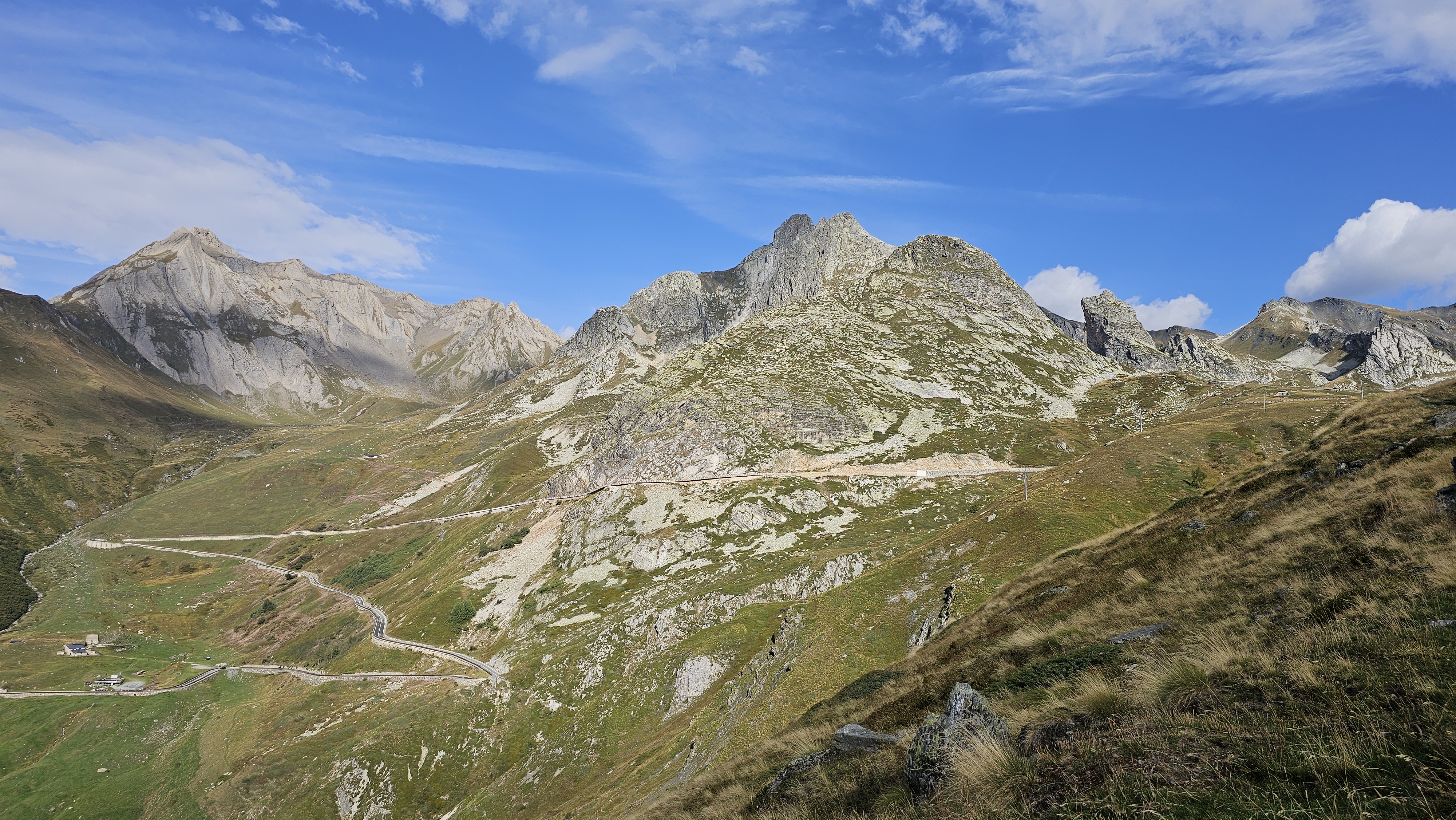
In clear weather we had spectacular views of the sharp granite peaks we were leaving behind.
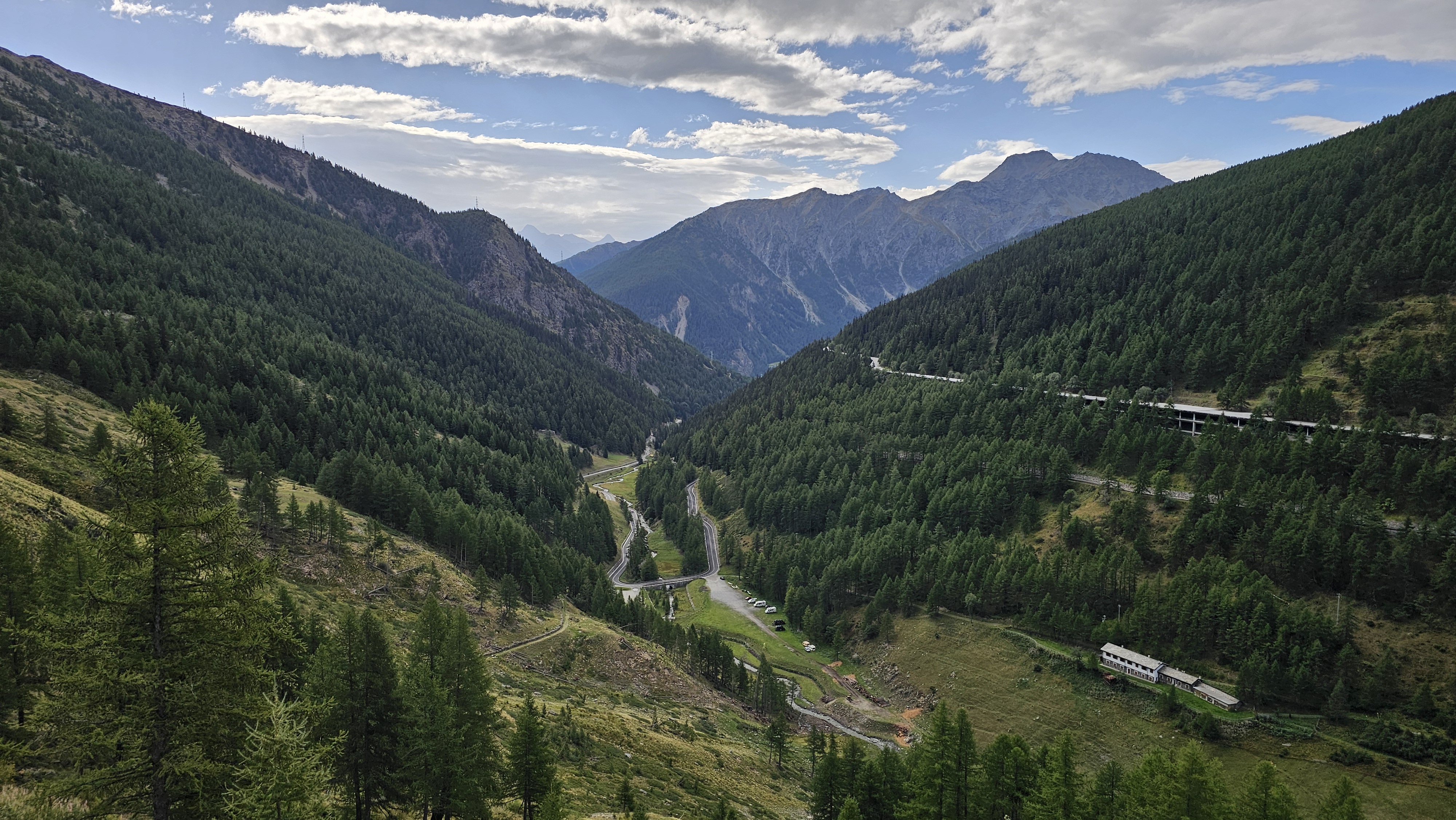
Facing forward a bit further down the lush green Aosta valley.
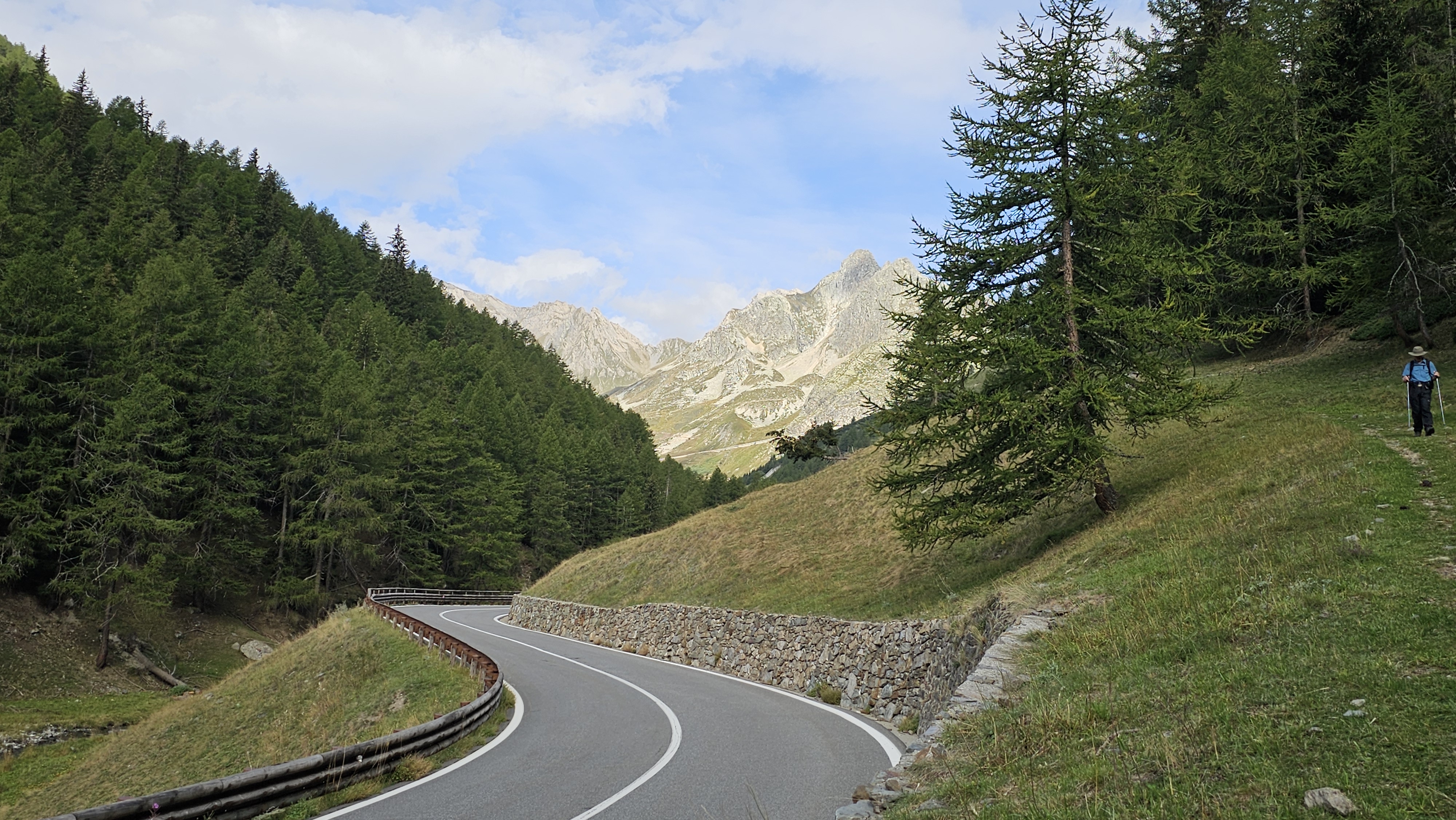
At the end of the steep track we came to the road which cuts through the valley to the pass. We had to walk along a small section of this road until we crossed over and then continued alongside the Gran San Bernardo stream until we arrived at quaint Saint Rhemy.
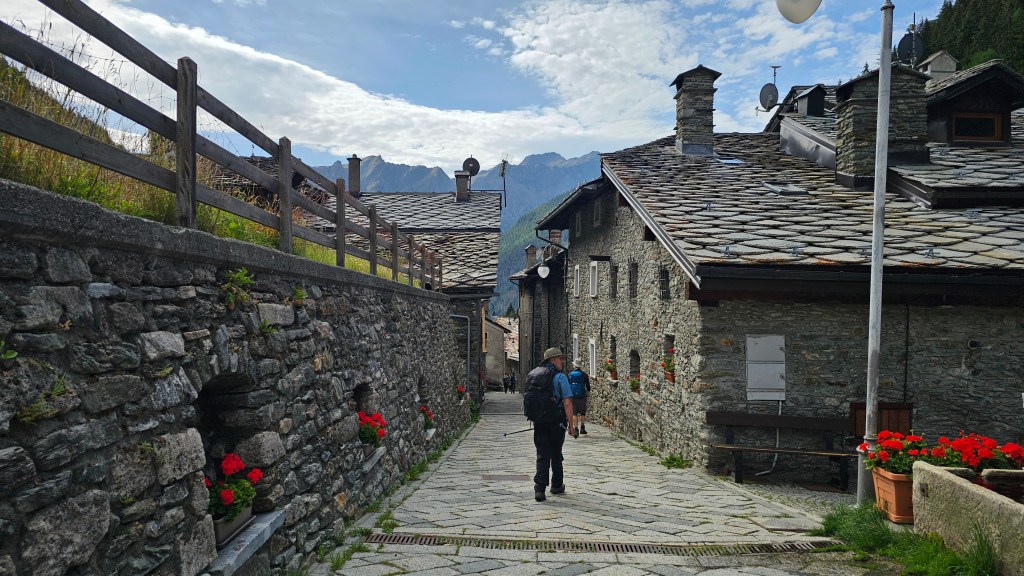
The small Alpine hamlet of Saint Rhemy was strategic in Roman times as a transit for the pass.
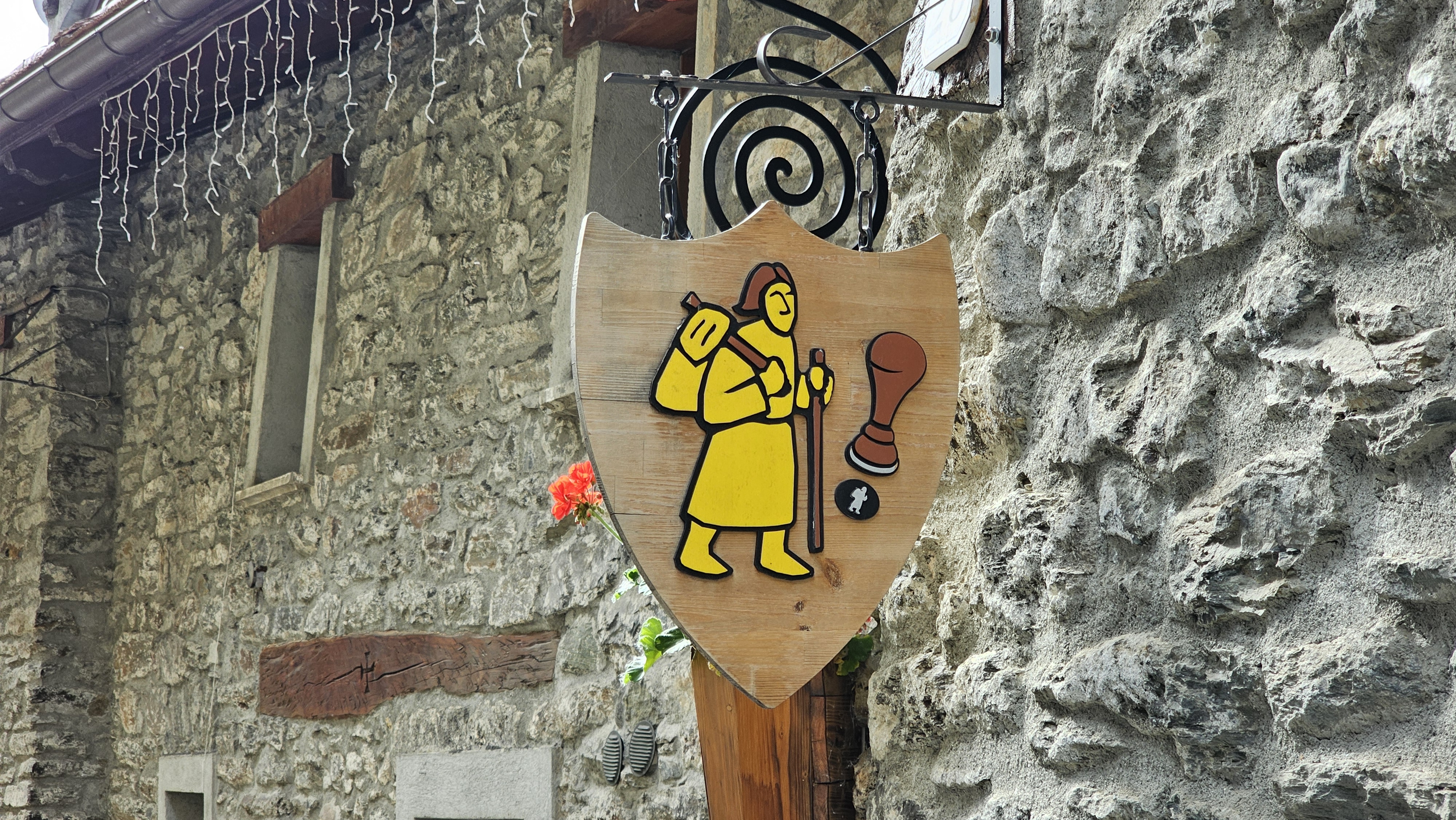
We stopped in Saint Rhemy for coffee in a small coffee shop. In here I had a lovely chat with some fellow pilgrims, a UK couple from Herefordshire who had also started in Lausanne. In here, we also received our first pilgrim stamp of the day.
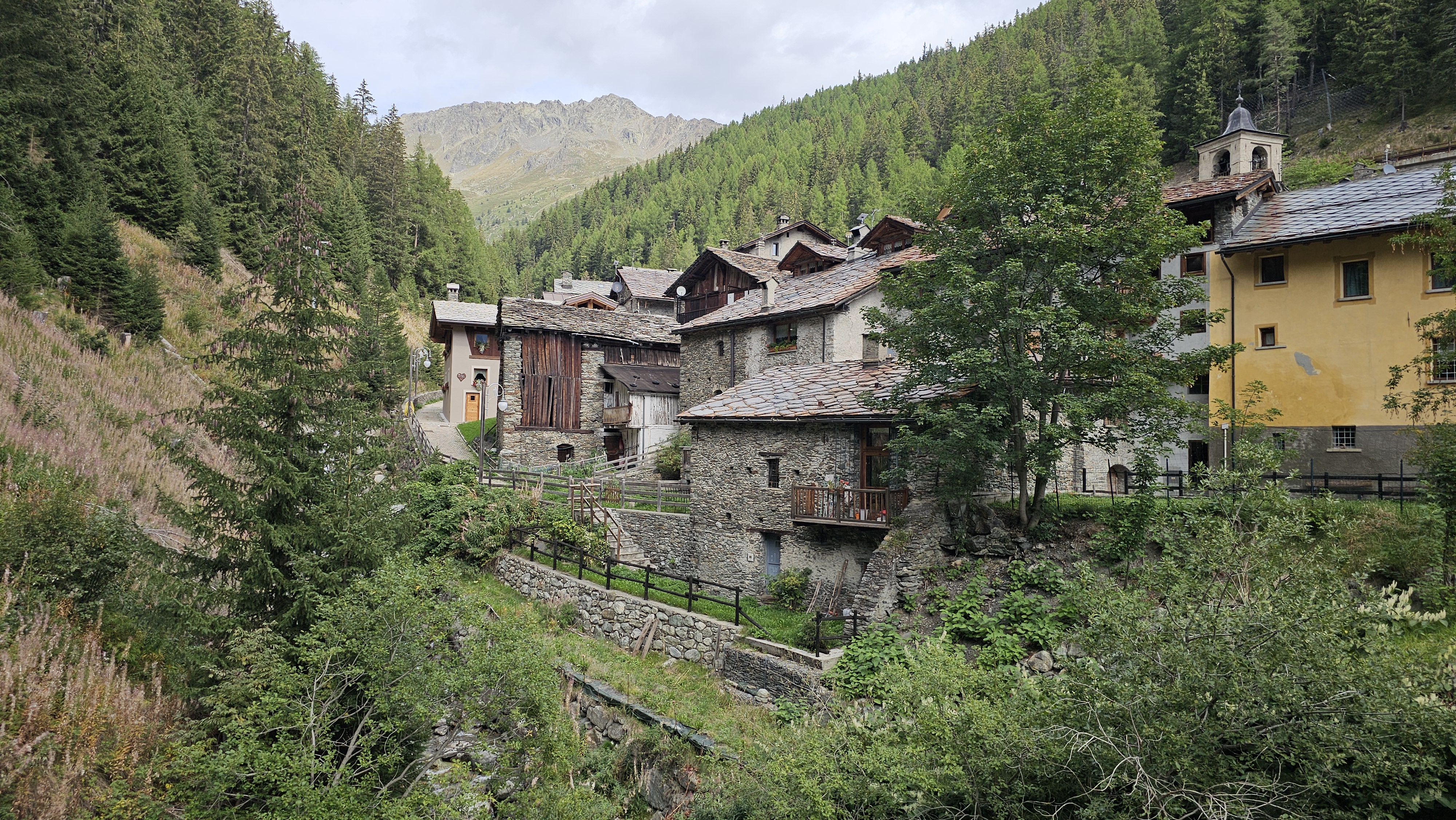
As we left the hamlet we crossed a bridge and continued along the wide gravel track.
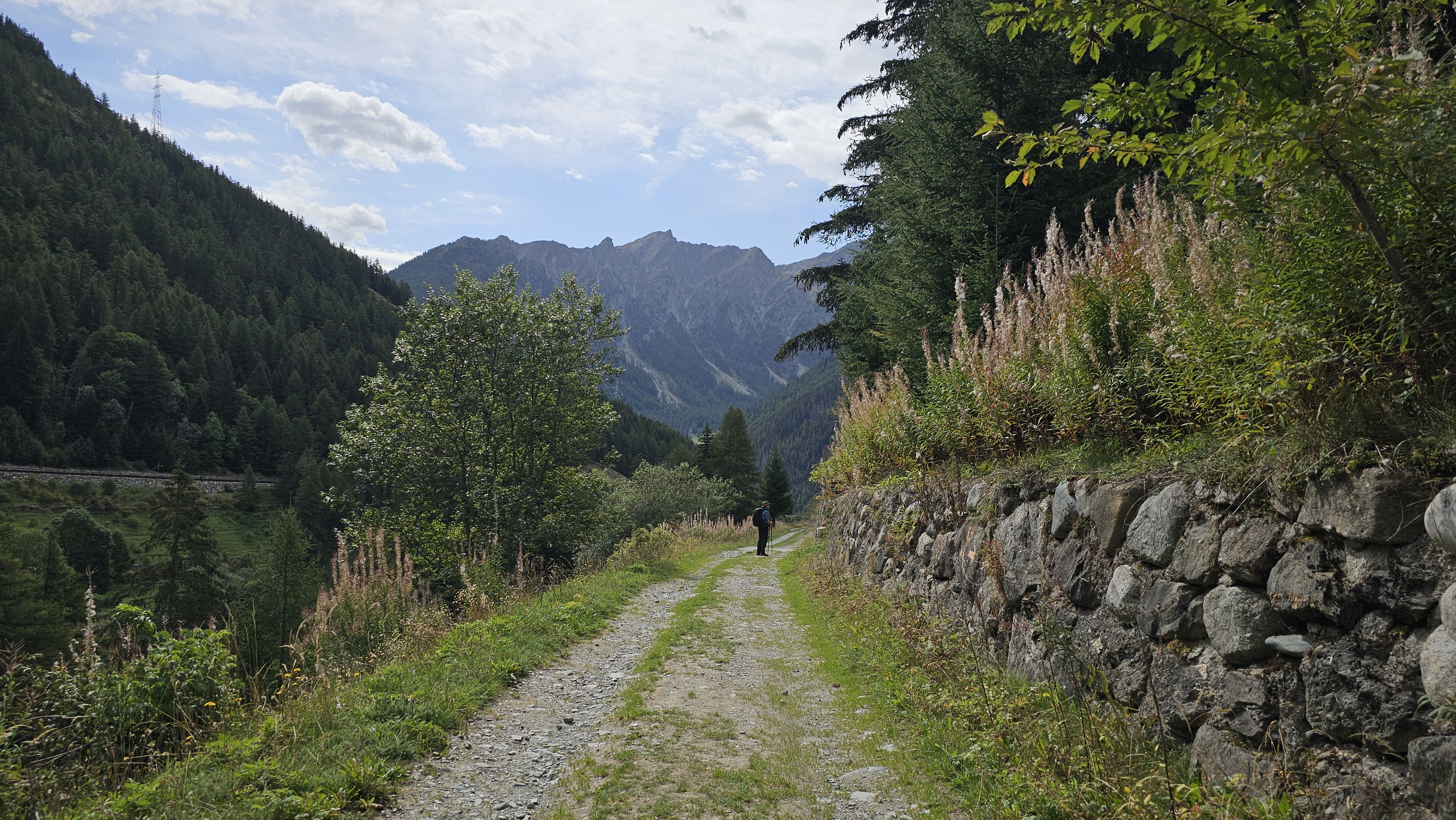
With the river to our left, we continued onwards and downwards!
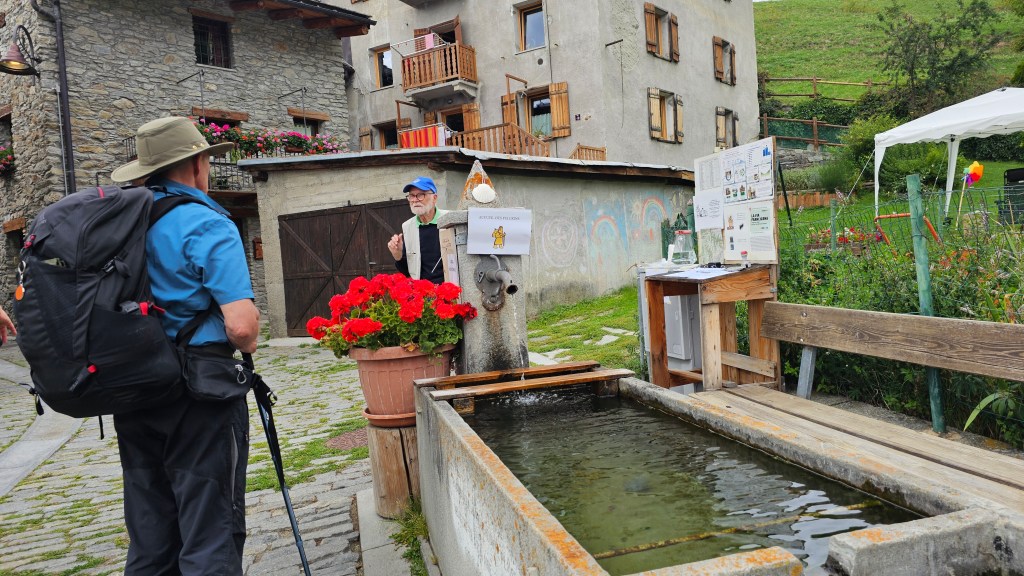
As we approached Saint Rhemy en Bosses we came across a pilgrim stop where the owner came over to say ‘bonjourno’ to us as we obtained another pilgrim stamp.
Roza entered our names in his book and we found that only 77 pilgrims from the UK had signed the book last year, about half as many as those from France. Of course, not every pilgrim who passes through signs the book!
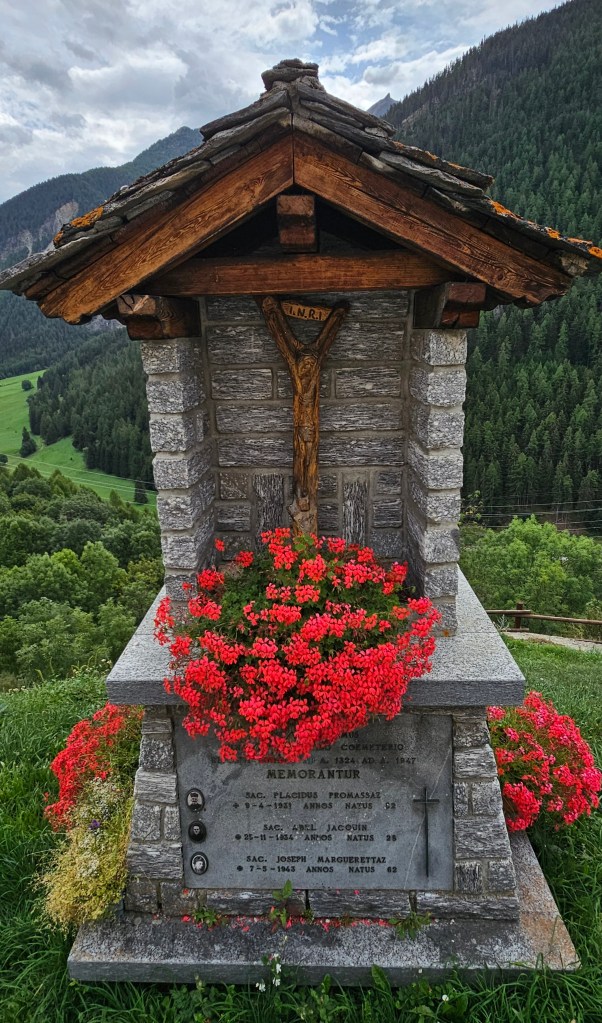
Next to Saint Rhemy en Bosses is Saint Leonard with its church, memorial and round stained glass outside window.
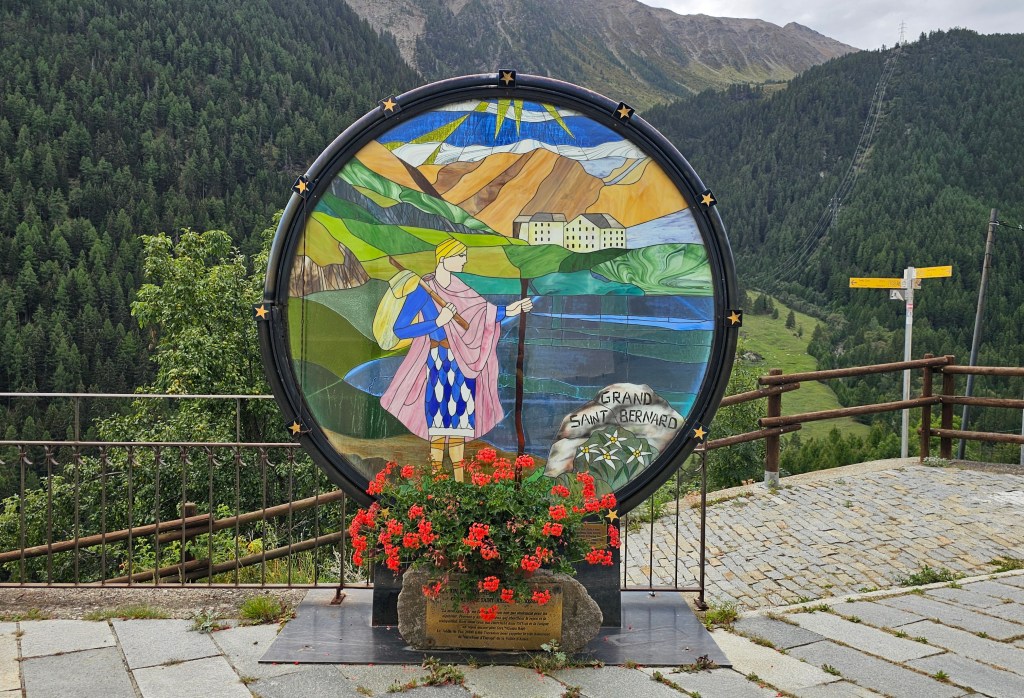
Overlooking the valley this stained glass window shows a pilgrim looking across the Great St Bernard lake and hospice.
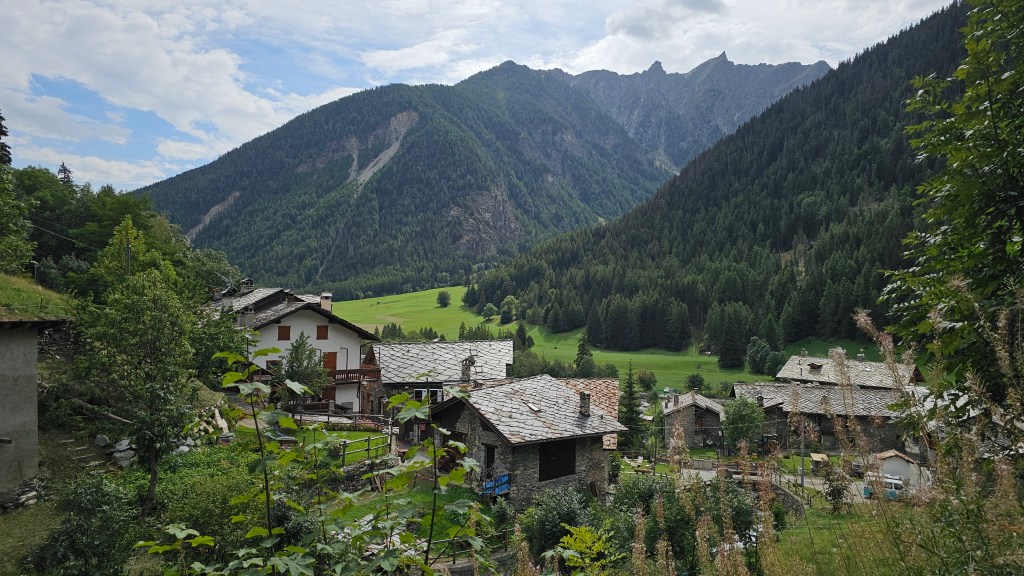
Just past the Saint Leonard church we had a steep downhill dirt track section which ended in the hamlet of Cerisey.
The trail flattened out here with wide grassy pastures and scenic views across the valley.
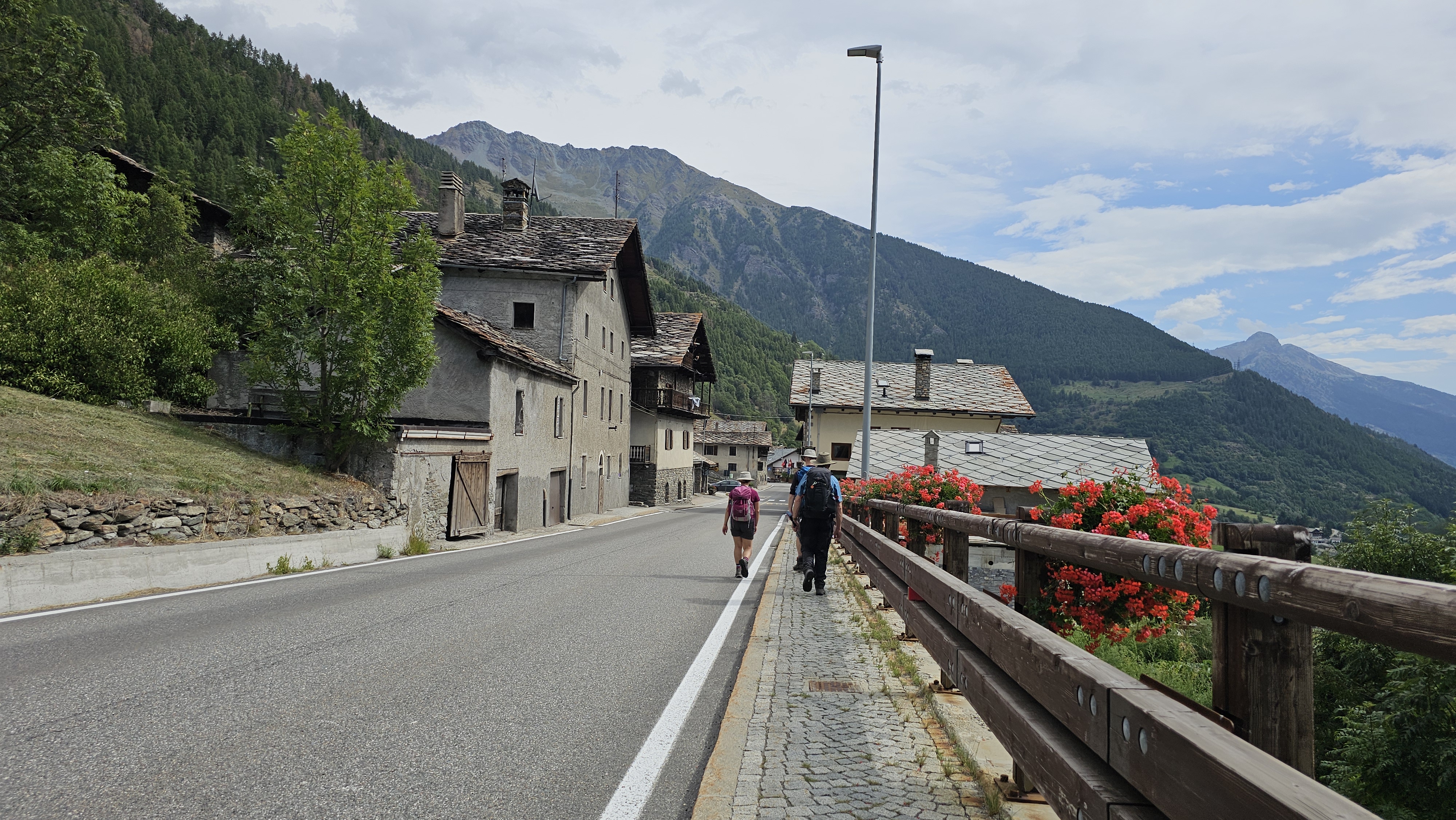
Then came a bit more road walking as we walked through the small town of Saint Oyen.
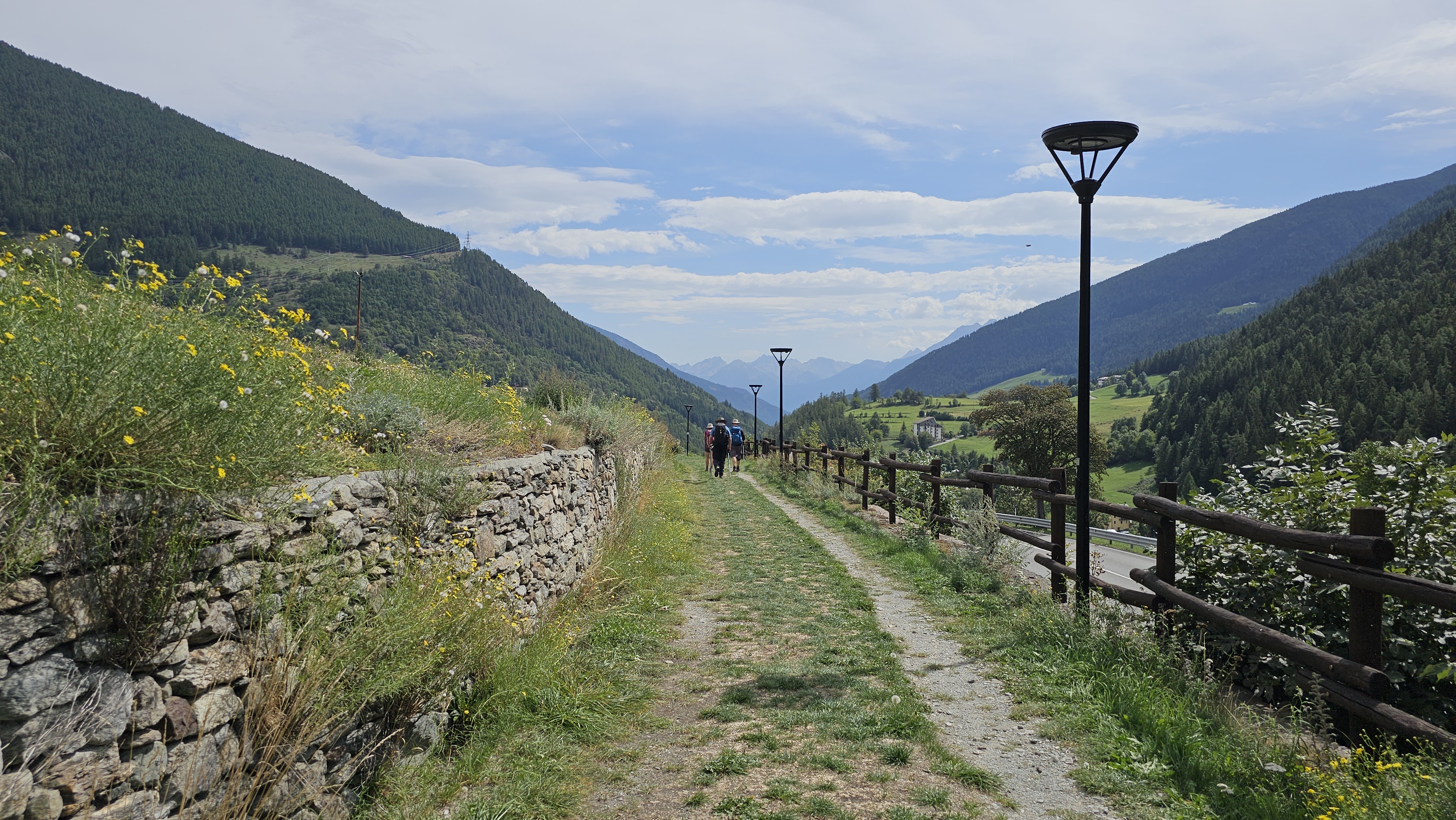
From St Oyen we walked adjacent to the road on this path for about 1.5 km to Etroubles.
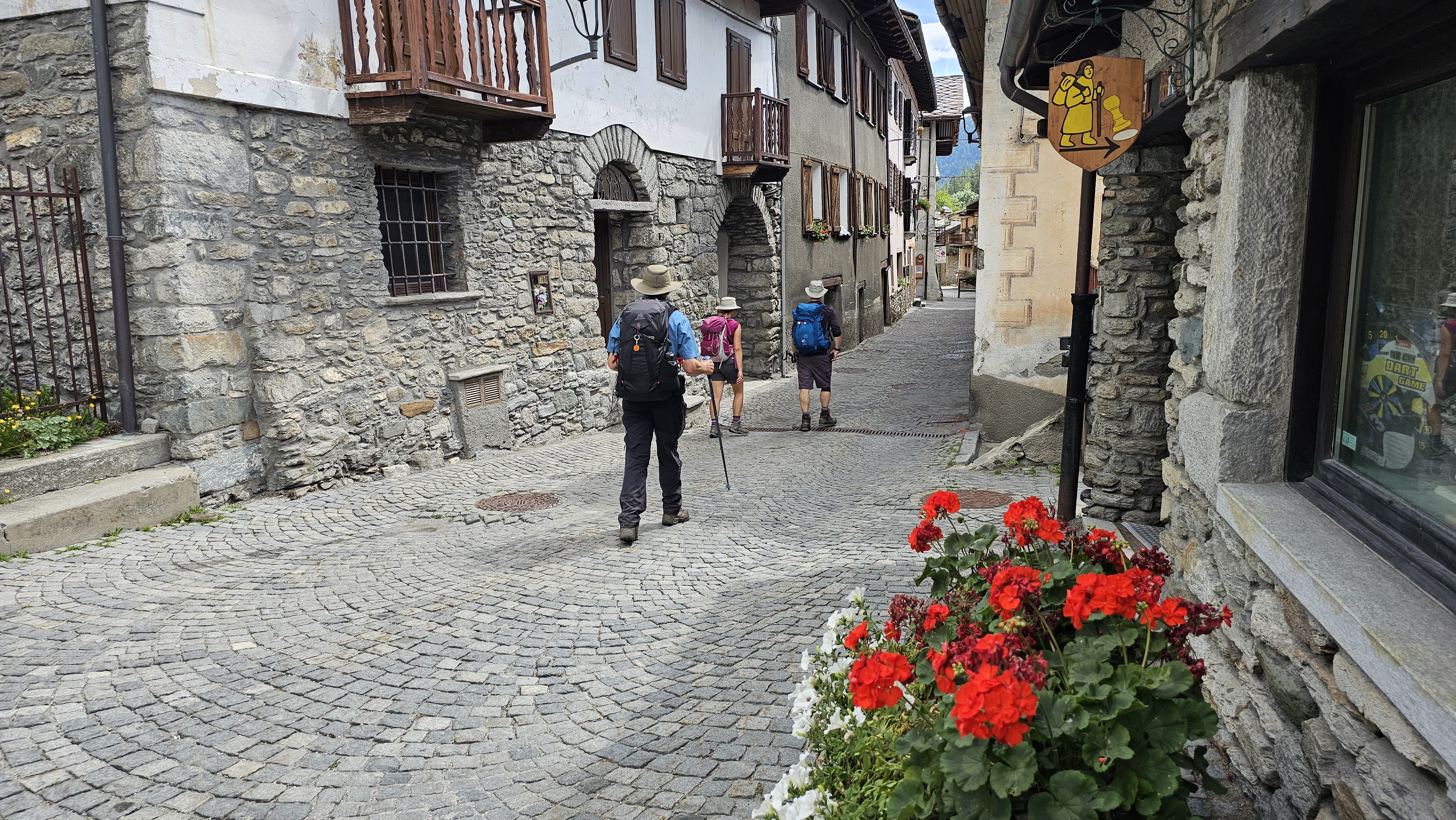
Etroubles is halfway between Great Saint Bernard and Aosta and many pilgrims break up this long section with an overnight stop here. But not us!
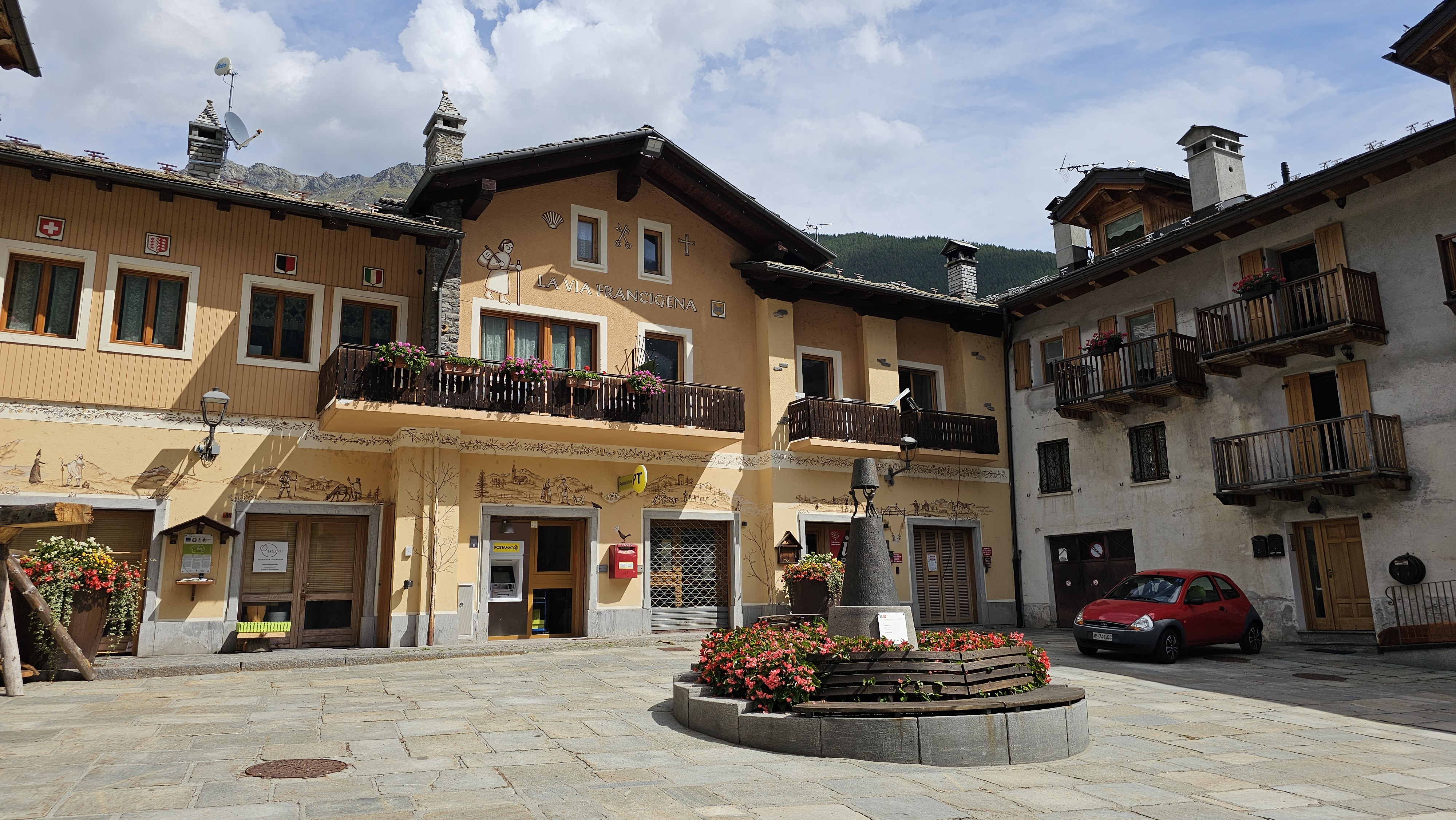
Etroubles is a historic medieval village with cobbled streets and colourful flowers.
A pilgrim hospice was built here in 1317 (above) and in May 1800, Napolean stayed in the home of Abbot Leonard Veysendaz.
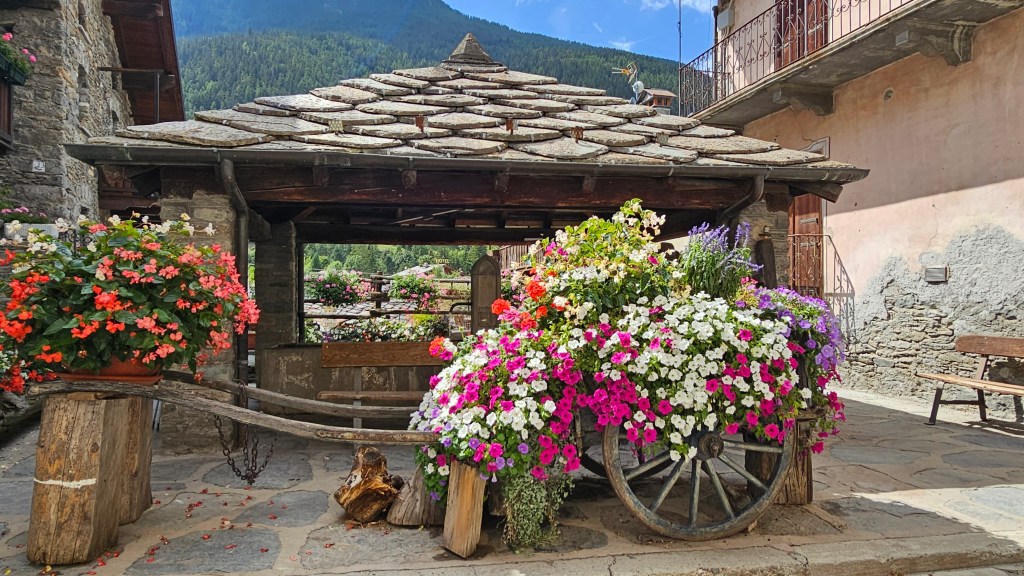
We stopped in a pizza restaurant called ‘Le Vieux Bourg’ for lunch in Etroubles. Cheese is a huge part of Swiss culture, but after 9 days in Switzerland I was completely cheesed out at that point, so here in Italy, I opted for a tuna salad instead.
The food was tasty but while acceptable, the staff were not overly friendly. As my 5G wasn’t working, I asked for the wifi password to be told bluntly “no wifi”. OK fair enough…
After lunch we refilled our water bottles from the above fountain in preparation for the next section of todays walk.
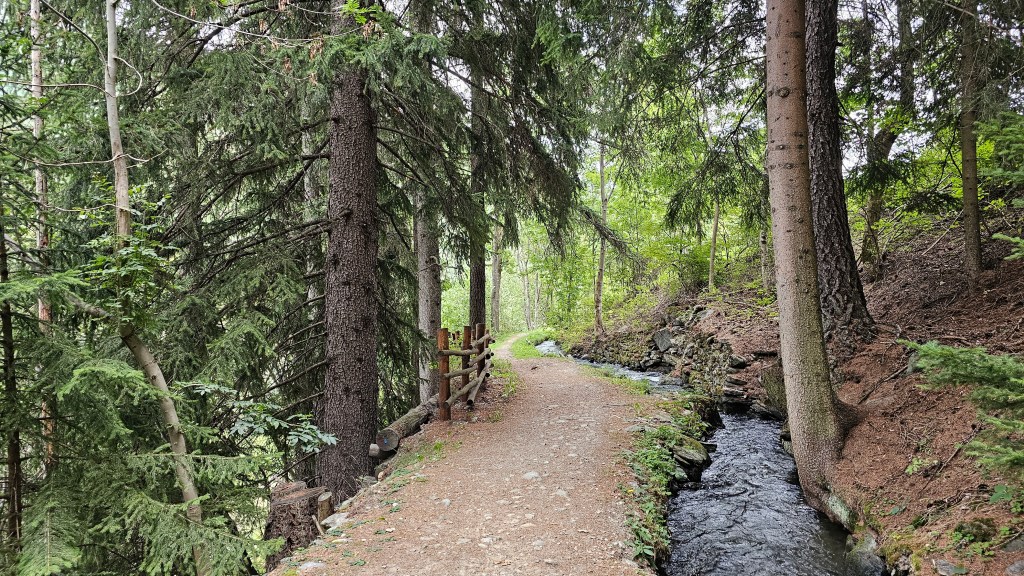
And thankfully, shortly after Etroubles we enjoyed flat terrain for the next 8 km or so as we walked alongside the Ru Nuef, an ancient irrigation canal.
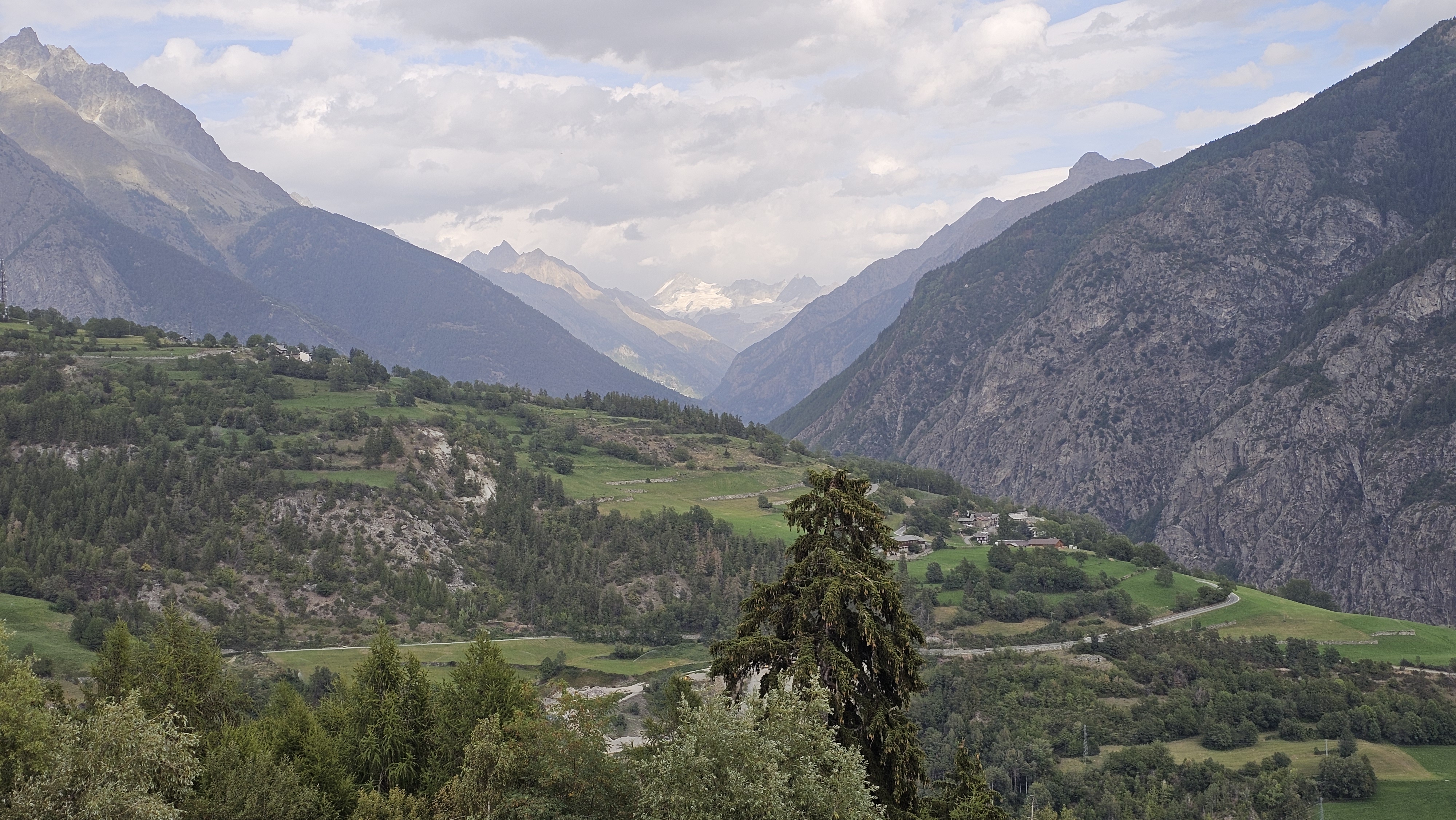
On occasions we could see snow covered mountains in the distance.
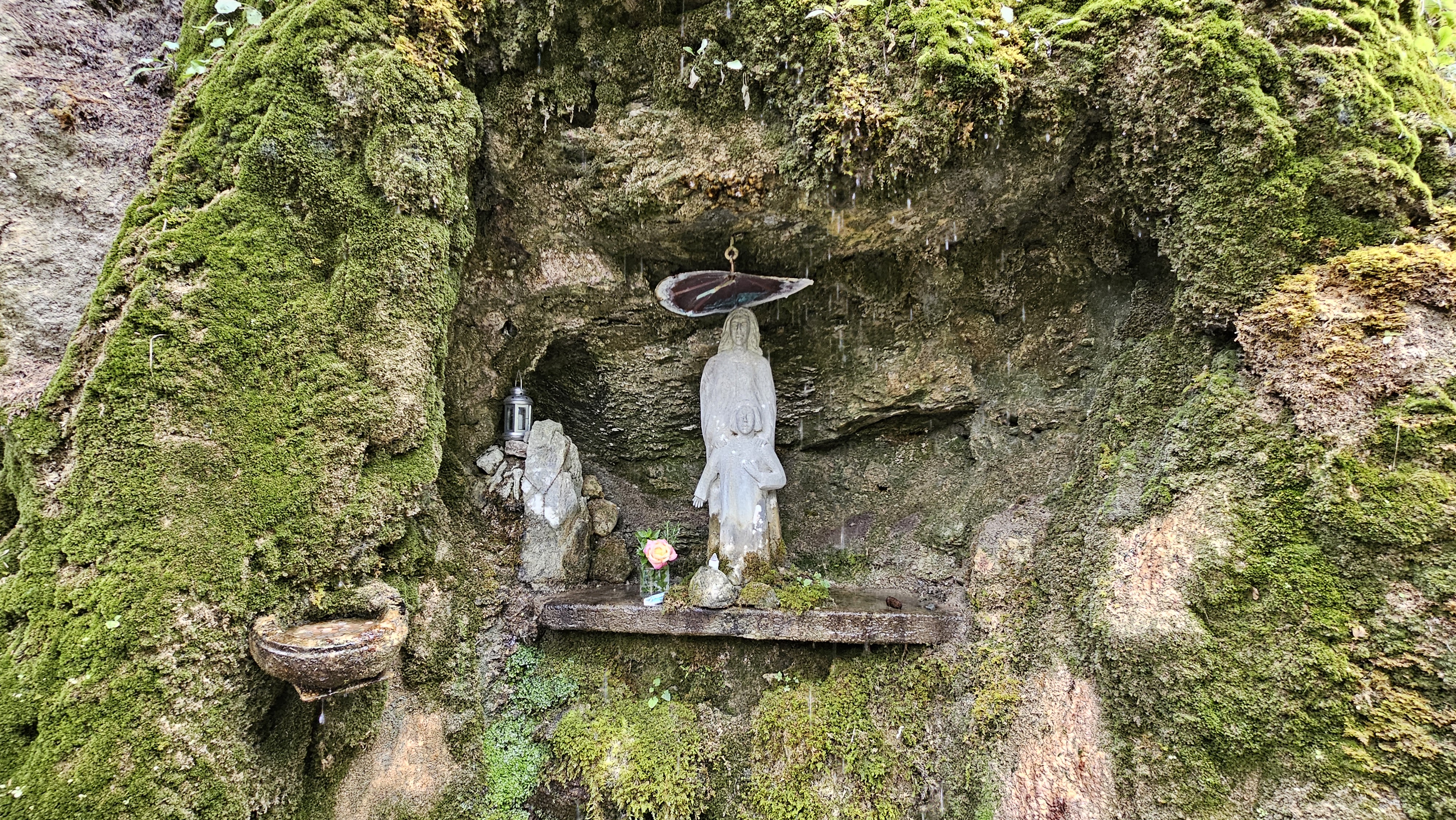
We had a break at a bench next to this grotto which is a statue of young Jesus with his mother.
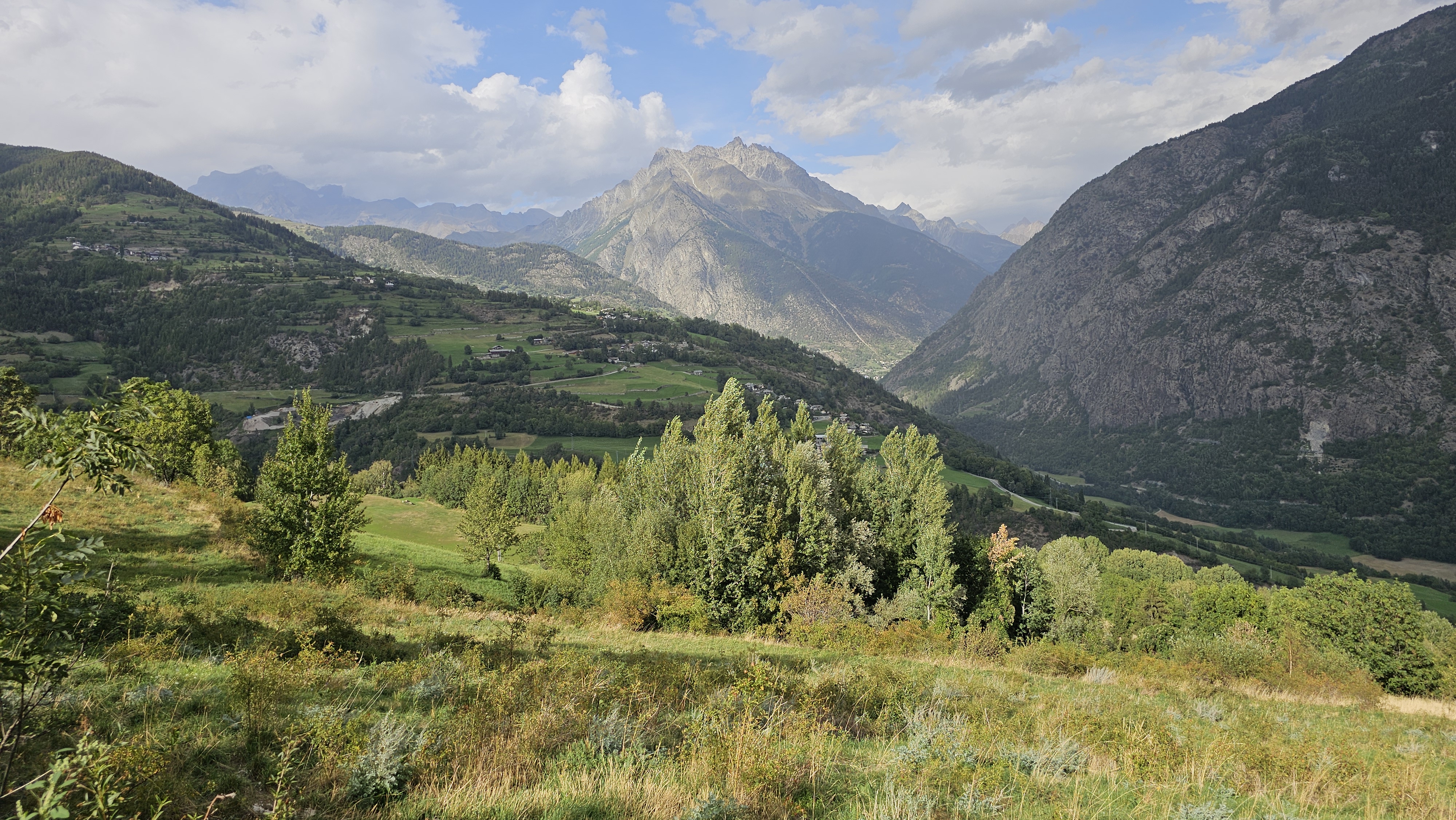
The flat section ended abruptly with a steep descent to Gignod.
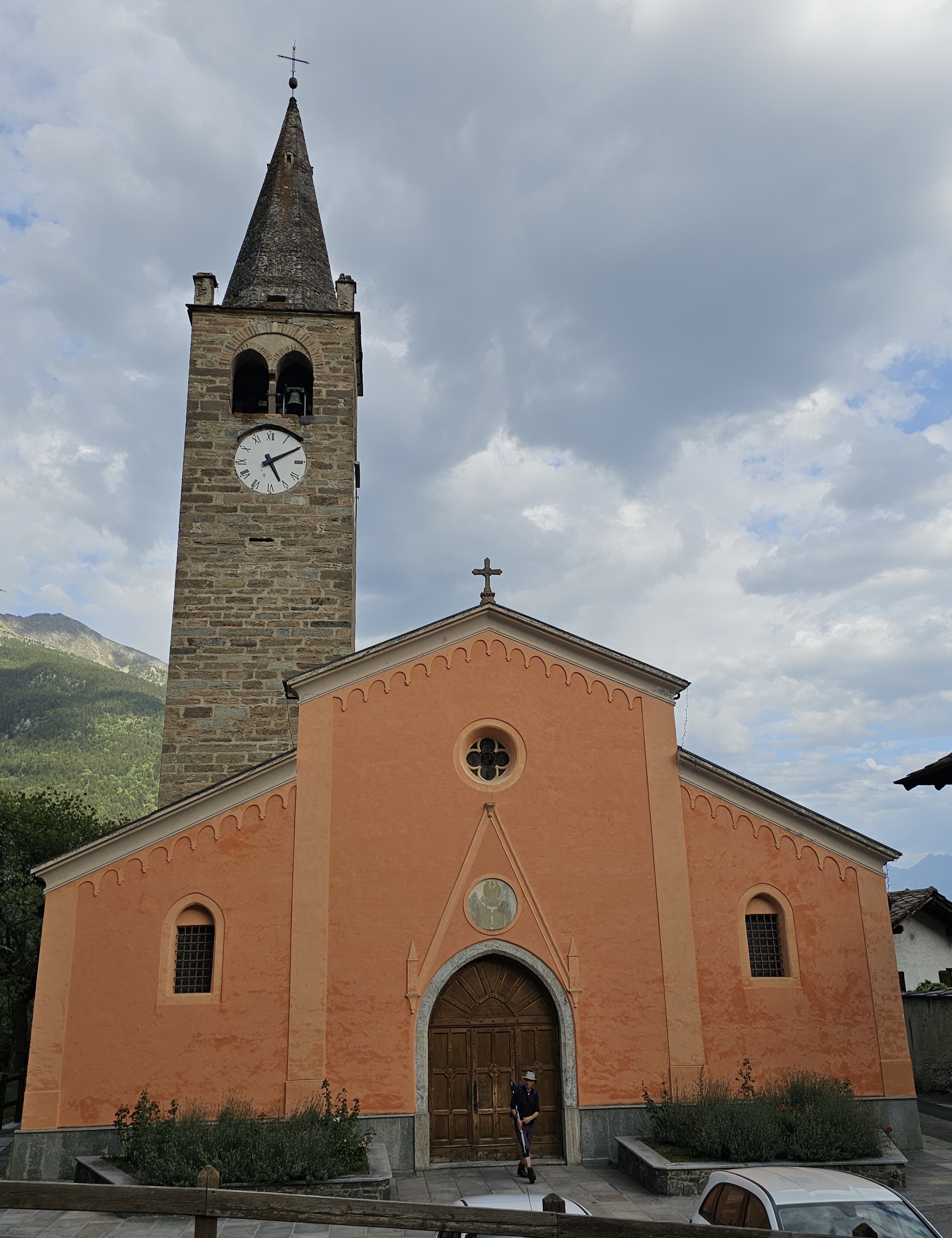
We stopped at the Church of Sant Illario in Gignod which was very pilgrim friendly with a welcome message and another stamp for our VF pilgrim passports.
We sat outside this church finishing off the last of our snacks before the final descent into Aosta.
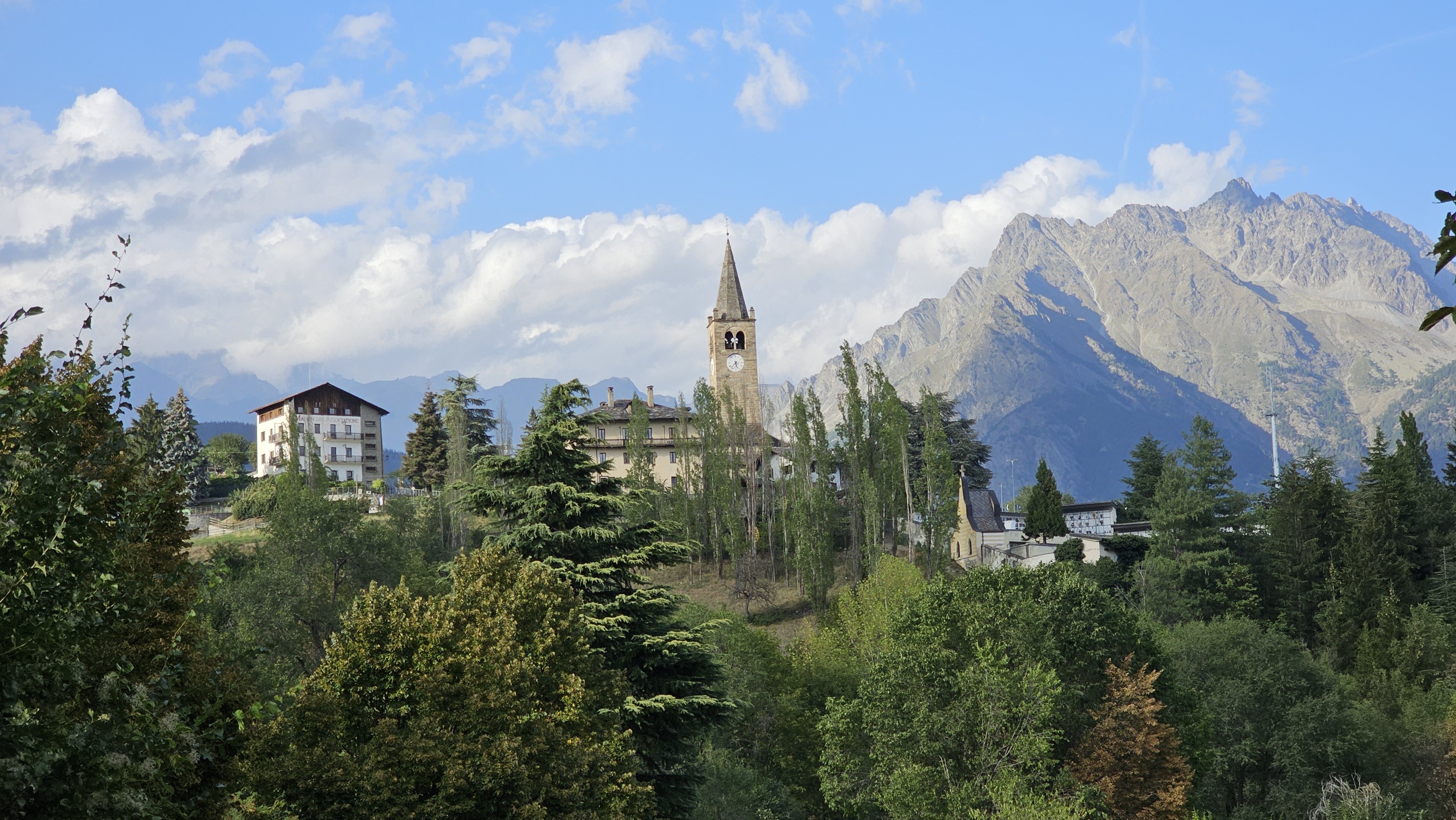
Gignod is named after the Gignod family and each year the current residents make a procession to the peak of Punta Chaligne to remember the two thirds of villagers killed by the plague in the 17th century.
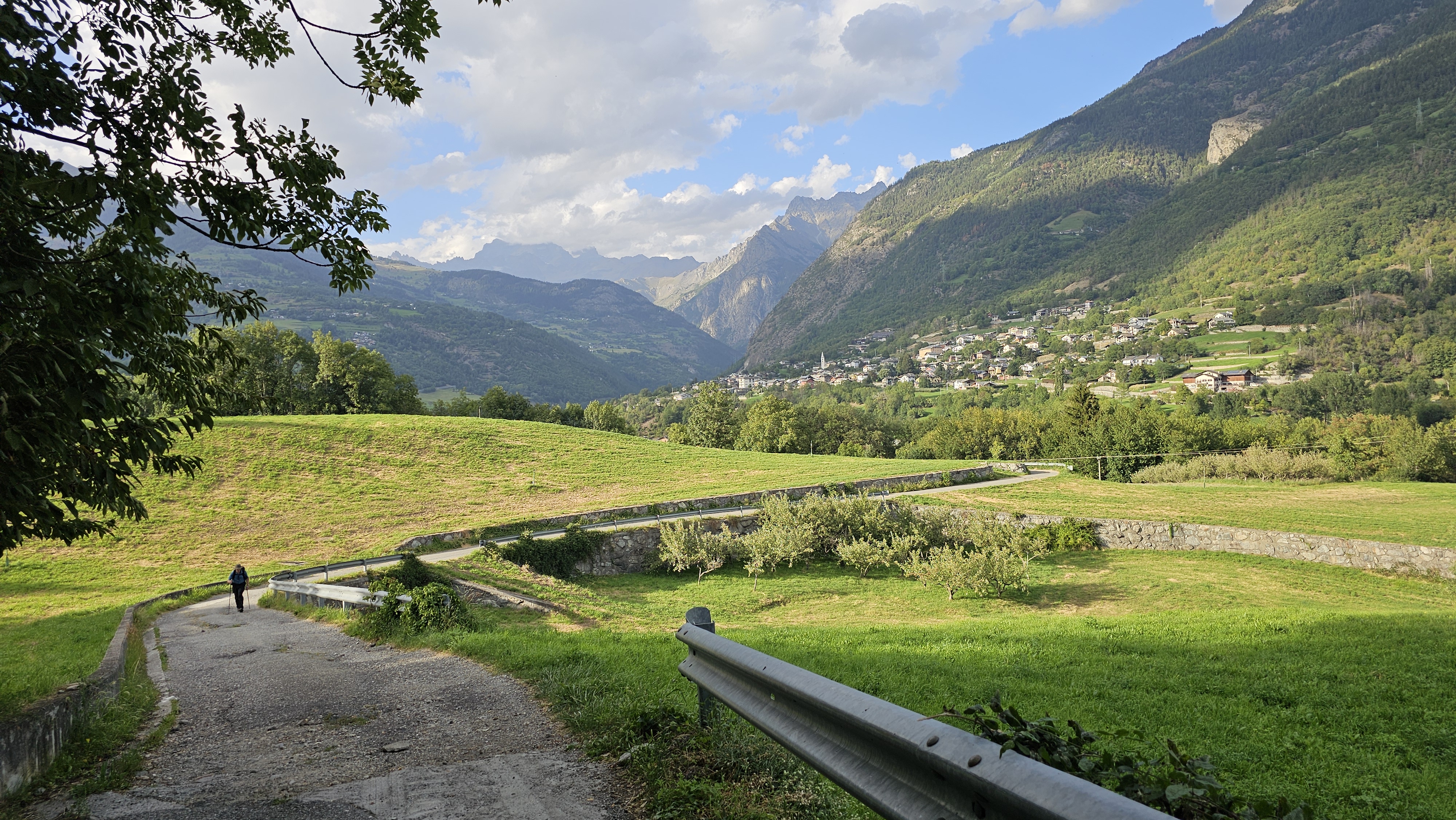
Chris on this quiet lane…
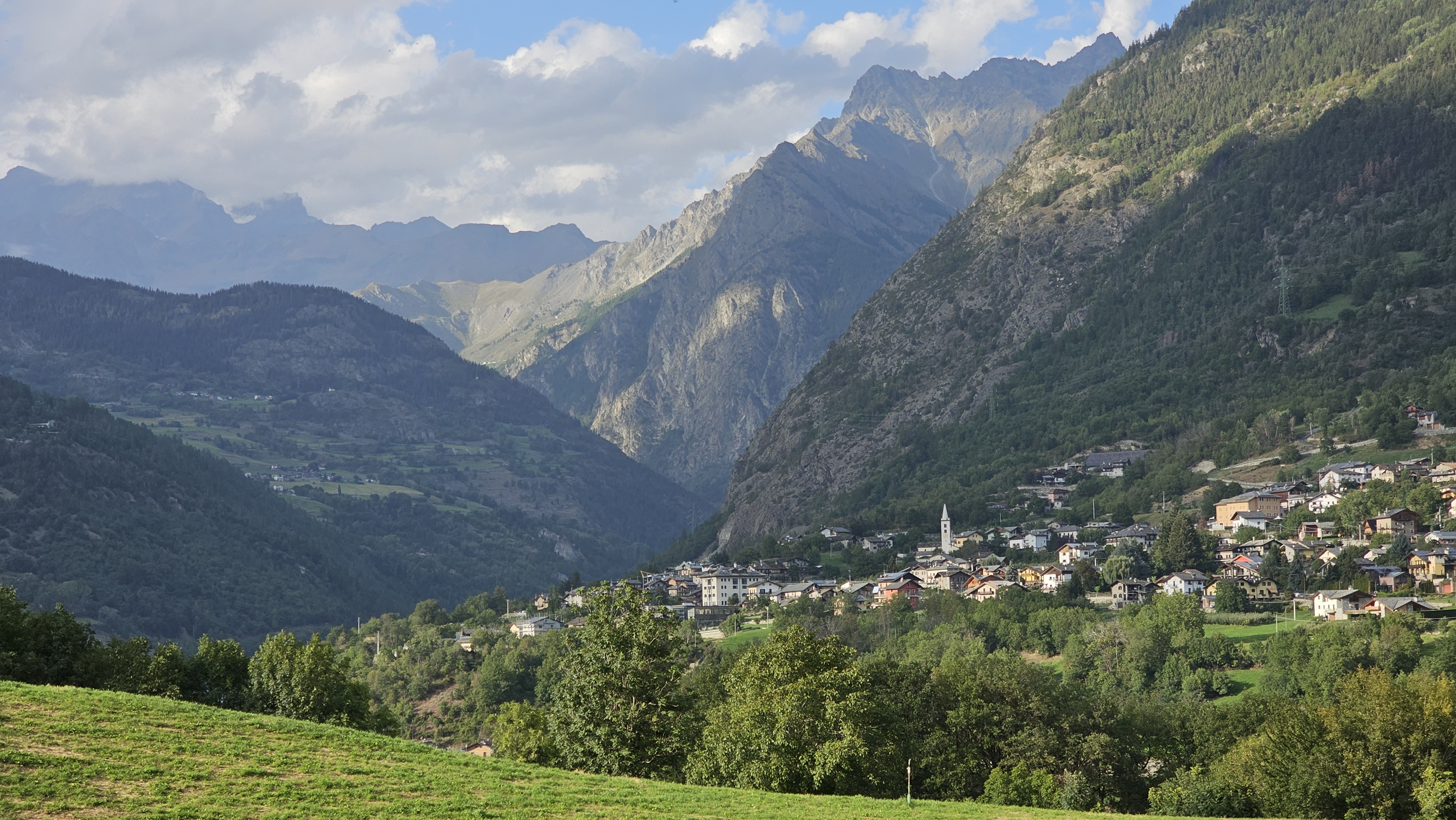
Aosta coming into view at last…
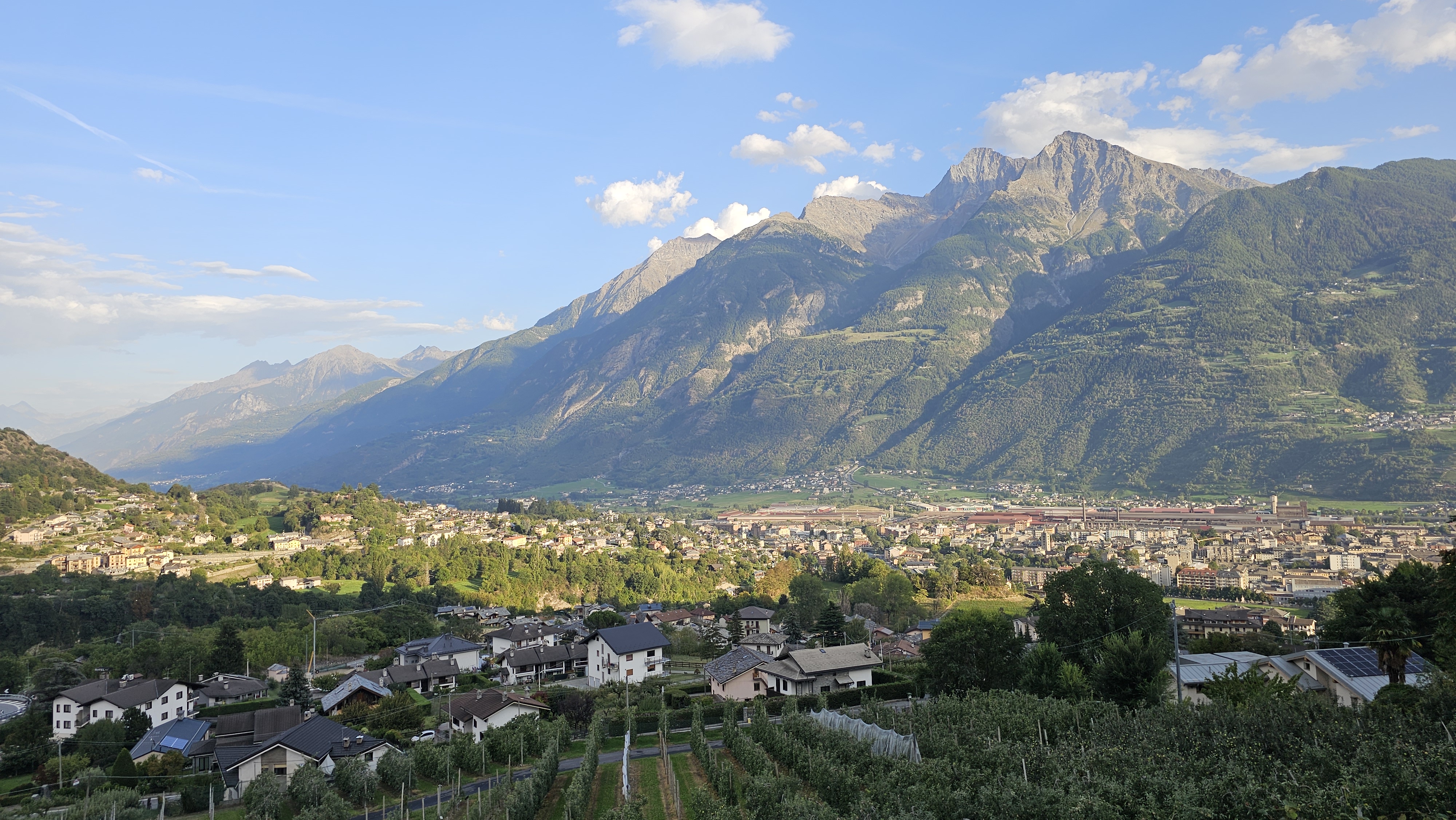
From quiet country lanes we walked along a busy road towards Aosta. As we got closer we followed steep paved downhill roads and at this point with aching legs, feet, shoulders and pretty much everything I did question our choice of holiday!
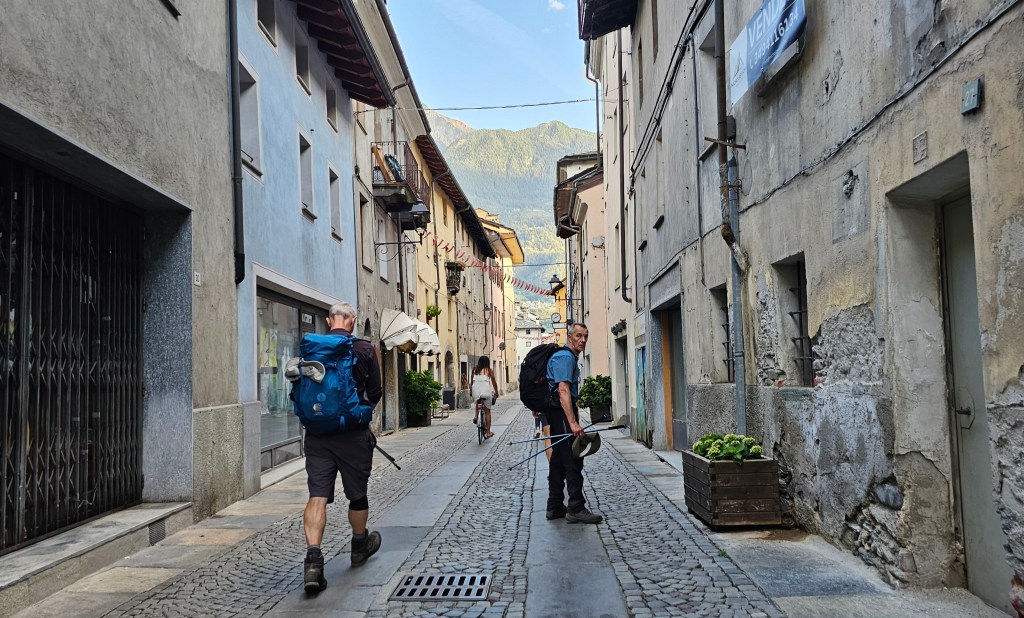
After nearly 33 km and about 10 hours (including stops) of walking the very last bit through the old town of Aosta seemed never ending…
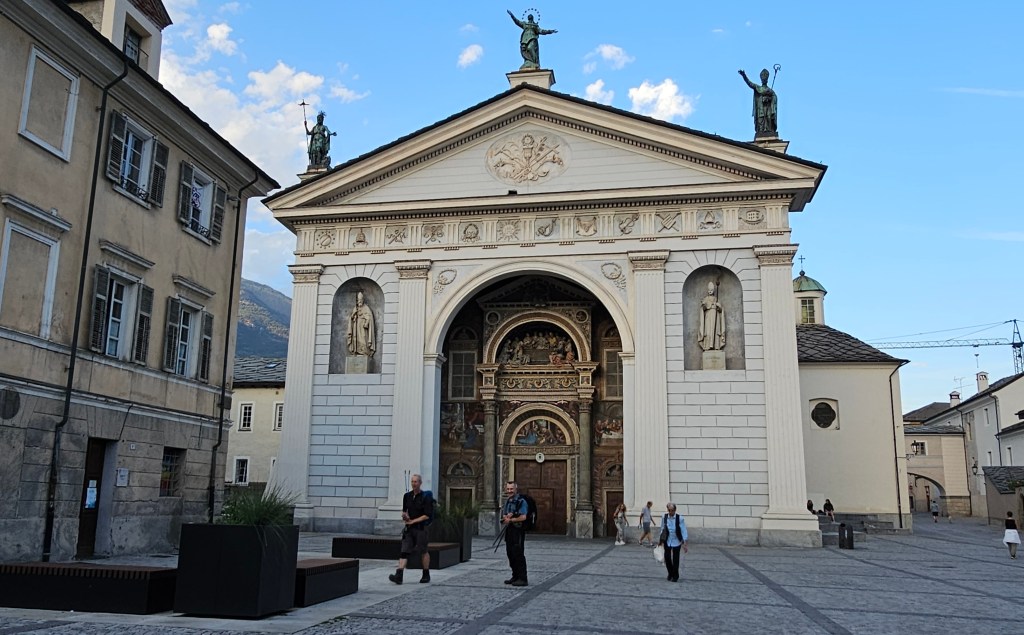
Hurrah! With much relief and over 49,000 steps later we finally reached the official end of this VF stage.
And on this occasion the guide book was correct with its description of ‘hard’. And actually incorrect with its distance! The book said 28.8 km and while we detoured a bit at lunchtime, it wasn’t much and Strava recorded the actual 33 km we had walked!
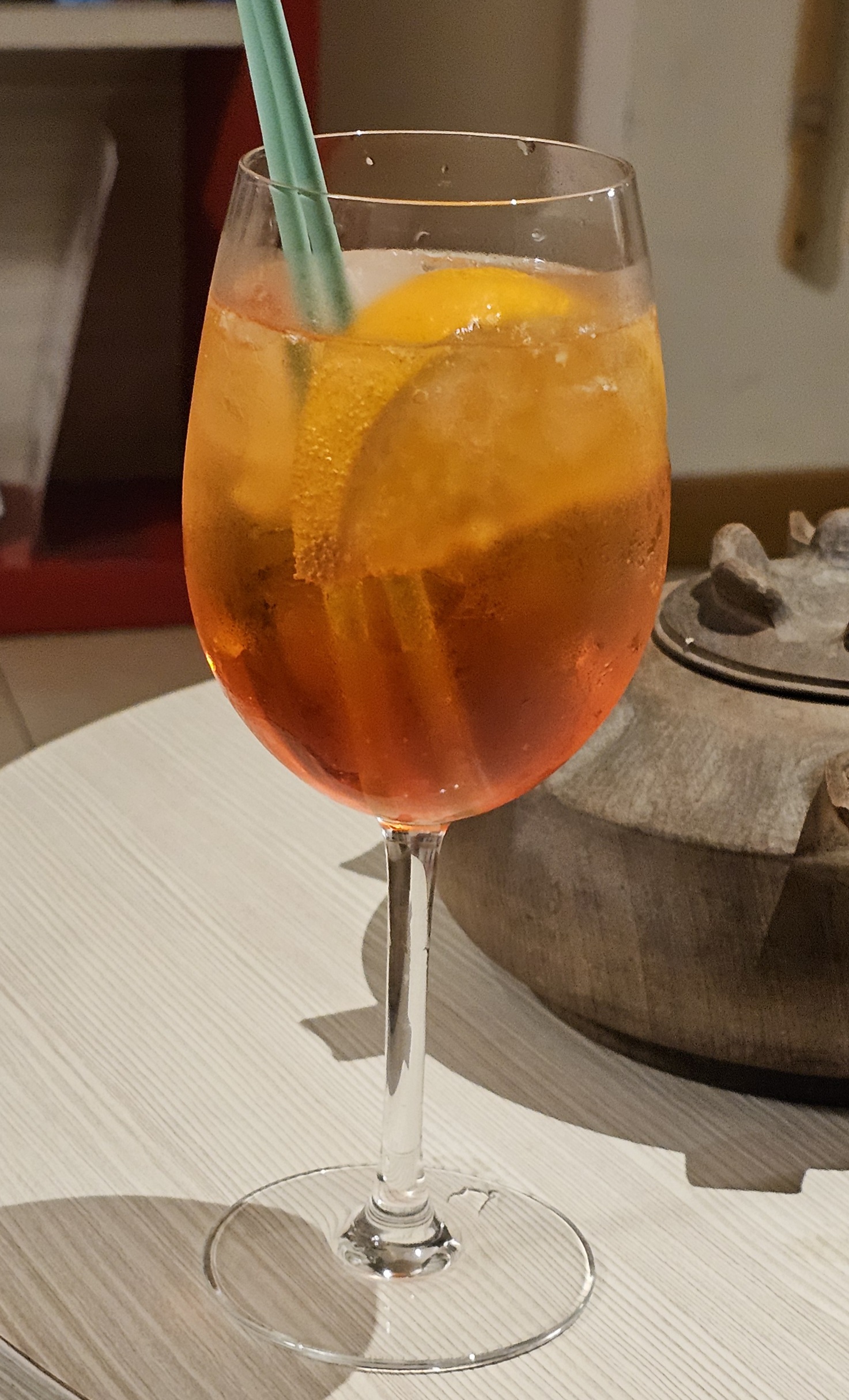
We checked into the nearby HB Aosta hotel at gone 7 pm. After a quick shower each, Chris and I popped downstairs for a celebration drink. A perfect chilled Aperol Spritz at what seemed, after pricey Switzerland, a perfect price at €7!
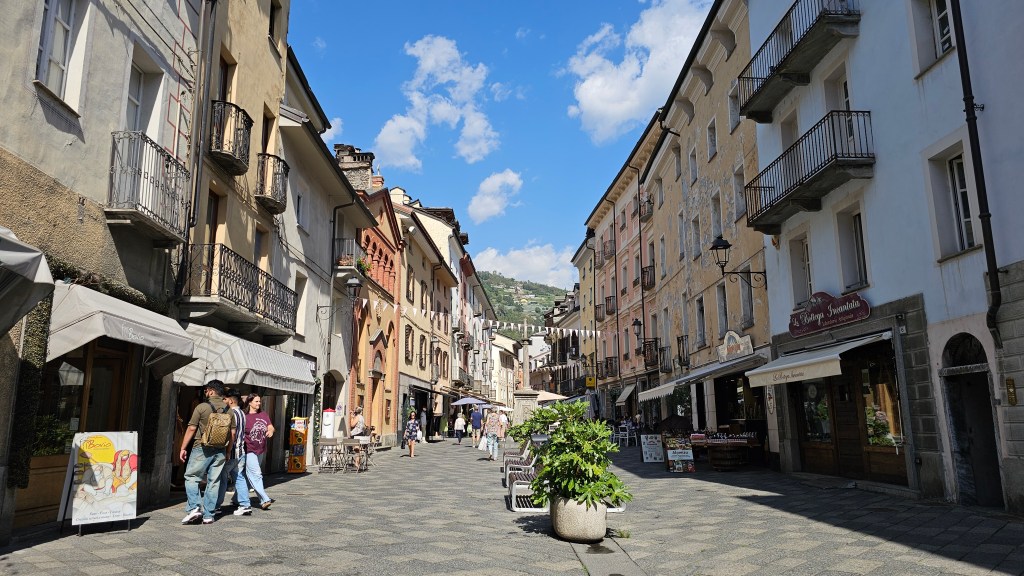
Aosta rest day
As mentioned, we had two nights booked in Aosta which gave us a full rest day to allow our tired muscles and aching limbs to recover.
Chris and I had a long and leisurely breakfast, chatting about our options and considering plans for tomorrow. The breakfast was amazing, with a wide range of fresh choices and even with Prosecco available for bucks fizz 🥂 this was the best breakfast of the trip!
After breakfast we washed our clothes in the sink and hung them in our sunny room to dry. By now we were in a good routine of the simple life of clothes washing almost every day… my lightweight tee shirts and walking trousers have easily dried overnight in each place.
Without rushing around, at late morning we set off to explore the main sights of Aosta. In pleasant temperatures of 26 degrees and sunshine and our lightweight small backpacks our little walkabout was easy although our legs were still aching from yesterday.
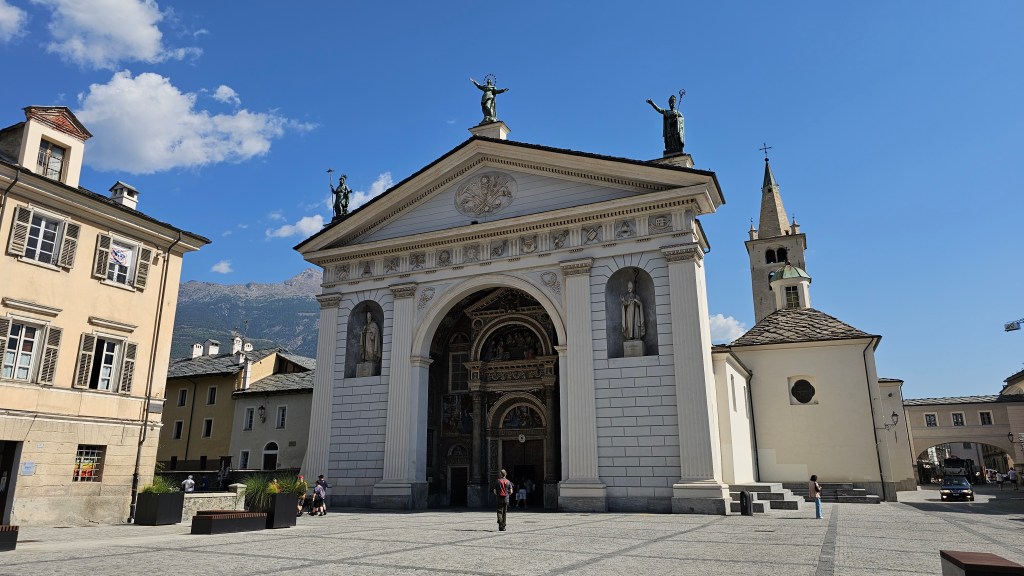
Our first port of call was back to the cathedral which was open this morning and free to enter.
The origins of the cathedral date back to the 4th century and its current Neoclassical facade was built between 1846-48.
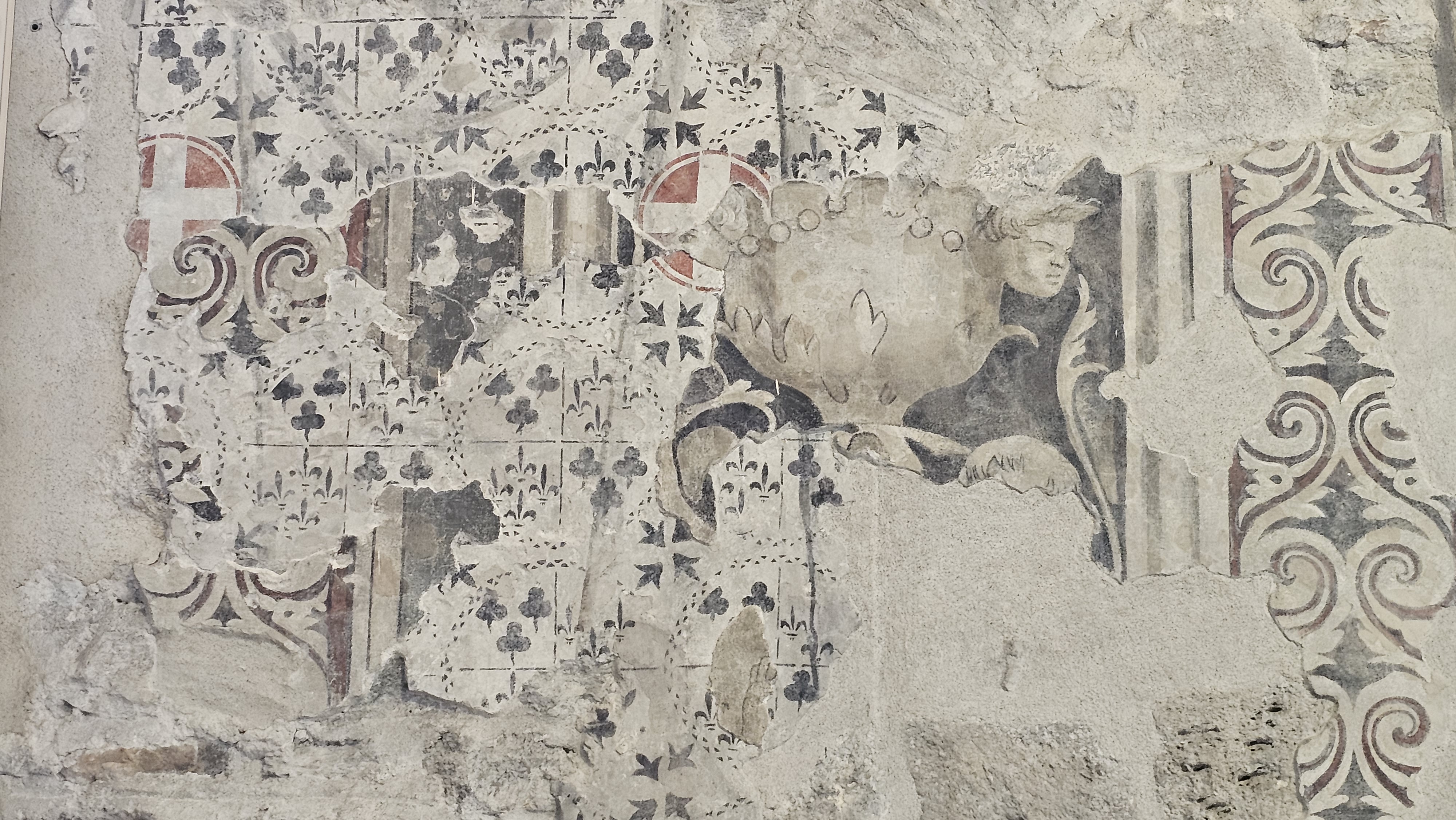
Original wall paintings and frescos can be found decorating the interior walls of the cathedral.
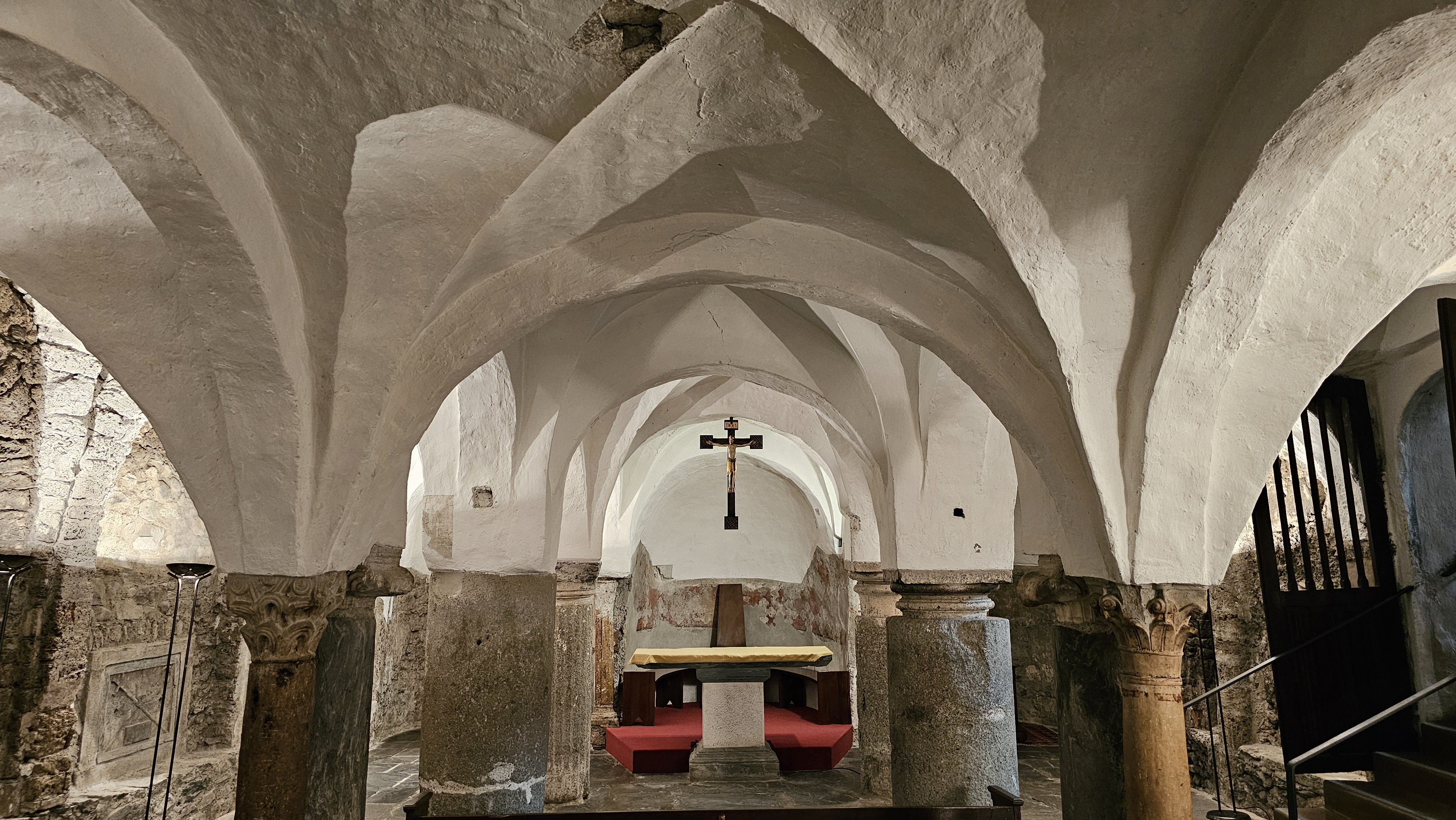
You can also go down into the crypt. We hunted around the cathedral looking for a VF pilgrim stamp but couldn’t find one.
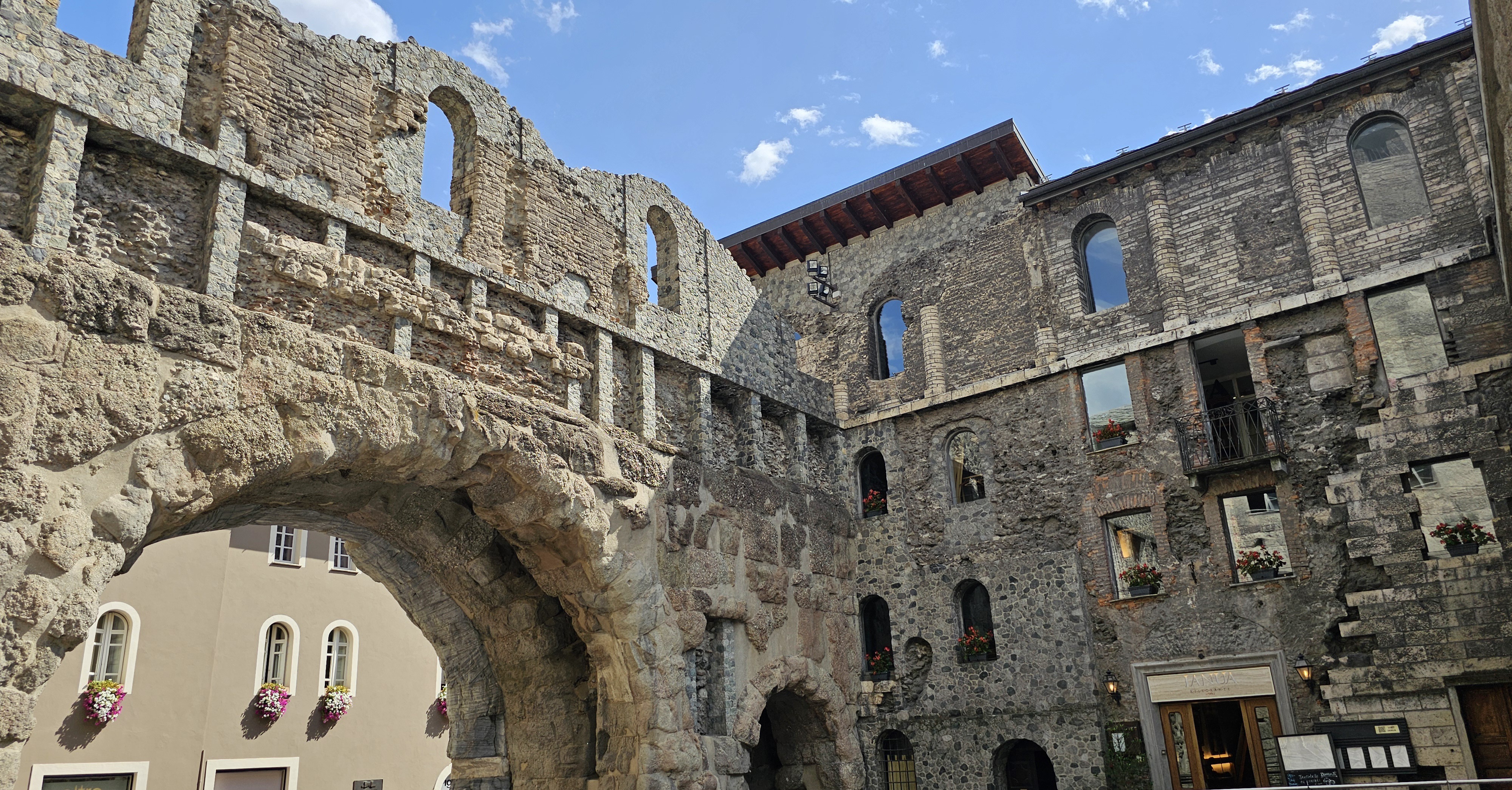
Thankfully there was a tourist information office at Porta Praetoria which gave us a choice of two pilgrim stamps.
With its triple arches, Porta Praetoria is an ancient Roman gate to the city. We learned that Aosta is often considered the “Little Rome of the Alps’ for its rich collection of Roman ruins. Later in the afternoon, we explored some of these.
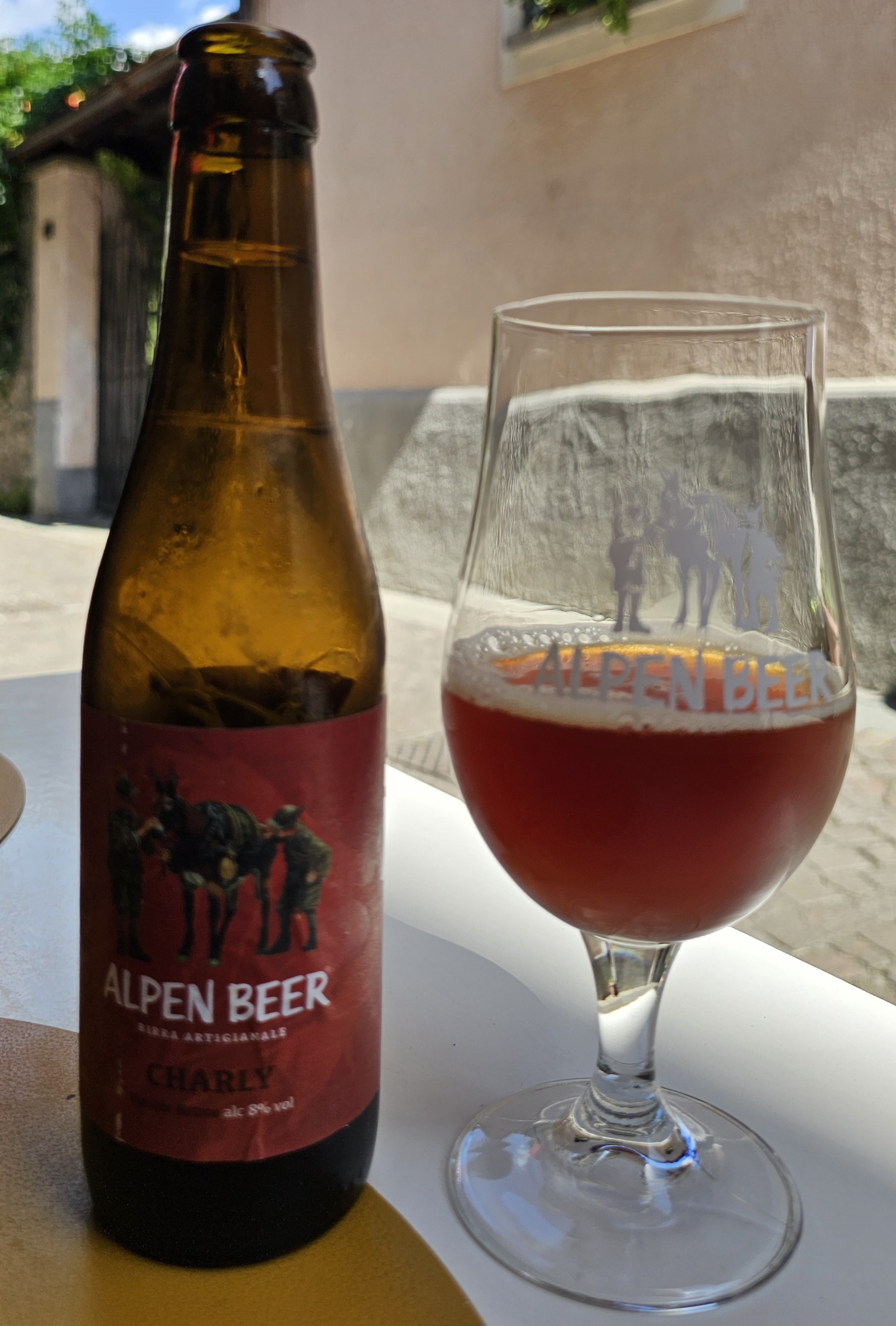
But now it was time for refreshments and we found a historic cellar bar with outside seating where we enjoyed a local ‘Alpen’ artesan beer each, called ‘Charly’. We both opted for red beer from a choice of white or red!
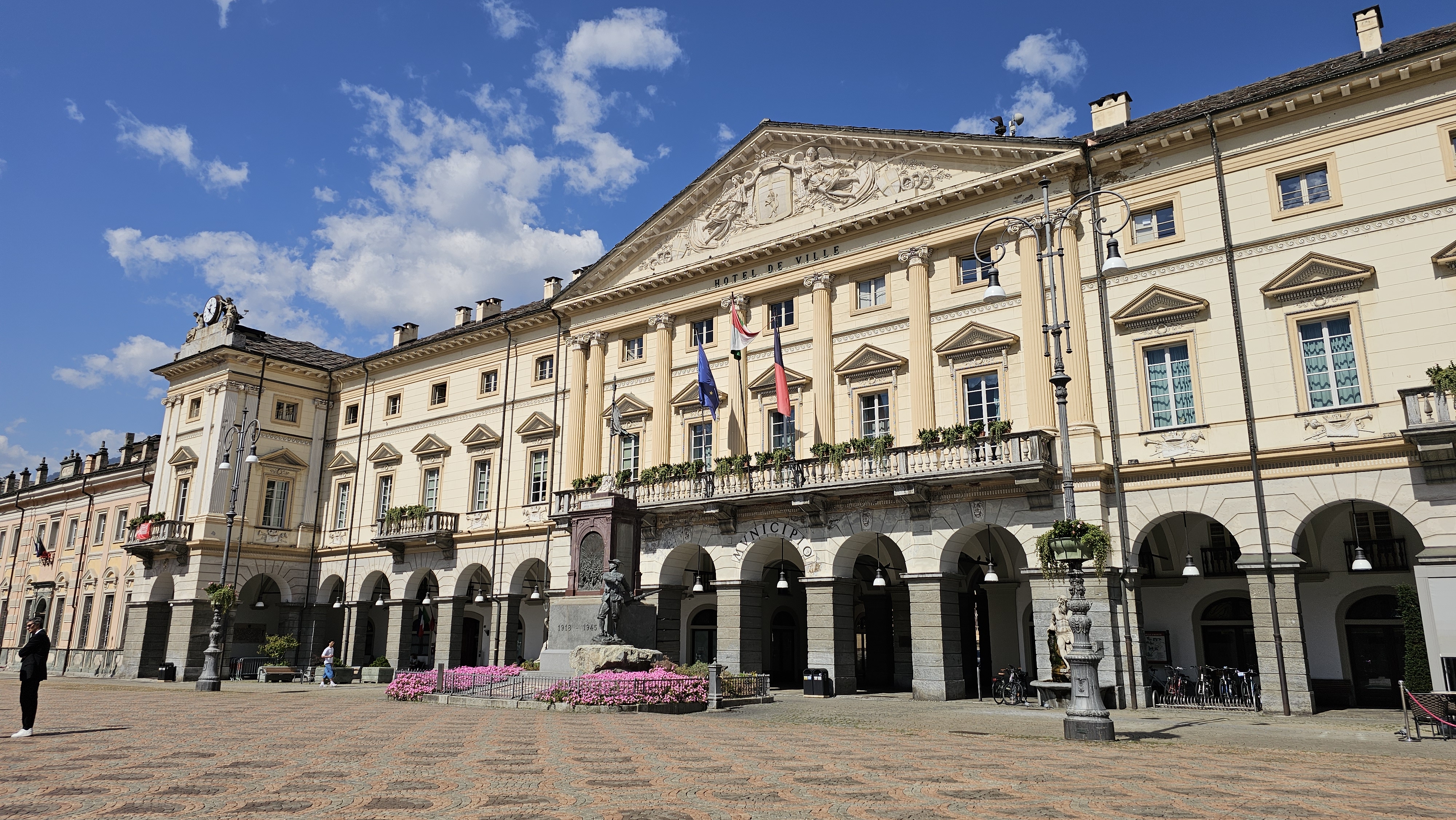
Next we passed through Chanoux Square which was built under the reign of Charles Albert and is home to elegant neoclassical buildings including the Town Hall. Born in Turin, Charles Albert was the King of Sardinia between 1831 – 1849.
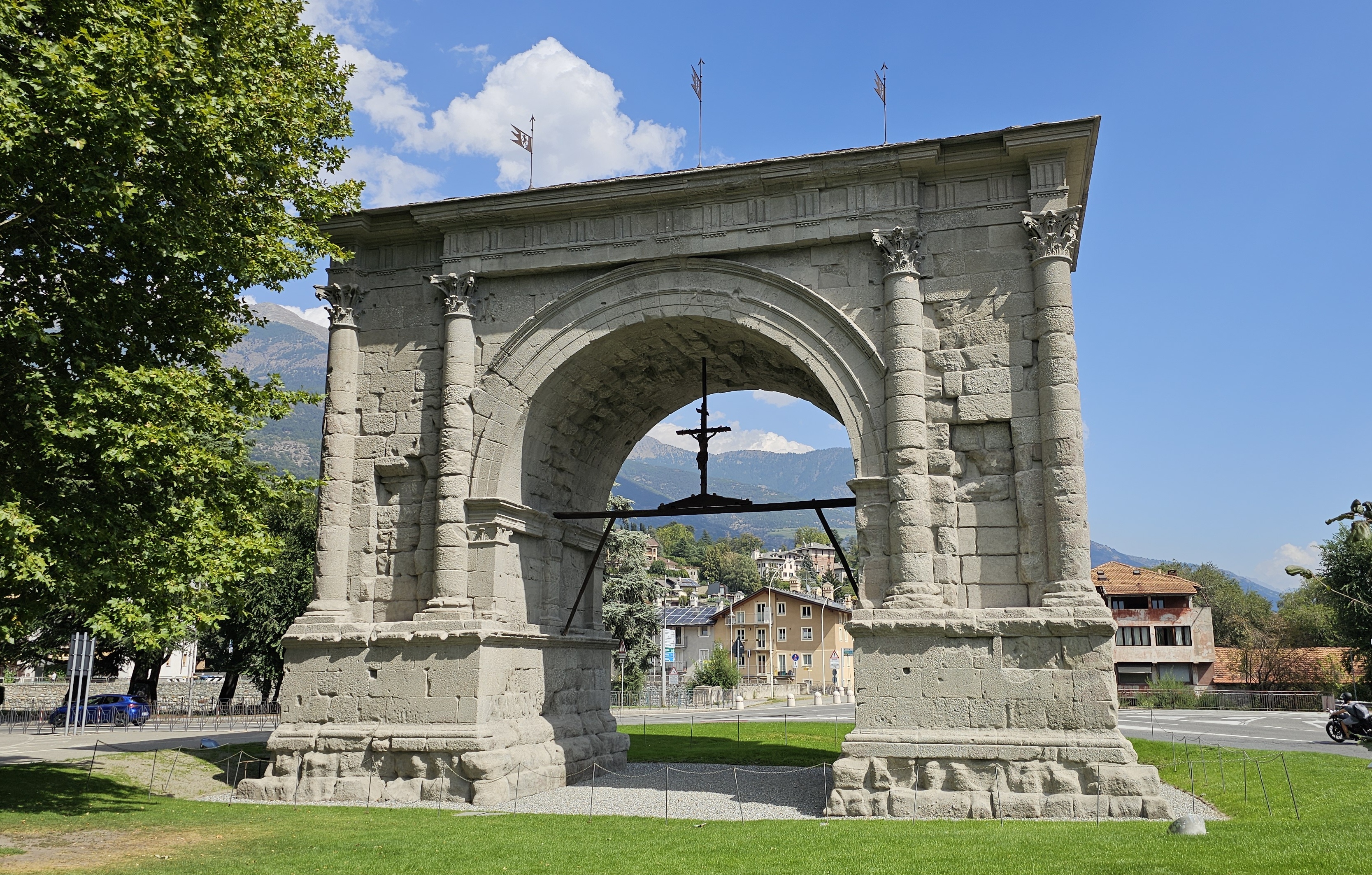
Arco di Augusto is a well preserved Roman arch which was built in 25 BC to celebrate the Emperor Augustus and the Roman victory over the Salassi tribe.
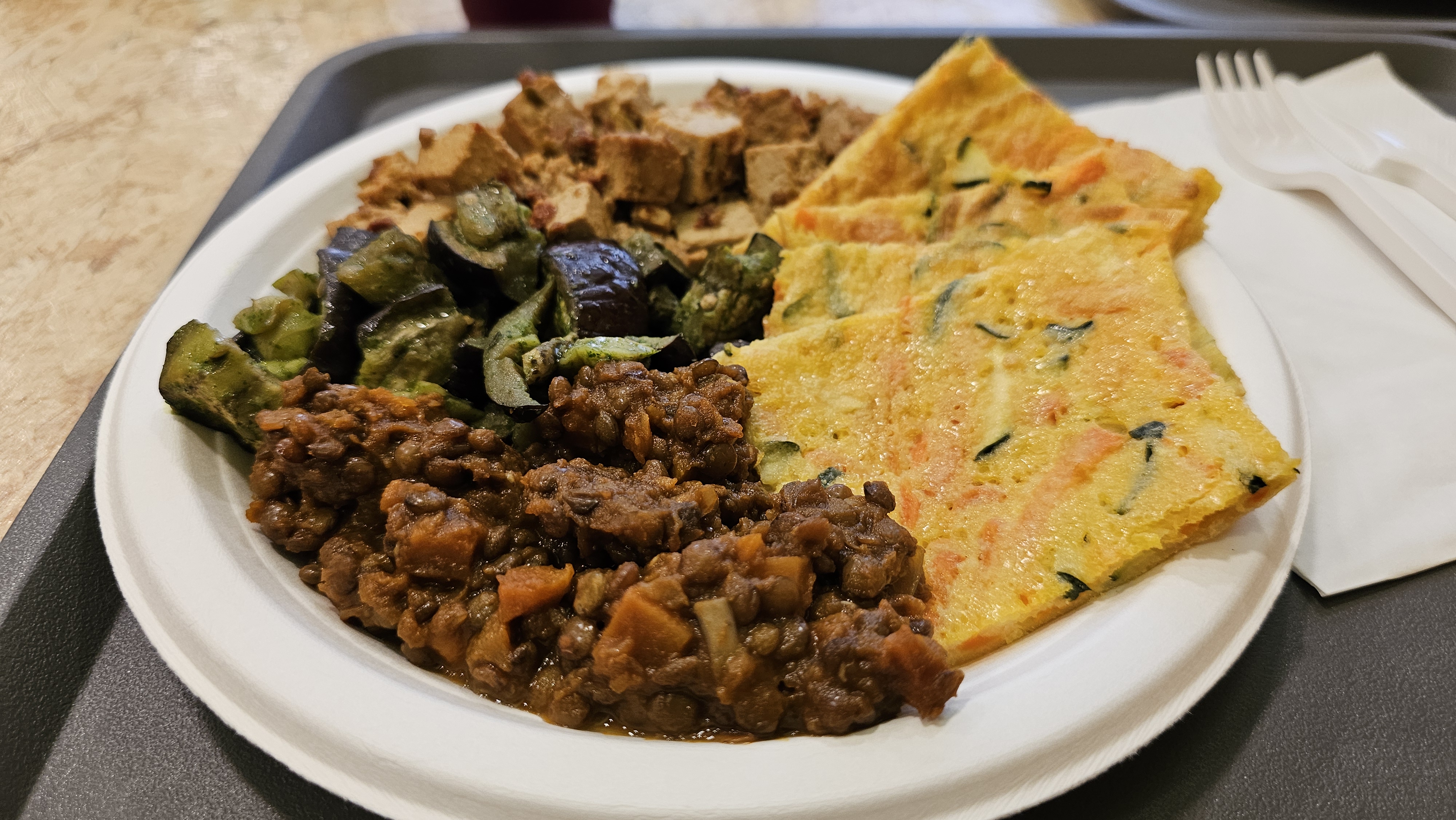
At last a healthy meal that didn’t involve lots of carbs and lots of cheese! We had a delicious lunch in Semi di Sesamo Gastronomia Veg vegan restaurant. This small eatarie has deservedly high Google ratings of 4.7 /5.
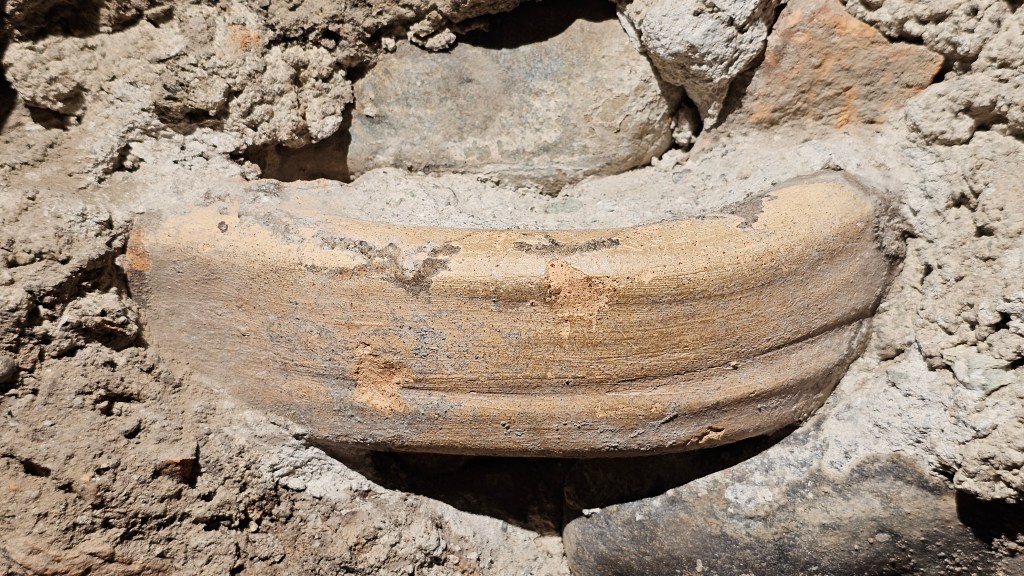
In the afternoon, Chris and I visited the archeological musuem where we purchased tickets for 10 euros each and which covered 5 different sites. We began by visiting the underground excavations where we could see the ancient Roman walls.
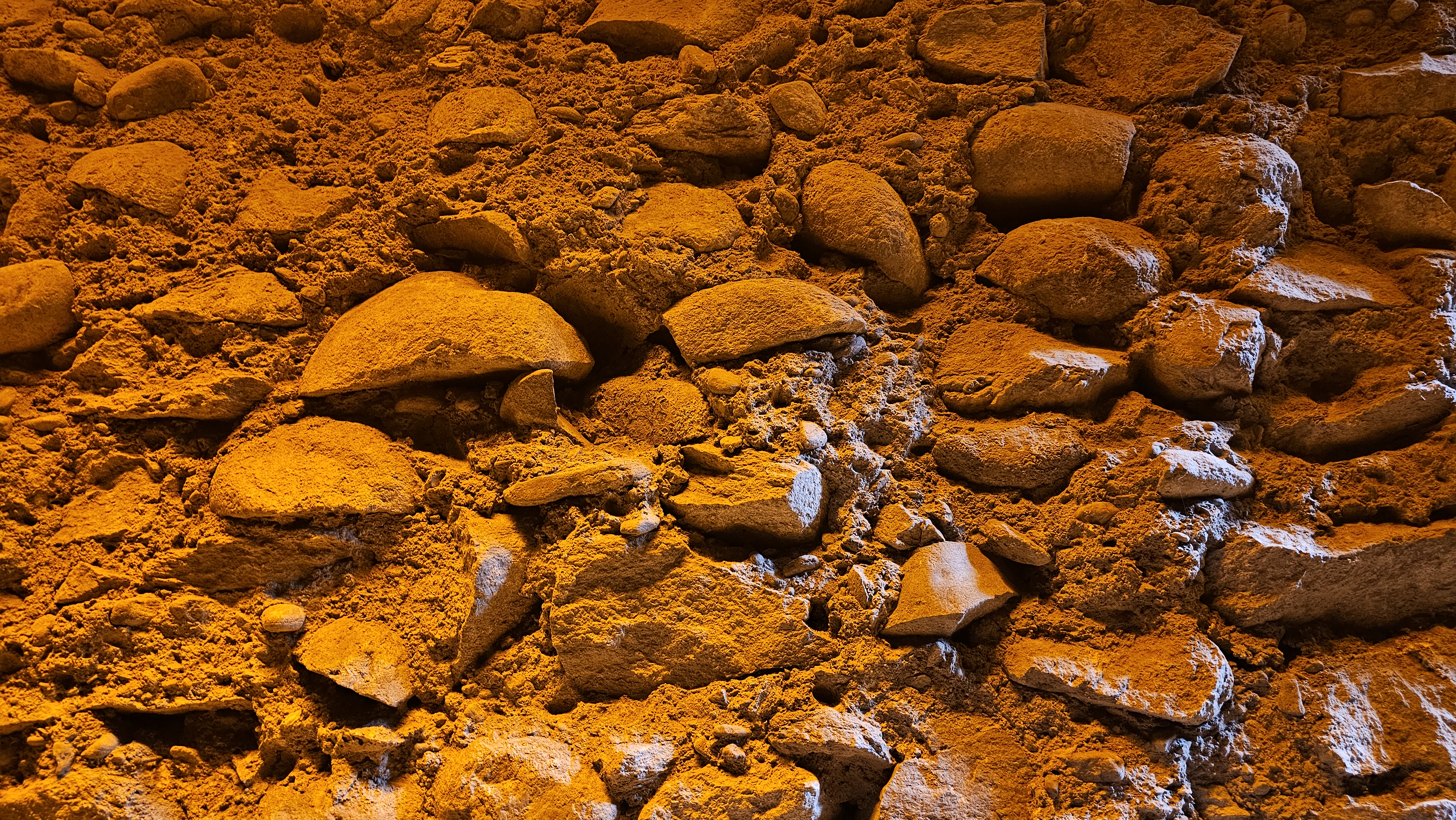
Most of the information was in Italian but it was interesting to walk through the underground excavations which are located underneath the main museum.
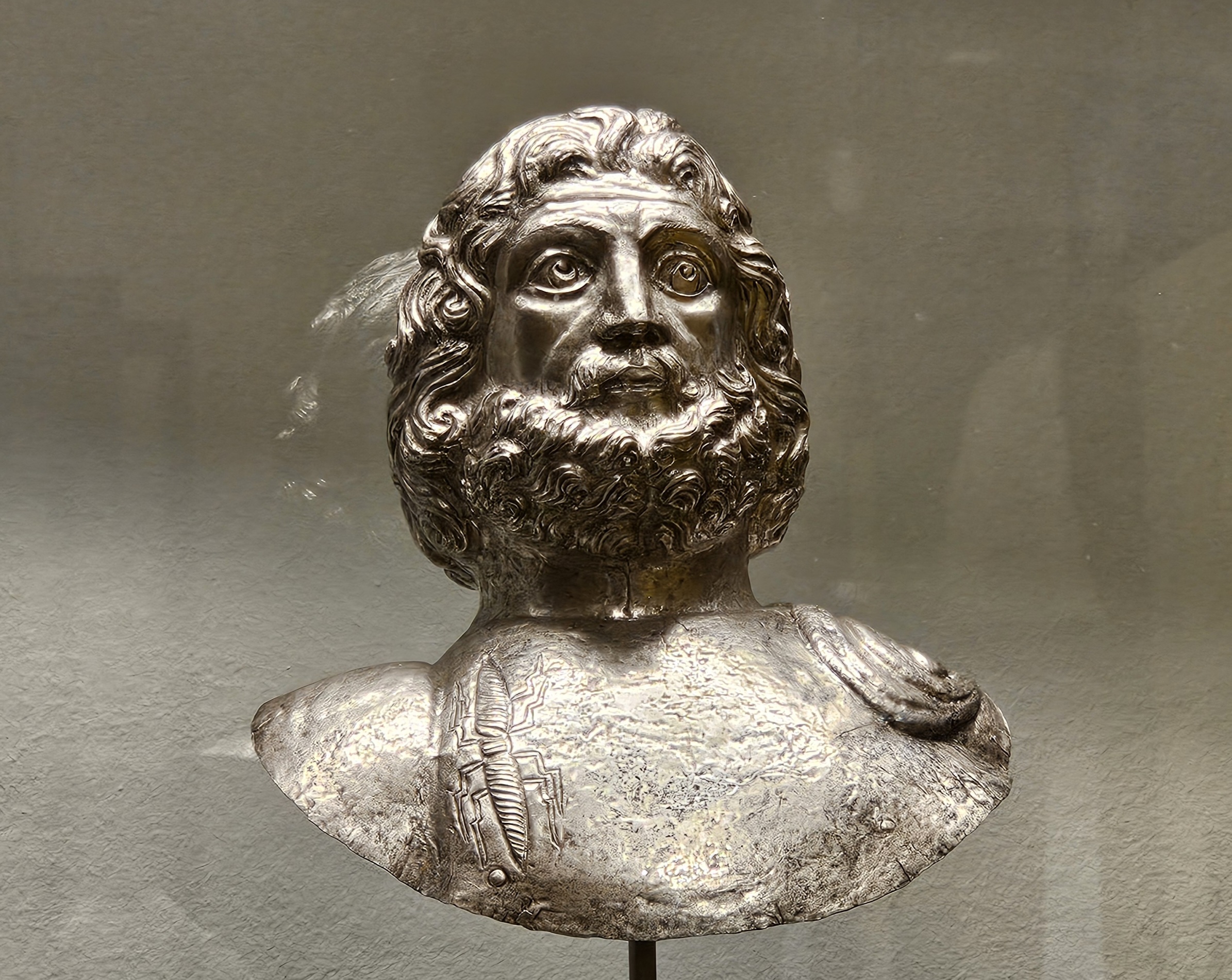
Upstairs we walked around the main museum which contained the history of Aosta dating back to pre-history times. There are many artefacts on display including coins, swords, lamps and bronze items.
Above is the silver bust of Jupiter Graius which has been very well preserved given it is a Roman artifact which dates back to the 2nd and 3rd centuries. This was excavated from the Little St Bernard Pass.
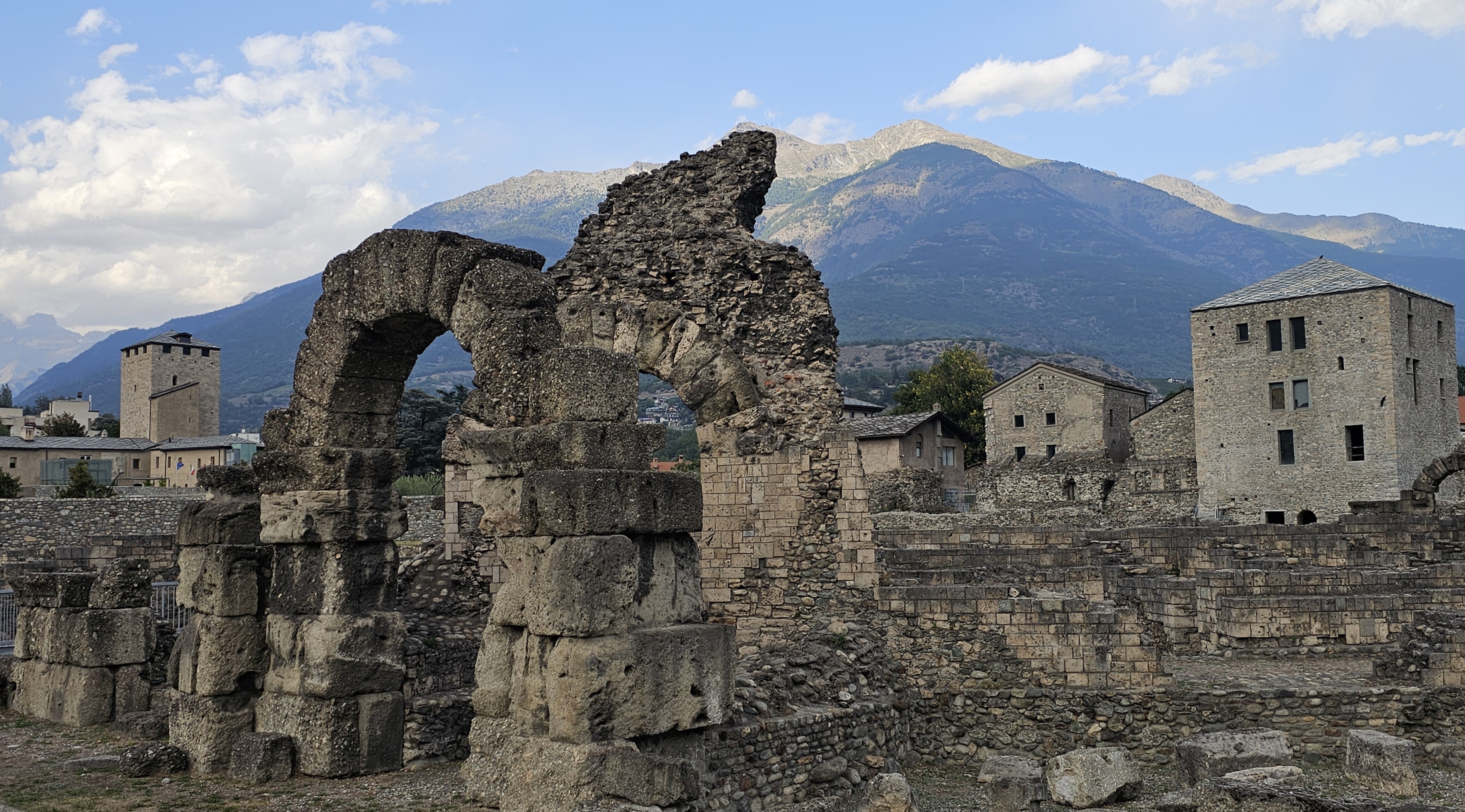
From the museum we walked for 10 minutes or so to the Roman Theatre which was built during the reign of Emperor Augustus around 25 BCE.
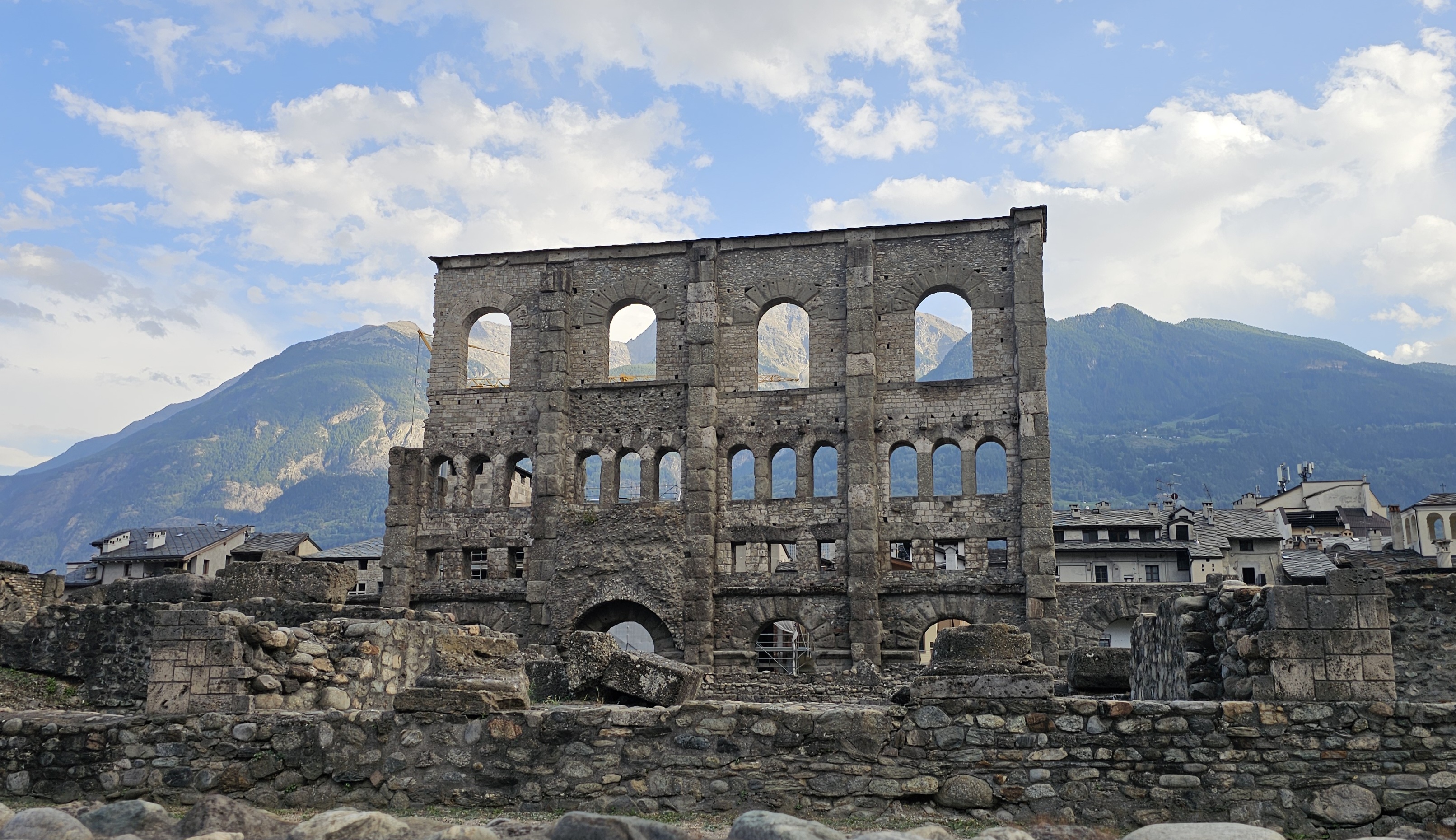
The Roman Theatre complex has recently completed a huge renovation and officially re-opened to the public in July 2026. The theatre would have originally accommodated over 3,000 spectators.
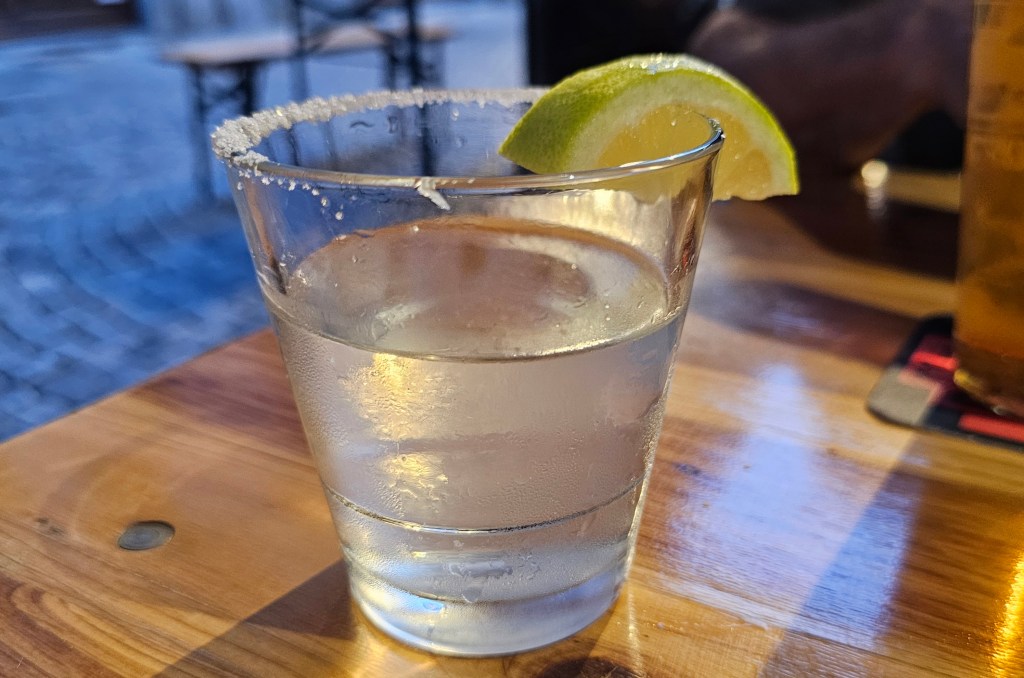
Later in the evening we met up with Roza and Russell in the Pub Beautiful which had a selection of unusual craft beers. I was tempted by a margarita on the menu which in hindsight was a dumb thing to do… the margarita wasn’t even served in a margarita glass and didn’t have much taste. At least they put salt around the rim and gave me a slice of lime! I scored this a 3 / 10. If the speciality is craft beer, its best to have craft beer…
As we sat outside the pub, clouds had been gathering and a full-scale thunderstorm suddenly erupted! This was the first rain we had encountered since starting our walk in Lausanne about 10 days ago.
We sheltered under the pub’s canopy waiting for the deluge to subside enough for us to make a quick sprint back to our hotel!
Summary
With it’s ancient history, mountain scenery and wide choice of restaurants, Aosta is a great place to spend a day or two, especially if you are walking the Via Francigena. Tomorrow is our final day of hiking and it is going to be another long stage as we make our way to Chatillon.

