12.4 km, total ascent 1062 m and official rating ‘hard’ (due to steep climbs and altitude)
From the beginning of this trip walking along the flat shores of Lake Geneva, then trekking through lush valleys and forests, today we find ourselves above the tree line as we enter rugged mountain terrain. Following a continuous climb for several hours, today the 4 of us made it to the *Great Saint Bernard pass, the highest point on the Via Francigena!
*Great Saint Bernard is the English translation of the French who say ‘Grand Saint Bernard’ so they both mean the same thing!
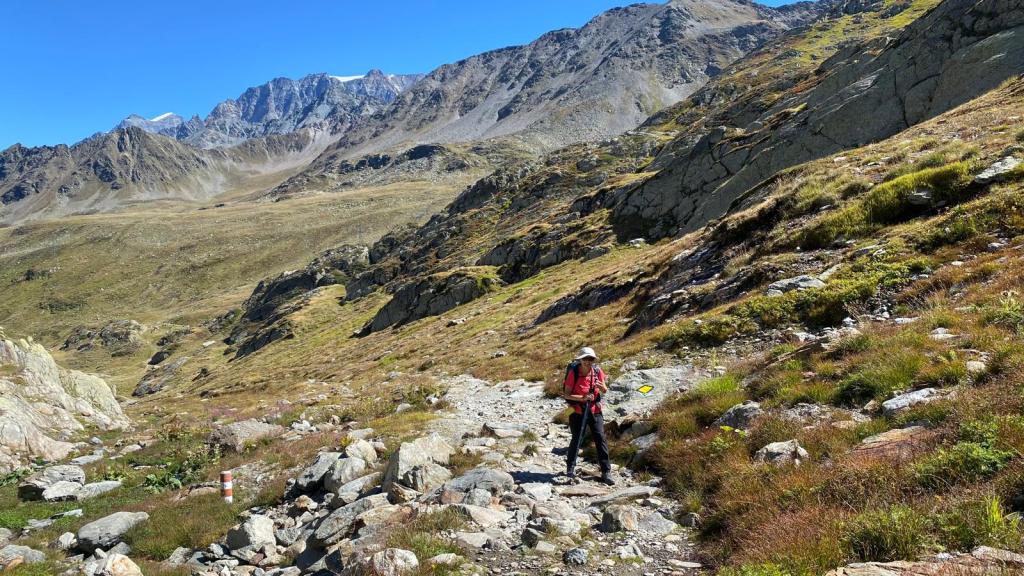
The hiking trail of the Great St Bernard pass is covered in deep snow for most of the year and the summit is only accessible to hikers in July, August and September. We could see snow covering distant peaks.
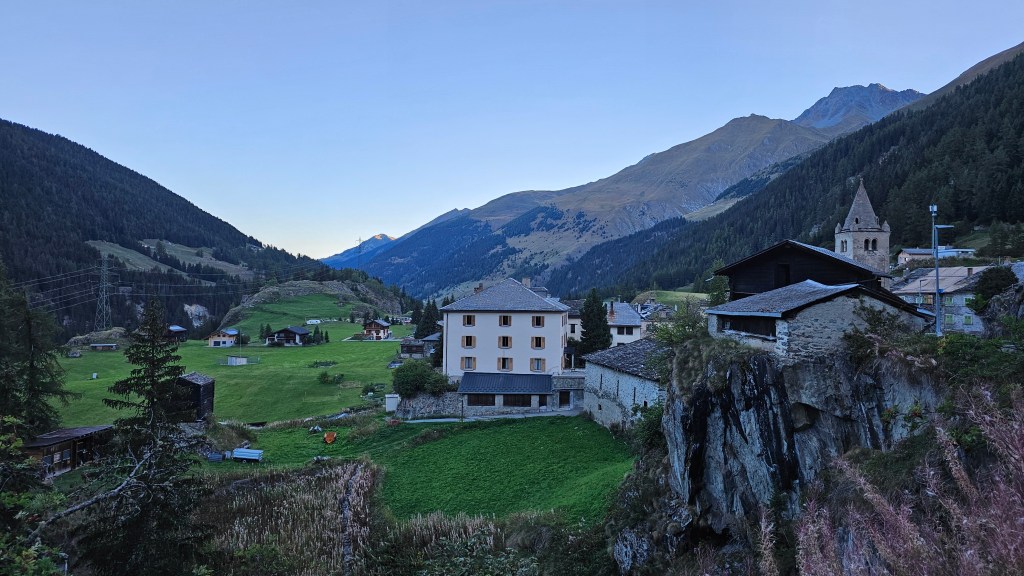
Following our requested early breakfast that the auberge had left ready for us (with cold cheeses, ham, yogurts etc left in the fridge) the 4 of us left at 7.30 am to make the most of the cool early morning.
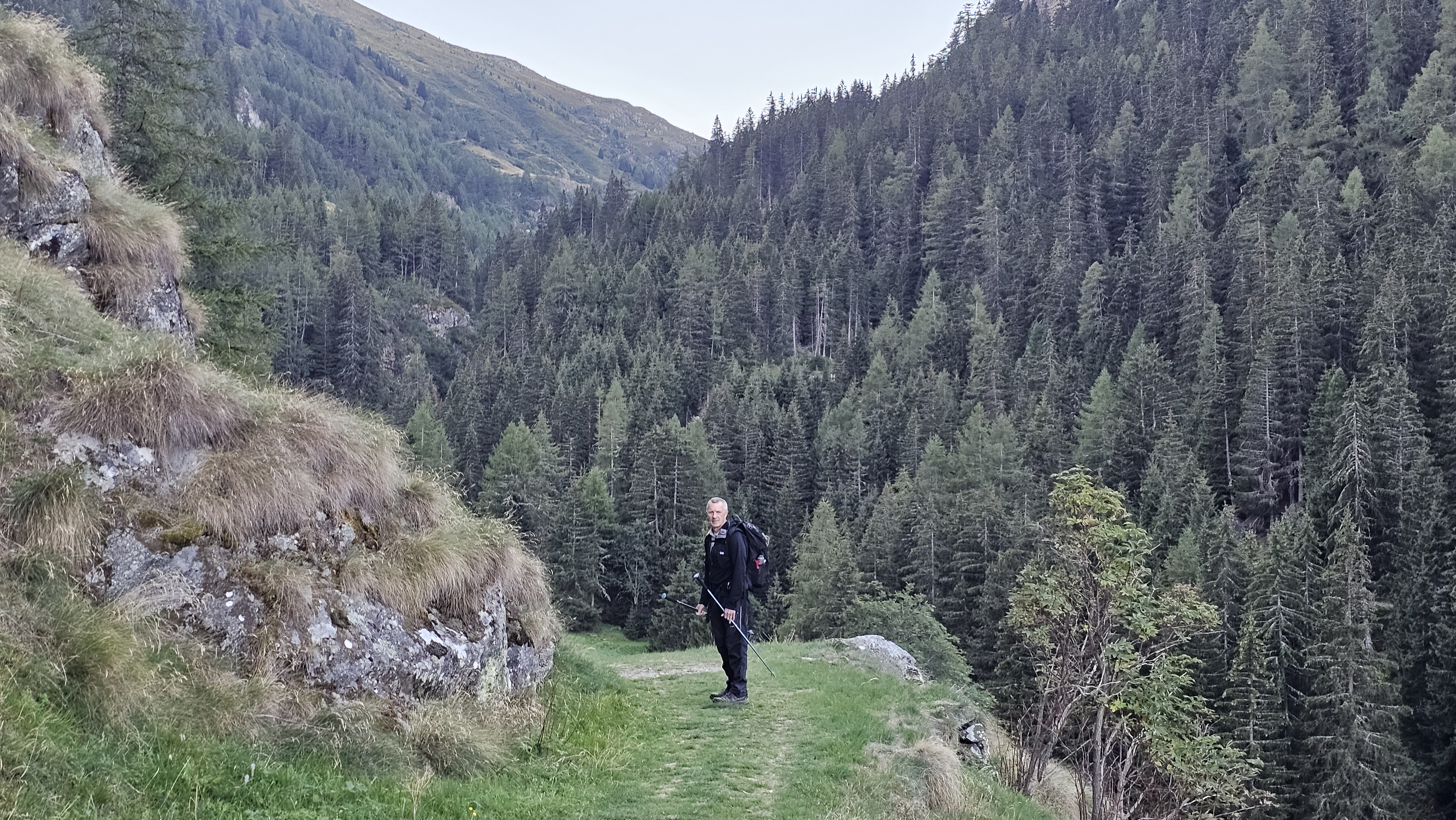
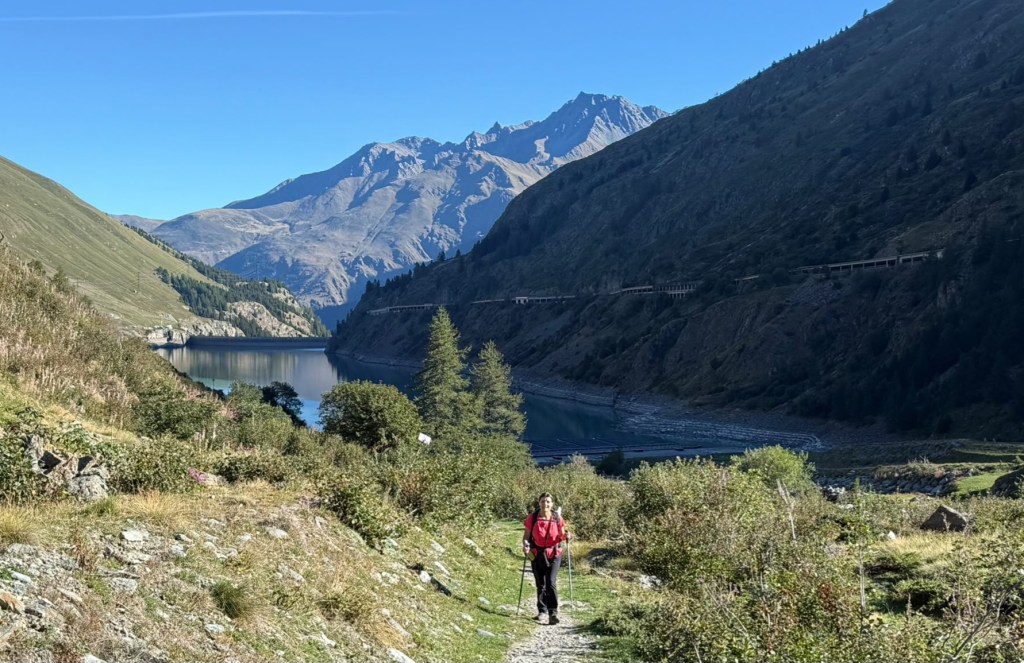
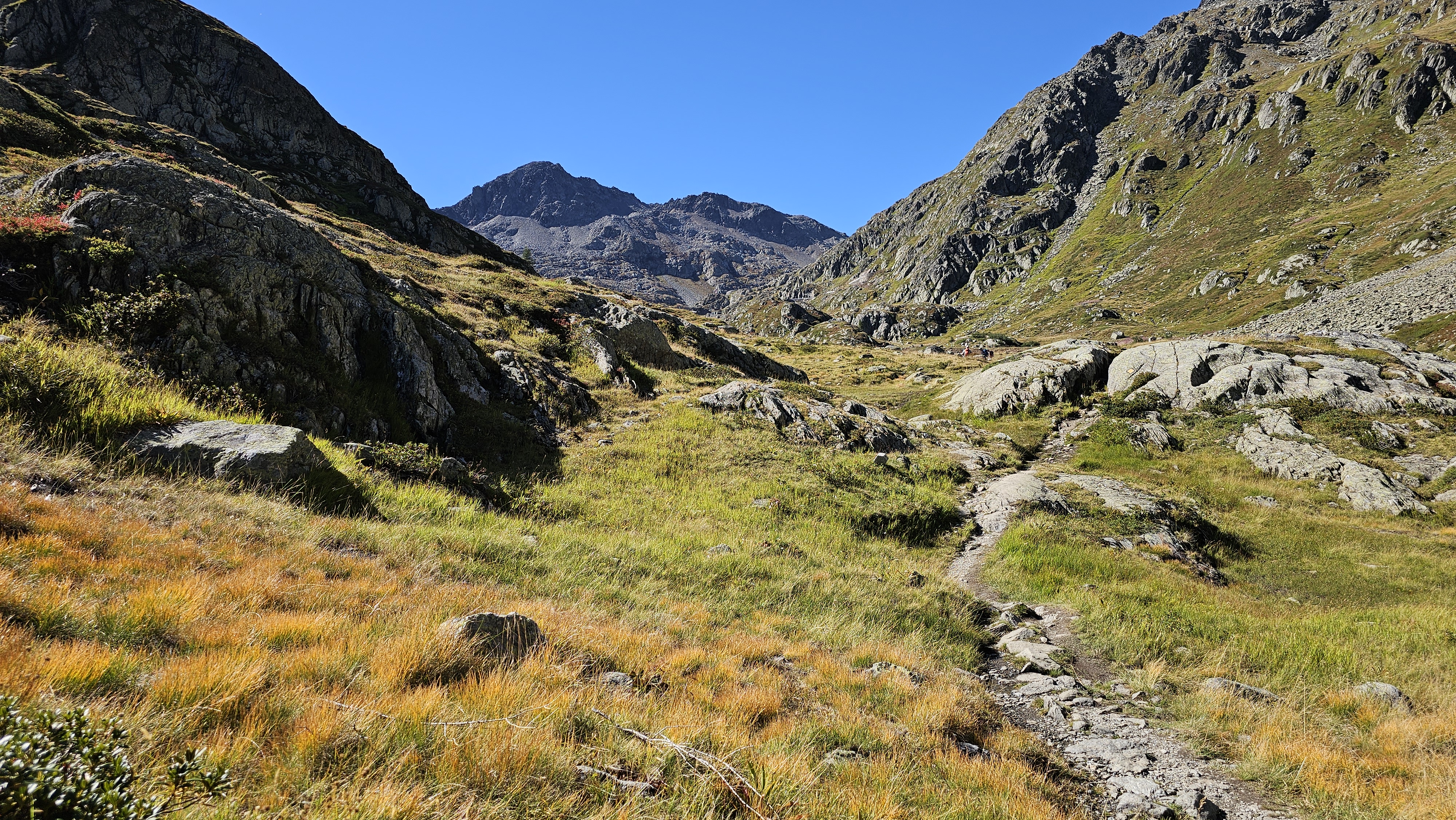
We followed the easy grassy track through pastureland and pine trees.
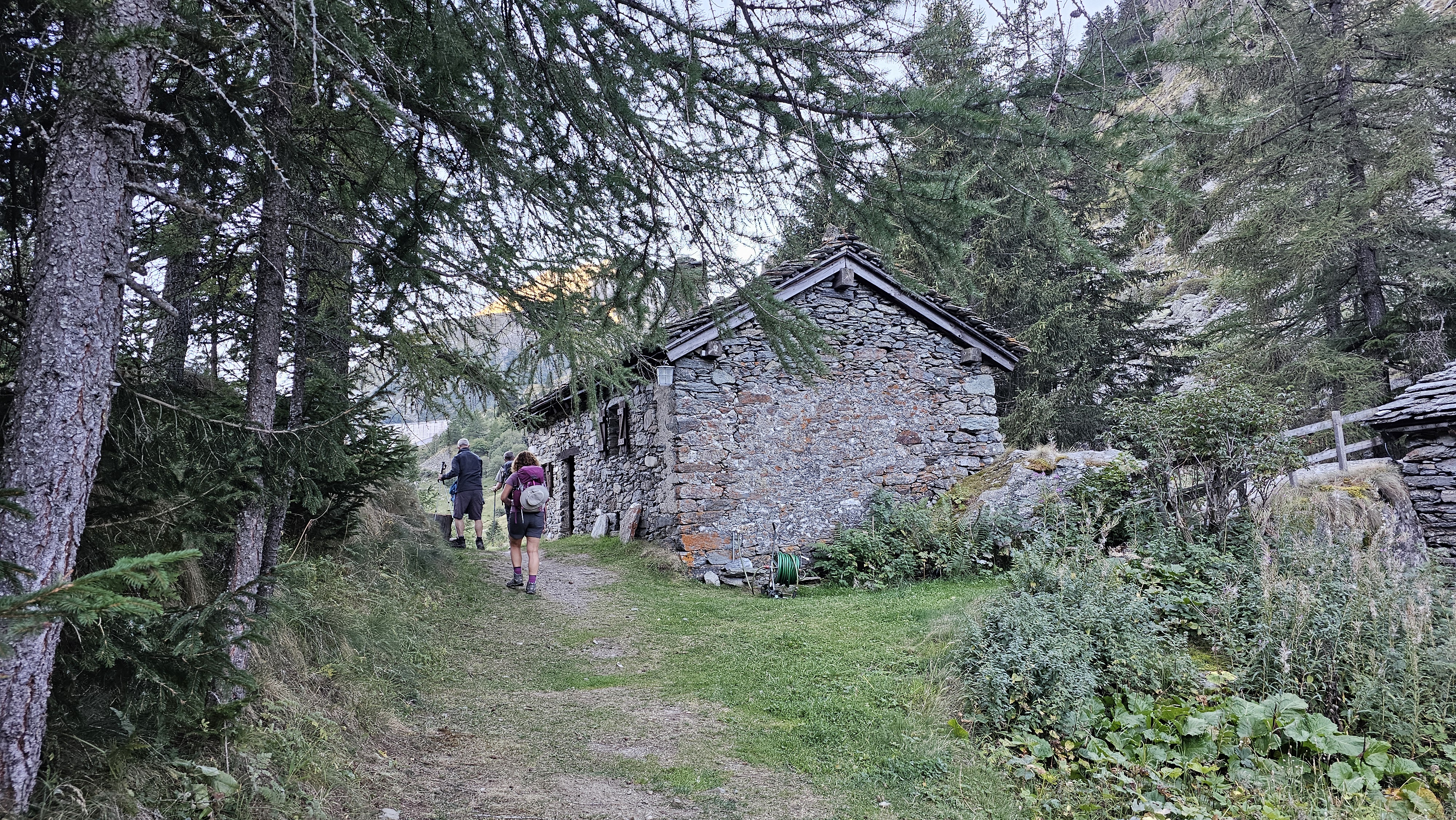
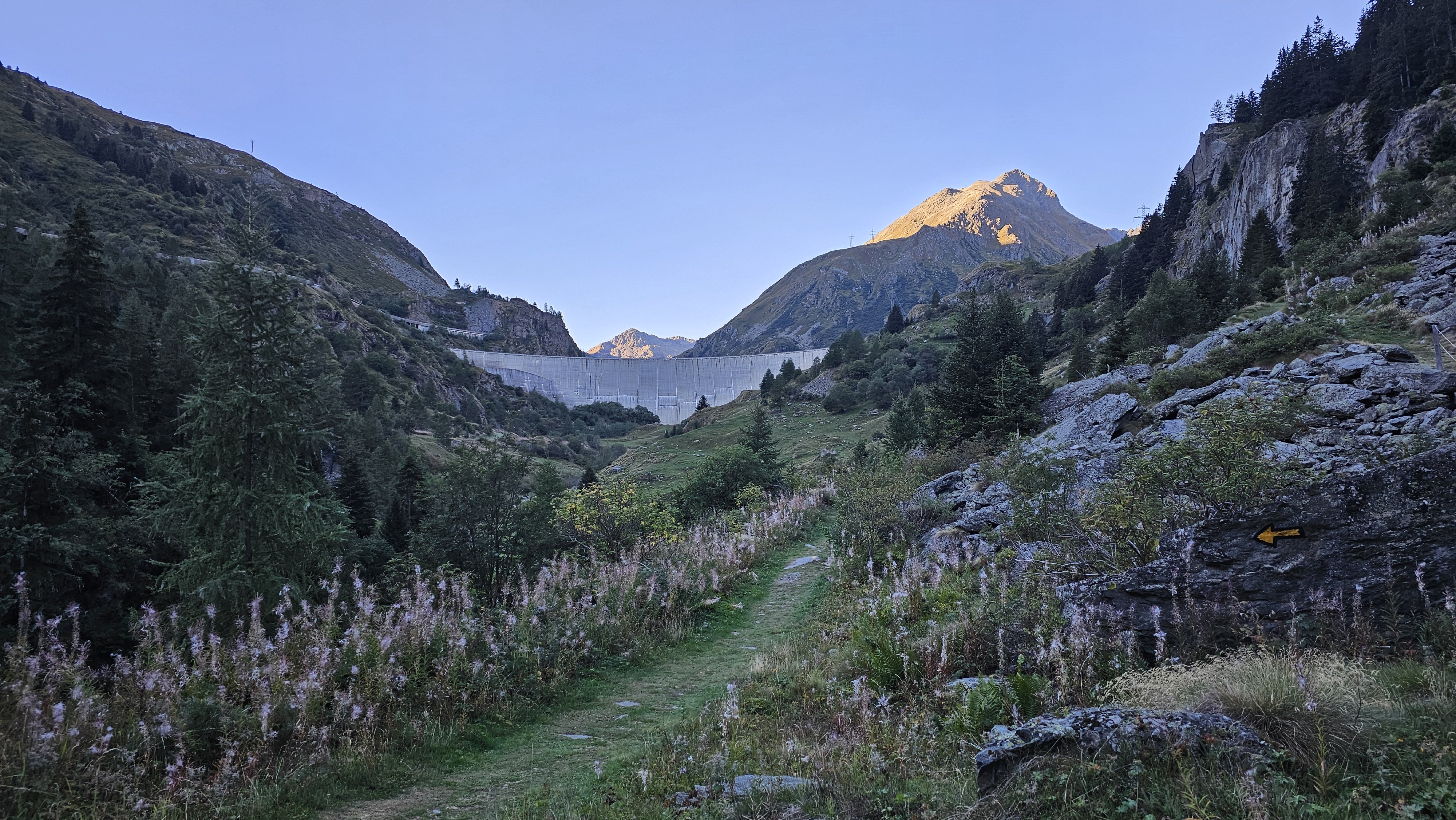
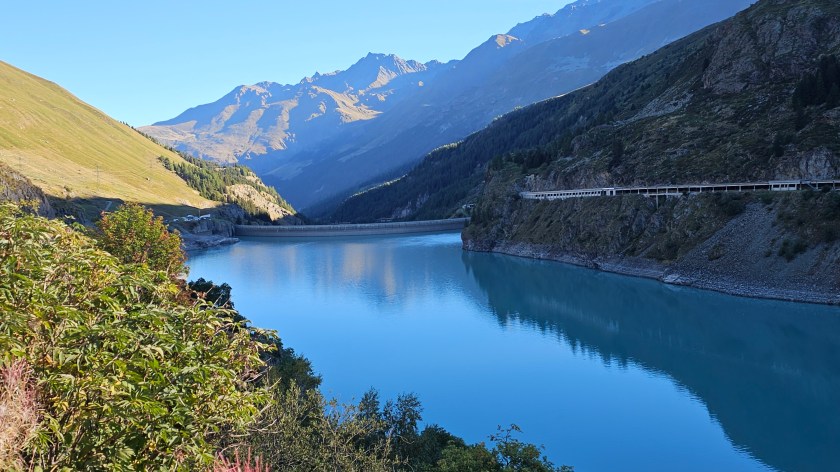
We made good progress while the mountains shielded the sun as we headed towards the Barrage des Toules dam.
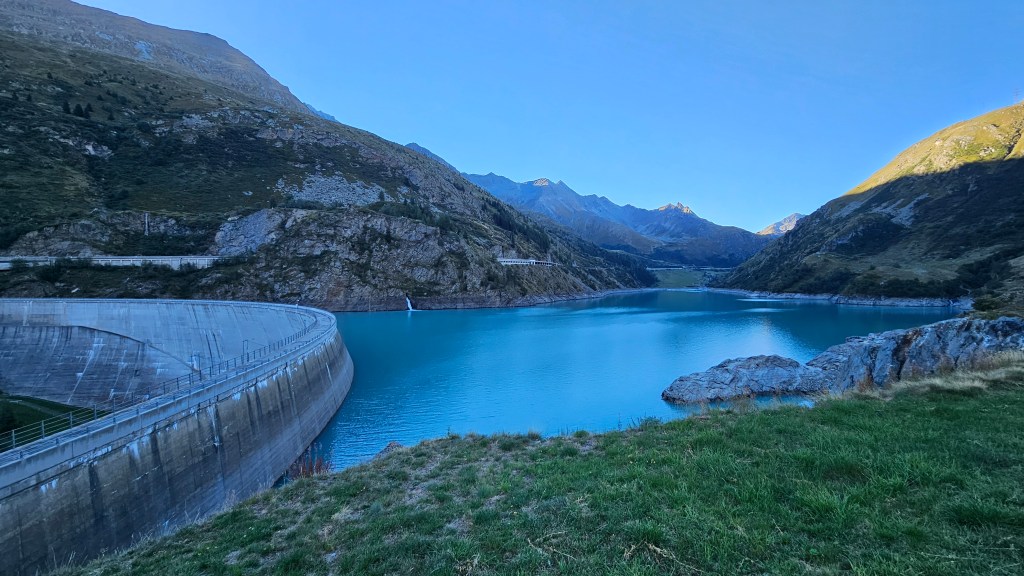
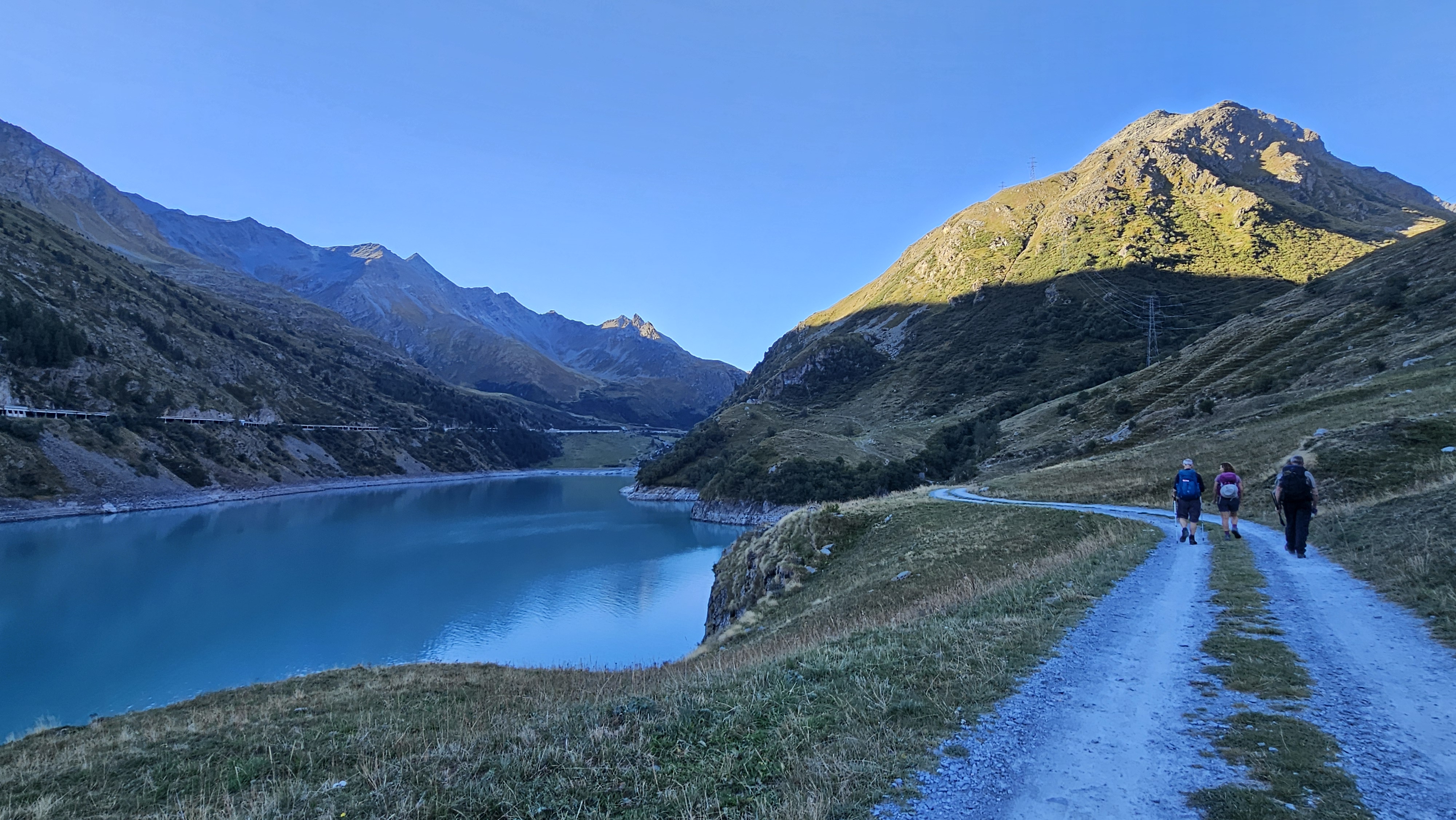
Now above the tree line, the track next to the reservoir was wide and flat and gave us a break from climbing.
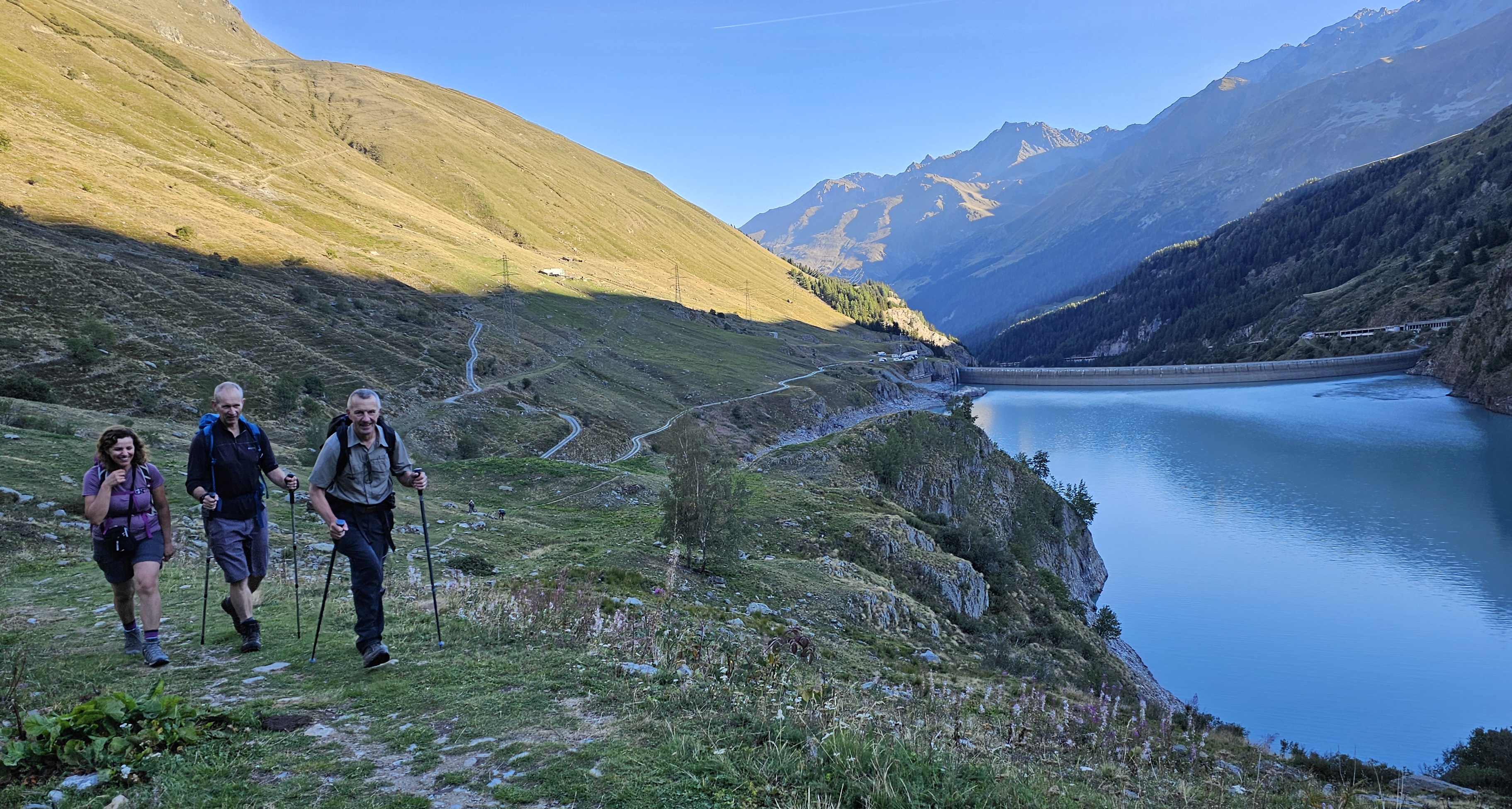
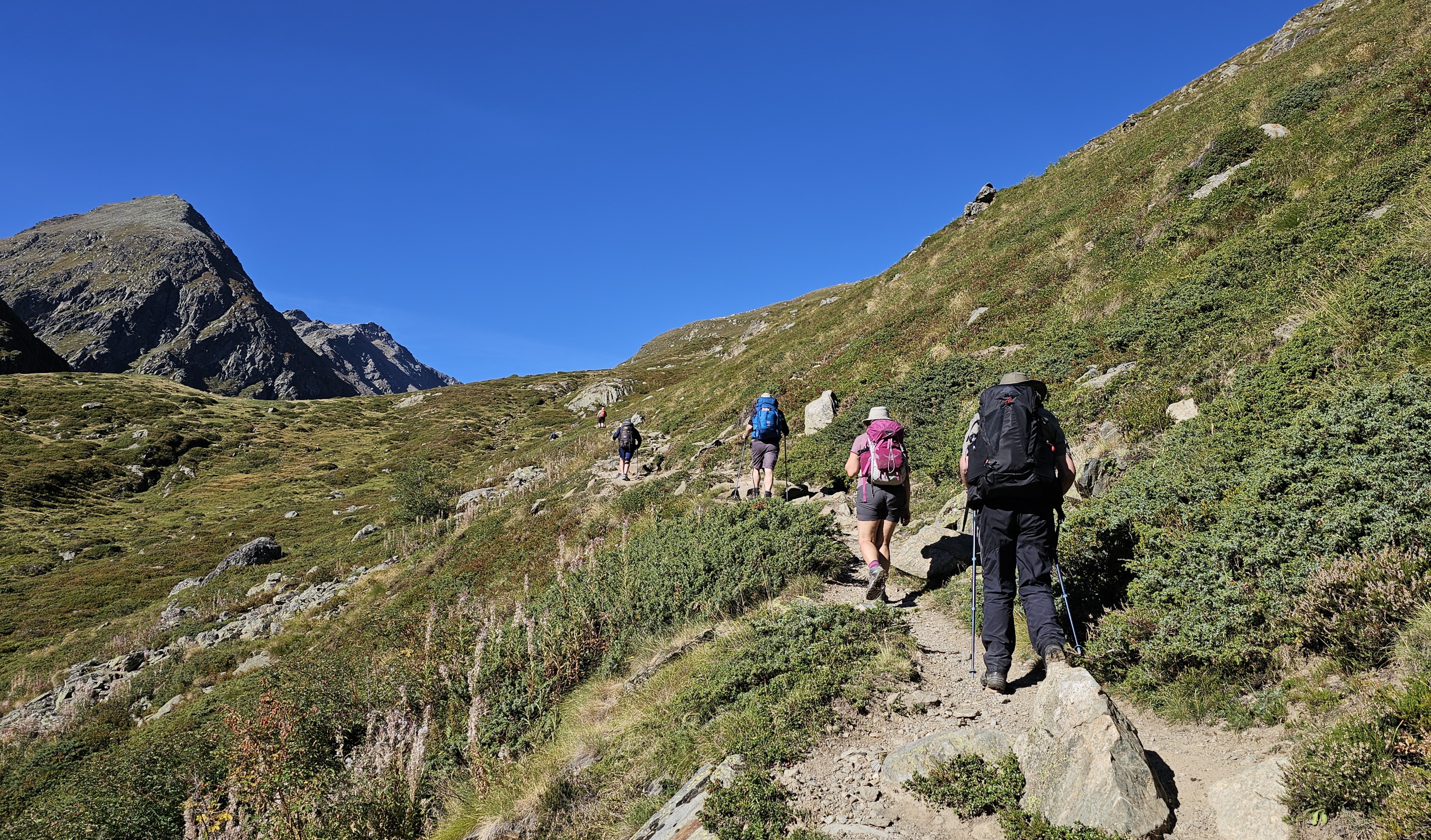
The climb became steeper again and we met and spoke with our Aussie friend.
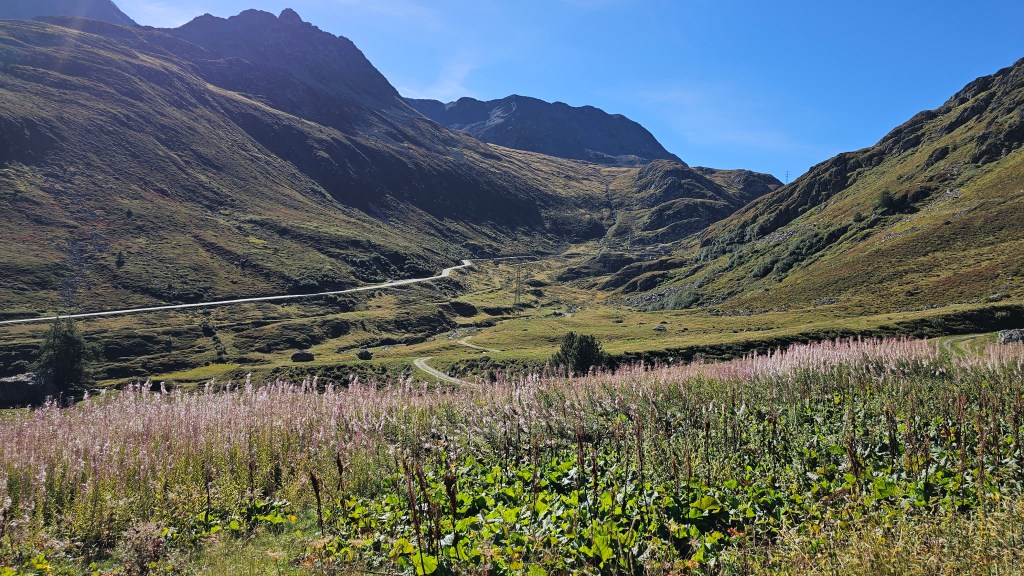
Near to this section a small stripy ringed snake crossed our path! Unfortunately none of us got an opportunity to capture a photo of it as it slithered off into the foliage. We checked our description later and identified it as an asp viper which is venomous!
We passed sparkling waterfalls as we continued our ascent…
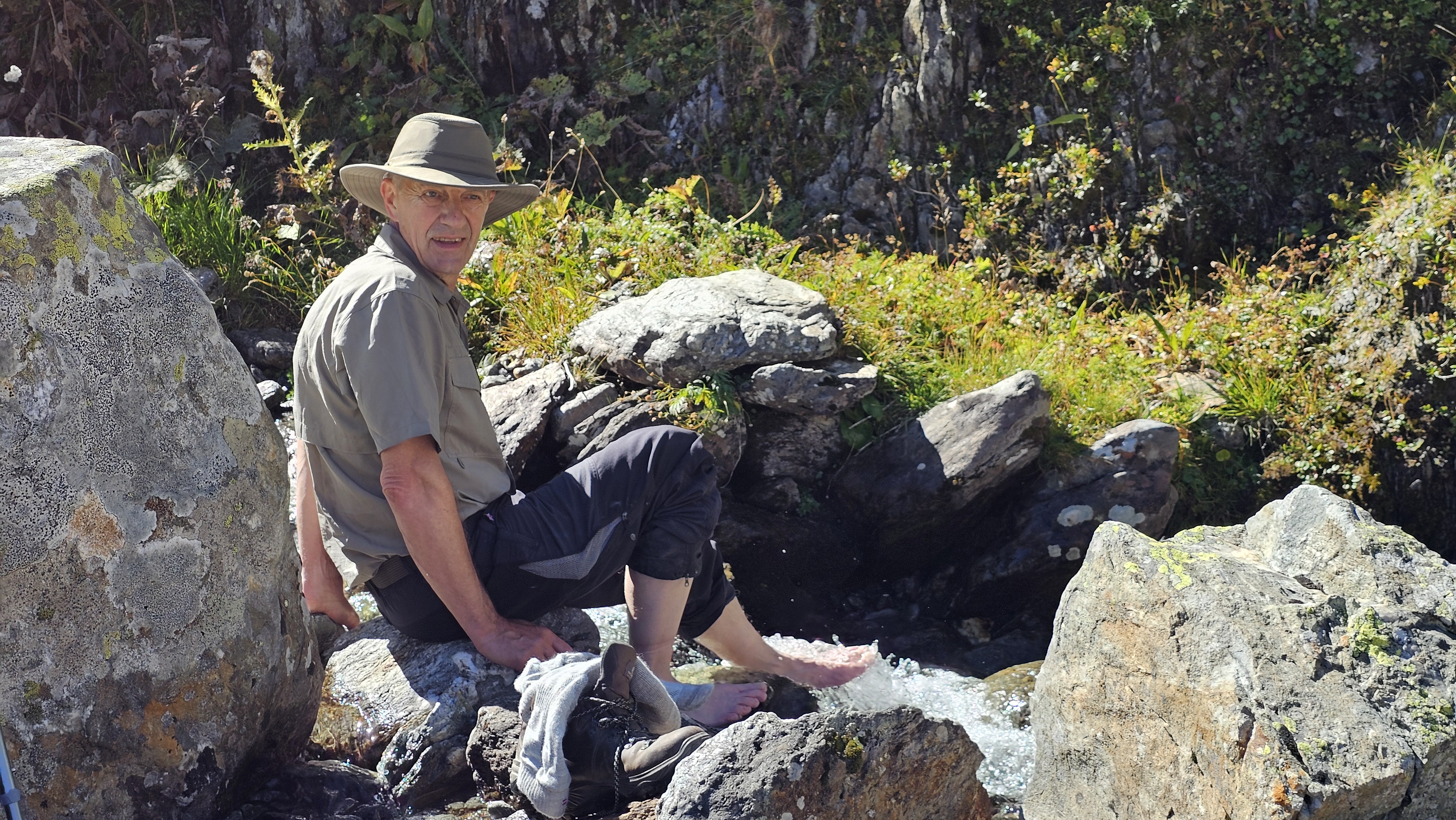
And as we neared the summit, we stopped at a stream for lunch and took the opportunity to remove our boots and socks and cool our feet in the refreshing cold water.
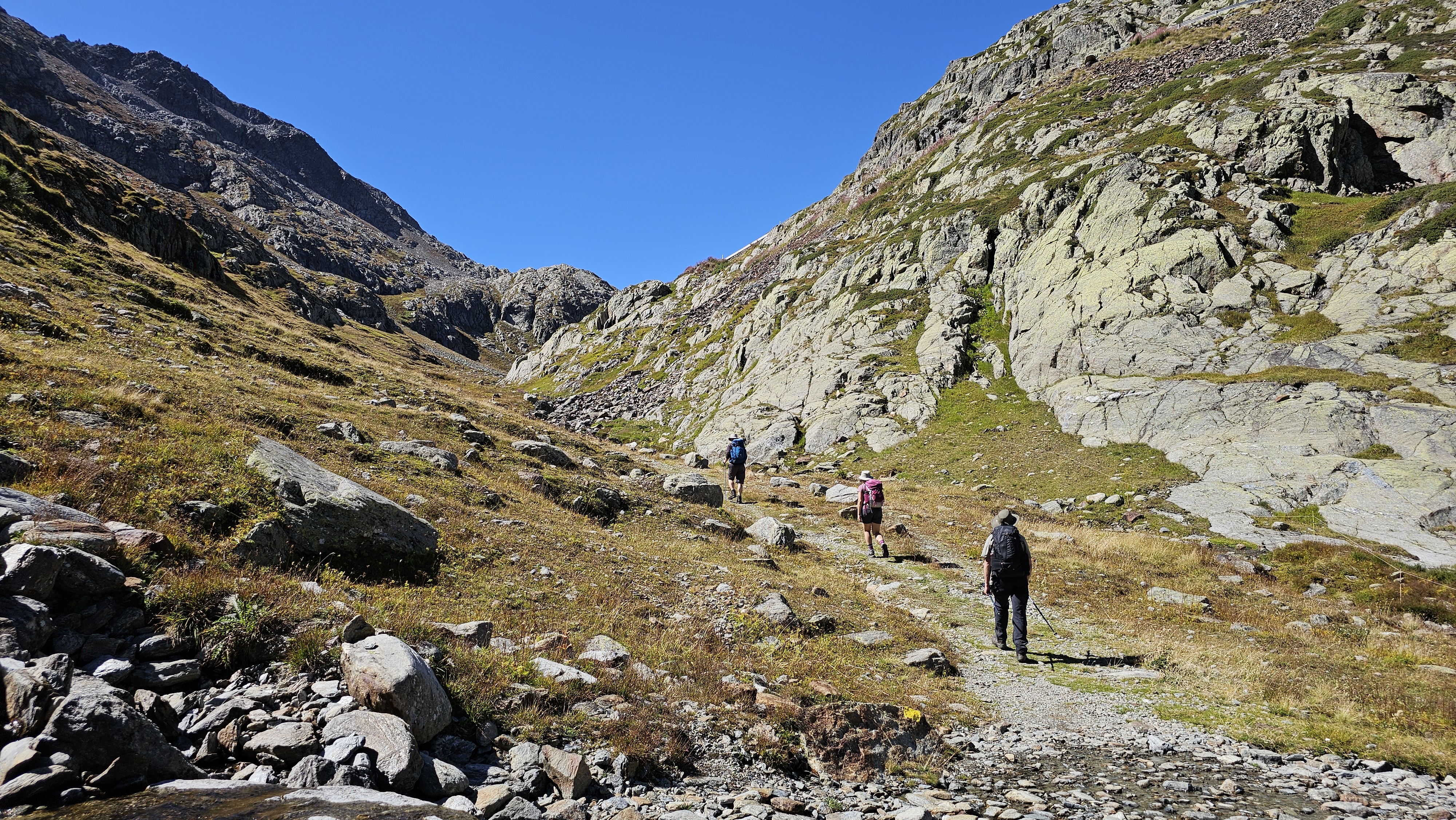
We had one more push up a steep ascent to reach the Great Saint Bernard’s Pass!
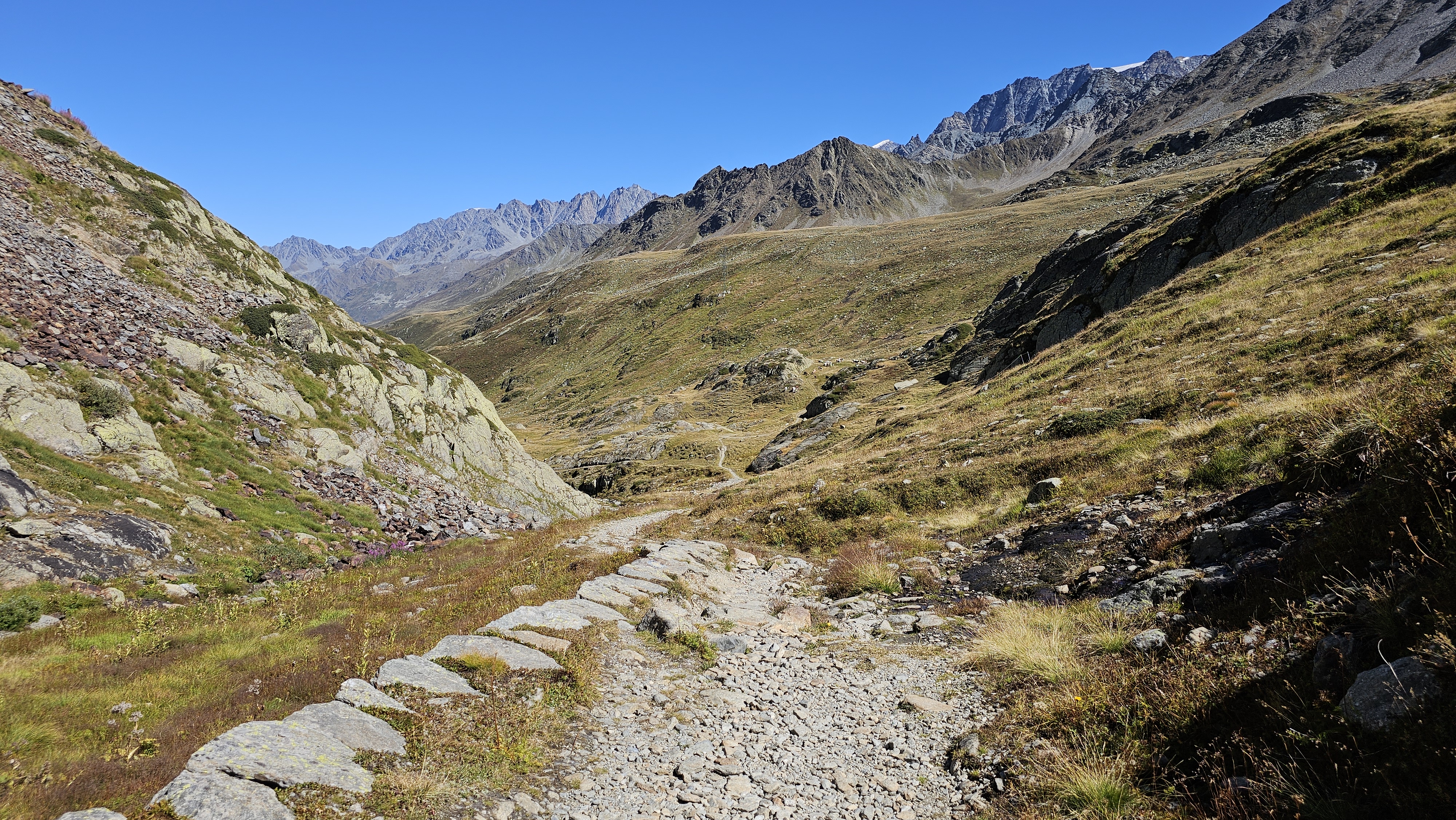
We arrived at the Great Saint Bernard Pass feeling completely triumphant. Yet, that hard-earned peace—the quiet solitude of open spaces and crisp mountain streams—instantly vanished. We were suddenly surrounded by crowds of day-trippers who had effortlessly cruised up the tarmac while we were sweating out every mile.
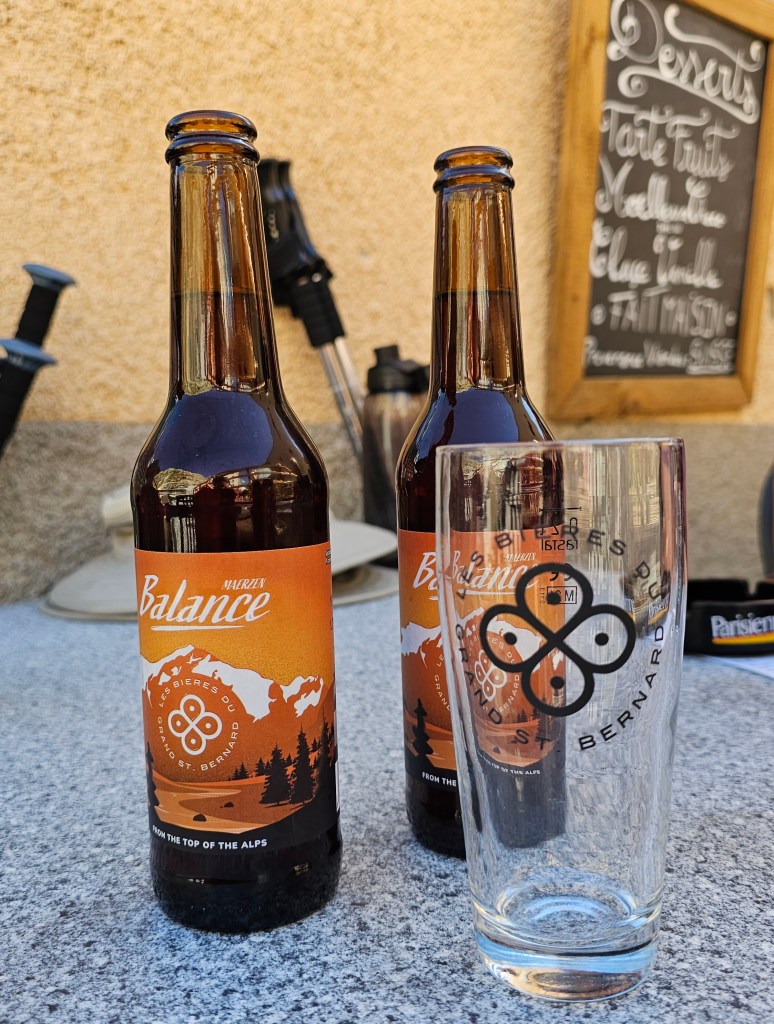
By now however it was 1 pm so we joined the crowds and called into a bar for celebration ‘Grand Saint Bernard’ beers.
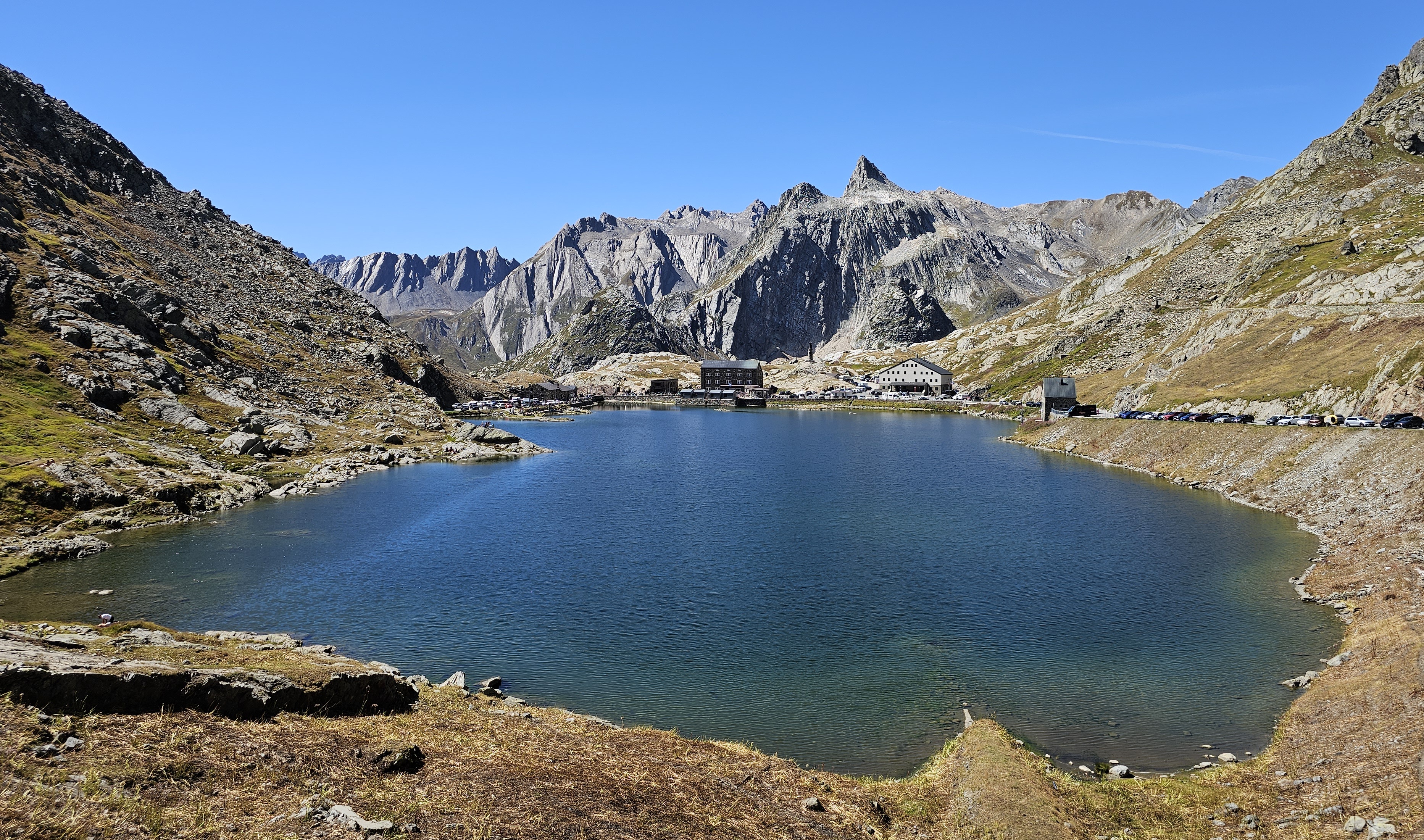
It was too early to check in to our accommodation so we dropped our heavy packs and our trekking poles and set off towards the Italian border which is further along the Great Saint Bernard Lake.
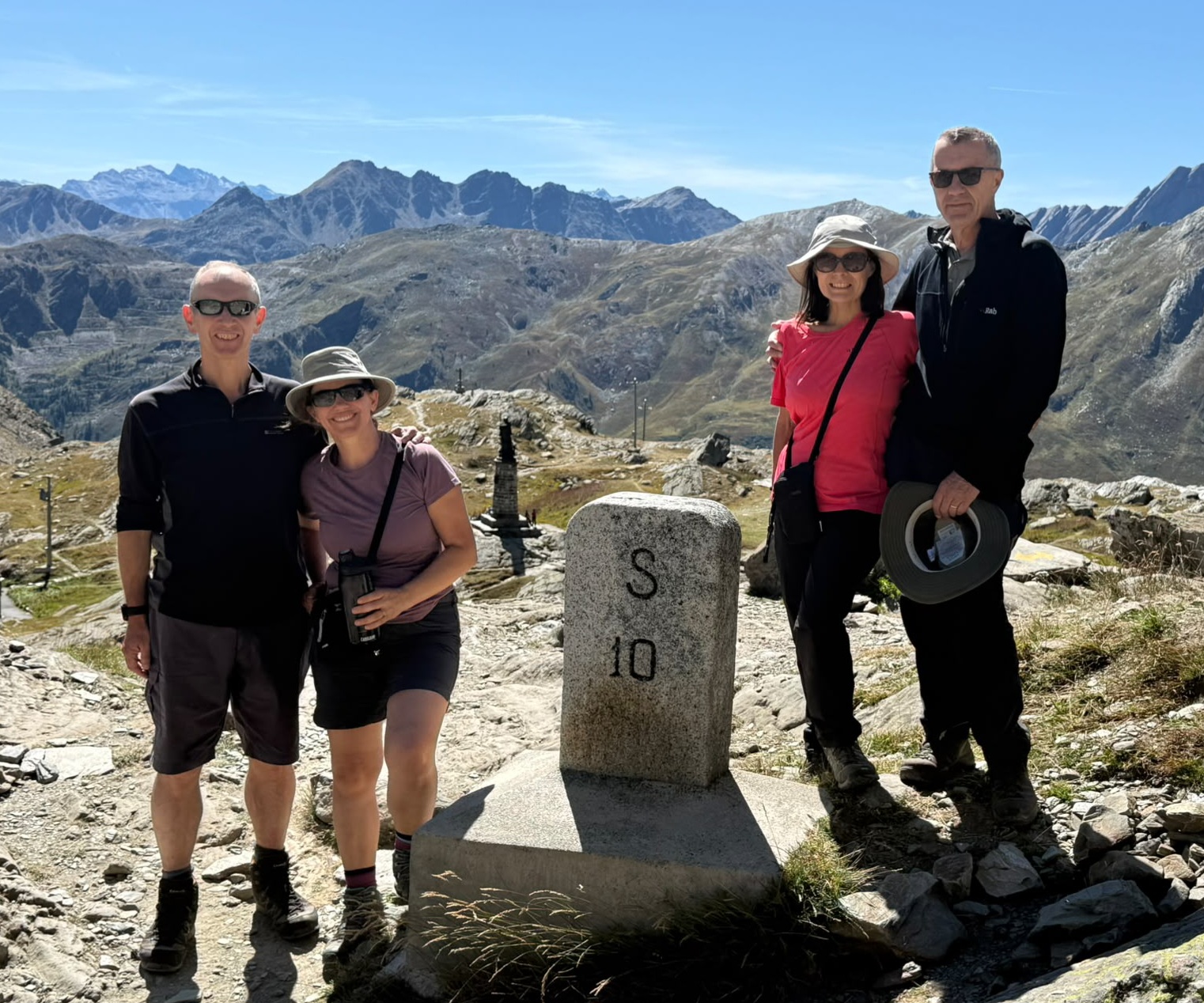
As Switzerland is in the Schengen area there are no border checks and you can freely walk between the two countries.
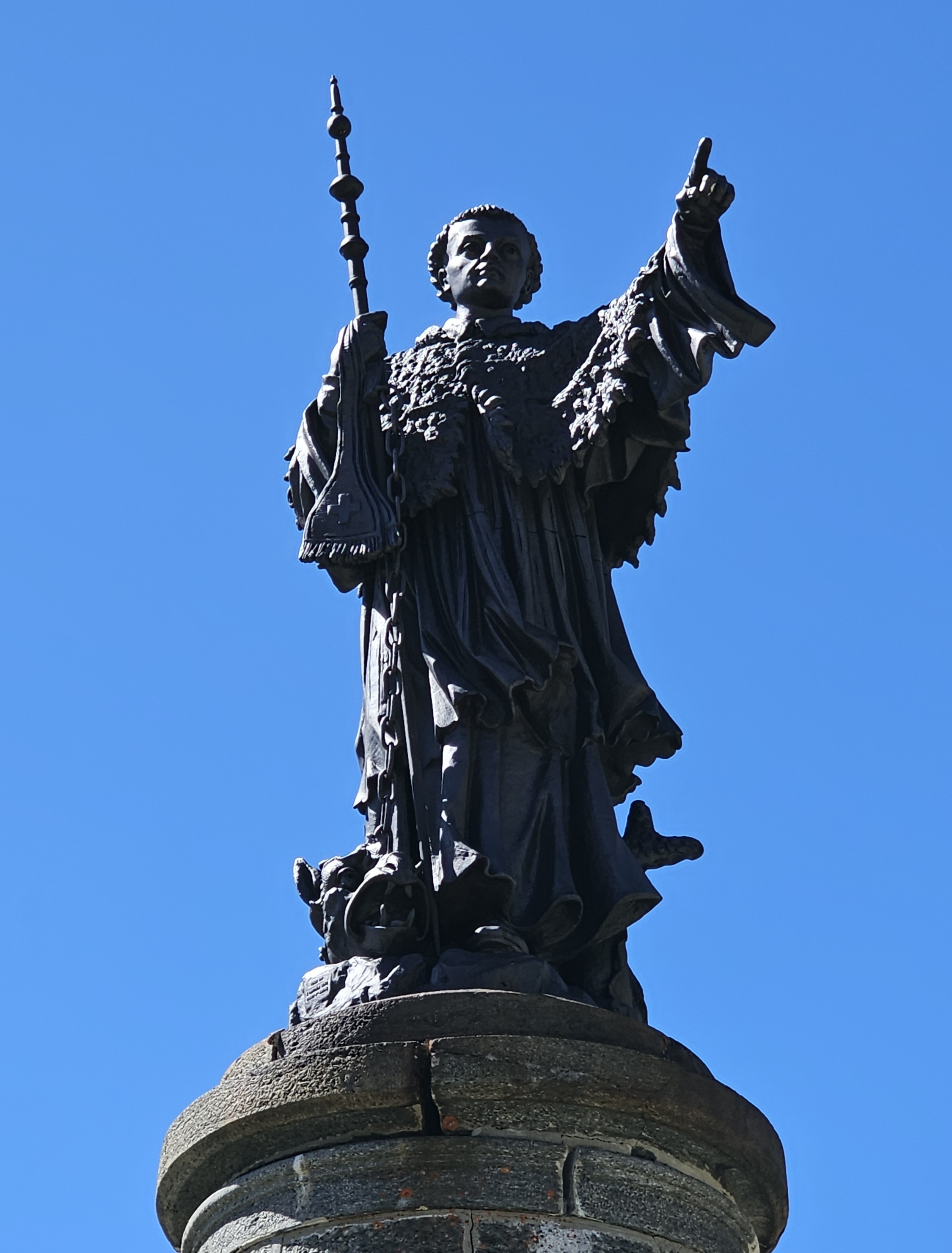
Saint Bernard was an 11th-century Alpine priest who became the patron saint of mountaineers, hikers, and skiers. For over 40 years, Bernard traveled extensively through the rugged valleys, preaching and looking after the poor.
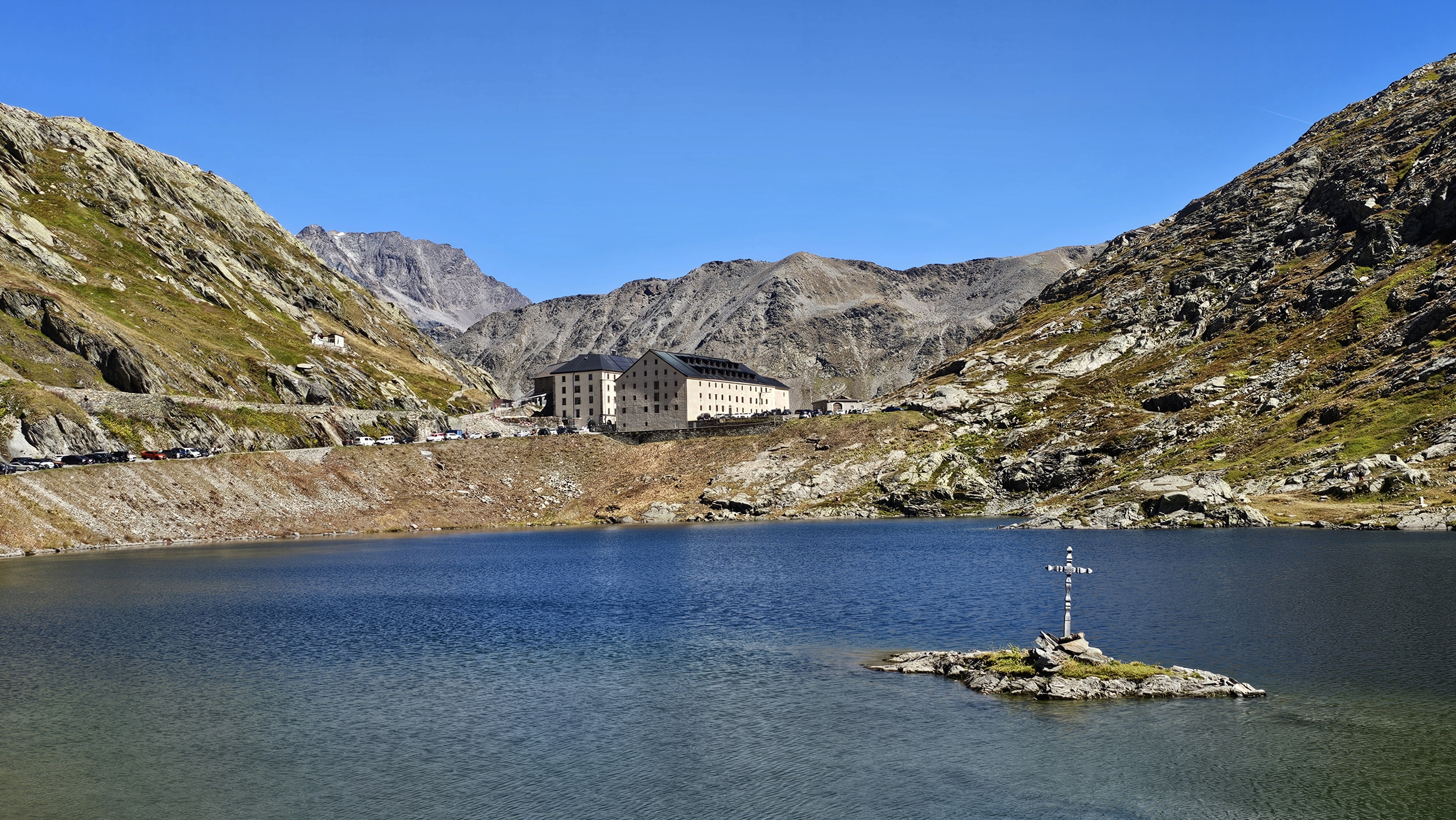
We were staying at the auberge which is part of the Saint Bernard Hospice. Due to freezing temperatures, the risk of sudden blizzards and avalanches as well as bandits waiting to rob them, the Great Saint Bernard Pass was dangerous to pilgrims as they made their way to Rome.
In 1050, Saint Bernard took action to clear the path of bandits and also built the first hospice which provided a refuge for pilgrims.
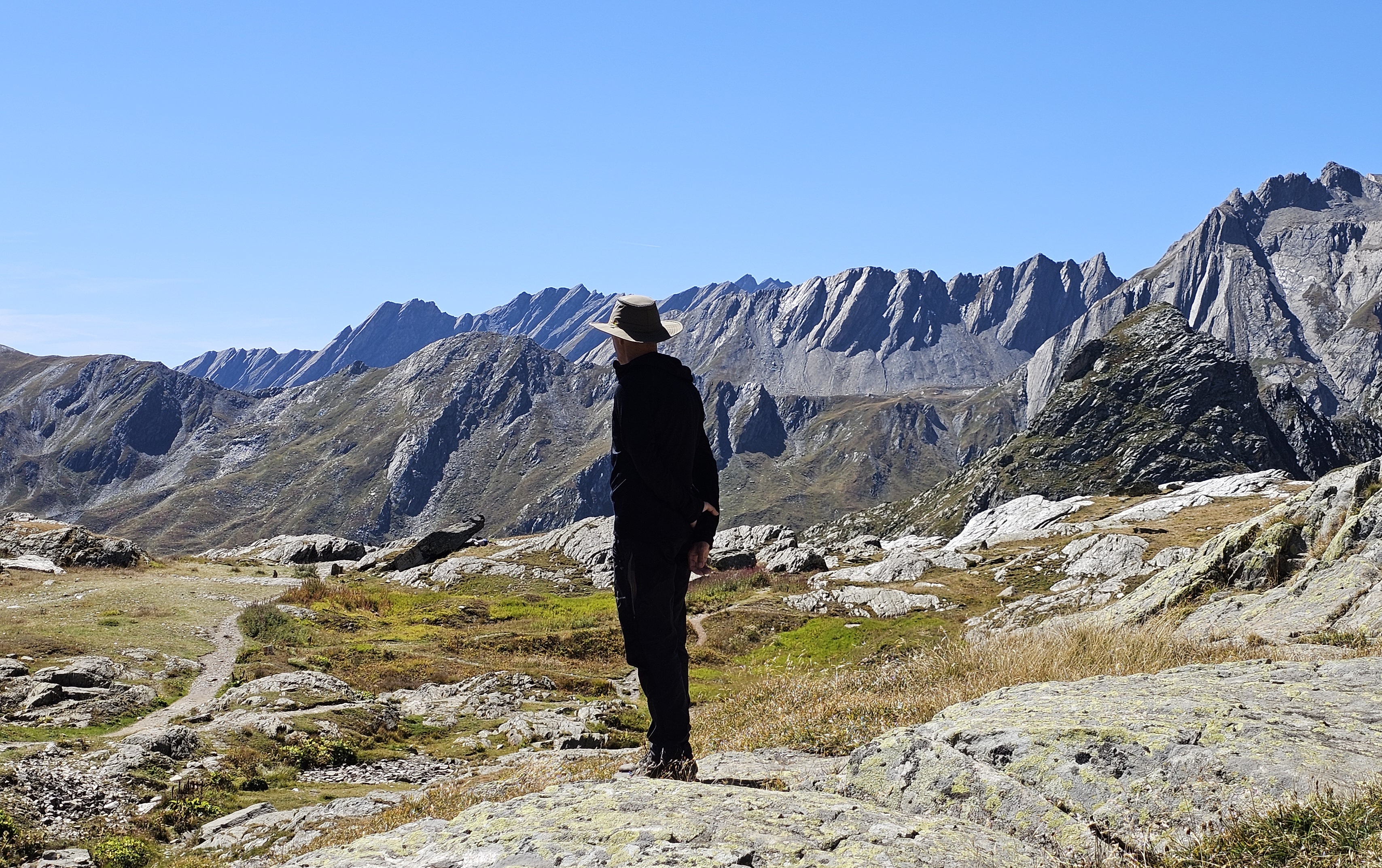
While on the Italian side, the 4 of us had a coffee and cake each and, as we switched to Euros, already the cost was much less than the expensive Swiss prices we had been paying for the last 8 days!
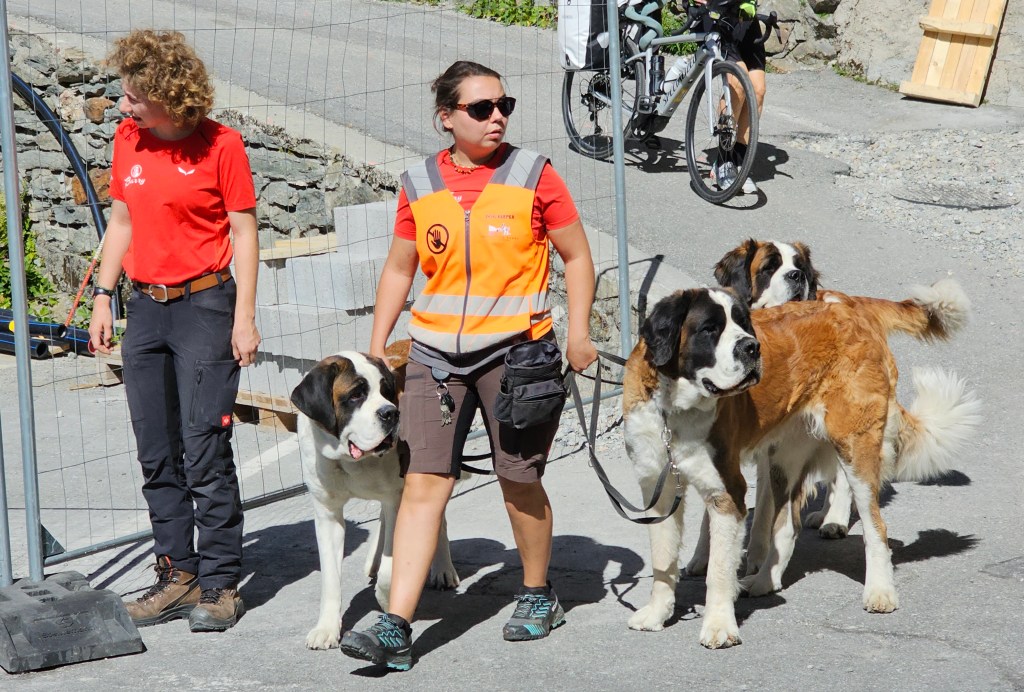
As we walked back into Switzerland we saw 3 Saint Bernard dogs being taken for a walk. These famous dogs were bred here and used for rescue operations. The most famous was called ‘Barry’ who is estimated to have saved up to 100 lives!
Named after the man himself, Saint Bernards are no longer used for mountain rescues, these ones are here for the benefit of tourists who can visit them in the museum and kennels.
We checked in and got our pilgrim stamps from the hospice. Russell had booked our comfortable ensuite hotel rooms in the auberge which is connected to the hostel by a covered bridge. This was great and preferable to staying in traditional dorms.
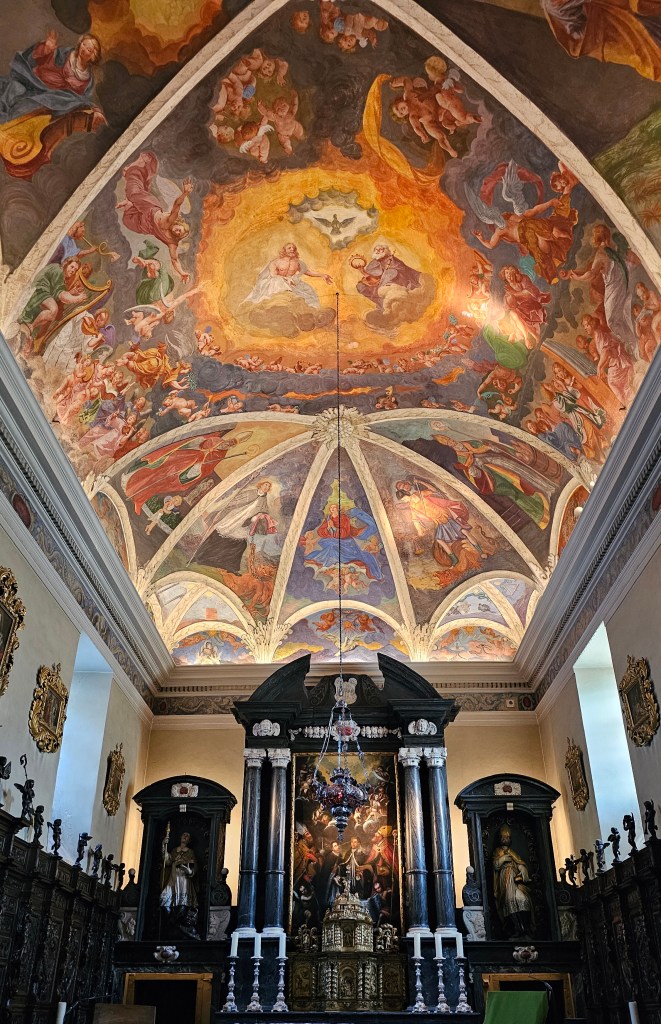
Located within the hospice, Chris and I visited the chapel. Sitting at an altitude of 2,473 meters, the Hospice Church (or Chapel) at the Great Saint Bernard Hospice is the highest church in Europe.
The original church dates back to the 13th century, but it was fully renovated in 1686 into its present, dramatic Baroque style with its elaborate woodcarvings, grand golden altars and beautiful ceiling frescoes.
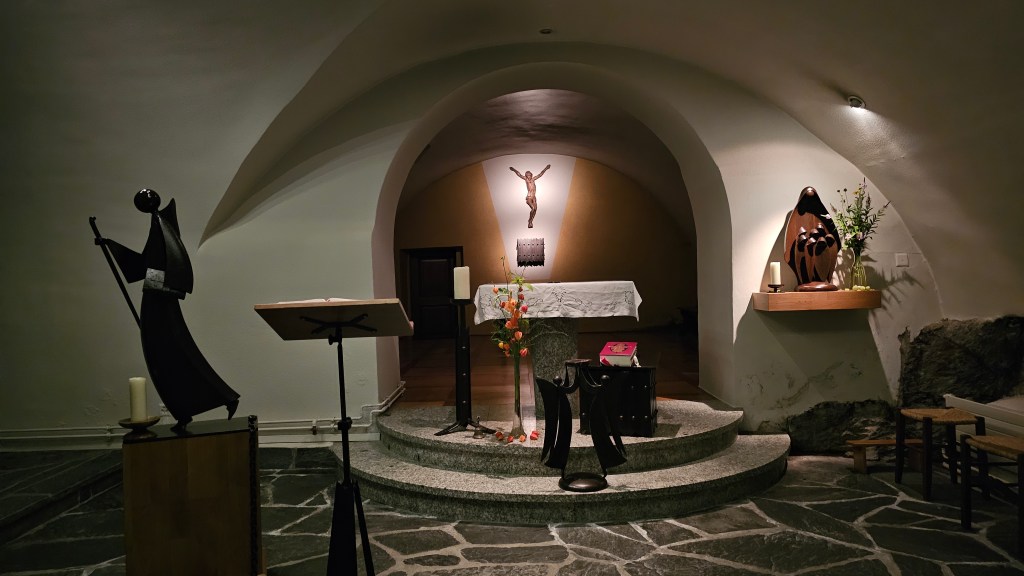
Next to the chapel you can visit the historic crypt. In 1800, Napoleon crossed the Great Saint Bernard Pass with his army. His closest military general, Louis Desaix died in battle. Napoleon ordered that he was buried at the hospice and today he lies resting in a tomb hidden underneath the chapel.
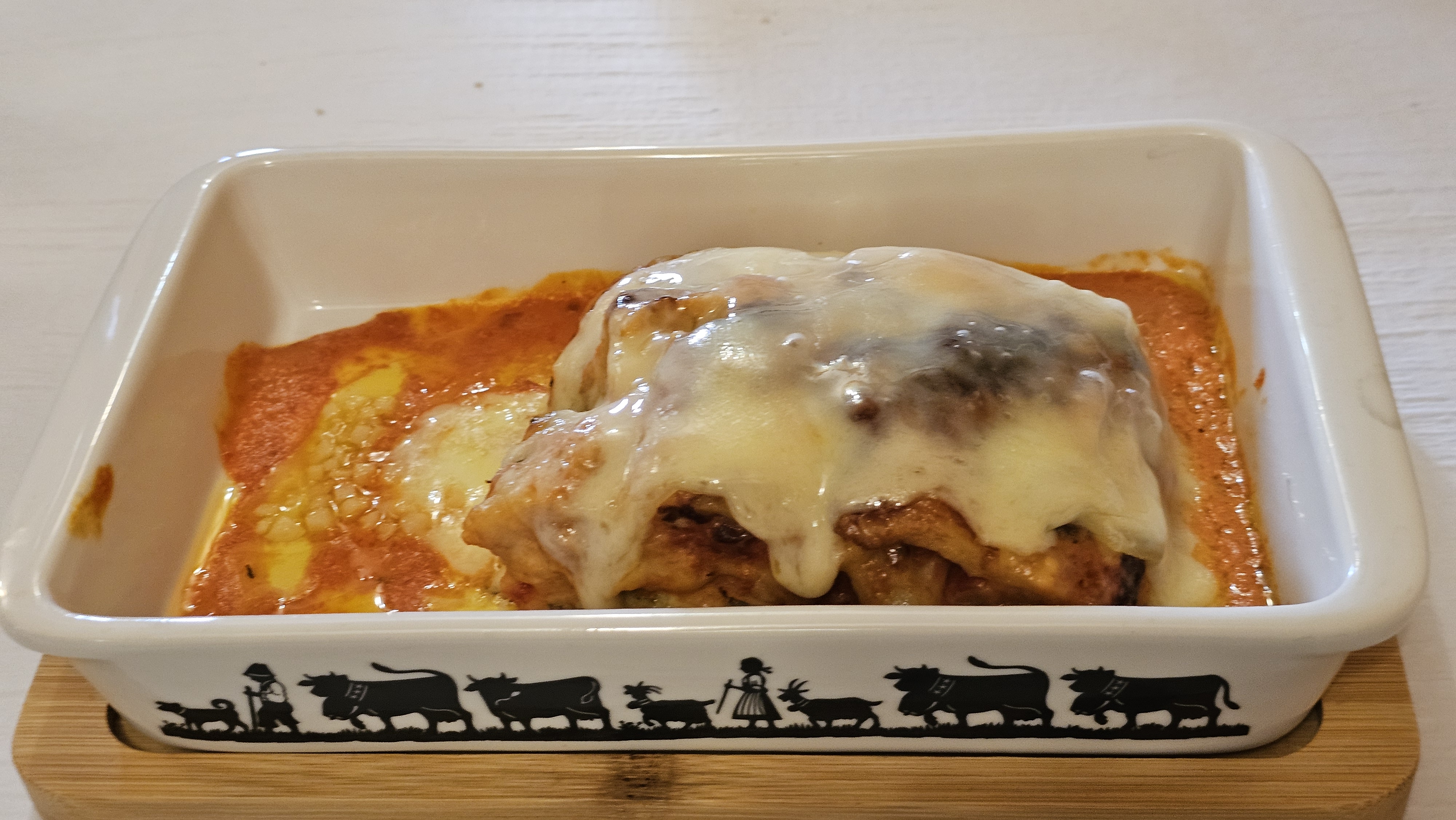
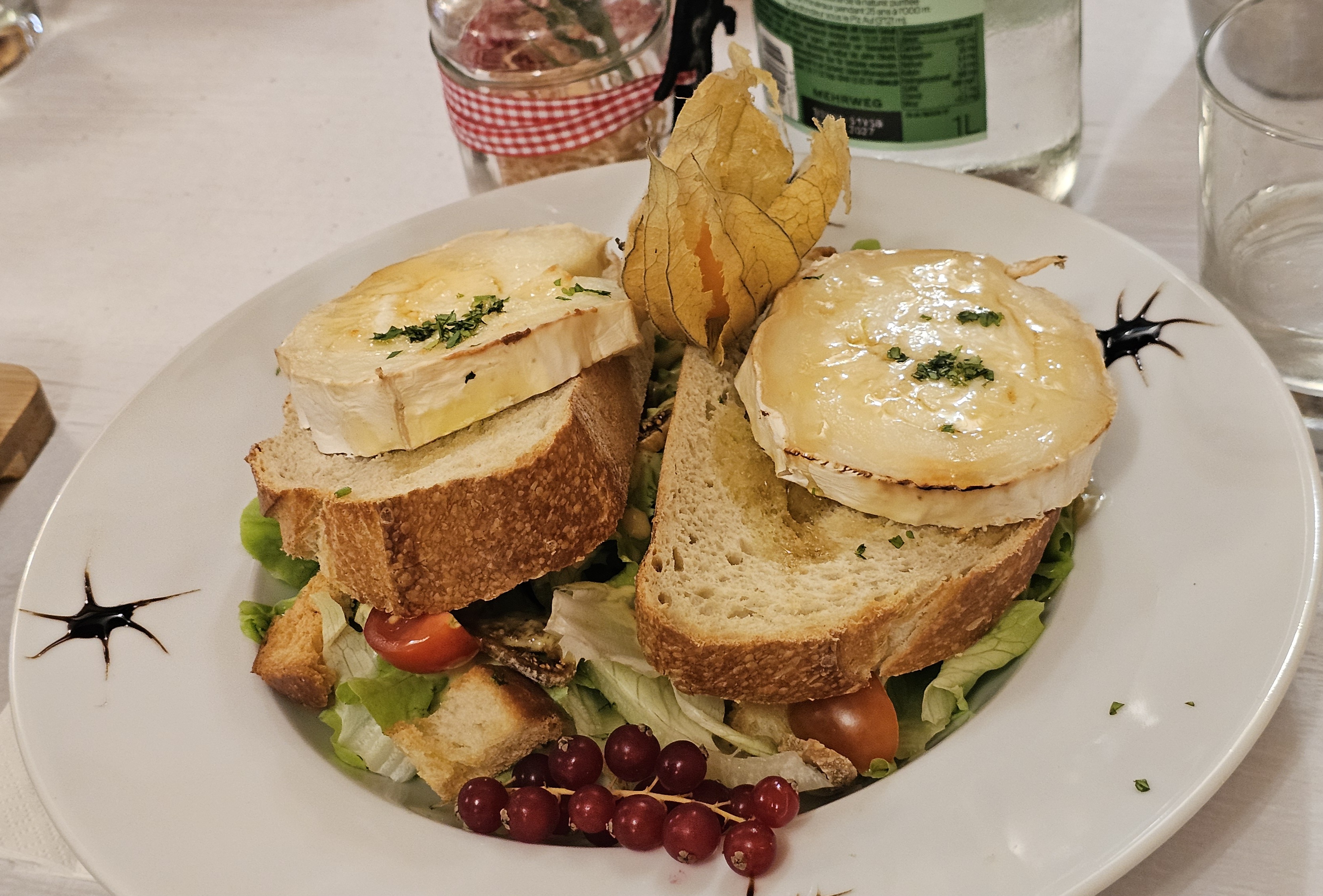
Following showers and a visit to the gift shop, later in the evening Chris and I met up with Roza and Russell and enjoyed a delicious high quality meal in the auberge restaurant. We had a vegetable lasagne each and shared a goats cheese salad.
Summary
Another brilliant day where we all felt a sense of achievement in this milestone of reaching the highest point of the Via Francigena.
We all made it easily up to the summit and it was not as difficult as we anticipated. And agreed, this was helped as we were fortunate with perfect weather again ☀️
First thing tomorrow we face a long day as we cross into Italy and begin our descent through the Aosta Valley.

