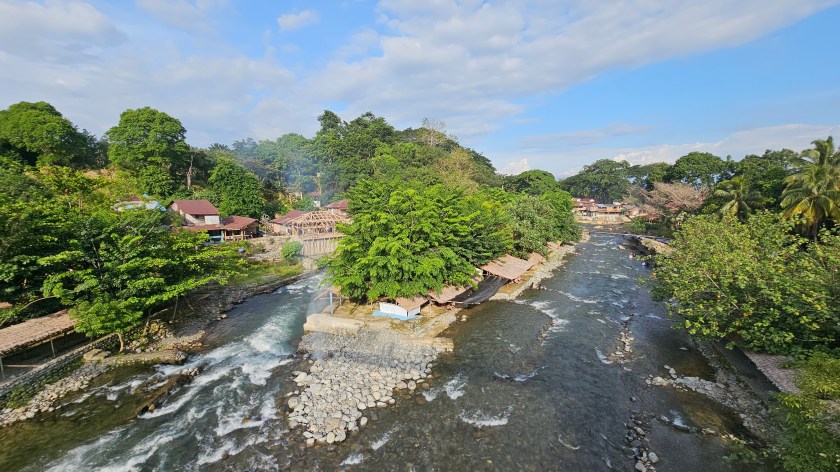
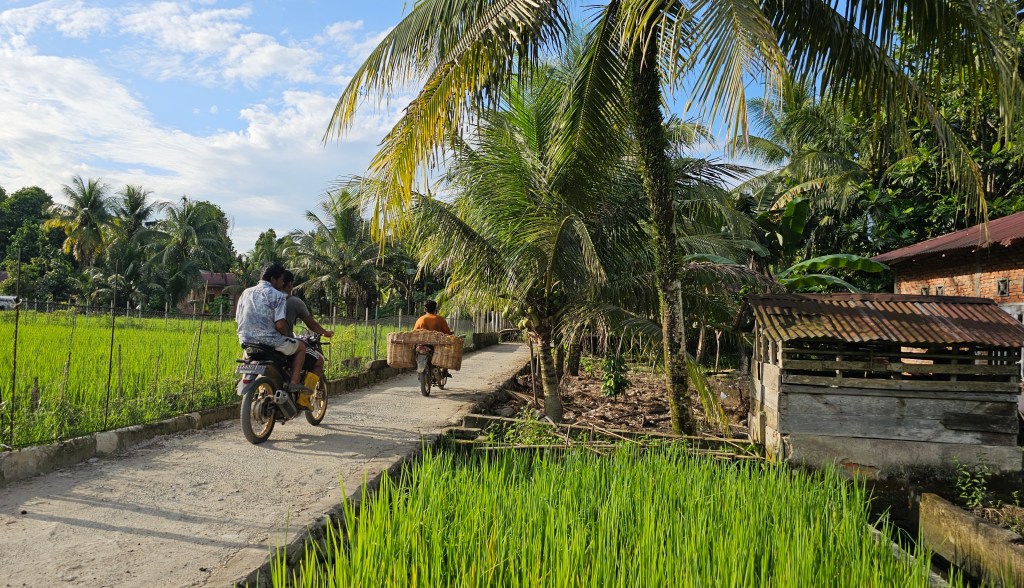
Following a 4 – 5 hour drive from Medan the first part of our Intrepid Sumatra adventure began in Bukit Lawang. Bukit Lawang is only about 90 km away however the drive is slow due to heavy Medan traffic at the beginning and bumpy twisty roads closer to Bukit Lawang.
We stopped 3 times along the way, the first was in Medan in a large and modern supermarket, similar to the ones found in Kenya. In here I purchased a small container of Autan insect repellent which had been recommended for use in the rainforest. This was just IDR10,000 or £0.41.
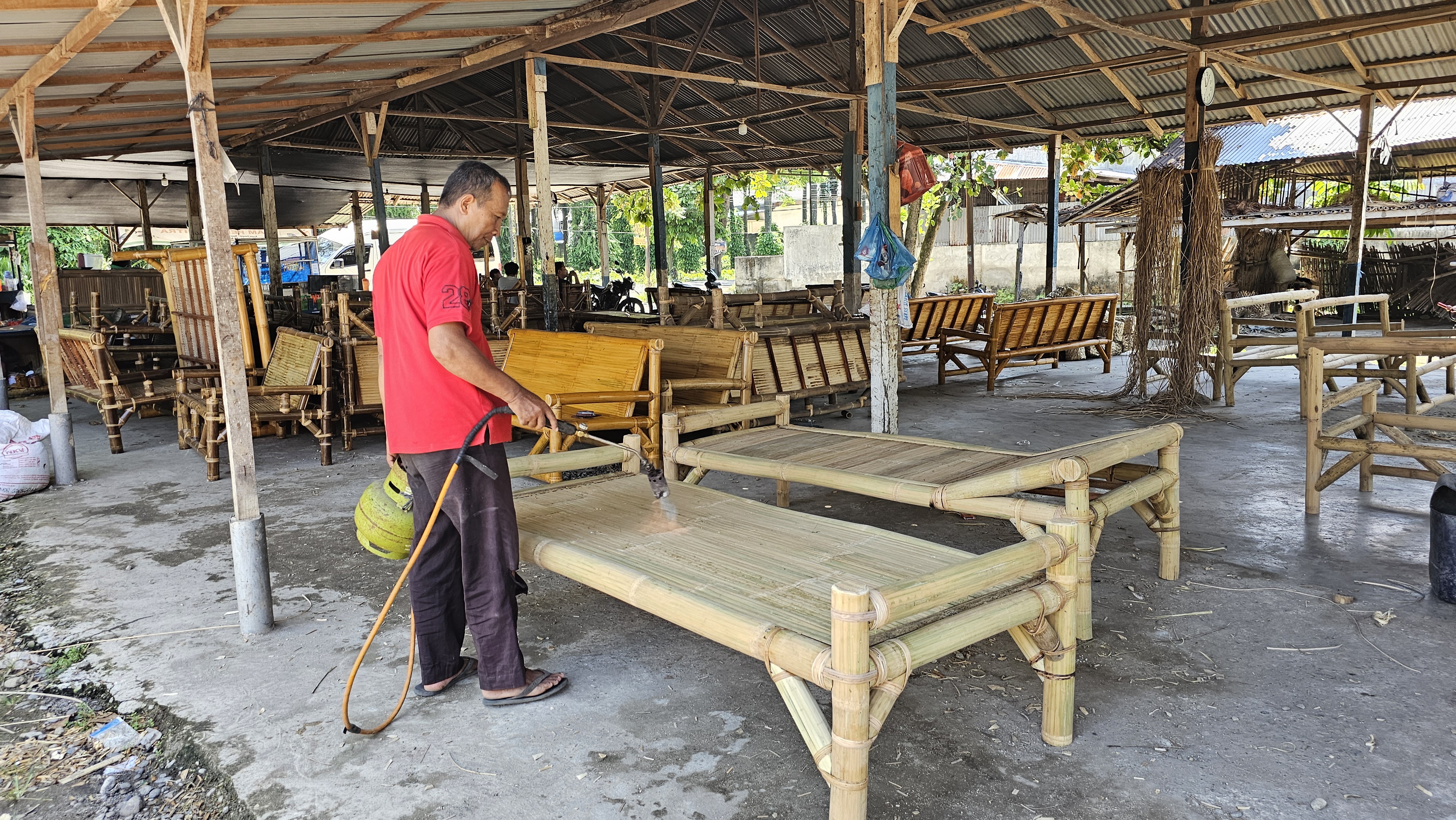
The second stop was to visit a bamboo workshop where items such as furniture and baskets were being made.
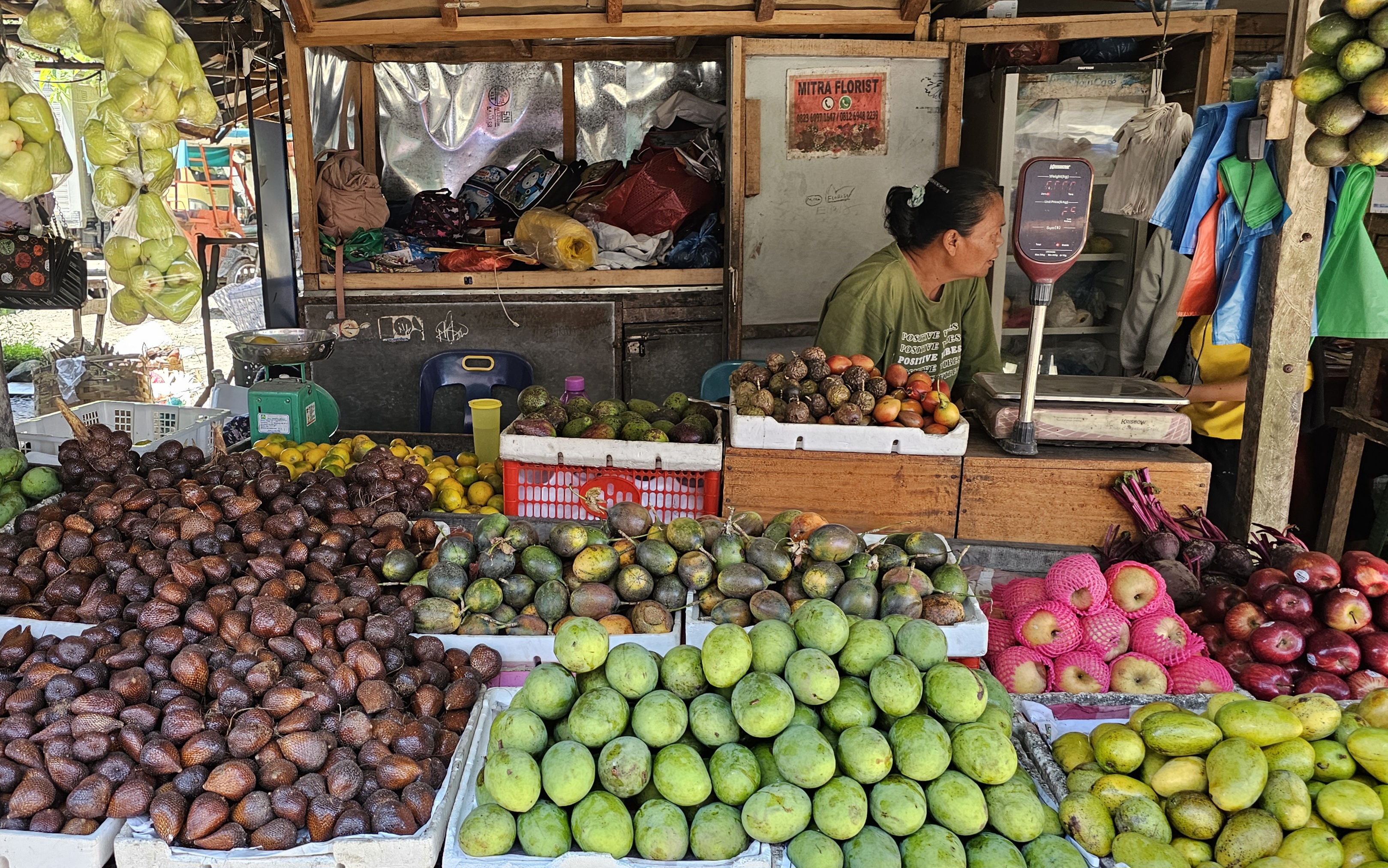
And on another stop, we visited a small local market which sold all manner of tropical fruits and other produce.
Sumatra is Indonesia’s main producer of palm oil and our drive took us past hundreds of acres of palm oil plantations. Palm oil is a vegetable oil which is extracted from the fruit of oil palm trees. It is a common ingredient being found in cosmetics, food and particularly cooking oils. This is a cheap and low maintenance crop however vast rainforests have been cleared to make way for them. Deforestation on such a massive scale has had a devastating impact on wildlife, including endangered species such as orangutans who inhabit them.
However, boycotting palm oil products is not necessarily the answer. The Sumatran Orangutan Society explains more.
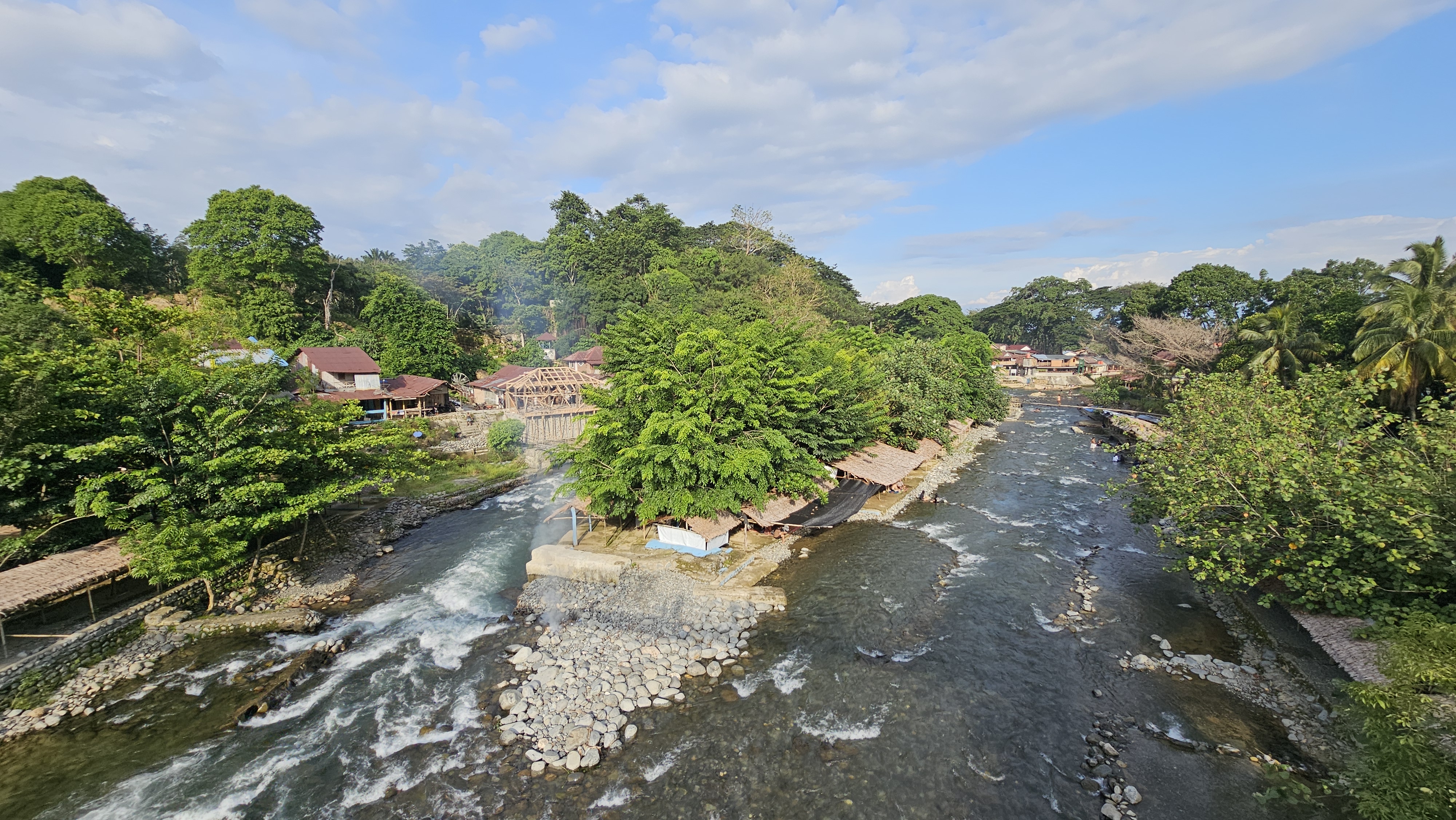
Bukit Lawang
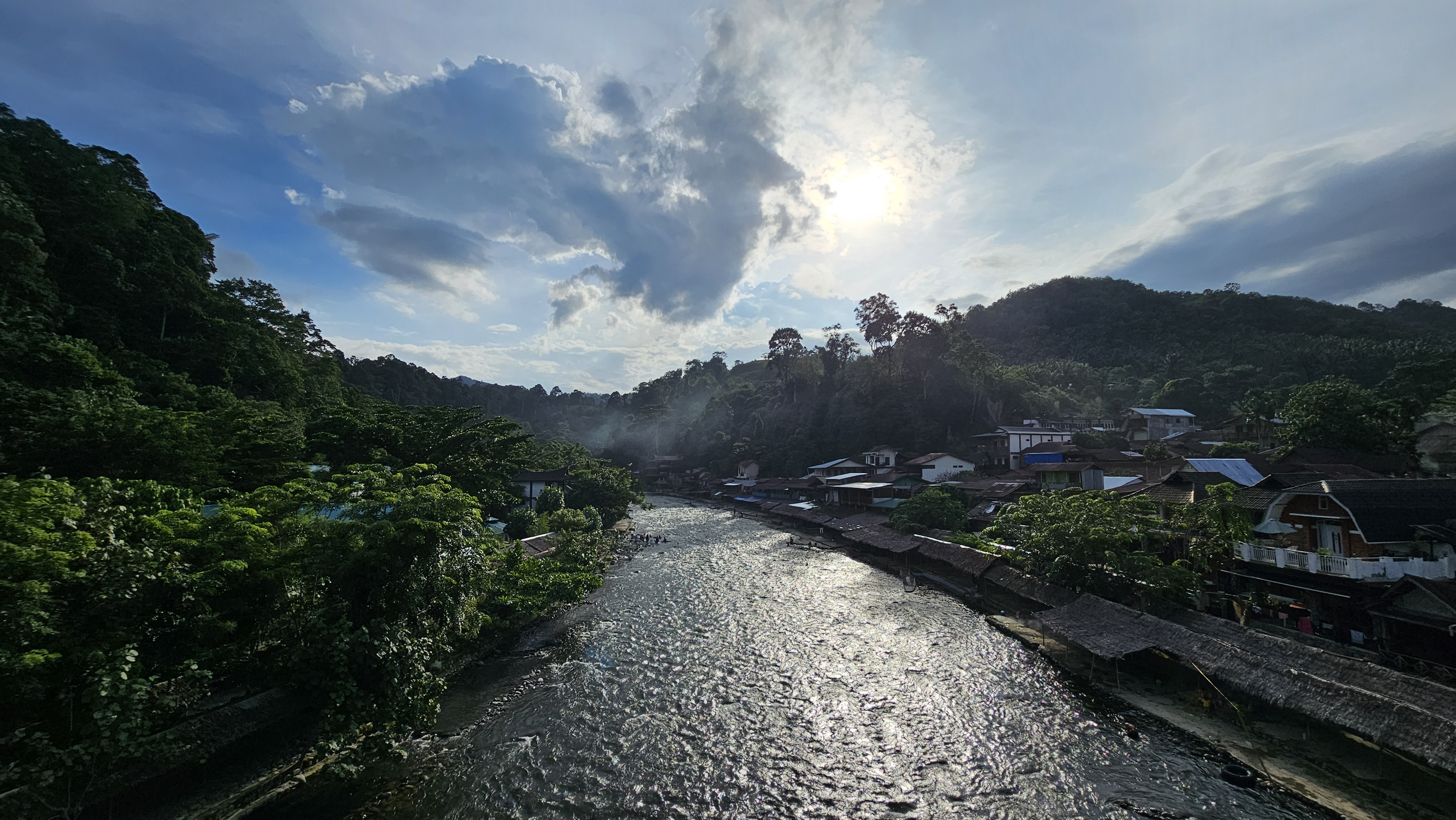
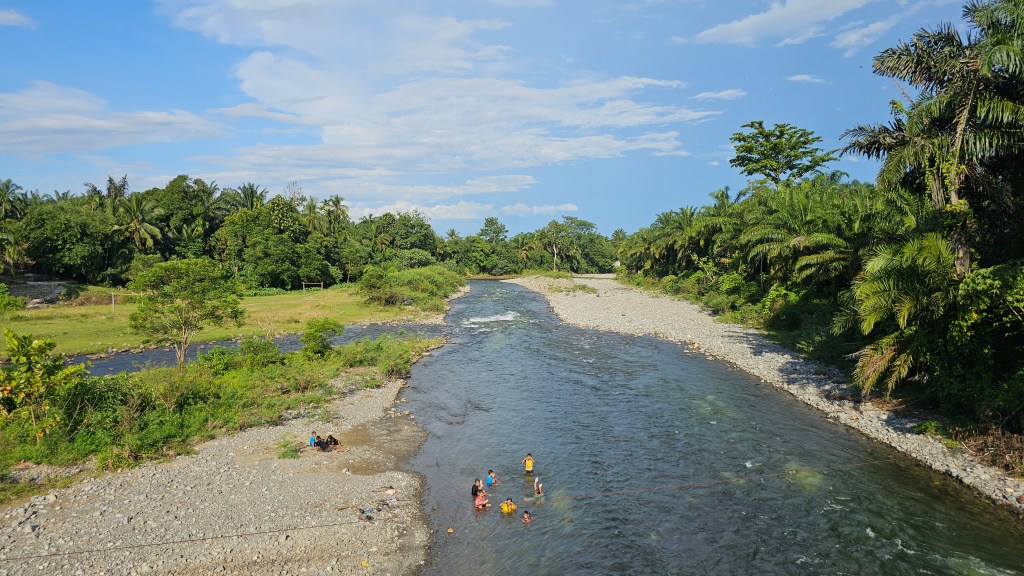
The small village of Bukit Lawang is located next to the Bahorok River and is popular with tourists due to its proximity next to the Gunung Leuser National Park, a UNESCO World Heritage Site. This national park is the tropical rainforest home to orangutans, Thomas Leaf monkeys, gibbons, hornbills and many species of lizards and reptiles. Larger animals such as Sumatran tigers, rhino’s and elephants hide themselves away deep in the national part and are rarely, if ever, seen by visitors.
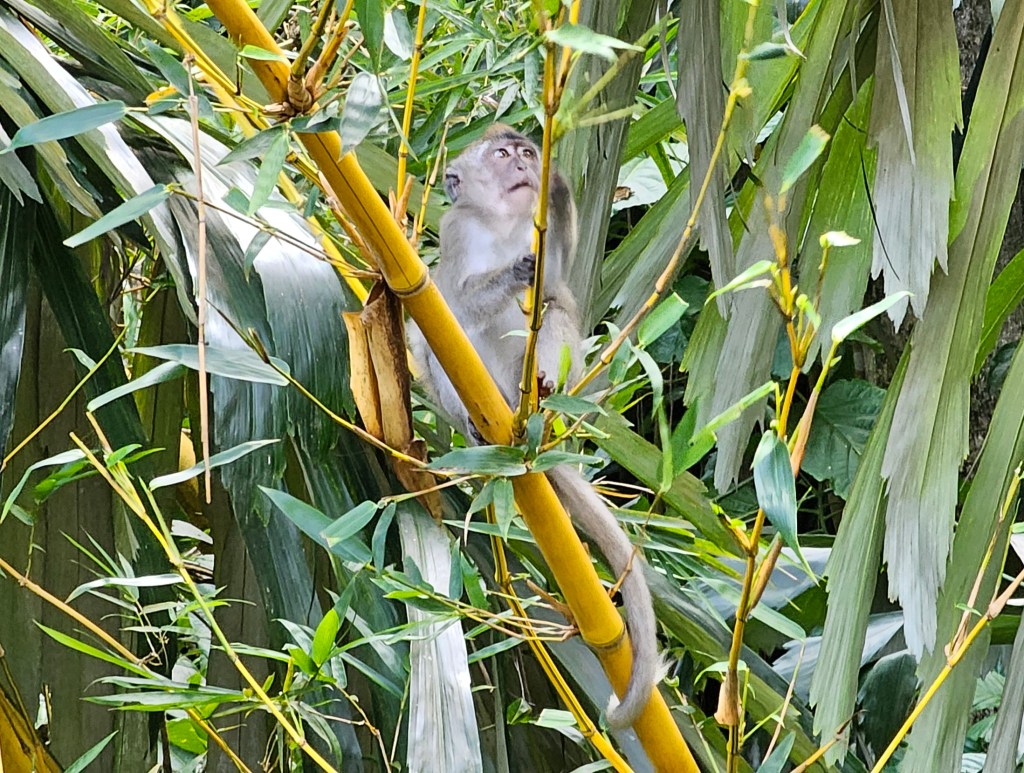
Visiting the national park for our 2 day trek was the objective of our stay here. However a walking tour through the village of Bukit Lawang and a tuk tuk tour of the small surrounding villages gave us a wonderful insight into the local life of North Sumatra.
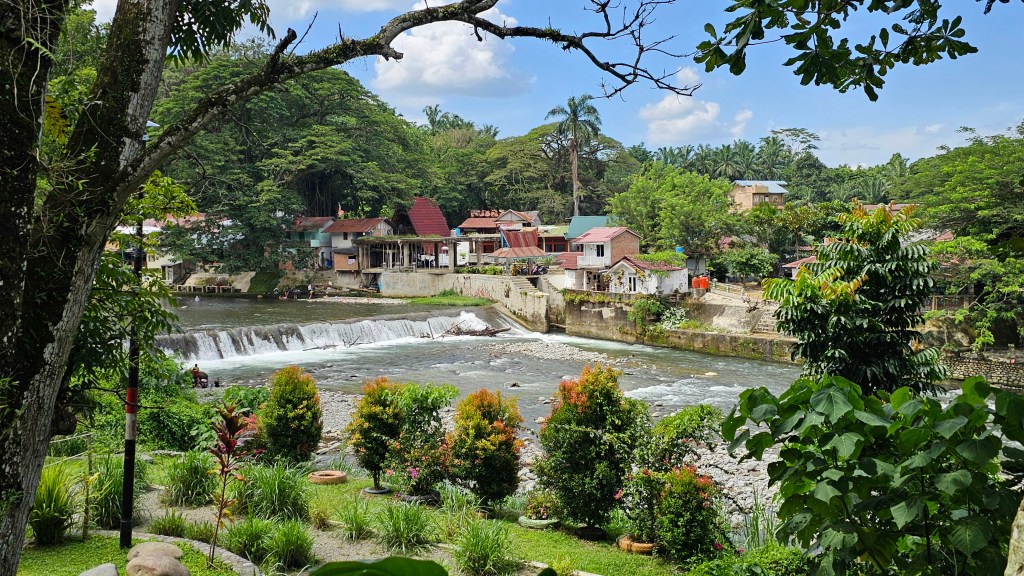
We stayed in the Ecolodge on the night before and the night after our orangutan jungle trek – more information on the Ecolodge can be found at the end of this post. But just to mention that many monkeys live in the trees surrounding the hotel and we were advised to keep our doors shut!
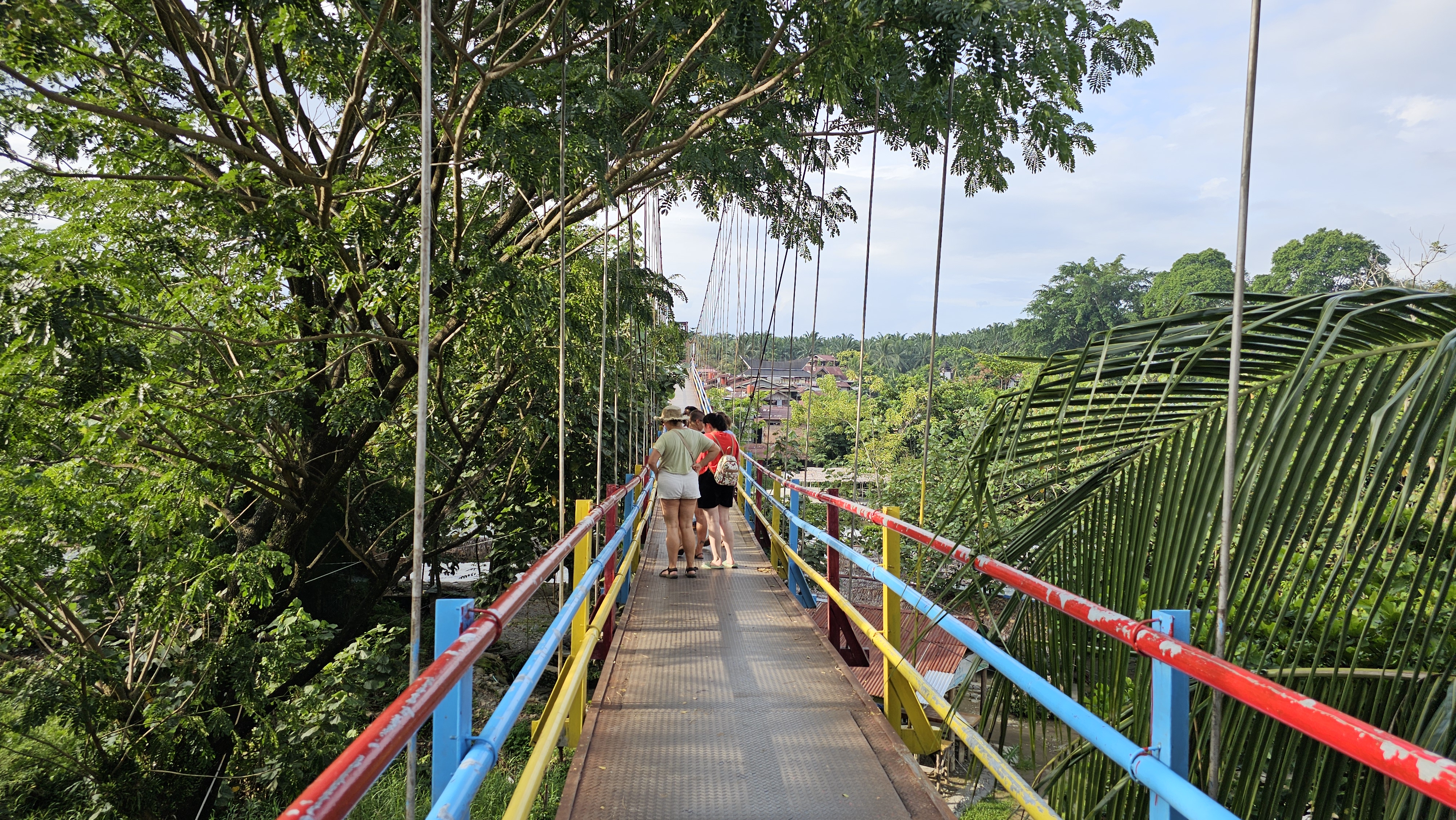
Walking tour of Bukit Lawang
Once we had settled in and had lunch in the lovely bamboo restaurant, later in the afternoon Abdul took a group of us on an optional walking tour of Bukit Lawang.
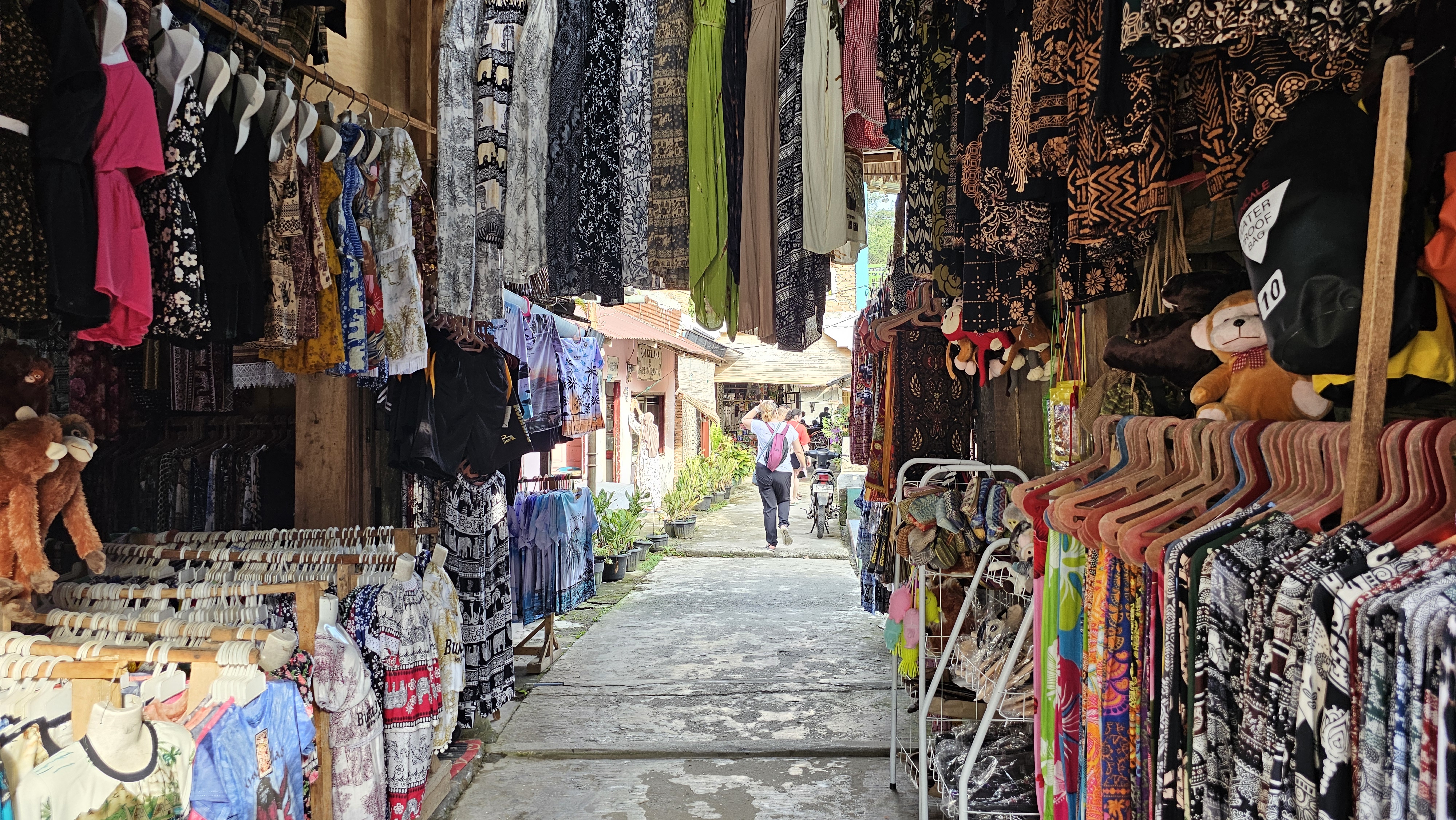
Abdul took us through the heart of the small riverside village where many gift and textile shops could be found.
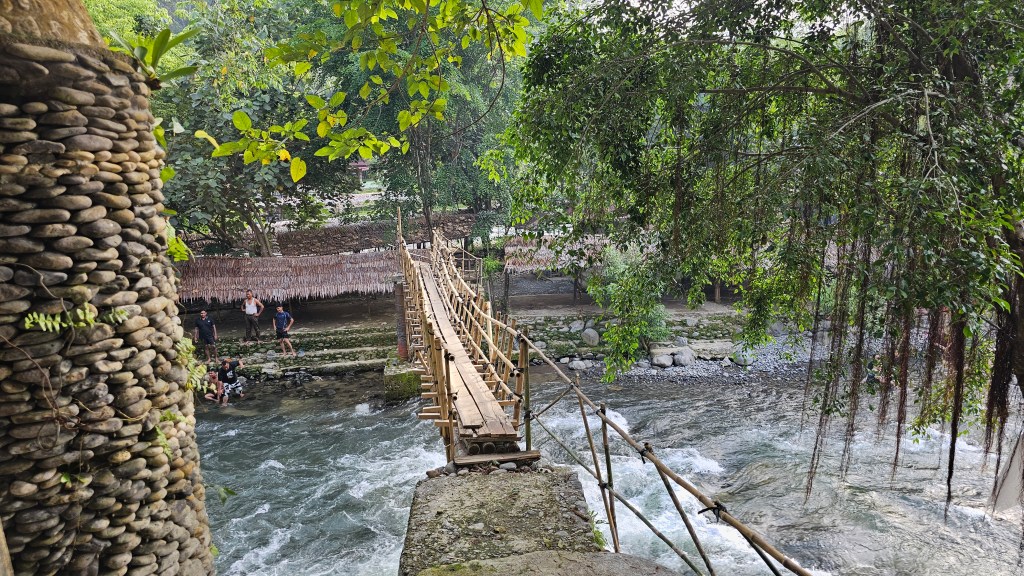
Several wooden suspension bridges span the river.
Casual bars line the river and these are frequented by tourists.
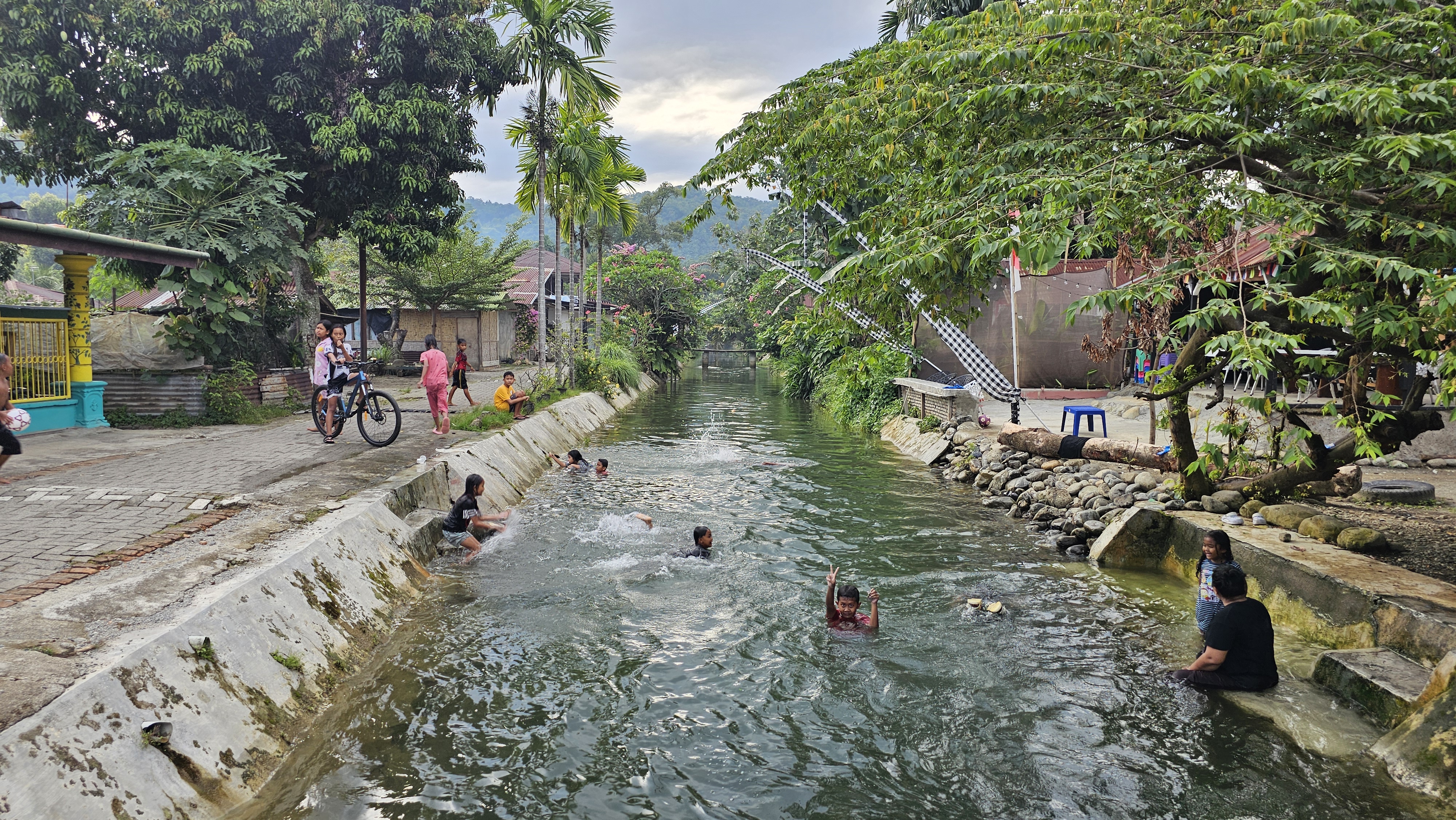
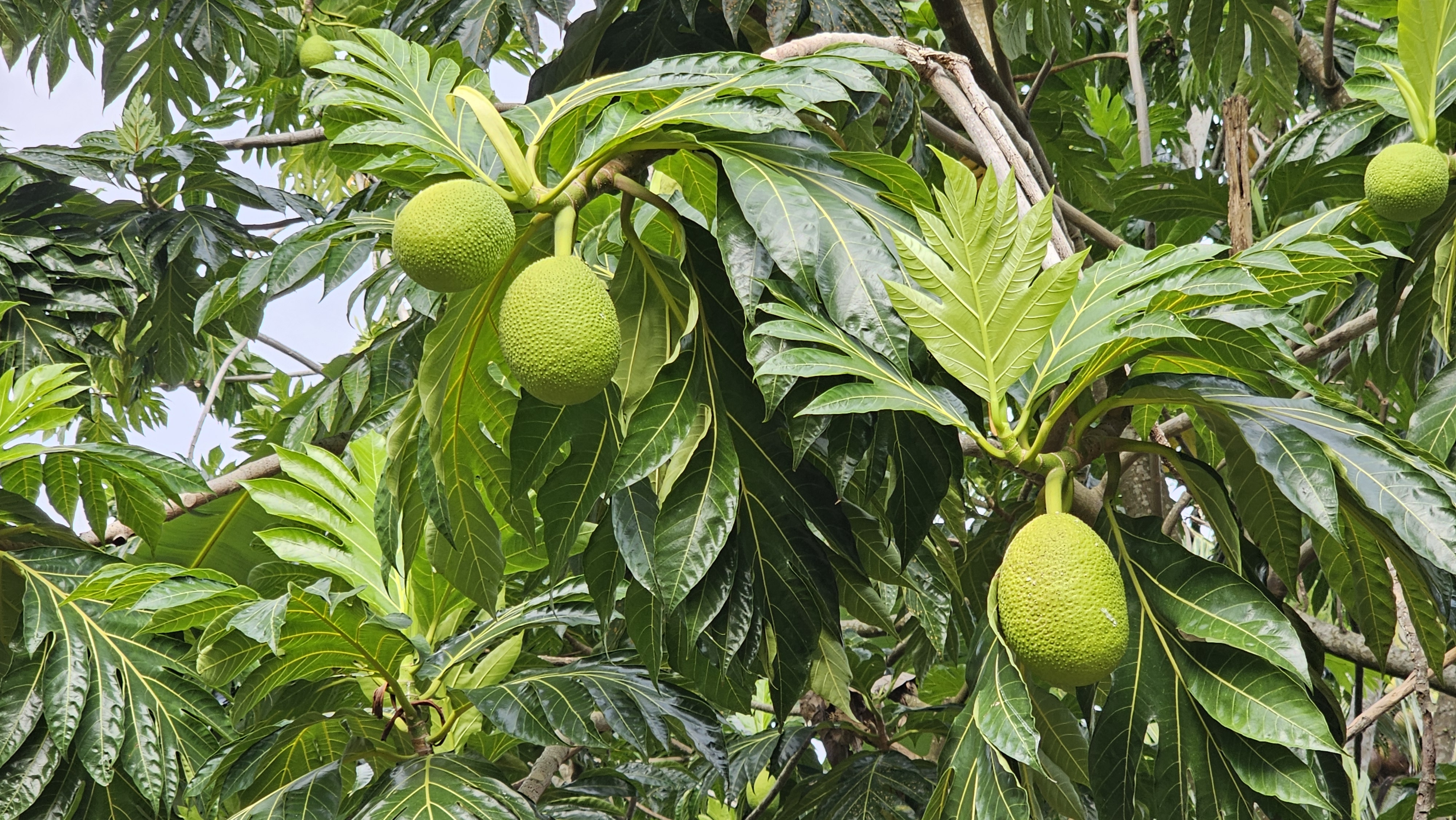
Throughout the tour, Abdul explained a range of flora and fauna which could be found.
Becak local villages tour
Following our 2 day jungle trekking adventure (to be covered in the next post) we arrived back at the Ecolodge Bukit Lawang hotel in the early afternoon.
While some of our group cooled off in the river, Bridget and I sat in the bar with a drink before joining a second optional afternoon tour! This was a motorcycle rickshaw (a becak) tour to some small local businesses.
At 3.30 pm Abdul led 6 of us to our 6 waiting rickshaws meaning we had one each.
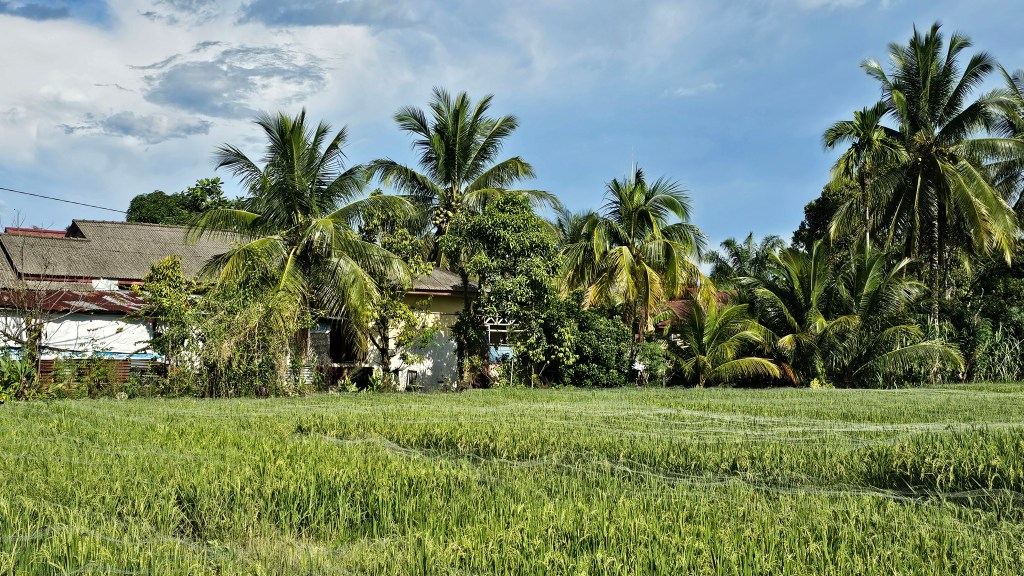
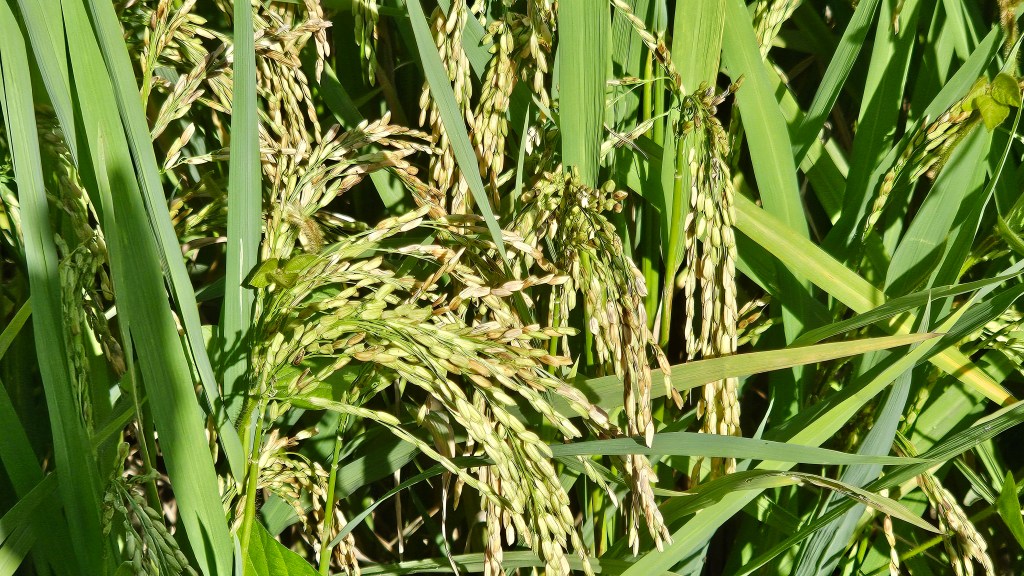
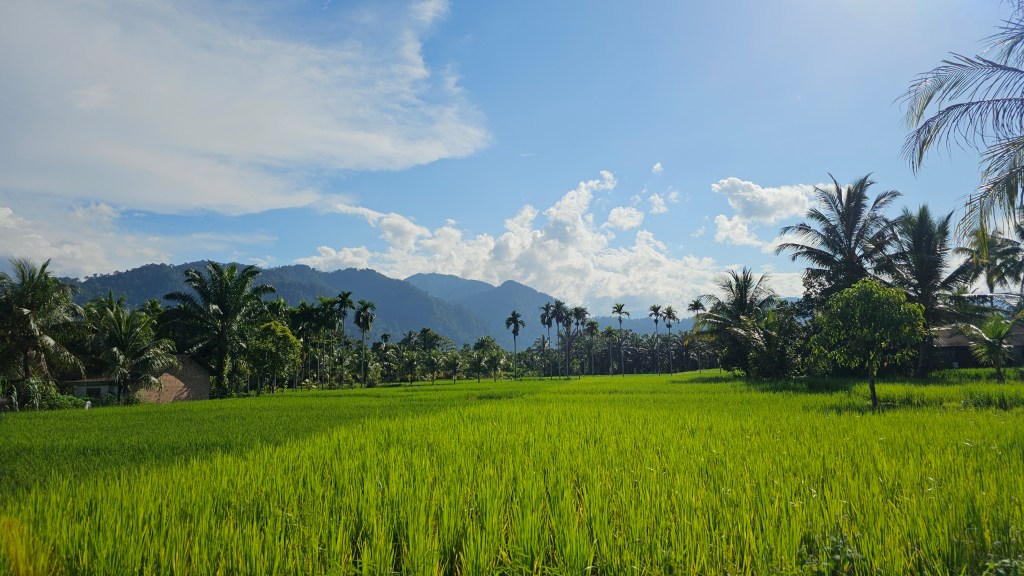
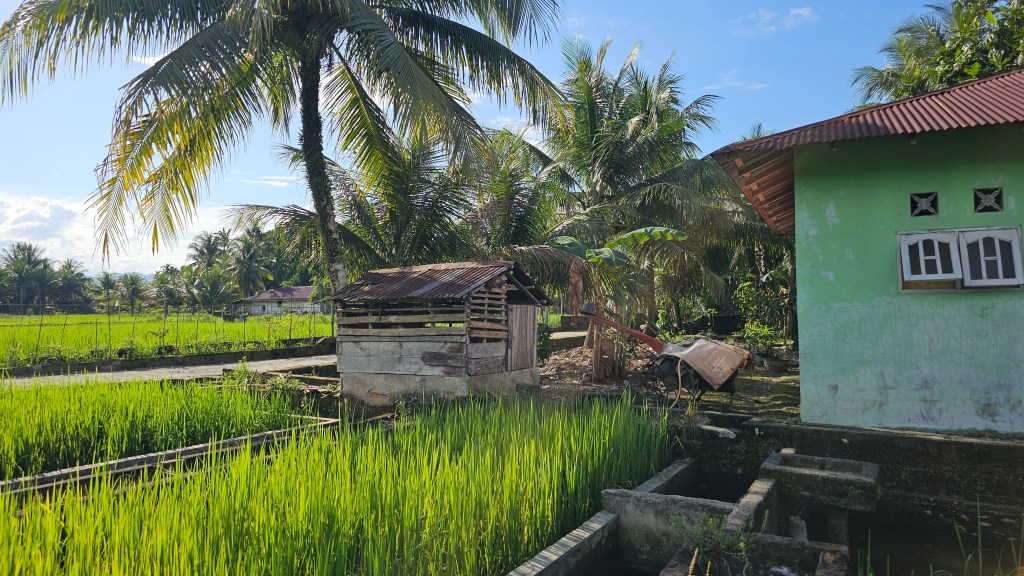
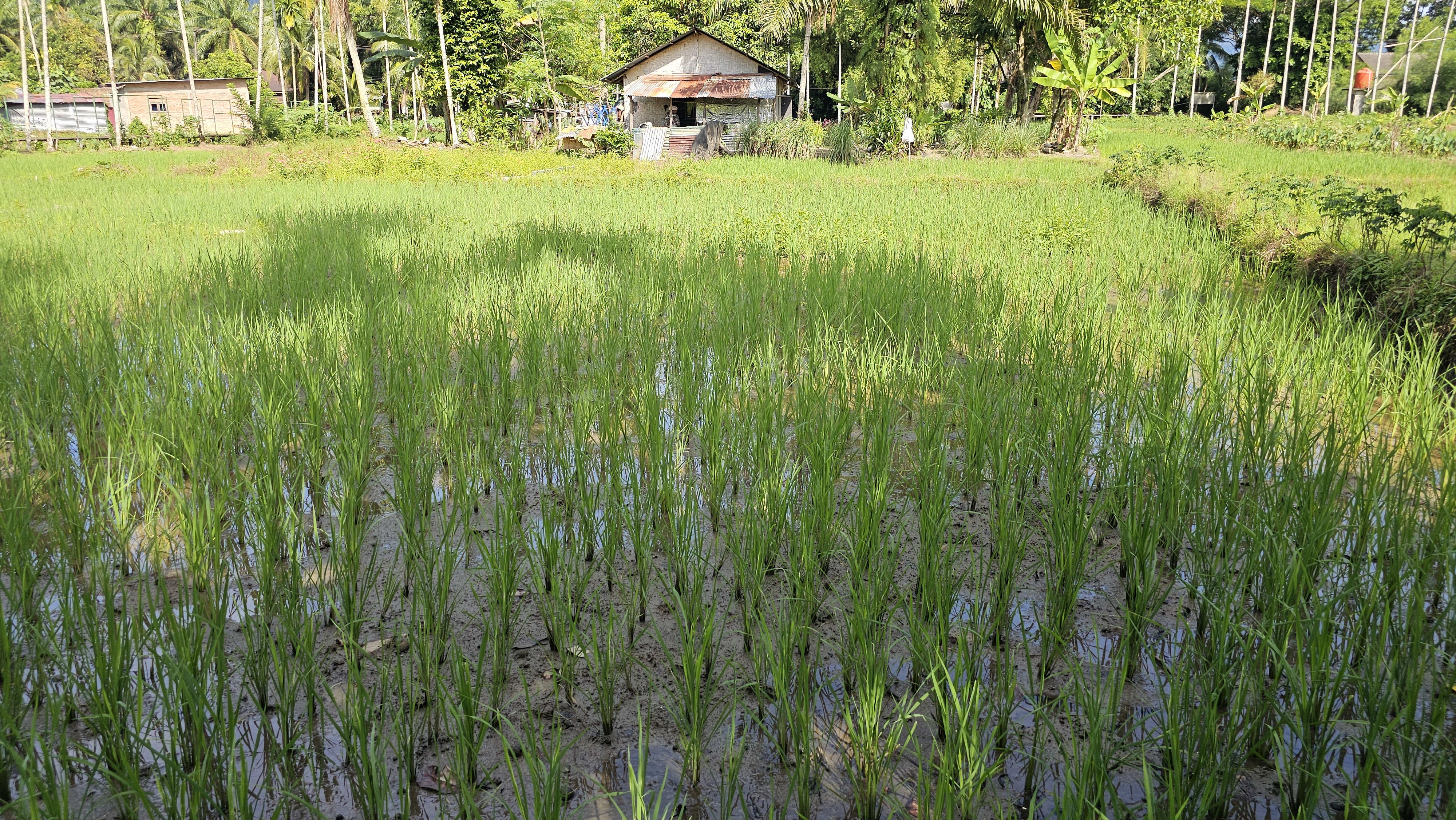
Our first stop was to a rice field where we disembarked the rickshaws and listened to Abdul who explained the rice growing process.
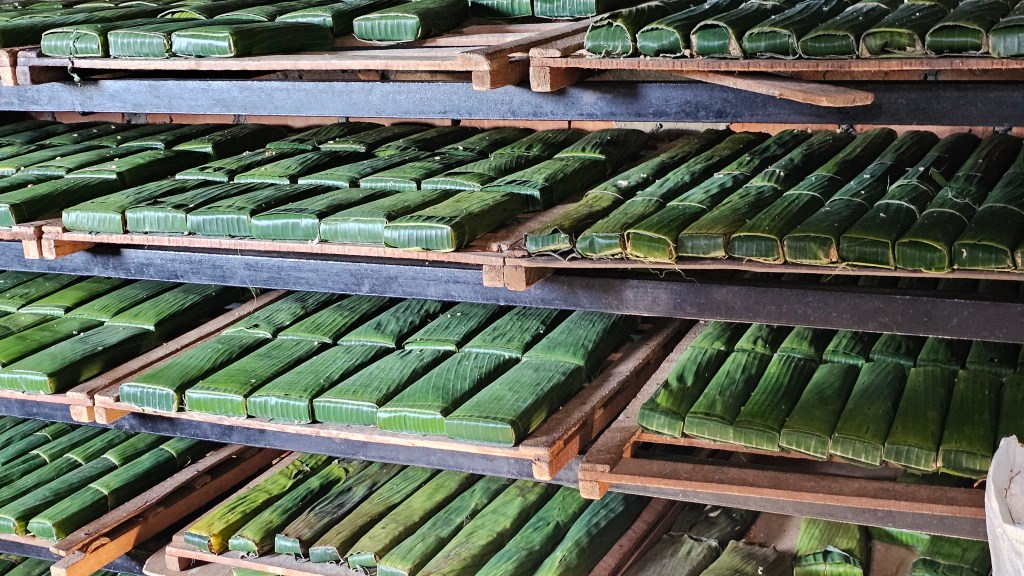
We returned to the rickshaws and were driven in convoy to our next stop, a small village where we were shown a local tempeh making process. Tempeh is a traditional Indonesian food made from fermented soybeans.
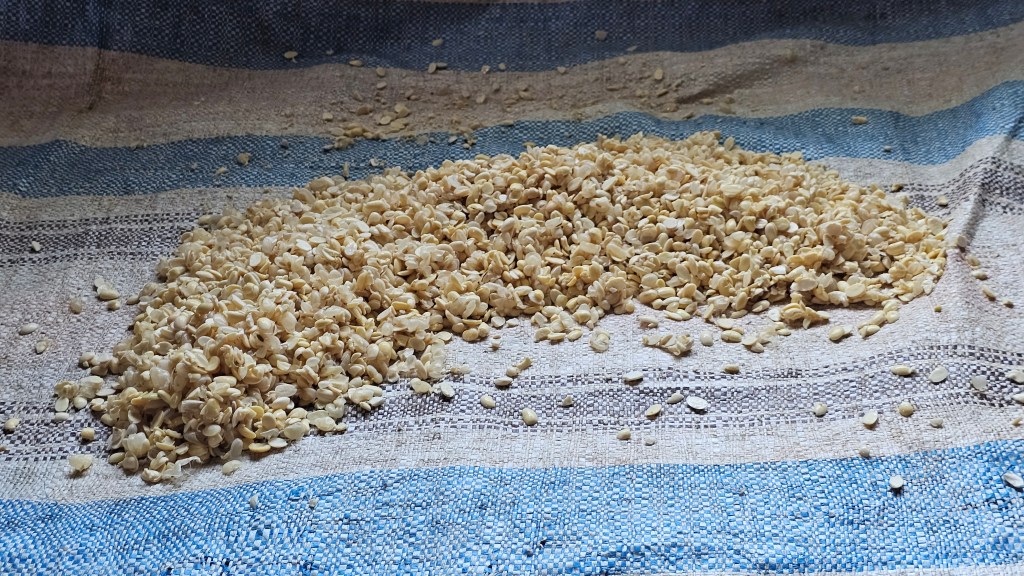
The tempeh beans are squashed and tightly packed into banana leaves for distribution.
Next we stopped near the river where we followed Abdul across a long suspension bridge.
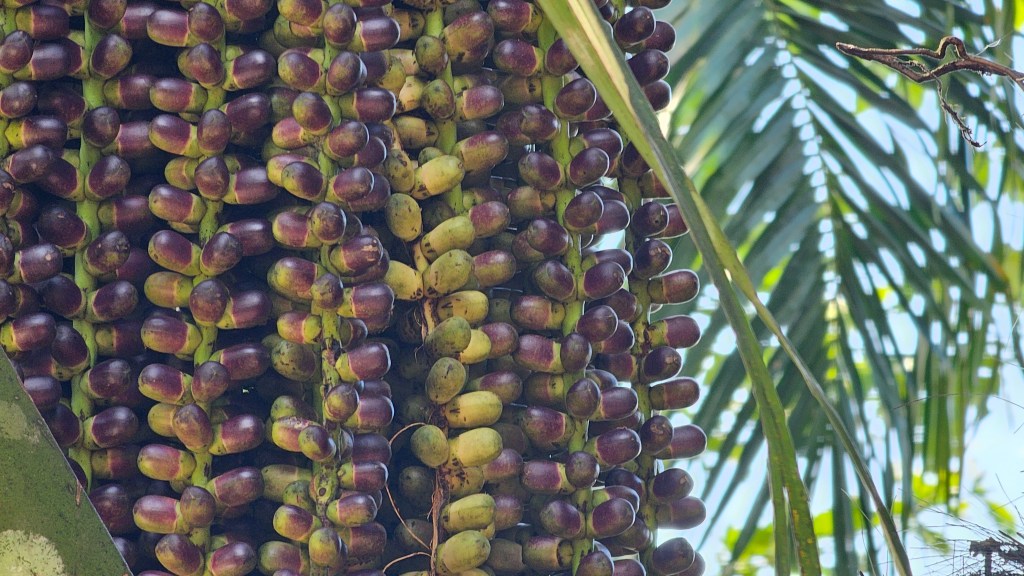
At the other side of the river was a sugar palm tree. Abdul explained how this is harvested and put to use!
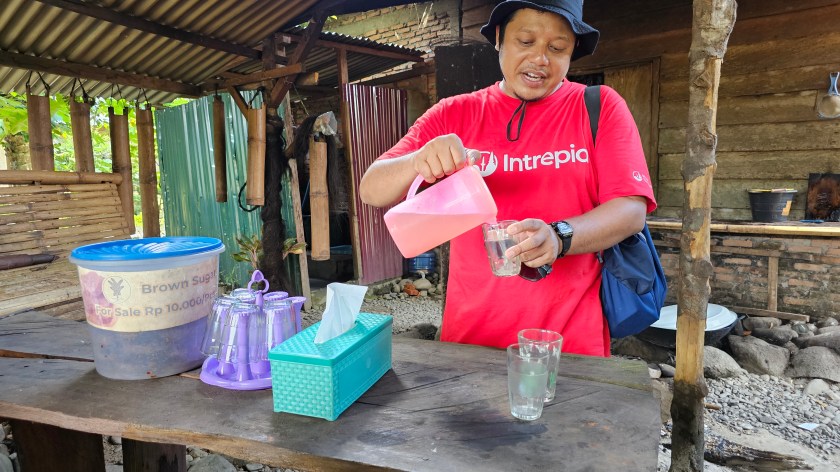
Near to the sugar palm tree, we called into a local artisan place where we were given a sugar drink to taste.
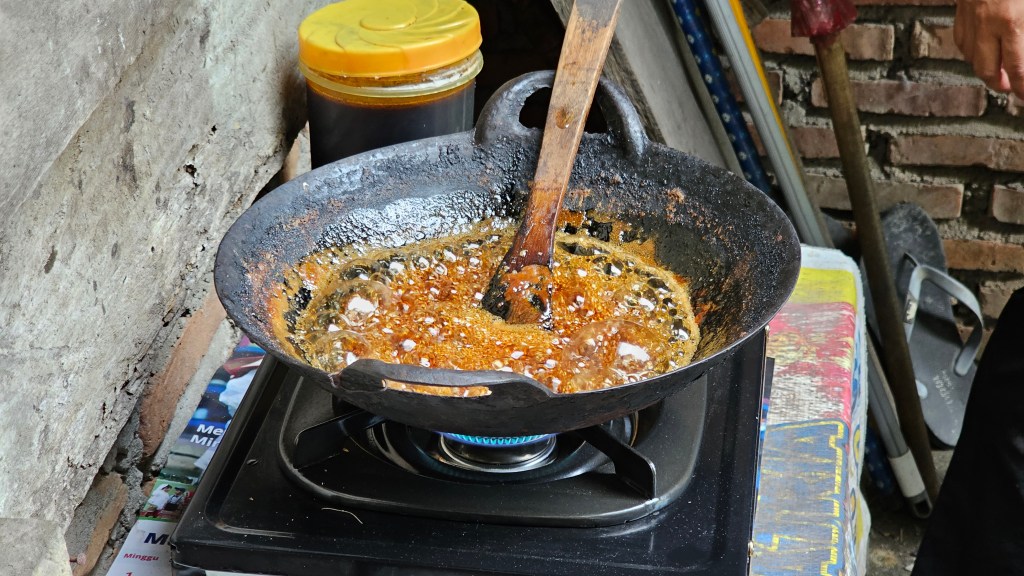
Also furiously bubbling away, sugar was being boiled to become caramelised.
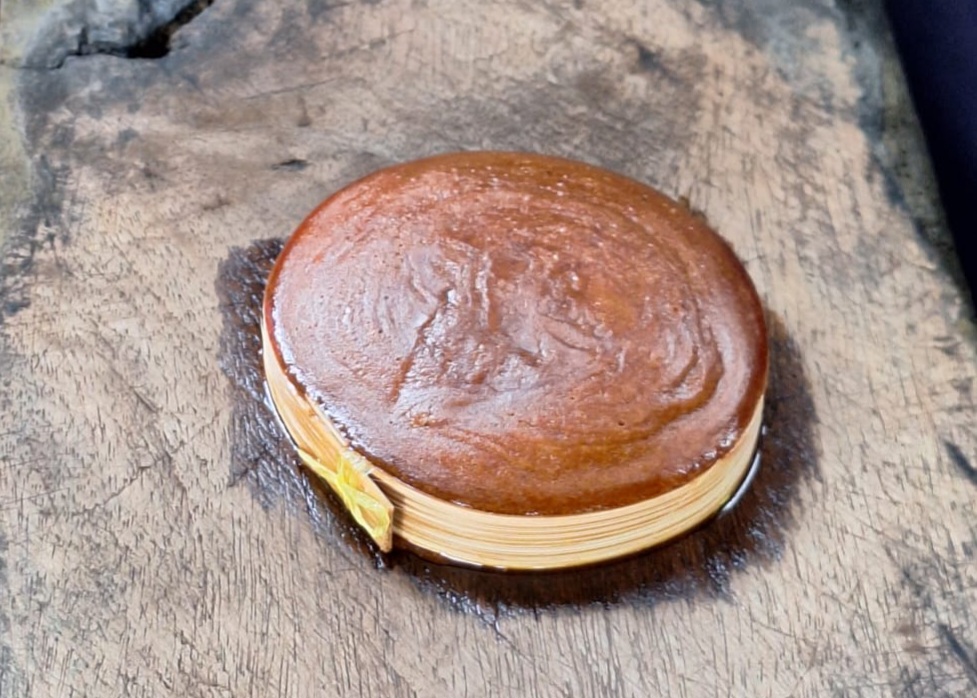
The boiling caramelised sugar mixture was then poured into a mould and cut up into pieces for us to taste.
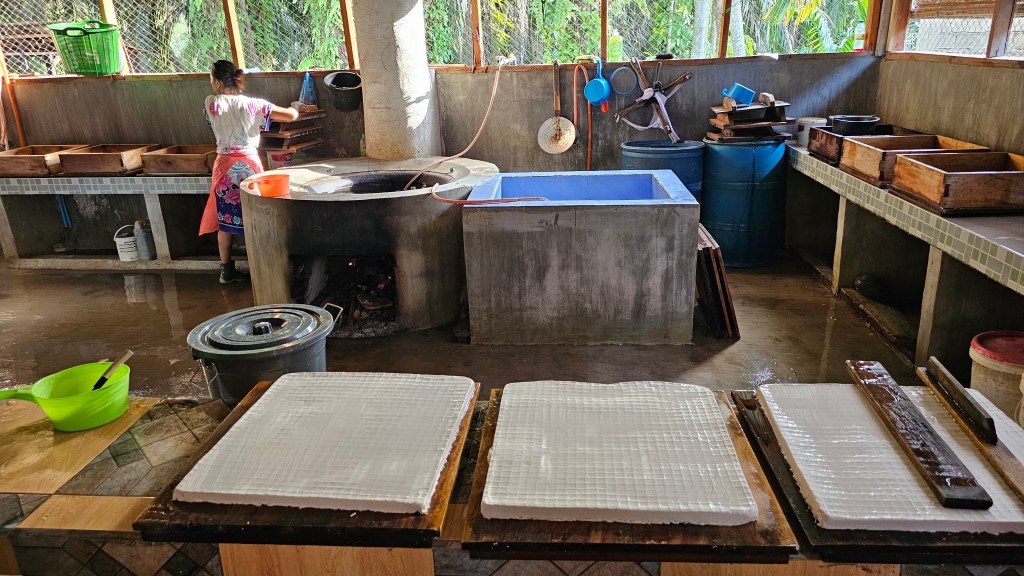
From our sugar overload our trusty tuk tuks took us to a local tofu production business.
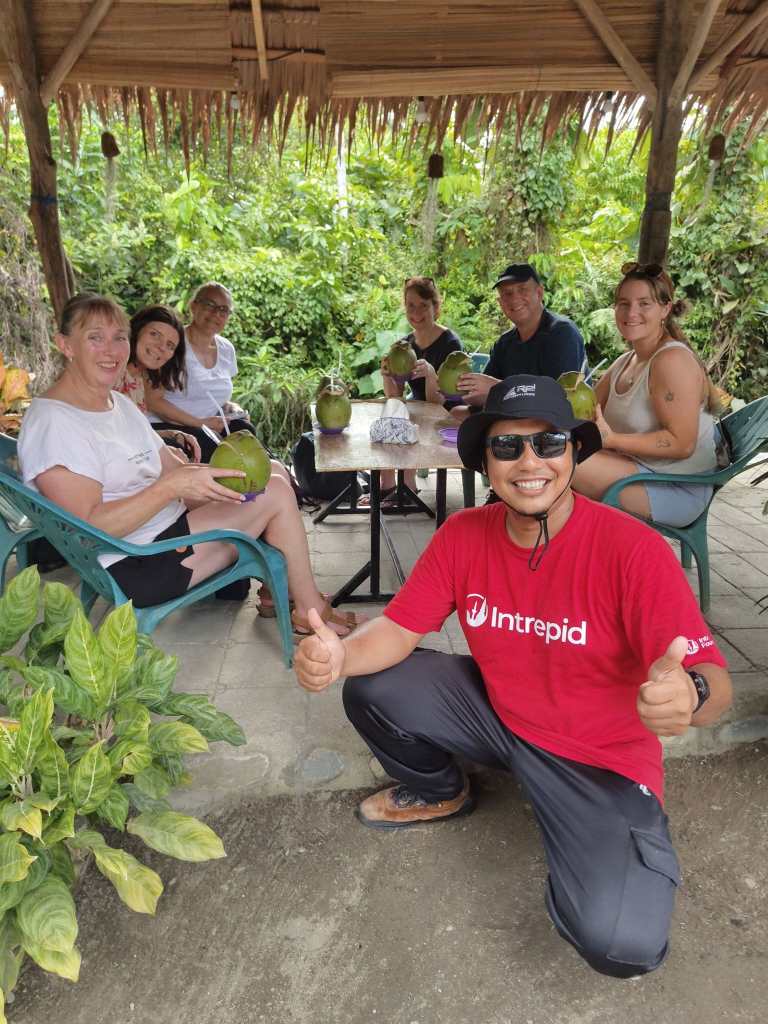
Our final stop was to relax in a small bar with a fresh coconut each.
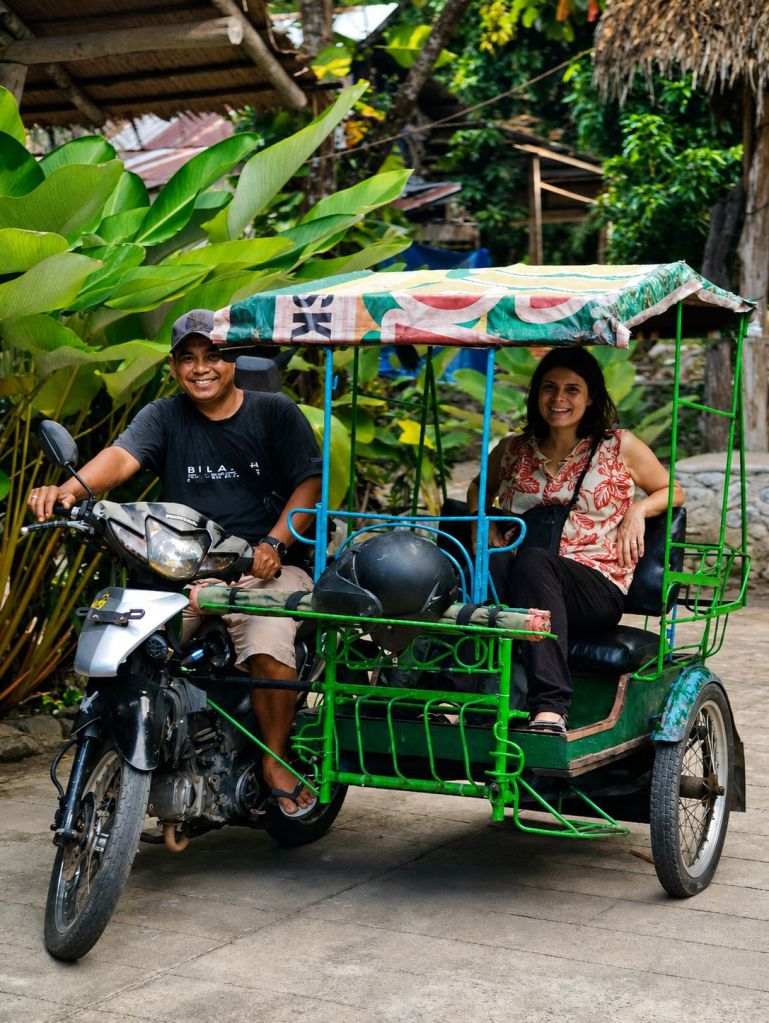
This was a fabulous cultural introduction to local villages. The cost of the 2.5 hour rickshaw tour was only IDR200,000 (£8).
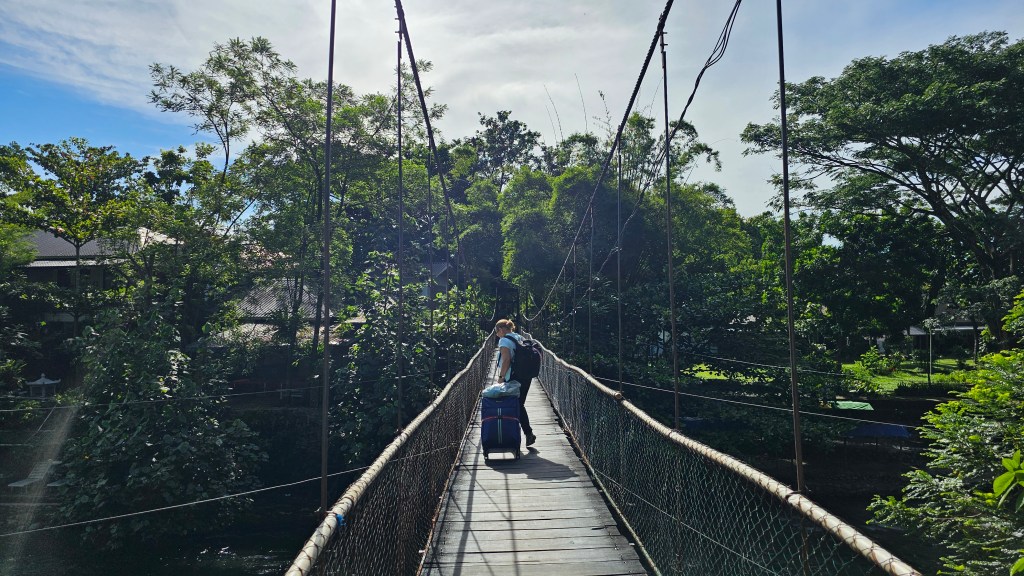
Following our final breakfast in Bukit Lawang we left the hotel at 9 am, crossed back over the foot bridge and boarded the Intrepid minibus. Our next destination was Berastagi for our volcano trek.
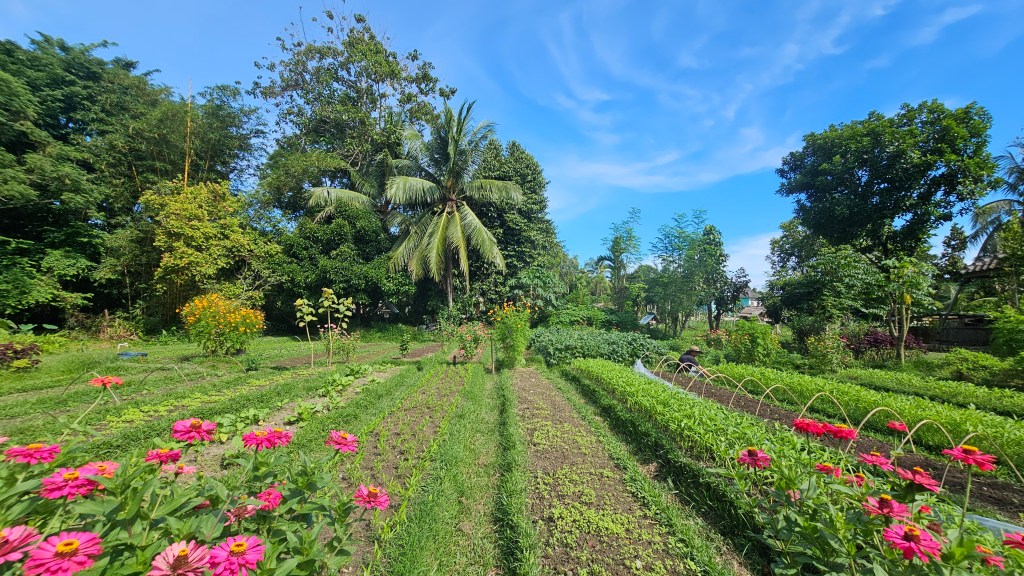
0rganic Farm
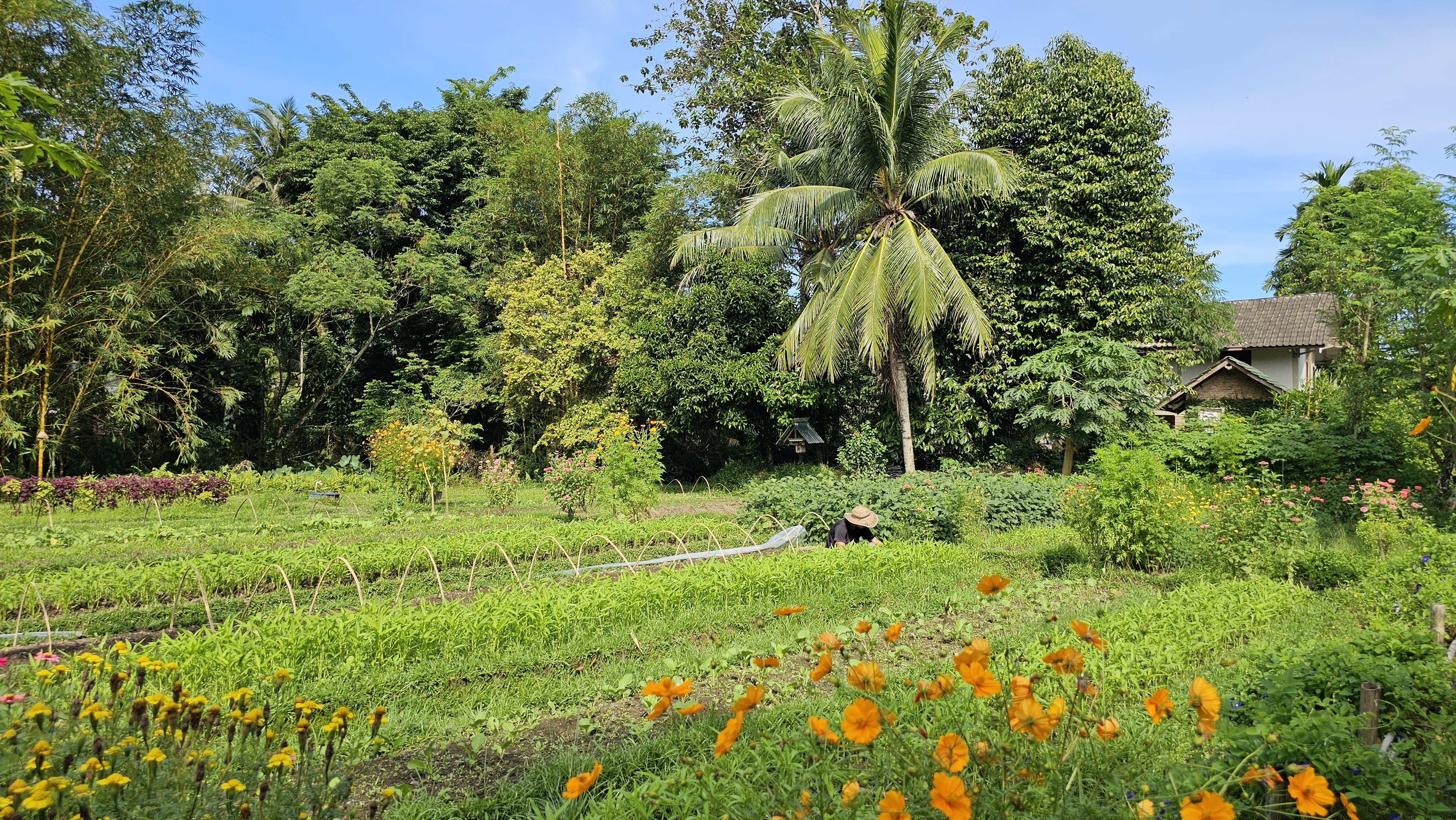
After about 25 minutes on the road towards Berastagi we stopped to visit an organic farm.
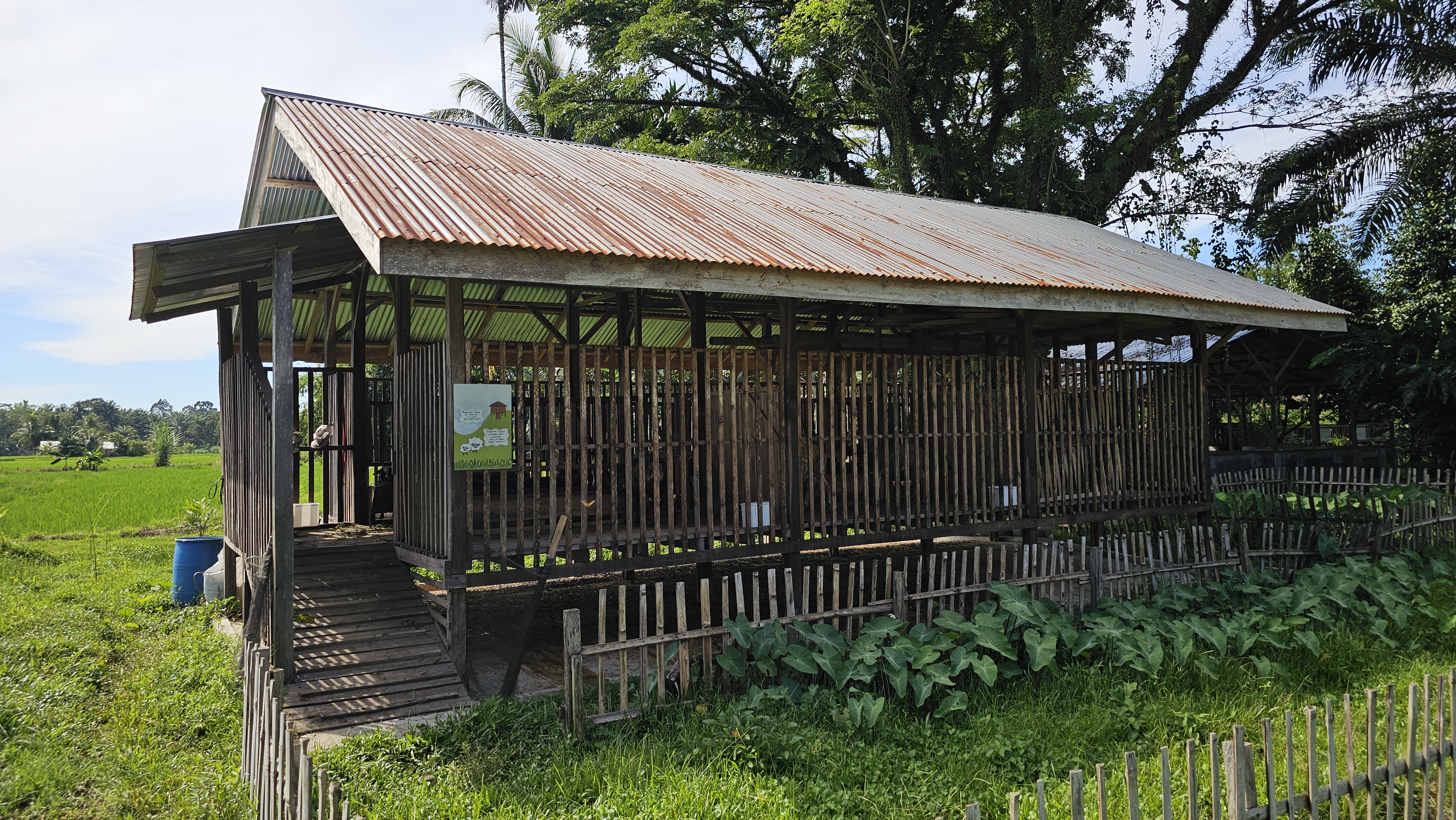
We had a tour of the farm and learned the organic production methods.
Lunch
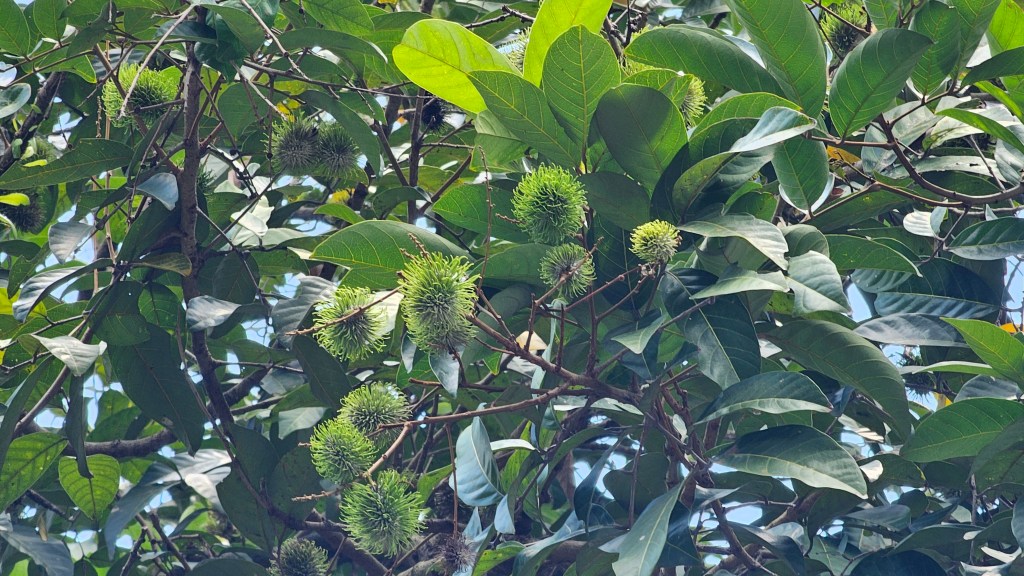
A rambutan tree was growing at the entrance to our lunch venue. Abdul explained that rambutans, similar to lychee, are a tropical fruit popular in Sumatra.
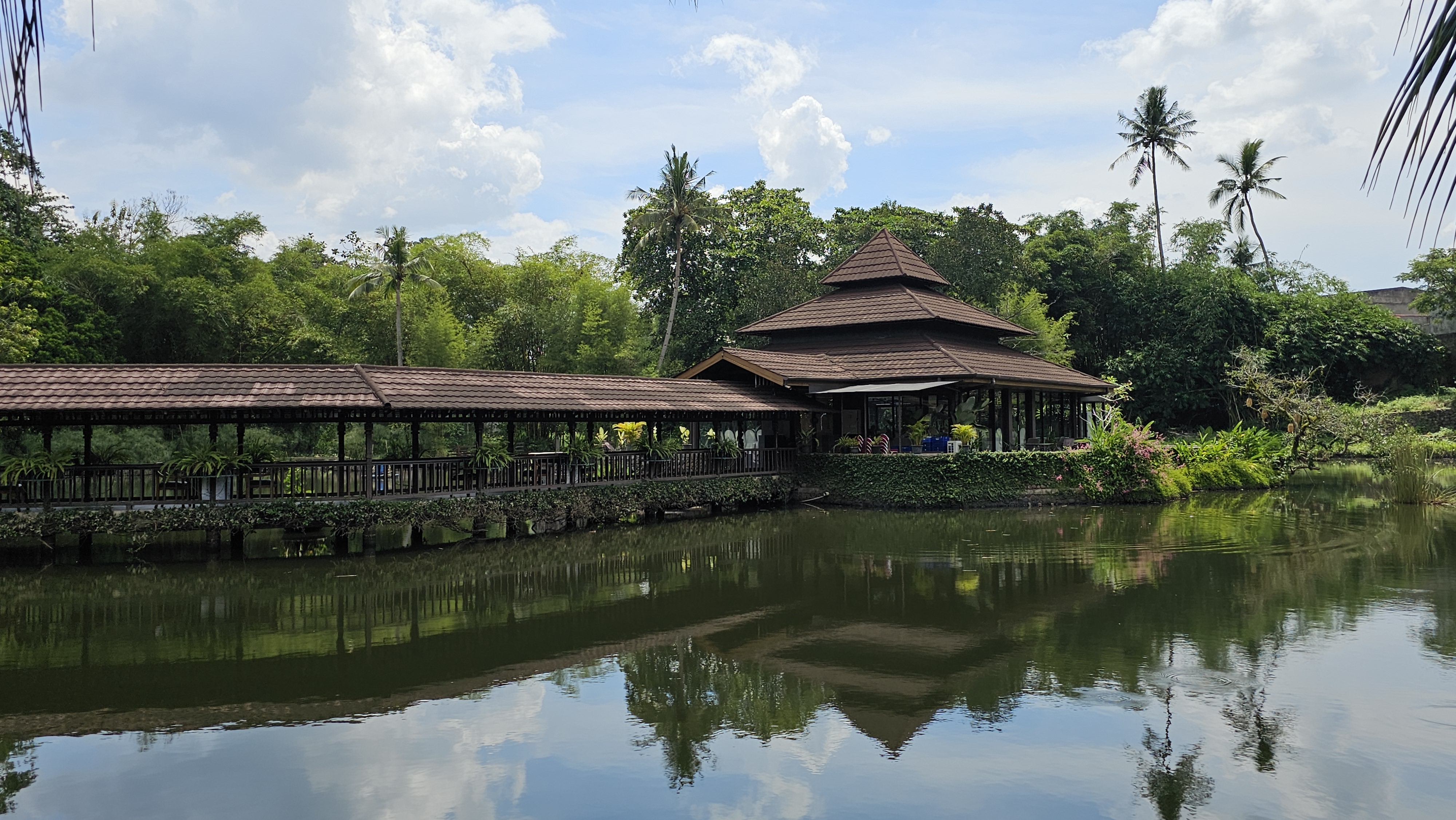
To get to Berastagi we had to drive back towards Medan. The Kenanga Garden is located on the outskirts of the city.
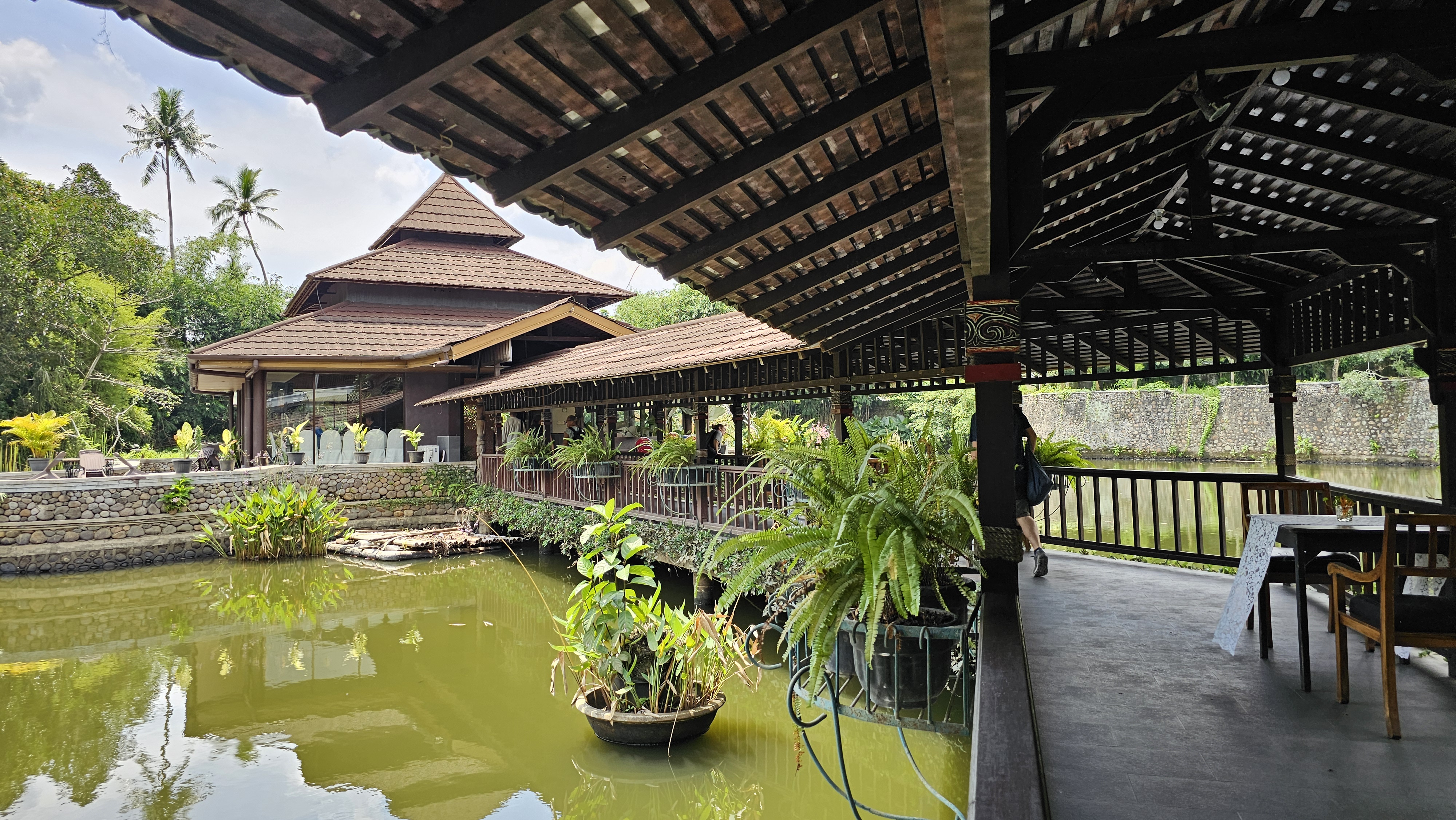
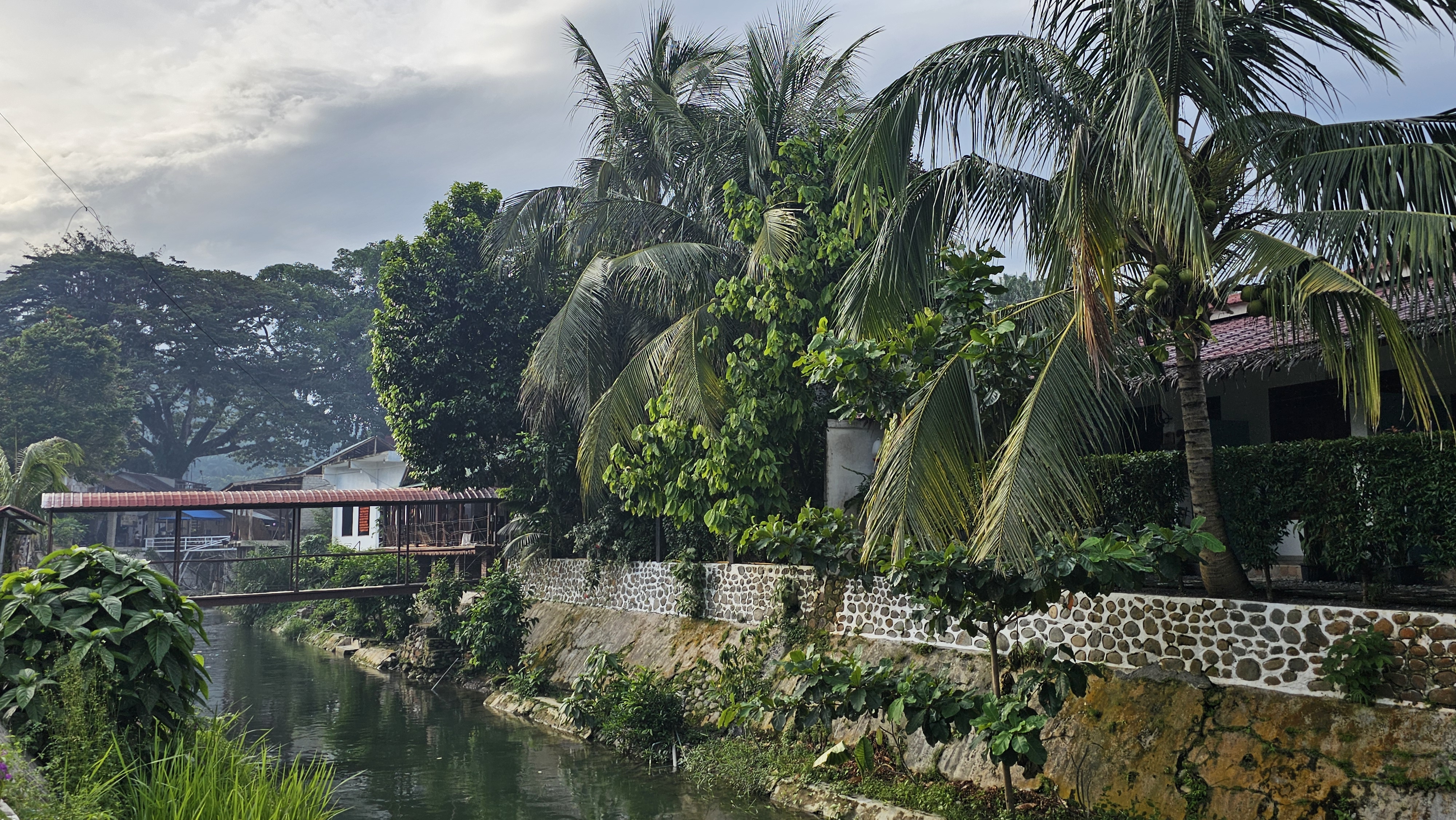
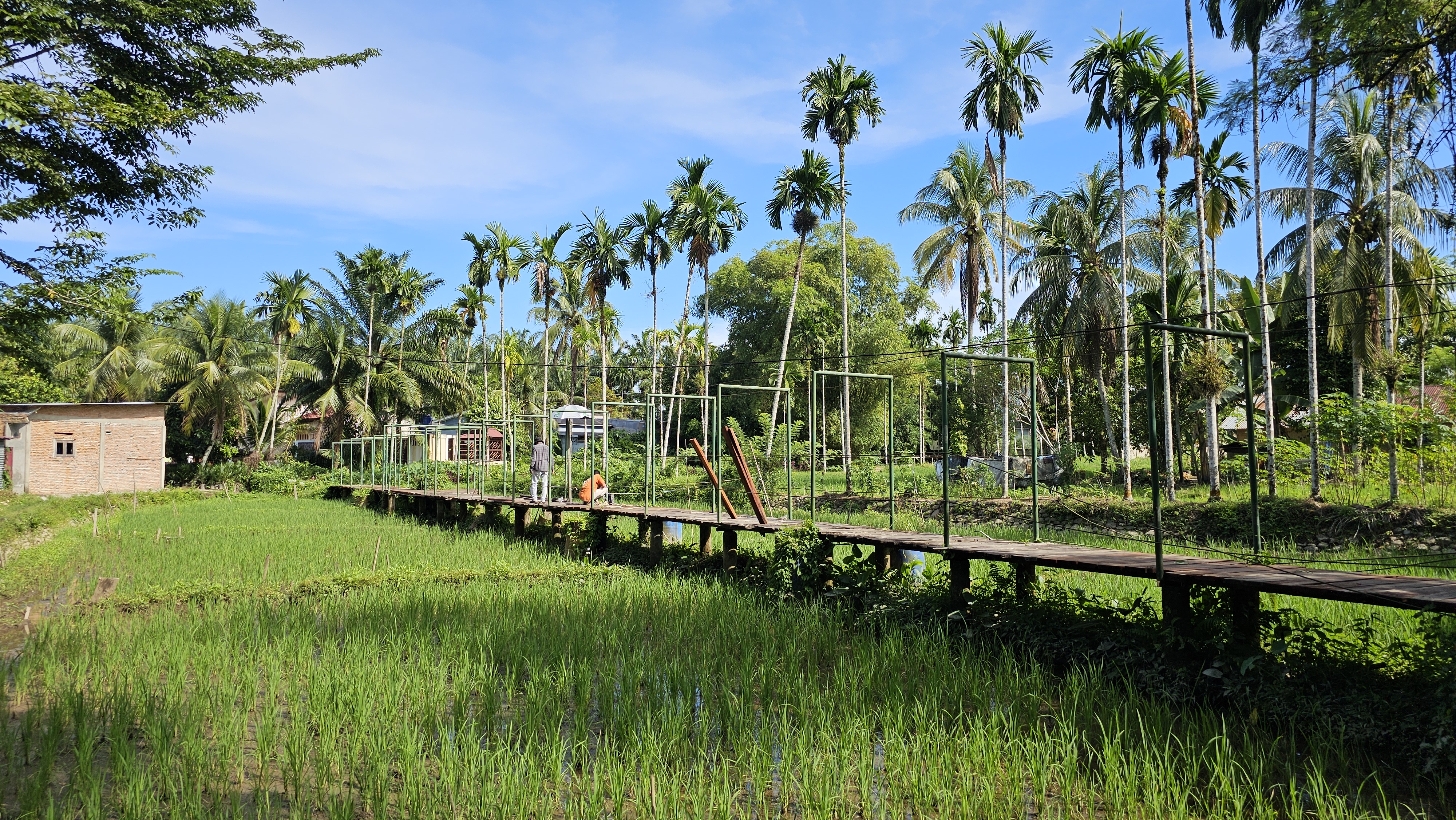
Our lunch was served in the restaurant which is located via a walkway over part of the pond which gave it an oriental feel.
More on the Eco Lodge accommodation
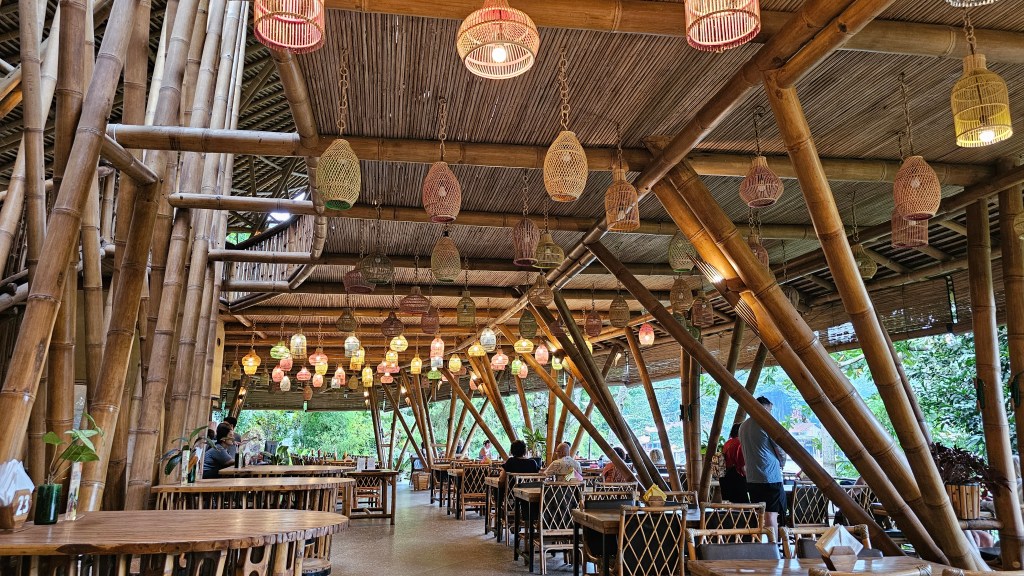
We had fabulous accommodation in Bukit Lawang where, as mentioned, we stayed in the Ecolodge. The best thing about this place was the large open sided Bamboo bar and restaurant area which overlooked the river. The breakfast was average but they served great drinks and lunches in the bar.
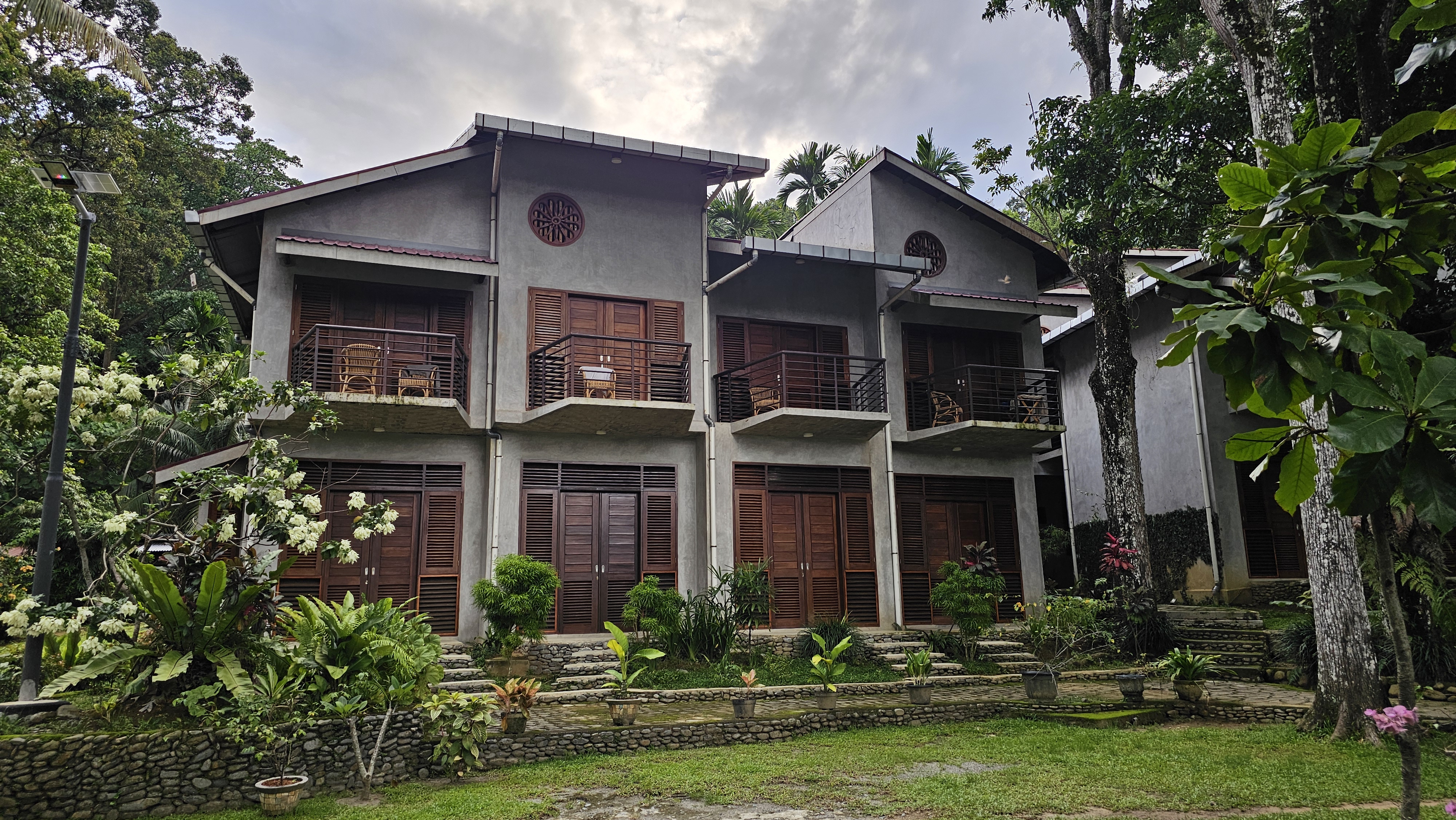
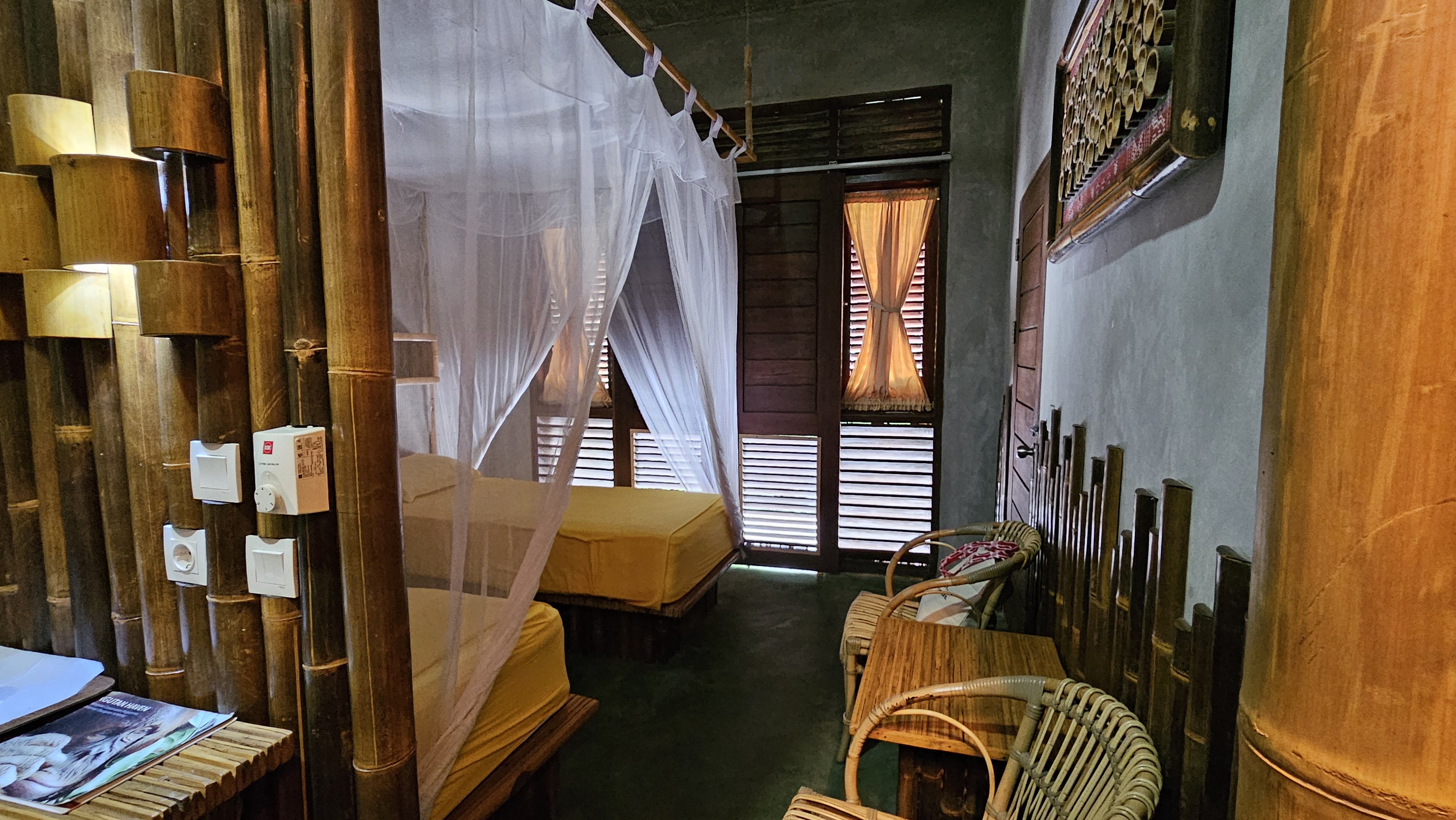
Our room in the Eco Lodge was a little on the rustic side but it was comfortable.
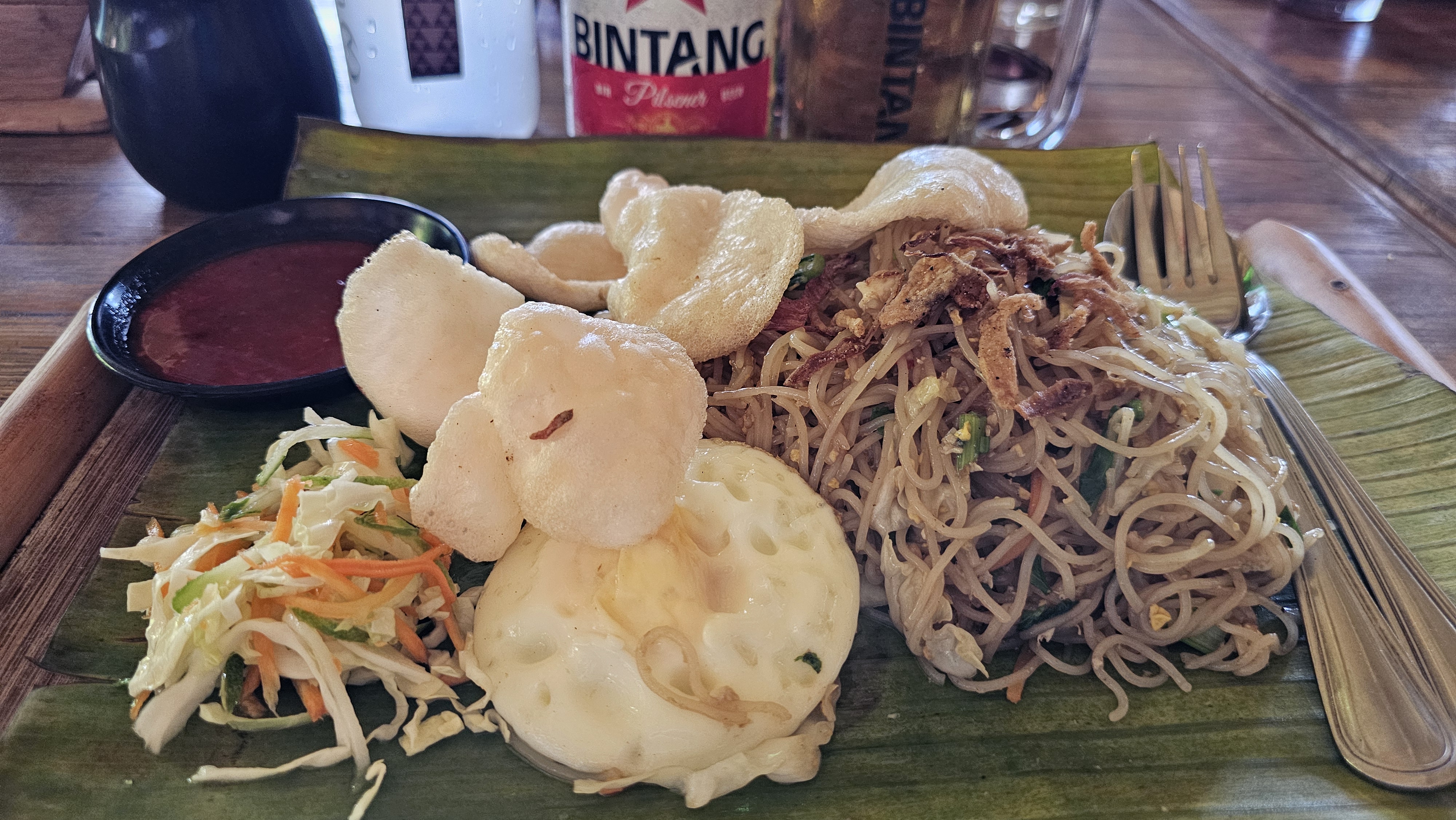
Food
Meals in the Bamboo bar of the Ecolodge, for example, the above lunch, were tasty and particularly good was the portion of ‘spring banana rolls’, i.e. spring rolls with hot banana inside, drizzled with chocolate sauce and served with a bowl of vanilla ice-cream!
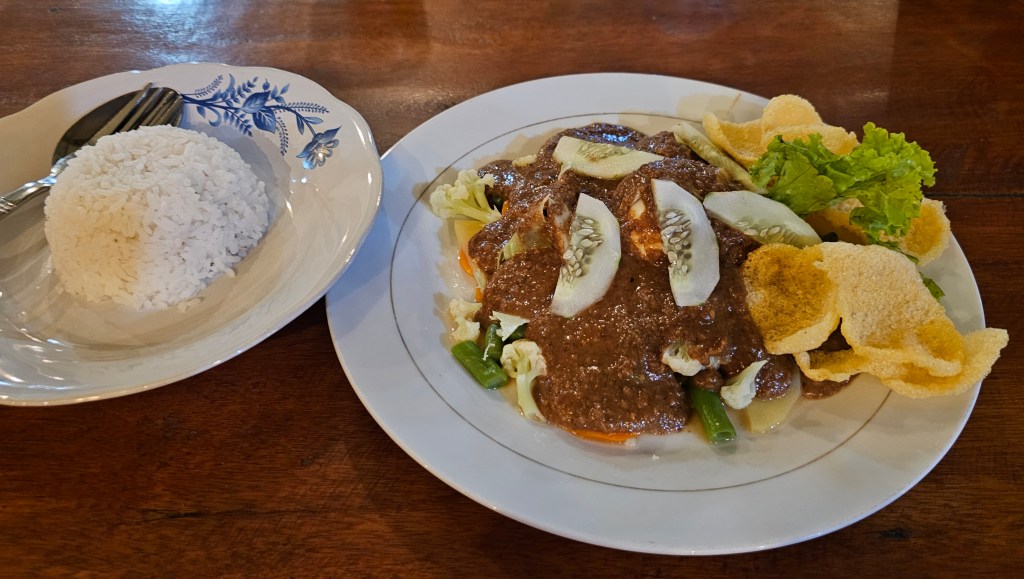
For the second evening, our Intrepid group shared a meal in the hotel next door. Tonight I had Gado Gado which was a dish of cooked vegetables covered in a thick layer of peanut sauce (like a satay sauce). The meal and a small Bintang was only IDR75000 including a service charge so under £4.
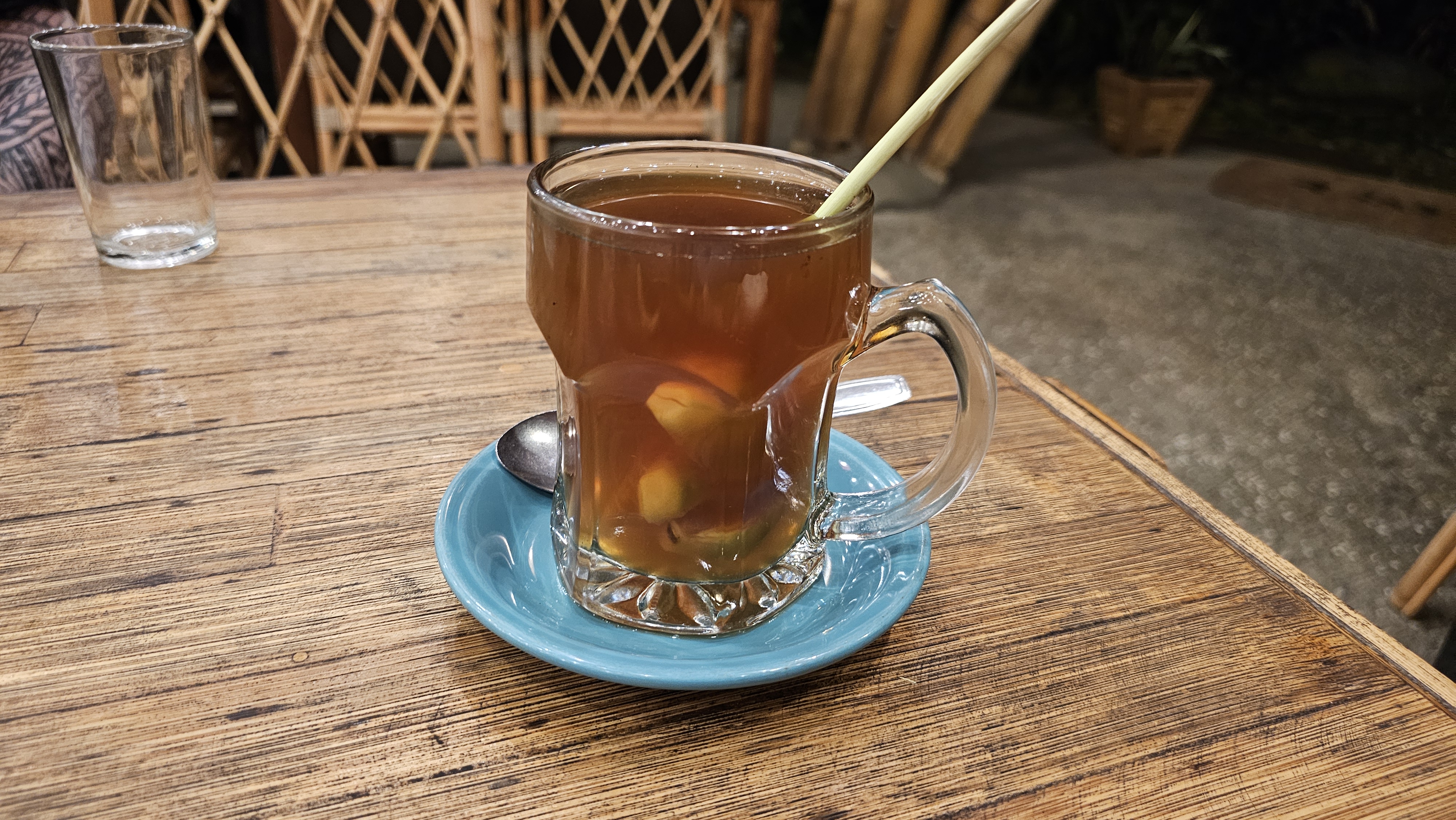
A hot beverage of ginger, brown sugar and lemon grass! These were served in the Bamboo bar and were amazing.
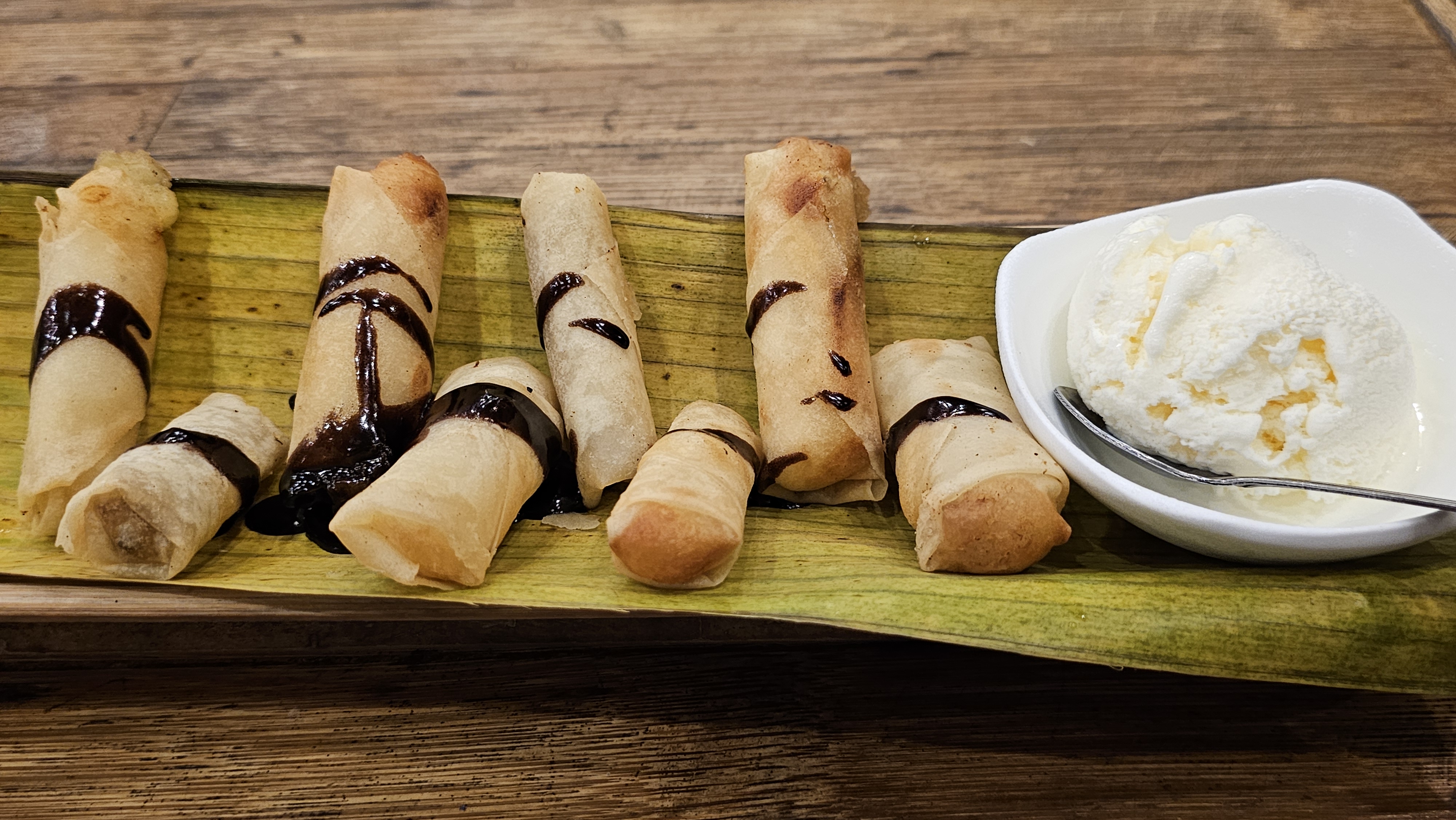
And finally, the banana spring rolls with vanilla ice cream were awesome! I wanted to capture this delightful memory in here 🙂
Next up
We leave Bukit Lawang and the jungle and drive to Berastagi for the next two nights (although the next blog post covers our orangutan adventures).
 frombluetogreen.com