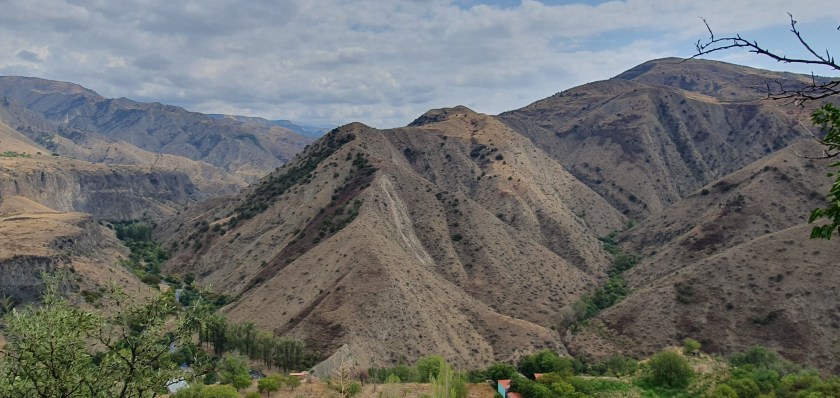
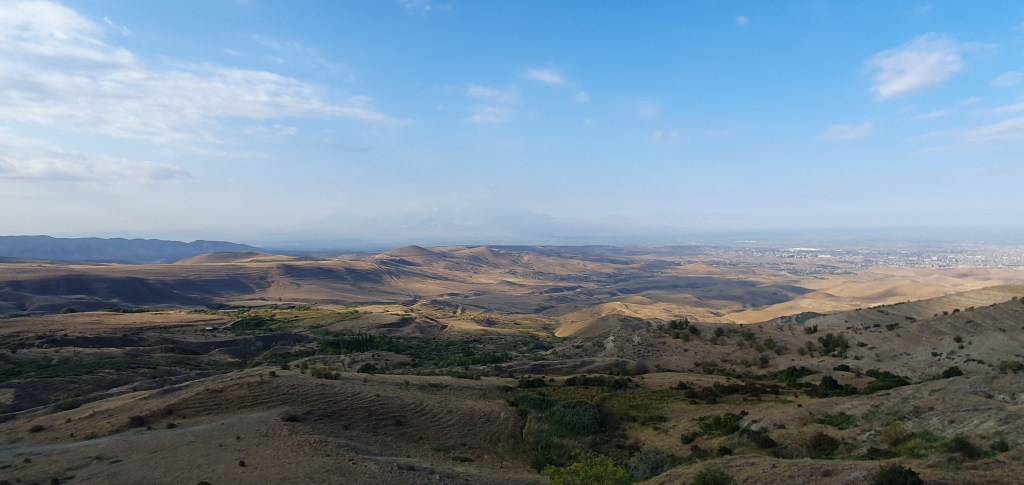
Continuing on my G Adventures tour this post showcases some of the treasures of Armenia which are close to Yerevan. As part of a group of 14 we were staying in Central Yerevan and ventured out of the city to visit the following attractions.

Geghard Monastery
Our first stop was at the UNESCO listed medieval Geghard Monastery. Geghard was carved out of the surrounding rocks and can be found nestled in a remote spot at the entrance to the Azat Vally in the mountains.

Intricate carvings adorn the interior and exterior walls and monks used to live in nearby caves. Legends are associated with this complex. For example, it is said that Geghard can make your dreams come true.

Geghard (which means ‘spear’) is one of the oldest monasteries in the world and was founded in the 4th century by Gregory the Illuminator at the site of a sacred spring inside a cave.
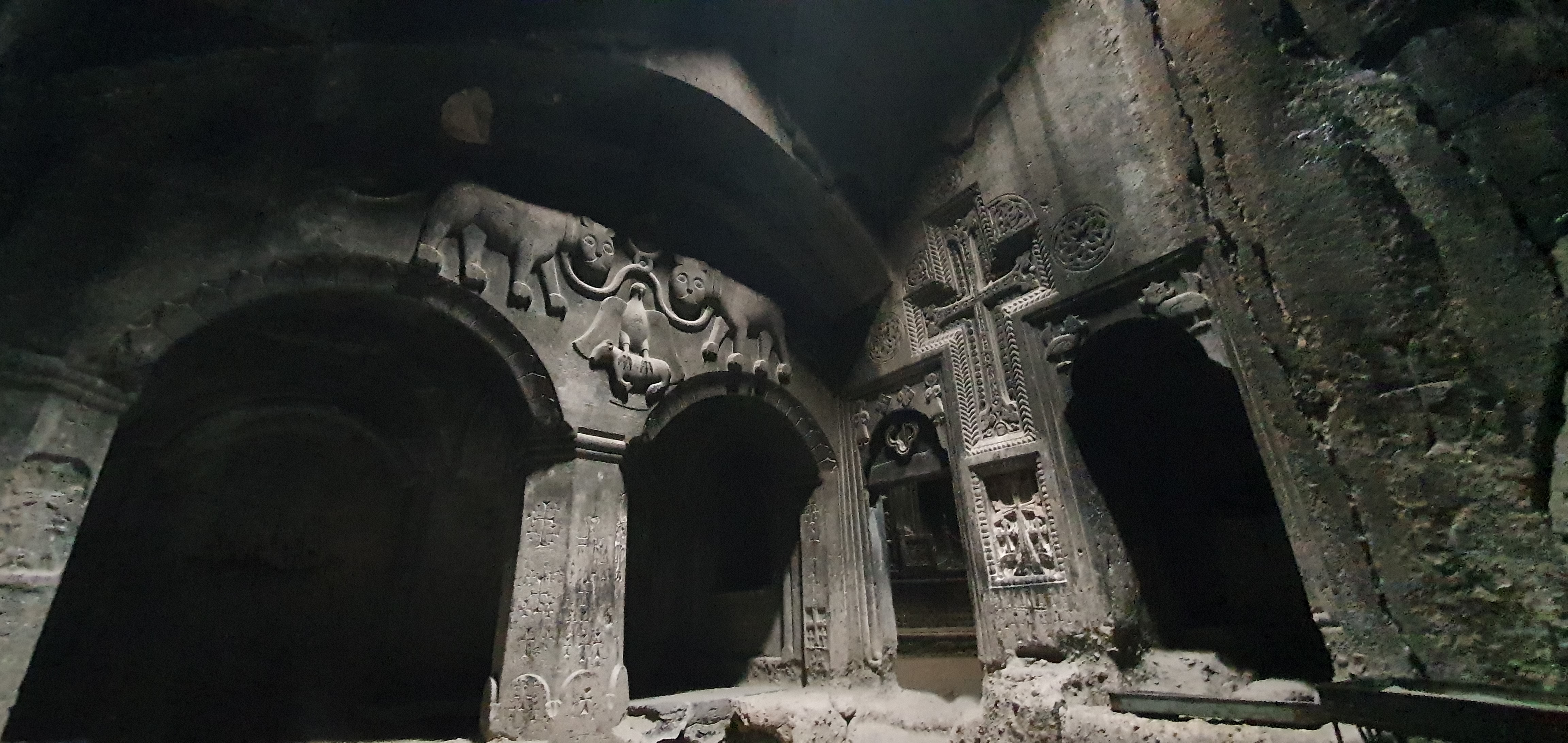
Inside the chambers of Geghard was atmospheric and the holy spring still flows to this day in a dark corner. In the photo above which was taken in one of the cave churches, above the two arches there was a carving of an eagle carrying a lamb as well as numerous crosses.
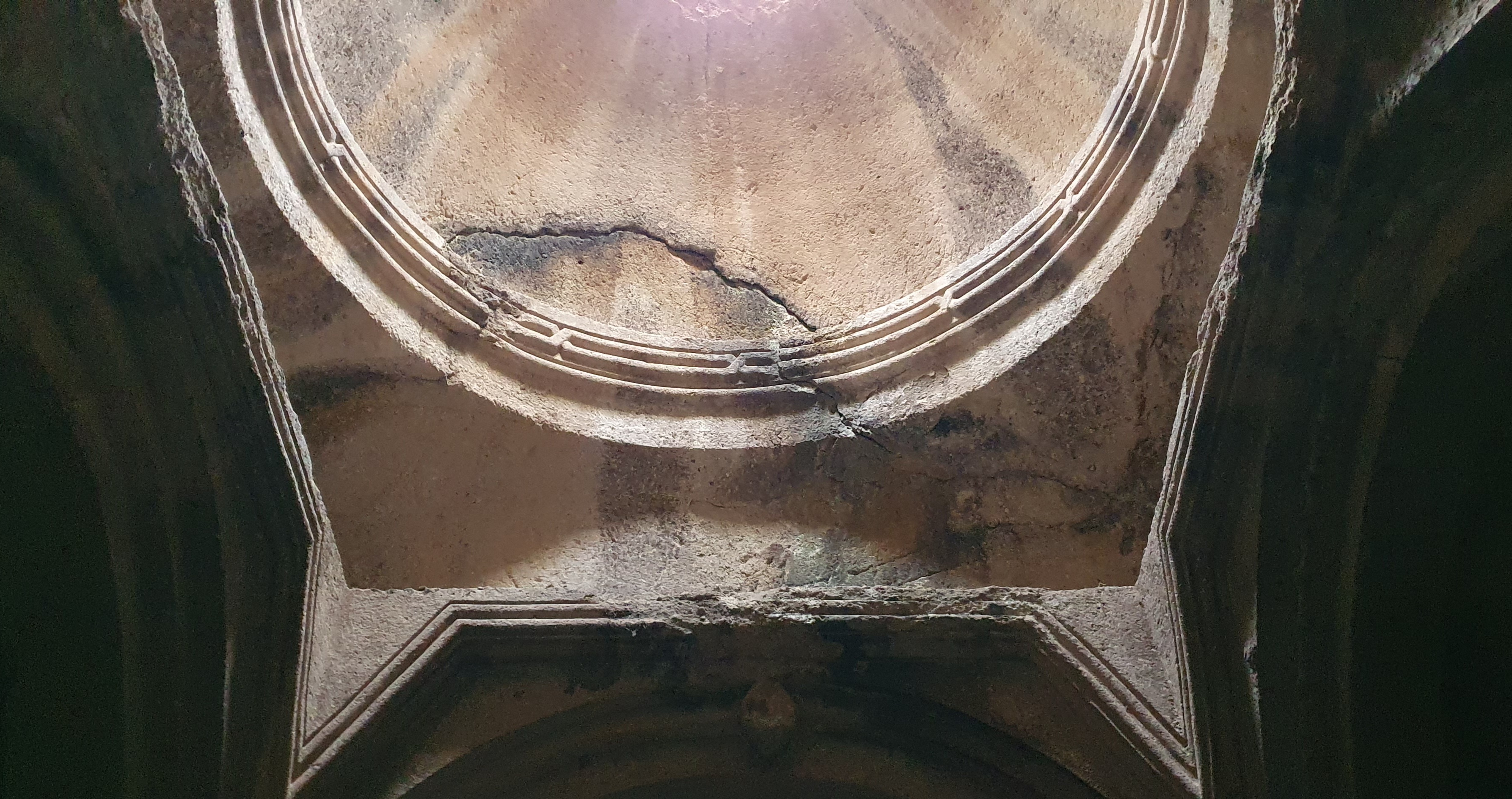
The Upper Jhamatun is located on a top level and was carved out of the rocks in 1288. This chamber contains the tombs of Merik and Grigor. The acoustics in here are extraordinary and we were so fortunate to be present to hear the mystical spine tingling singing of the choir.
The choir were standing around a square in the centre of the chamber and above them was a small light opening.

Garni Gorge
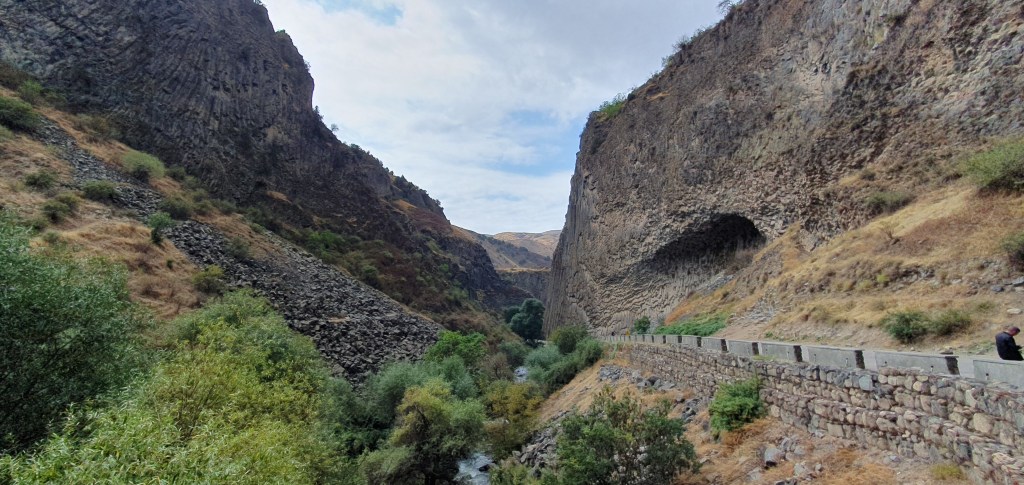
Next our mini bus driver took us to a small village near Garni where we met a local guide called Igram who led us on an hour long trek from the village and through the Garni Gorge with its impressive rock formations.

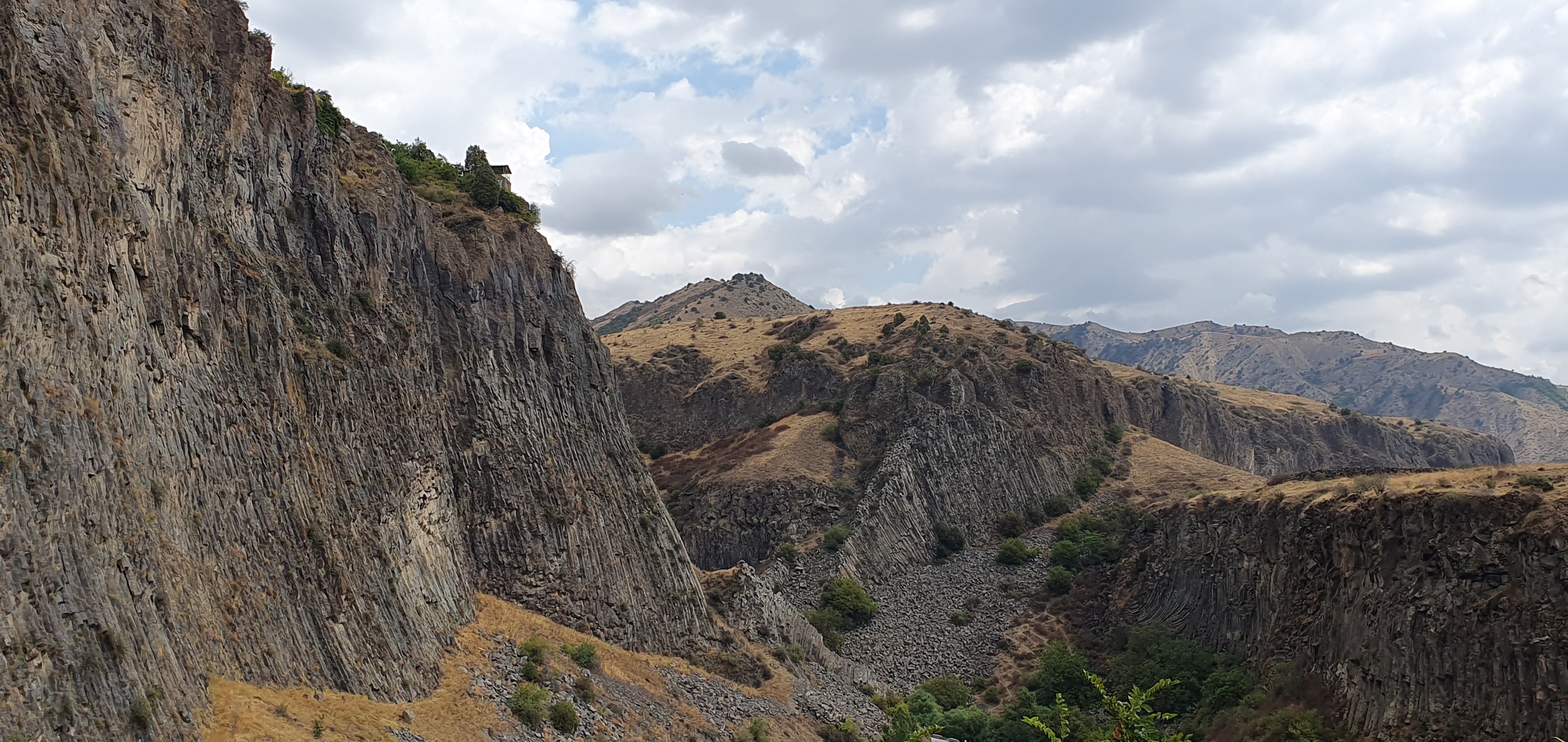
We walked along a path through the gorge and the spectacular basalt columns which reminded me of the Giant’s Causeway in Northern Ireland.
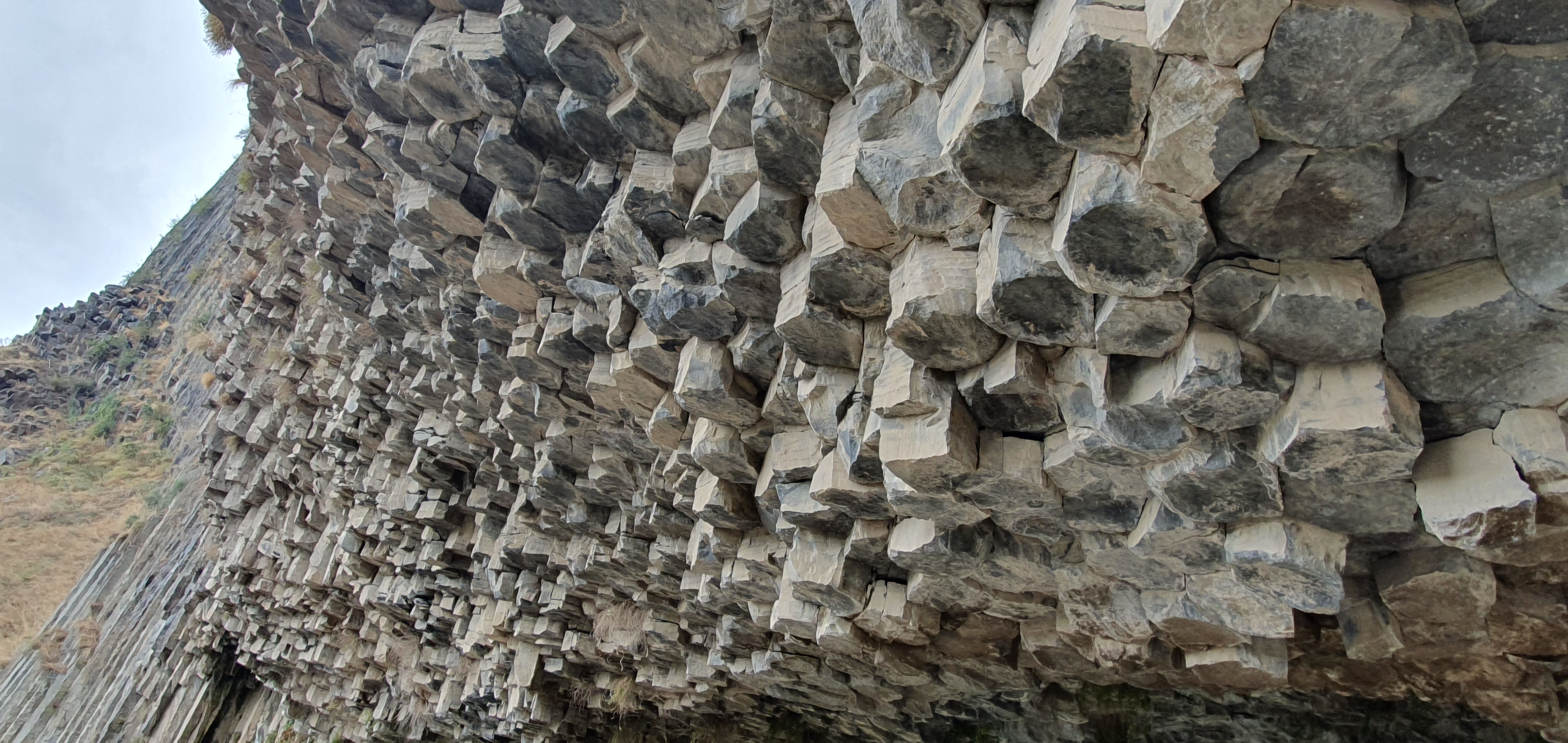

Garni Gorge is also known as the ‘Symphony of Stones’.
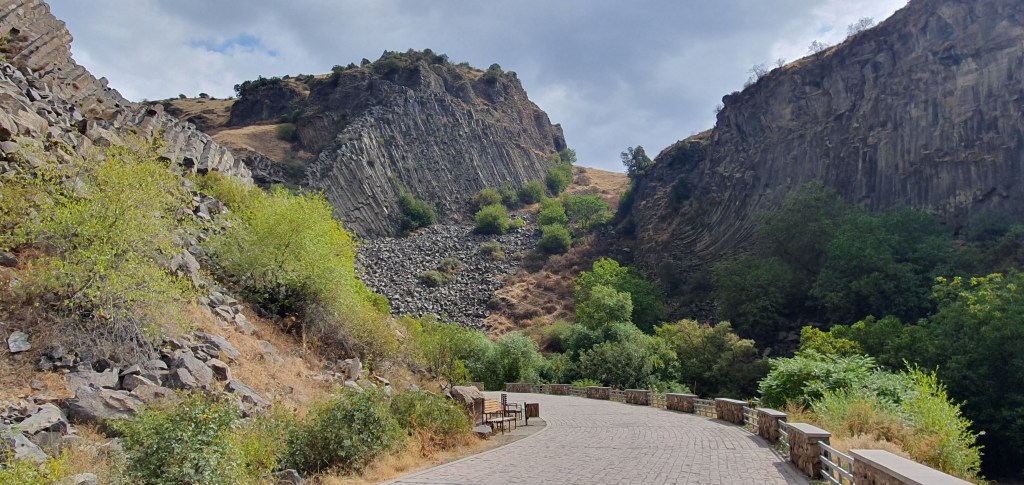
We continued along the path and then had a relatively steep climb to reach Garni village where we visited the Temple of Garni.
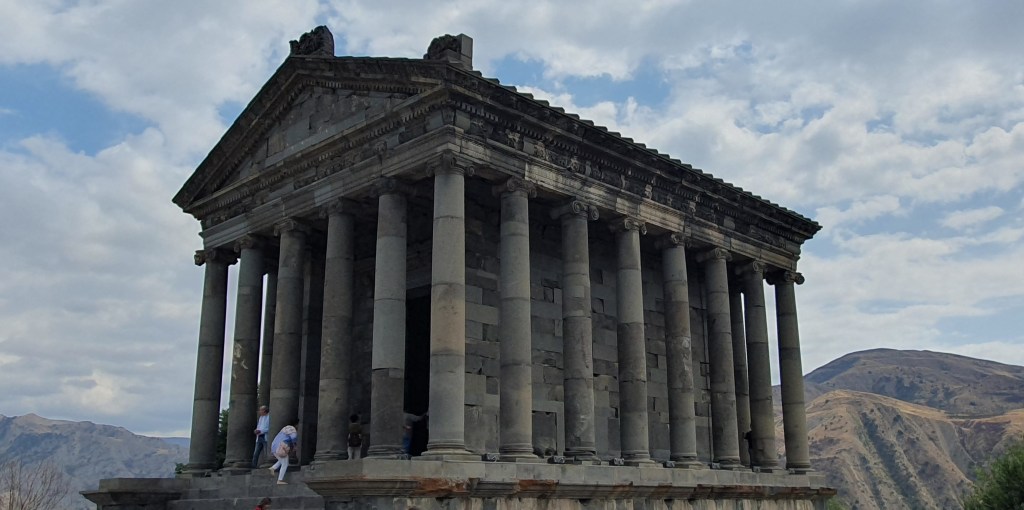
Dedicated to Mithra, the God of the Sun, Garni Temple is the only standing Roman temple in Armenia and was thought to have been constructed in the first century AD. The temple collapsed in an earthquake in 1679 and following excavations in the 20th century its reconstruction was completed in 1975.
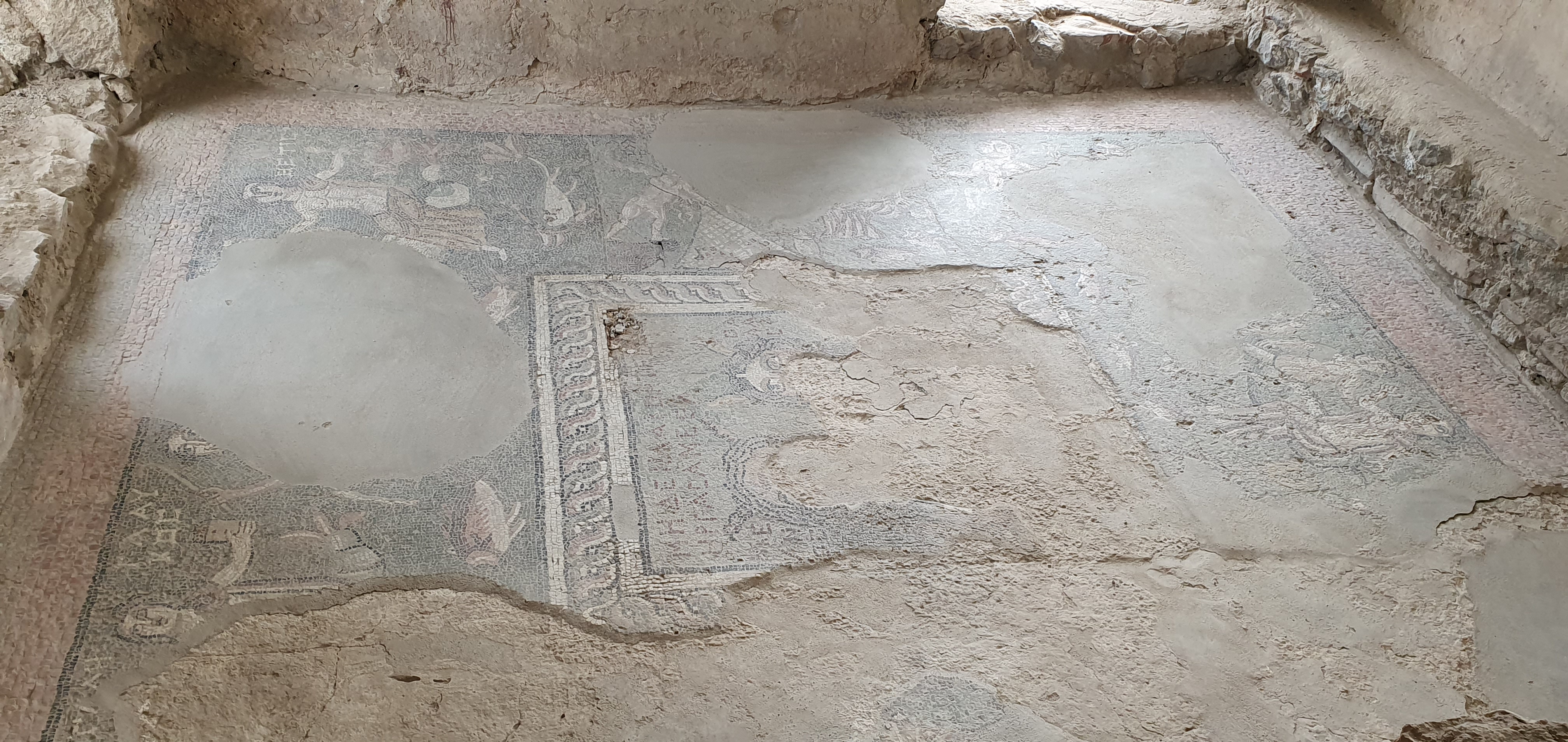
We also saw the ruins of the Roman bathhouse with its mosaic floor.
Sonia our guide excitedly told us we would be able to enjoy some ‘doo doo’! I was slightly puzzled until she explained we would be watching a doo doo player, playing his flute! This still made me chuckle 😂
The doo doo player played his flute inside the cella of temple of Garni to a small crowd. The ‘cella’ is the Latin name for ‘small chamber’ and about 20 people could fit inside this one.
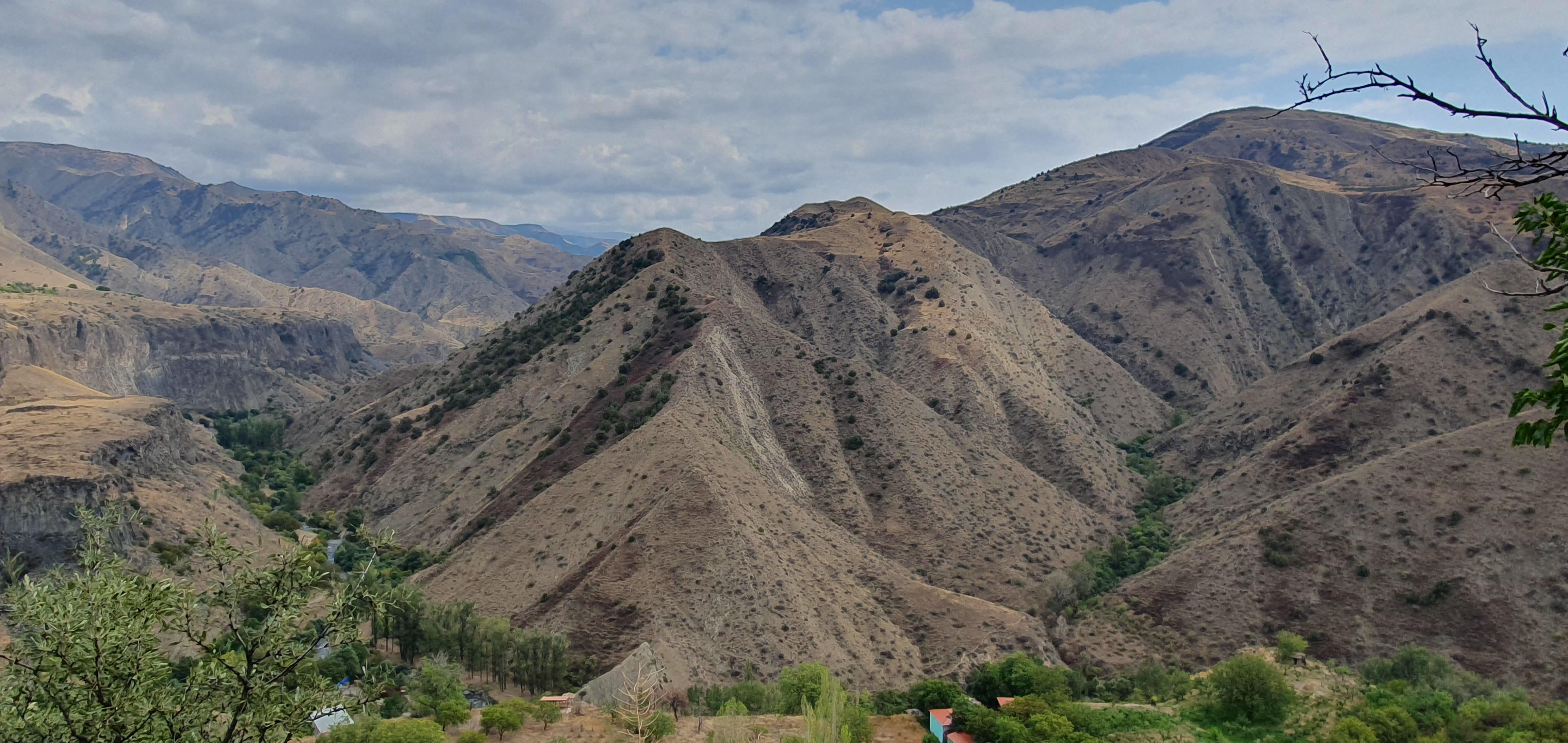
From the Garni Temple perched high up on the cliff edge we had spectacular views of the gorge.
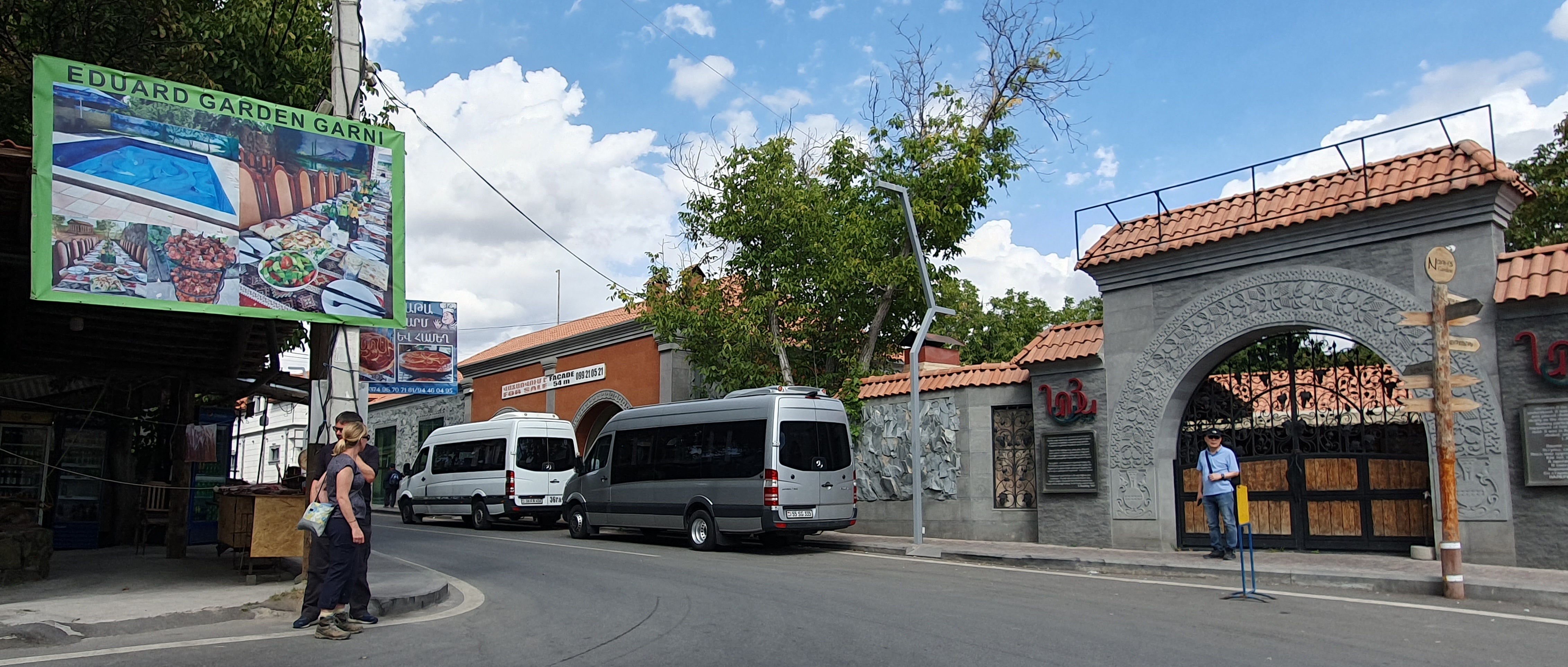
From the temple we walked through Garni village to our lunch venue where we were hosted by a traditional Armenian family.
First we watched a demonstration of Lavash bread baking which was a very quick process! The first lady rolls out the dough and tosses it over to second lady. She then spreads it over a cushion, puts the cushion (+ dough) into the hole (with hot coals in the bottom), uses the cushion to stick the dough to the side of the hole and it bubbles up and cooks within a minute! The result: a tasty bread resembling a thin naan bread!
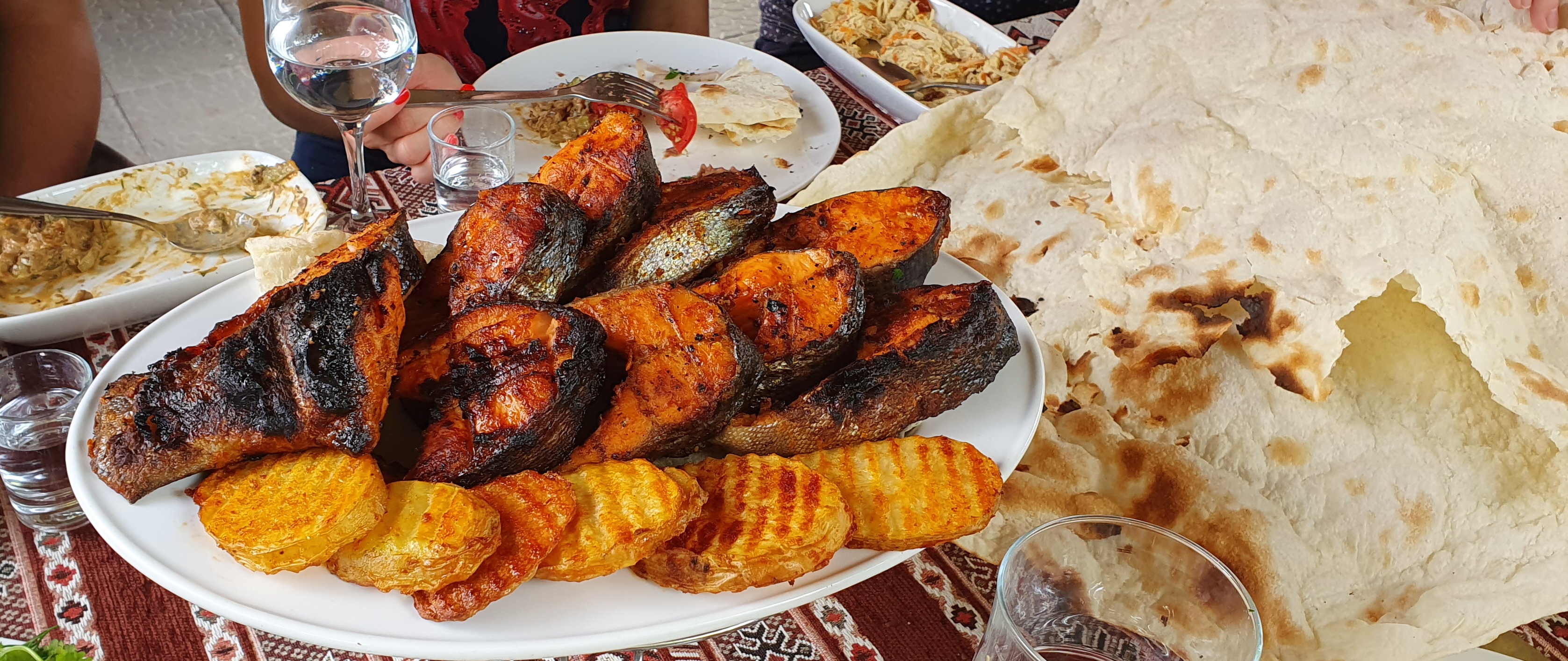
Lunch was a feast of traditional food including salads, dips, local cheeses and some of the delicious freshly cooked bread for the starter. The main course was barbequed trout which was cooked to perfection.
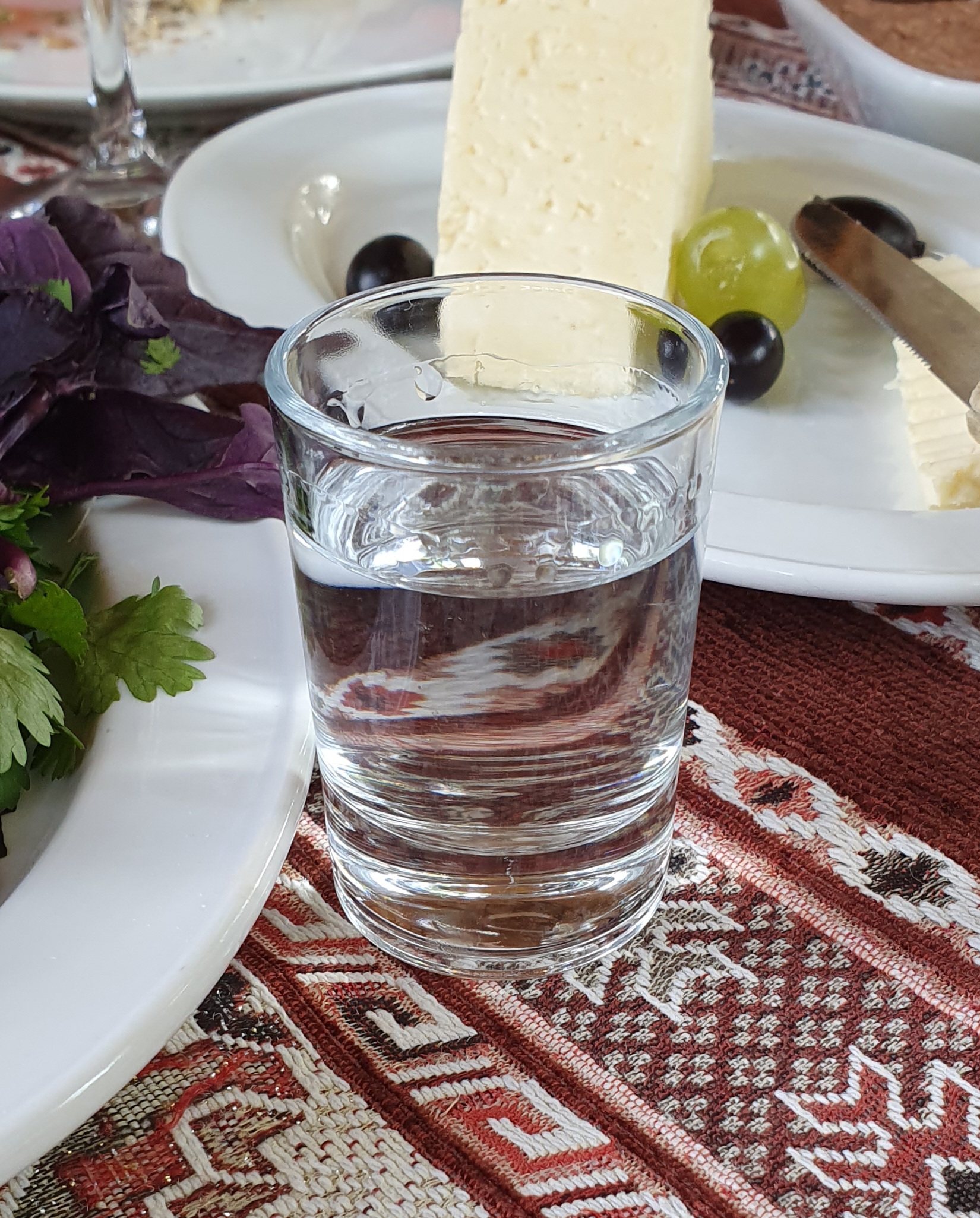
We were each served a shot of apricot vodka to go with the meal.
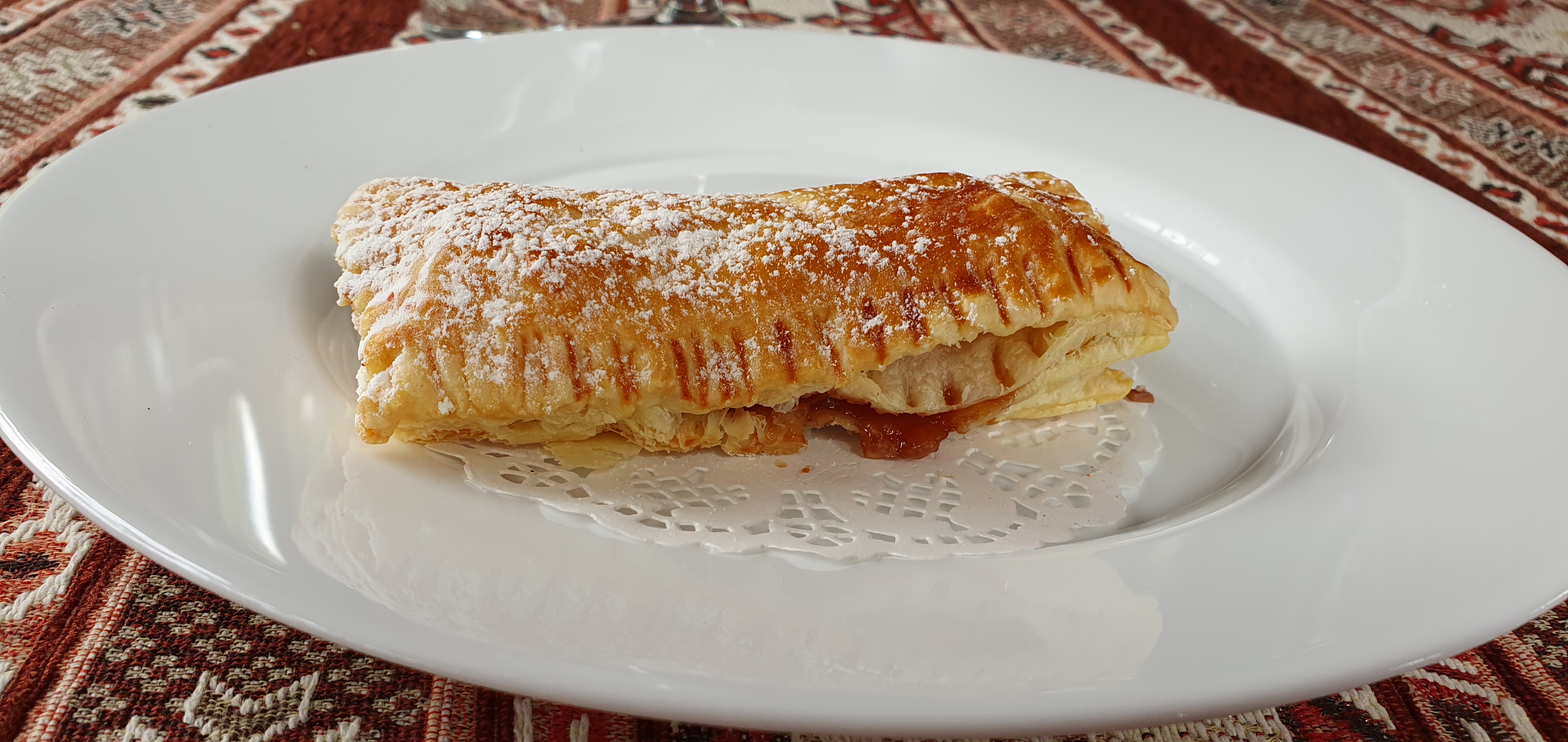
With a traditional dessert and Armenian coffee to finish.
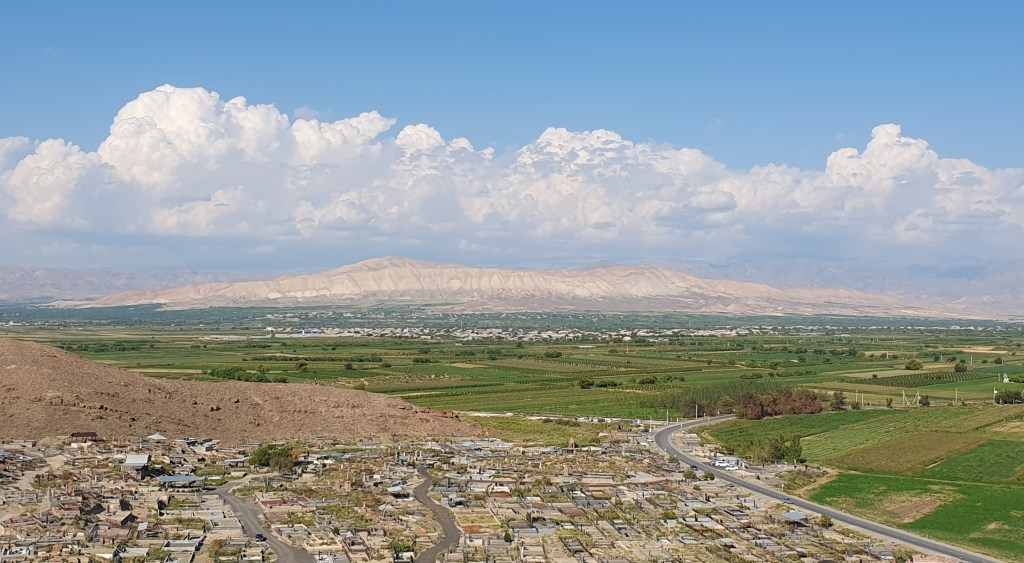
From Garni we drove around the serpentine roads through the mountains and the Ararat Plain towards Khor Virap.
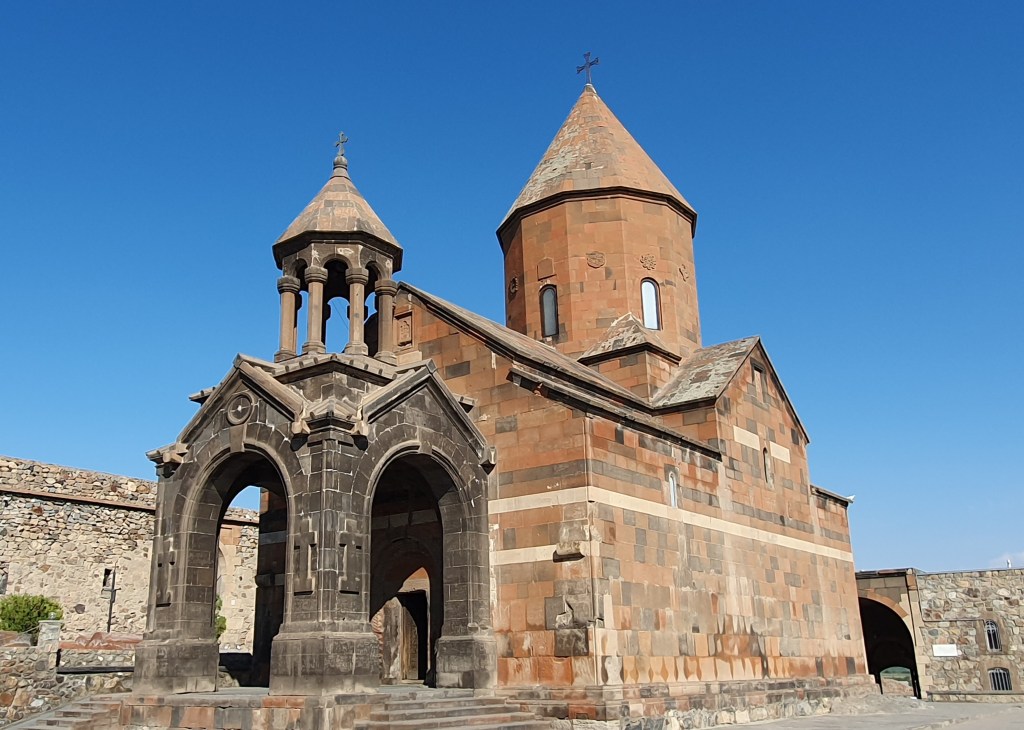
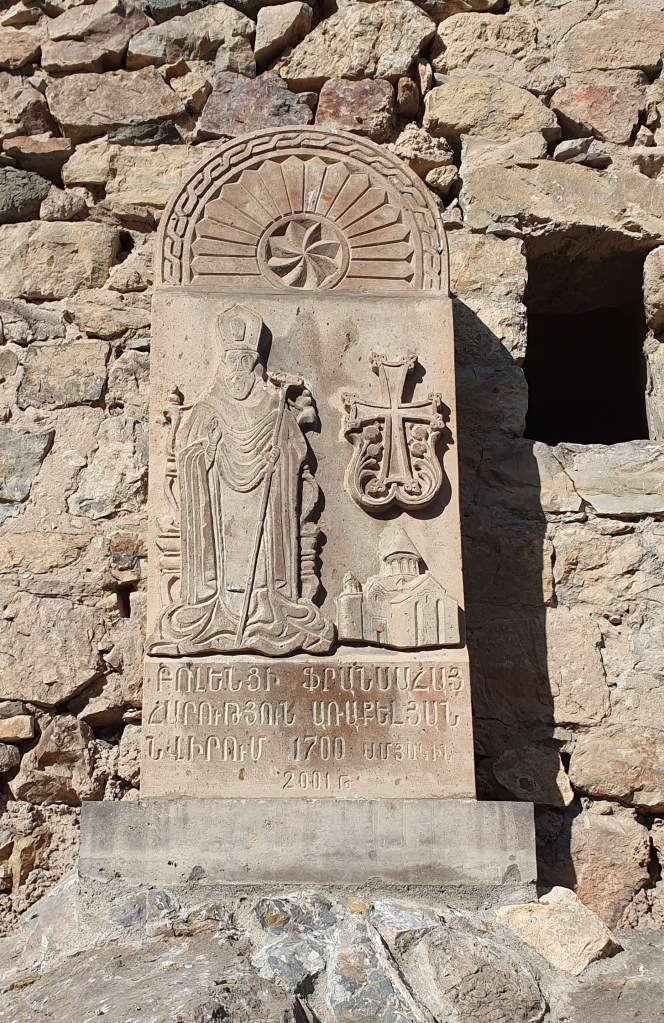
Khor Virap is a monastery which was built in 1662 and is still used for services today. It contains a pit which was used to imprison Saint Gregory the Illuminator who was confined there for 13 years by his pagan king for preaching Christianity. Using a ladder you can climb down into the pit which is 6 meters deep and 4.4 meters wide.
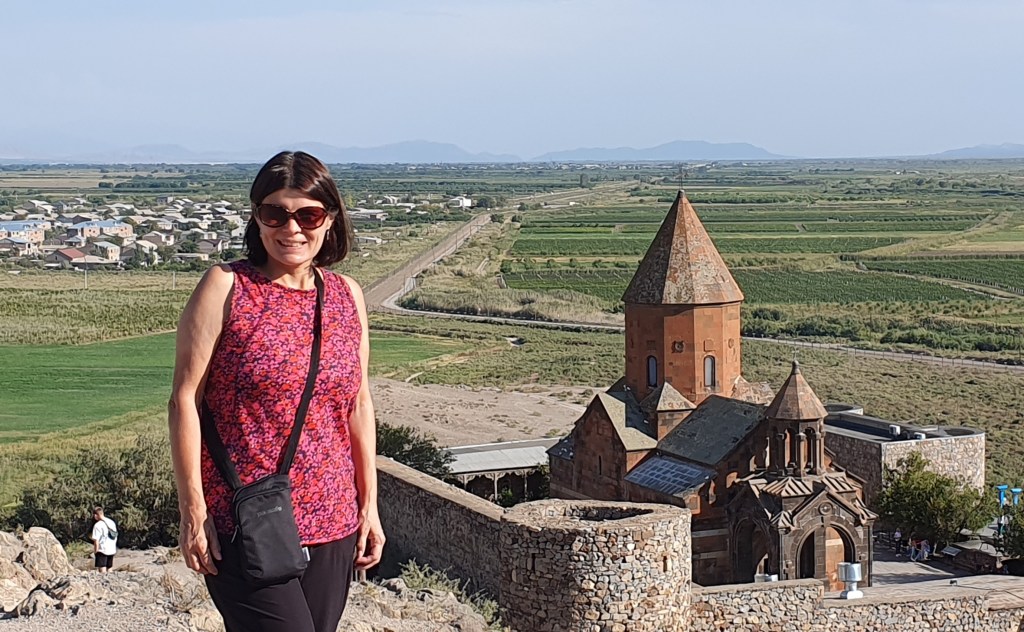
Some of us climbed a small hill behind Khor Virap which gave us panoramic views of the monastery and the surrounding countryside. Behind where I’m standing (in the above photo) is a road, on the left is Armenian houses and on the right is the border with Turkey. Armenians are not allowed to cross into Turkey although there is an agreement that locals can use the ‘no-mans land’ in between to cultivate crops.
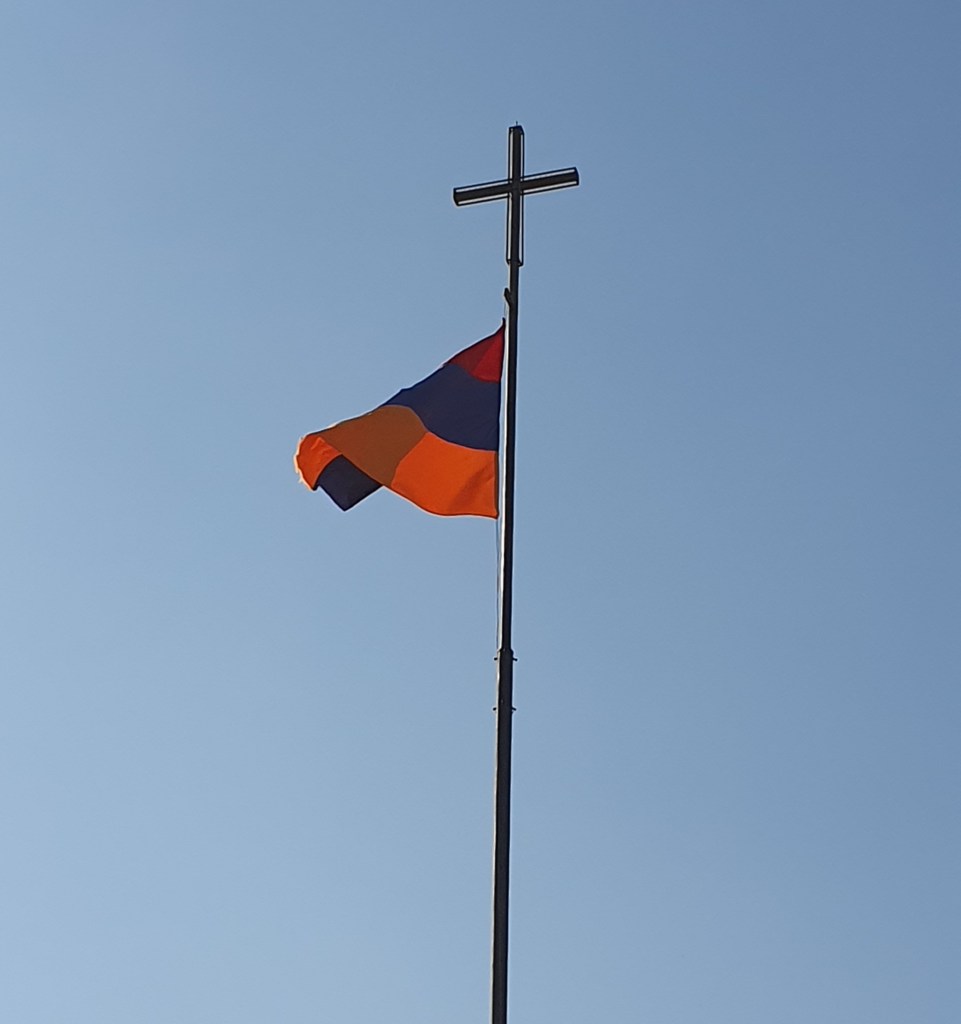
At the top of the small hill was the Armenian flag. This was more or less on the border of 3 countries: Armenia, Turkey and Iran to the south.
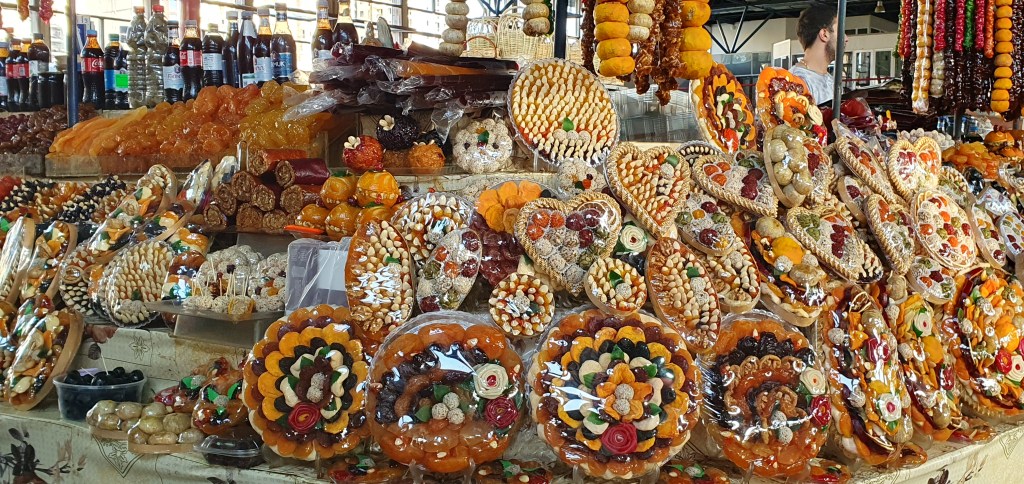
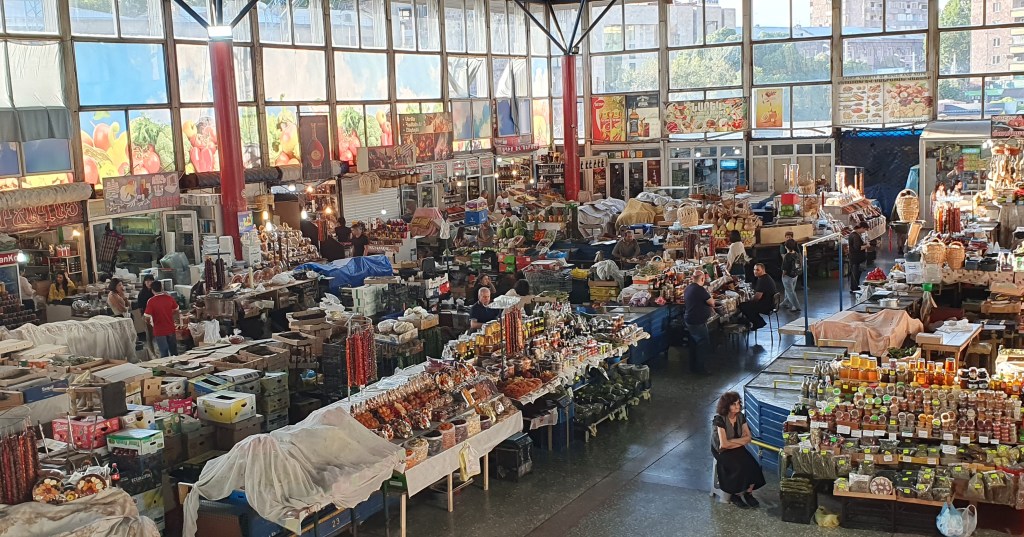
Back in Yerevan at the end of the day for a visit to the food market with its colourful array of dried fruits and local delicacies. Here you can try some of the produce and barter with the market vendors.
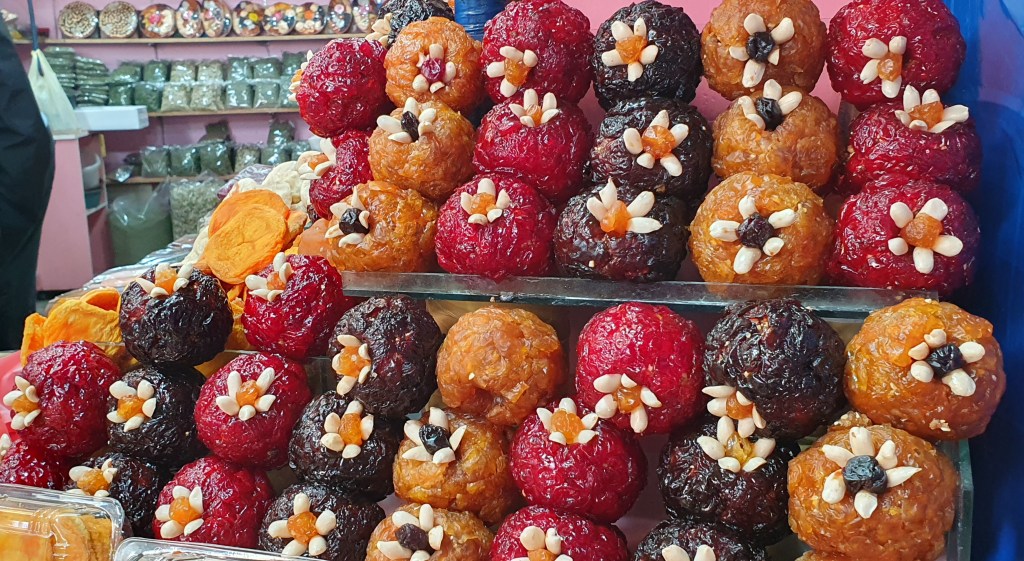
About the size of an apple, these sticky sweet cakes were on display on some of the stalls.
Following my 4 night stay in Yerevan for the next stage of our trip our group of 14 were driven north through Armenia towards Lake Sevan and Haghpat in the mountains.
 frombluetogreen.com