
We arrived at the Maasai Mara campsite during late morning and once we had put up the tents and Judy had prepared lunch we set off to the wild expanse of the Maasai Mara for an afternoon game drive. This was followed the next day with a full day game drive and both are covered here in this final blog post of the trip.
The Maasai Mara National Reserve covers an area of 1510 sq km and is the northern Kenyan side of the Tanzanian Serengeti which is much larger.
With this being one huge national reserve separated only by a political country border, the famous great migration begins in the Maasai Mara from where thousands of wildebeest move south into the Serengeti each year.
Half day afternoon game drive
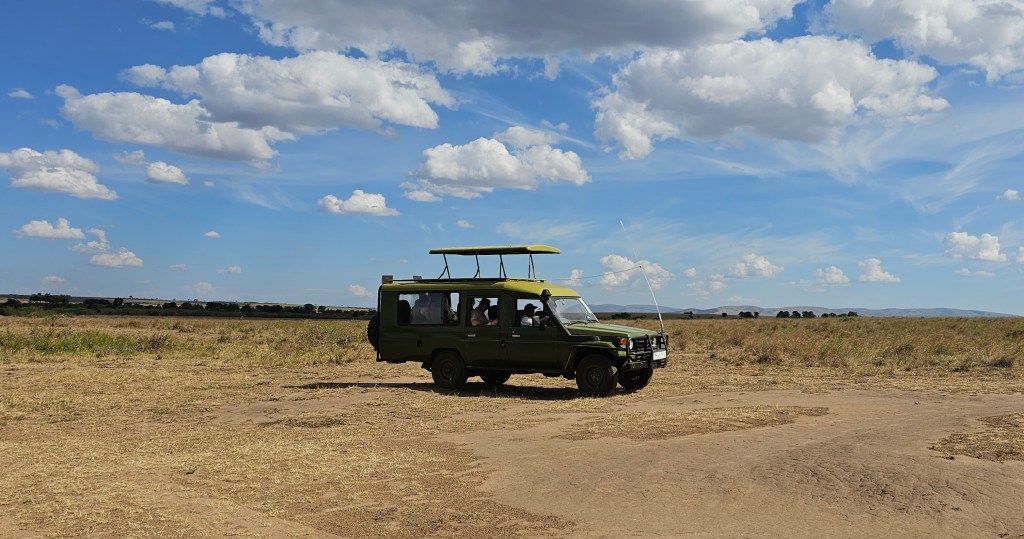
Our group was split between two 4WD vehicles which had arrived at the campsite to collect us. Each seat had an open window and the entire roof was open and popped up to enable us to stand up and view the wildlife. With us being a small group there was plenty of room in these two 7 seaters.
This time of the year (early December) is normally one of two annual rainy seasons but due to climate change the rains hadn’t yet started so the roads around the park were dusty.
Usually during November and December there is a short afternoon rainfall each day with the more substantial rains falling during March to May but there wasn’t a single drop during my entire Kenya trip. Fortunate for me as it meant I didn’t have to deal with a soggy tent or muddy campsite but not good for the wildlife or the eco system.
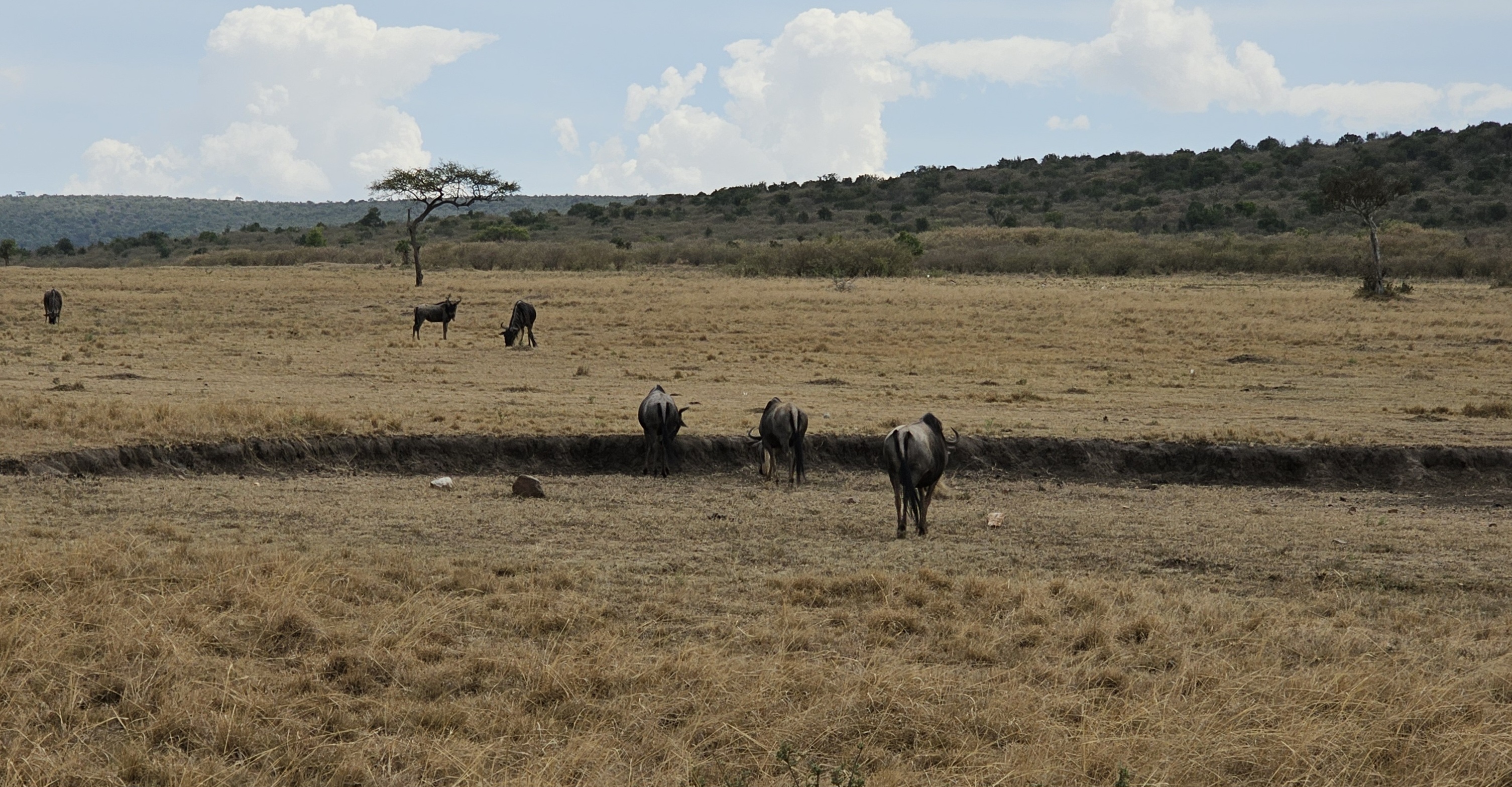
Once inside the reserve the first animals we came to happened to be zebras and wildebeests who migrate together as they follow the rains for fresh grazing between the Serengeti and the Maasai Mara. The Great Migration where up to 1.5 million wildebeest and a million zebras make this trip and move back into Kenya peaks in at around August.
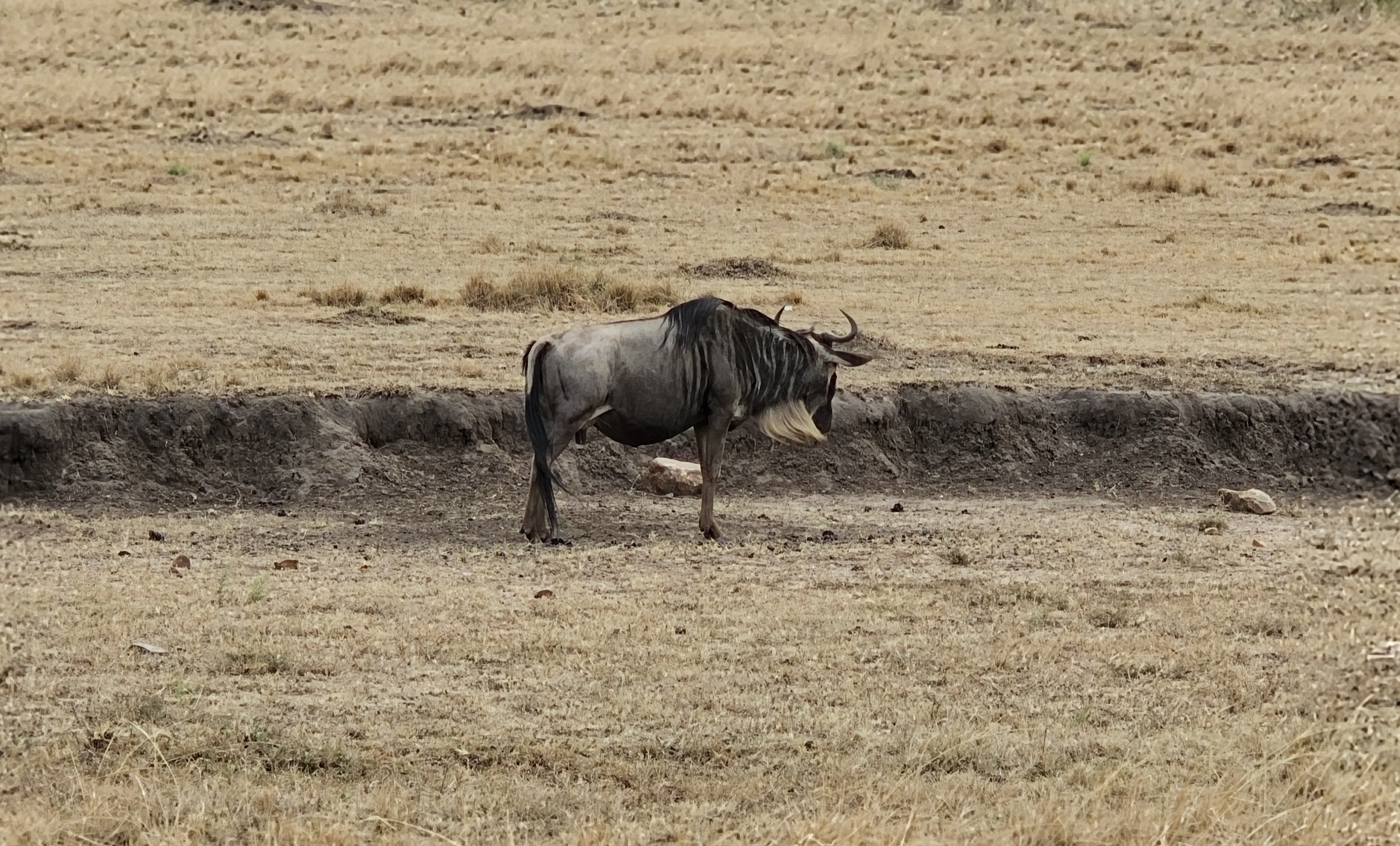
Our guide explained that the wildebeest is one of the ugly 5 said to be made of the spare parts from different animals. It is like a cross between a horse, a buffalo and an antelope. The warthog, spotted hyena, vulture and marabou stork make up the rest of the ugly 5.
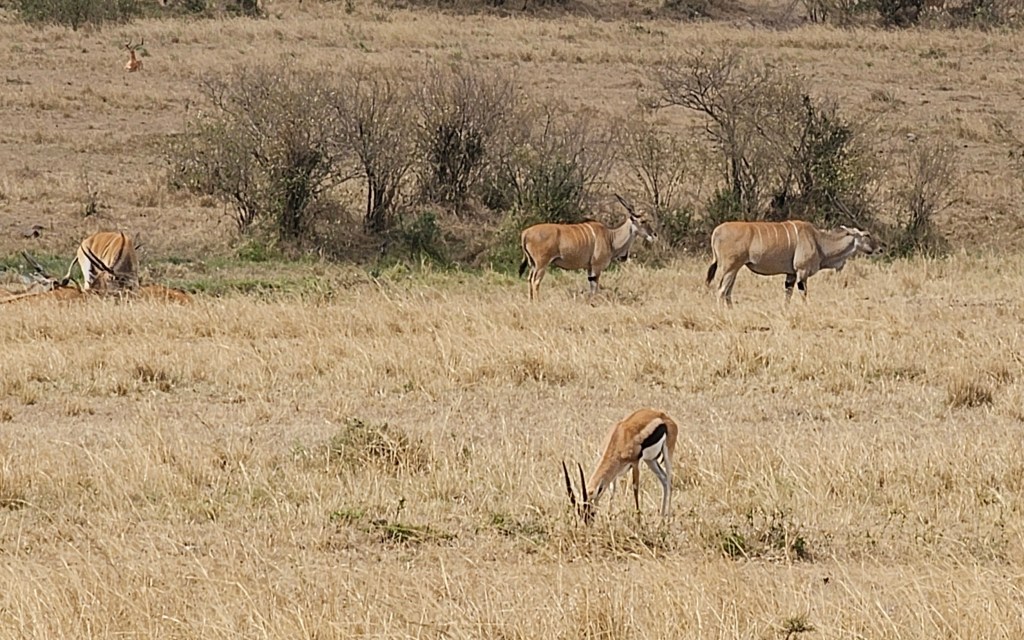
Thomson’s gazelles were named after an explorer called Joseph Thomson.
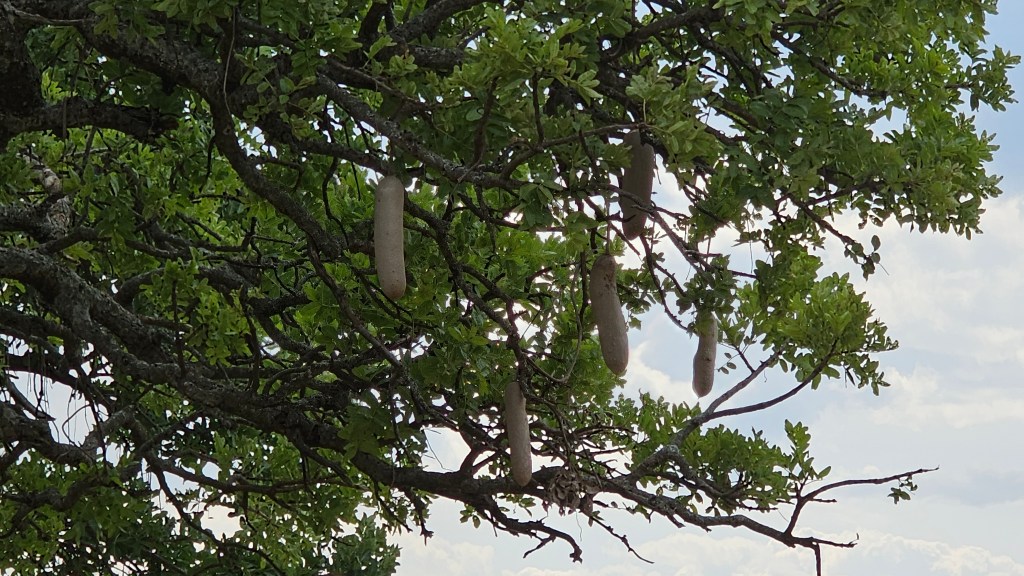
Above is a sausage tree which leopards like to climb. The long sausage like fruits are eaten by elephants and monkeys but would be poisonous to humans.
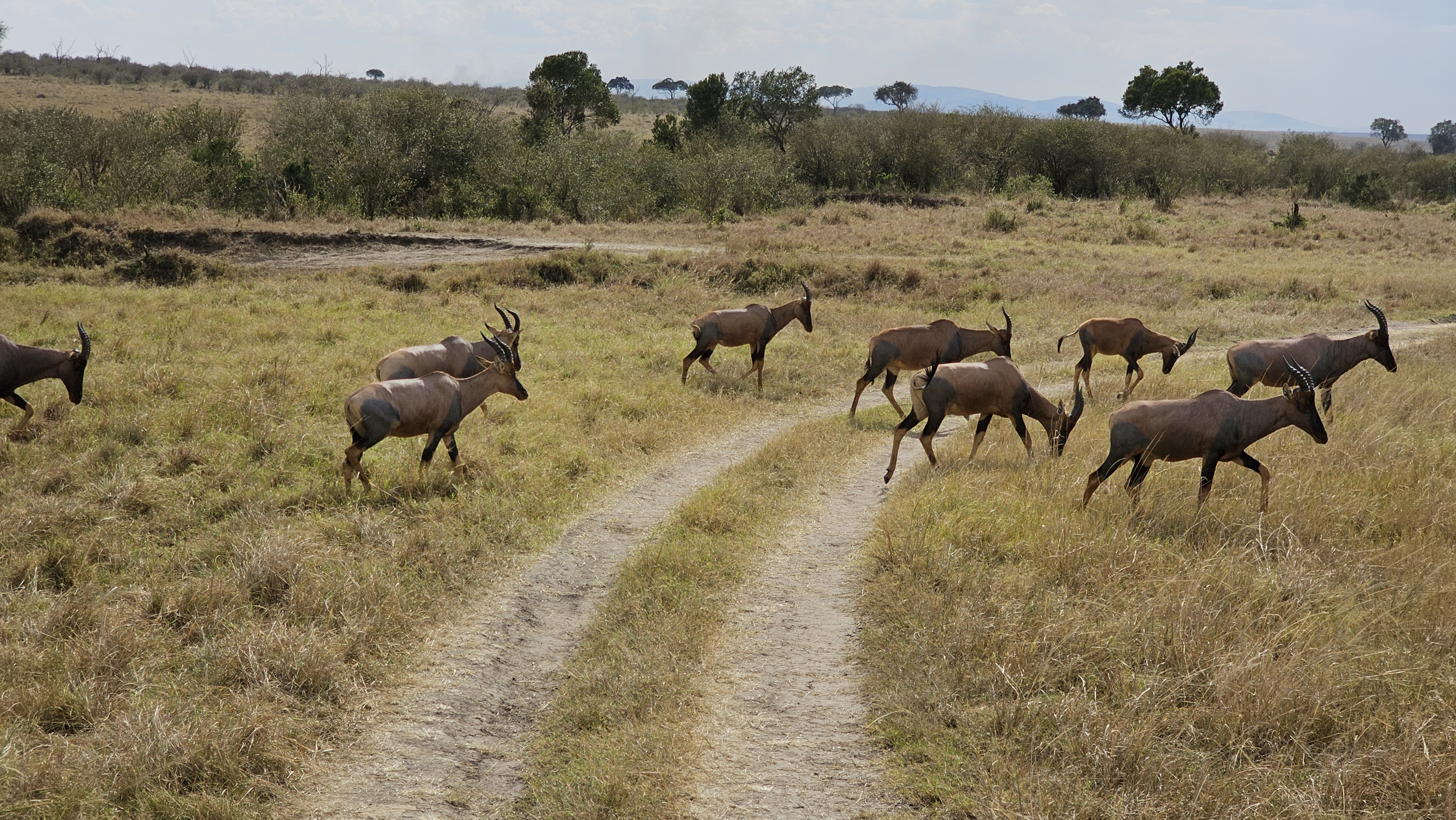
Topi antelopes crossed over the track in front of us, these are also known as Africa Gazelles as the black mark on their back is the shape of a map of Africa.
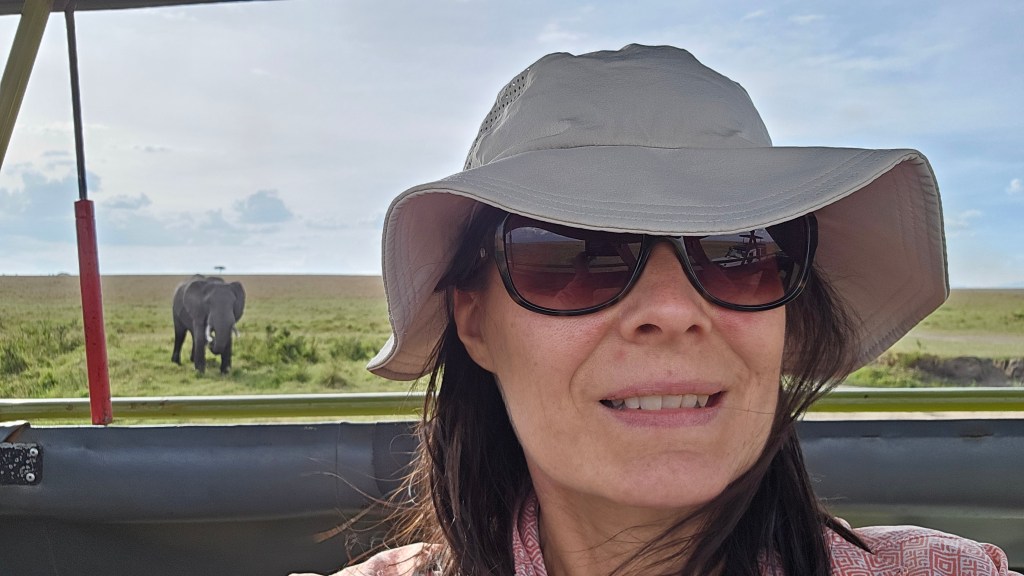
Shortly afterwards we came across some elephants, the first elephants we had seen on the trip so far. This was a matriarchal herd consisting of a group of cows and calves. Around 2,500 elephants reside in the Maasai Mara and ranger patrols, monitors and community projects help to protect them from poachers.

Shortly afterwards we saw a lone male bull elephant who typically live alone or in small groups of other males.
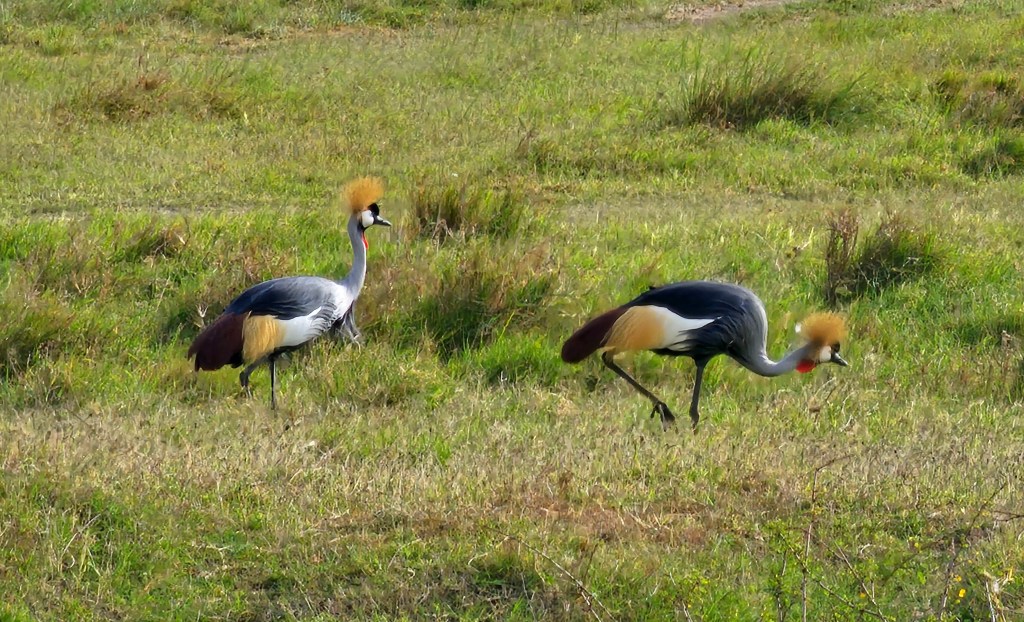
The grey crowned crane is the national bird of Uganda. They are found is pairs, they stay together for life and when one dies the other dies too.

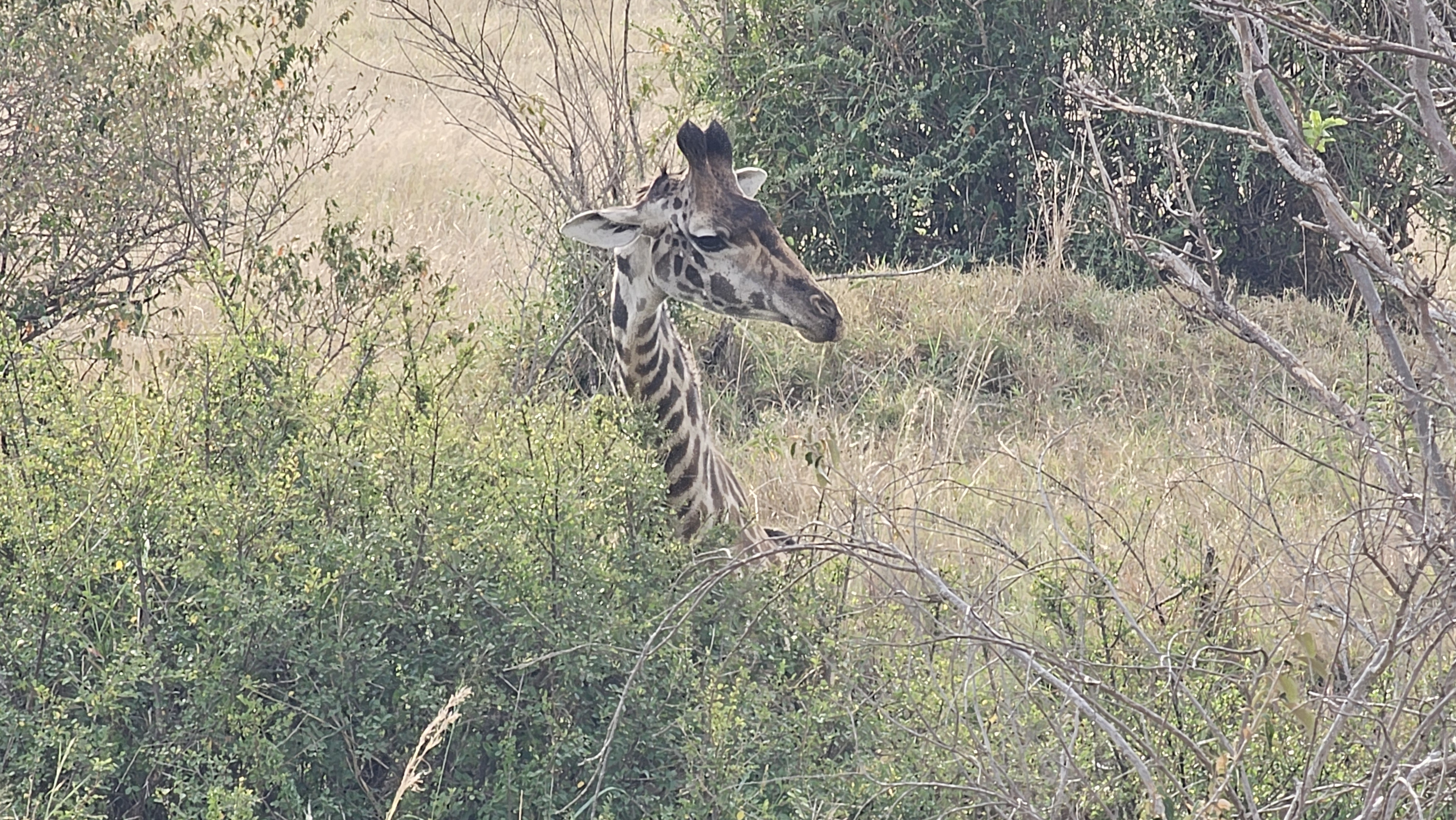
We saw several giraffes and a group is called a tower of giraffes. Giraffes are the tallest animal on the planet and the Maasai giraffe is the national animal of Tanzania.

Towards the end of our first game drive we were fortunate to see a black rhino which is extremely rare in the Maasai Mara. Our guide Henry was elated as in all of his years of visiting the Maasai Mara he had hardly ever seen one and this was the closest sighting he had ever had.
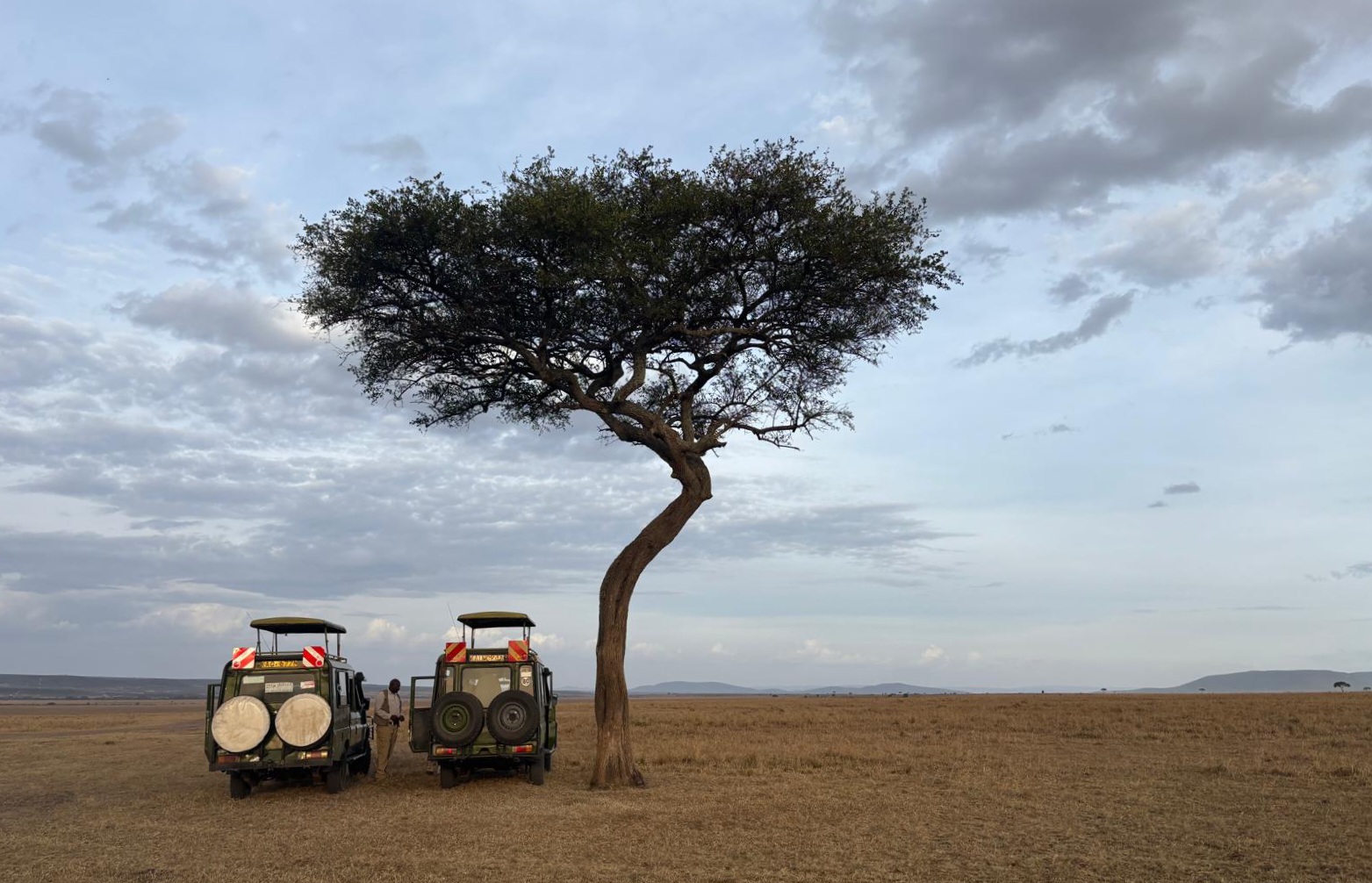
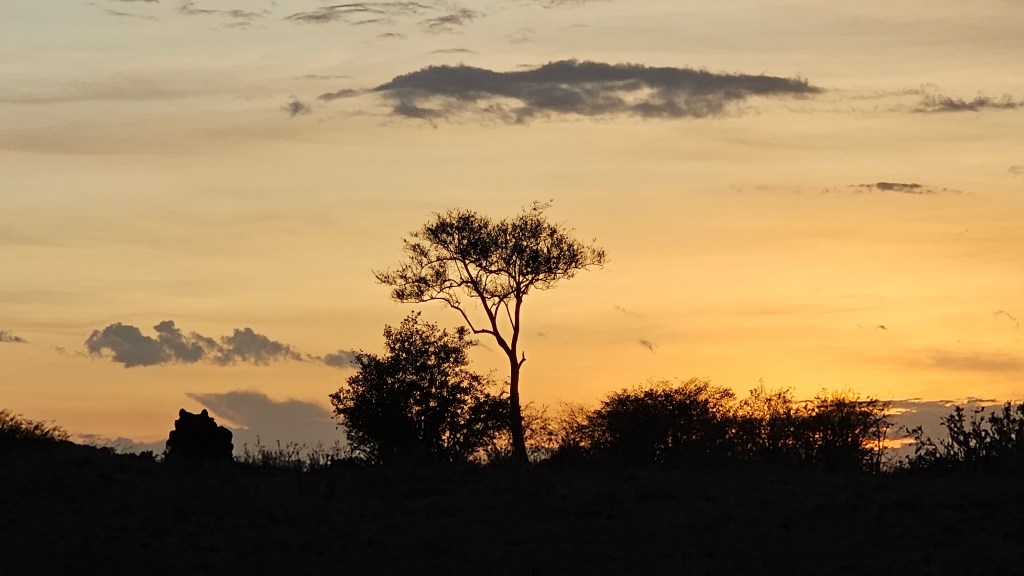
With its rolling savannah interspersed with lone Acacia trees and rich concentration of protected wildlife this first afternoon was a wonderful introduction to the Maasai Mara.

Full day game drive
At breakfast the following day, chef Judy had prepared some pasta and snacks from which to select to take with us for our packed lunches. After breakfast we set off at 07.45 am to drive again the short distance from the campsite to the Maasai Mara entrance ready for an all-embracing full day safari adventure.
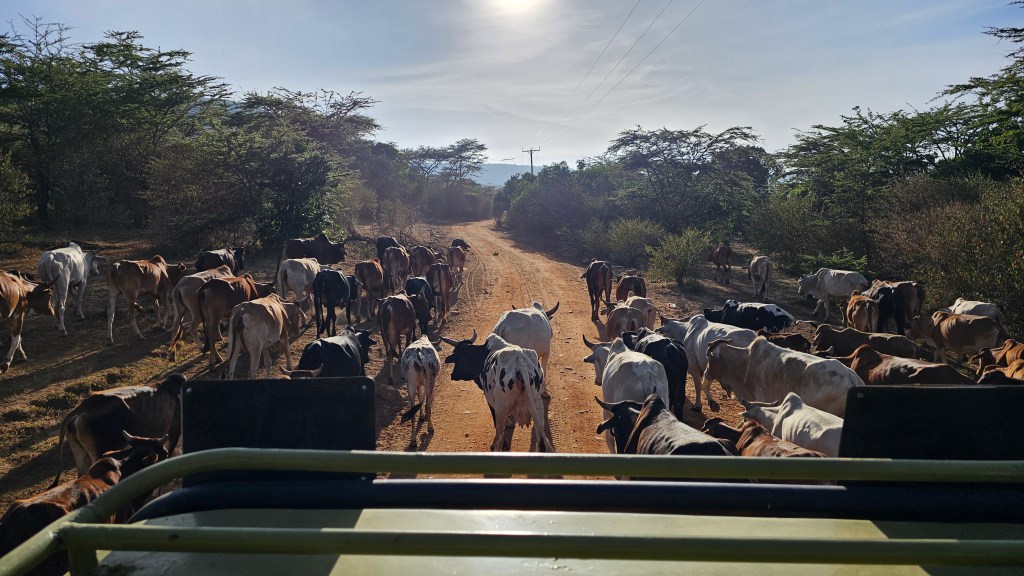
And as we left the campsite the first animals we came across were cows, thankfully outside the reserve!
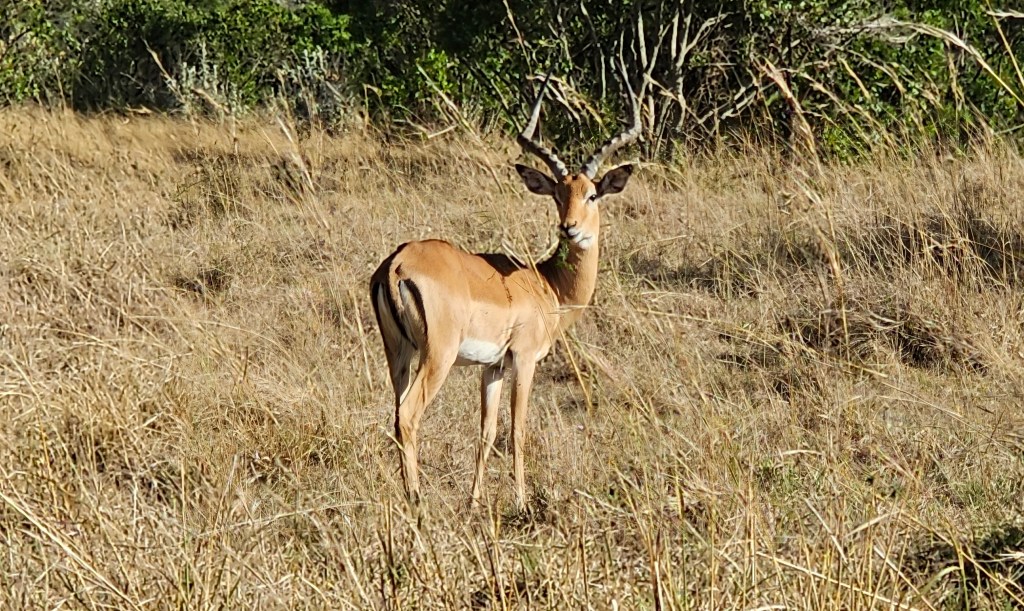
Upon entering we came across zebras, topi’s, gazelles and impalas.
The banded mongooses are small mammals who stay in large groups and feed on snakes.
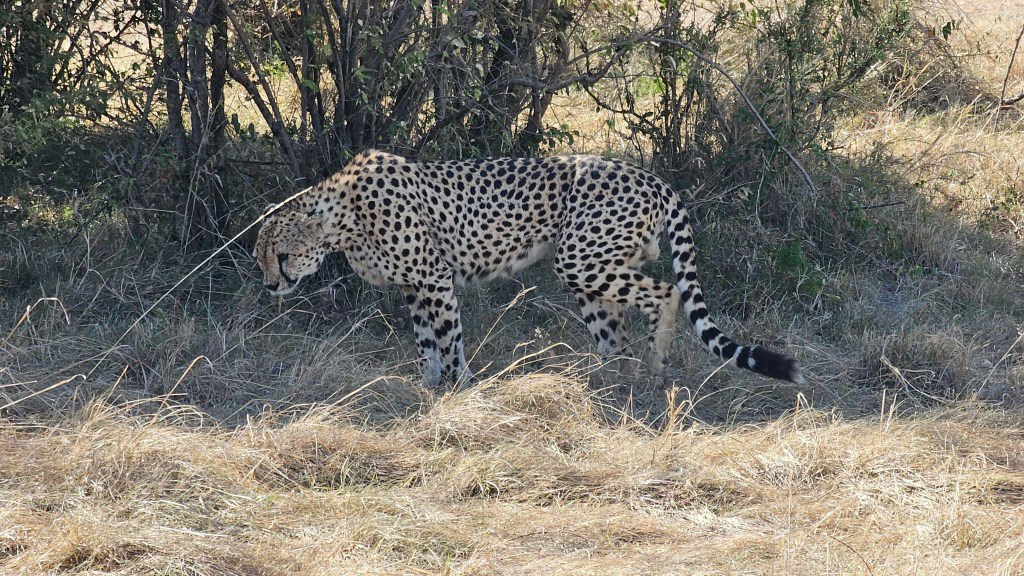
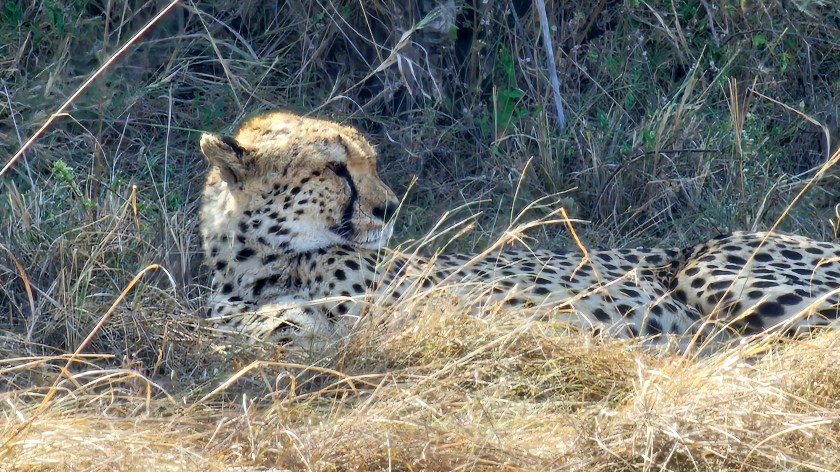
Things got very exciting when we came face to face with a cheetah!
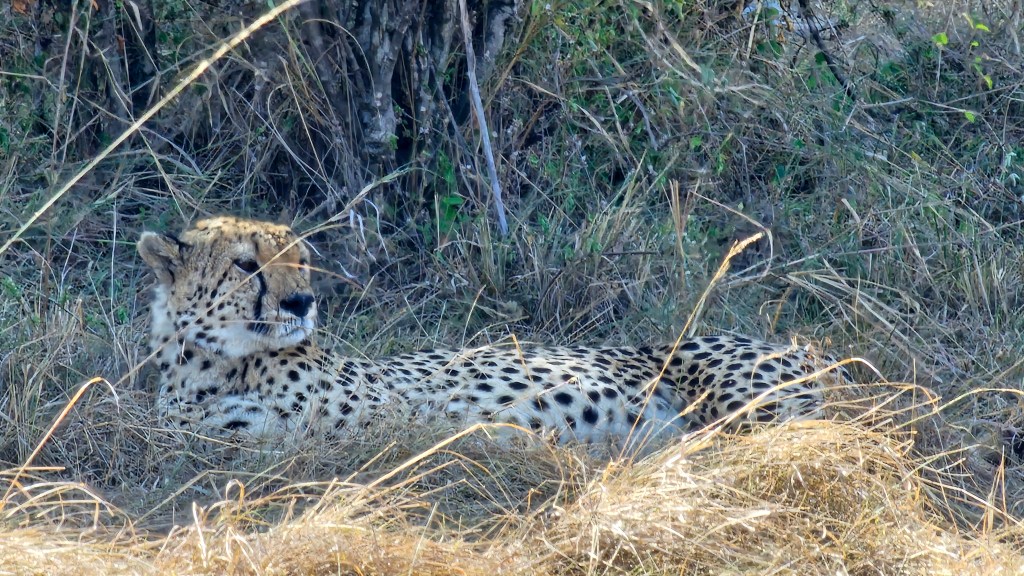
This cheetah was chilling under a tree and a group of cheetahs is called a ‘coalition’ (something to remember for a future pub quiz).
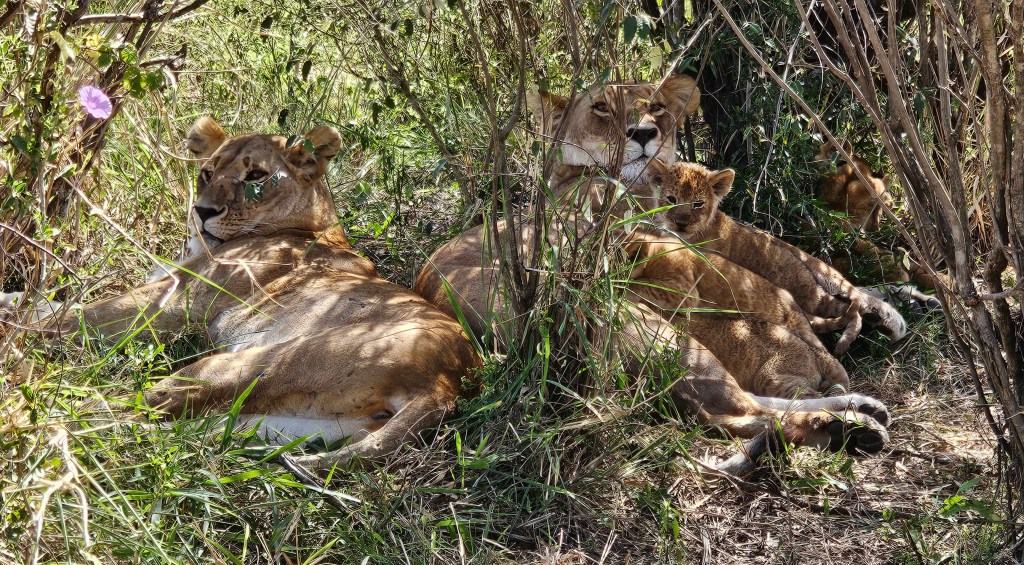
One of the absolute highlights was seeing these cute little lion cubs with their mother.
We continued driving through the grasslands in search of more wildlife…
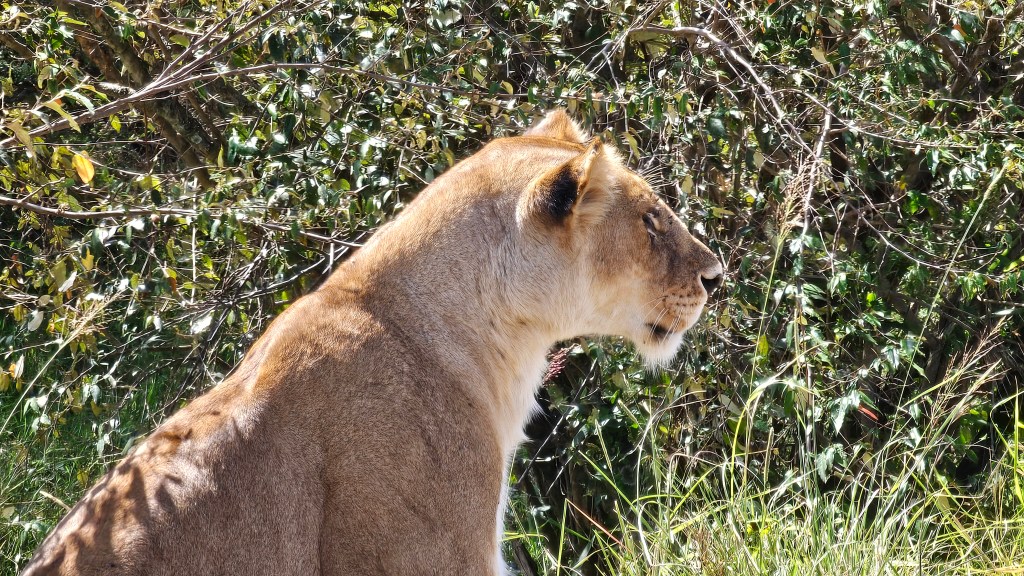
And before long we came to a small pride of 2 lions and a fairly big cub who would soon be ready to learn how to hunt.
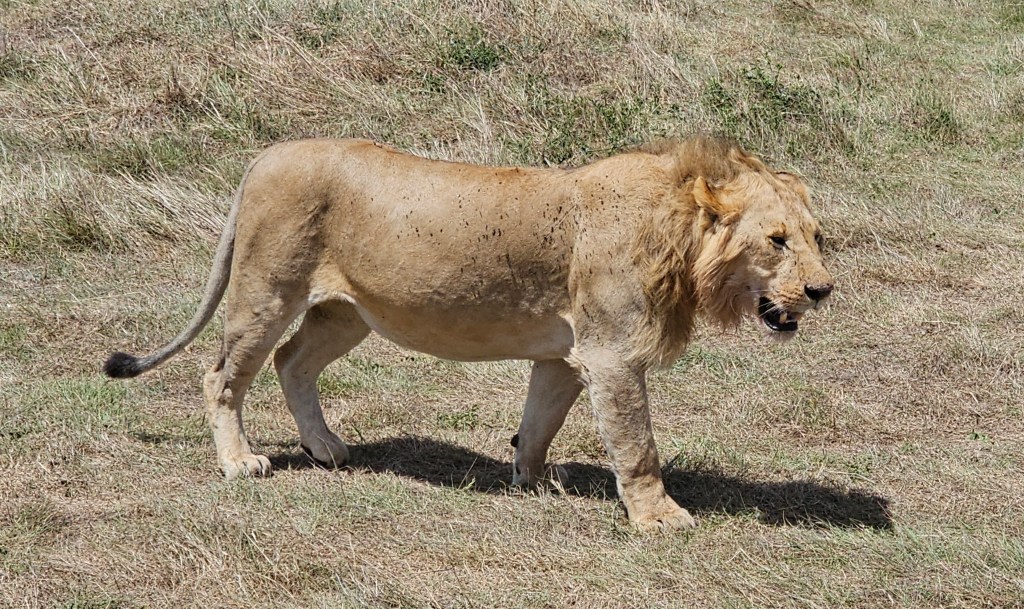
Next is where the action came which started with a blood splattered male lion who had recently killed a buffalo. Having had his feast, he sauntered off with his full belly while the scavengers began to appear.
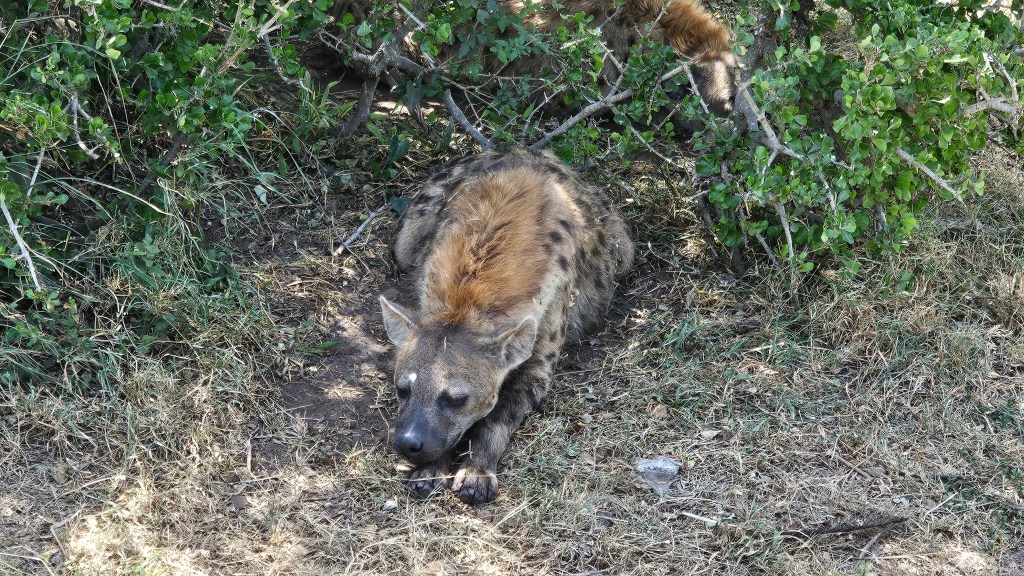
To begin with there was just one hyena who tentatively approached the kill making sure the lion had actually gone. He continued to keep a look out as he began to tuck in.
Several vultures had already started to congregate and they all sat around on the sidelines knowing their place literally in the pecking order.
Hyena’s have an excellent sense of smell and before long more of them began to appear and rip the meat off the dead buffalo with their strong jaws. Generally they shared their space around the kill but not without the odd scrap!
At the same time more vultures swooped in and sat around the edge while the hyenas filled their boots. There were 3 different types of vulture patiently waiting and by the time we left things were getting crowded with about 10 hyenas and at least 50 vultures.
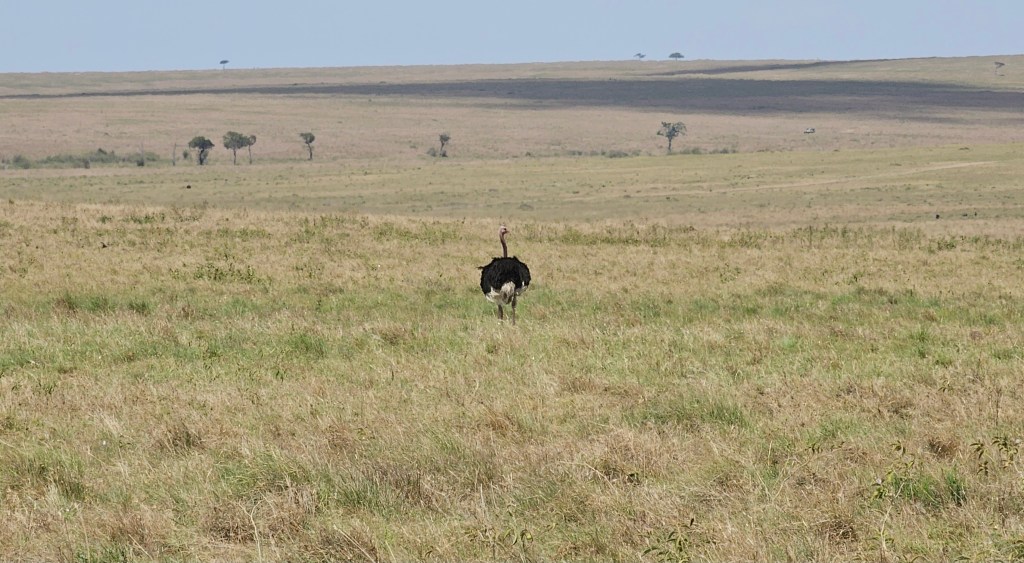
We saw one ostrich in the distance.
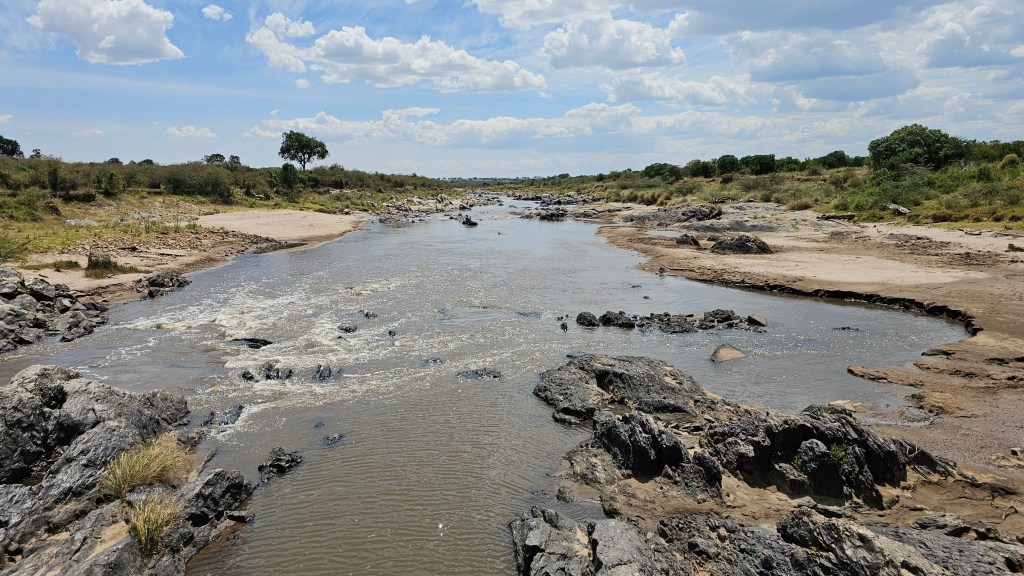
We crossed the Mara River on our way to search for a leopard which would complete our ‘Big Five’ checklist. We took the bridge but the Mara River is famous for the dramatic river crossings made by over a million wildebeest and zebras during the Great Migration.
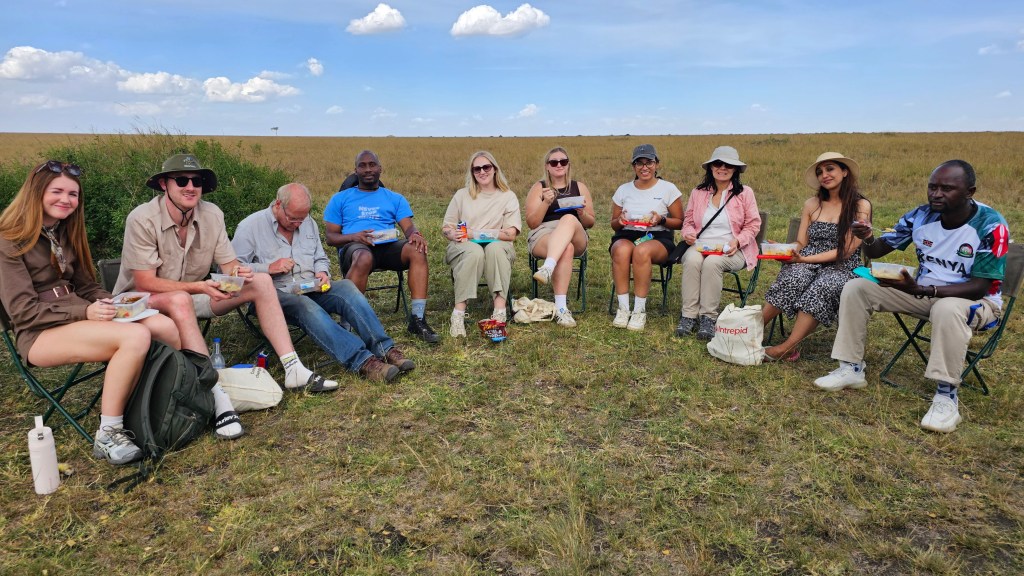
The two drivers (of our two 4WD’s) drove slowly around the area most frequented by leopards but as we didn’t see one it was decided this would be a good spot to get out of the vehicles and have our lunch. Yep – lunch in leopard territory!
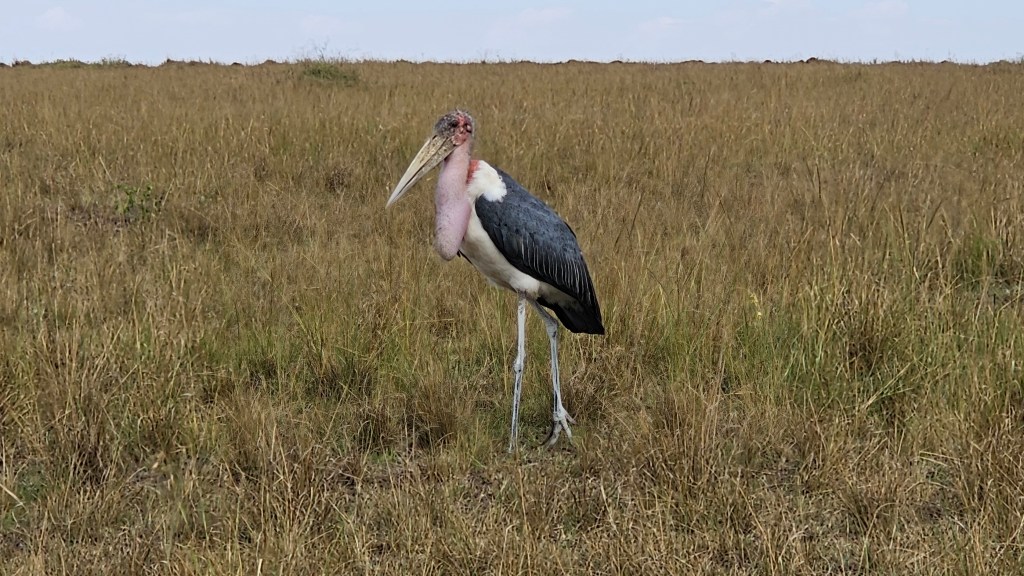
As we munched (somewhat quickly) a Maribou Stork arrived and was hovering around behind where we were sitting. These things are about 4 feet tall and are another of the ‘ugly’ 5.
After lunch we had another drive around looking for the elusive leopard but to no avail. Brit, one of our fellow Intrepiders saw one disappear into trees but didn’t get a chance to take a photo.

It was decided that enough time had been spent searching for a leopard so instead we set off to find the hippos and crocs.
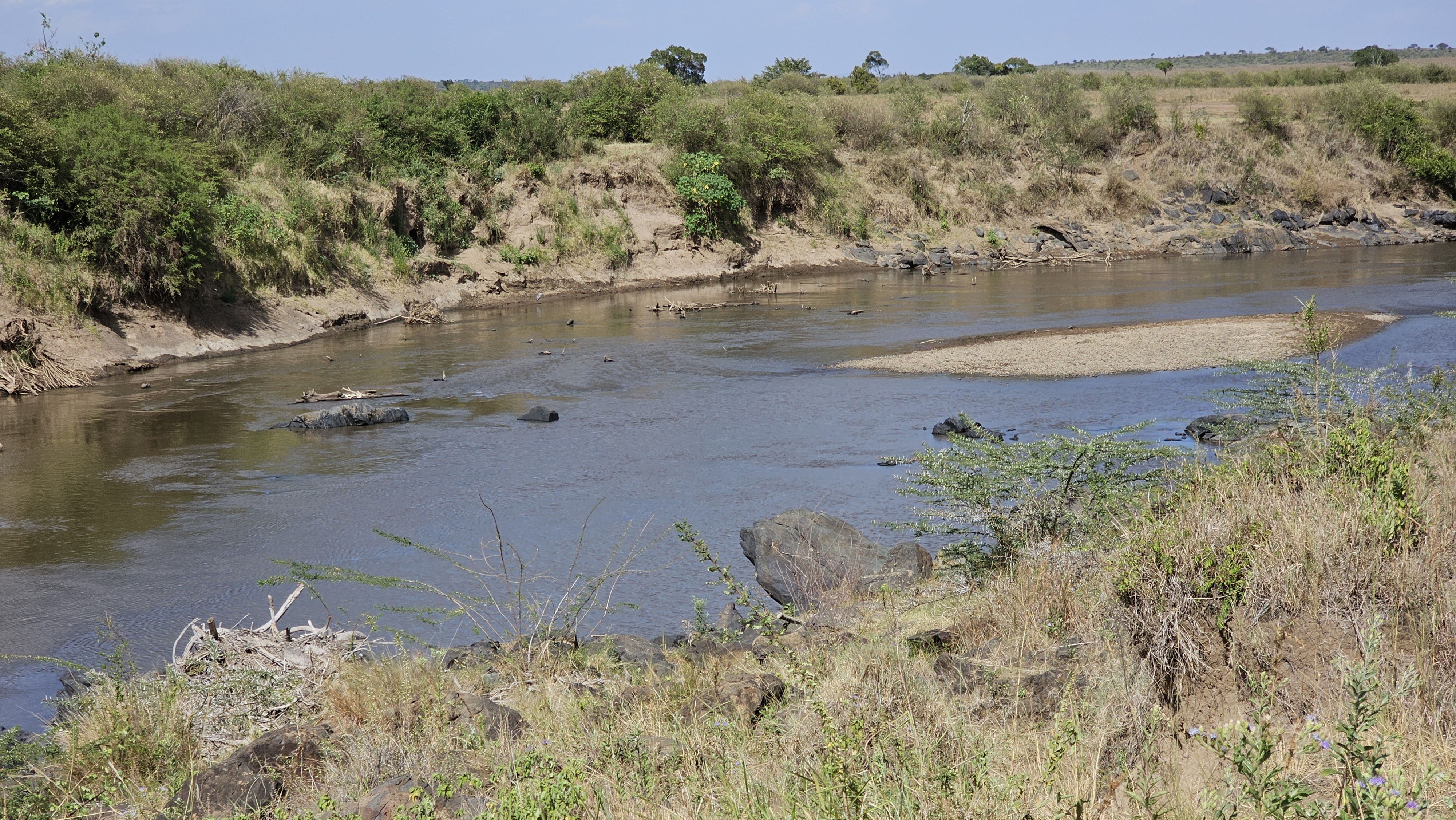
These were easy to spot and we had a good vantage point of a group of hippos so spent a few minutes watching them having a wallow.
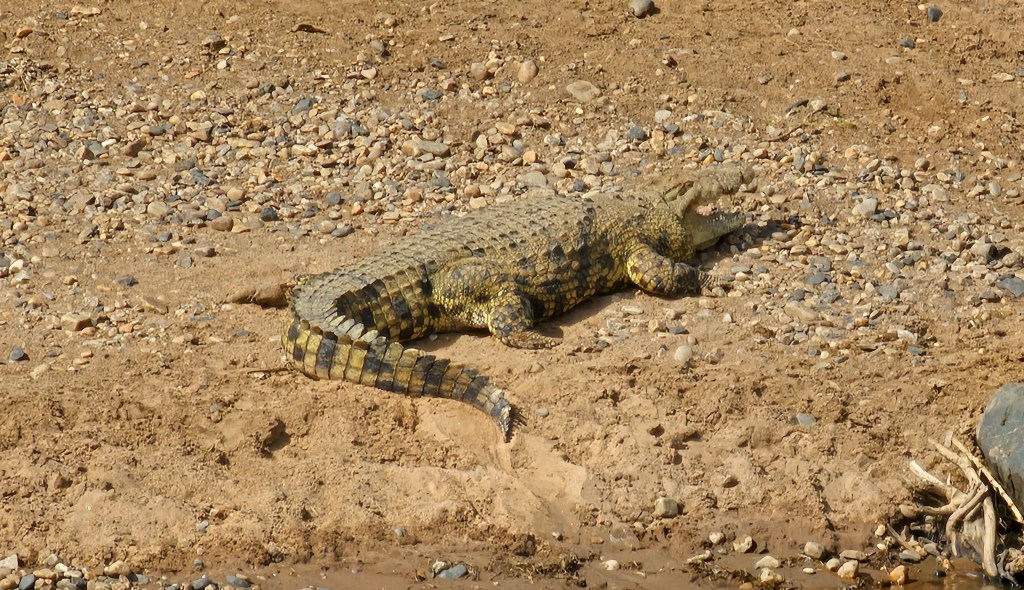
At the hippo place we saw just one crocodile.
Giraffes spend a lot of time eating and with their long necks are able to reach leaves that are not available to other animals. Things get awkward when they are peckish and have to eat grass!
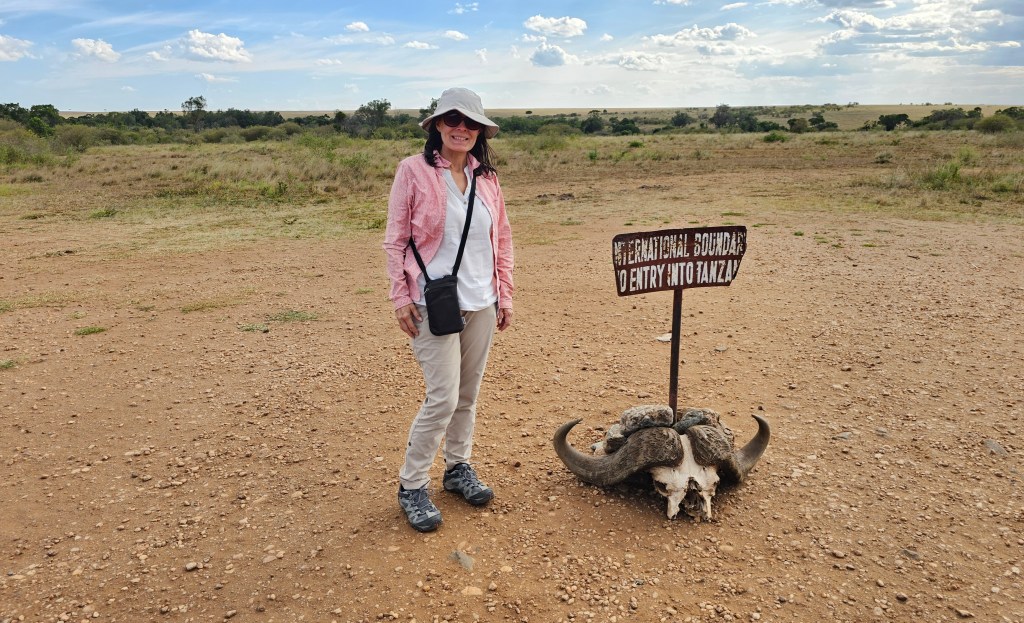
As mentioned the Maasai Mara and Serengeti are connected and we drove to the border between the two. Above is me standing in Tanzania (but I don’t think I should include this as a new country 😆)
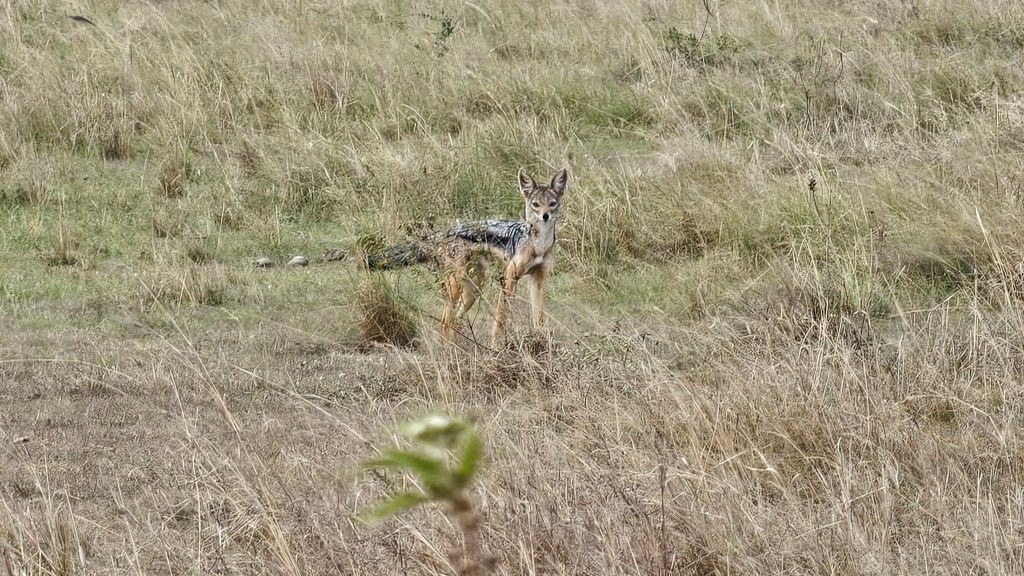
From the Tanzania border we started our drive back to the entrance of the reserve, still on the lookout for animals. Similar to hyenas, jackals are also scavengers and can be found not too far away from lions or cheetahs waiting for scraps from their kills.
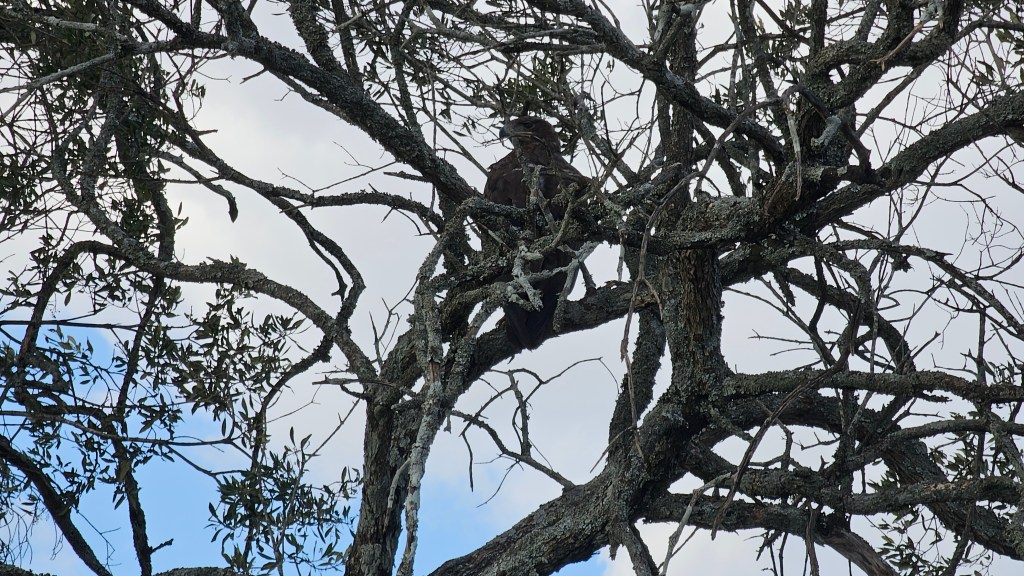
What an amazing and memorable day which left me with a sense of awe… seeing these incredible animals in real life and the first hand experience of witnessing the aftermath of a recent kill was like being in a real-life documentary!
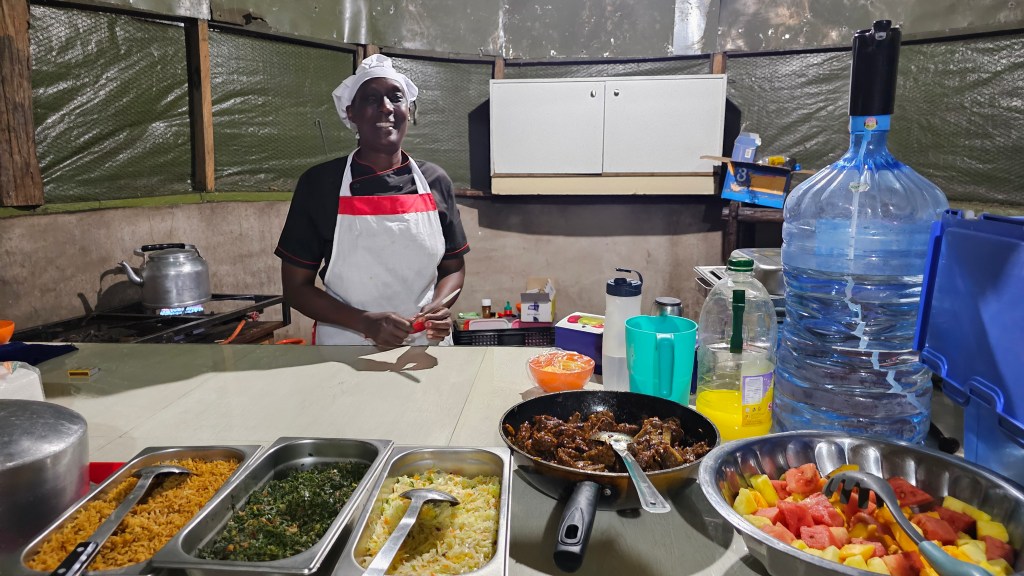
And to finish off, back at the campsite chef Judy had prepared a traditional Kenyan feast for our final dinner together as a group. This included lamb, polenta and kale and she showed us the way this is eaten is by rolling the polenta together with the kale and eating it with your fingers together with a piece of lamb.
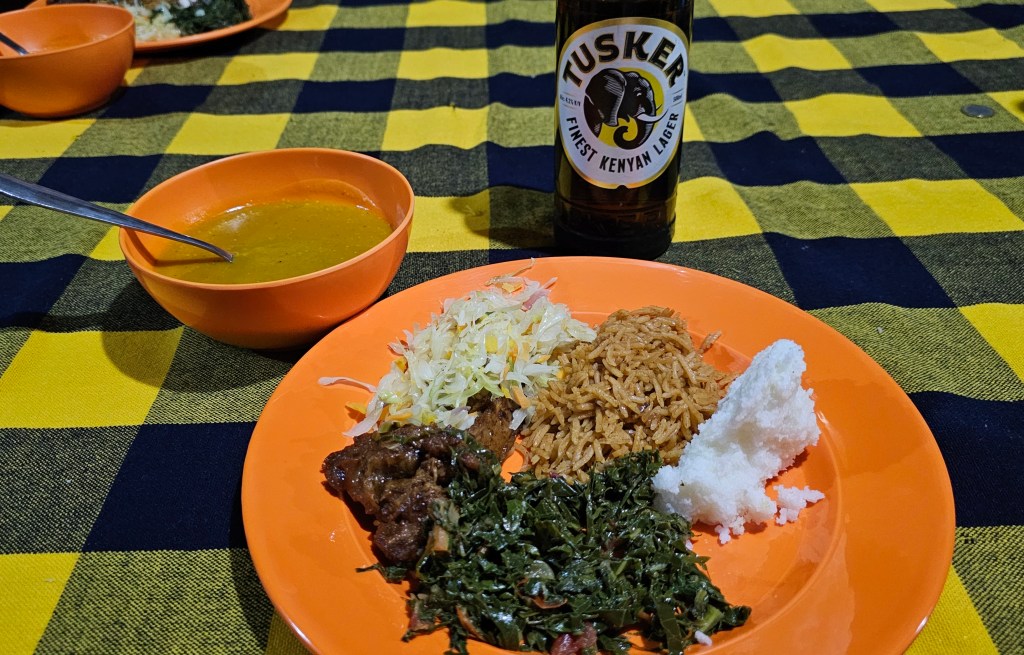
She had also cooked spicy pilau rice, mixed cabbage (like hot coleslaw) and another delicious soup, this time it was pumpkin. And we finished with a fruit salad of fresh pineapple, mango and watermelon. Tropical fruit is always so much more flavoursome when its locally grown.
After dinner we had a final debrief with Henry, chef Judy and driver Mashi, reflecting and thanking them for such an unforgettable experience before going to bed at around 10 pm in preparation for our early drive back to Nairobi the following day.
Summary of the trip
This is the final post of my amazing Kenya wildlife safari trip. For me, the biggest highlights overall were seeing the baby lion cubs, witnessing the activity of the food chain in real life (lion to hyena to vultures) and staying with the Maasai warriors. This trip was a perfect blend of wildlife, culture and the opportunity to learn about Kenyan way of life.
I was pleasantly surprised at the high standards of cleanliness throughout the trip. All toilet blocks (except one at a garage) either at campsites, in the Maasai Mara reserve and even those at the back of a shop during transits were western style, had toilet paper, had soap and didn’t smell.
With the exception of Lake Nakuru there was hardly any mosquitoes throughout the tour although I did get a couple of bites so continued taking Malarone anti-malarial.
From the Intrepid tour company side, Henry our guide for the week was knowledgeable, patient and went over and above to ensure we had the best experience.
Mashi our truck driver got us around safely, was always smiling and each time he assisted me with putting up and taking down my tent.
And chef Judy prepared fabulous Kenyan meals with one night of fish and chips.
Even though at least half of the group were in their twenties and I was the second oldest everyone was always friendly and I met some lovely people.
I am keen to do more Africa overlanding trips with Intrepid! (This is one reason for covering this one in so much detail – I want to remember things to help prepare for future Africa overlanding trips).
Budget
- Return Heathrow to Nairobi direct British Airways flights £150 + Avios points
- Intrepid Wildlife Safari tour £1225 (includes single supplement, additional post trip Nairobi hotel and credit card offer)
- Hells Gate cycling £67
- Nairobi private tour £83
- Crowne Plaza day pass £52
- Overnight pre-flight hotel at Heathrow £57
- Pre-trip Nairobi hotel (Boulevard) £49
- Additional costs (travel to and from Heathrow airport, Nairobi transfer, Ubers, meals, drinks, souvenirs, donation to the Maasai Hellen project, tips, Kenya visa, malaria tablets etc) £370
The overall total spent was around £2050 and as this was my final trip for 2025, this concludes my year of budget travel.
 frombluetogreen.com