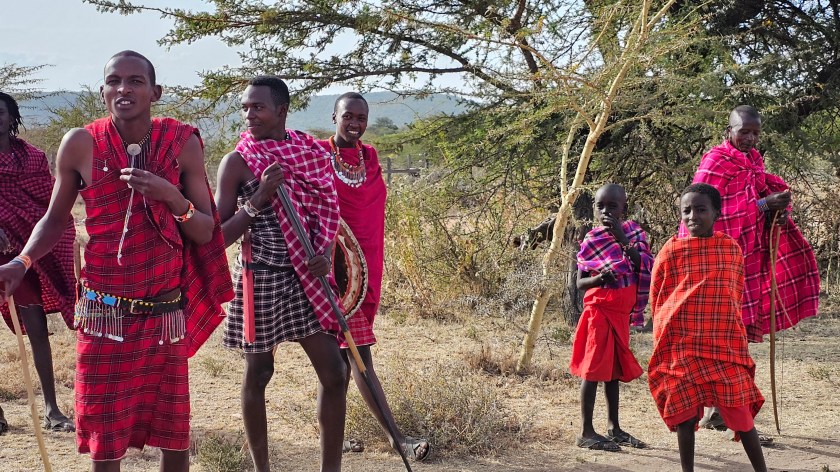

We were fortunate to spend 24 hours off the tourist trail camping in an authentic Maasai community village. This post captures what I learned about the fascinating rich traditions of Maasai culture.

Between Lake Naivasha and the village we passed Mount Longonot, at 2776 m high it is sometimes used by people who are training to climb Kilimanjaro in neighbouring Tanzania. This is a dormant volcano having last erupted in the 1860’s.
Further along we stopped at a small shopping complex in Narok where we purchased snacks in a huge supermarket with a massive choice. It was incredibly clean and tidy and would put UK supermarkets to shame. It was also playing Christmas songs, a small reminder to self that we are now in early December.
Before lunchtime we arrived at the cultural eco campsite where we received a warm traditional Maasai warrior greeting. Red is the holy Maasai colour and the ‘shuka’, the traditional bright red blankets worn by the Maasai immediately caught my eye. We were encouraged by the Maasai to take many photos of everyone during our time there.

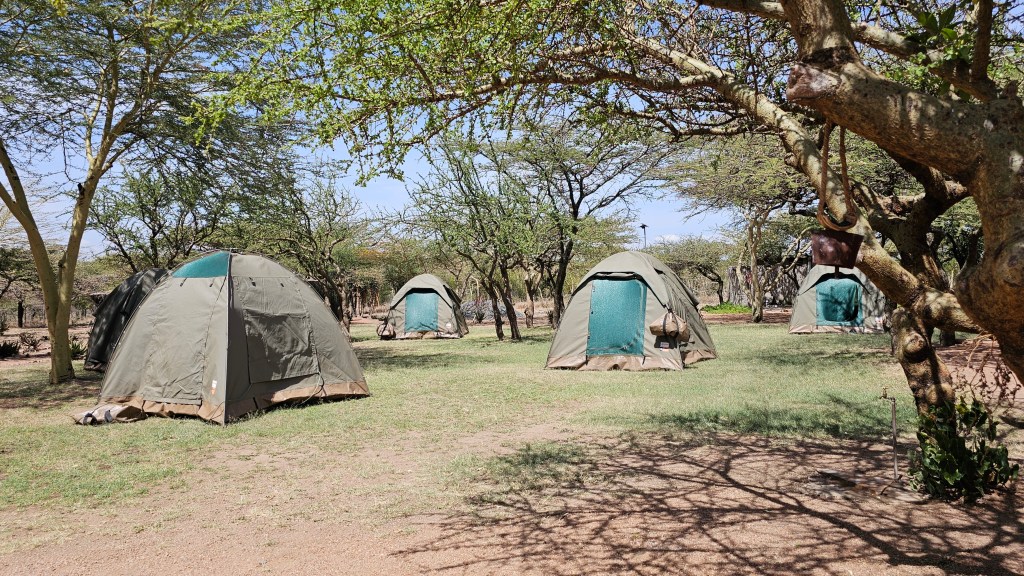
Joy the leader then proceeded to show us around the small campsite with its immaculate facilities with a modern western toilet, a cane lined shower room and some guest rooms should any of us wish to upgrade from our tents.
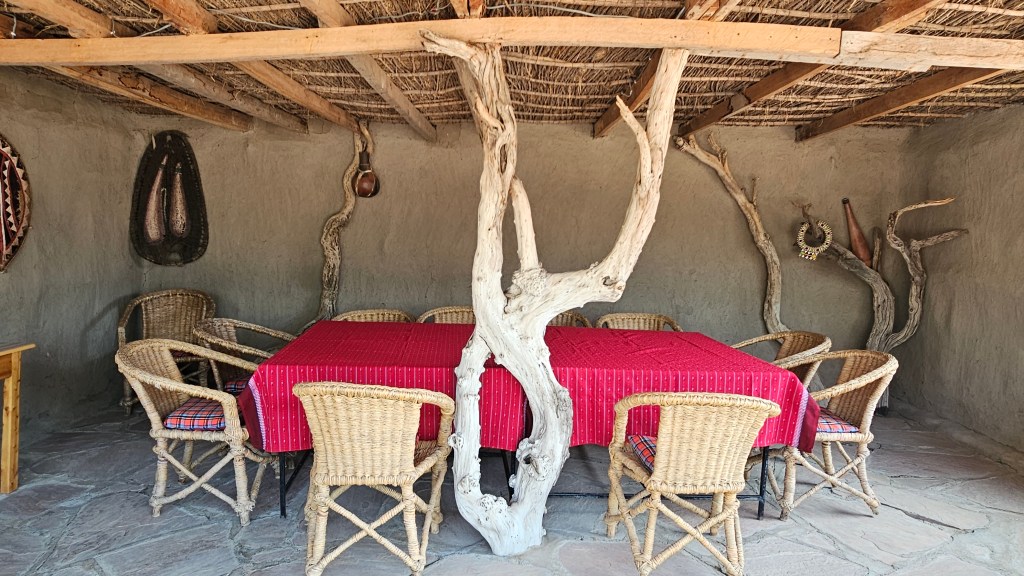
We pitched our tents in the calm and serene grounds while Chef Judy prepared lunch.
At 4 pm Joy rang the cowbell to gather us together to brief us on Maasai culture and deep-rooted traditions before leading us mzungu’s to the community village. (White people are referred to as ‘mzungu’ by Maasai’s)
He explained that when Maasai children come over to meet you they stand in front of you and bow their heads. You need to respond by touching childs head and saying ‘supa’ to them which means ‘hello’.
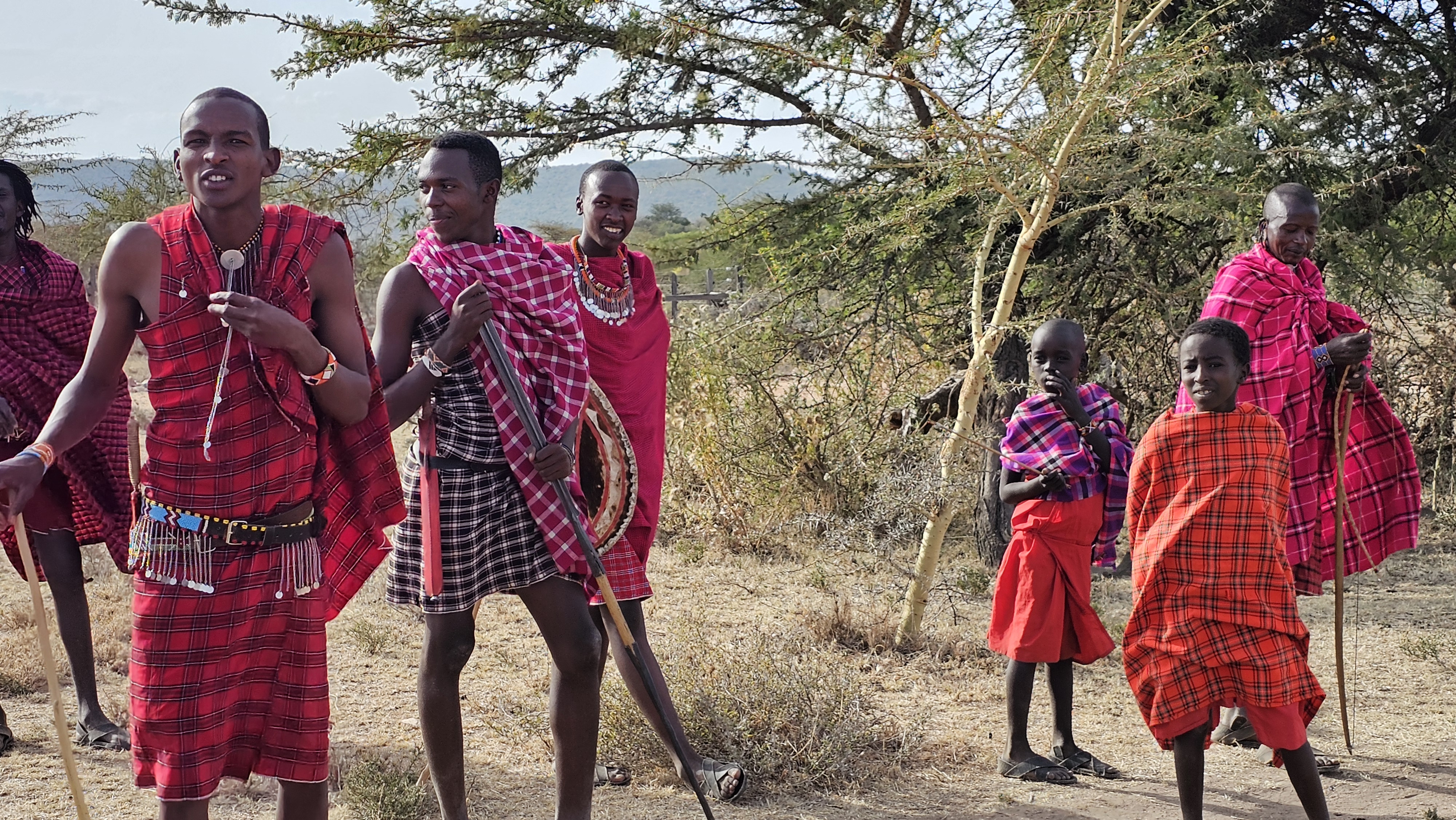
We were joined by some more Maasai warriors. They don’t celebrate Christmas or birthdays and don’t even know their ages. Instead they have 4 stages of life: childhood, circumcision, warriorship and adulthood. During warriorship which lasts a few years the boys don’t see their mothers which is worrying for the mother as while he is away learning warrier skills they don’t know if their son is even alive.
The warriors we met had already graduated but others were out in the bush learning their skills as part of the warrier stage.
As we walked towards the community village the warriors (and two children) gave us a bow and arrow demo to showcase their skills. Maasai don’t hunt the wildlife as they farm their meat from cattle, sheep and goats.
Fresh cows blood is one of the main staples of their diet. They make a small cut in the cow’s neck to collect the blood and make sure the cow doesn’t die which gives them a constant supply.
Maasai’s have arranged marriages and women can only marry once. There is no such thing as divorce. Even if the husband dies the woman can’t remarry. However men can marry several women. Girls as young as 9 are forced into marriage and this can be to an elderly man. Once he dies the poor girl is left a widow for the rest of her life.
We walked past the school and Joy explained this is where Hellen teaches the children. More on Hellen shortly…
As we neared the village the warriors demonstrated 3 different dances, above is one of them. Known as ‘Adumu’ this is done by men only and the men of our group were invited to join in. Warriors jump as high as they can to demonstrate their strength and agility.
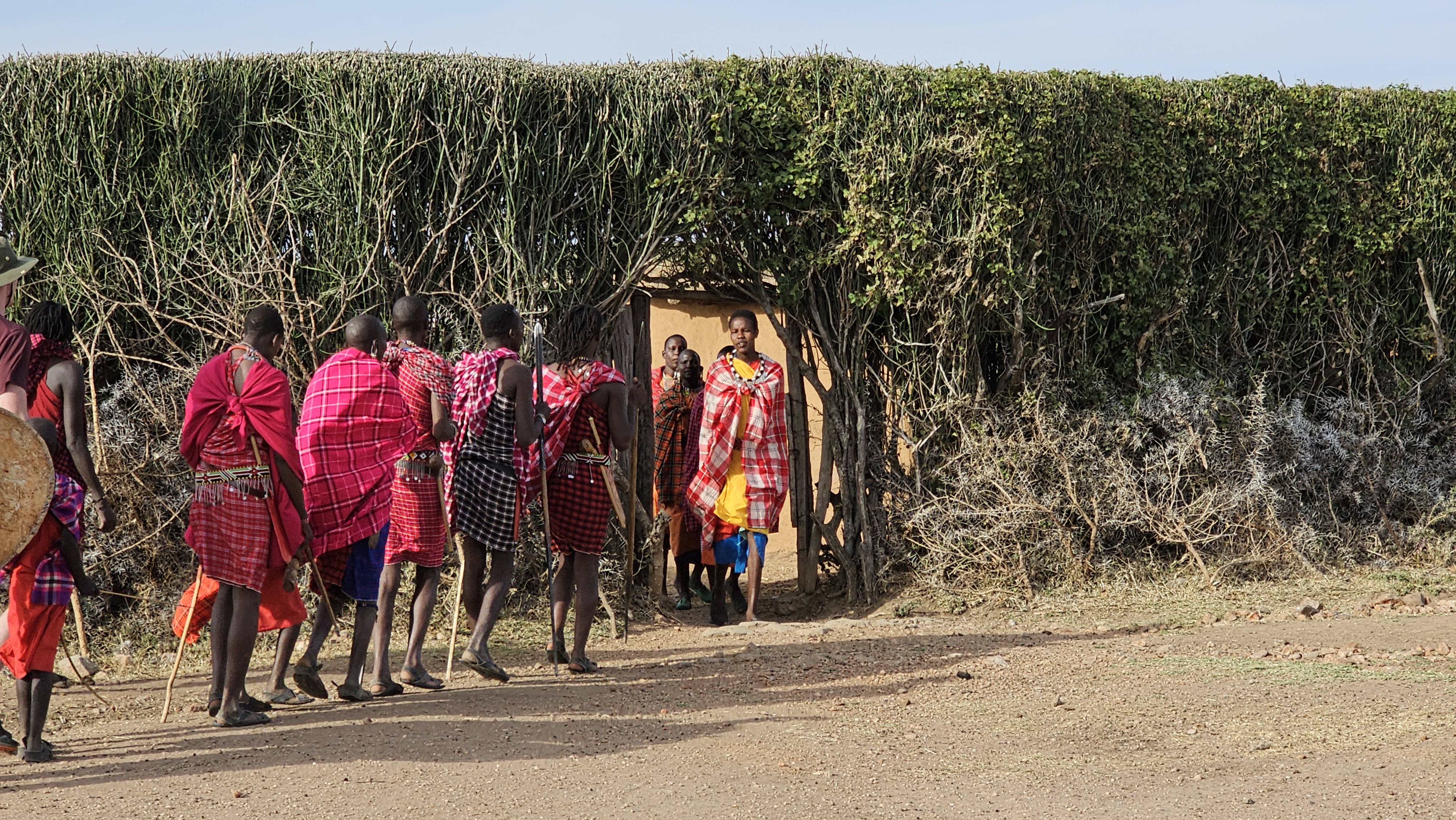
We reached the small community nestled in the sprawling savannah landscape and protected by a closed in hedge, entered through a gate and had a full welcome from everyone in the village.
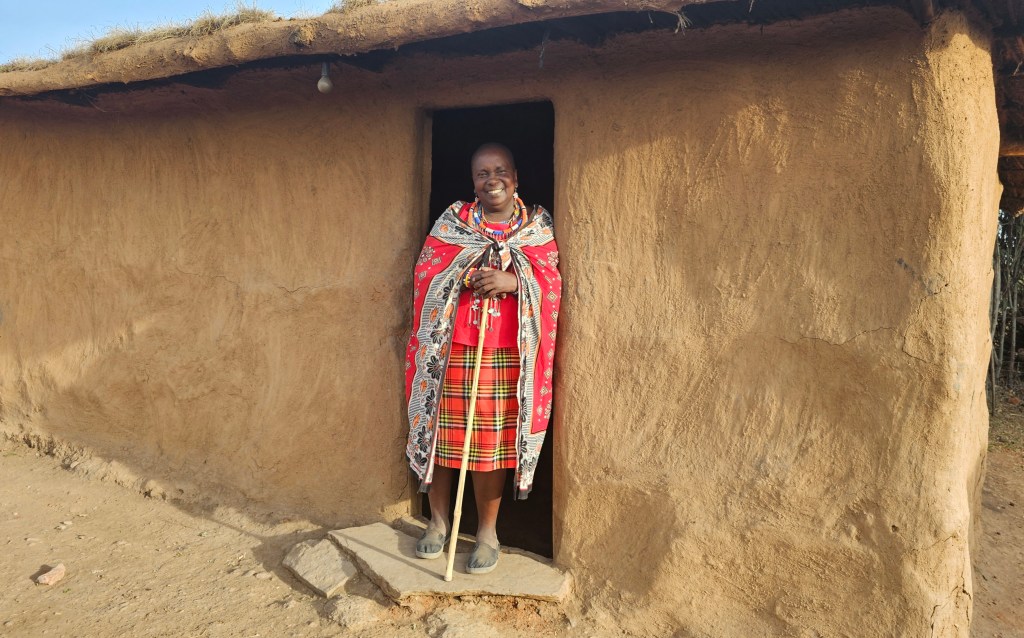
Hellen
Hellen is the founder of the Tepesua Community Based organisation and she took 5 of us into her tiny mud house to explain more about it.
First she explained the layout of her home which included a small child’s bed, a guest bed, the man’s bed and the separate woman’s bed. While we were there, they doubled up as sofas with animal skins as covers.
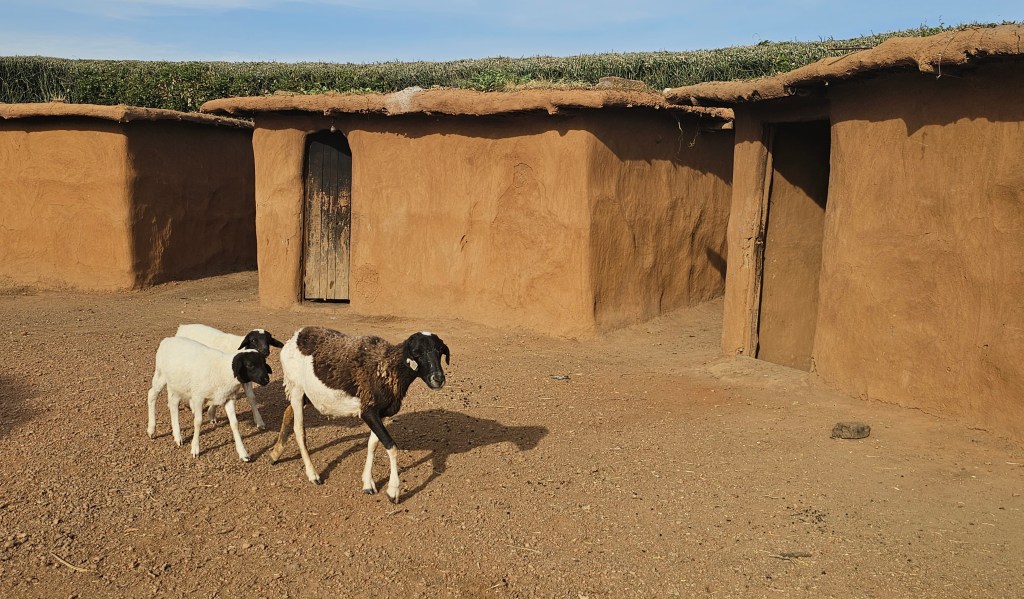
There was a small mud kitchen area, an open fireplace and an inside pen for small animals when they come in at night (larger ones have an outside pen).
Hellen’s life story is inspiring. She herself suffered female genital mutilation (FGM) at the age of 9 and marriage at 11. Thankfully Hellen was rescued by an Italian Catholic nun who supported her education to enable Hellen to train as a teacher. From this platform, Hellen went on to establish the Tepesua Community and has since dedicated her life fighting to change the damaging parts of the Maasai culture.
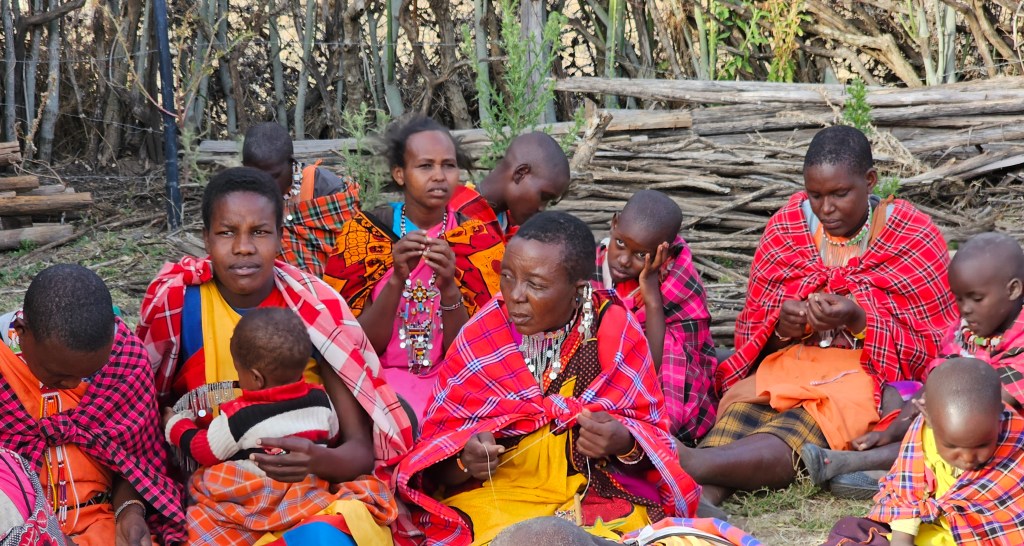
This includes the school she set up to enable both boys and girls to receive an education and the project to provide reusable sanitary pads for girls and women to avoid them using leaves which are not hygienic.

Cattle co-exist in the village and these larger animals are housed in the centre of the community to protect them from predators.
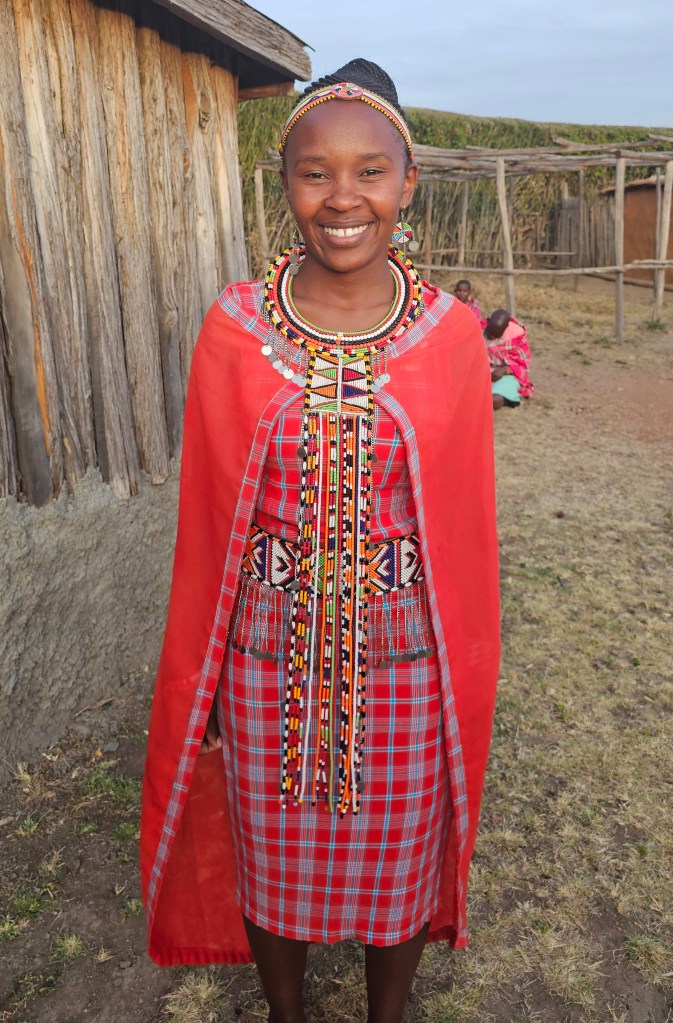
Above is one of the young girls (I can’t remember her name) who thanks to Hellen now has a promising future. She spoke very good English and told us she wants to train to become a tour guide.

Funds are raised by selling locally made colourful and intricate handicrafts. These are taken to local markets throughout the region.
We said goodbye to the children and the villagers and walked the short distance back to our campsite before darkness fell.

Before dinner the Maasai warriors showed us how to light a fire without using matches.
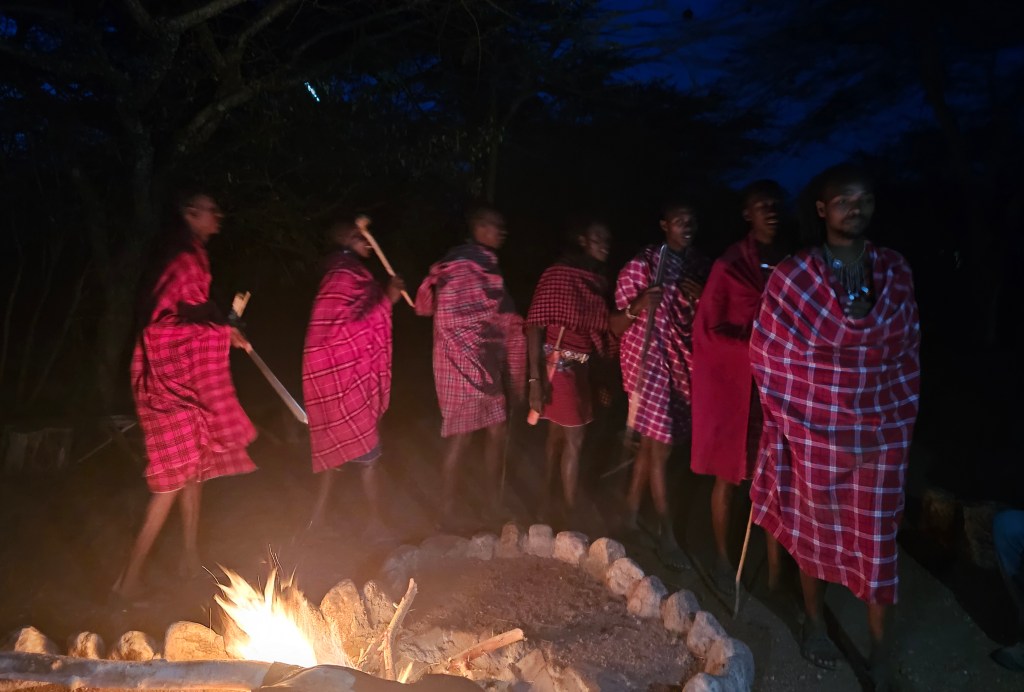
Once the campfire was roaring we participated in more Maasai entertainment.
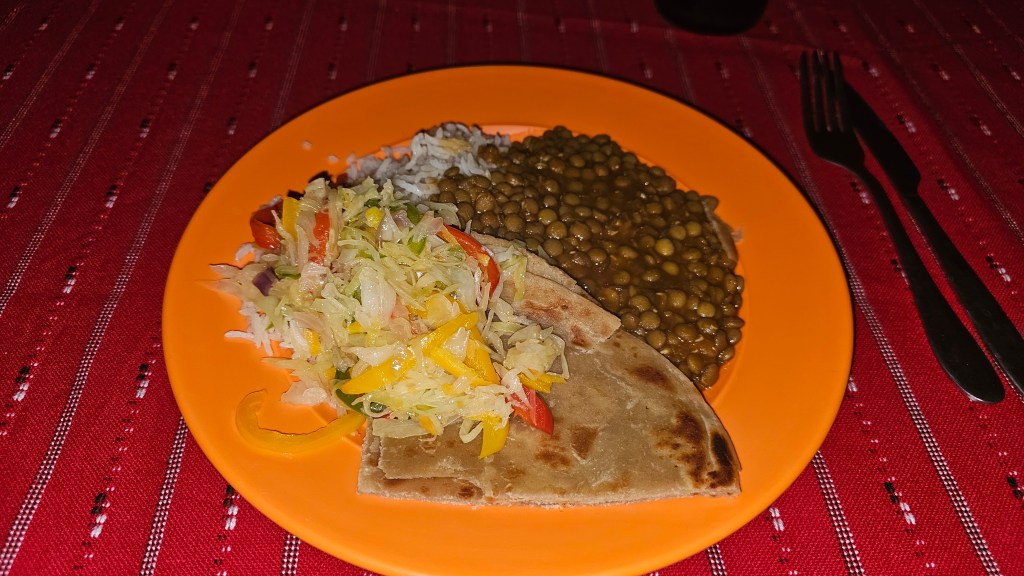
Tonight Judy cooked a traditional Maasai dinner of rice, lentils, cabbage (cooked with peppers and things) and the best chapatis ever.
After dinner Hellen sat with us around the crackling fire immersing us deeper into the lives of the Maasai with more cultural stories.
The next day…
Since we moved to a lower altitude the night time temperatures are warmer in the Maasai area. Having been cold in the tent for the previous 3 nights this resulted in a comfortable nights sleep which required less layers.
After a tasty breakfast of omelete, pancakes and bananas, then washing up, then taking the tents down we had a short nature walk with Joy, Hellen and the Maasai warriers.
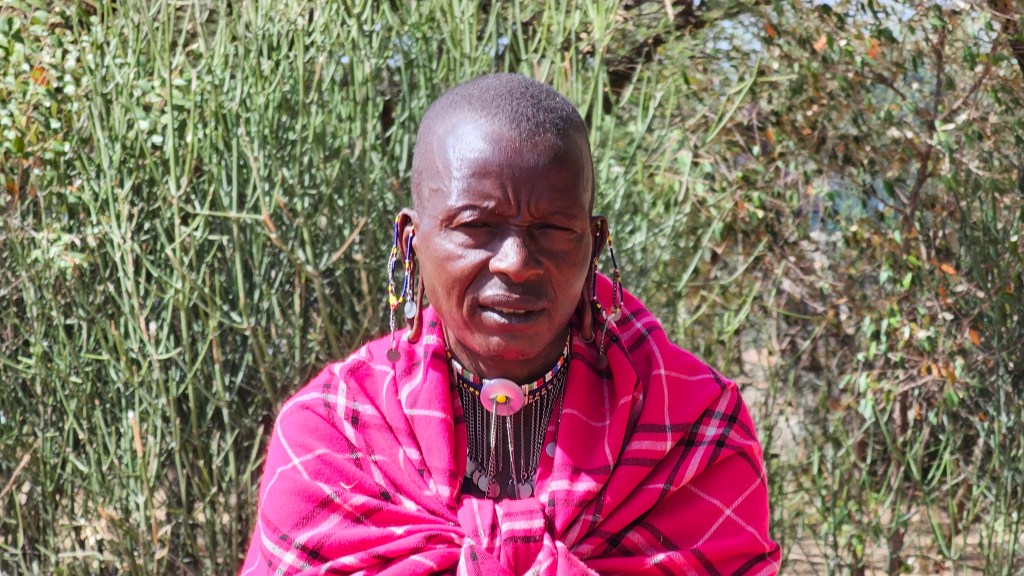
The purpose of the walk was to learn how the Maasai connect with the natural world. For example, Leleshwa leaves are used as a deodorant, a sanitary pad and are also used to make wine. The orange leaf is used as a mosquito repellent.

Aloe vera root is used for yellow dye for colouring clothes and elephant dung is mixed with aloe vera to make footballs.
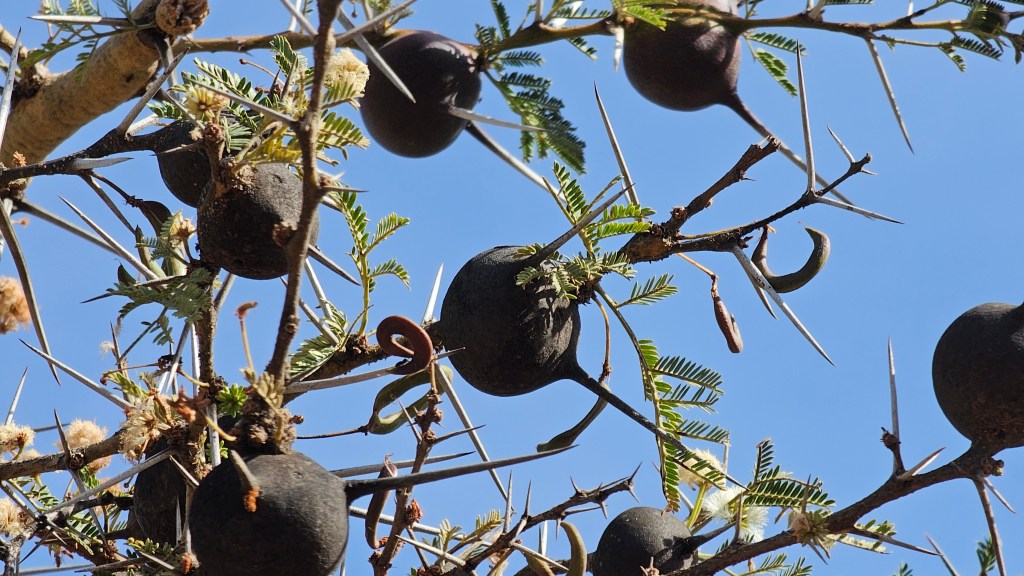
Whistling acacia – giraffes love these and the rounded hook shaped thorns slot through the ear to make earrings.
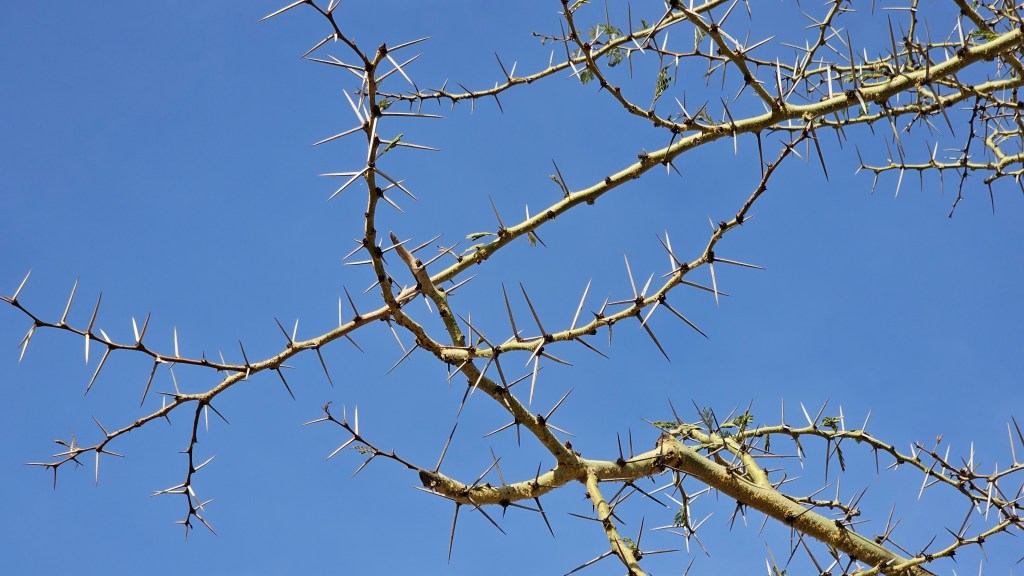
This type of acacia is used as toothpick.
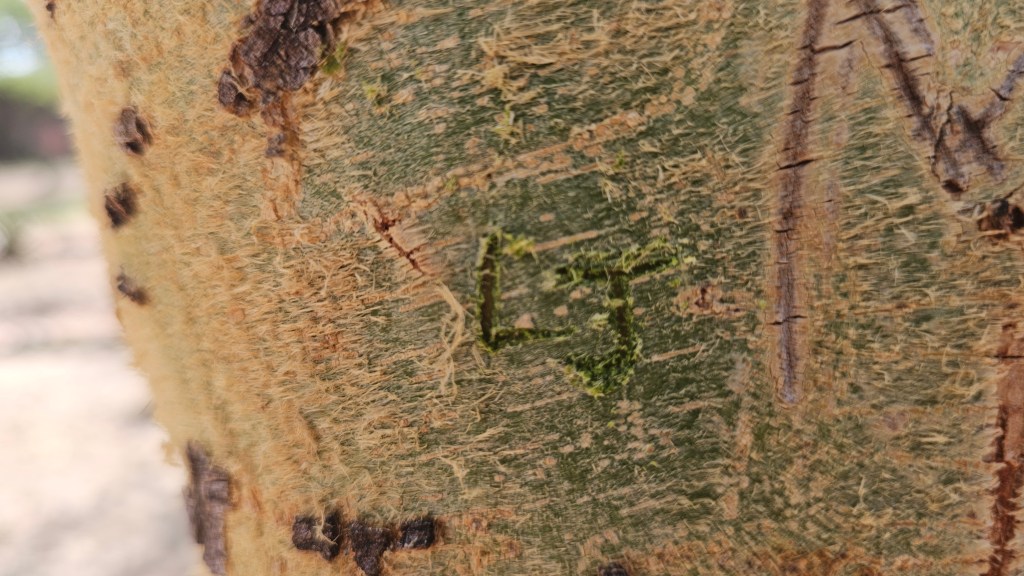
The thorns from this acacia are also used for carving images and words into tree trunks which we were invited to do.
Henna is orange and is used for lipstick and nail polish. A soft white rock is used to produce white zebra markings on the skin, as shown above.
The Maasai holy colour comes from a red stone powder and is sometimes mixed with lanolin (which comes from a cow) to make cosmetics. Above is Joy demonstrating this on Hellen.
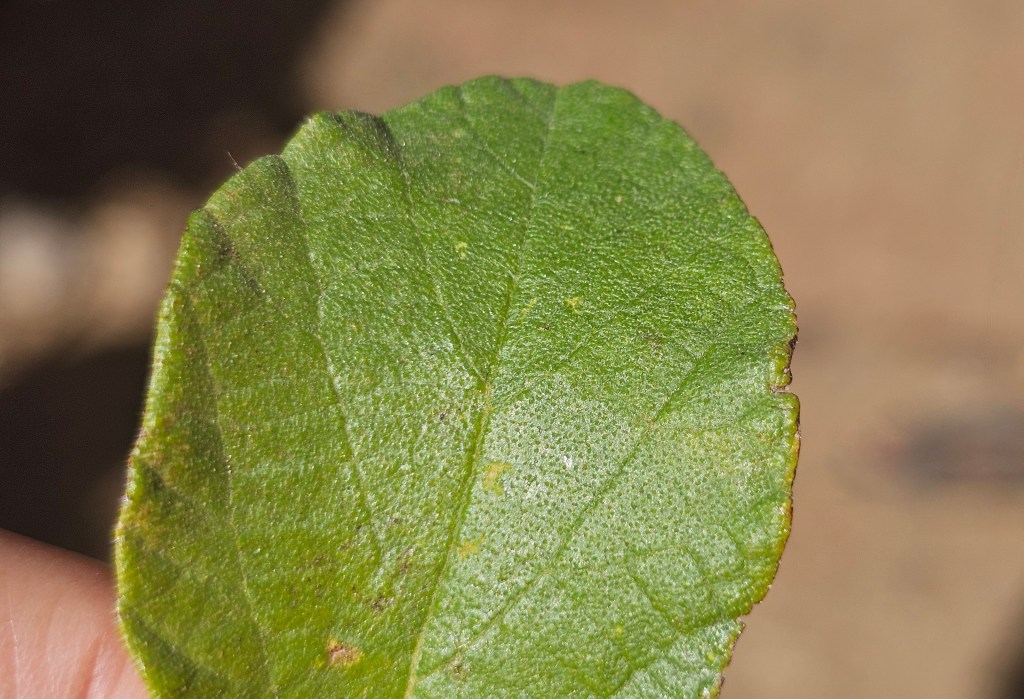
The rough leaf of the ‘sandpaper’ tree is used as a nail file.

Above is a toothbrush and toothpick other end! You slightly fan out the side on the right and it makes s little brush! In addition, tree sap is used for chewing gum and soap is made from the stem of a plant and is multi purpose. It is made into bars for hand washing (as we had been using at the campsite) and also a liquid soap for clothes washing.
Summary
This was a genuine charity project and not something put on for tourists. Intrepid help to fund and promote Hellens work to improve the lives of Maasai girls. This magical experience left me with a lasting impression and a reminder to stay humble and appreciative.
With its new and immaculate facilities based on traditional Maasai culture this eco campsite was also (in my view) the best of the trip.
Next on our itinerary with its magnificent array of wildlife is the sweeping grasslands and the dramatic skies of the Maasai Mara National Reserve.
 frombluetogreen.com