Pico Island
Another Azorean island, Pico is dominated by Mount Pico, its huge central volcano which happens to be the highest mountain of Portugal. Pico is also known as the ‘Black island’ due to its black volcanic soil and rocks.

Wine Museum & Criacao Trail
Following our early departure from Ponta Delgada we arrived at Pico airport at 9 am. Here we collected our 2 hire cars (between the 6 of us) and set off to nearby Madalena, to start exploring the largest town of the island.
The weather was cloudy with light rain so after coffee and breakfast in a Madalena cafe we decided to visit the nearby ‘Museo do Vinho’ aka the wine museum.
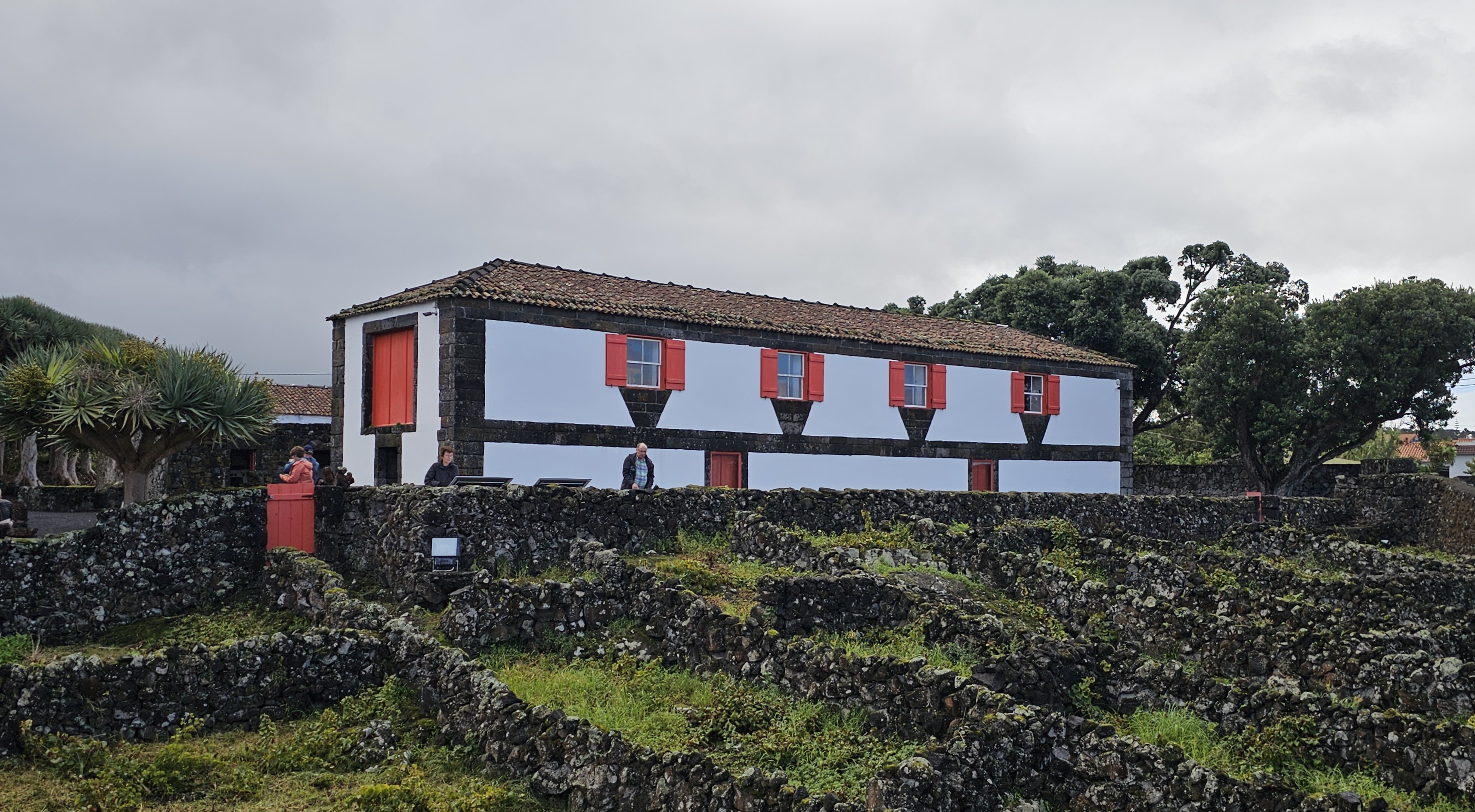
Entrance to the museum was free and unfortunately they didn’t have any samples to taste. We were given booklet guides in English which explained the history of grape growing and wine production in Pico. The above building was the convent house and is now used to display the museum exhibits.
Also in the above photo you can see the stone corrals, a small section of the vast labrynth of walls spread across the island . As Pico is volcanic, less than 4% of its soil is arable and suitable for farming. Over centuries, the island inhabitants used pickaxes and spades to split the lava and reach the soil underneath. These walls were created by the left over lava to shelter the vineyards. Vines were planted in the crevices of the volcanic ground.


Dragon trees are present on all of the Azores islands and also grow in Madeira, Canary Islands and Cape Verde. The blood red colour of their resin is known as ‘dragon’s blood’ and is used in the production of paints and dyes. There are several growing at the wine museum.

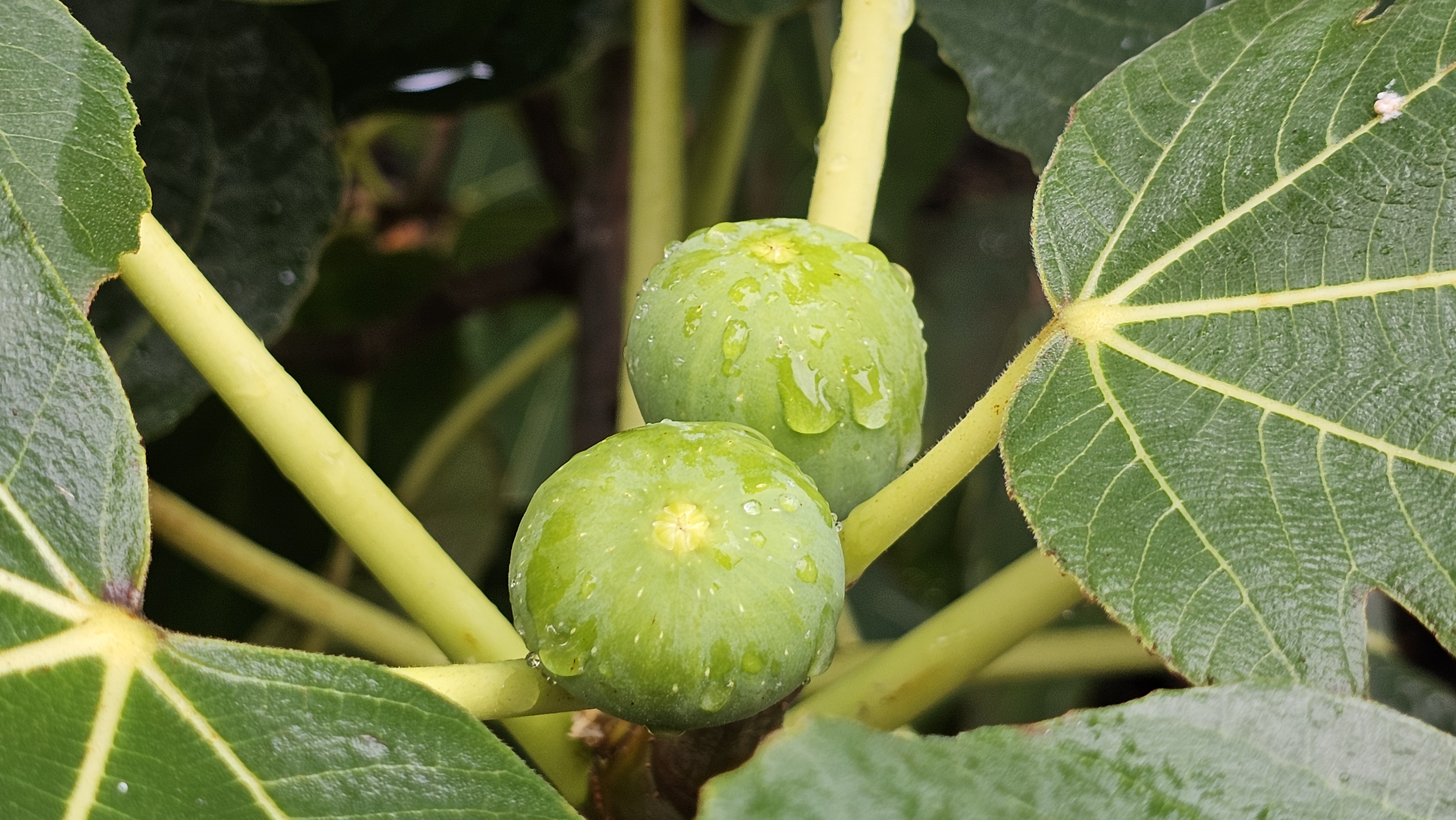
The well stocked gardens of the wine museum are pleasant for a short wander around.


Criacao Trail
Next up, from the museum the 6 of us walked the Criação trail and thankfully by now, it had stopped raining.
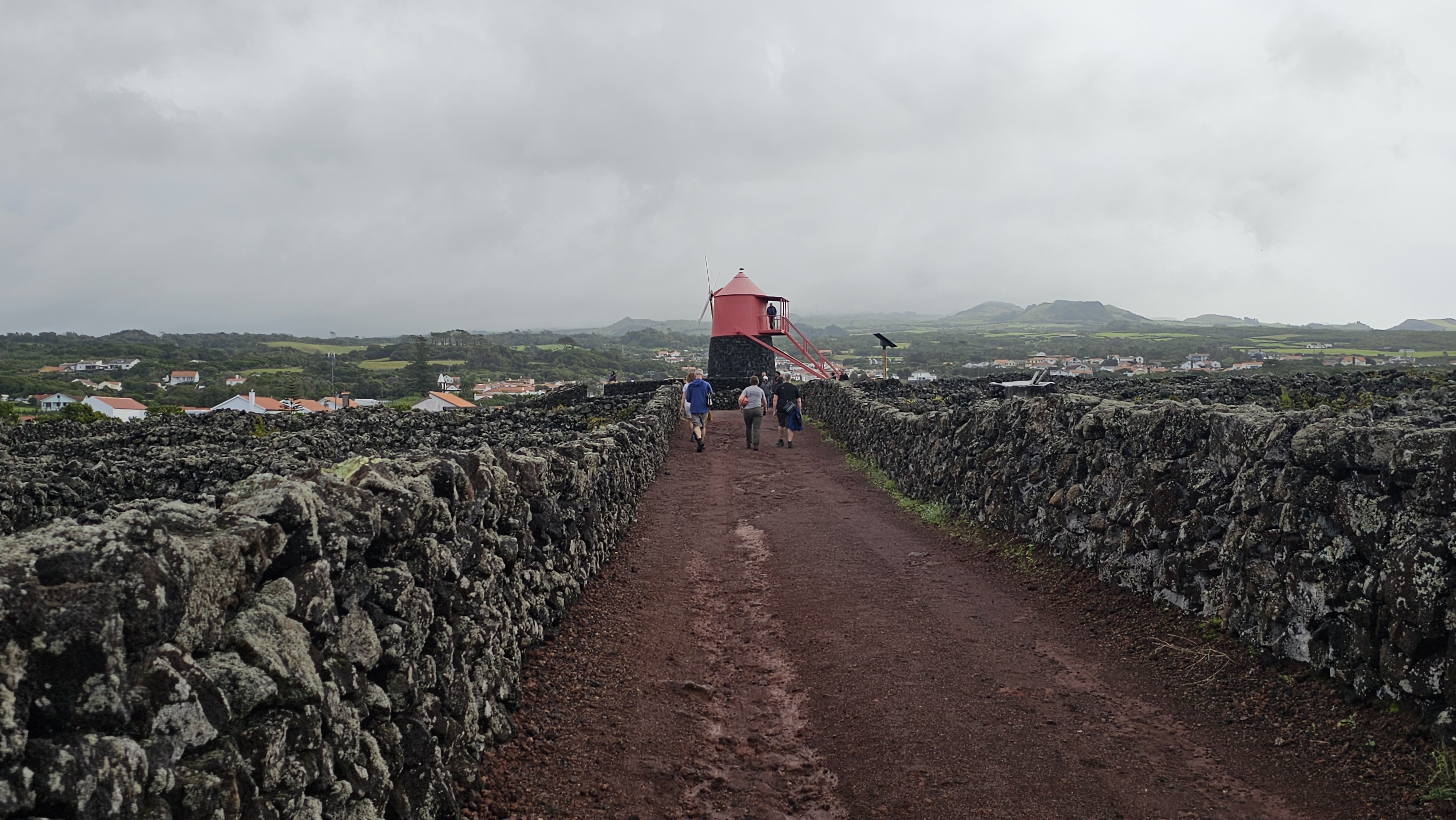
The scenic Criação trail takes you through 1009 hectares of the protected landscapes of the west coast of Pico and with its historical features, it is a good introduction to the island.

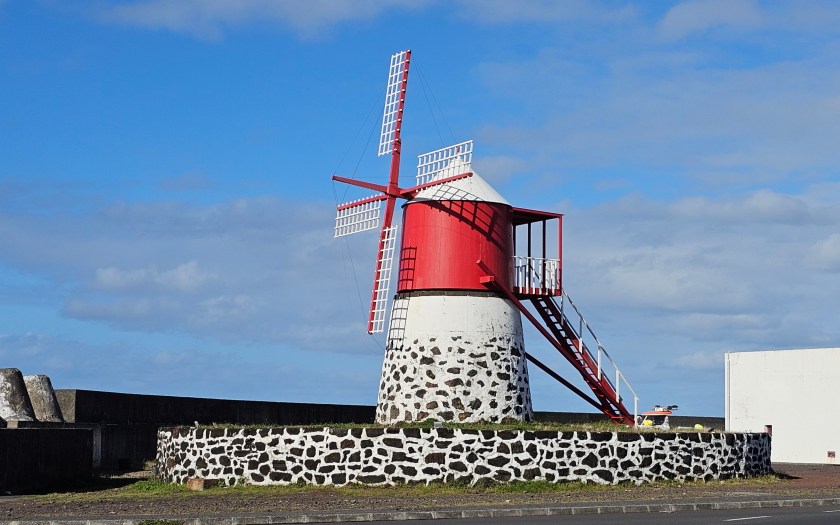
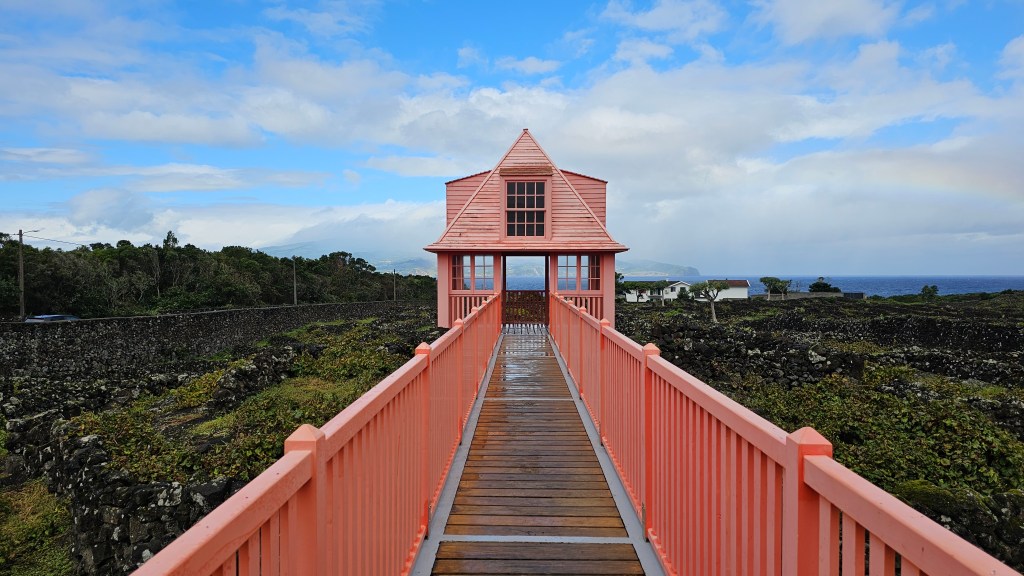
One such historical feature is the Moinho do Frade, a windmill which you can climb for good views of the surrounding volcanic vineyard landscape and out towards the Atlantic Ocean.


We had good views of Faial island, another island of the Azores just across a short channel of the ocean. You can take a ferry across to Horta, it’s main town, if you wish to visit.
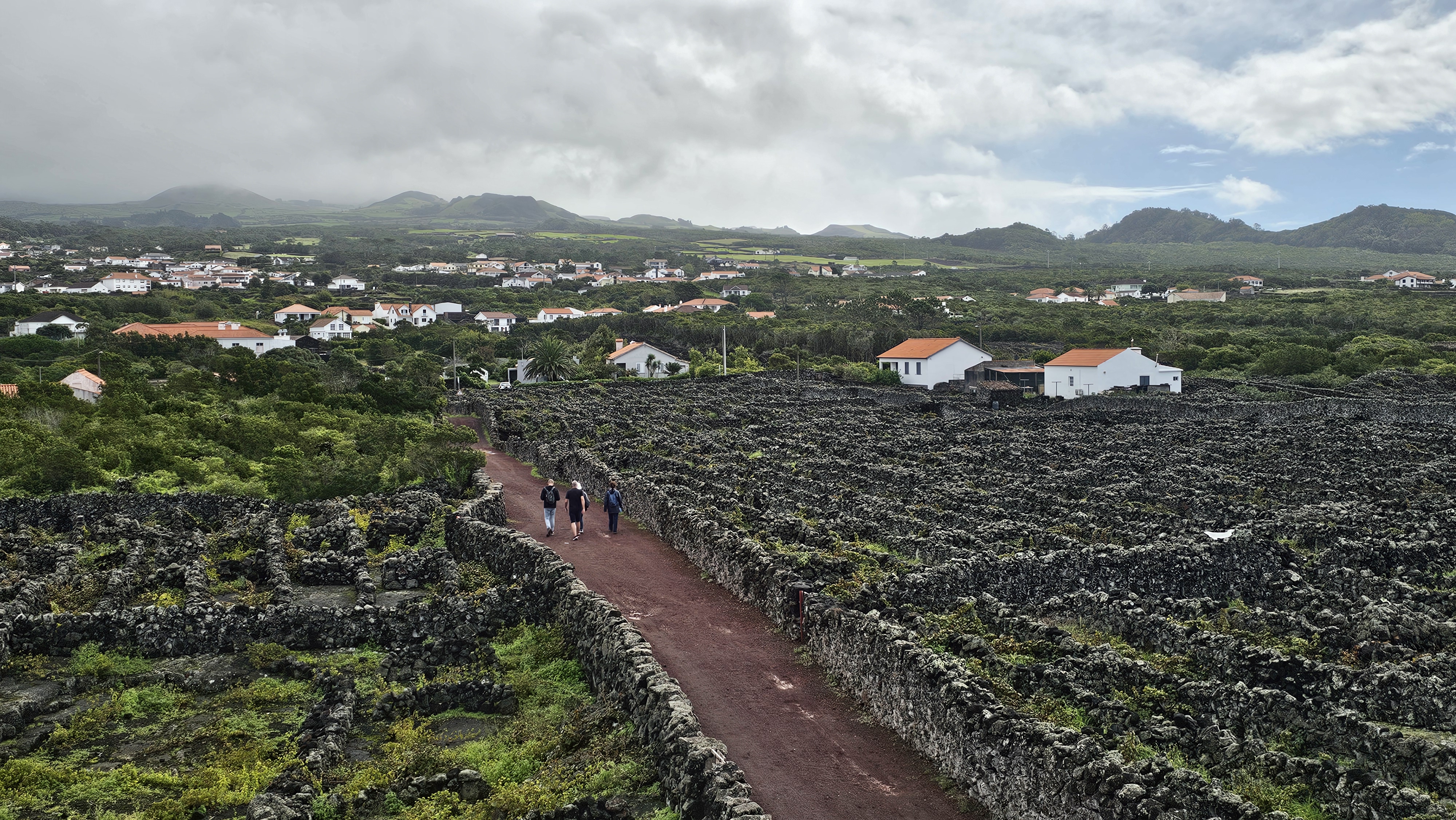
We continued along the trail of this UNESCO World Heritage site.
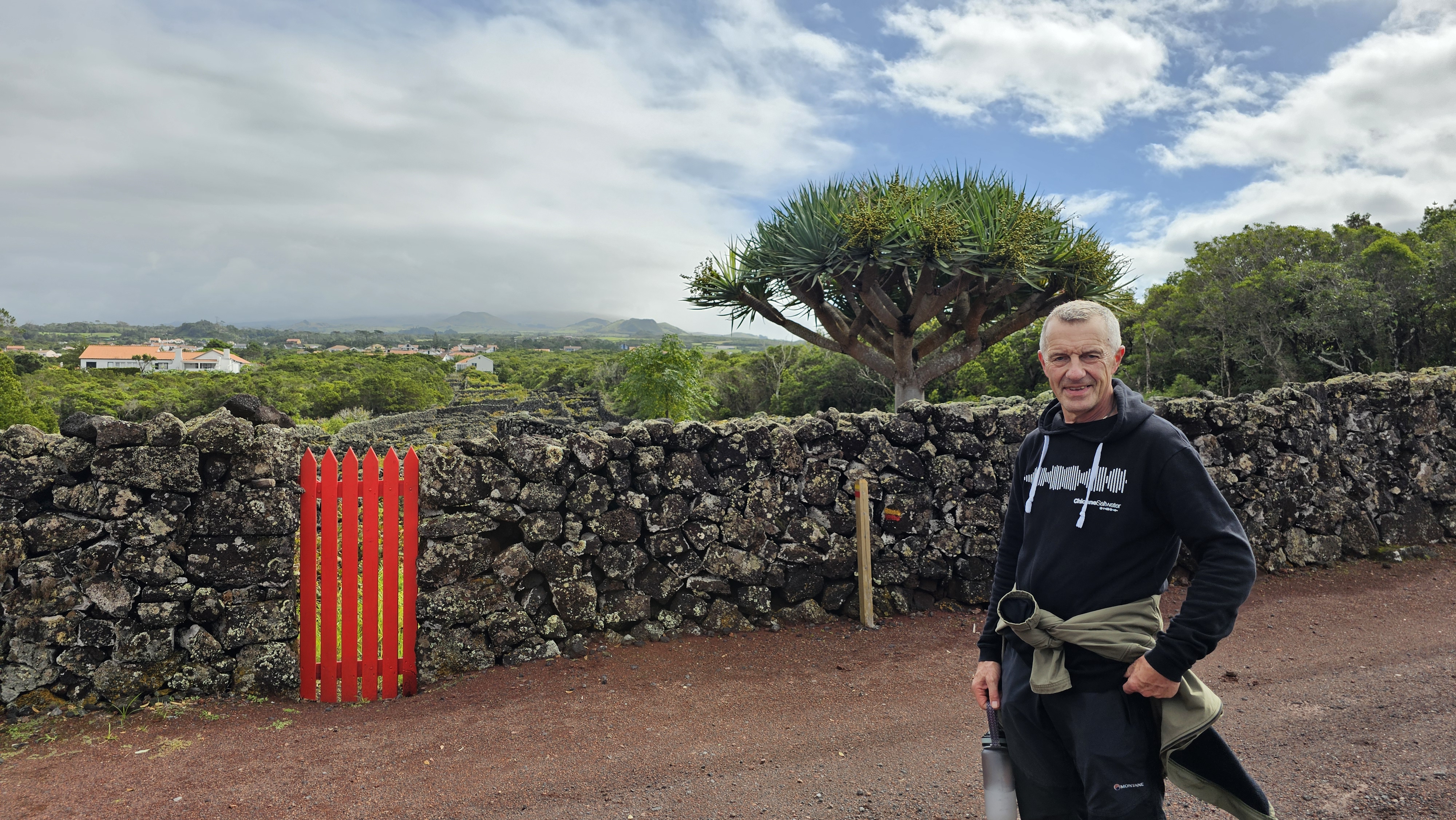
Most of the gates of the vineyards in Pico are painted red which is traditional and marks the volcanic landscape and historic wine production.

By now the sun was shining so away with our jackets and out with the suncream!

At this point we came to a quiet road which we followed back towards the sea.


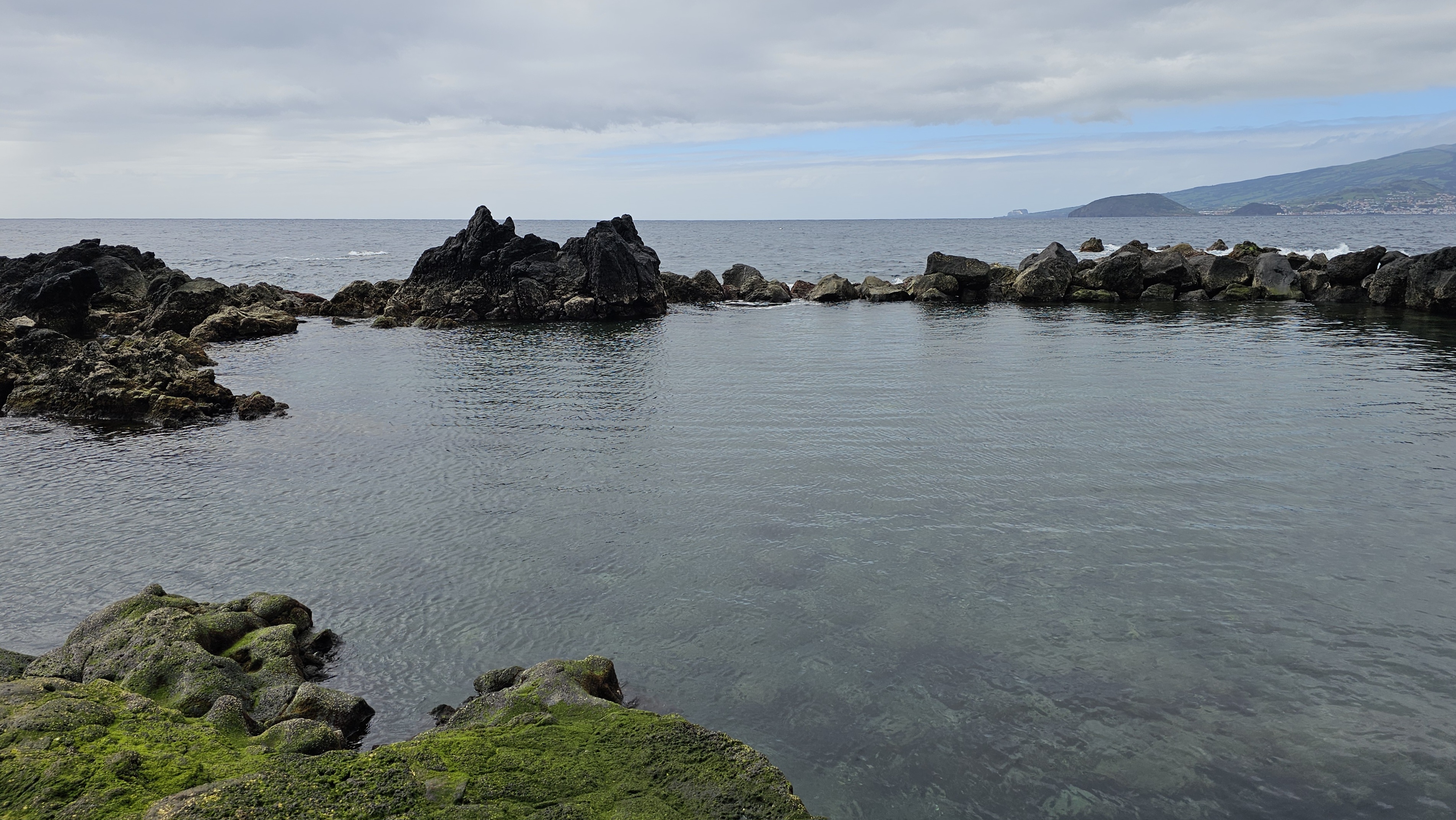
At the sea we came across a natural swimming pool which had been carved out of the black volcanic rocks to enable people to swim safely in the sea.

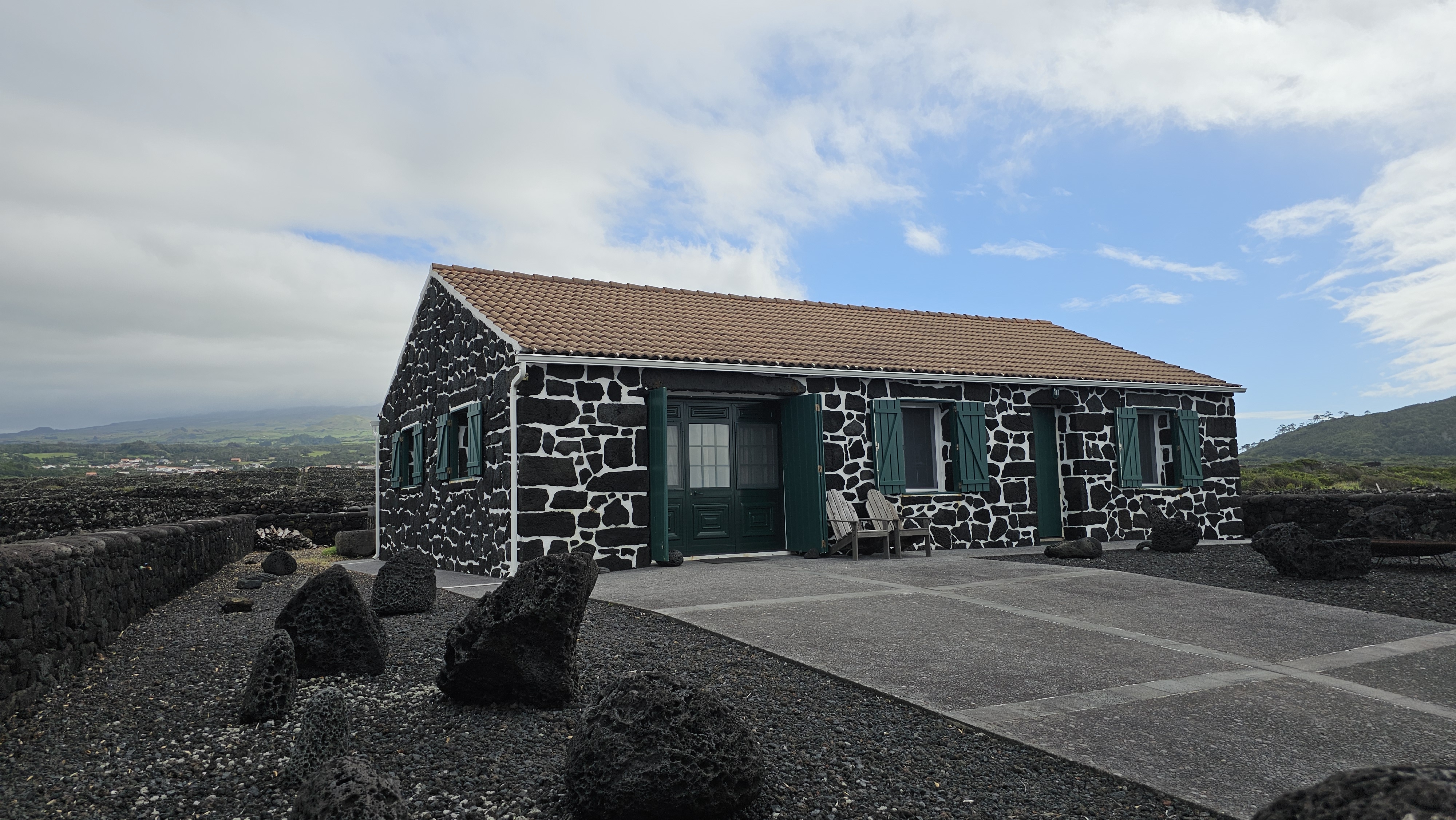
We passed a couple of local style houses as we walked along the coast and back into Madalena.

At the end of the 6 mile walk it was time for refreshments…

Keen to continue with our day of Pico culture, we ordered a couple of cheese boards with local cheeses, a basket of different fresh local breads and a glass of local Pico wine.

We finished our drinks and snacks, walked through Madalena and back to the cars for our 30 minute drive along the west and then south coast of the island to check into our accommodation.

We walked past the Church of Holy Mary Magdalene is the largest church on Pico and was built in the 17th century.

Moinho do Saca is another historic windmill, and this one is located in the town of Madalena.
Pico Holiday House
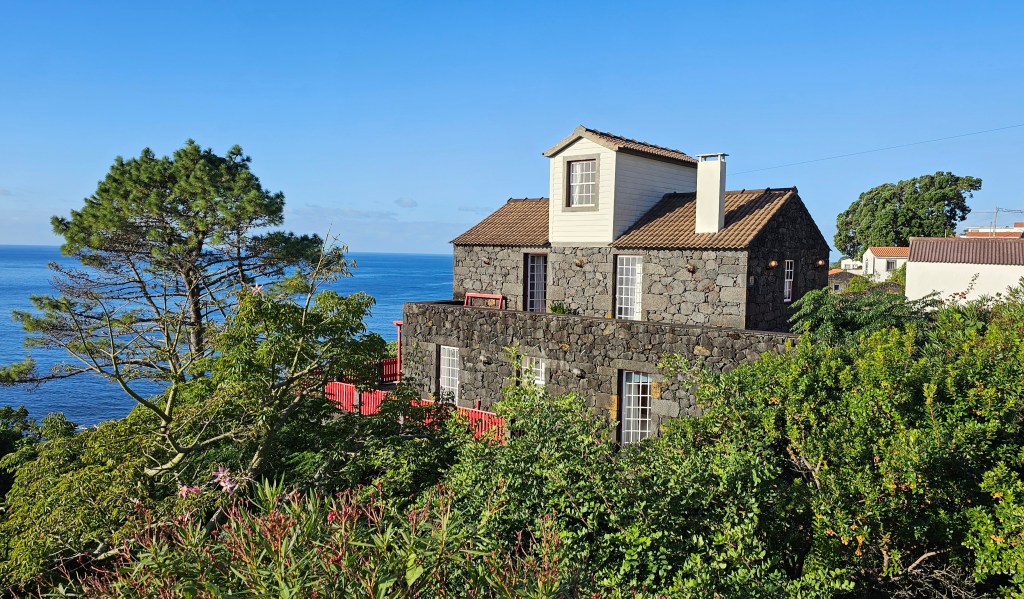
The 6 of us spent 3 nights staying in the self catering Casa da Aguada which is built into a cliff just outside São João, along the south coast of Pico. São João is named after John the Baptist (in Portuguese).
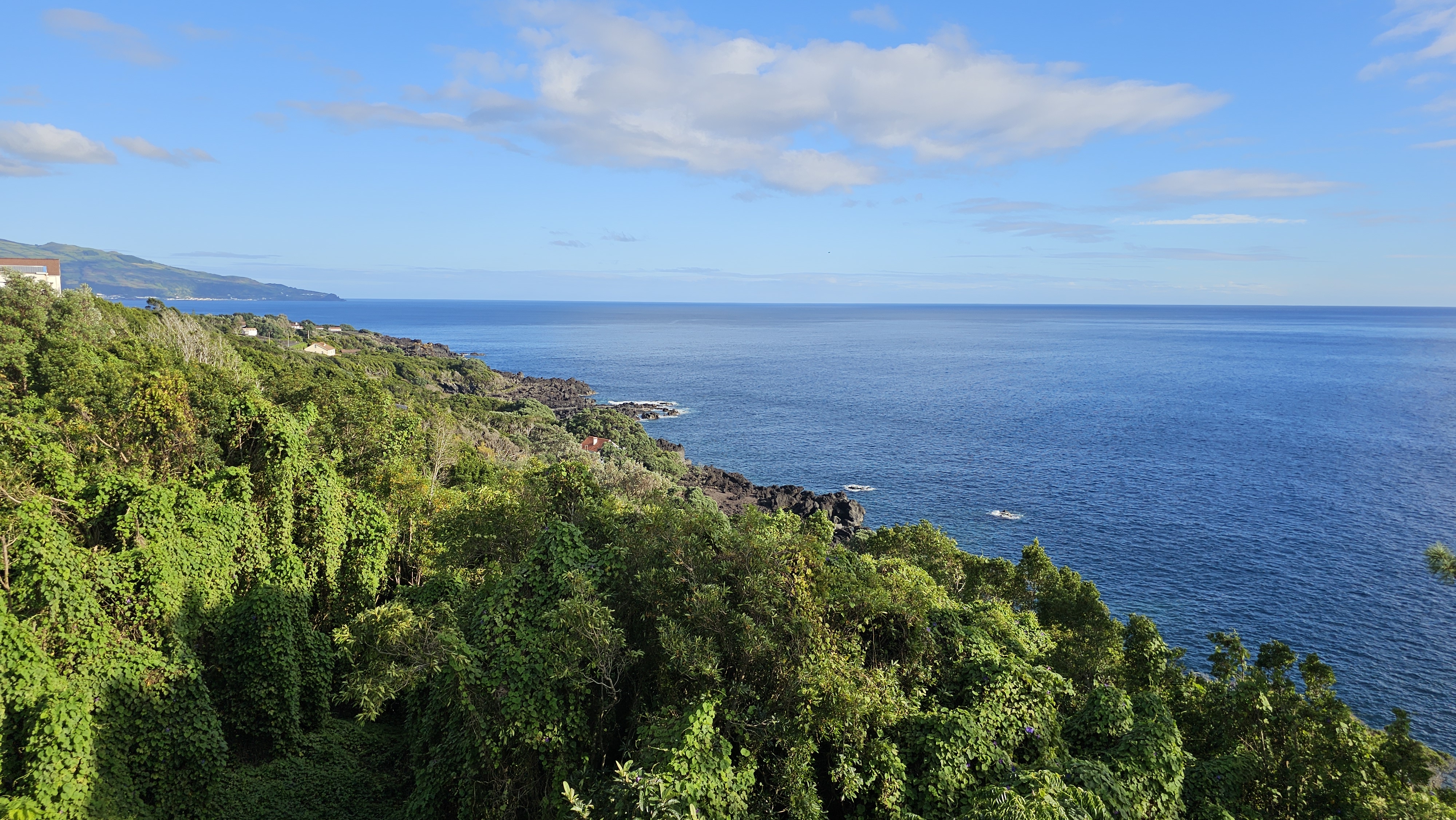
Casa da Aguada has spectacular views of the coast which can be enjoyed from its large terrace and from every window.


The owners of the house supplied a generous welcome basket which included 2 large round loaves of fresh bread, a bottle of wine, some honey and some locally produced cheese from Sao Joao, the very same village we were staying in. This soft and creamy cheese was delicious with the fresh bread.
Evening meal
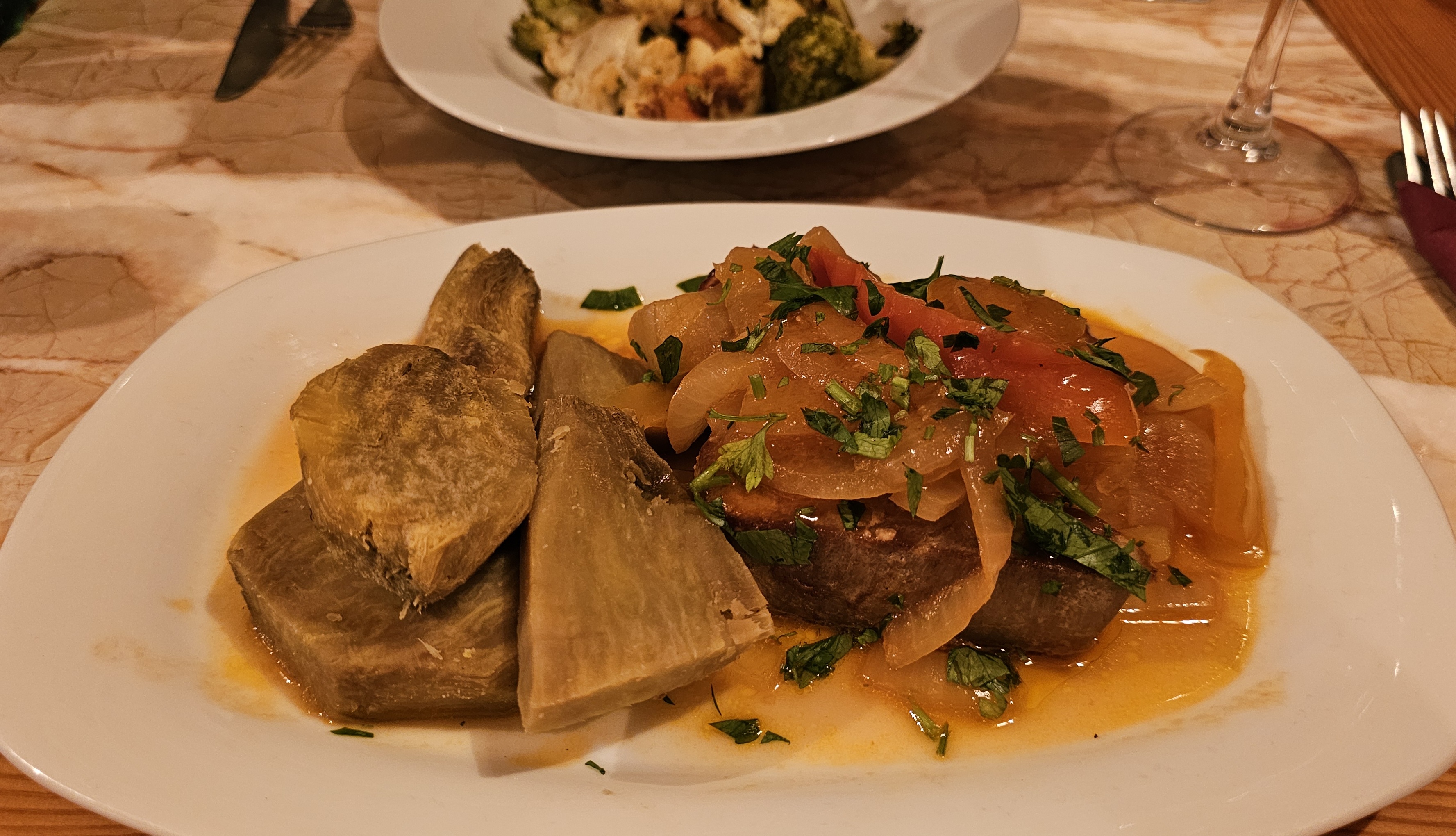
There wasn’t any restaurants within walking distance of the house which meant we had to drive out for dinner. For our first evening we made the great choice of Fonte Tavern in Lajes do Pico where all 6 of us enjoyed a delicious meal of ‘Pico style roasted tuna’, sweet potato and sauted vegetables. This was a small unassuming restaurant along a side street, probably frequented by locals rather than tourists. We had excellent service and the total cost for the main meal, drinks, desserts and coffees came to around £40 per couple.
Getting to Pico
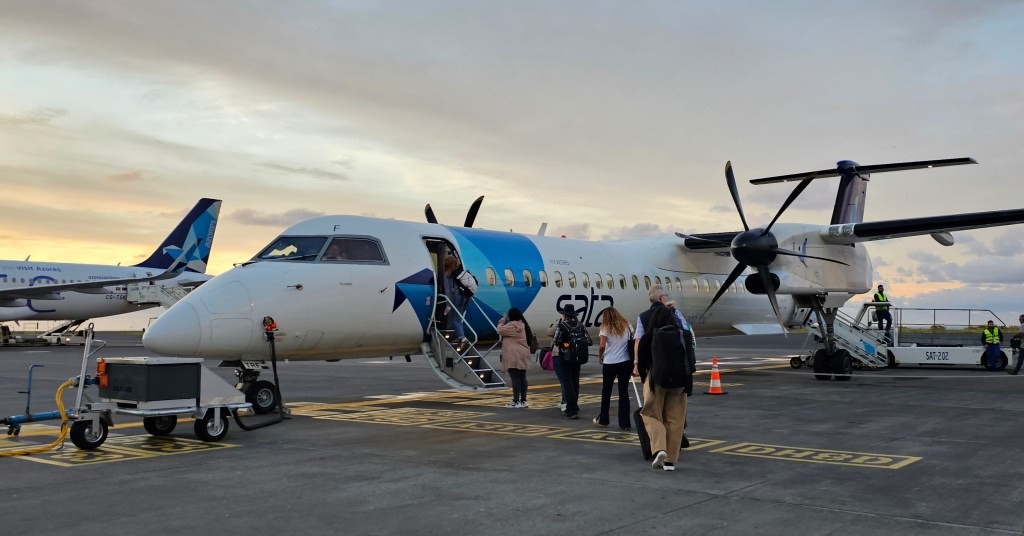
We had booked direct flights from Ponta Delgada to Pico with Sata Azores Airlines. The small inter-island plane took less than an hour to reach Pico.

Summary
A fabulous introduction to Pico and a road trip planned for tomorrow…
 frombluetogreen.com
One comment