

Surrounded by Italy, tiny San Marino is the oldest country in Europe and has the smallest population.
San Marino is a stones throw from Rimini and can easily be reached by public transport in under an hour.
While staying in Rimini Bridget and I had a captivating day exploring this interesting little enclave.
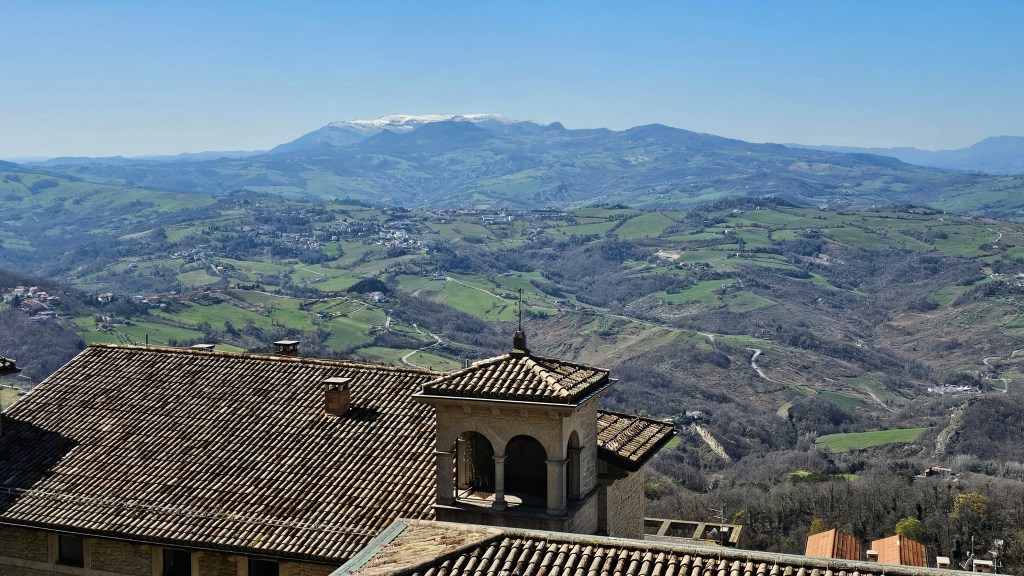
San Marino is located on the slopes of Monte Titano (Mount Titan) and from the old city perched at the top you see extensive 360 degree panoramic views as far as the Adriatic Sea in the distance on one side and snow capped Apennine mountain range on the other.

We spent our time walking around the old city stopping at the key points. The historic centre became a UNESCO site in 2008. The Palazzo Pubblico or Public Palace is the location of the San Marino parliament.

The Basilica of Saint Marinus is Catholic in a country dominated by Christian churches. It is named after Saint Marinus, the founder and patron saint of San Marino and whose remains are buried there.

The Basilica of Saint Marino dates back to 1825 which is relatively young, although it stands on the grounds of a 5th century former church.
San Marino has 3 towers: Guaita (First Fortress), Cesta (Second Fortress) and the third which is Montale. We arrived at the first fortress and purchased a combined ticket for €11 which enabled entry to the two main fortresses, the state museum and a couple of other places.
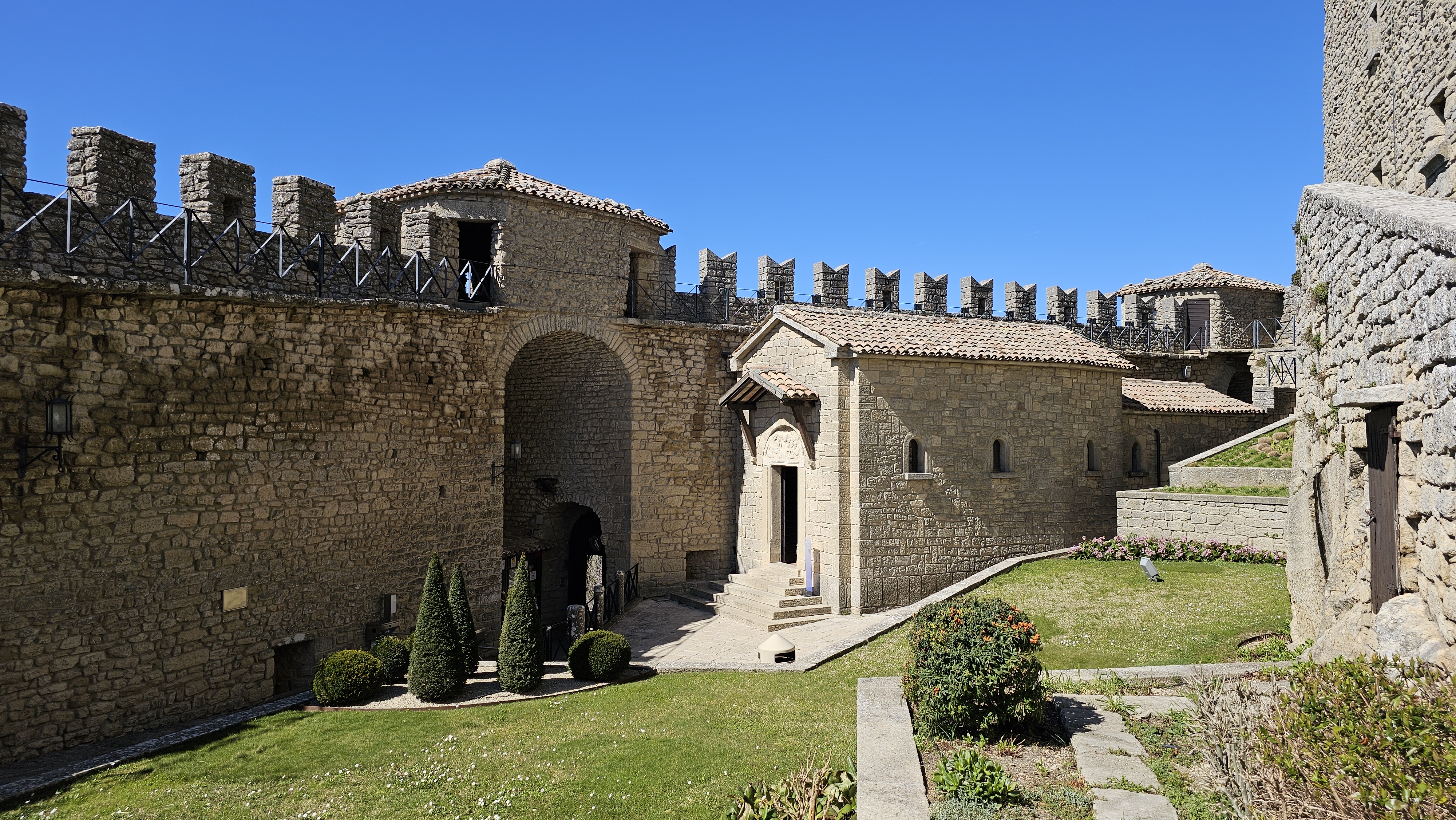
The first fortress was constructed in the 11th century and the front door was originally protected by a drawbridge. The fortress was rebuilt in the 15th century to help protect San Marino in the war against the Malatesta family who ruled over Rimini between 1295 and 1500.
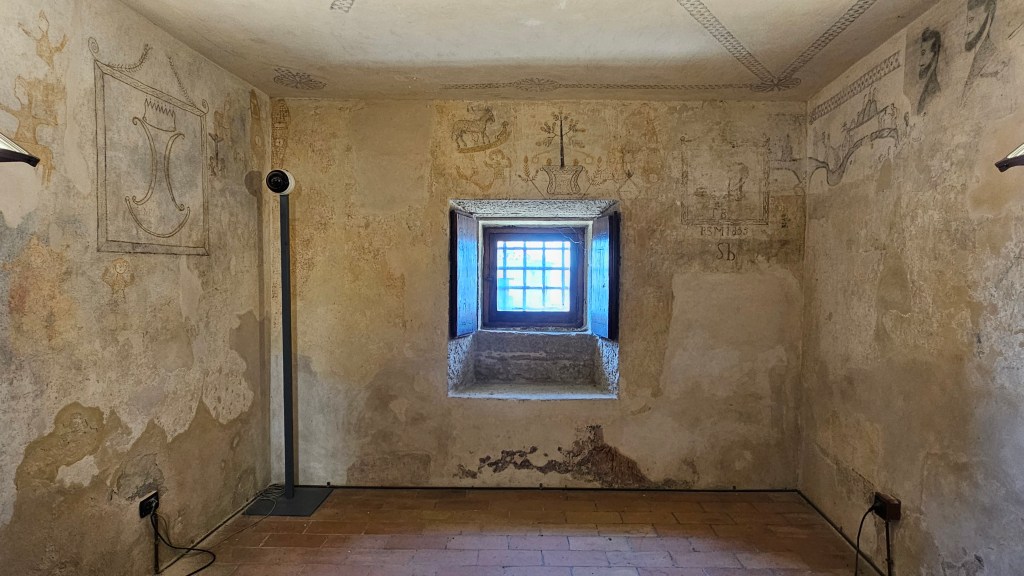
Some of the rooms of the first fortress were used as temporary prison cells for those with short sentences. Longer term prisoners were sent to Italian jails.
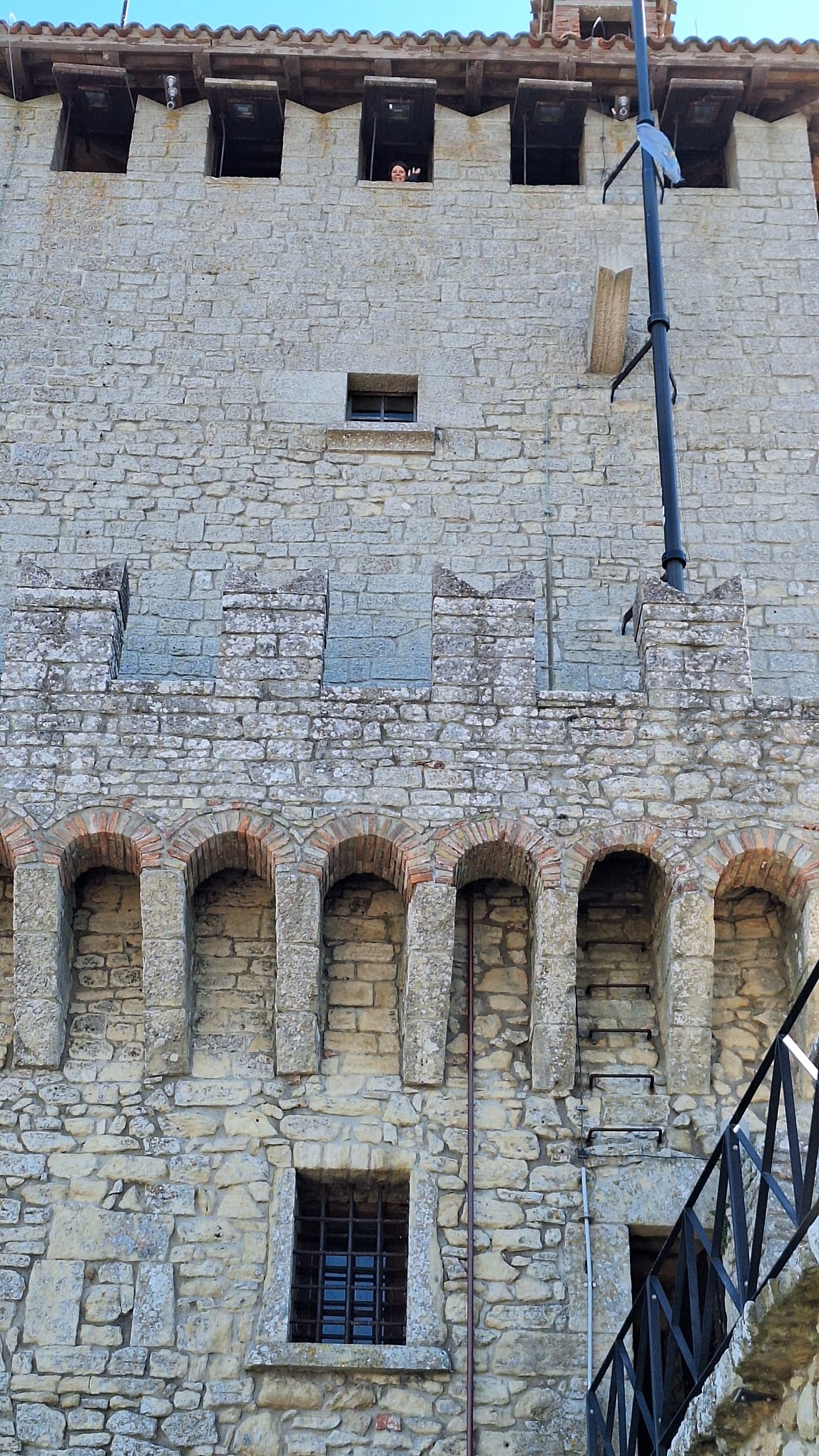
I climbed up the narrow wooden staircase and onto metal ladder rungs and through a hatch on my way to the top of Guaita tower, the oldest of the 3 towers.

From the top of Guaita I had a magnificent view of Cesta, the second fortress.

After coffee and biscuits we visited Fortress Cesta, known as the Second Fortress which stands on the top of the highest peak of San Marino at 755 meters above sea level.


A museum created to honour Saint Marinus is located at the Fortress Cesta. This was established in 1956 and contains over 1550 weapons which date back to medieval times.

Bridget and I climbed to the top of Cesta tower which again had impressive views.
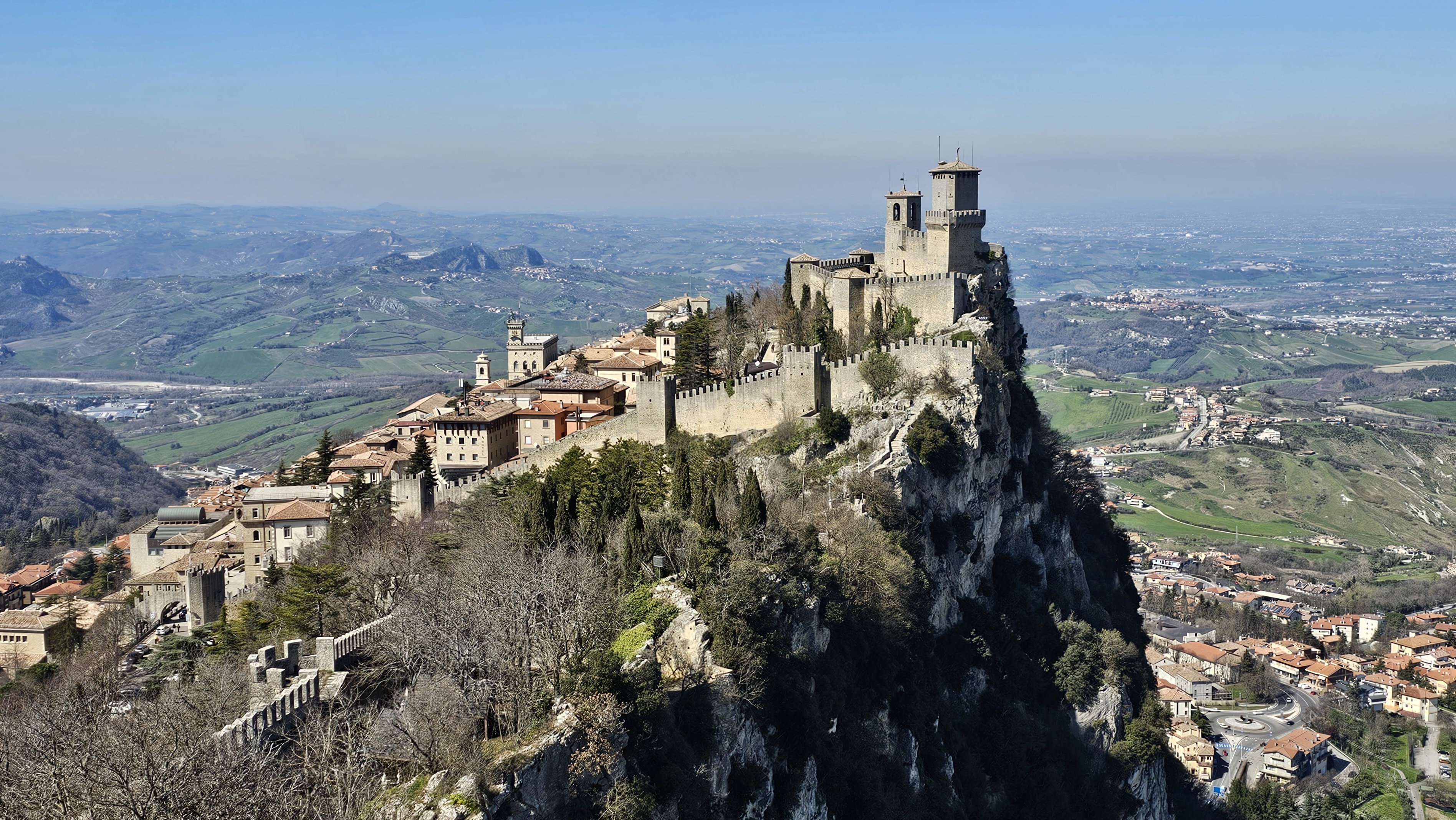
From Cesta tower we could see across to Guaita tower.

Tower Montale, the third tower, constructed in the 14th century is not open to the public. We could see this from Cesta, the second fortress.

Our tower tickets also included admission to the State museum which contains 5000 archaeological and artistic artefacts. Some of these are from around the world for example including a collection of small statues donated from Egypt.

Many oil lamps are exhibited in the State museum which have been used for lighting since the 7th century BC. Olive oil was put in the container and a wick was immersed in the oil.
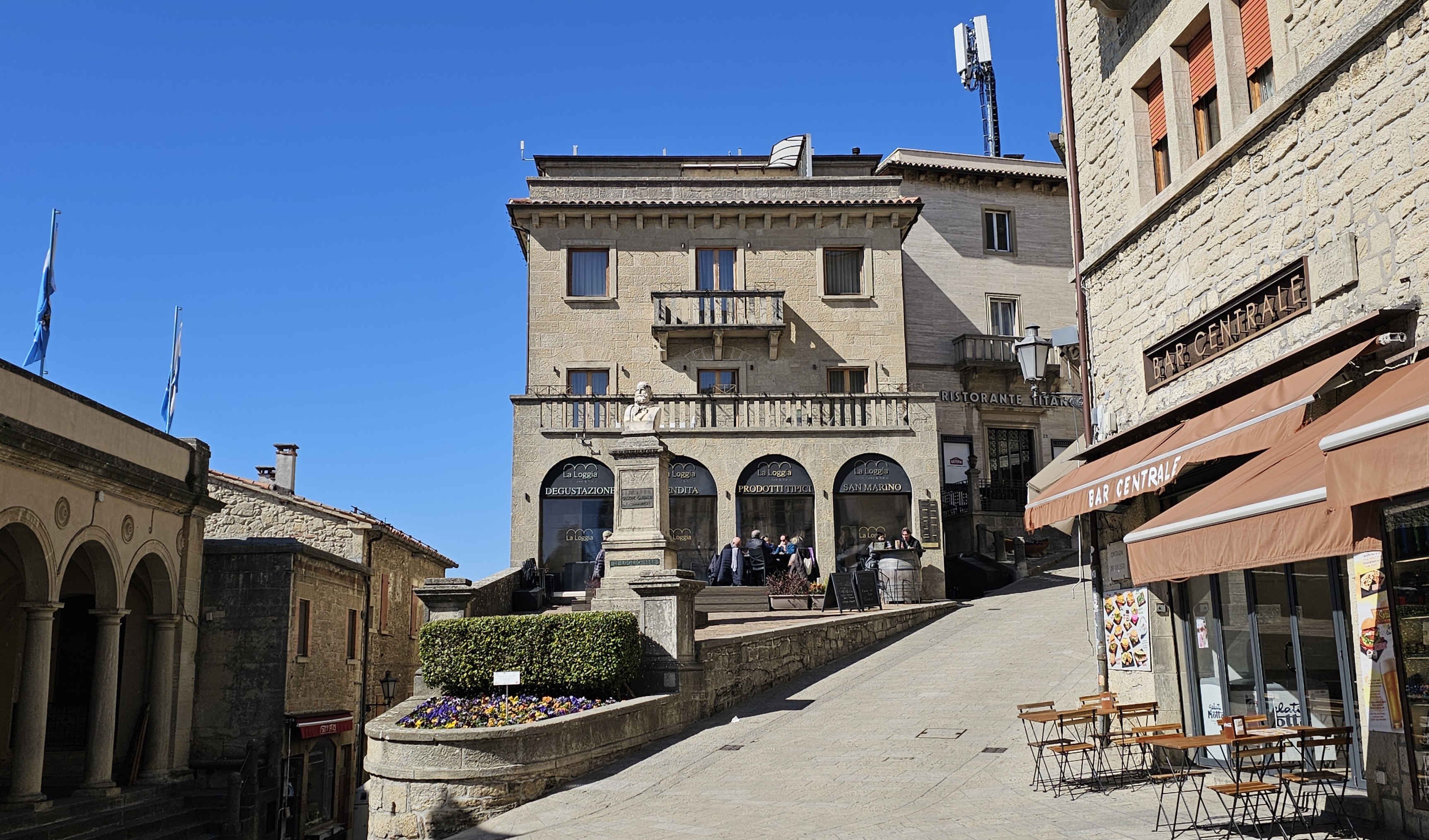
Our final stop in San Marino was in La Loggia which overlooks the Piazzetta Garibaldi in the historic centre.

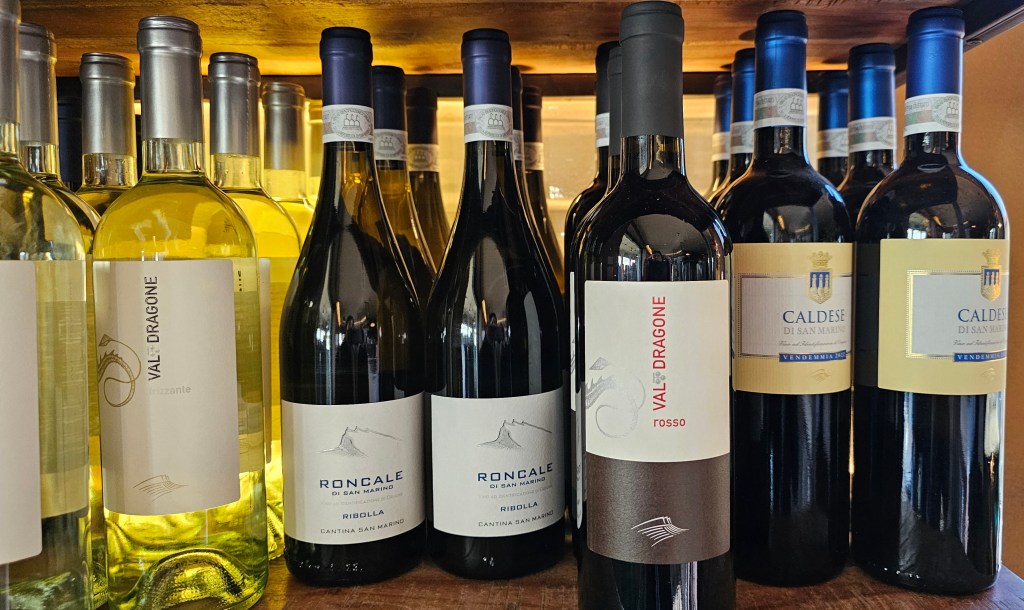
We shared a tasty lunch in La Loggia which consisted of local cheeses and cold meats together with a glass of red wine from San Marino. The sharing platter was lovely and also came with local honey, local orange jam, warm flat bread and warm focacchia bread. The cost for this delicious little feast was 28 euros (£23.50) for both of us which I considered to be reasonable.
Following two castles, one museum and a plethora of sights we returned to Rimini in the afternoon.
Getting to San Marino
A dedicated Rimini-San Marino bus departs from outside the front of the Napolean Hotel (opposite Rimini train station) several times a day.
The cost is 7 euros per person each way. You can buy your ticket from a little newsagent about 50 meters away from the Rimini bus stop and this is cash only. You can also pay the driver as you board the bus.
As San Marino is a separate country we had our passports with us ‘just in case’ but this wasn’t actually necessary as there was no official border crossing.
 frombluetogreen.com
One comment