
Post written by Laura
My friend Bridget and I have just returned from a week staying in Rimini, the Italian resort next to the Adriatic coast. Our trip was in mid March so was just coming into the shoulder season. This was a great time to visit without the crowds or the melting temperatures of high summer where it can reach 40 degrees.
I had not visited this part of Italy before and selected Rimini as a base due to its close proximity to places of interest such as San Marino, Bologna and Ravenna.
This was the itinery:
- Sat: Bologna
- Sun: Rimini
- Mon: Ravenna
- Tue: Cattolica & Gradara
- Wed: San Marino
- Thu: Cesenatico
- Fri: Rimini wine tasting
- Sat: Bologna

Rimini has been one of the most famous resorts of the Italian Riviera for decades and in the summer this beach would be crammed full of colourful beach umbrellas. However we were delighted to discover this well known party town has so much more to offer.

We had arrived in Bologna on the Saturday morning and having spent a few hours in the city we travelled from Bologna city centre to Rimini by train later in the afternoon. The single ticket was €10.80 and the journey took about 1.5 hours.
Part of the Emilia Romagna region of Italy a short drive from Rimini will take you into varied landscapes of rolling hills cultivated with grapevines, ancient unspoilt woodlands and mountains.
We began by exploring the history of the town of Rimini…

Self guided walking tour
Bridget had downloaded a helpful ‘self guided walking tour’ which we decided to follow on our first day. We headed from our hotel for about 20 minutes and came to site number one, the 30 feet wide Arch of Augustus.
This arch was a gate in the original city wall was dedicated to Emporer Caesar Augustus, son of Julius. It was built in 27 BC using Istrian stone blocks.

We walked through the arch along Corso d’Augusto and came to Piazza Tre Martiri or Three Martyrs Square which has a grim history. Part of the Italian resistance against German occupation in August 1944 Cappelli, Nicolo and Pagliarani were taken to this square and were hung together.

Today in the Piazza Tre Martiri there was a colourful artisan market with stalls selling hand made crafts such as candles, mosaic plaques and crocheted items.

The clock tower of the 17th century Brioli Palace with its astronomical clock.

In the Piazza Tre Martiri is a statue of Julius Caesar, which has been placed where the Roman general delivered a famous speech.

A couple of minutes walk from the Piazza Tre Martiti was the unfinished Malatesta temple of Rimini which was built in 13th century. The wealthy Malatesta family then controlled much of the region around Rimini.

This gothic style church was designed by Leon Battista Alberti and the frescoes inside by Piero della Francesca.
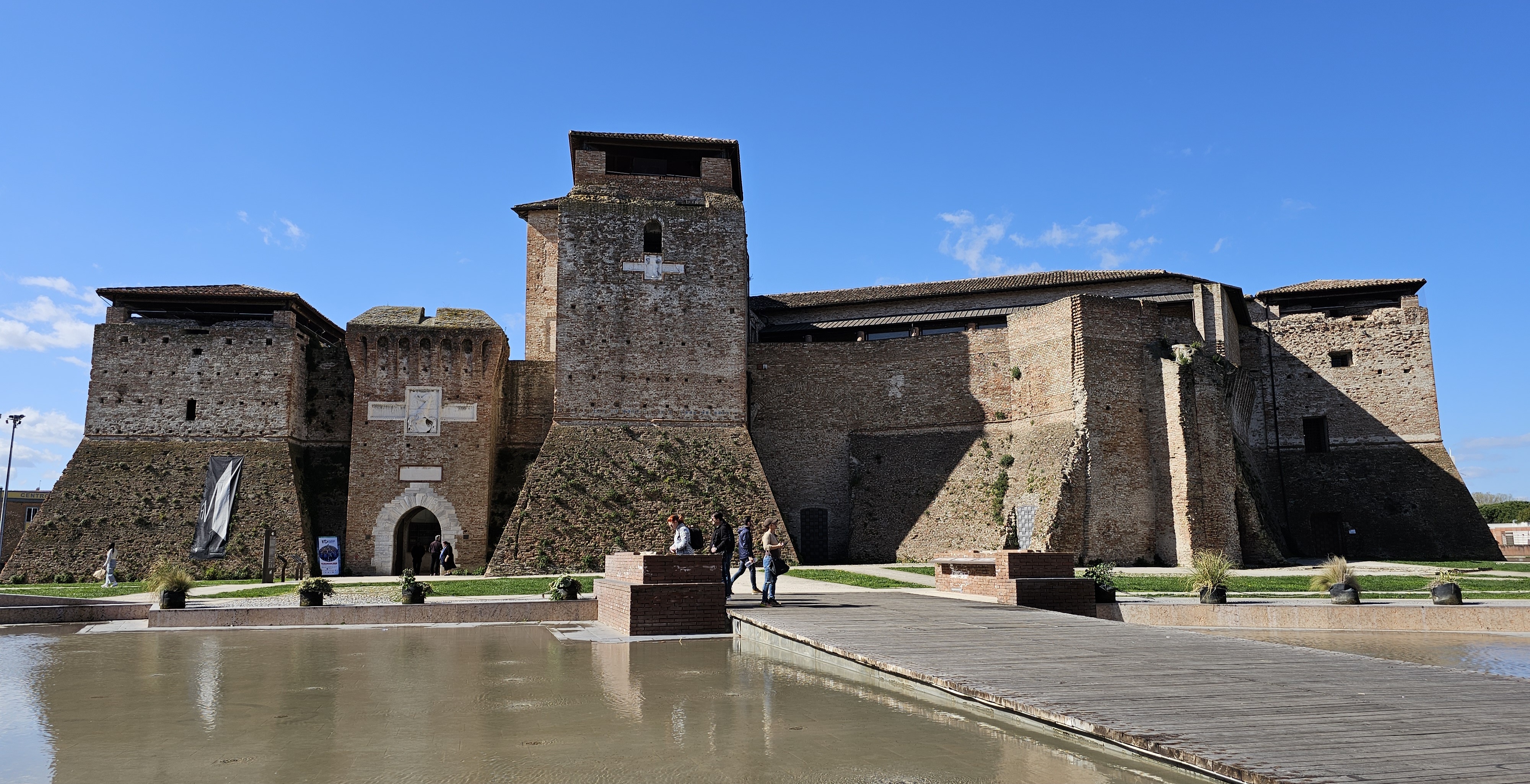
Next was the imposing Sismondo Castle, construction of which began in 1437 and taking 15 years to complete. Sigismondo Pandolfo Malatesta became lord of Rimini when he was just 15 years old. He earned fame and wealth as he fought in military campaigns across Italy, commanding the Venetian forces in 1465 against the Ottoman Empire. I’ve read different accounts about Sigismondo with some saying he was a poet and patron of arts but others documenting a reputation as a cruel womanising rapist. Maybe he was both?
Since 2020 the Sismondo Castle complex has become a museum dedicated to Federico Fellini, an Italian film director who was born in Rimini.

Piazza Cavour is one of the main historical squares of Rimini and with several restaurants and cafes is a popular place for locals and tourists. In the square, the Galli Theatre and Opera House (seen above in the photo) is one of the largest theatres in Italy.

As a coastal town fishing has been an integral part of Rimini’s history. This building was built in 1747 by a Rimini architect called Giovanni Francesco Buonamici and can be found at the Piazza Cavour.
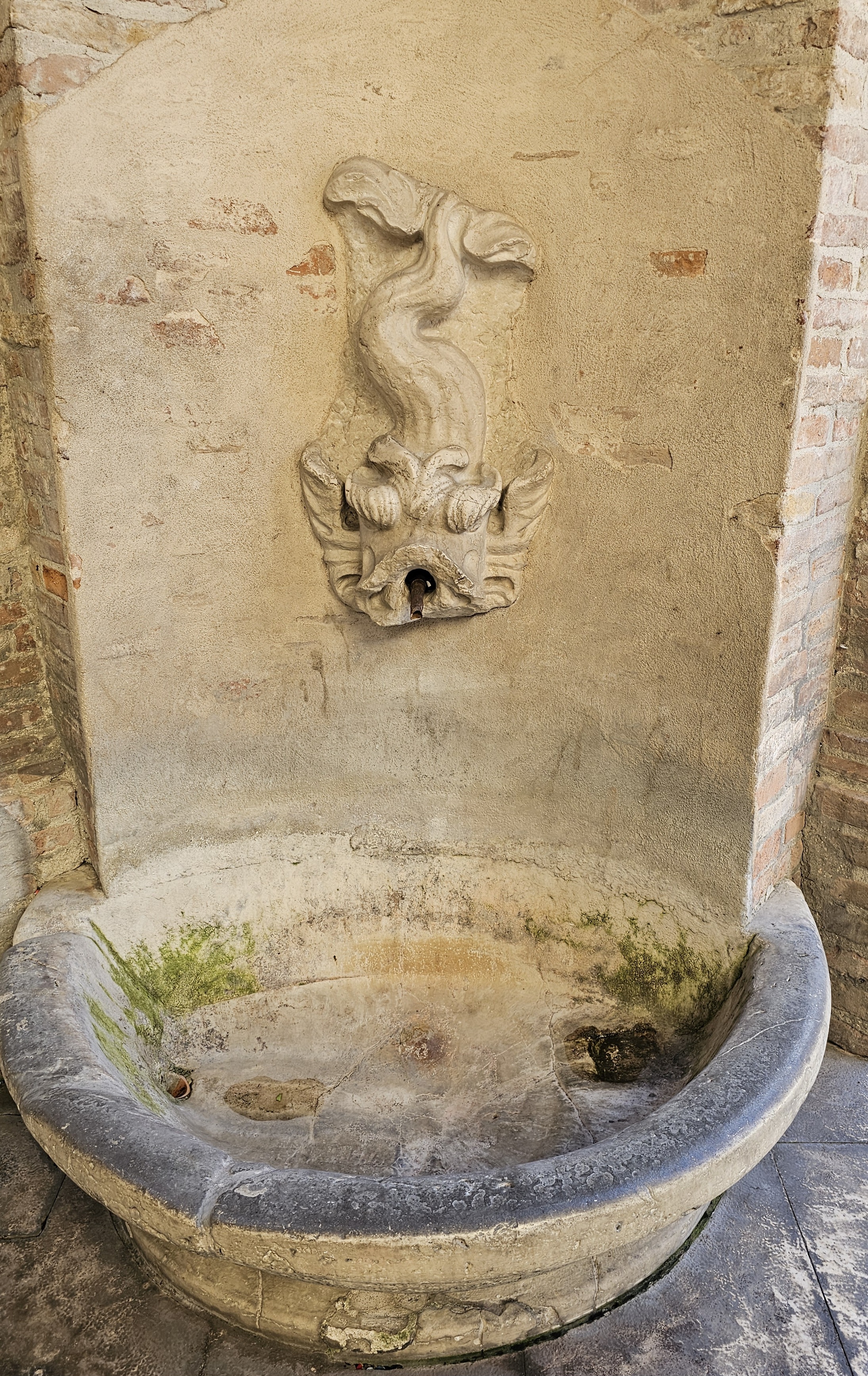
A dolphin water jet can be found in each corner of the open air former fish market and these were previously used to clean the fish.

The statue of Pope Paul V has stood in Piazza Cavour since the 17th century.

Fontana della Pigna, the Pine Cone Fountain was built in the Roman times and was the only source of drinking water in Rimini until 1912.

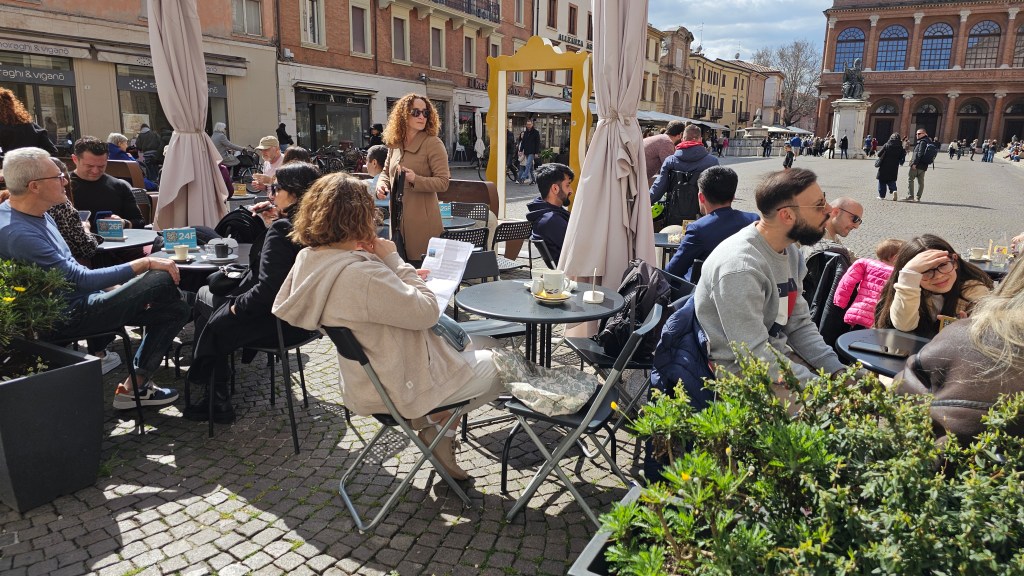
On this day we were lucky to have sun and 18 degrees so we decided to take a break in Piazza Cavour. Above is Bridget checking out the next part of our walking tour over a coffee.

We walked for a few minutes to Ferrari Square and the archeological House of the Surgeon site.
The entrance ticket was €7 and also included entry to the museum next door where some of the surgeons artifacts are on display.

This entire site had only been discovered by chance during some work on the gardens of Ferrari Square in 1989. A section of masonry and some mosaic pieces were discovered entangled in the roots of a tree. Excavation was carried out and 2000 years of history was revealed.
These remains of the ancient Roman house which dates back to the 2nd Century AD were really fascinating and well worth visiting.

Using our tickets we next had a look in the city museum and its 5 floors of exhibits covering the history of the town.


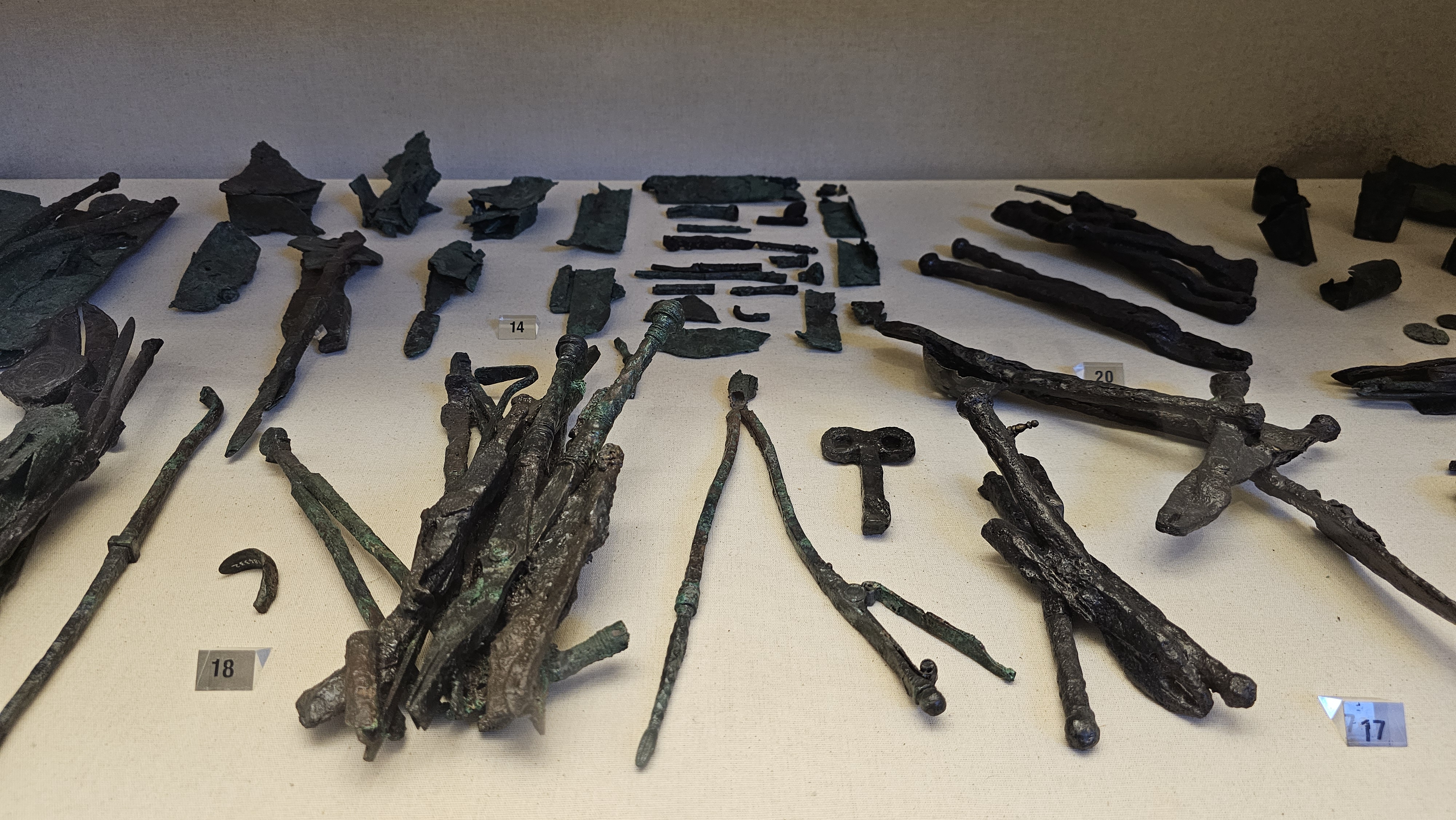
150 surgical instruments which were uncovered in excavations of the surgeons house are exhibited.
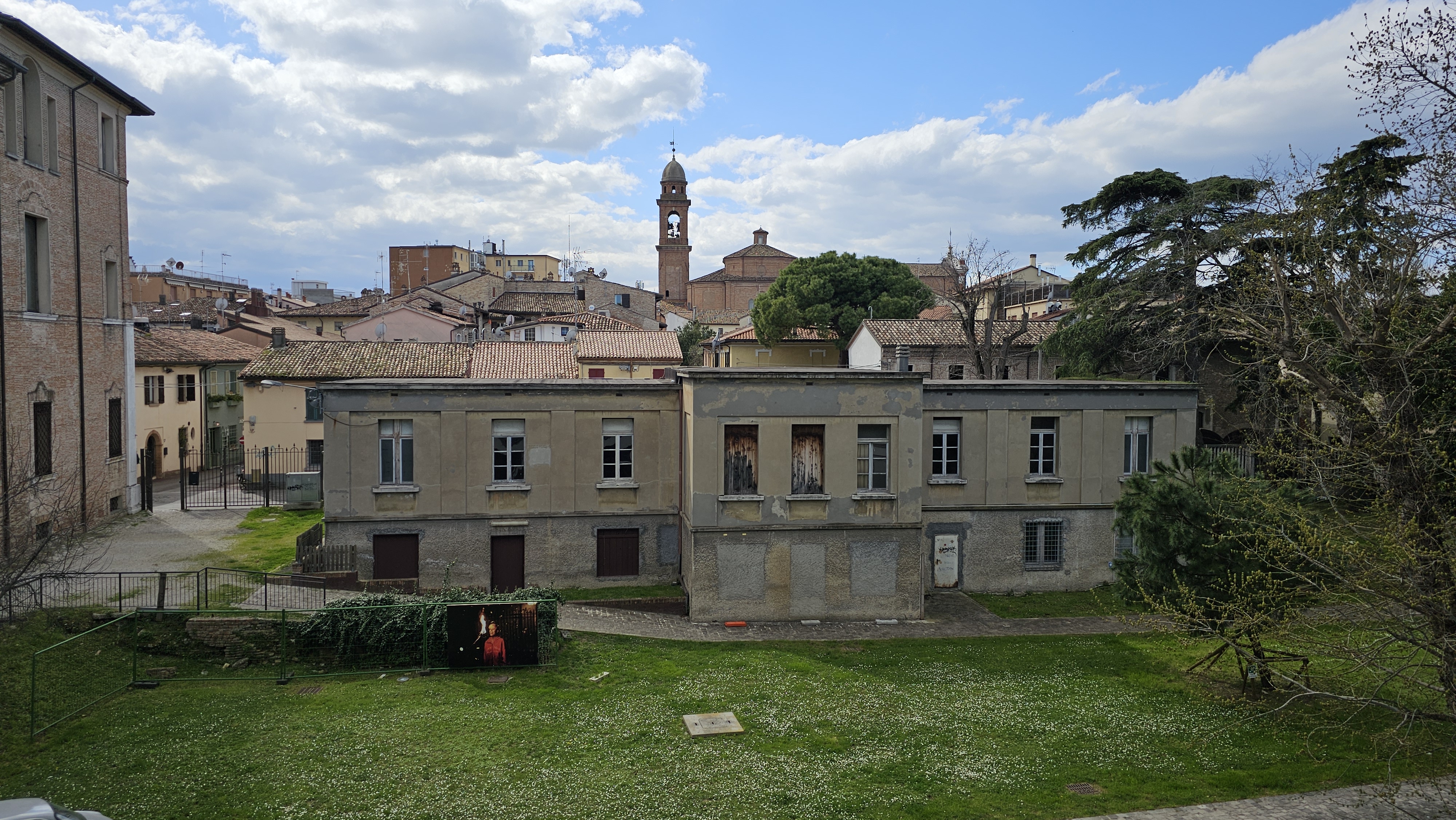
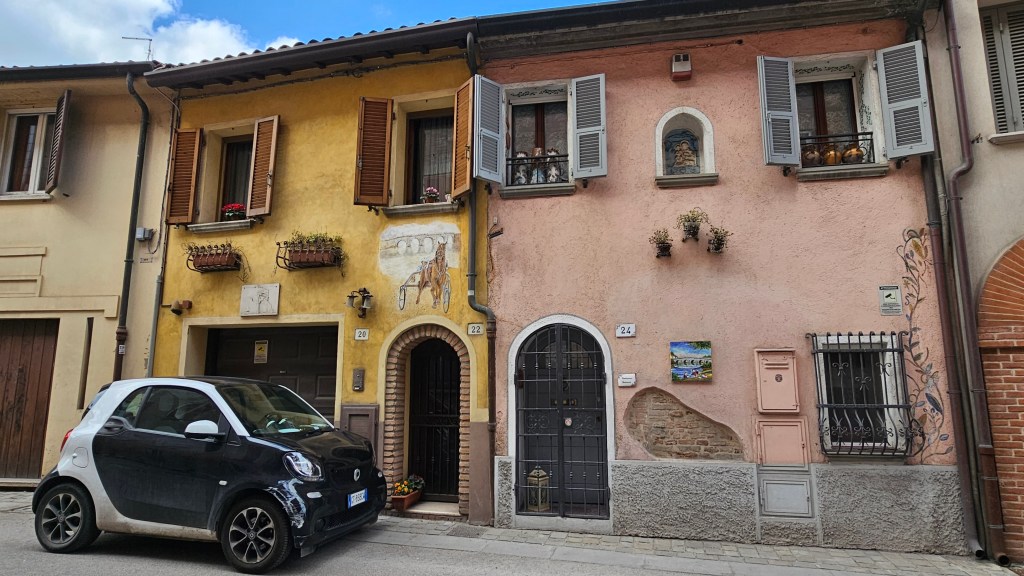
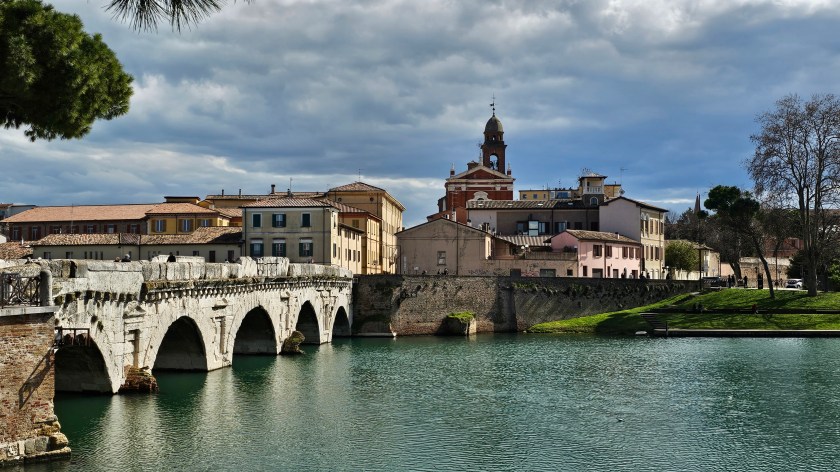
From the museum we walked through quiet peaceful streets towards the Tiberius Bridge.
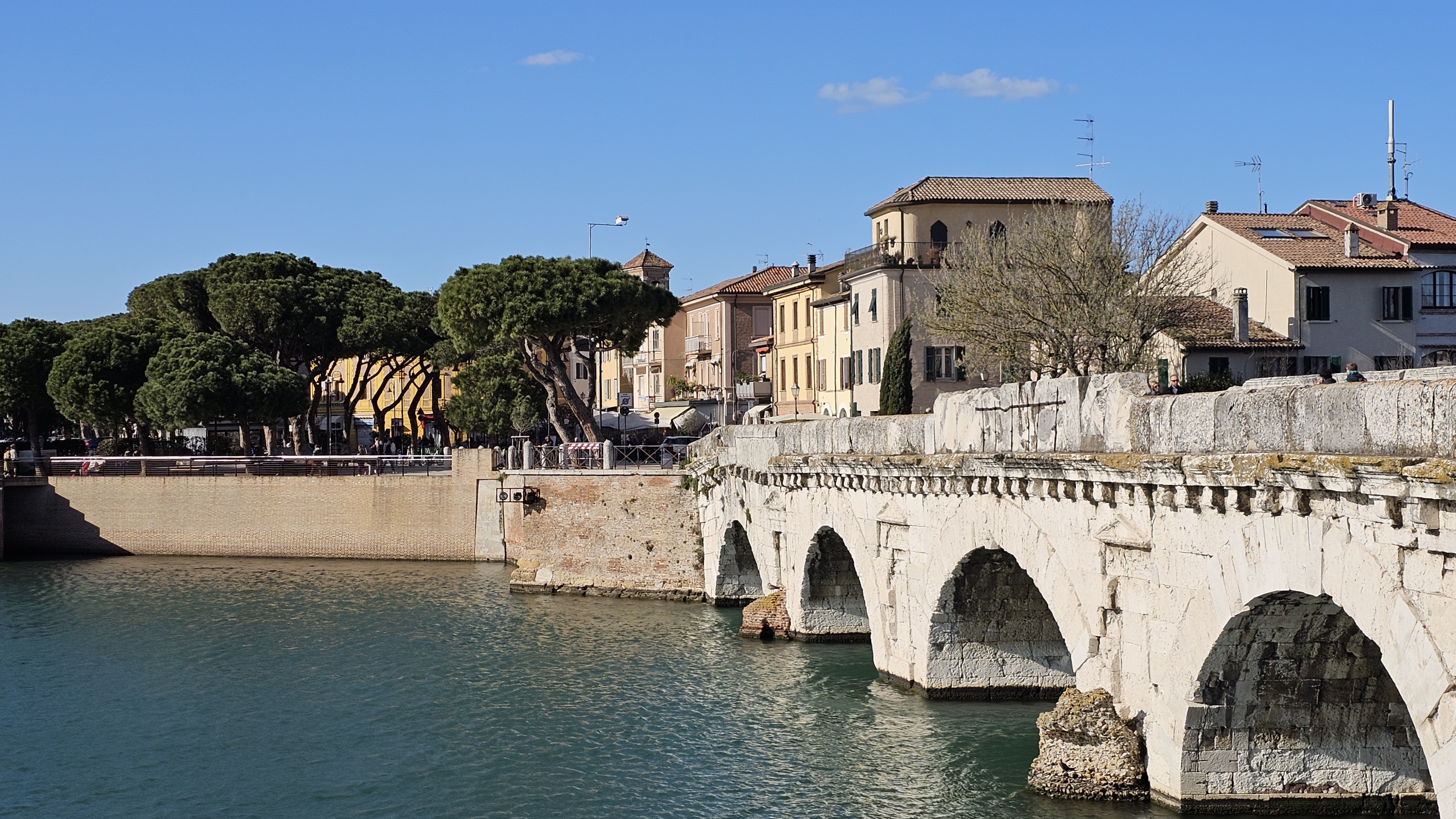
Made entirely of Istrian stone this bridge with its 5 arches has survived earthquakes in 1672 and 1786.


Across the bridge the Borgo San Giuliano neighbourhood dates back from the 11th century. Back then this was a poor fishing village. Throughout the centuries this area remained poor and would often flood due to lack of drainage. It was also a notorious area of criminals and prostitutes.

Today and full of charm Borgo San Giuliano is well known for its pastel buildings, little cobbled streets and its colourful street art.

We had a wander around the picturesque streets and sat outside enjoying lunch in one of the Borgo San Giuliano restaurants.
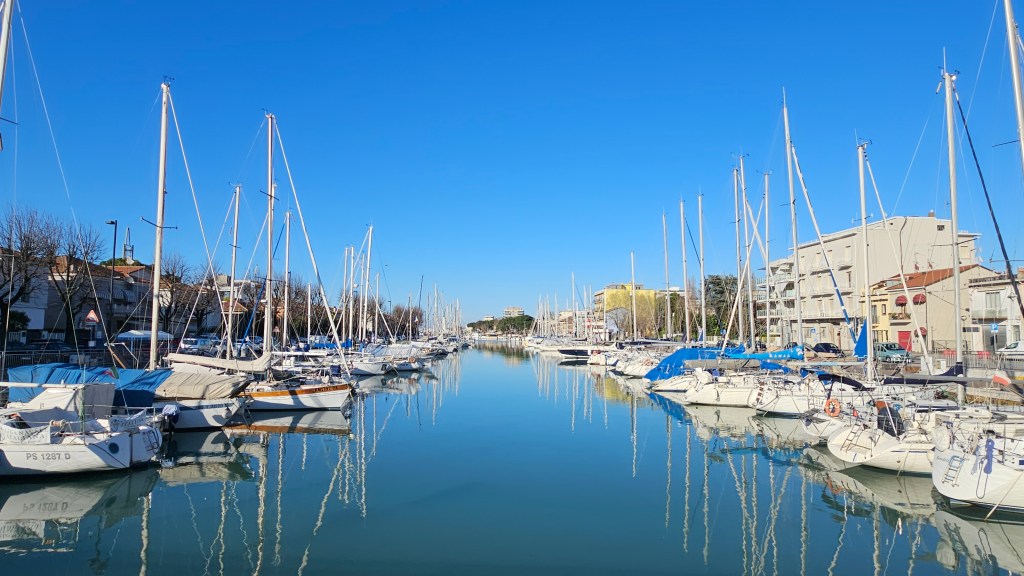
The Port Canal of Rimini is lined with boats and is pleasant to walk along.

The bronze Sailors Bride monument can be found at the end of the pier at the very tip of the east of Rimini. It is dedicated to the wives and children of the sailors lost at sea and also those away at sea for a long time. The statue shows the wife gazing out to sea with her children hanging onto her legs.
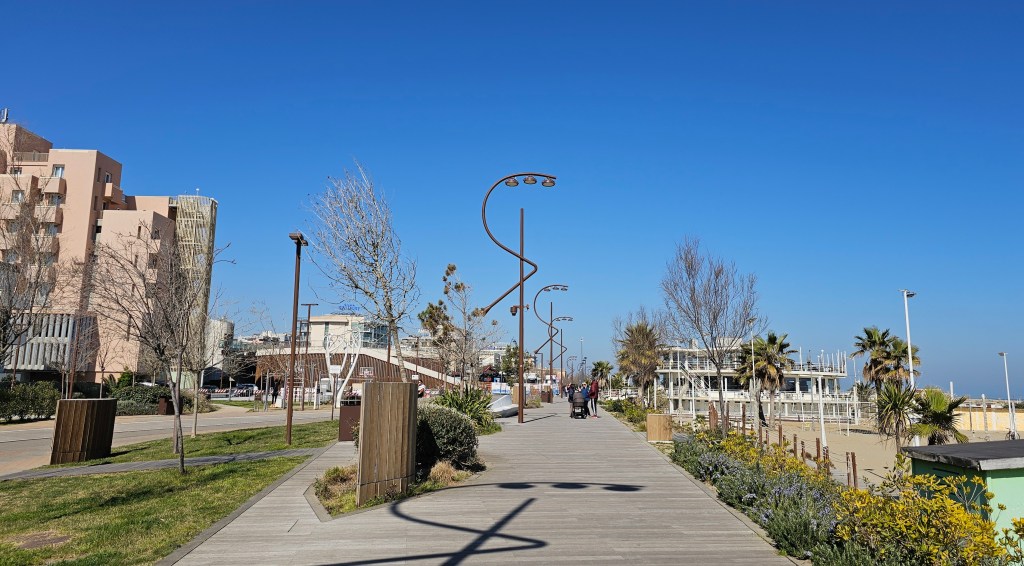
Adhacent to the beach the well kept promenade at Rimimi stretches for miles and is popular with locals who take long walks during the winter months.
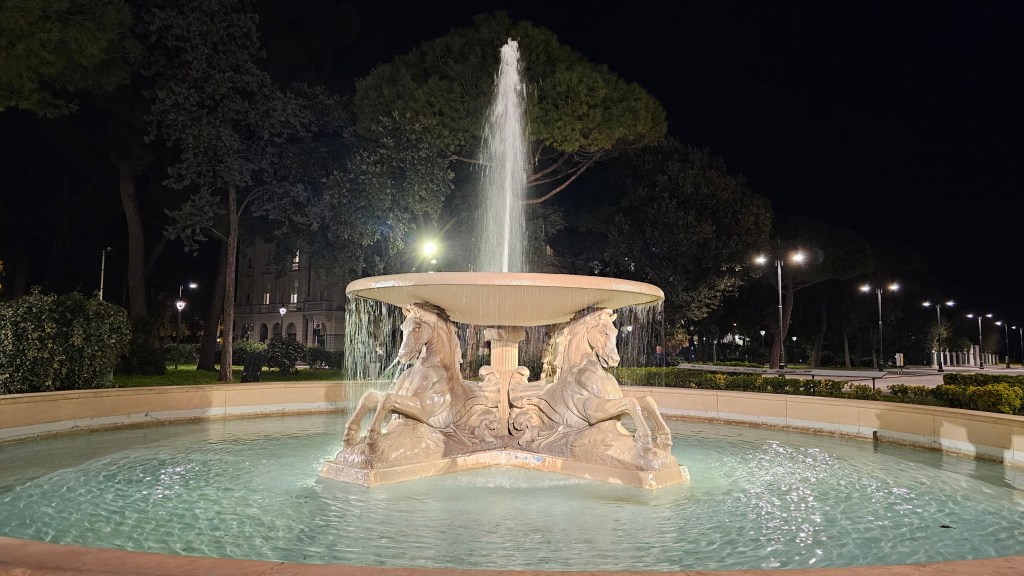
Food and Drinks in Rimini

Our first meal upon arrival in Rimini was a huge and delicious pizza each! The restaurant Sbionta was recommended to us by the hotel receptionist and was a 3 minute walk from the hotel.
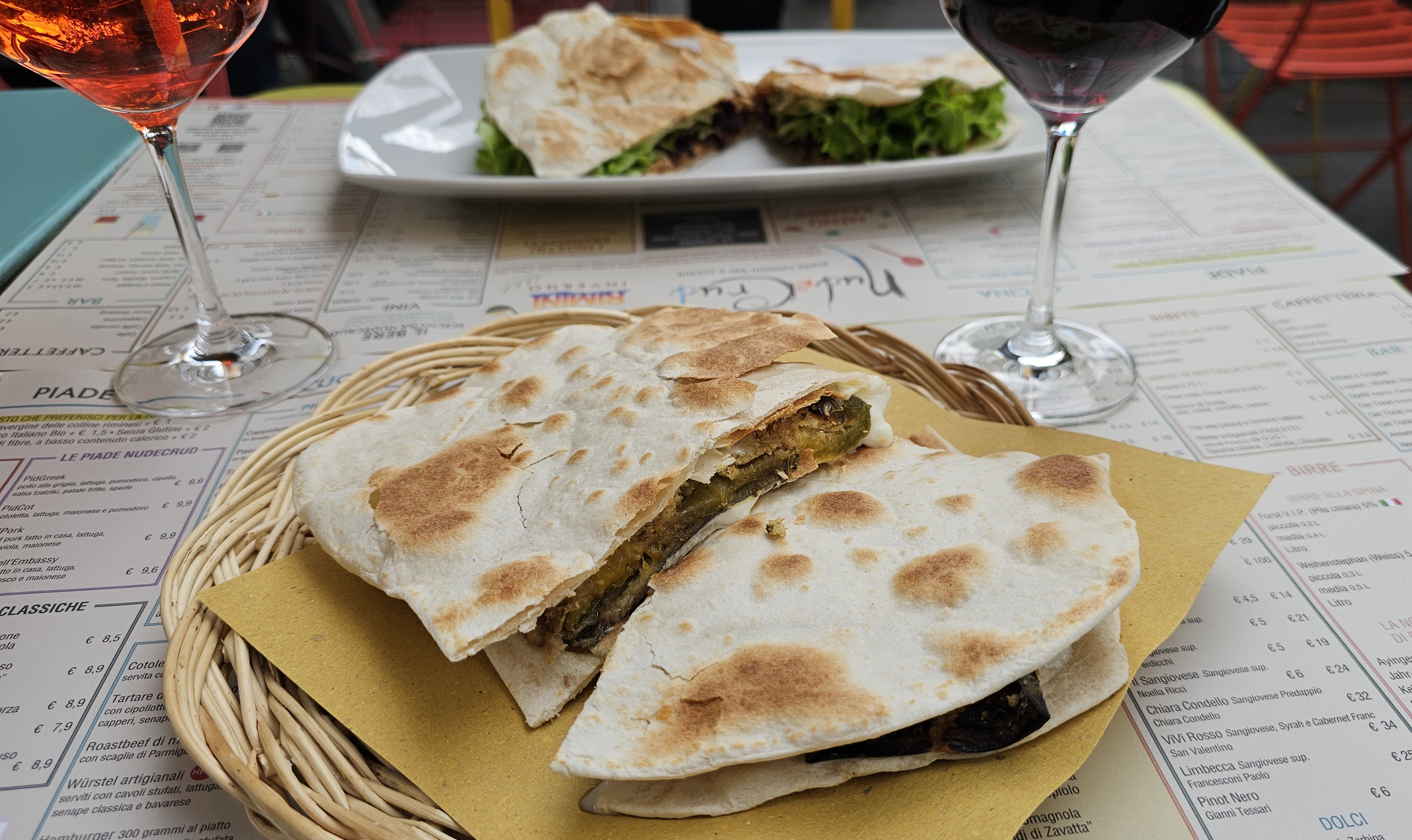
A piadina is a traditional Italian flatbread from the Emilia-Romagna region. This popular snack is served with various options for fillings and on this lunch occasion in the San Giuliano neighbourhood of Rimini I had roasted vegetables and cheese in mine.
Another time (in Sbionta) I had prawn cocktail as a piadina filling and it was the best ever with a huge amount of large prawns in prawn cocktail sauce with lettuce 😋
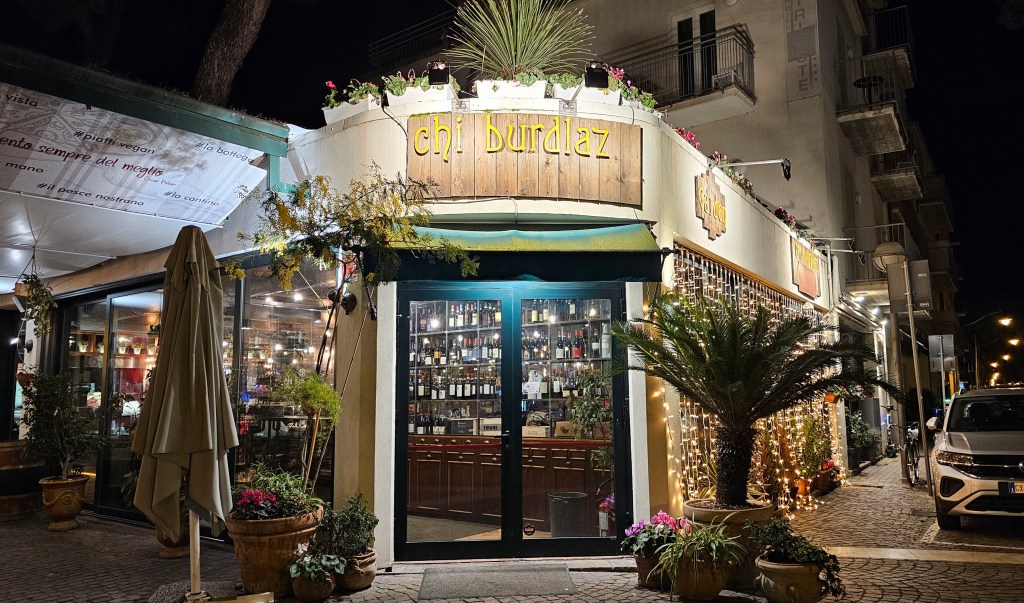
One of our favourite restaurants was Che Burdlaz Garden which had super friendly staff, a lovely atmosphere, good service and excellent food.

In there I had a delicious €14 vegan dish made with quinoa. We shared a half litre jug of chilled white wine which was delightful and only €6.

We went for something a bit more upmarket when we visited Il Pesceinnamorato a lovely fish restaurant

I had seafood pasta in Il Pesceinnamorato and we both had a glass of house wine which was a cold and delicious Chardonney. Generally the cost for a glass of wine was €5 or €6 but without the standard measures as we have in the UK the amount of wine you receive varies each time. In here we were fortunate to be served a very large glass each.
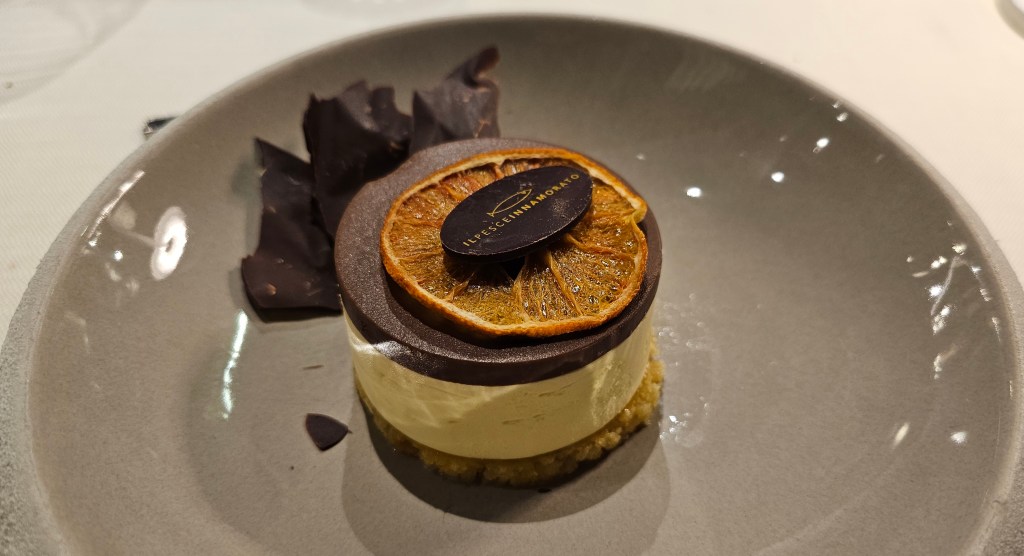
This was the only dessert I had in Rimini and it was tasty so worthy of a mention. Zabaione Surprise in Il Pesceinnamorato consisted of: zabaione mousse, mandarin compote, grand marnier, dark chocolate and almond biscuit 😋

One evening in restaurant Sabbiani I had calamarata which is a round thick ring type of pasta.

Sangiovese was the main wine on menus as the sangiovese grape is grown in this region of Italy. What a joy!
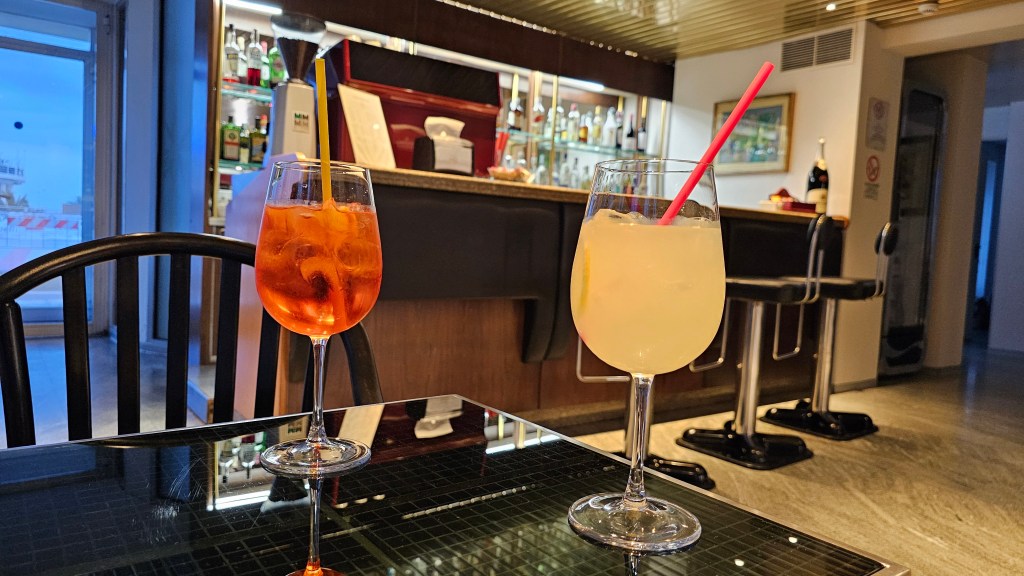
Aperol Spritz is a popular and refreshing drink from Italy. My preference was a slight twist with lemoncello replacing the aperol to go with the prosecco and soda. We tried these in our hotel bar and they were fabulous! Generous glasses for just €6 (£5) each.
Accommodation
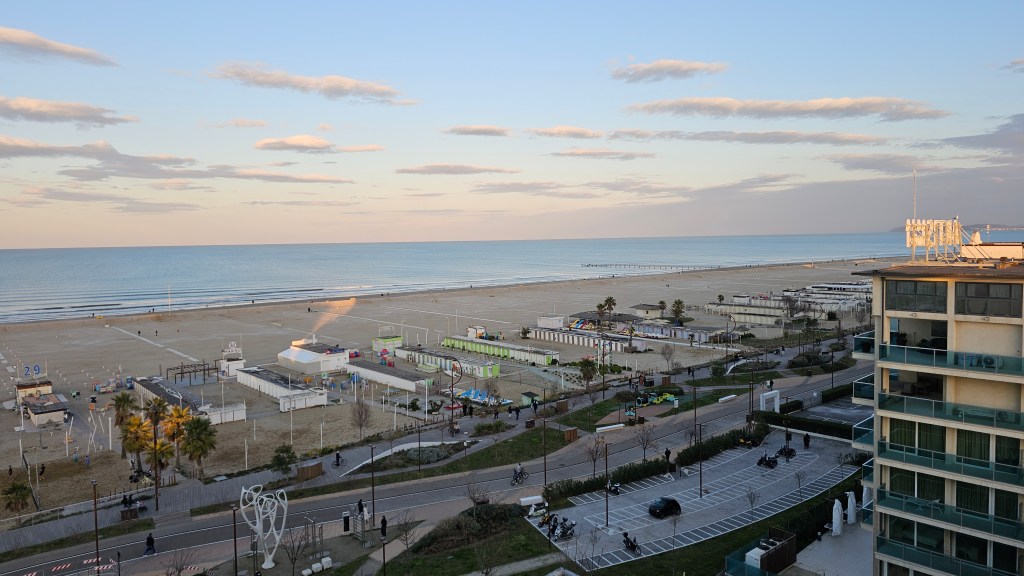
We stayed in the Bellevue hotel which had an excellent location close to the beach and some great restaurants yet also only about 20 minutes walk from the train station.

In the bright airy and colourful dining room of the Bellevue hotel we enjoyed a wonderful breakfast each morning where a wide range of hot food together with fruits, breads and pastries was on offer.
The staff were friendly, the hotel was spotlessly clean and I would recommend a stay here.

Summary of Rimini
We had a fabulous and activity packed week with many sights seen, much food eaten and many miles walked!
We had some decent restaurants close to our hotel which, even in low season were busy with a lively yet friendly feel about them.
A pleasant surprise was the fascinating history and ancient sites to be explored in the old town of Rimini, eons away from the buzzing holidaymaker beach scene.
Throughout the week we did a lot of walking averaging around 10 miles on most days! Overall at the end of our final day in Bologna we had walked a total of 65 miles!
With sapphire blue skies for much of the week the weather was amazing even if a tad on the chilly side at times!
And Rimini was an excellent base from which to explore some of the well known destinations nearby as well as a couple of hidden treasures.
The captivating history…
During the week some of the interesting stories of the past began weaving together through the places we visited. With the Malatesta links of Rimini, the unfortunate story of Francesca and Paola in Gravara and the poet Dante in Ravenna things were starting to piece together.

How about the budget?
This was my first holiday of 2025 and the first of my year of travel on a shoestring.
The flights and 7 nights bed and breakfast came to just £230 which was was a great budget option. This region of Italy wasn’t expensive with the average main meal costing around £12-13 each. Train and bus travel was cheap averaging at around €5 per single train ticket and €1.30 per bus journey.
Overall I spent around £677 in total for everything throughout the week which was a bit over my backpacking target budget of £500 but not a bad effort and much less than previous week long trips to Italy.
Budget breakdown (costs shared with Bridget):
- Hotel: 7 nights twin room bed & breakfast £175 each
- Ryanair flight £58 (no extras)
- Stansted car park £44 each
- £400 spend for 8 days (meals, transport, entrance fees & snacks)
We were able to keep the costs down by travelling out of season, booking the flights early (these were booked last August), sticking to public transport and researching and organising everything ourselves. I spent quite a few hours planning this trip in advance (which I enjoy… its my hobby) and Bridget had found and printed off the free walking tour of Rimini which was an excellent start to the holiday. An equivalent holiday with a travel company would have been at least double if not treble this cost.
Up next…
A series of posts documenting each of the highlights and places of interest from this trip to Italy.
 frombluetogreen.com
One comment