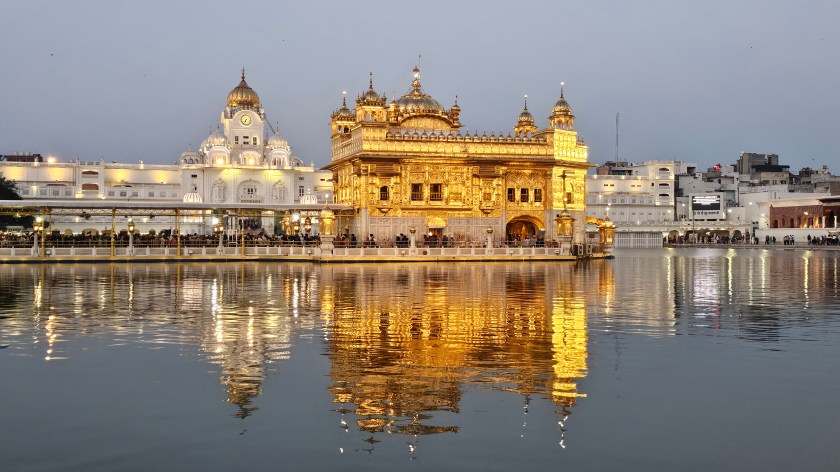

Amritsar is located in the Punjab province of northern India and is within a few miles of the border with Pakistan. Amritsar is also home to the incredible Golden Temple, one of the most holy of Sikh sites.
Having checked into our hotel we were then driven towards the Golden Temple and dropped off at a nearby bustling pedestrian street which is lined with market stalls and small tourist shops.

We arrived at the Golden Temple however you are not permitted to wear shoes or socks. With thousands of people visiting at any one time, you can leave them at kiosks outside the temple in exchange for a ticket.
Once we had removed our shoes and socks we had to walk through the water bath to ensure our feet were cleansed before entering.
Entry to the temple is free however strict entry rules apply. As well as removing your shoes and socks you are not permitted to take in any form of tobacco or cigarettes and you can only take in a small bag or small backpack. These are searched by hand at each of the 4 entrances.

Everyone including men, women and children must wear a head covering. There are containers of these outside the front where you can take an orange scarf which I did for my first visit. I returned again the following morning, this time remembering to take my own newly purchased head scarf!
But I’m not a scarf person… while Indian women seem to walk around effortlessly with a perfectly placed scarf, mine kept sliding around all over the place. This meant I had to keep stopping and adjusting it whilst ensuring my head remained covered in the process and while trying not to look like a complete and amateur fool!
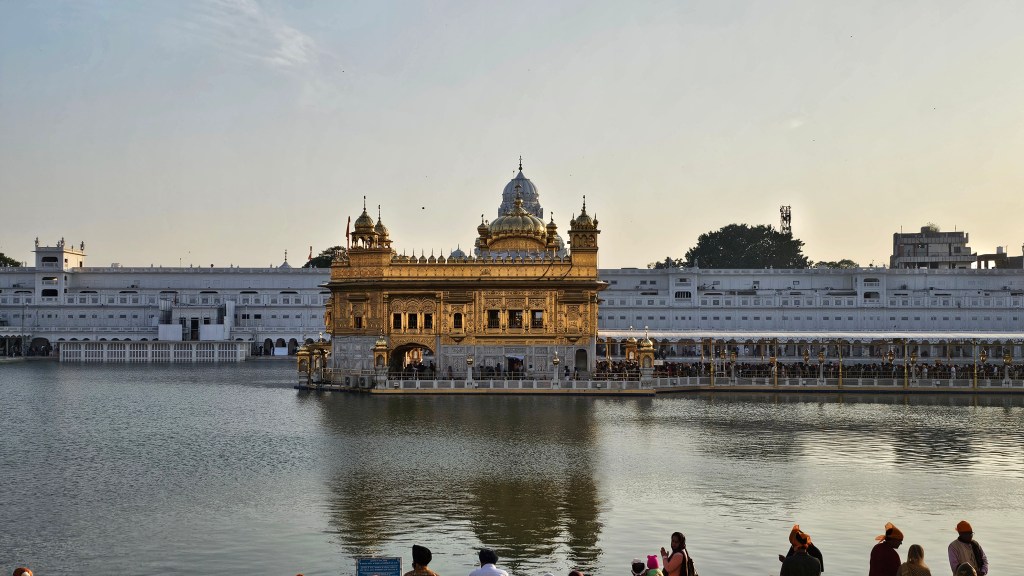
The Golden Temple is a large and incredible sight and the centre piece is a man made pool which was completed in 1577 by the 4th Sikh Guru Ram Das. People were bathing and some were splasing their heads with the water.


Maddy took us into the Langar Hall which is the name for the kitchens.

The Golden Temple is home to the worlds largest community kitchen and between 50,000 to 100,000 hot meals are served every day.
The kitchens are staffed entirely by volunteers who participate in preparing, cooking and serving the food, as well as the washing up.
Anyone can volunteer and some people may turn up to give an hour or two of their time each day as their way of giving back to the community.
This was a hectic and noisy place!
Generous portions of a variety of breads, curries and rice are served as people sit in line and patiently wait. Each person put their hands together for a little prayer before receiving their food.

This lovely friendly woman waved and smiled at me as I look her photograph.
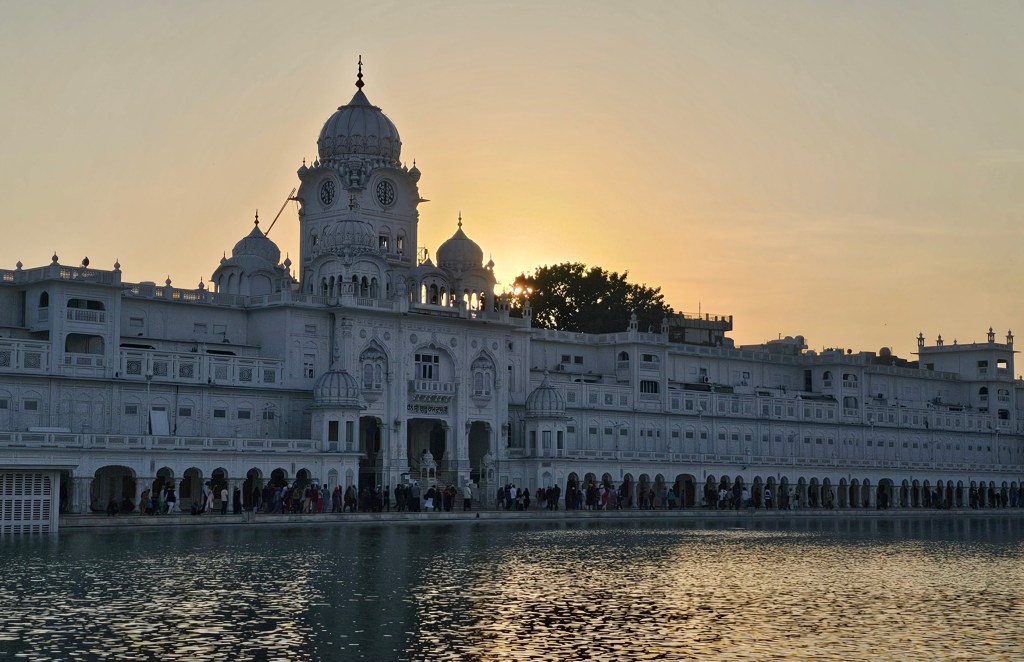
The sun was setting so from the kitchens we went back outside and slowly walked around the pool taking in the spectacular sights as darkness began to fall and the temples began to light up.
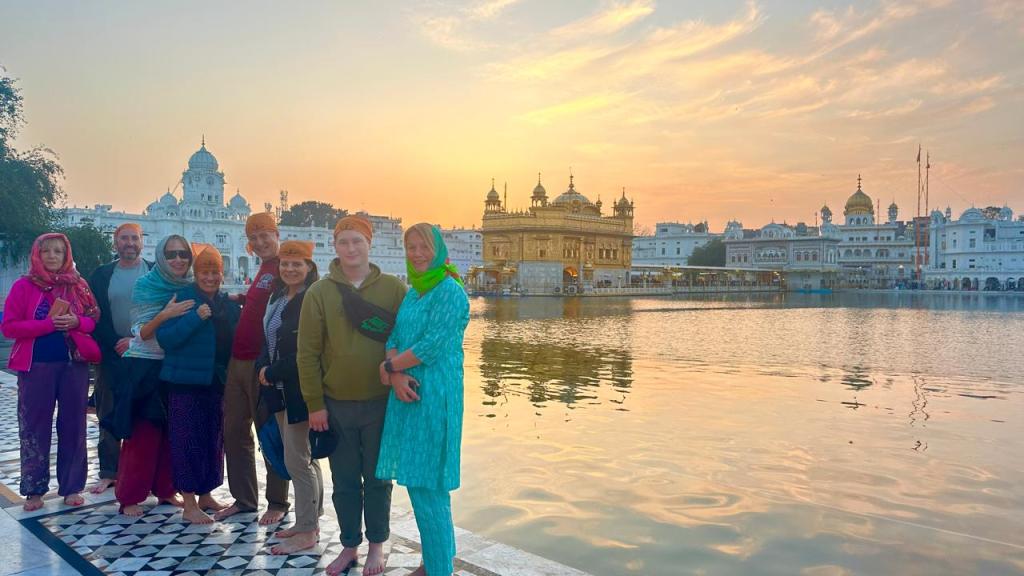
Below are some of the images I took as we walked around the large central pool.
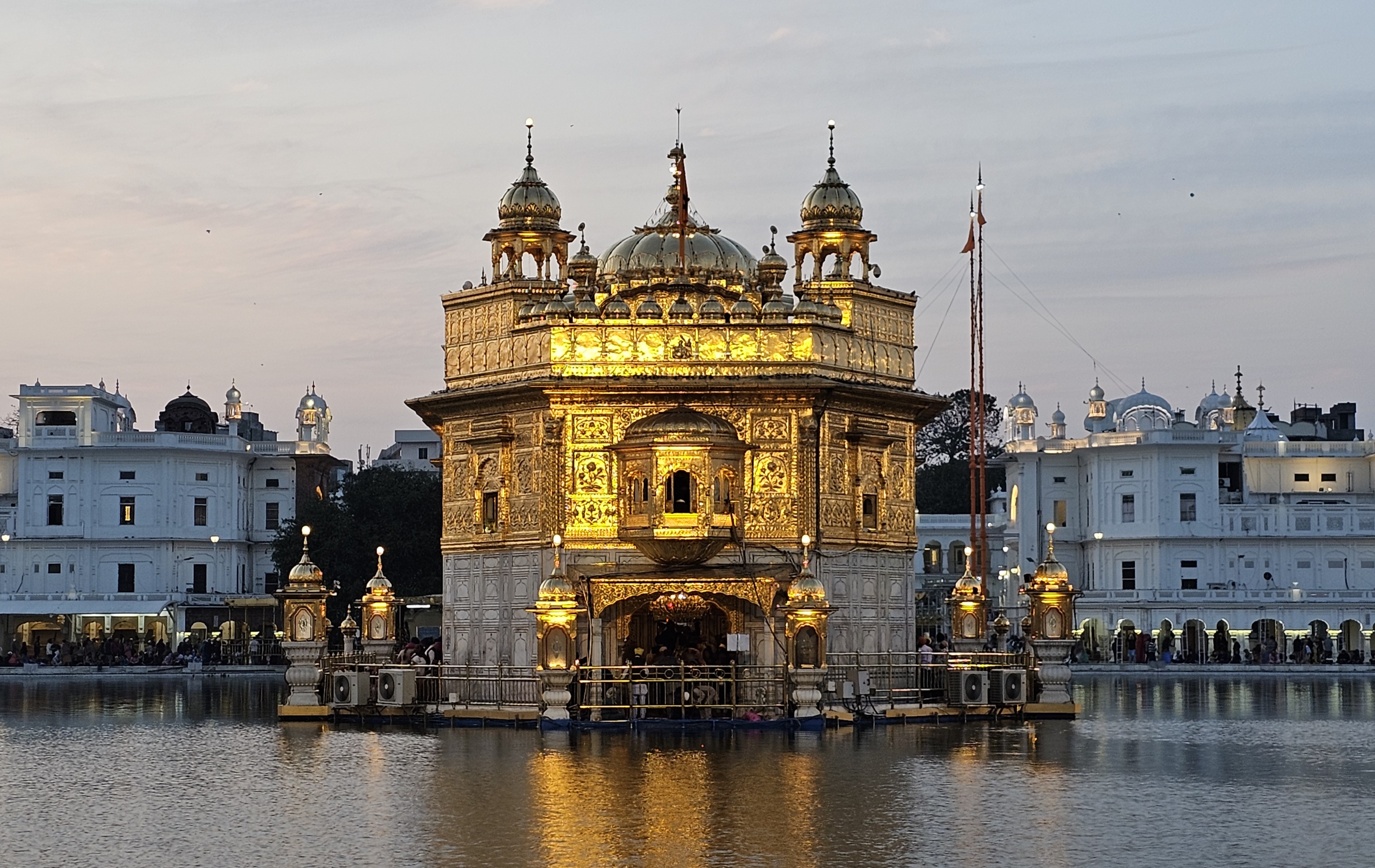
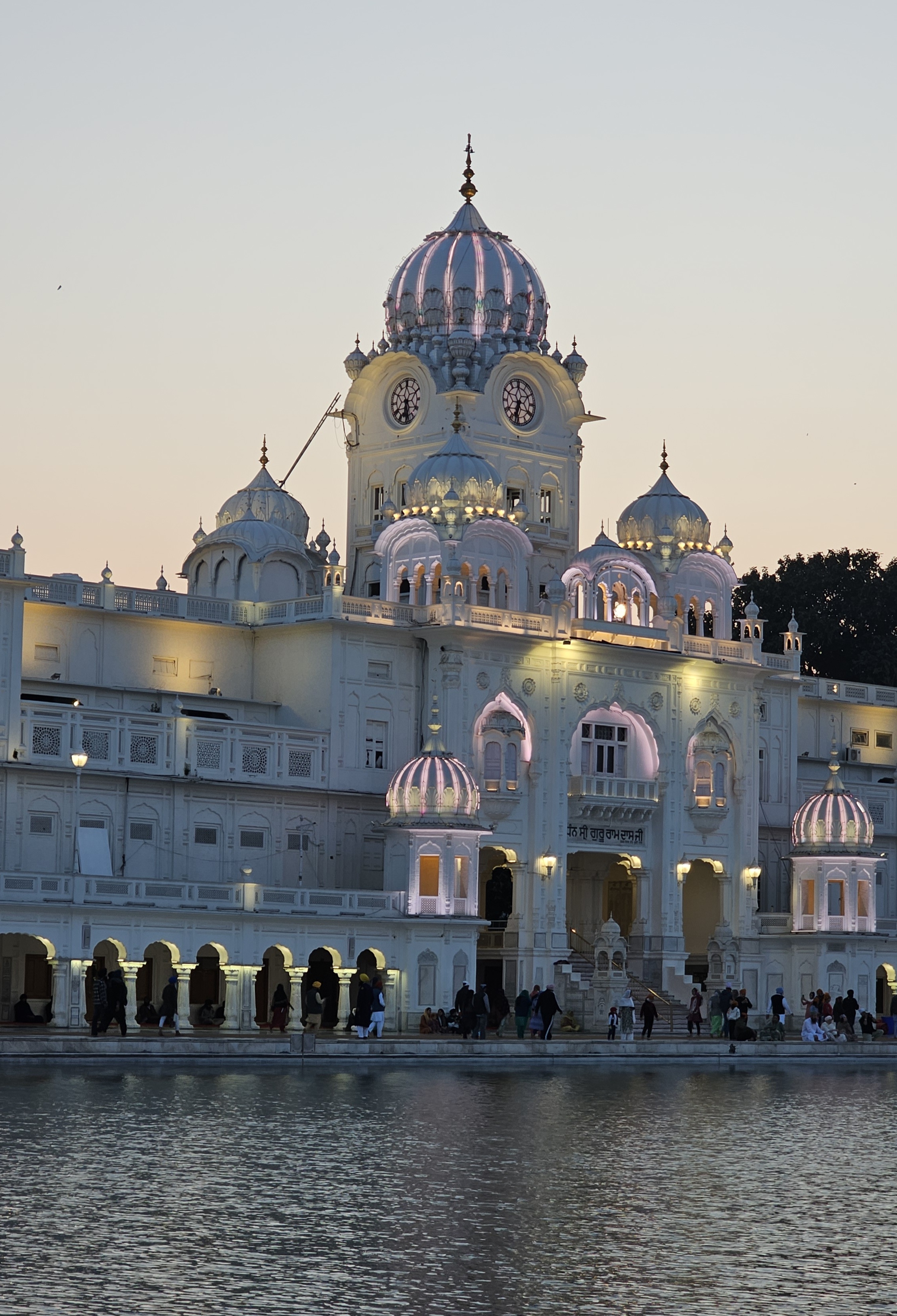


Coated in gold leaf, the actual Golden Temple in the middle of the large pool is the main focal point however there was a very long queue to visit it.

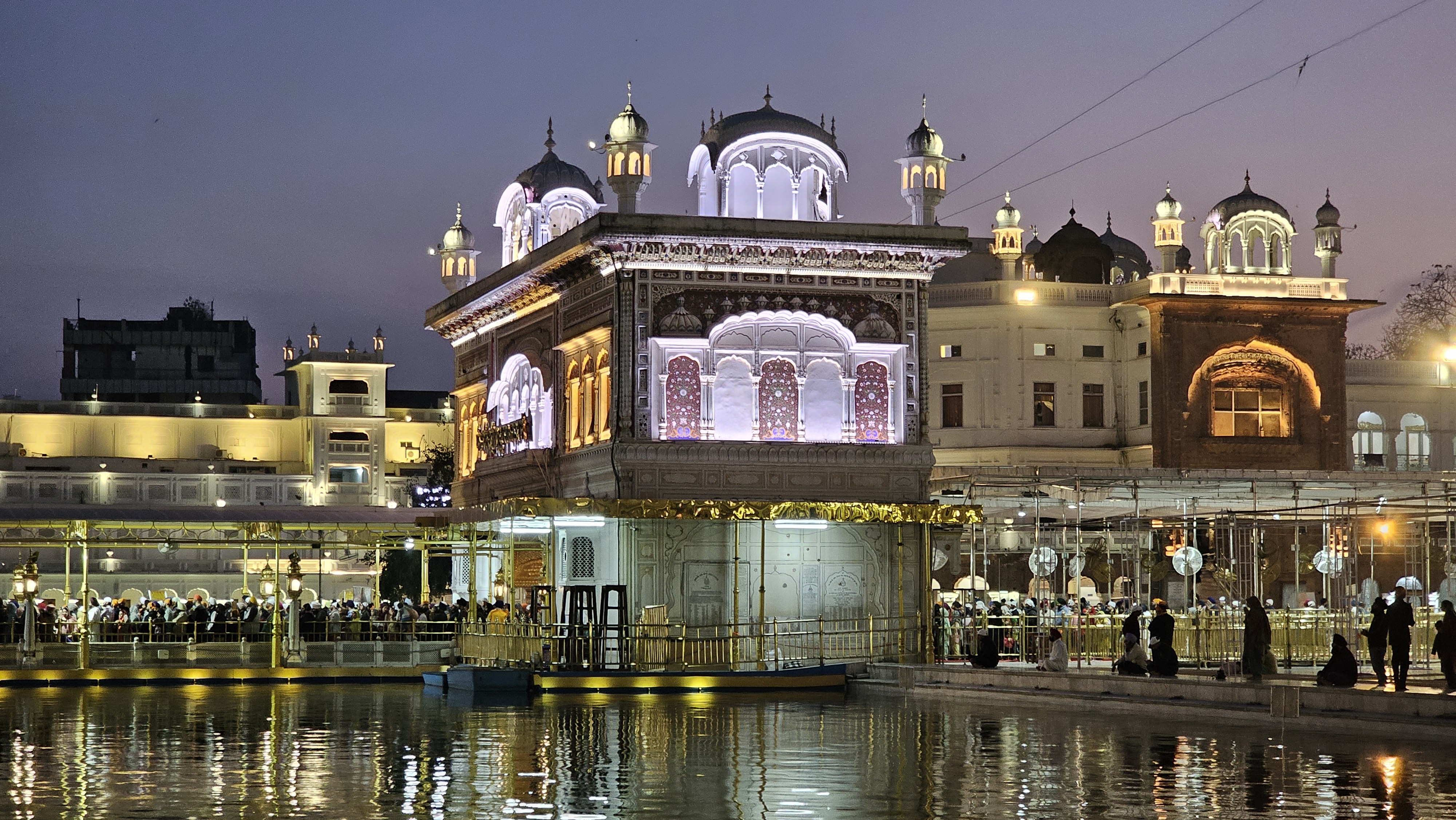

Visiting the Golden Temple was a huge wow factor and so far this had been the absolute highlight of the trip.
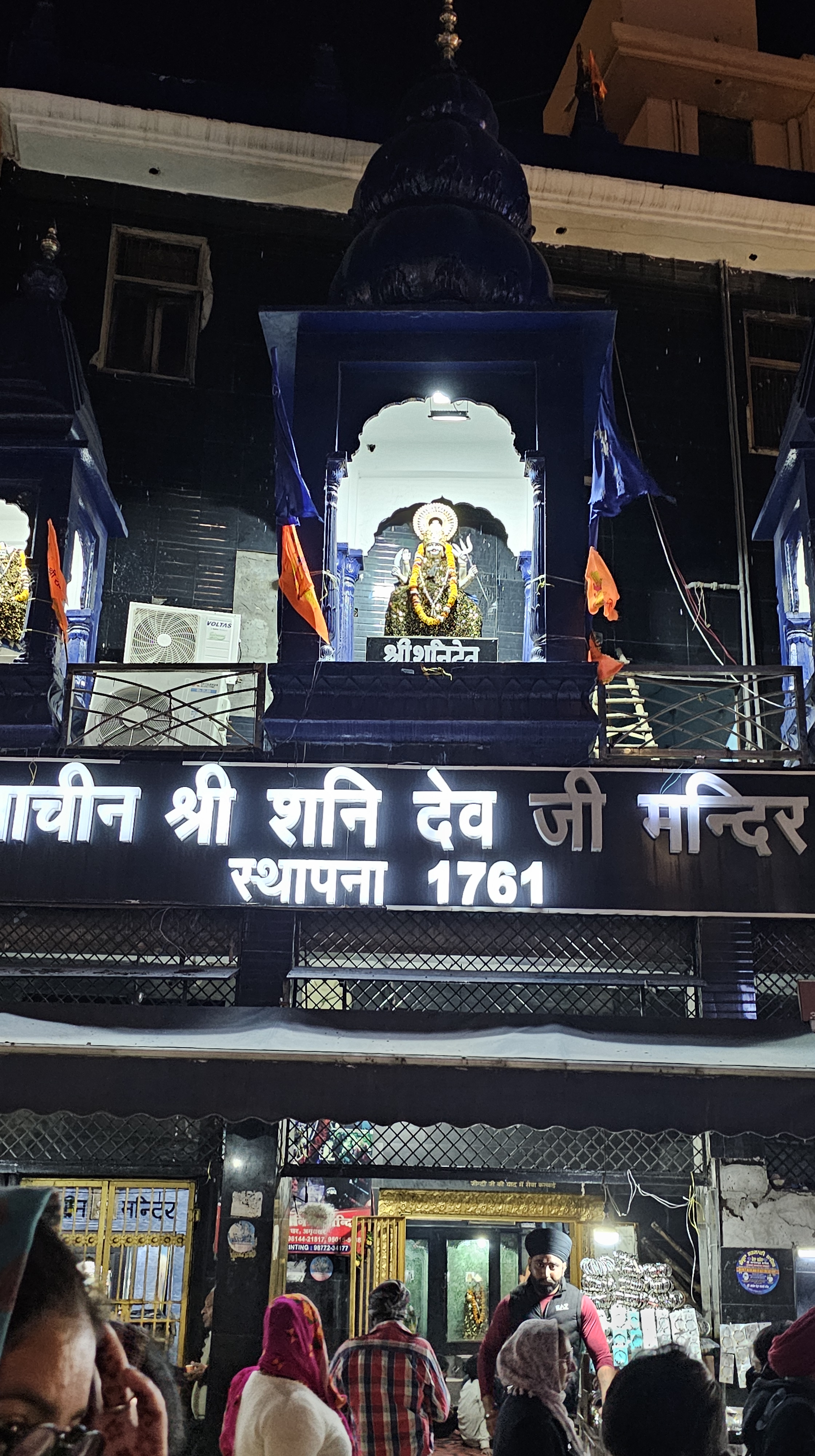
We collected our shoes and walked back through the market street. Close to the Golden Temple is the black temple of the Saturn God which was built in 1761.


Jallianwala Bagh Memorial Park
The following morning Maddy took us back to the area of the Golden Temple to the nearby Jallianwala Bagh Memorial Park which was the site of a terrible massacre on 13 April 1919. Maddy explained a large crowd had gathered on that day to participate in a peaceful protest against the ‘Rowlatt Act’, a law applied during the period of the British Raj in India. The purpose of the Act was to enable the police to arrest people with no reason and to imprison people without trial.
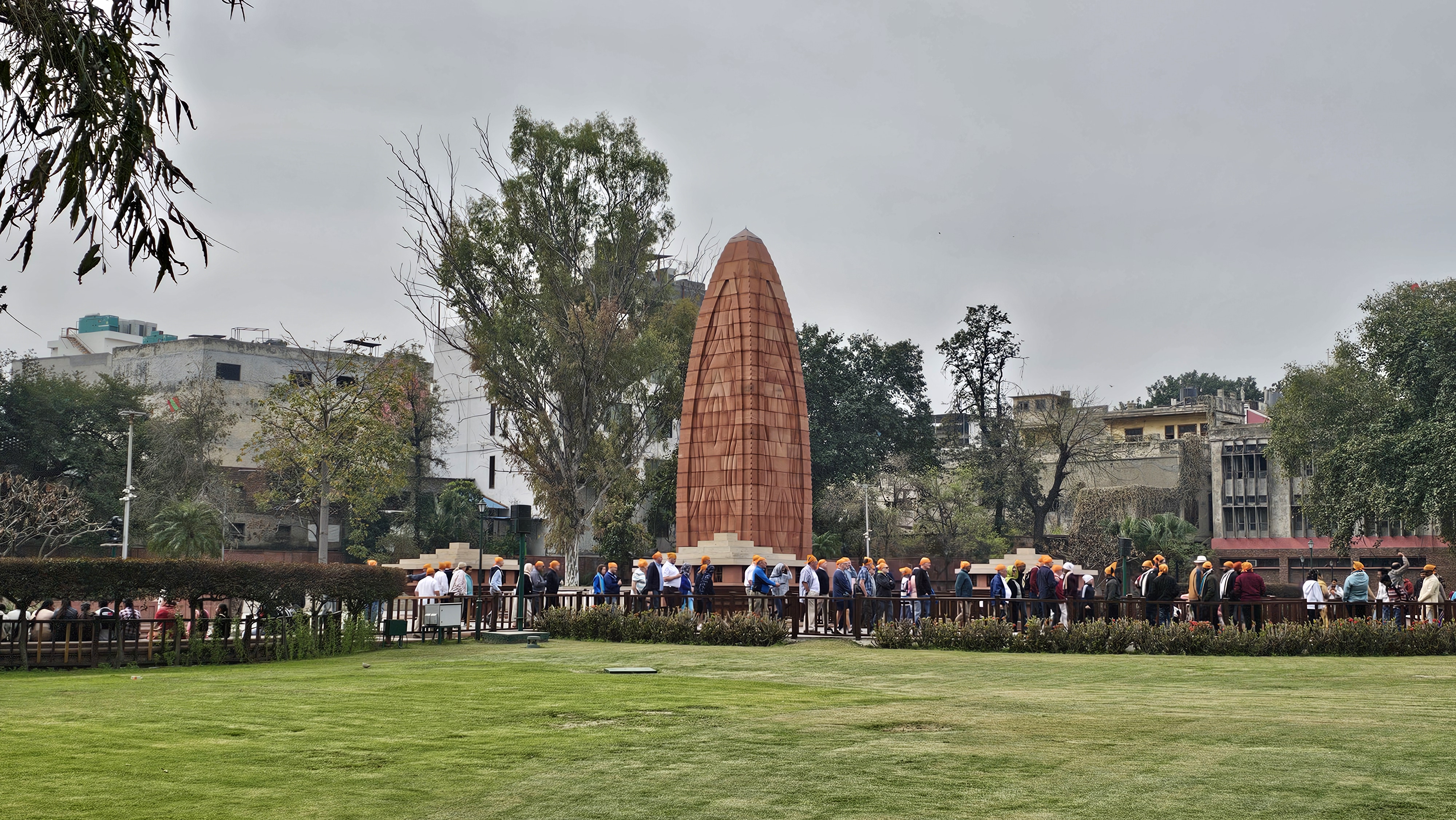
The British temporary brigadier-general Reginald Dyer ordered his troops to block the park exits and shoot at the crowd which resulted in the deaths of hundreds of innocent men, women and children. This was utterly shocking – what a despicable person.

After the memorial park visit we had a couple of hours of free time to explore the area. I had another short look at the Golden Temple but it was even busier than the previous afternoon and wasn’t quite as spectacular on a cloudy day.

The Partition Museum is located in Amritsar and I didn’t visit but apparently it contains a great deal of information about the partition between India and Pakistan which took place following independence from British India in August 1947.

I’m not too interested in looking around tourist shops or markets so following the second Golden Temple visit I spent 30 minutes in the Amritsar Starbucks! At £3.76 for an oatmilk cappuccino it was UK prices in there! (And they didn’t have an option for coconut milk).

Lowering of the flags border ceremony
As mentioned Amritsar is only 28 km from India’s border with Pakistan and every afternoon a border ceremony takes place at the Attari-Wagah border. Not quite knowing what to expect, our group was driven to the border to watch the ceremony.
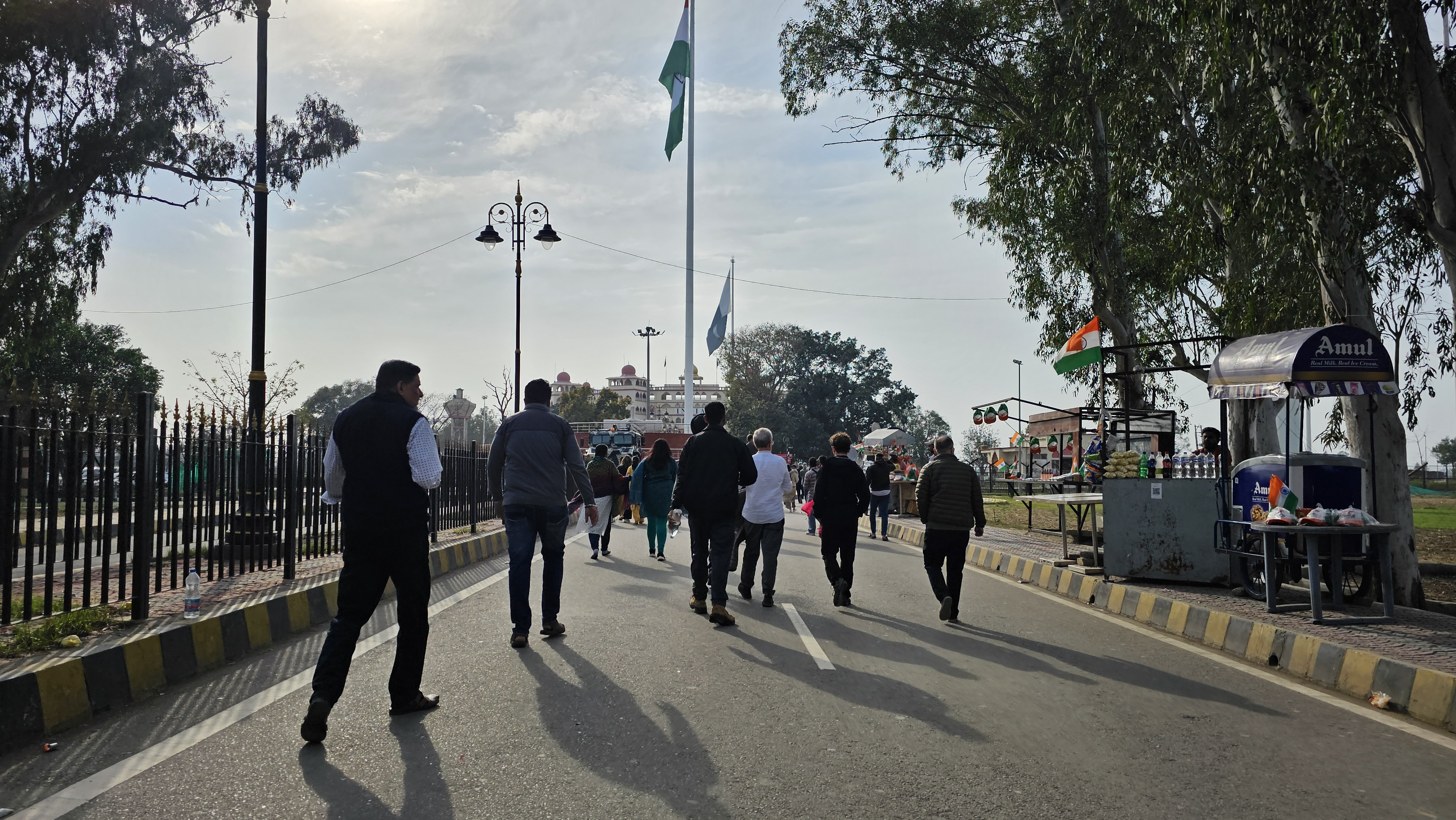
The border itself is 24 km from Lahore and had been closed for many years meaning nobody can cross between India and Pakistan.

We joined the crowds of locals and tourists alike as we made our way to the big grandstand. We had to line up in 2 x queues, one for men and one for women, show our passports for ID purposes and have our bags checked before being allowed to enter.
We were ushered to a section of one of the terraces amidst the noise, energy and the atmosphere of an American baseball match.

The border gates were closed (the above picture is looking onto the Pakistan side) as we looked around us trying to work out what the heck was happening.
Bollywood style music was playing and people were getting very excited!
Then the military display of co-operation between the two countries began. We could see the Pakistan ceremony across the gates and had a good view of the Indian ceremony in front of us.
We watched the bizarre and brusk ‘Basil Fawlty Nazi style‘ marching.
The gates opened and the military officials on both sides were marching in synch.


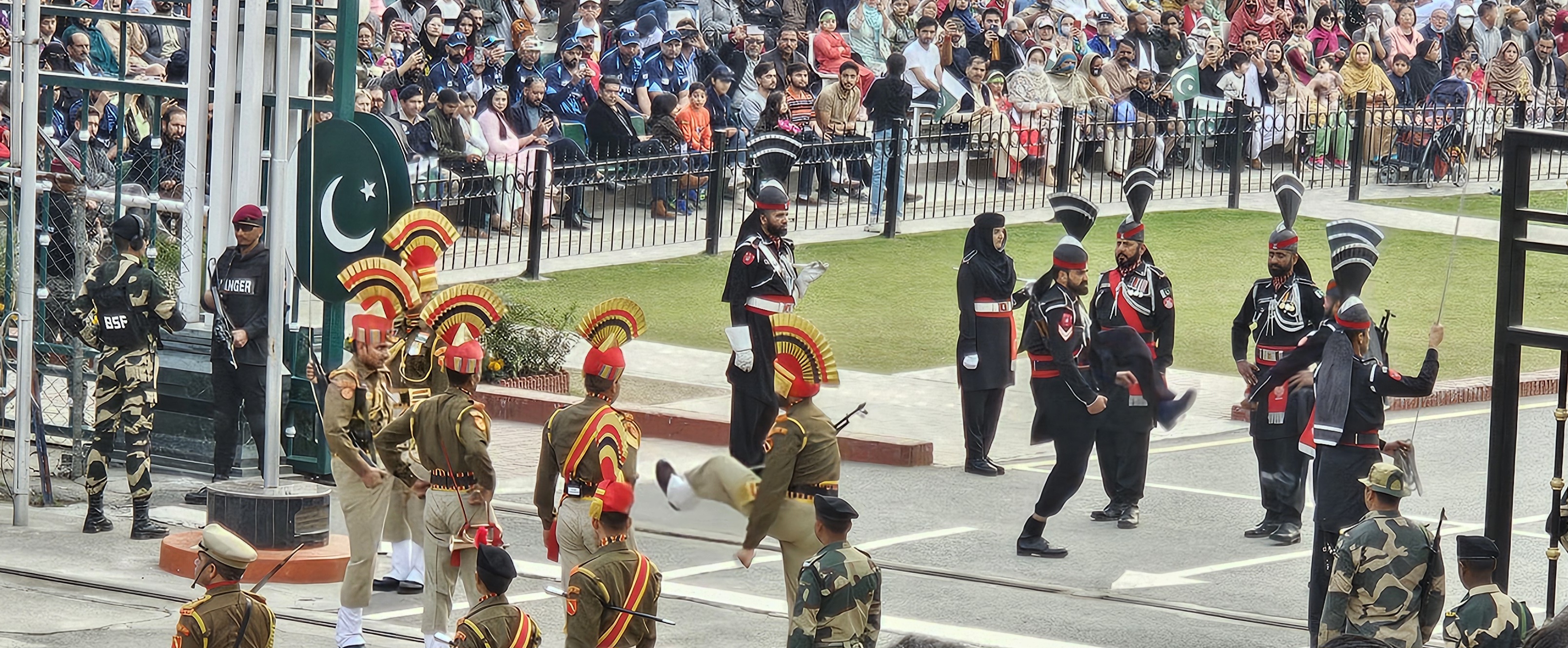
At the end, the flags were lowered and the gates closed again. This ceremony takes place every day – what a strange experience!
Yellow Chilli Restaurant
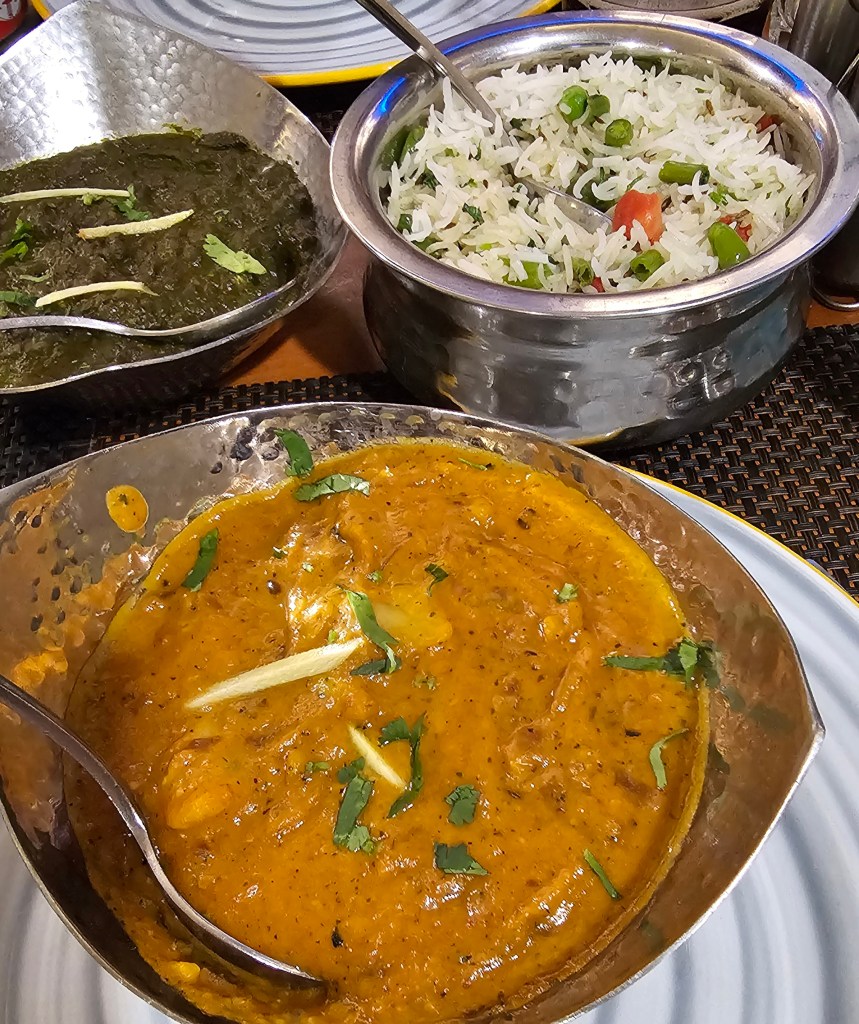
While in Amritsar our group of 9 *splashed out and went to a restaurant owned by a famous Indian chef called Sanjeev Kapoor. I had ‘Garha Dum ke Aloo’ (above) which was Kashmiri style potatoes and cashew nut, saffron curry, tempered with star anise, brown garlic and cooked with thick yoghurt. It tasted superb and one of the most flavoursome curries of the trip.
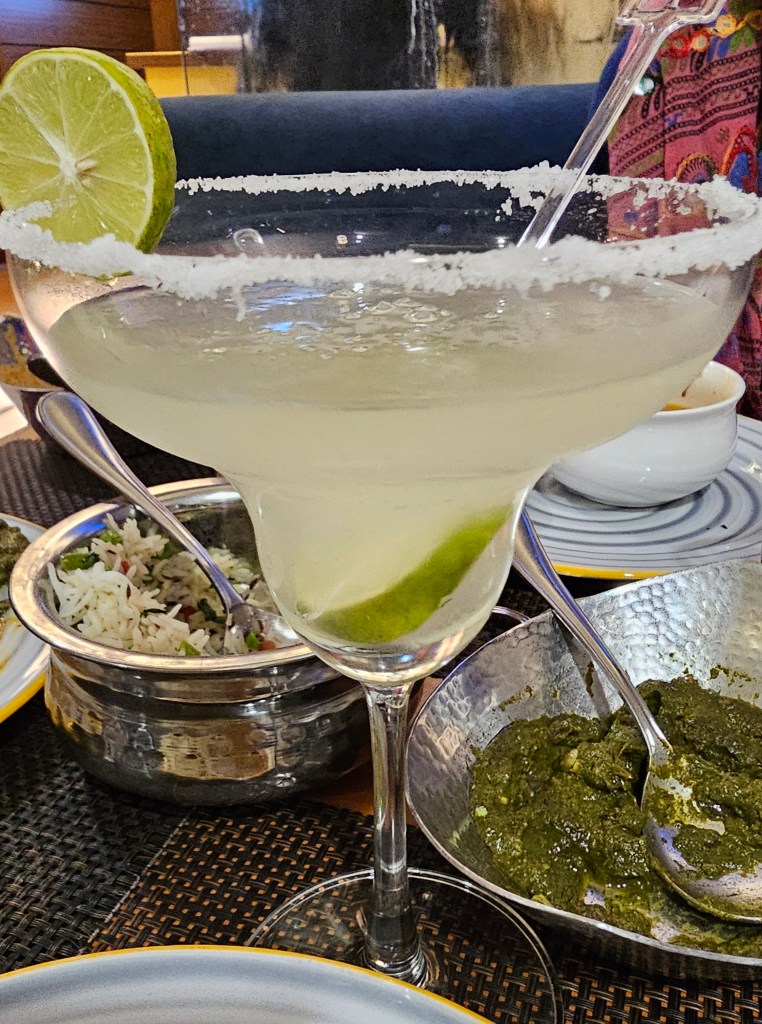
I started with a refreshing and tasty glass of Indian white wine but it was relatively expensive and the serving was only about 125 ml. During this trip I’ve found wine is usually significantly more expensive than beer and on this occasion cocktails were cheaper than wine. I then had a margarita but sadly it wasn’t one of the best… it tasted mainly of lime and I could’t taste the tequila so verdict only 3 out of 10!
*When I say ‘splashed out’ my bill for the wine, cocktail and meal was only the equivalent of £20! By far the most expensive of the trip!

Getting to Amritsar
We left our hotel in McLeod Ganj and began our descent towards Amritsar. After about 15 minutes the driver pulled into a Himalayan tea plantation where Maddy explained the types of tea and how its picked.

The journey throughout the morning was slow, firstly with the descent down through twisty mountain roads and then we spent a couple of hours driving along a dirt track next to a new motorway which was under construction.

At lunchtime we stopped in a modern and new roadside restaurant where I had my first vegetable thali of the trip. This was called ‘Haveli Special Thali’ and consisted of: Dal Makhani, Kadhai Paneer, Mix veg, salad, plain rice, pineapple raita, butter naan, 2 x roti and another gulab jamun.

Today I also had my first mango lassi which was a thick yogurt drink popular in Northern India. It is said to have originated as far back as 1000 BC in the Punjab region.
We covered more distance in the final two hours of the journey as the long, flat, straight dual carriageway to Amritsar.
 frombluetogreen.com
One comment