

Post written by Laura
Delhi, India’s colourful and vibrant capital city, was the starting point of my first trip to India. Such a huge and diverse country and with just two weeks off work I had to prioritse and consider where to begin.
Settling on the north I had booked the Intrepid ‘Mountains & Mystics of India‘ trip which took me by train and mini bus to the foothills of the Himalayas, the tallest mountain range in the world. Intrepid also promised this to be a journey of “body, mind and spirit”.
The Taj Mahal is located in Agra a city around 200 km south of Delhi. As my Intrepid trip was going north and didn’t include the famous white marble monument I arrived a day early in Delhi and enjoyed a fabulous day trip there.
I also had an extra day in Delhi at the end of the Intrepid trip. This post covers my two very different days of exploring the two extremes of this city: Old Delhi and New Delhi.
My two week itinerary:
- Day 1: Arrive in Delhi
- Day 2: Taj Mahal, Baby Taj and Agra Fort
- Day 3: Old Delhi
- Day 4 & 5: Shimla
- Day 6: Mandi
- Day 7 & 8: Dharamsala
- Day 9 & 10: Amritsar
- Day 11 – 13: Rishikesh
- Day 14: New Delhi

Intrepid introductions on day 2
I had arrived back from the Taj Mahal at around 3 pm, somewhat tired but still in a state of awe.
Our Intrepid guide Maddy introduced himself at the 6 pm welcome meeting where the small group of 8 of us Intrepid explorers also met for the first time.
We followed this with a welcome dinner in nearby Hooter restaurant which gave us an opportunity to start getting to know each other.

Old Delhi walking tour
The following morning, led by Maddy our group of 8 took the metro train from Karol Bagh the closest station to the Hotel Pooja Palace where we were staying.
The single metro journey was just 30 rupees (about 30p). Each train has a women only carriage and each time Maddy took us to the area of the platform which is marked as such and the 5 women of the trip took that one while the 4 men took the next door carriage.
Other than that my Delhi metro experience felt very similar to the London underground with a couple more exceptions:
- All bags and backpacks had to pass through a scanning machine.
- It was necessary to buy a ticket rather than using your card.
During rush hour having your bag scanned might be an issue as there isn’t much to stop a random person from stealing it if your bag passes through while you are still in the queue waiting to walk through the human scanner. And thankfully the officials didn’t insist I put my small ‘pac safe’ bag containing my passport, money, cards and mobile through the machine!
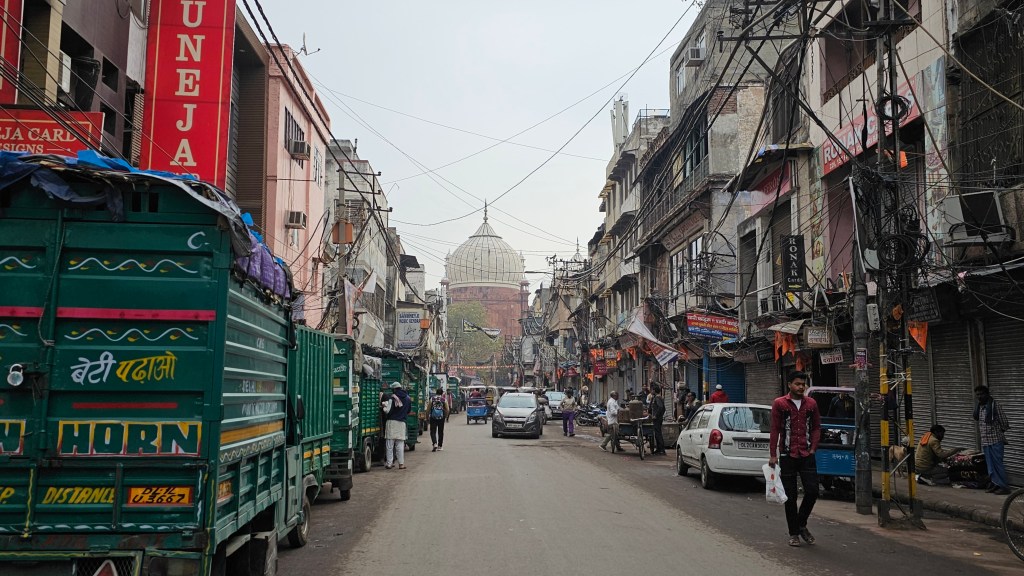
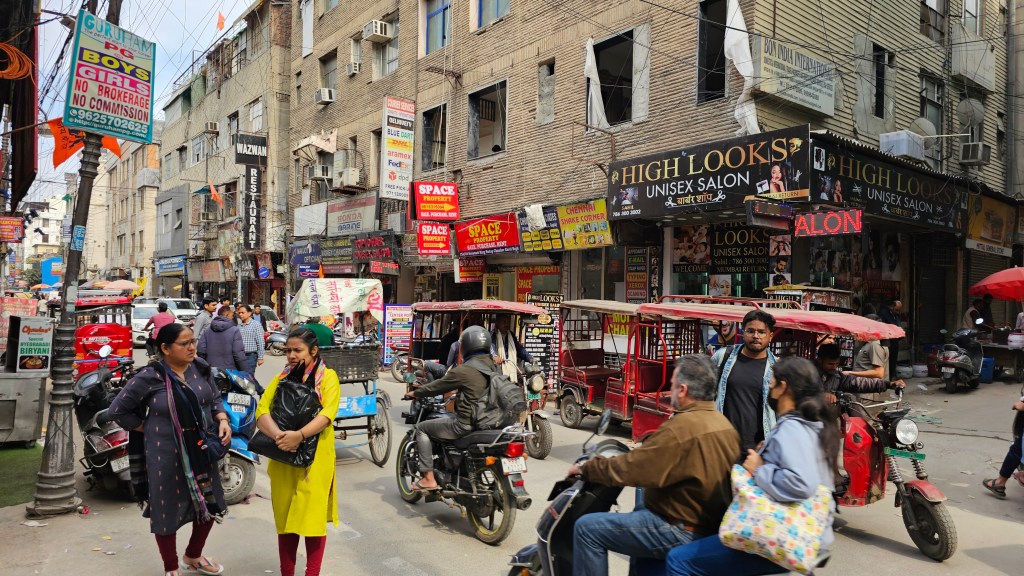
Anyway after about 25 minutes we stepped out into the streets and mayhem of Old Delhi.

Maddy pointed out that many shops and local businesses have 7 chillis and a lime hanging up. He explained this is an old superstition to ensure no bad luck would enter the premises. The above tuk tuk also had 7 chillis and a lime dangling from the front so a lucky tuk tuk!
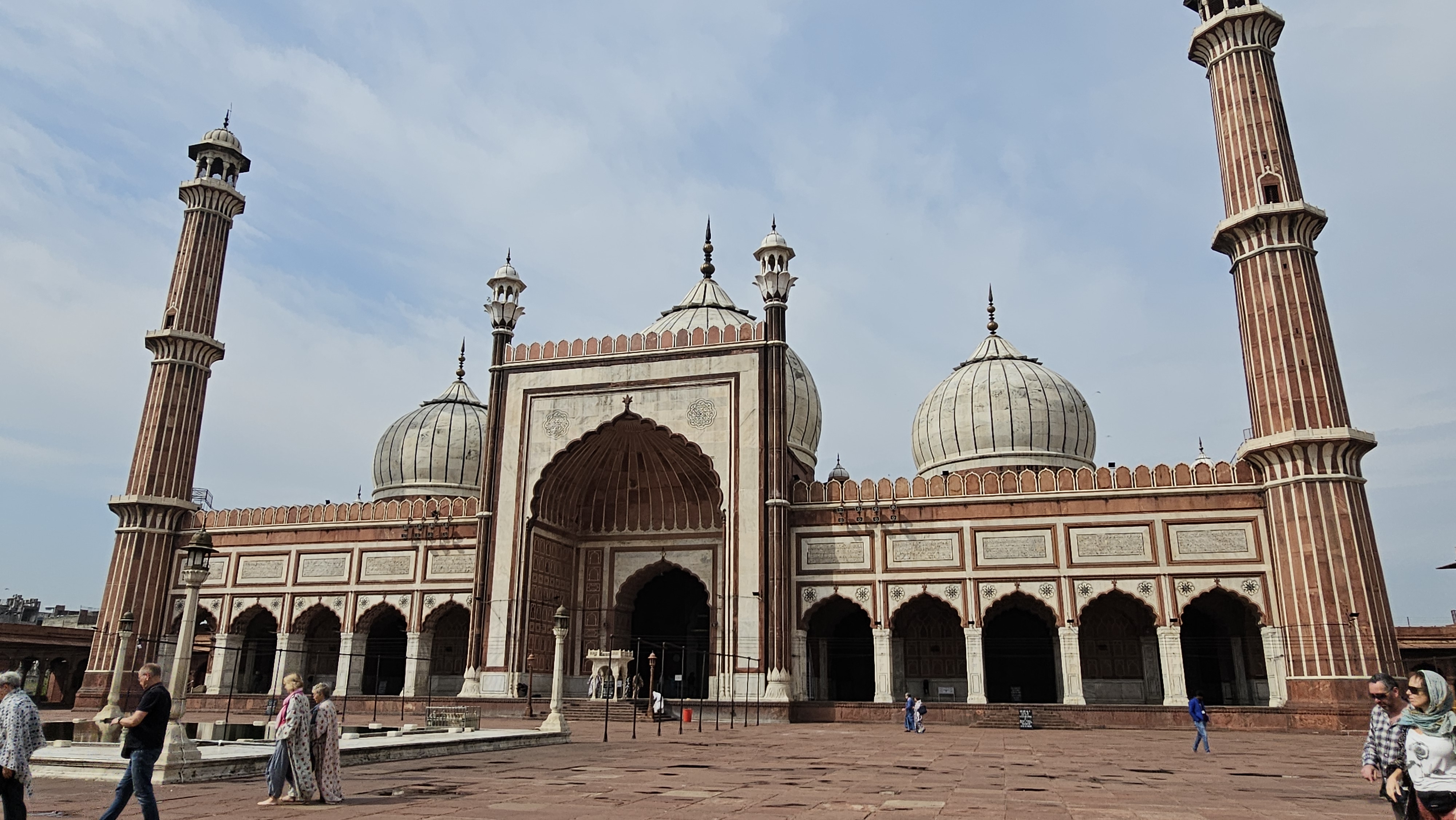
In Old Delhi we visited the 17th century Jama Masjid mosque which is the oldest and largest of the city. This Mughal style mosque was built with red sandstone and has a capacity of 25,000.
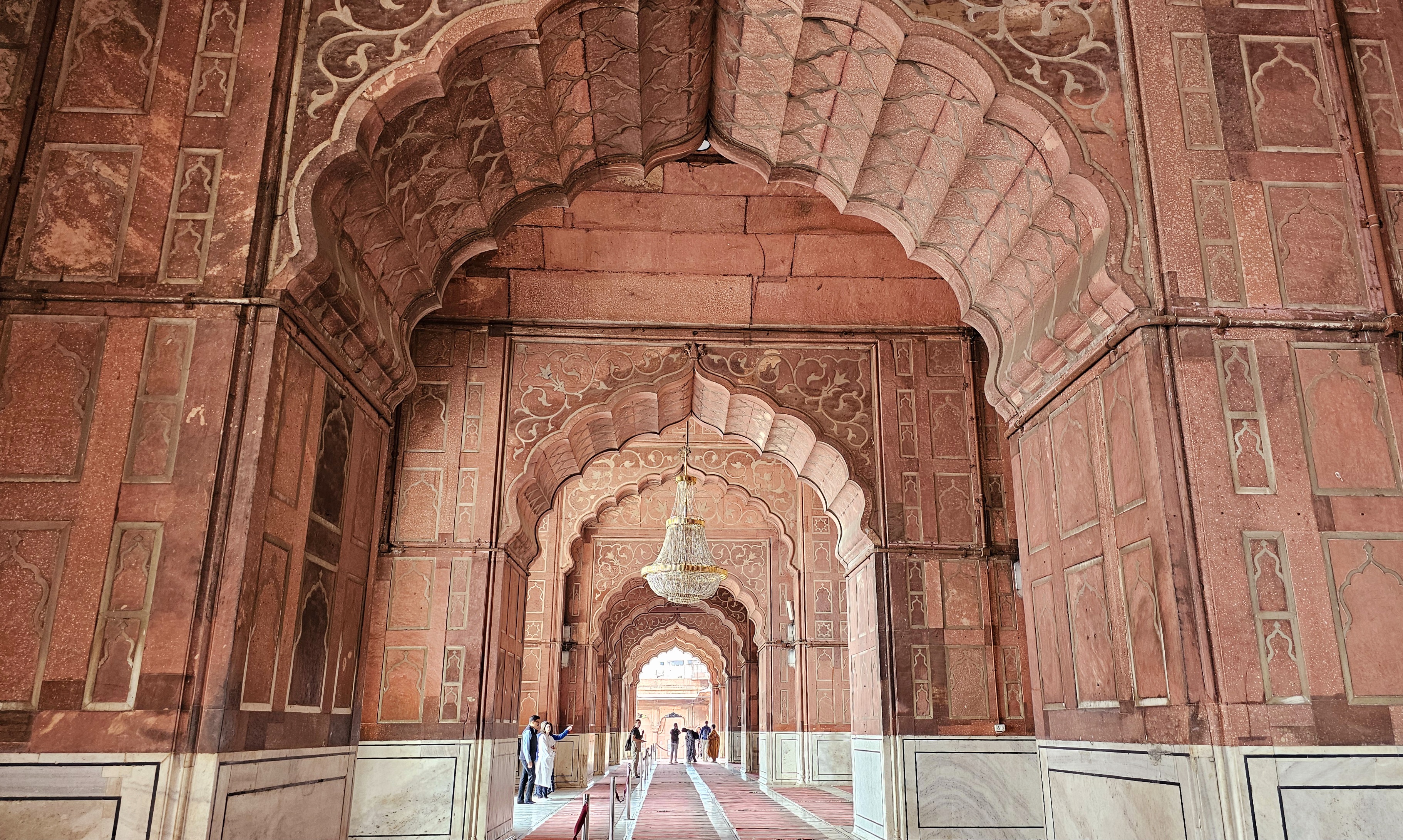
Entry was included in our Intrepid tour and even though we were all modestly dressed with our shoulders and knees covered the women still had to wear a long flowing robe which we were provided with at the entrance!
Mine was white with garish orange and yellow flowers and looked like something your grandmother may have worn at bedtime in the 1950s.


Back in the bustling and noisy streets of Old Delhi.
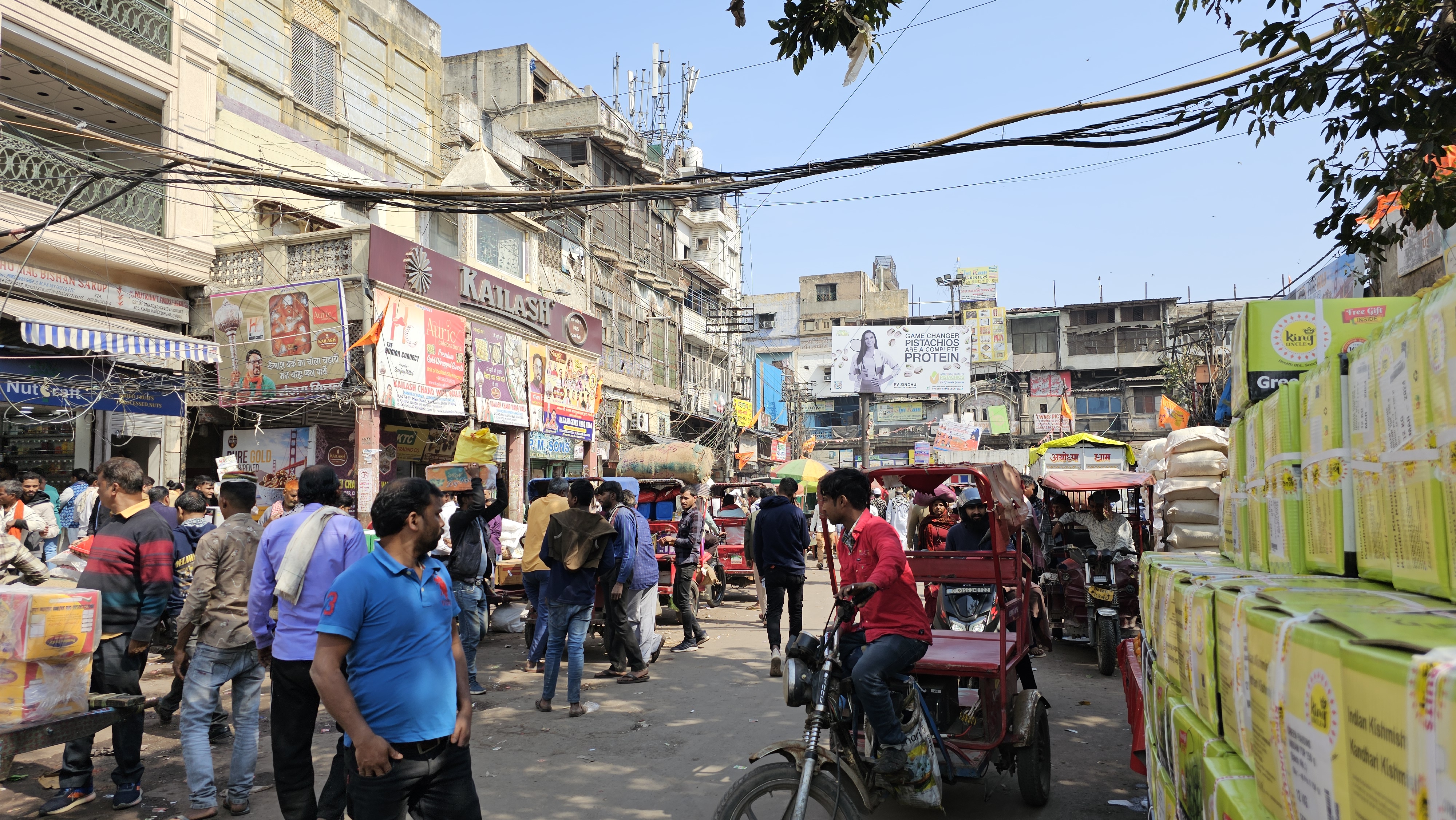
Negotiating tiny market streets was a hazard as it was necessary to dodge mopeds and tuk tuks as they sped up behind you bibbing their horns.
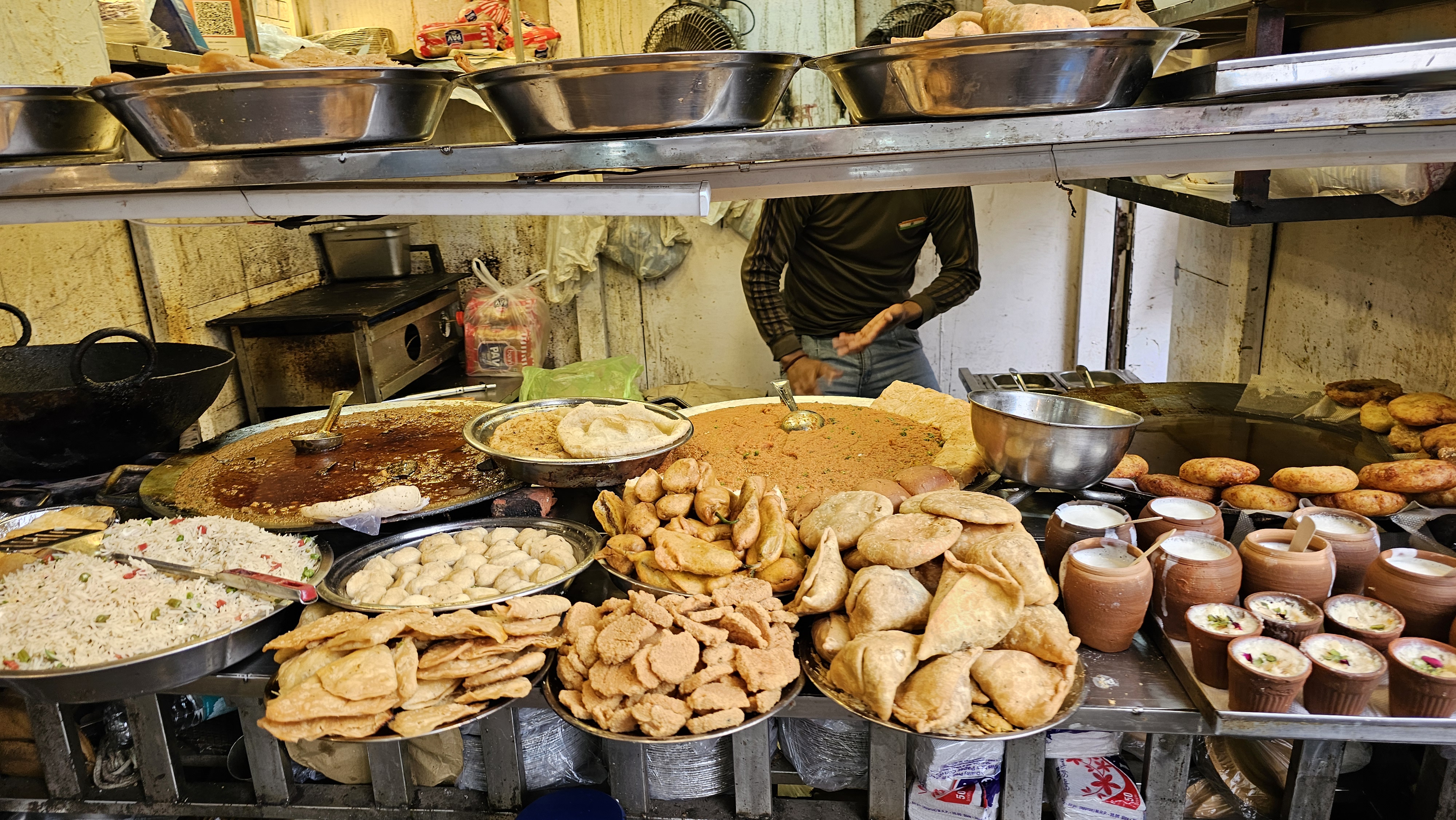
A range of different street food was available in the markets of Chandni Chowk.
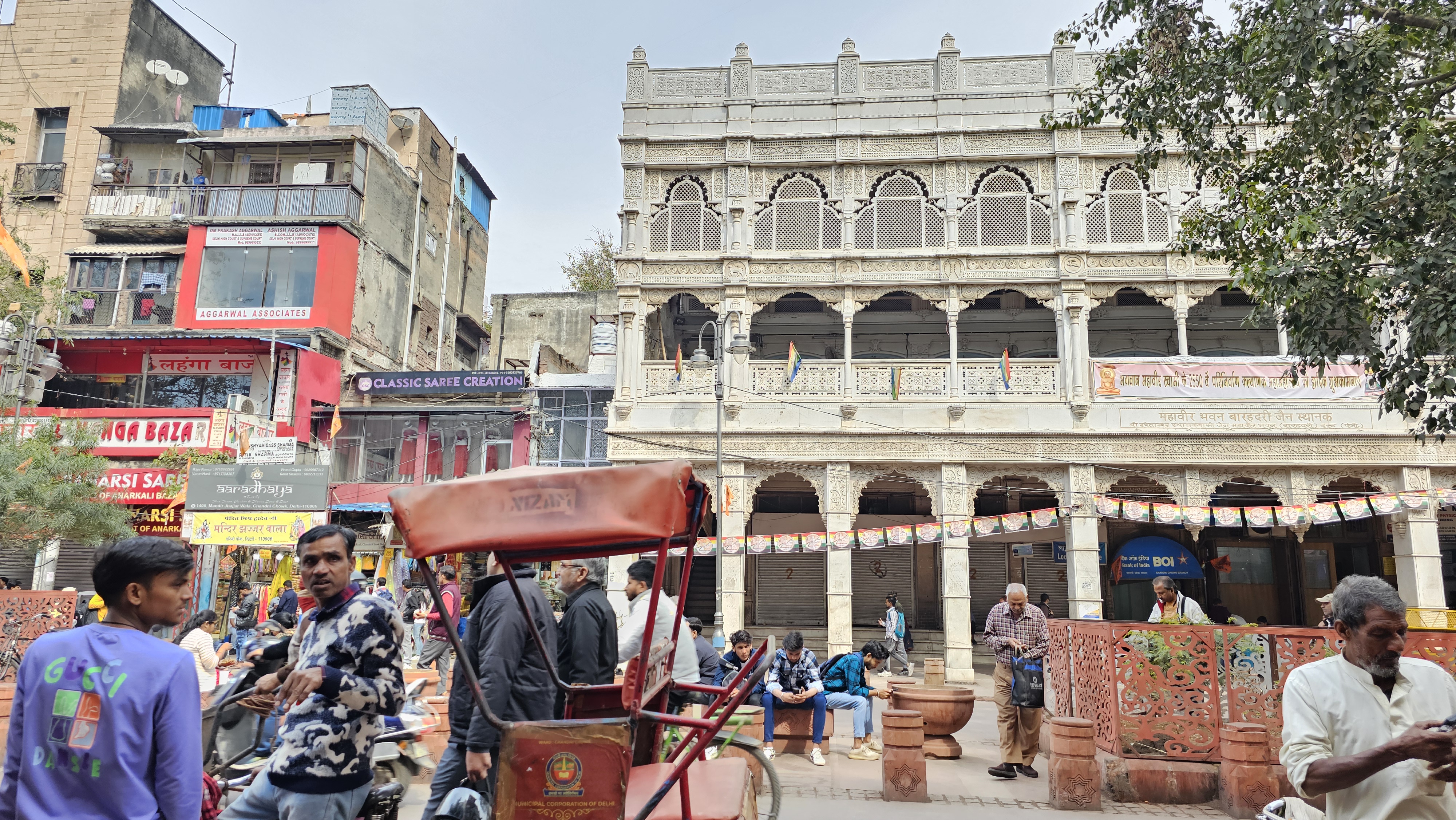
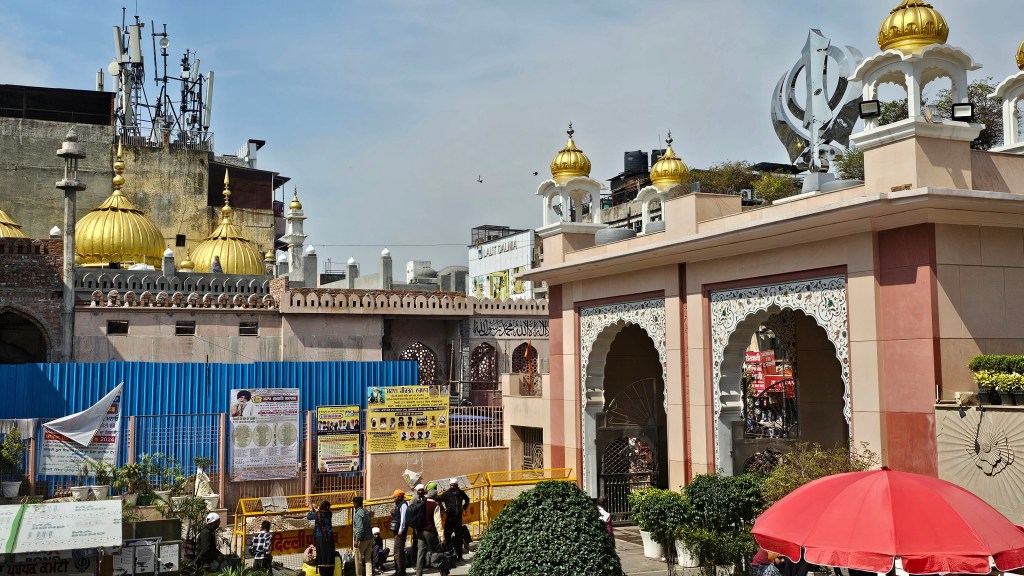
Sheeshganj Gurudwara is a Sikh temple and Maddy took us inside for a visit.
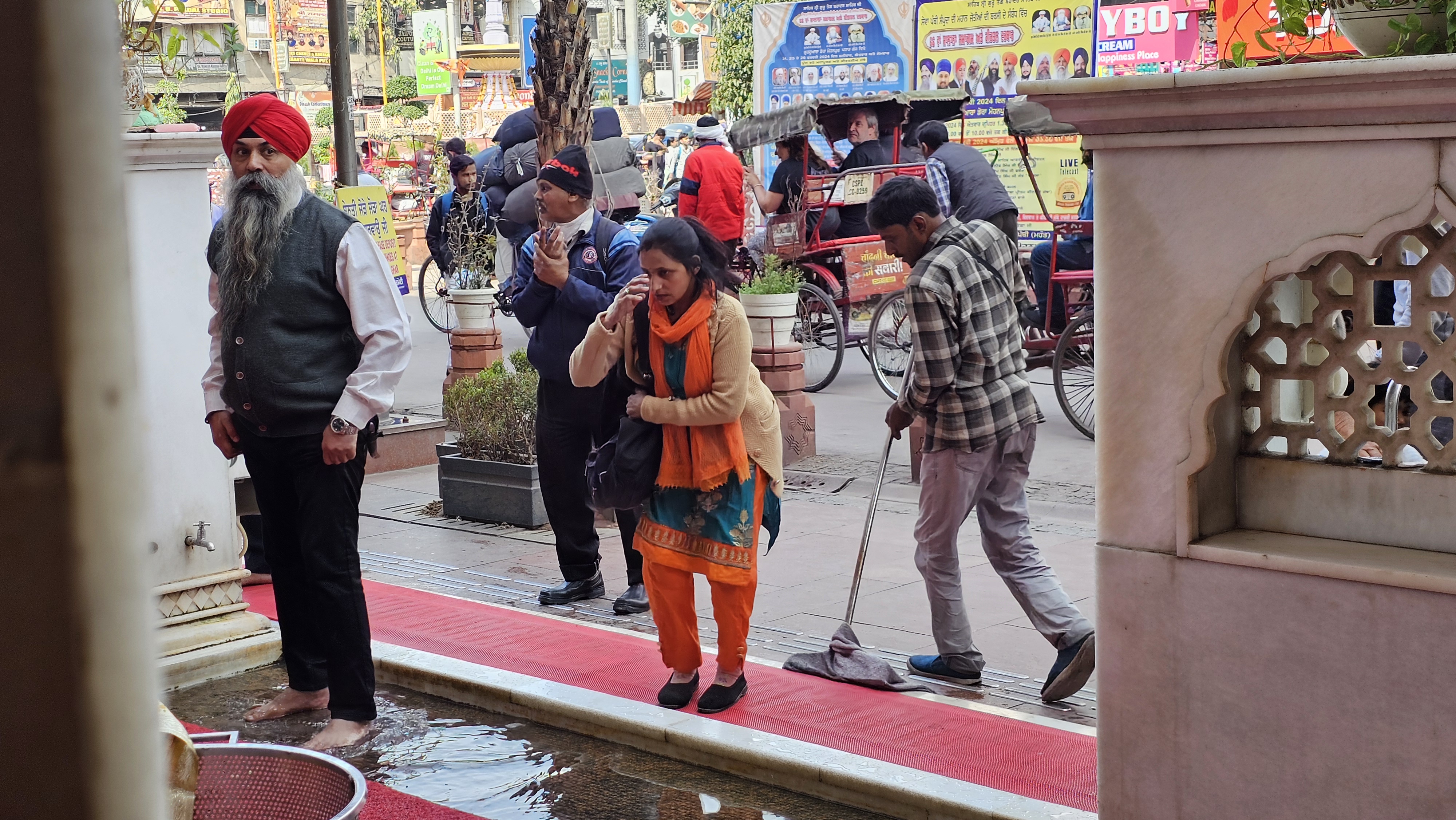
We had to remove our shoes and soxes (as Maddy called them) and walk through the foot washing area before we could enter the temple. Some people also washed their hands and faces and even drank this water! We were also supplied with an orange head covering of which men and women had to wear, unless you had your own scarf or turban.
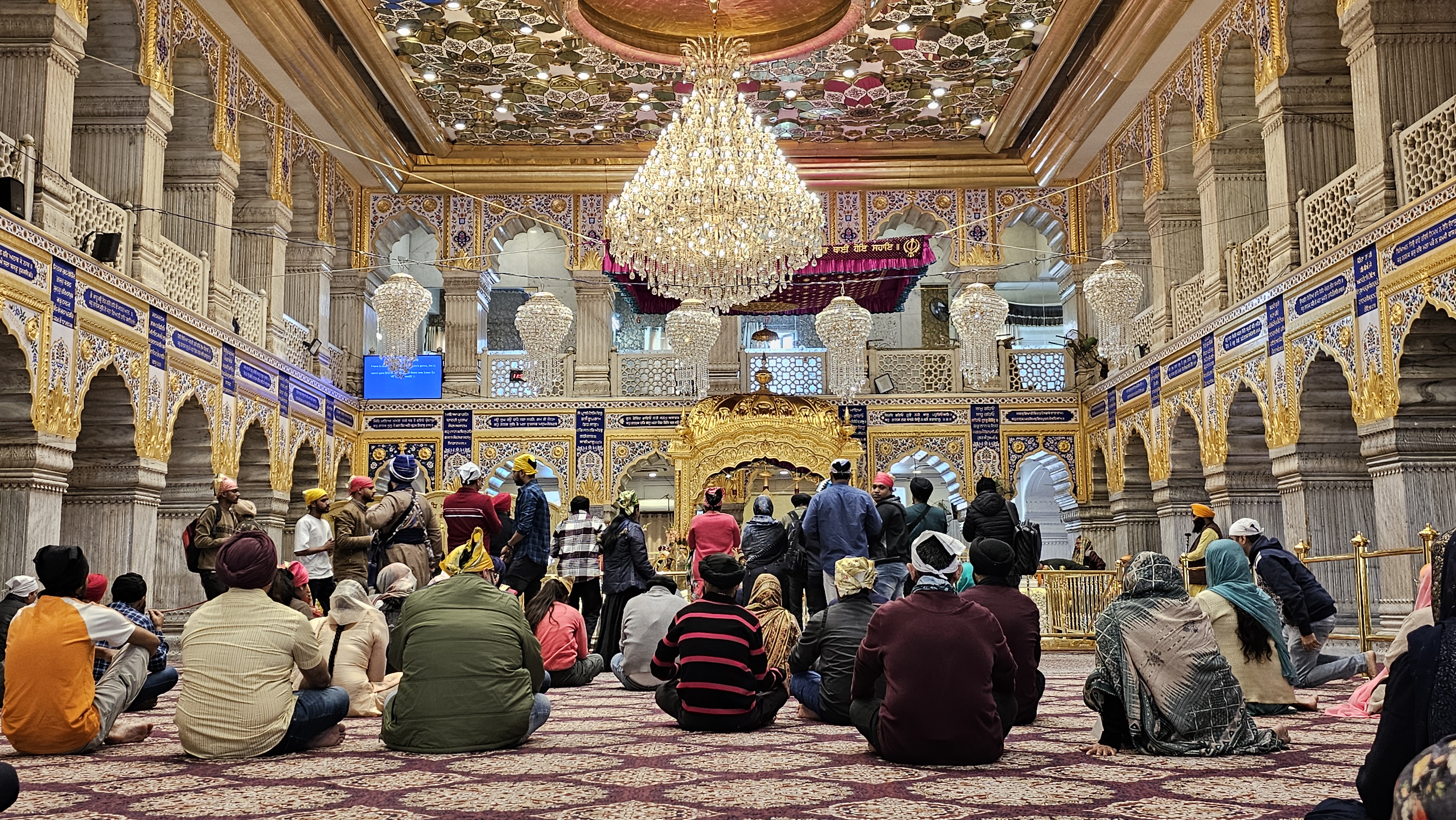
Once inside we sat quietly at the back for 5-10 minutes listening to a service. We had to cross our legs and ensure our feet didn’t point ahead at anytime. We also had to be respectful when taking photos and were not allowed to take selfies or to stand in front of anyone.
Next Maddy led us to the community kitchen area where volunteers help to make food.

Food is provided free of charge to any person who enters the temple regardless of their religion or beliefs.
From the temple Maddy organised a cycle rickshaw ride where we sat in two’s and were taken through the streets of Old Delhi.


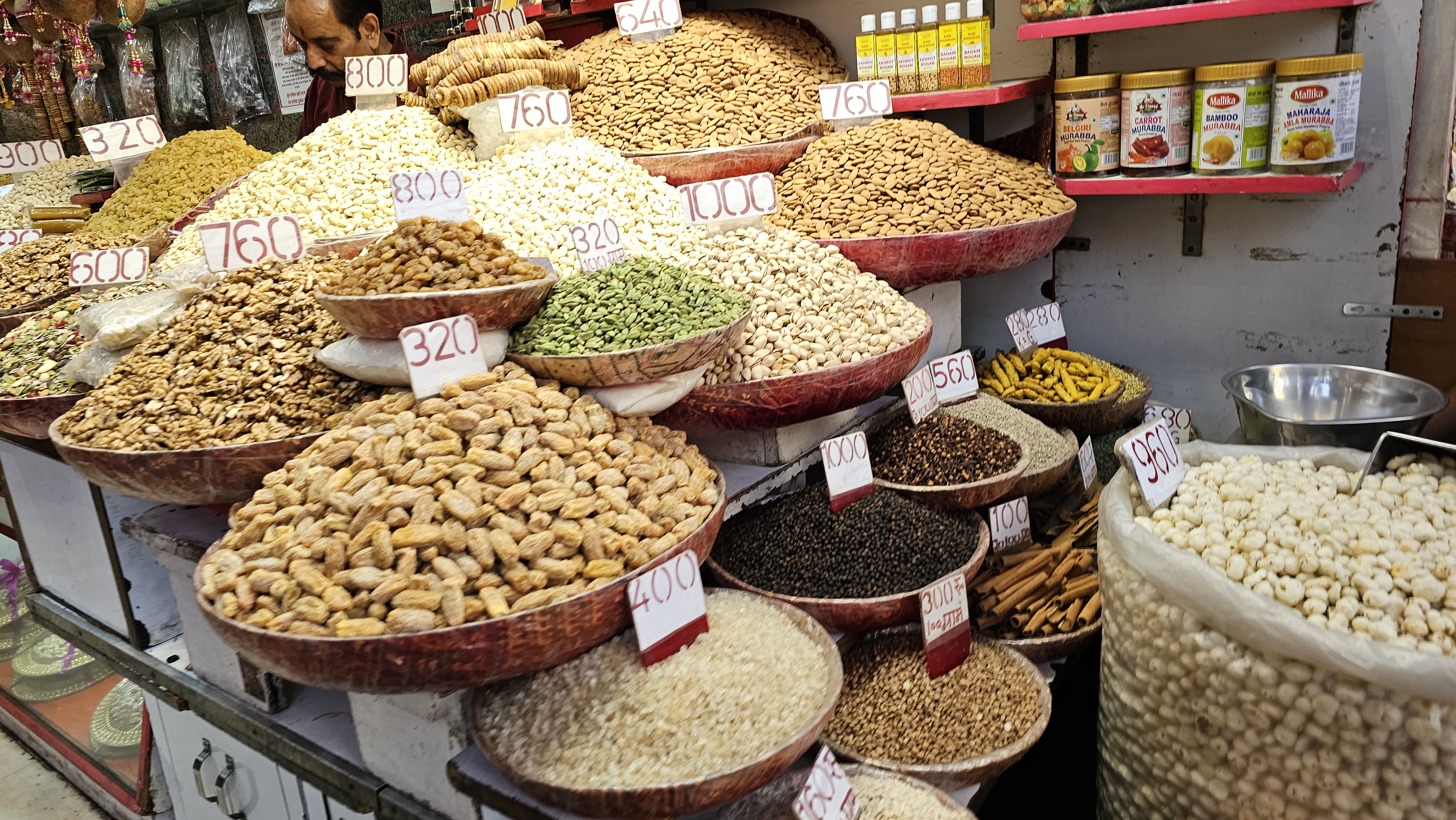
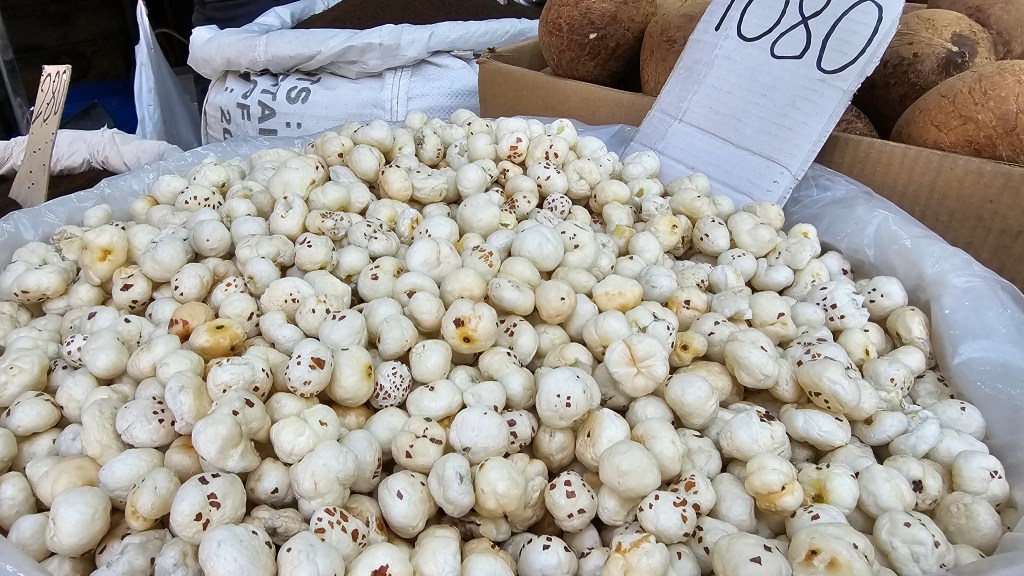
Chandri Chowk is a busy shopping area and has a large spice market.
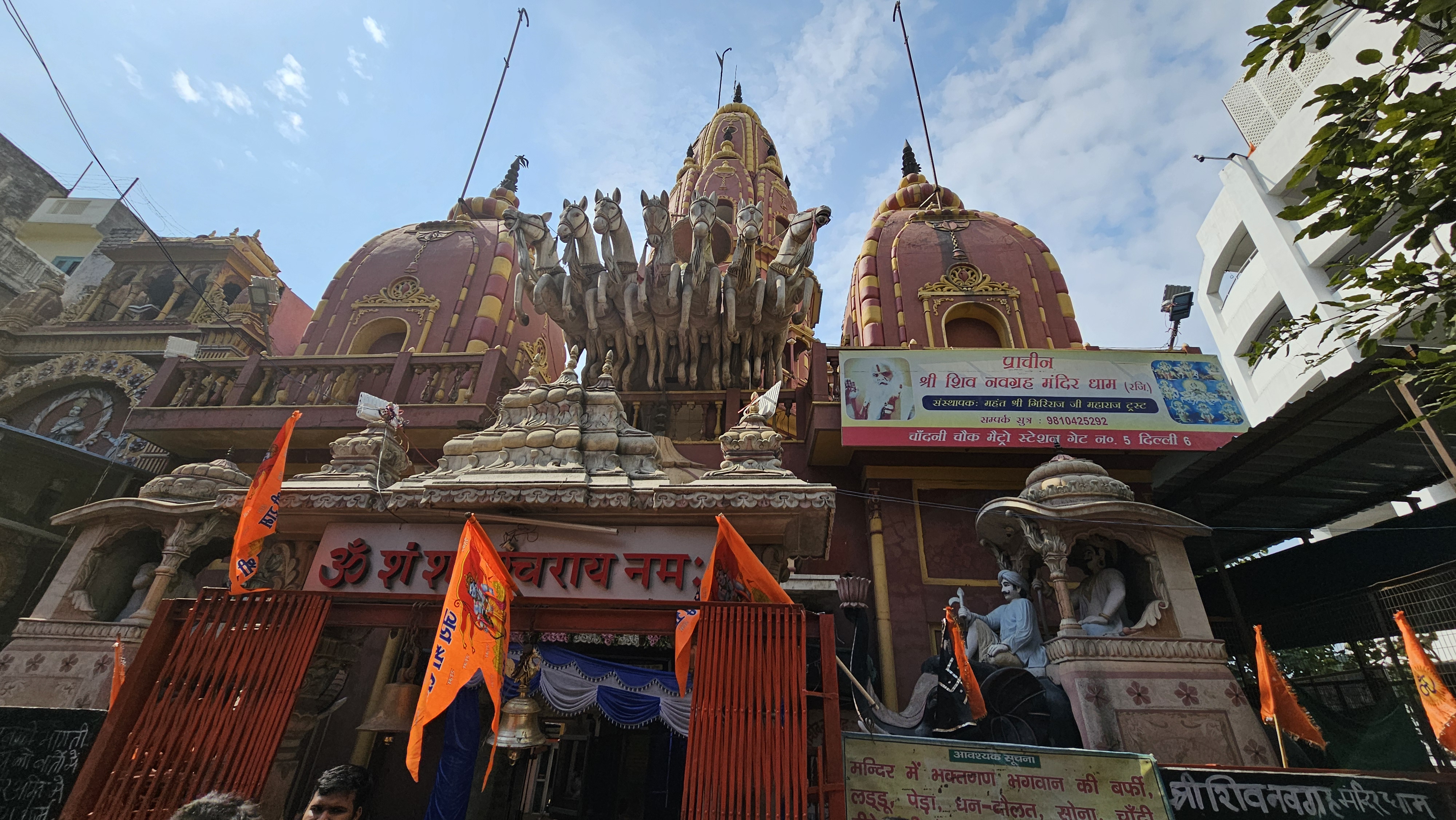
We didn’t enter, but Maddy pointed out the Shami the Saturn God temple before we returned back to the hotel again, via the metro.
That day 5 of us had lunch in an atmospheric bar close to the hotel called ‘Boheme’.
Hidden Gems of New Delhi
*** Fast forward 2 weeks ***
Once the Intrepid trip had finished, I spent my last day on a 5 hour tour of New Delhi. I had booked this Intrepid ‘Urban Adventure‘ tour via Maddy.
I was collected from the hotel by an Intrepid guide called Abby (one of Maddy’s mates) and driver Ram. In the comfortable large and new 6 seater car, I joined two other participants, both academic professors who knew each other and were in Delhi for a conference. One was a Mexican from Mexico City and the other Indian from Delhi.

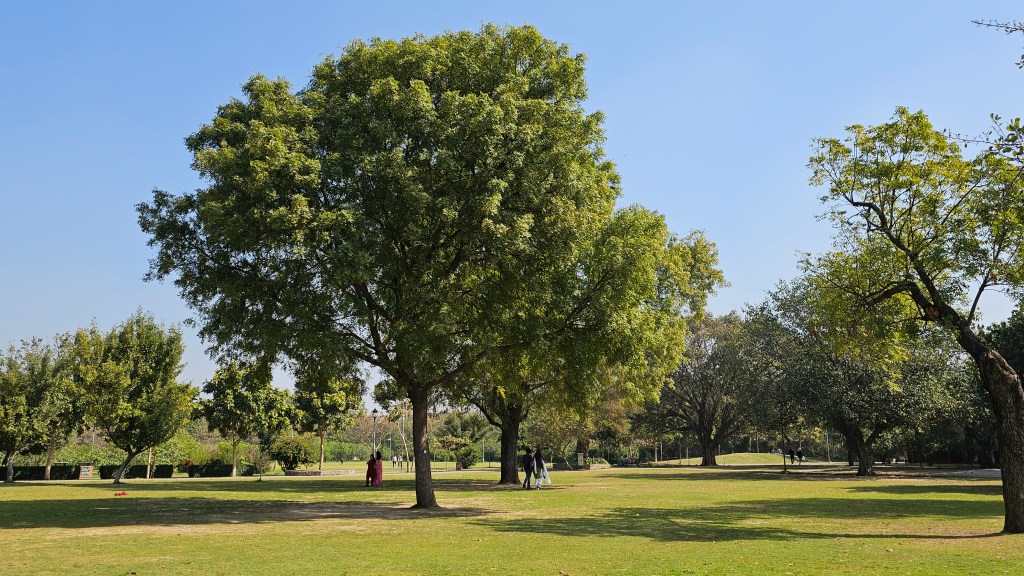
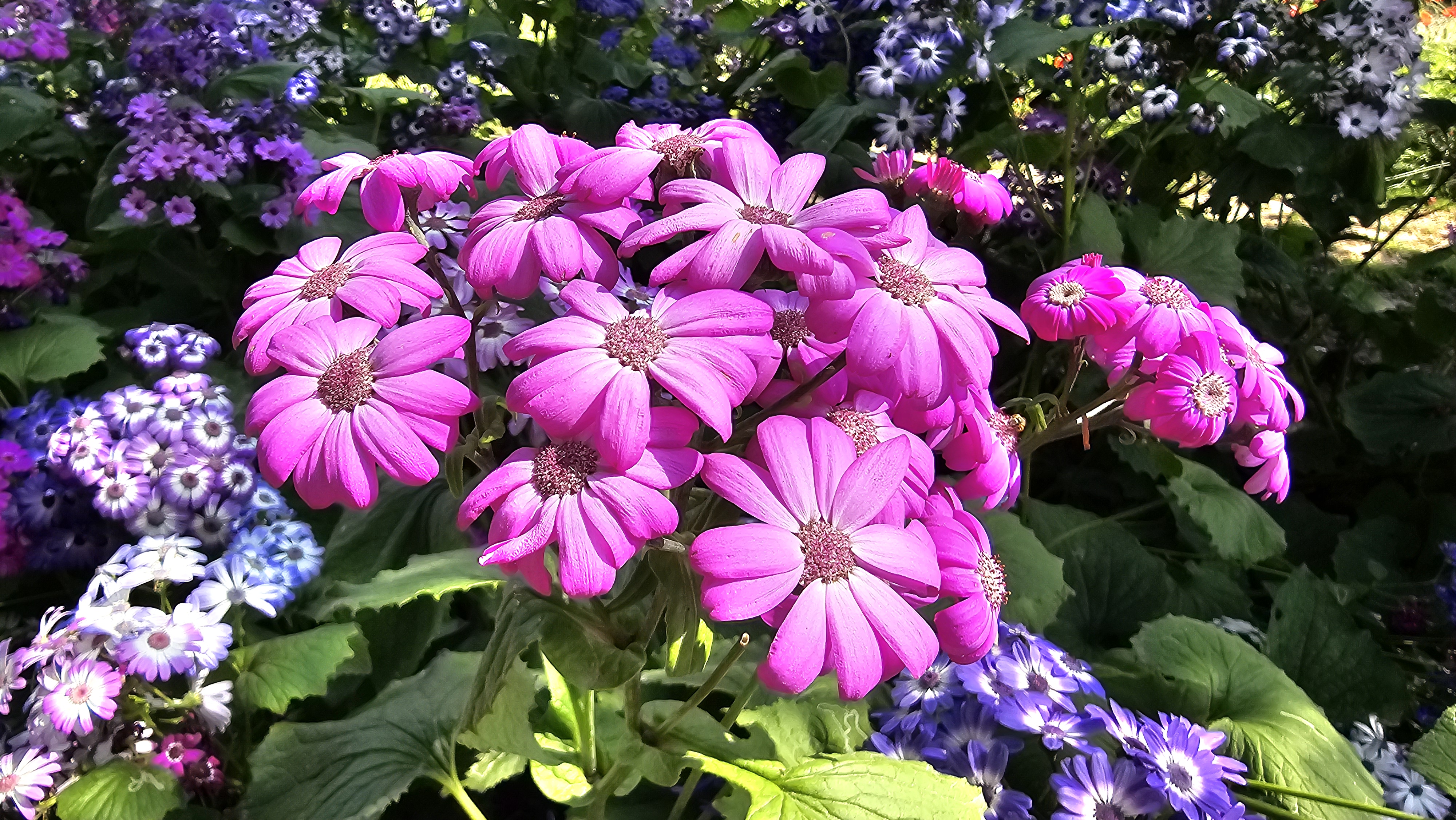
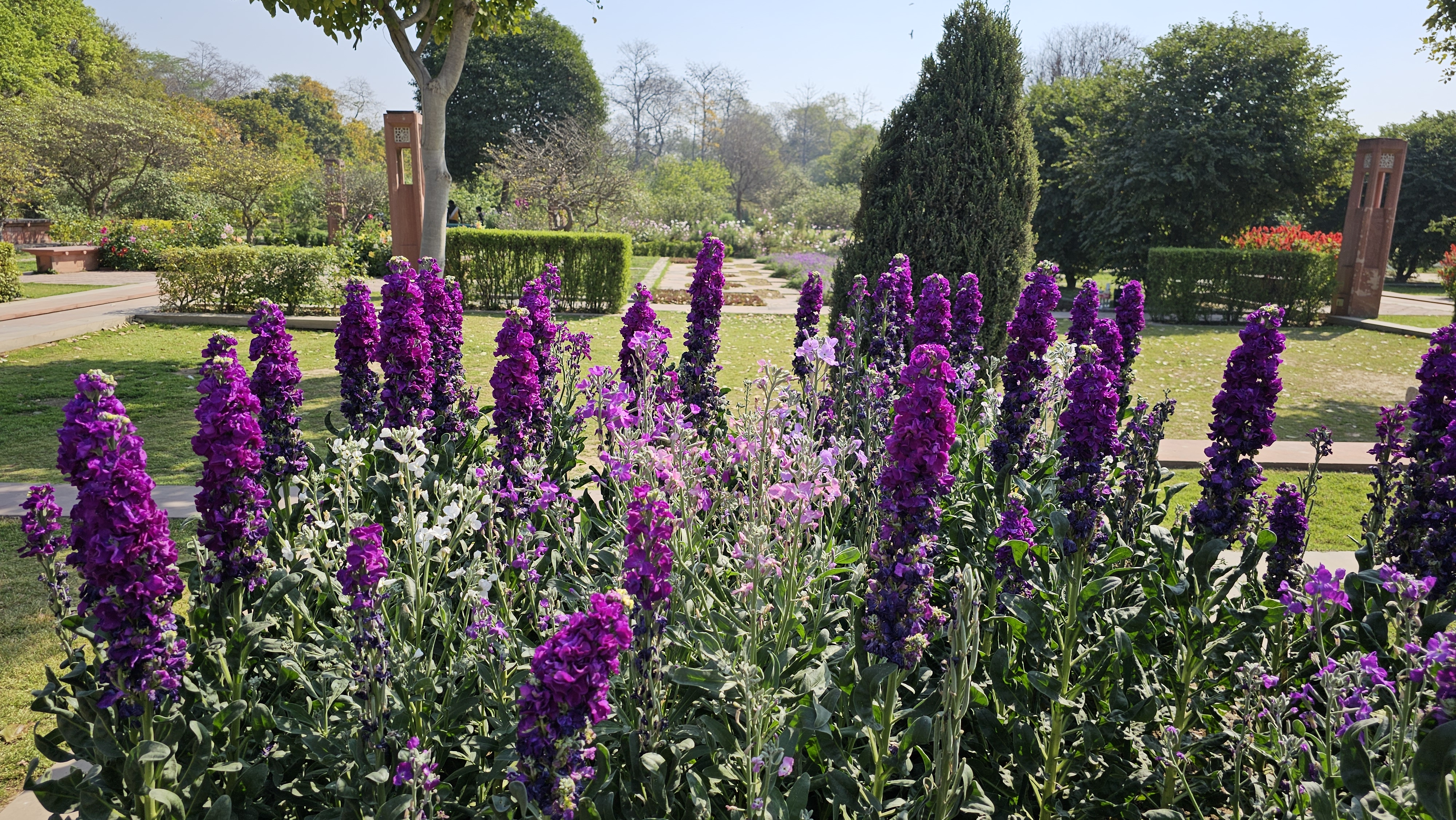
Our first stop a 30 minute drive to the south of Delhi was Sundar Nursery, a delightful green open space. The 90 acres of garden were immaculate with beautiful and colourful flowers and dotted around were some restored Mughal-era monuments.

The park wasn’t crowded or at all busy but was a gorgeous and relaxing environment for local families to spend their weekend. This was a huge contrast to the bustle and noise of Old Delhi!
Abby showed us some of the features of the park as we spent about 30 minutes walking around it. I could have spent longer but we had an agenda for the day!

Next Ram drove us to the Lodi Art District which was another lovely surprise! The roads were clean, wide and attractive avenues lined with trees and flowers. New buildings for example the Ministry of Environmental Science and the Ministry of Meteorology and embassies such as the Embassy of Georgia glistened in the sun. It was like a totally different city.

We stopped in the Lodi art district which is India’s first open air art district containing over 50 huge murals. The above mural is apparently a new one.

Local and international artists have created the murals and each have a plaque with details of the artist. Urban Adventures explains this initiative was started by the St+art India Foundation “a non profit organisation working to make art accessible to a wider audience”.

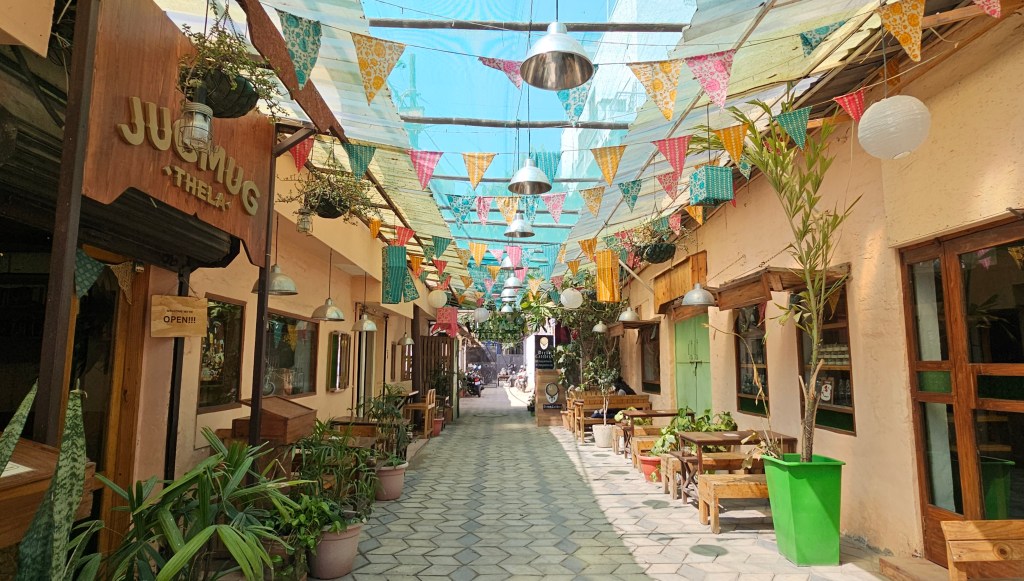
Next it was time for a snack and Abby led us through a vibrant alley of modern and quirky coffee shops to a place called Jugmug Thela where we sat in the pleasant colourful courtyard and were asked to order one drink and one snack from the menu (complimentary as part of the trip). Abby explained this cool and trendy area comes alive in the evenings with the young and the hip.
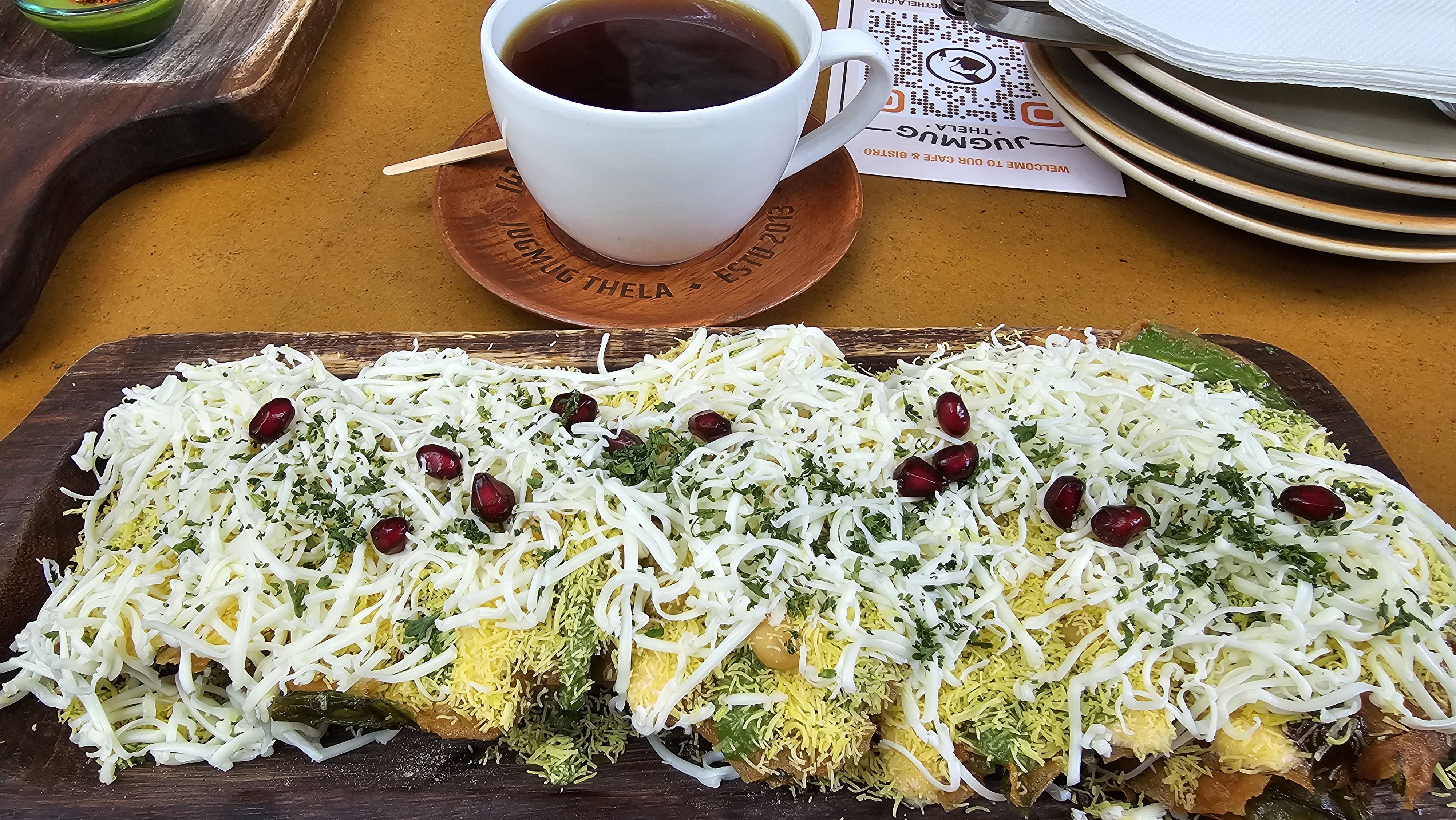
Items on the menu are inspired by popular and market snacks from the city. I chose ‘cheesy palak patta chaat’ which were crispy spinach fritters with sweet and sour chaat dressing, pomegranate seeds and cheese. This crunchy tasty snack with the delicious sauce was amazing and is recommended.

Our final stop was at the Mehrauli Archaeological Park which dates back to the 12th century. Abby and my two chatty and friendly companions (above) walked through the shaded forested grounds to one of several historic monuments.

The Mehrauli Archeological Park is spread across 200 acres and contains over 100 historical monuments. Mehrauli is the oldest part of Delhi.
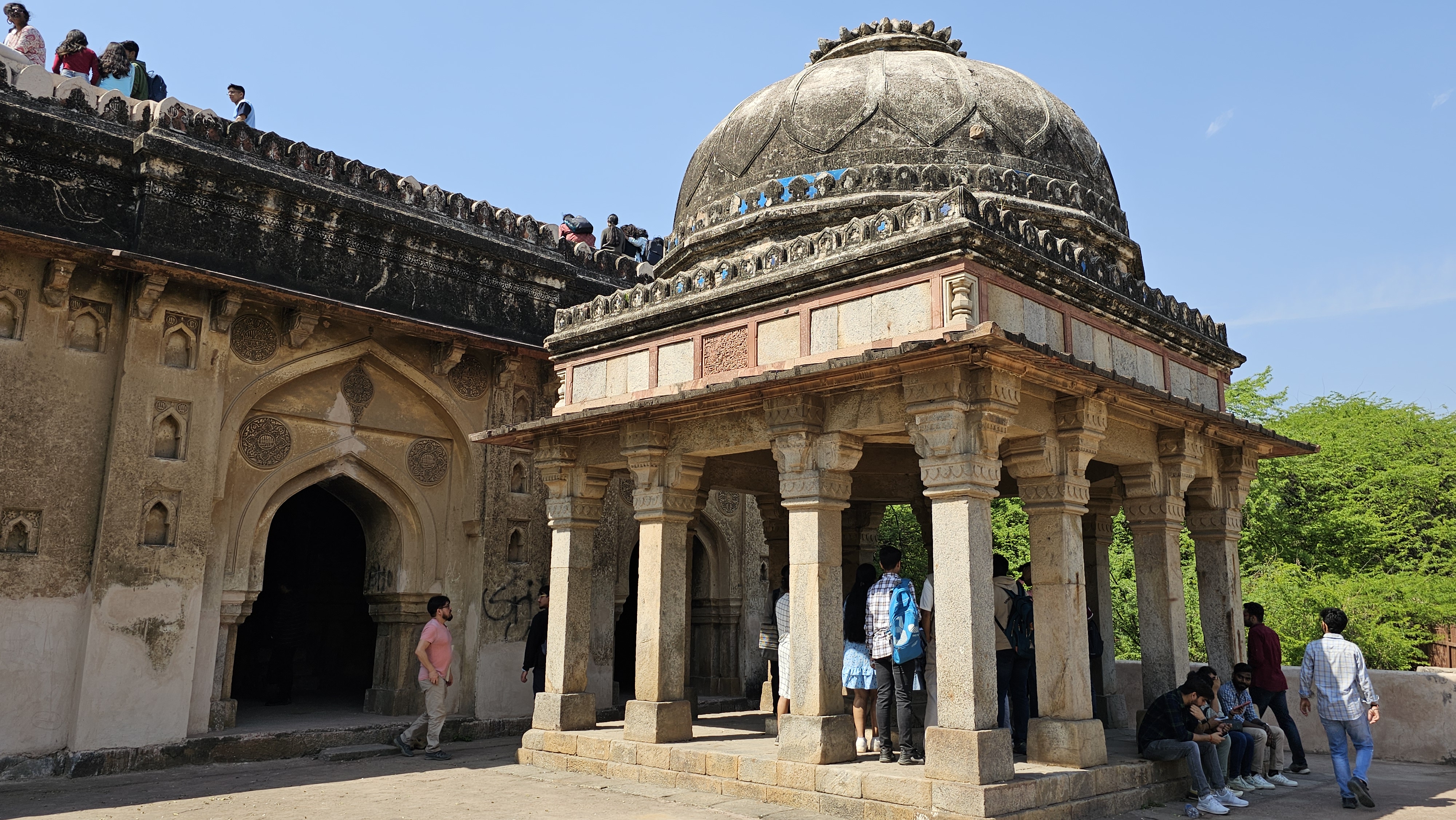


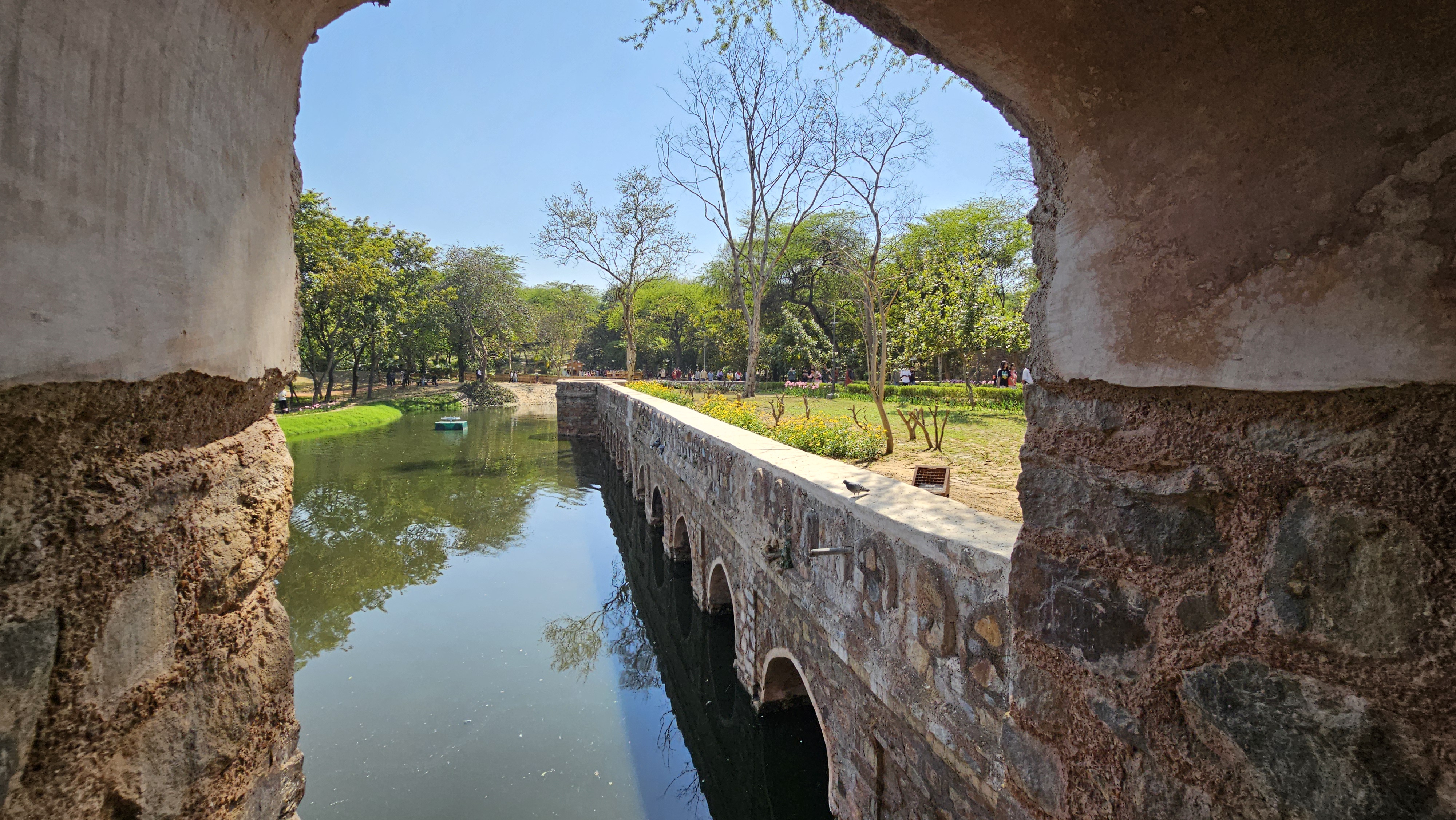
Next we visited Metcalfe Boathouse where it is believed to have originally been a tomb which was later modified by Thomas Metcalf.

Built in the early 17th century, the octagonal Tomb of Quli Khan had been a forgotten and crumbling structure until the site was renovated as part of the ongoing restoration work of the Mehrauli Archeological Park.
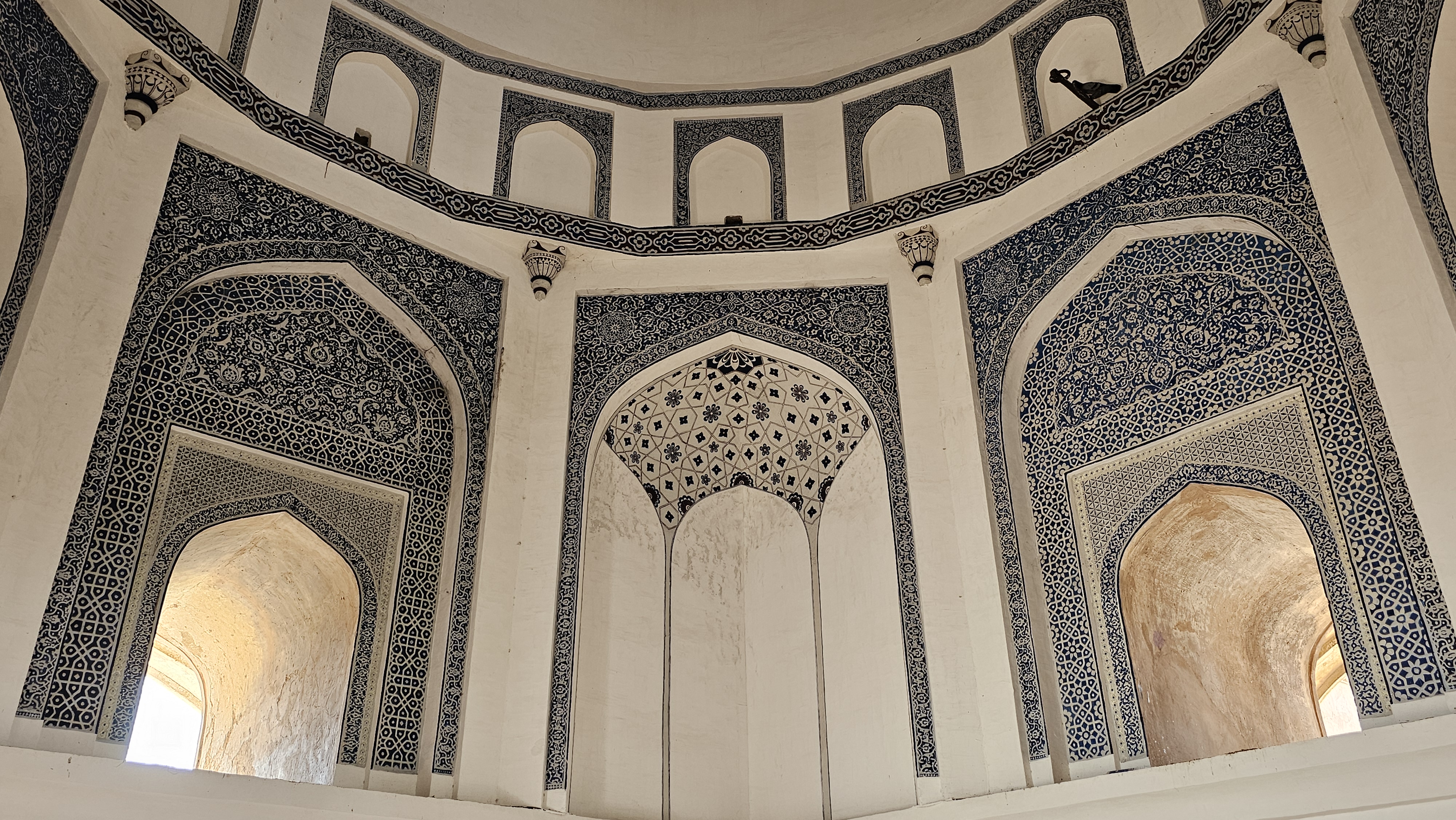
I was amazing to see the inside of the Quli Khan Tomb which was decorated in exquisite blue and white patterns.

Above is Qutub Minar which is a minaret and victory tower which was built between 1199 – 1220 and consists of of 399 steps. Throughout the centuries the tower has suffered from earthquake damage and has been renovated several times. It became a listed UNESCO World Heritage site in 1993. I didn’t go up to the tower but had a good view from the Quli Khan Tomb.

What a wonderful 5 hours to spend exploring New Delhi, something I would recommend for anyone on a visit and wanting a total contrast to Old Delhi.
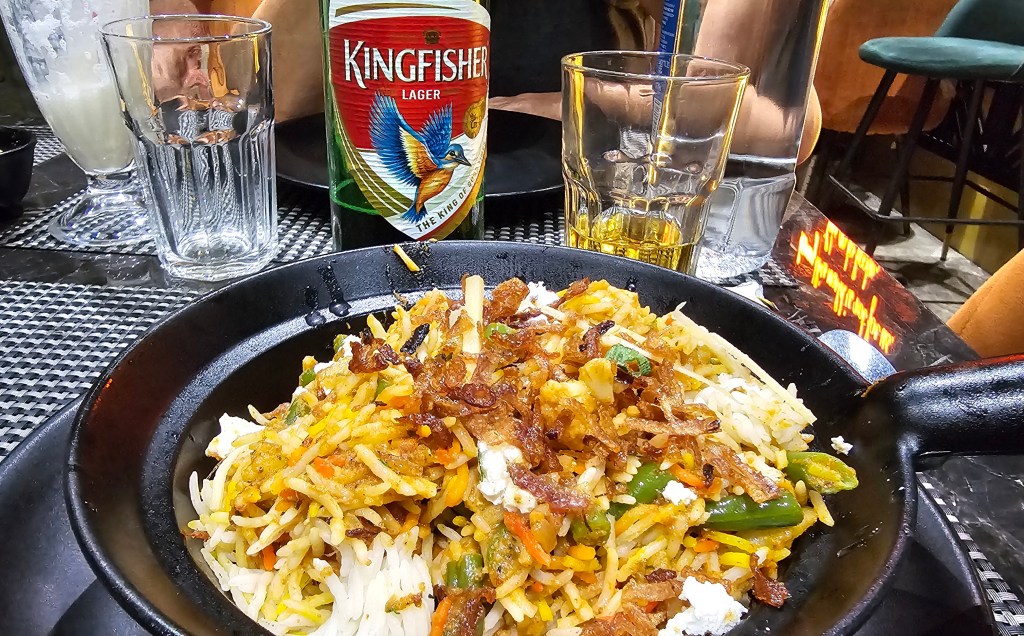
Food
My first curry in India was a superb vegetable biriyani in Hooter restaurant which was a few minutes walk from the Pooja Palace hotel. This and the bottle of Kingfisher was 824 rupees including tax and service charge so just over £8 in total.
Overall during the two week trip the food was consistently excellent and I had wonderful curries every day. Not once did I experience even the slightest hint or twinge of ‘Delhi belly’. As always food will be a fairly significant feature of my up and coming series of India posts.
Visa tips
Obtaining my one one month e-visa for entry to India was a somewhat frustrating experience which took me about 3 hours! As a reminder for my next visit (and for anyone else who is interested) these are my tips:
- List every country visited in the last 10 years: you can only add 20 so I chose the more significant countries of which I had a passport stamp for (and ignored the European ones).
- Take a recent photo of yourself and save as PDF: this had a maximum size of 300 kb so took several attempts of reducing the image size and converting JPG to PDF to enable it to save.
- Upload an image of your passport page: as a JPG. And taken while trying to prop up the passport, keep it open and avoid the glare on the shiny bits!

Money tips
While credit cards are fairly widely accepted in India, from past experience of group tours, dealing with group dinner bills is usually easier if you pay with cash. Most places are not too keen on 12 separate card payments from one table! So for this trip I decided on a cash rather than card focus.
The Indian rupee is a closed currency meaning you will need to obtain it once you’re in India. I covered 2 bases and brought some GBP in cash and topped up my Monzo currency card.
Both options were easy. As soon as I arrived I withdrew 10,000 rupees from the airport ATM and at a cost of £97 this seemed a good rate (according to XE.com). This atm even allowed me to choose which demonimations of currency the amount could be split between. The 500 rupee note is the equivalent to £5.
My hotel offered currency exchange and again on the first day I changed £100 in cash and received 10,200 rupees.
In Shimla I did have an issue with an ATM. The machine froze during the transaction and kept my card. Thankfully this ATM was located inside a bank and the bank was open. A member of staff simply unplugged the machine, pressed a button and my card was released. “Network issues” he explained…
This was not the first time I’ve had ATM issues in Asia so another reason to highlight the importance of using a commission free pre-loaded debit card such as Monzo. You get immediate notification of any transactions (if you have data or wifi) and if the worst happens and you lose your card in the machine, you can immediately cancel it.
I only use Monzo abroad and usually keep no more than £100 – 200 in this account so if the account is compromised, you don’t loose too much and it is all kept right away from your main current account.

Costs
India is relatively inexpensive compared with the UK and Europe. The average meal each day was under £10 including a drink. Alcohol is heavily taxed and wine is expensive so if you stick with beer and especially if you have soft drinks you can keep your costs right down. Most meals were not included as part of the trip and throughout the 2 weeks I spent under £300. So for breakfast (around £3 per day); lunch and dinner my average daily food costs was under £20.
Hotel tips
Each of the 6 northern India hotels I stayed in during my 2 week trip contained a kettle so for my next visit I’ll bring some of my Pukka tea bags and maybe some coffee.
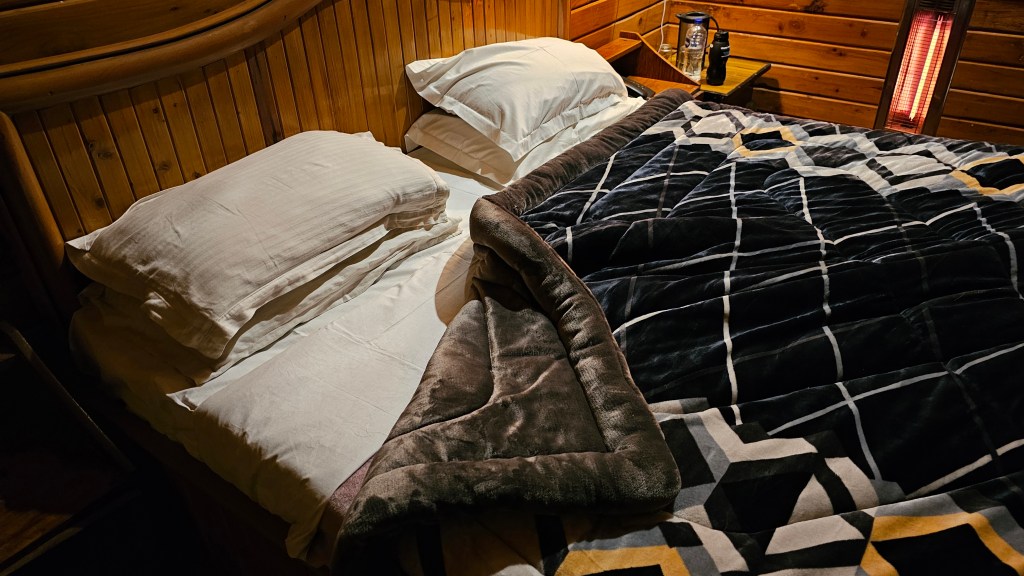
End of February/early March is cold in the mountainous area of northern India and not all hotels had heating so warm layers are advised. However each of these hotels supplied a big thick over blanket.

Each hotel had 3 pin sockets with the top pin being larger than the other two so this 3 pin plug adapter is the one to take (this is the same adapter I used in Nepal).
All had wifi although this varied with some having a stronger signal than others. In one hotel it was only available in the reception area and in another hotel it went off with frequent power cuts.
Summary
What a fabulous introduction to diverse, historical and vibrant India! I already have a few more trips back to India in mind so I included the details as above to serve partly as a reminder to myself.
I have a series of India blog posts coming up which contain detailed information about the rest of the trip. Next up will cover my visit to the Taj Mahal, Baby Taj and Agra Fort.
 frombluetogreen.com
What an amazing trip. The food looks fabulous. I’ll look forward to your upcoming posts about India.
LikeLiked by 1 person
Thank you for your comment and hope you enjoy more of the India posts where the wonderful Indian food will be featured throughout 🙂
LikeLiked by 1 person