
Post written by Laura
Continuing after the border crossing from Armenia on my G Adventures trip my first introduction to Georgia was a visit to a winery for wine tasting 🍷
Our new Georgian guide Anna had introduced herself and the 14 of us boarded a full size bus which gave us all plenty of room to stretch out.
With a packed lunch to keep us sustained we travelled for over 3 hours towards the Kakheti wine region and arrived at the Mosmieri Winery at around 4:30 pm.

Telavi and Mosmieri Winery
This was a lovely, modern and well maintained place which reminded me of the Piattelli winery Chris and I had visited in Cafayete, Argentina for our anniversary lunch and wine tasting back in November 2016.

Georgia is well known as a wine producer and has been doing so for over 8000 years which makes Georgia the oldest wine producing country in the world. With it’s ideal grape growing micro-climate, Kakheti is Georgia’s largest wine producing region.

We were shown the large tanks and barrels and the wine making process was described to us. We were then taken into a room where the traditional Georgian wine making method was explained.

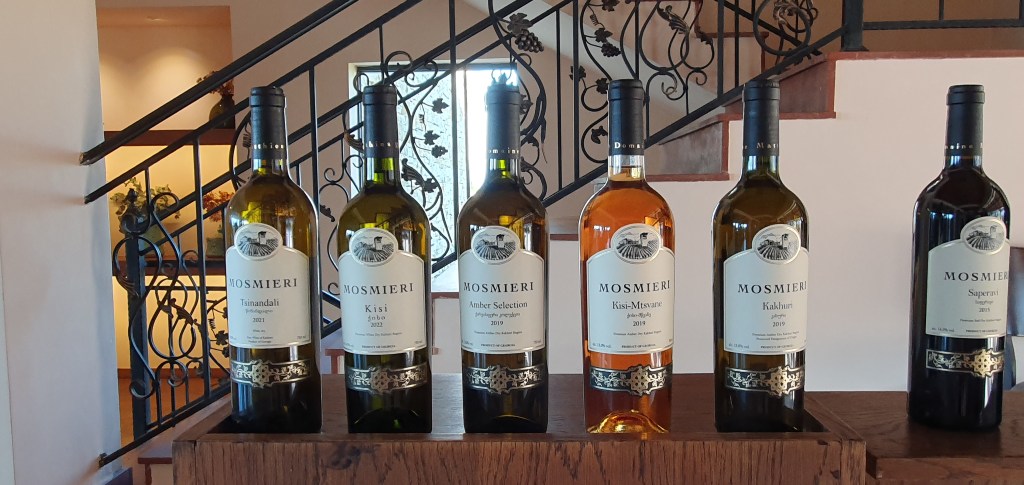
The best bit was the tasting! We had a long table and our host was soon filling our glasses… half filling our glasses with delicious samples of white and red wines to savour.
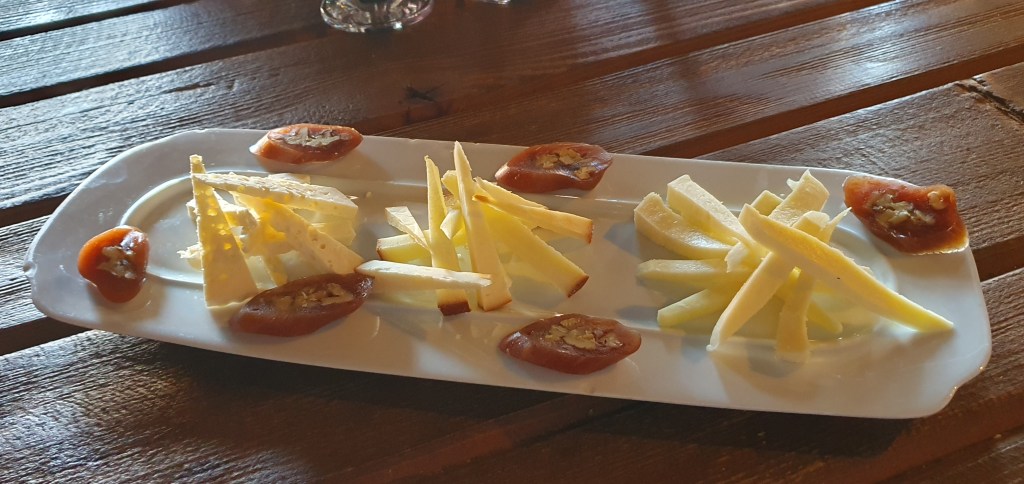

As wine tasting goes, the measures were generous and ended with us being asked to finish the bottles off! About half of us from the group stayed at the table to do so while polishing off the tasty Georgian cheese platters.


A couple were celebrating their marriage at the gorgeous winery setting. This was their table all set up and waiting for them with a wonderful view across the vineyards and towards the mountains.
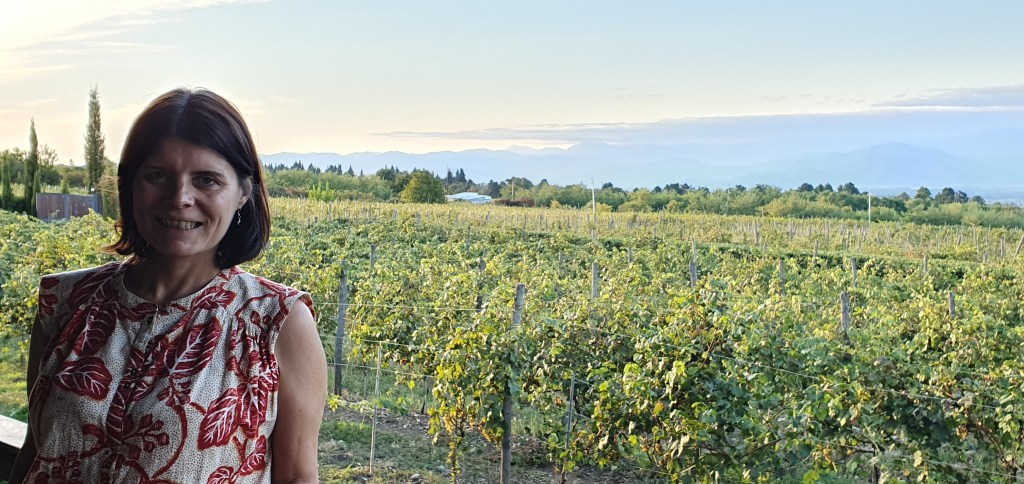
All in all we had a fabulous time at the winery. That night we stayed in our first Georgia hotel, the Hillside Resort which was in a quiet street on the edge of Telavi, not far from the winery.

Sighnaghi
Having checked out of the hotel, our first stop the following morning was to Sighnaghi village, still in the Kakheti region. Sighnaghi is known as the ‘City of Love’ as many couples visit this pretty pastel coloured town just to get married. The town registry office is open around the clock and foreigners can also get married here if they just show up with their passports!


Our guide Anna led us through Sighnaghi pointing out the various places of interest.

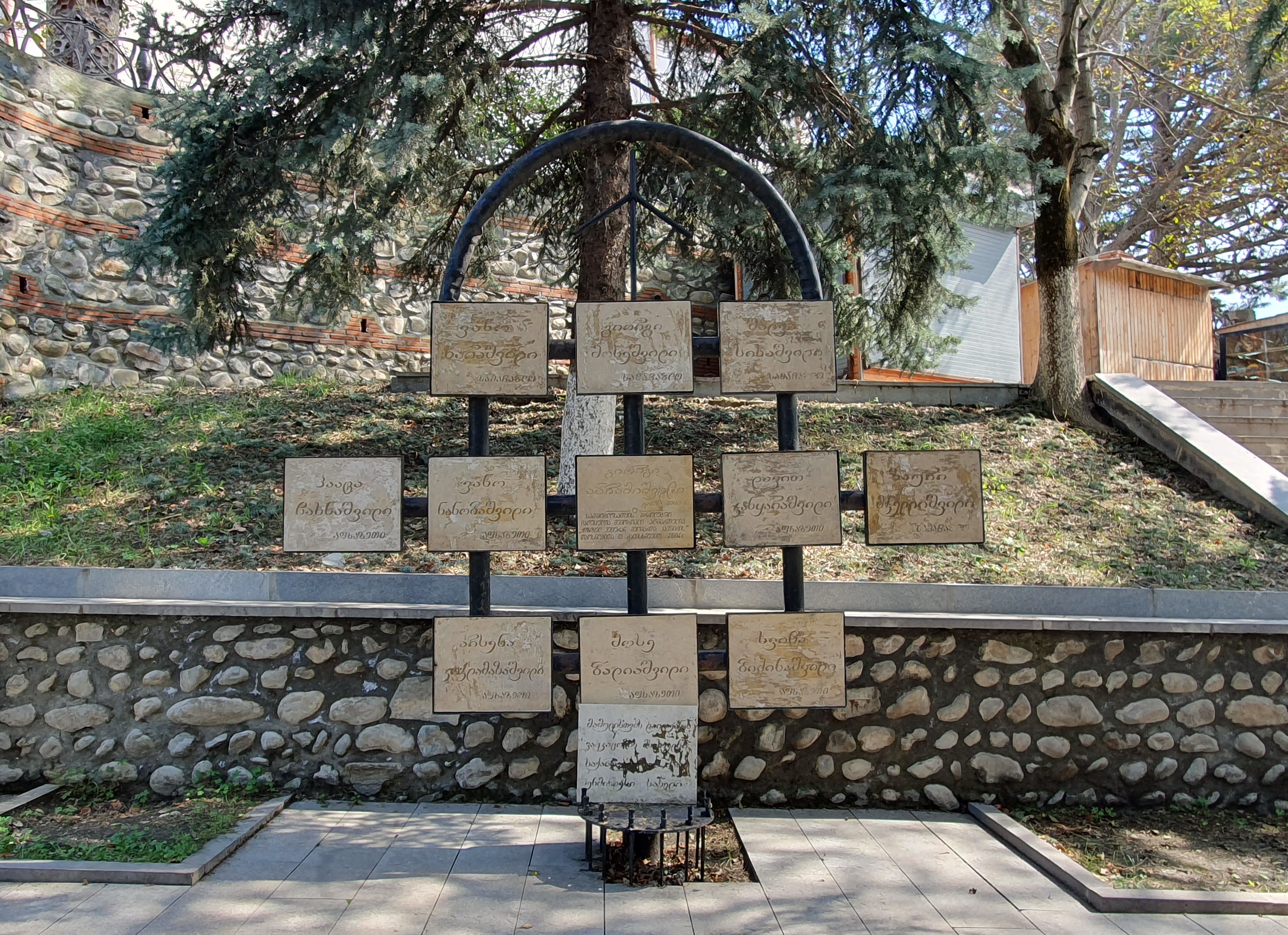
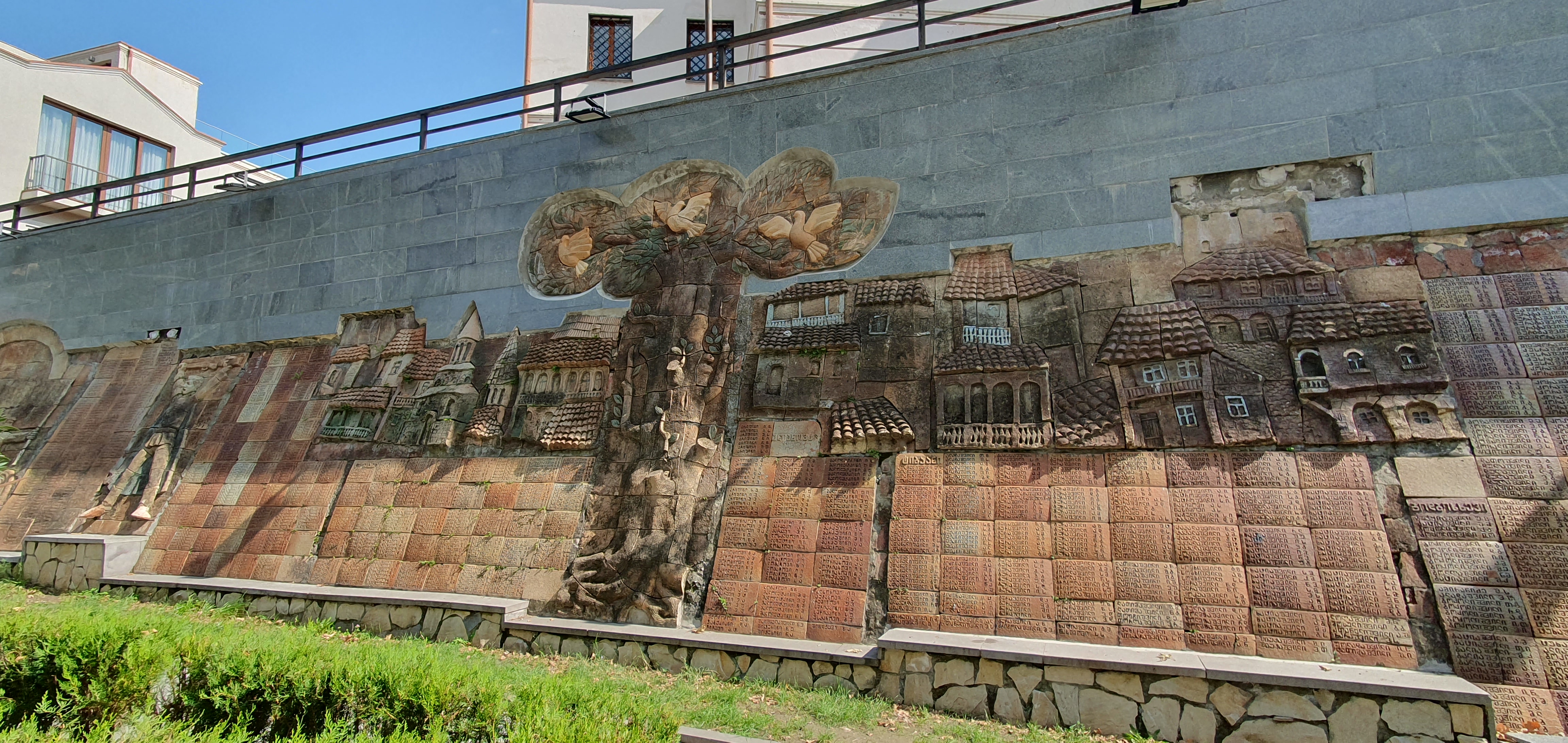
The town centre WW2 memorial wall lists names of those who lost their lives.

At 4.5 km, Sighnaghi’s 18th century fortifying wall is one of the longest in Georgia.
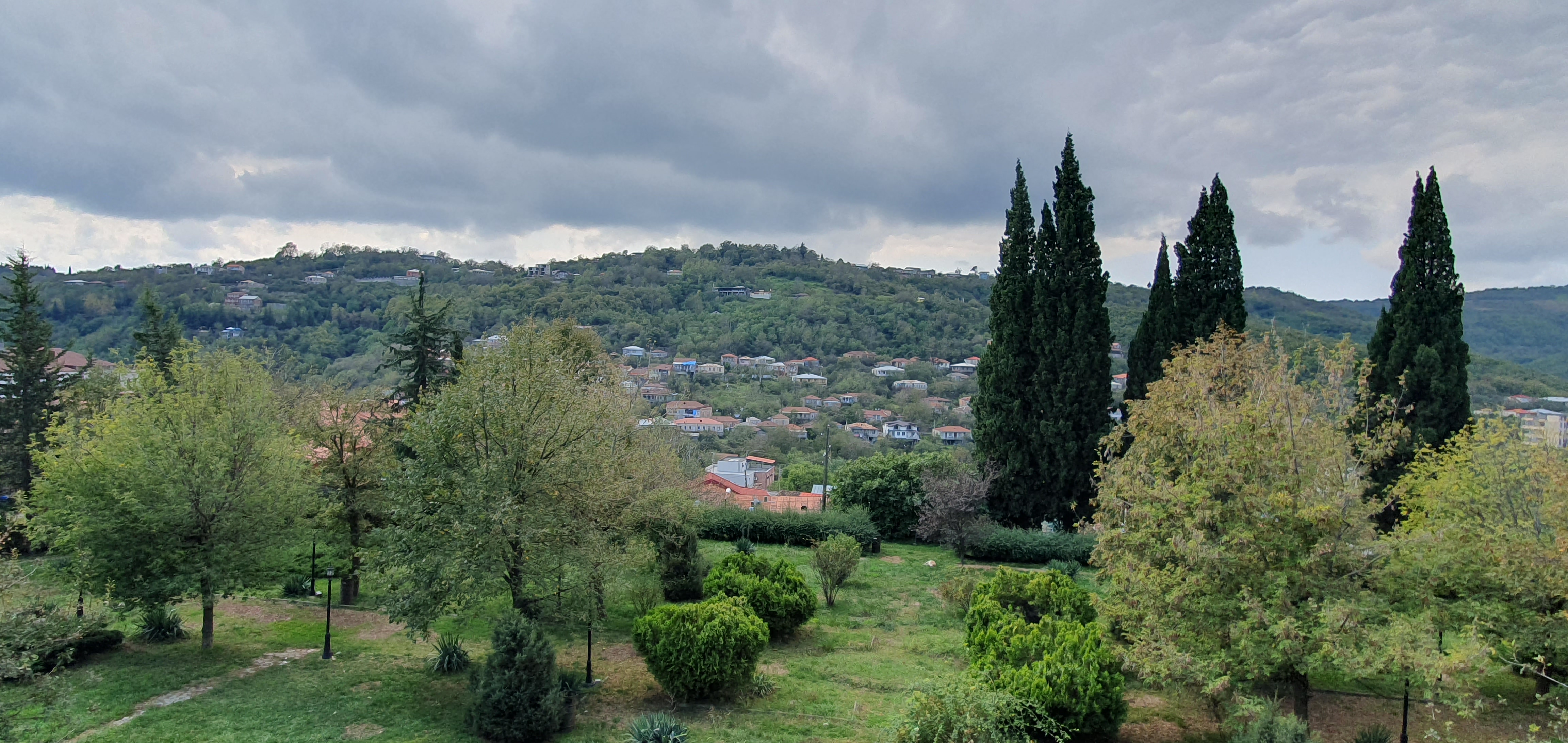


Views across the town towards the Alazani Valley in the distance. Unfortunately we didn’t have a clear day… Anna showed us images of her phone where the snow capped Caucasus mountains can be seen on a clear day.

A local Sighnaghi family provided an extensive Georgian lunch which was served in an open air (but covered) terrace overlooking the valley. This was after a demonstration of traditional mtsvadi bread making.
From Sighnaghi our driver had driven us to Tbilisi, Georgia’s capital which is covered in a separate Tbilisi post.
Uplistsikhe
The following morning, the last day of the trip, he took us in the same large bus out of the city to Uplistsikhe an ancient cave town!
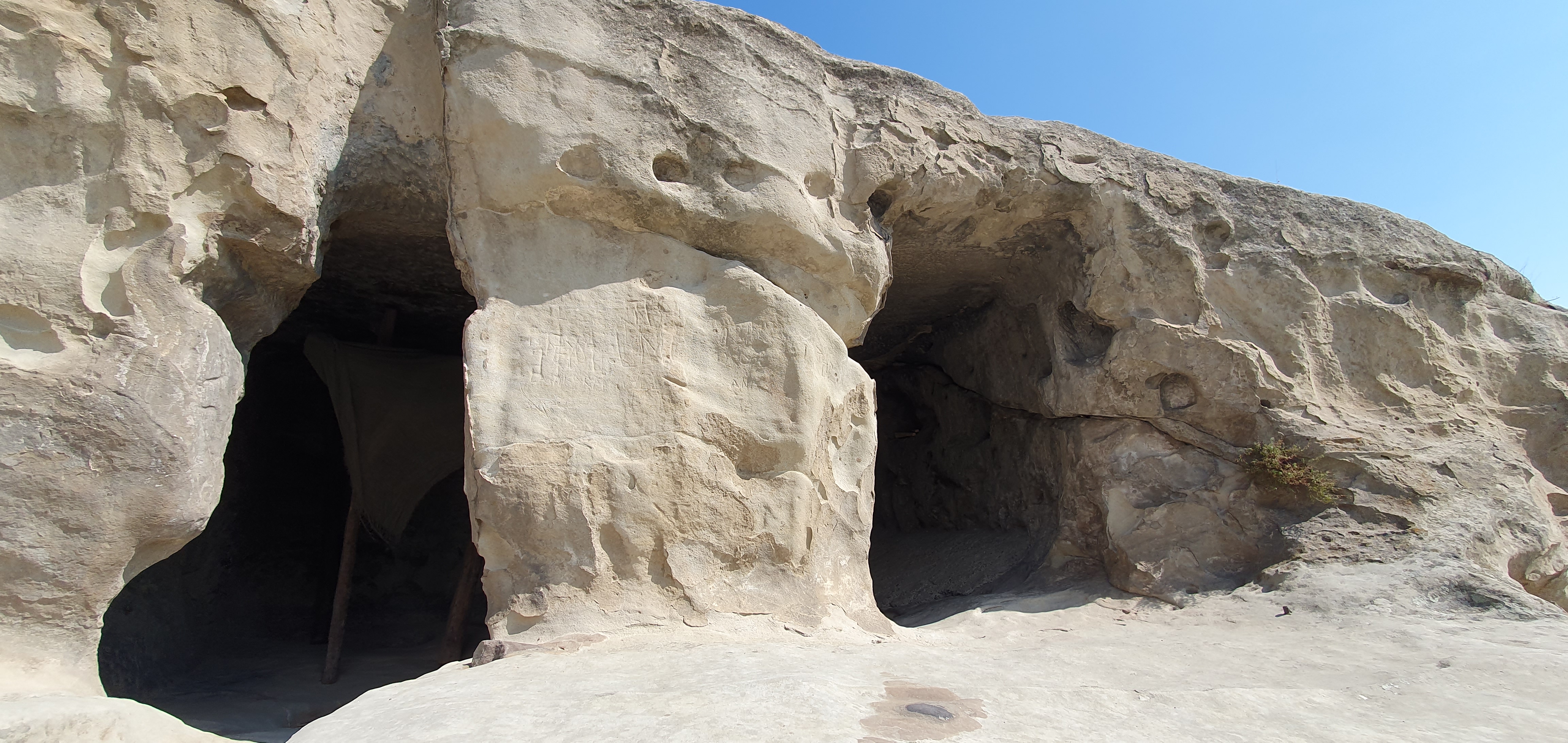
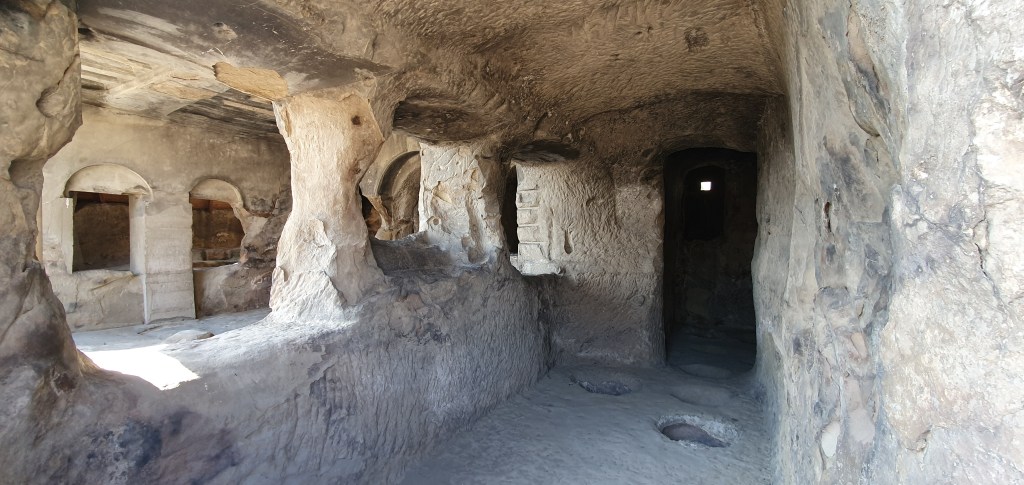
Uplistsikhe is a UNESCO site and one of the oldest urban settlements of Georgia. Archeologists have found traces of human presence which date back to 2000 BC.

The name ‘Uplistsikhe’ means ‘the lords fortress’. From the early settlers the first Christian church was constructed in the 6th century. The town was attacked by the Mongols in the 14th century after which it was more or less abandoned.

We spent an hour or so clambering around the rocky paths and looking in the caves – this incredible and unique cave town was one of my favourite places in Georgia.


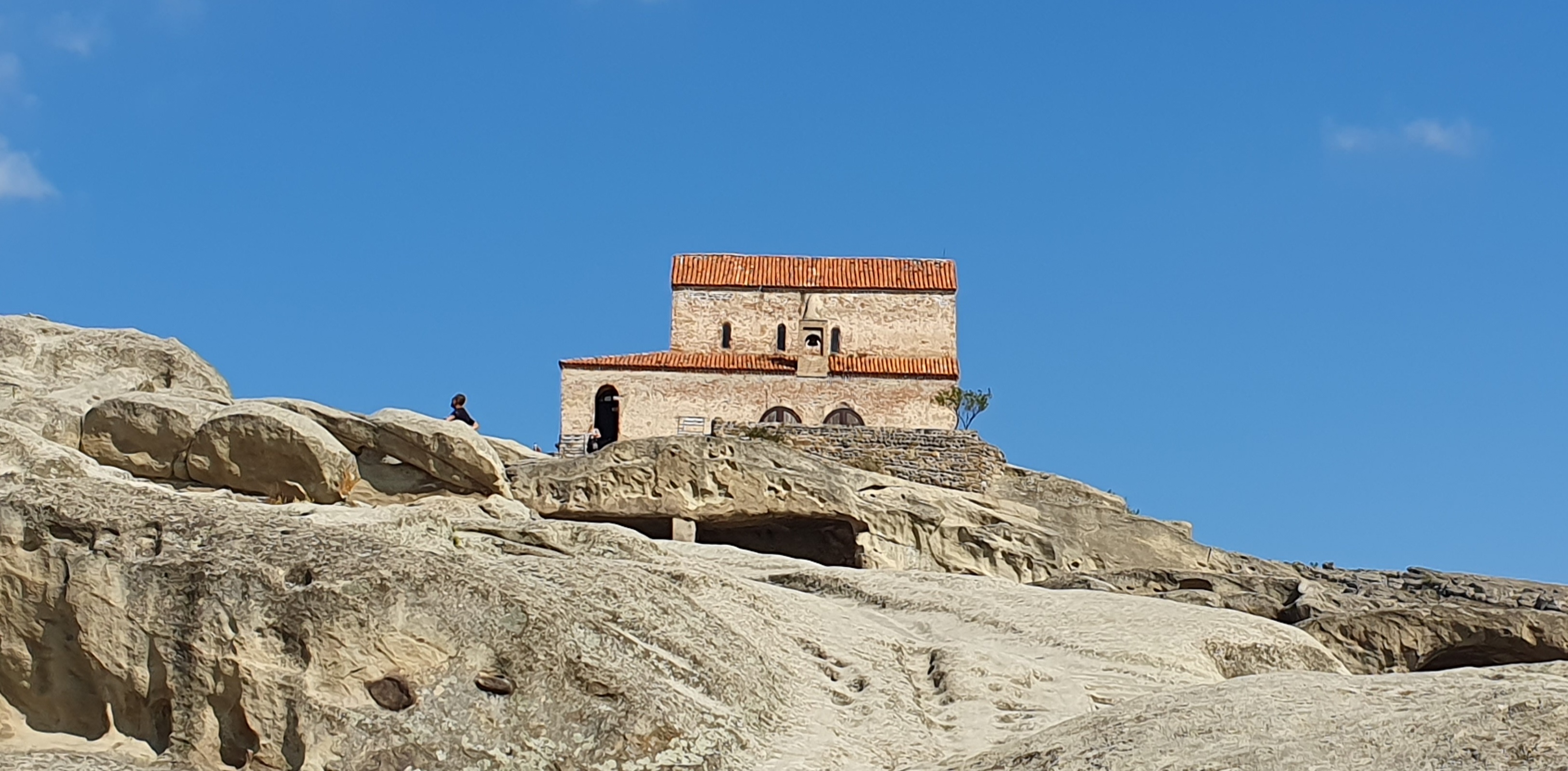


High up at the Uplistsiche caves we had spectacular views of the Mtkvari River and Aragvi Valley.
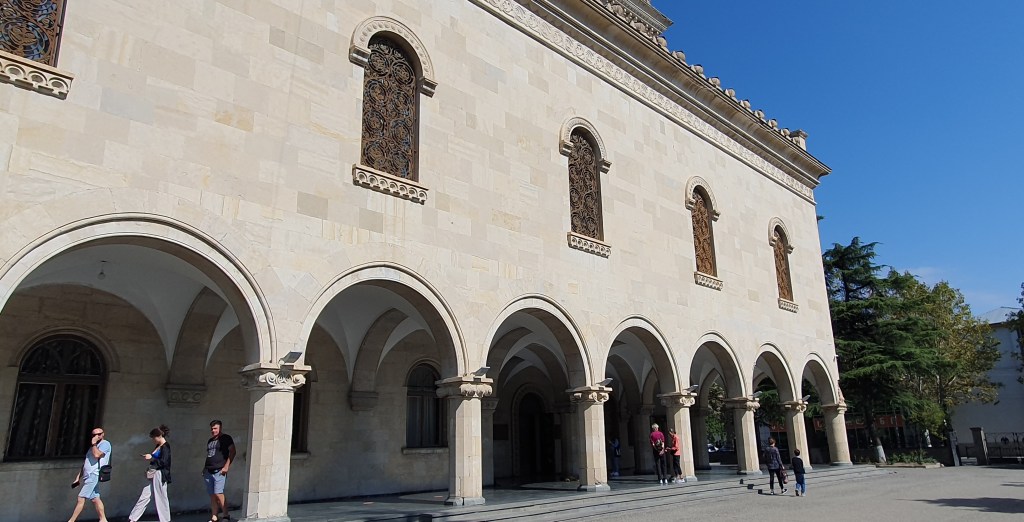
Gori and Stalin Museum
A few km from the Uplistsikhe cave town was Gori where we stopped to visit the Joseph Stalin Museum. Gori was caught up in the Russian invasion of Georgia in 2008 where Russia launched a military attack in an attempt to slow down Georgia’s escape from its clutches.

Joseph Vissarionovich Stalin was born in Gori and the museum was established in 1957 which was 5 years after his death.
We paid 15 Georgian lari each (around £4.50) to enter the museum as this wasn’t included as part of the G Adventures trip.
Anna, our G Adventures guide kindly led us around the museum and used her excellent knowledge to explain things.

Stalin was a Soviet revolutionary and political leader who led the Soviet Union from 1924 until his death in 1953.

The Stalin Museum contains pictures, artefacts and a great deal of information about the life of Stalin. He was born in 1879 here in Georgia into poverty with his mother being a washerwoman and his father a cobbler.
With a slightly deformed arm and a pockmarked face (as a result of smallpox at the age of 7), Stalin was bullied as a child and felt the need to prove himself. He later became involved in revolutionary activities, organising strikes and protests.
His ruthless activities caught the attention of the Tsarist secret police and he joined the Bolshevik party where he conducted guerrilla warfare in the 1905 Russian Revolution. He met Lenin, the Bolshevik leader and later joined forces with him in the 1917 Russian Revolution where Lenin promised ‘peace, land and bread’.
After Lenin’s death in 1924, Stalin became ‘dictator of the Soviet Union’.
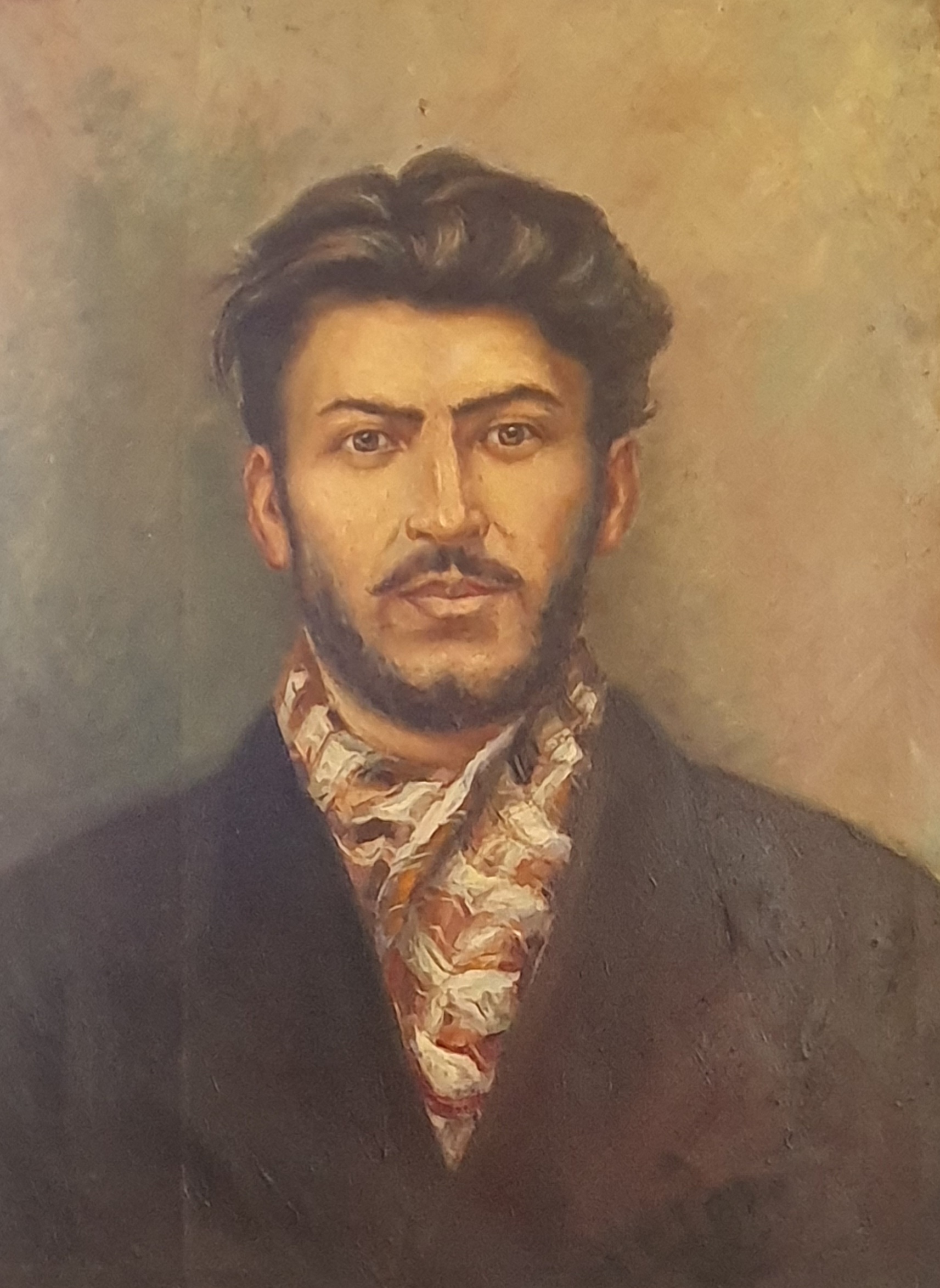


Many portraits of Stalin are on display in the museum. We had previously driven past the square where Anna pointed out a huge statue of Stalin had been torn down in 2010.
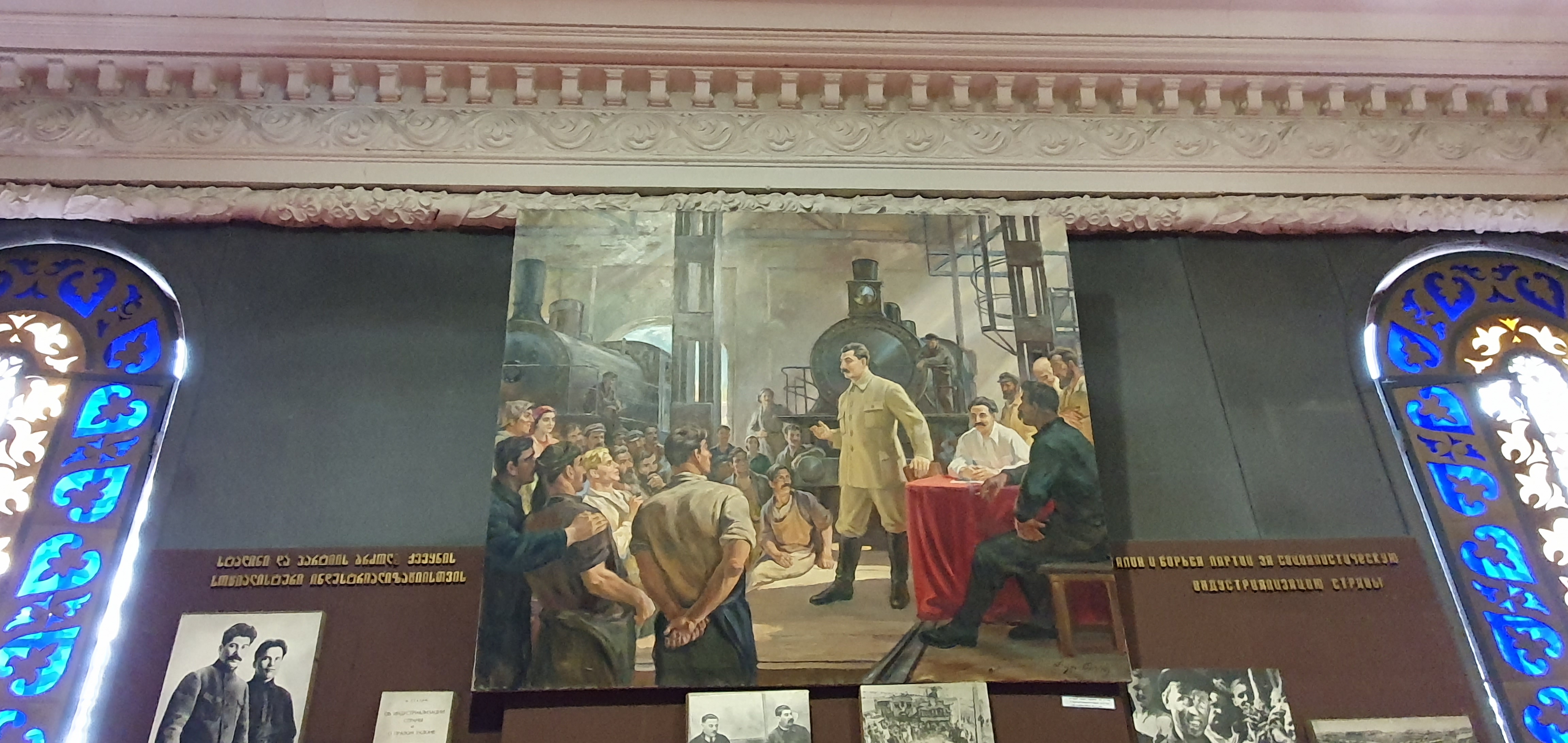
The first exhibition hall showed the early life of Stalin. Next was the beginning of the Russian revolution and the third hall was the World War 2 displays.


There was an exhibition hall which contained displays of a wide range of gifts given to Stalin. For example, a pair of clogs from the Netherlands, a set of pipes from Italy (Stalin was a heavy smoker) and a wooden casket from Finland.


Outside the museum on display was Stalin’s personal bullet proof train carriage. One of the museum officials unlocked the train so we could have a look inside.
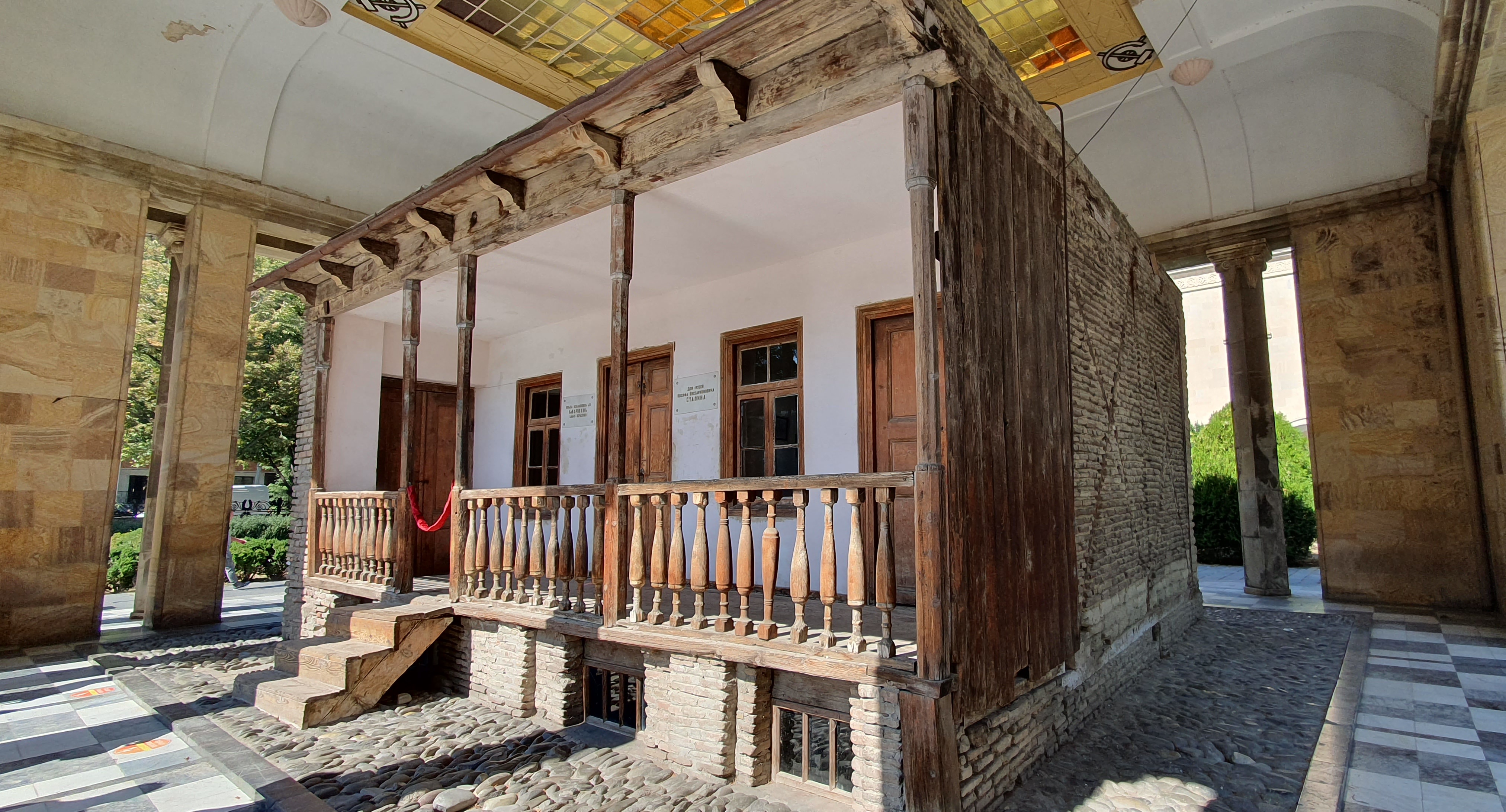
Also outside in the courtyard was the original house where Stalin was born.

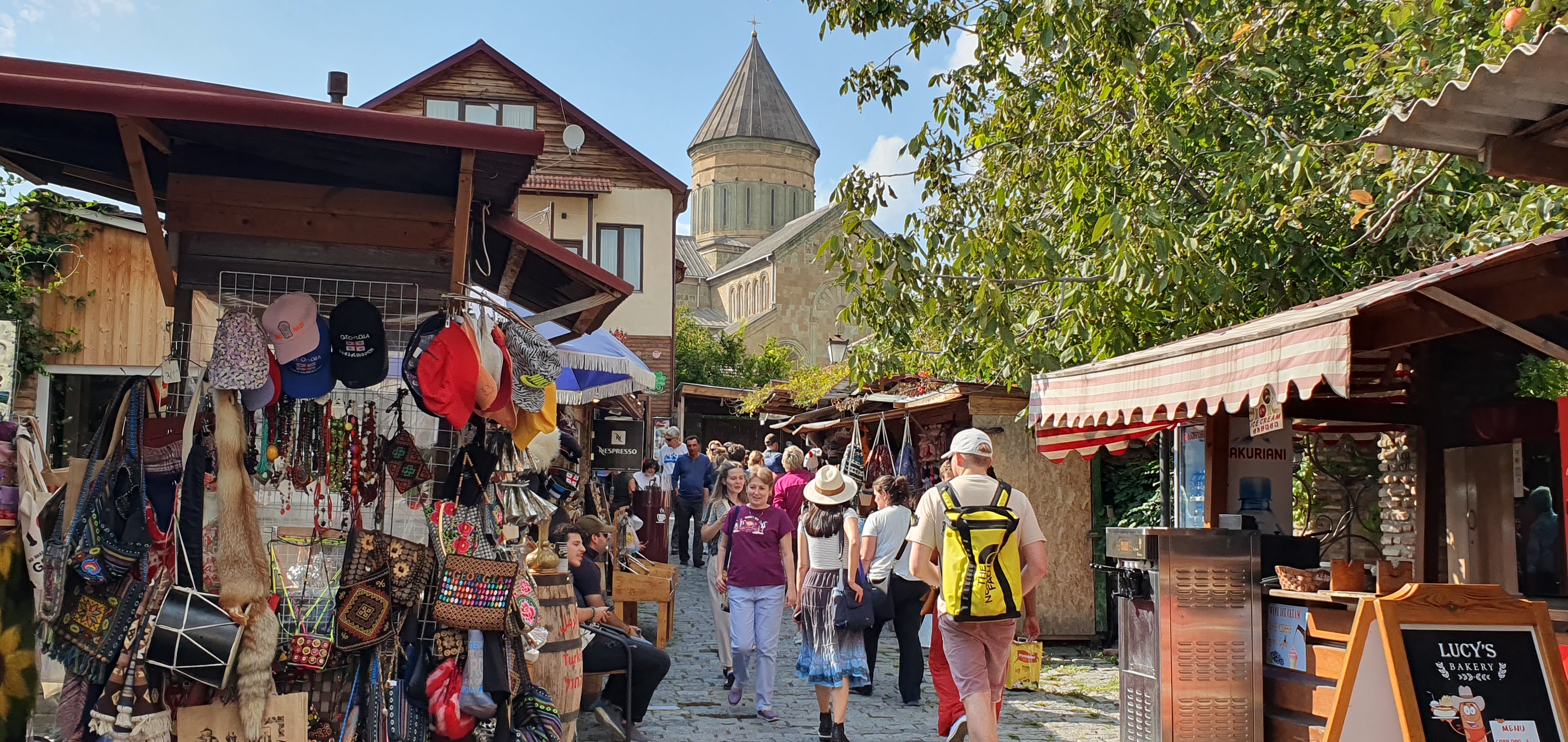
Mtskheta
Next was a stop in Mtskheta to visit the Svetitskhoveli cathedral. Our bus parked in the large car park adjacent to the town. We had to walk through the medieval streets lined with craft stalls selling local gifts and souvenirs.



Inside the Svetitskhoveli cathedral.


From the cathedral we walked back through Mtskheta Square and the cobbled streets past the market stalls to the bus.

Some of the market stalls were selling ‘churchkhela’ a traditional Georgian sweet made with walnuts coated in a mixture of grape juice and flour.

Jvari Monastery
Our final stop before heading back to Tblisi was the Jvari monastery which is perched high up on a hill overlooking the town of Mtskheta.

The 6th century Jvari monastery is a medieval Georgian church which has remained unchanged throughout the centuries.

From its high vantage point we could see the mouth of the river Mtkvari and Aragvi and the ancient town of Mtskheta below.


Jvari was the final stop of the last day of the trip and we were taken back in our bus to Tbilisi.
What a wonderful time I had spent exploring Georgia! We packed in quite a lot in the two days we were there and I would love to return and see more of this fascinating country. My next and final post for this Armenia and Georgia trip covers Tbilisi, Georgia’s capital city.
 frombluetogreen.com
One comment