Post written by Laura
Having begun our G Adventures ‘Camino de Santiago Encompassed‘ adventure in Madrid, my friend Bridget and I had arrived in Sarria by train and bus from Madrid as part of our group of 10 (including Elu, our guide).
Camino Frances is the most popular camino route which traditionally starts in St Jean Pied de Port in the French Pyrenees and continues for 790 km (490 miles) to finish at the cathedral of Santiago de Compostela.
According to legend, St James had started preaching in the Galician region of northern Spain as well as in Palestine. King Herod ordered him to be beheaded and so his disciples took his body by boat and carried him the rest of the way to be buried in Compostela.
Santiago is the Spanish equivalent name for James and for hundreds of years, los peregrinos (the pilgrims) have walked ‘the way’ to pay their respects at Santiago de Compostela cathedral where it is believed the remains of St James are buried.
Many books have been written and films produced, for example ‘The Way’ with Martin Sheen.
Technically you can begin your camino from anywhere in Europe however according to Follow the Camino there are 9 marked camino trails, including the Camino Frances, Camino Norte and Camino Portuguese.
Hundreds of thousands of people walk the Camino Frances each year and many start in Sarria as to receive your certificate in Santiago de Compostela it is necessary to have walked the final 100 km.
The next 6 posts represent each of the 6 days Bridget and I spent as we made our way along the ancient pilgrim route from Sarria to Santiago de Compostela.
- Day 1: Sarria to Portomarin
- Day 2: Portomarin to Palas de Rei
- Day 3: Palas de Rei to Melide
- Day 4: Melide to Arzua
- Day 5: Arzua to Amenal
- Day 6: Amenal to Santiago de Compostela
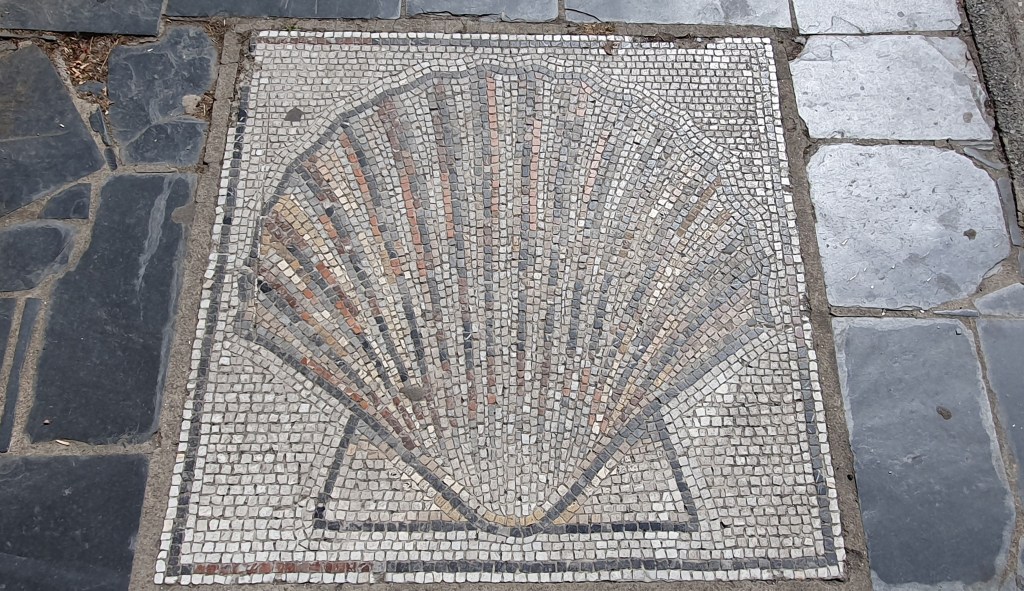
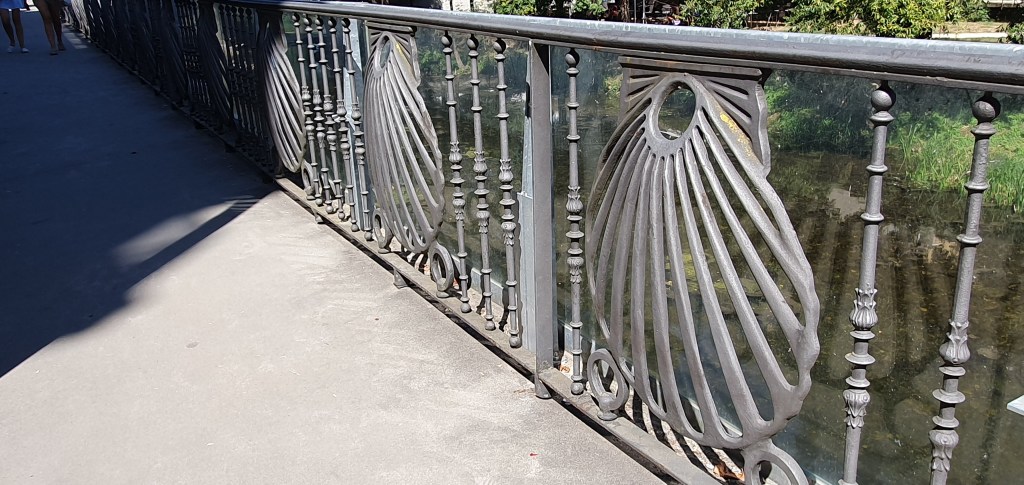
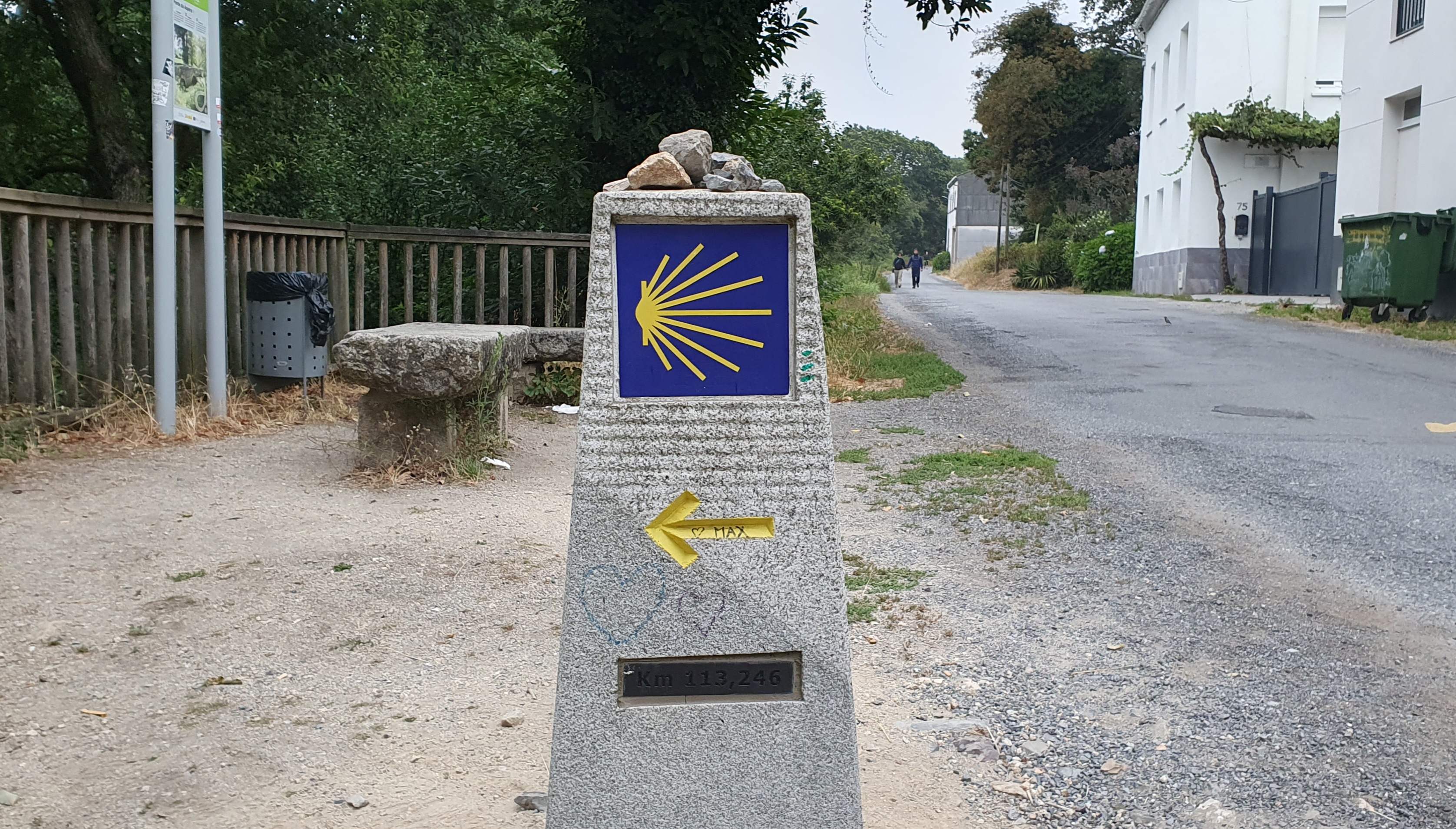
For hundreds of years the scallop shell has been a symbol of courage, strength and hope of the pilgrims who walked the Camino. This shell is found on the coast of Galicia and throughout the week we found all kinds of shell symbol shapes and sizes.
The scallop shell symbol is used for way markers along the route and we became familiar with looking out for the gold shell set in blue and complete with yellow arrows!
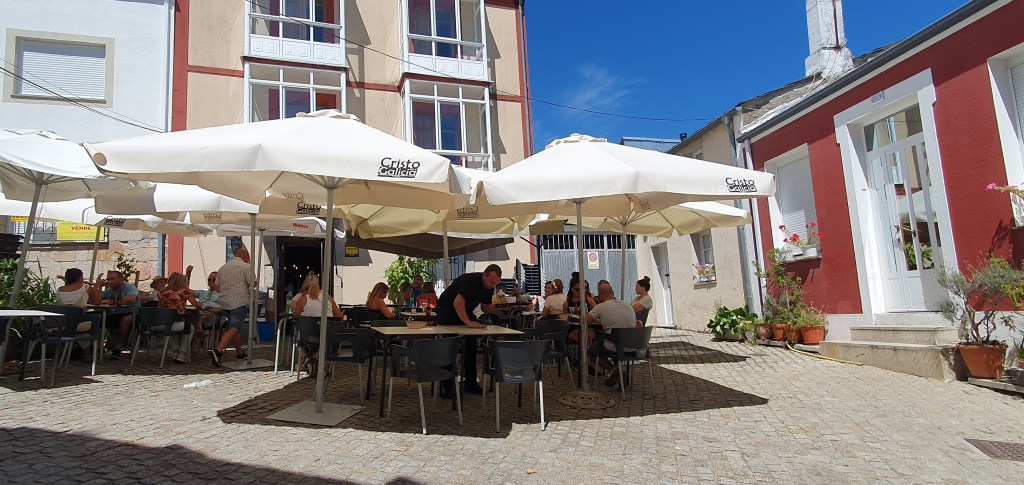
Once we had checked into our hotel, Bridget and I had a relaxing lunch in a shady courtyard in a Sarria restaurant and shared a few ciders with our new Brazilian friends Fernanda, Mariana (Mari) and Mariany (Mari). And our new UK friend, also called Marie but pronounced Mari 😂


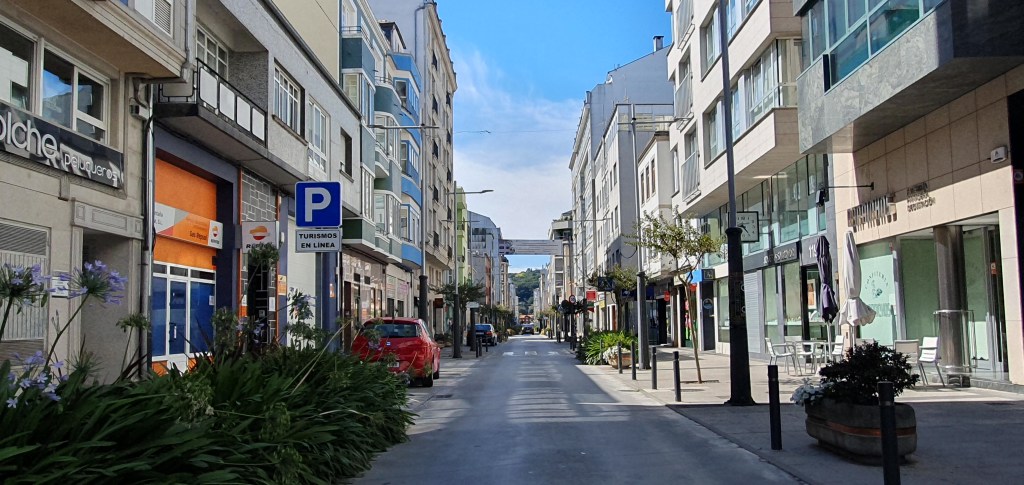
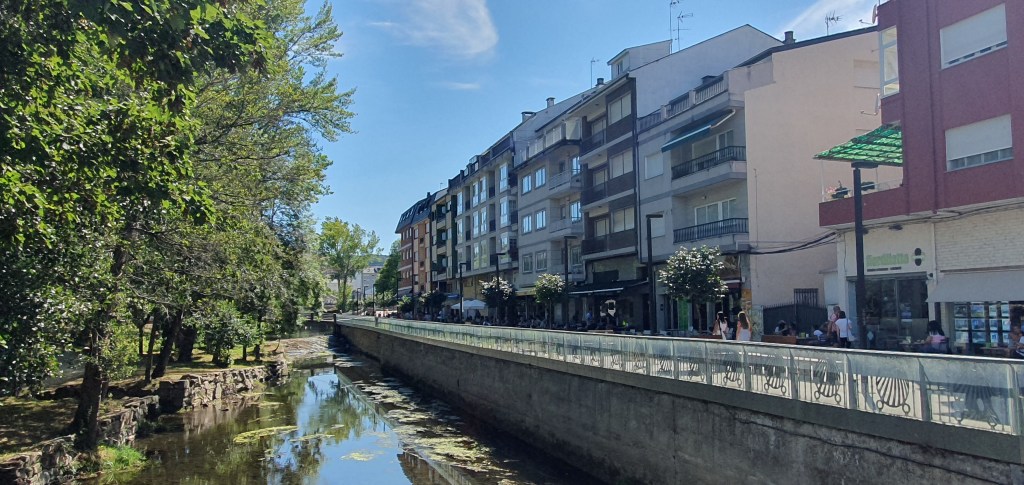
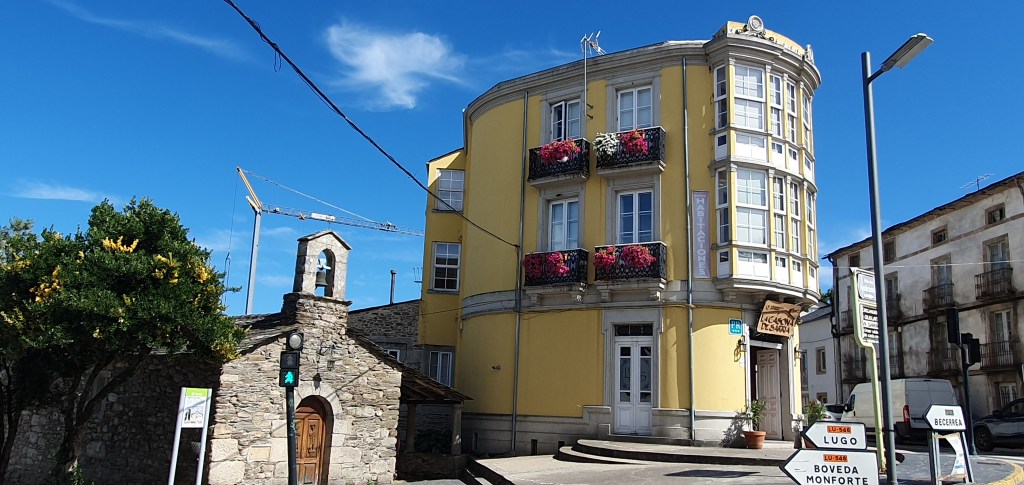
After lunch Bridget, (UK) Marie and I had a walk around Sarria which was fairly quiet on a Sunday afternoon.
In the evening our guide Elu conducted another G Adventures welcome meeting where we met Sam & Naomi, Sarah, Rachel, Michelle & Brynn who had joined the group in Sarria rather than Madrid. We were now a G Adventures group of 16 (including Elu).

Elu gave us our pilgrim passports and explained we had to obtain at least 2 stamps per day to ensure we qualified for our official Camino certificate at the end of our walk in Santiago de Compostela.
Elu led the 15 of us to a local restaurant where we had an evening meal together and another opportunity to meet and chat with our fellow peregrinos.

Starting El Camino!
A quick selfie on the first morning as we were about to set off from Sarria with 14 miles to walk to our first Camino stop in Portomarin.

And a group photo together with our new G Adventures friends at the start of the walk (minus the Brazilian’s who had already left).

We had packed our cases and left these at the reception by 8 am ready to be collected by the luggage transfer company. This was all arranged by G Adventures as part of the trip.
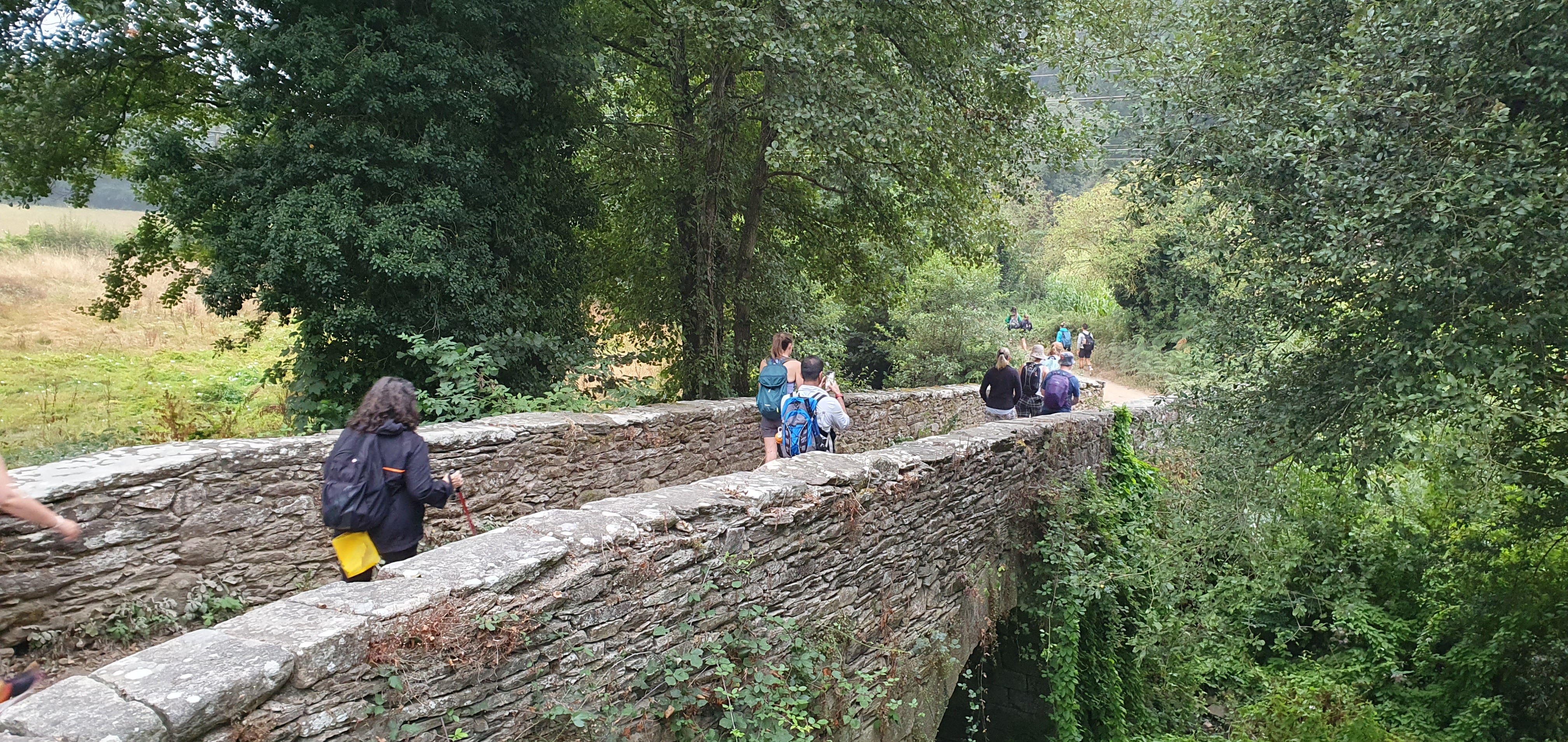
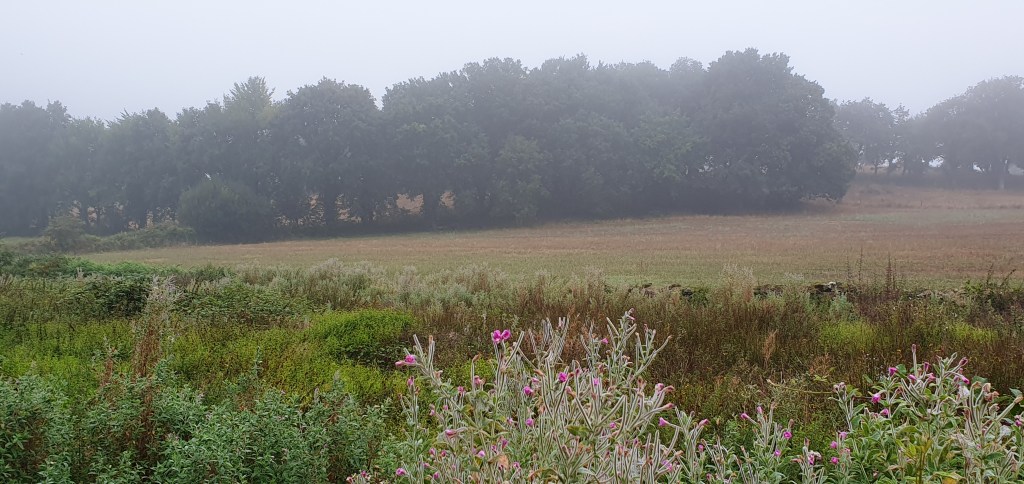
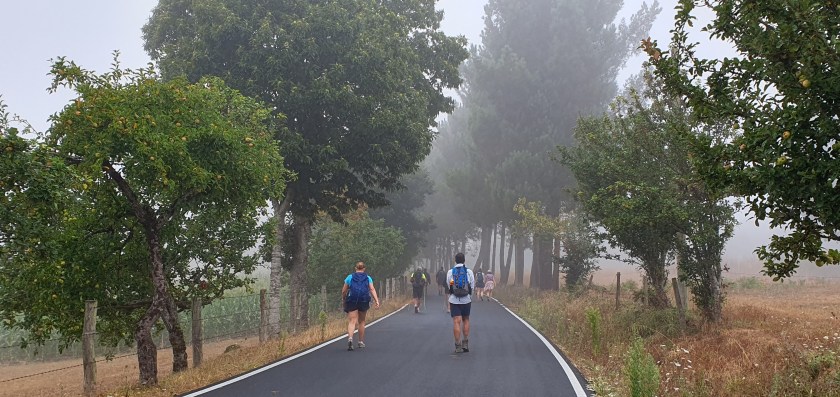
We spent the first couple of hours walking in mist and at 15 degrees this was most refreshing especially after 40 degrees in Madrid.


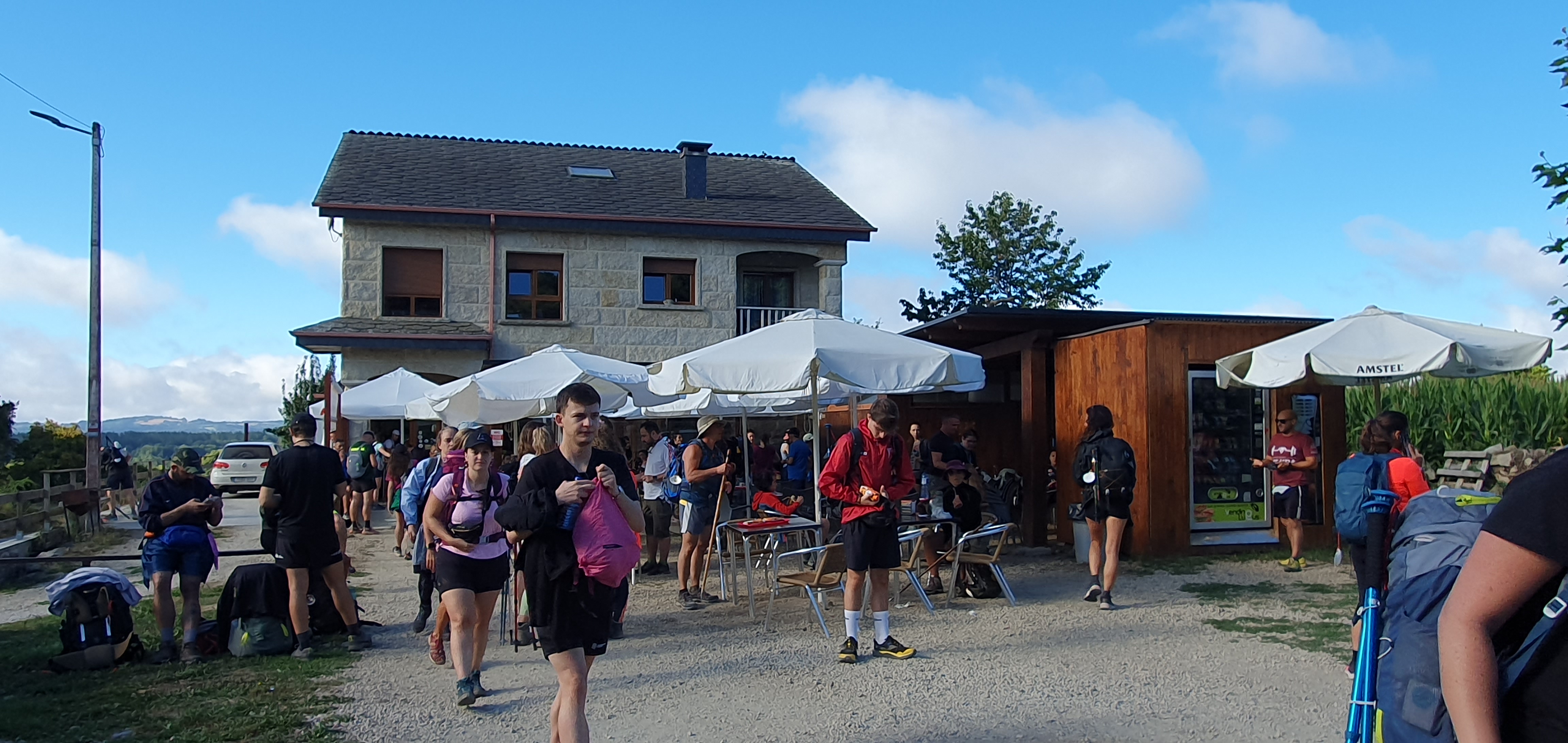
The mist had cleared by mid morning and we had a stop at one of the busy en-route pilgrim refreshment places.

Compared with Italy’s Via Francigena this part of Camino Frances is far more commercial with many opportunities for coffee, snacks, drinks and even vending machines! In theory you just need a small back pack with minimal snacks and minimal water.

The sun became warmer and reached about 28 degrees by mid afternoon.
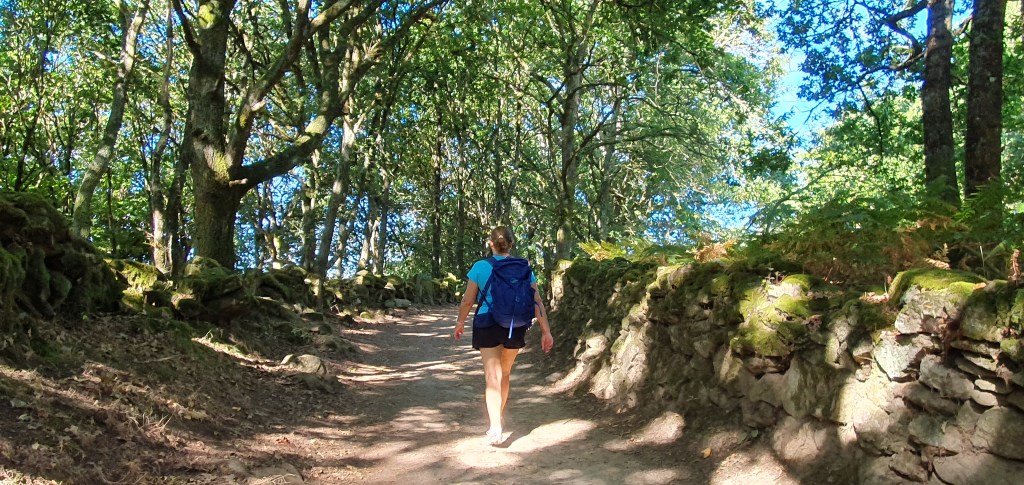
But there was plenty of shade and woodland today so it never felt too hot.

Horreos are popular in this part of Spain and are used to store grain. They are kept off the ground so rats can’t get to it and as they are historical they are not allowed to be removed. You can move them within your property but not destroy them.
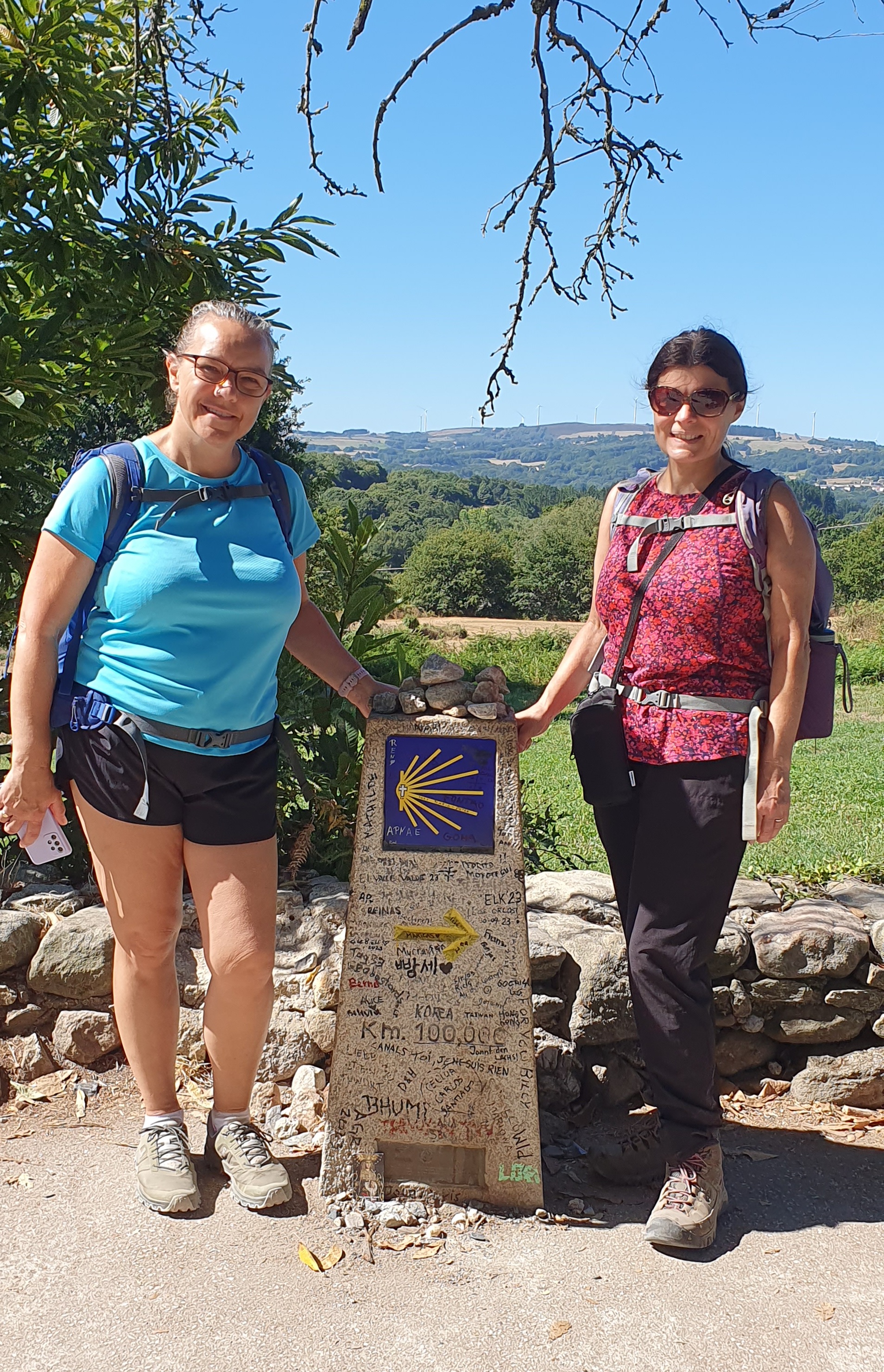
After 17 km we had reached the 100 km way marker! Sadly many of these way markers are defaced by selfish individuals who think it’s a good idea to scribble on them. This was a particularly bad example.
Our G Adventures group had split up at the very start of the walk with little sub groups starting at slightly different times and walking at different paces. This happened throughout the week although we would often bump into some of the others throughout the day.
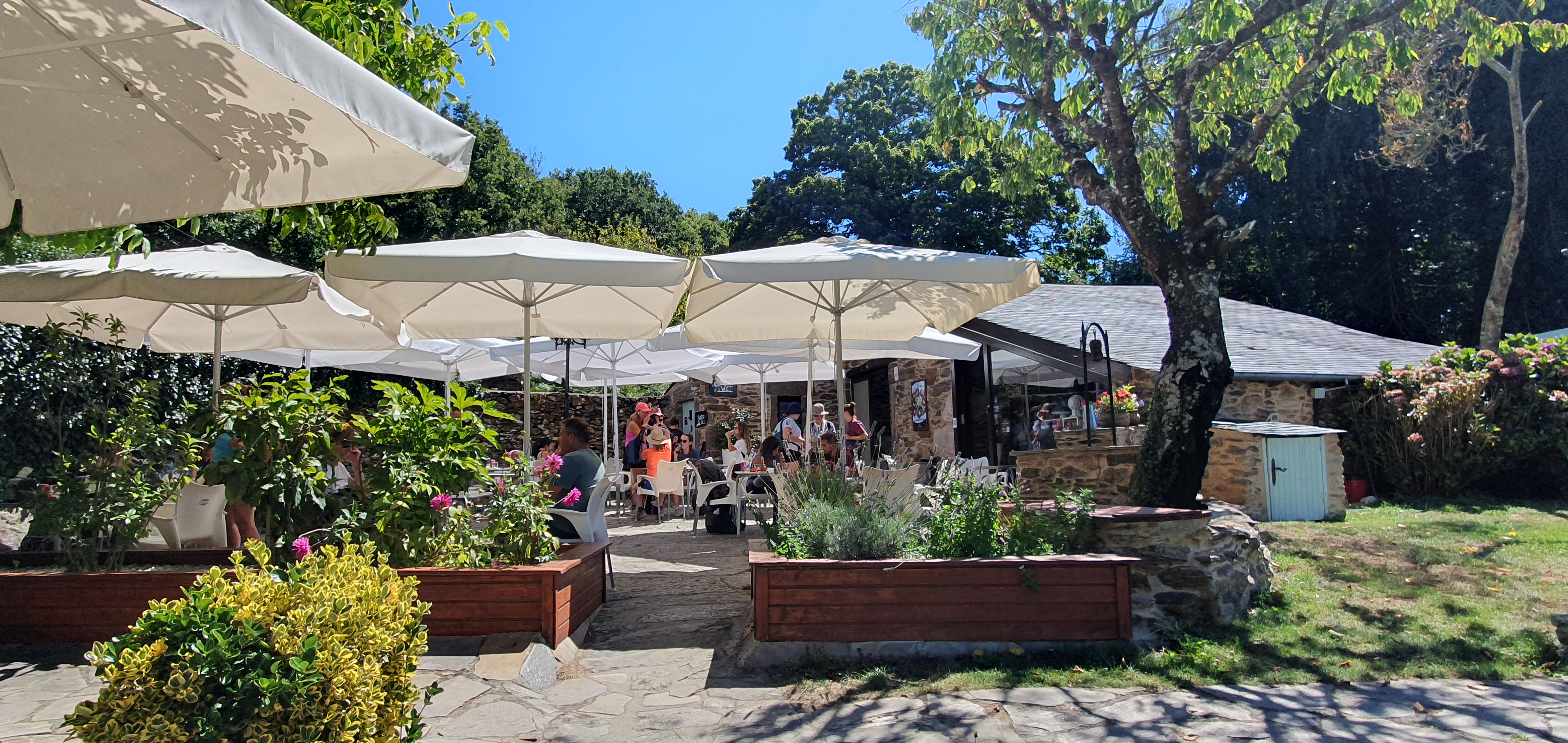
Lunch and an opportunity for a stamp for our camino passports.

Bridget and I were not in any hurry to rush and complete our first 14 miles and we enjoyed a fabulous and leisurely lunch in Albergue O Mercadoiro, sharing a table in a lovely shady spot with Elu our guide.

Elu was the last to leave each morning and generally stayed at the back following the group in order to be available if anyone needed any assistance.


We were able to buy all manner of things on the route and in this shop you could buy anything from tee shirts, walking sticks, hats, key rings, socks etc.


By mid afternoon we were approaching Portomarin, the official end of today’s section of the Camino.
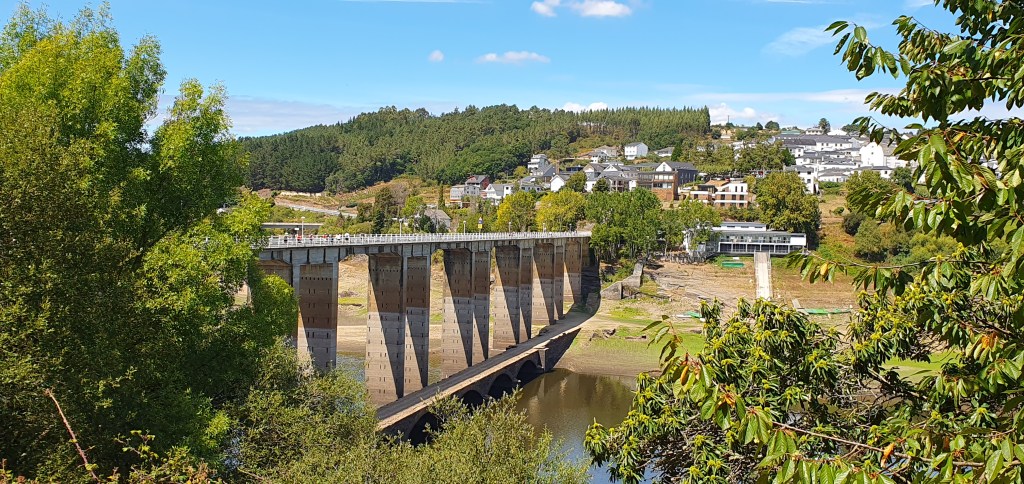
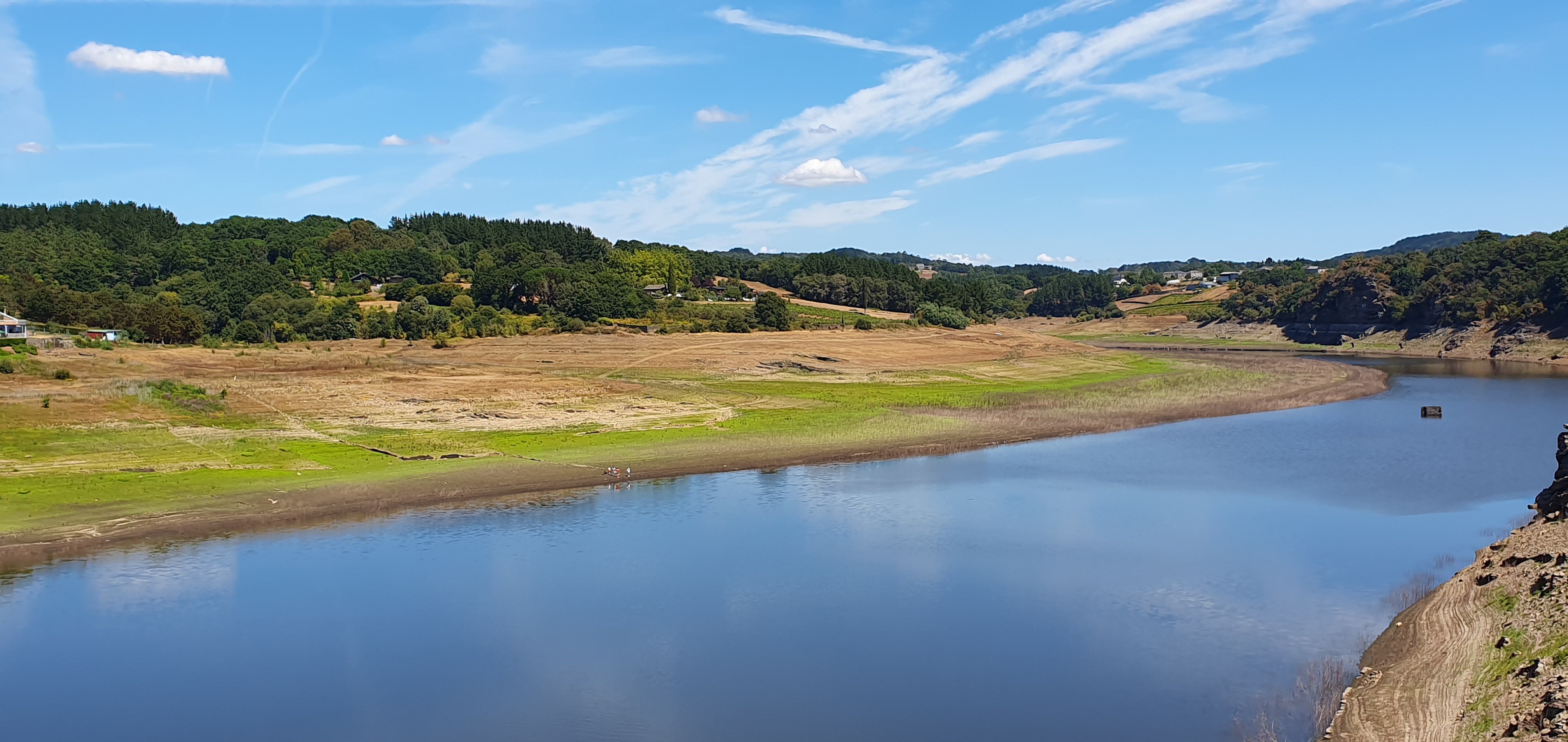
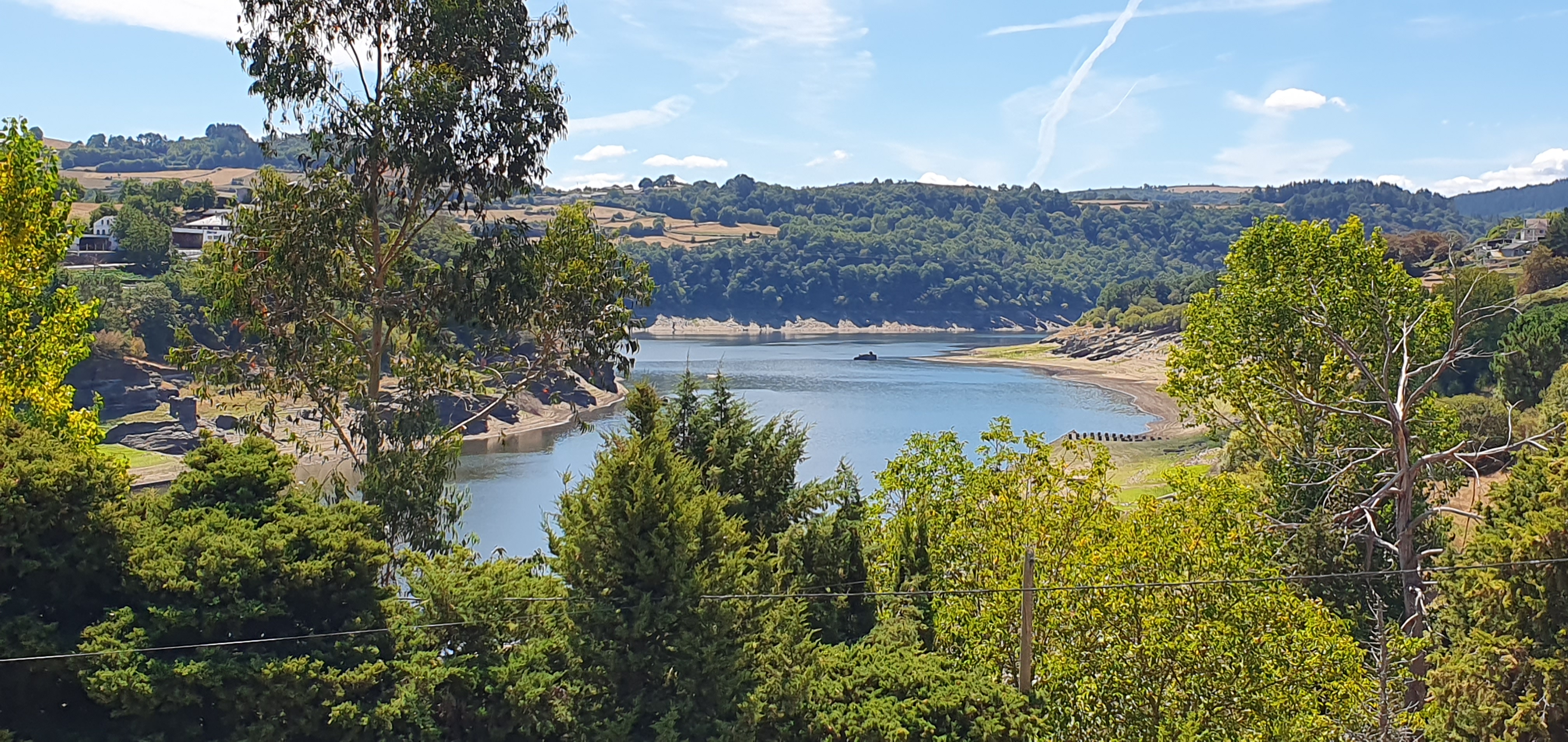
Portomarin is a town both above and below water! The ancient town of Portomarin lies in ruins under this river and the new part of the town was build up on higher ground. In the 1960’s a dam was built which caused the original town to flood. In anticipation of this, some of the ancient buildings, including the church, were moved and rebuilt brick by brick on higher ground. Now you can see some of the ruins either just below the surface or slightly poking out of the water especially when the water levels are low.
The above photo shows the original low old Roman bridge (which is sometimes under water) together with the new higher bridge.

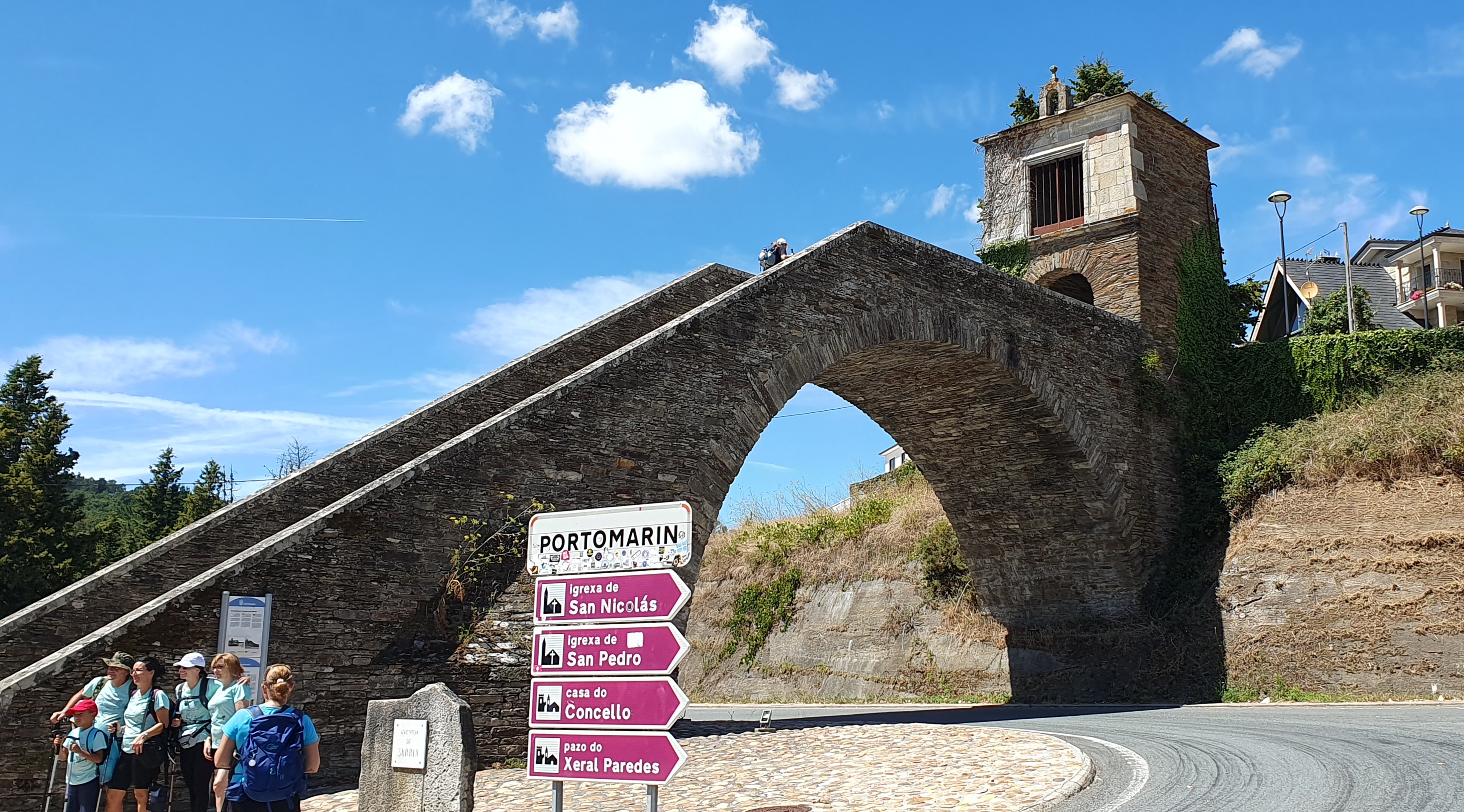
Arriving in Portomarin and a few steps to climb! This staircase was built using the old medieval bridge and the small temple was rebuilt before the flooding.
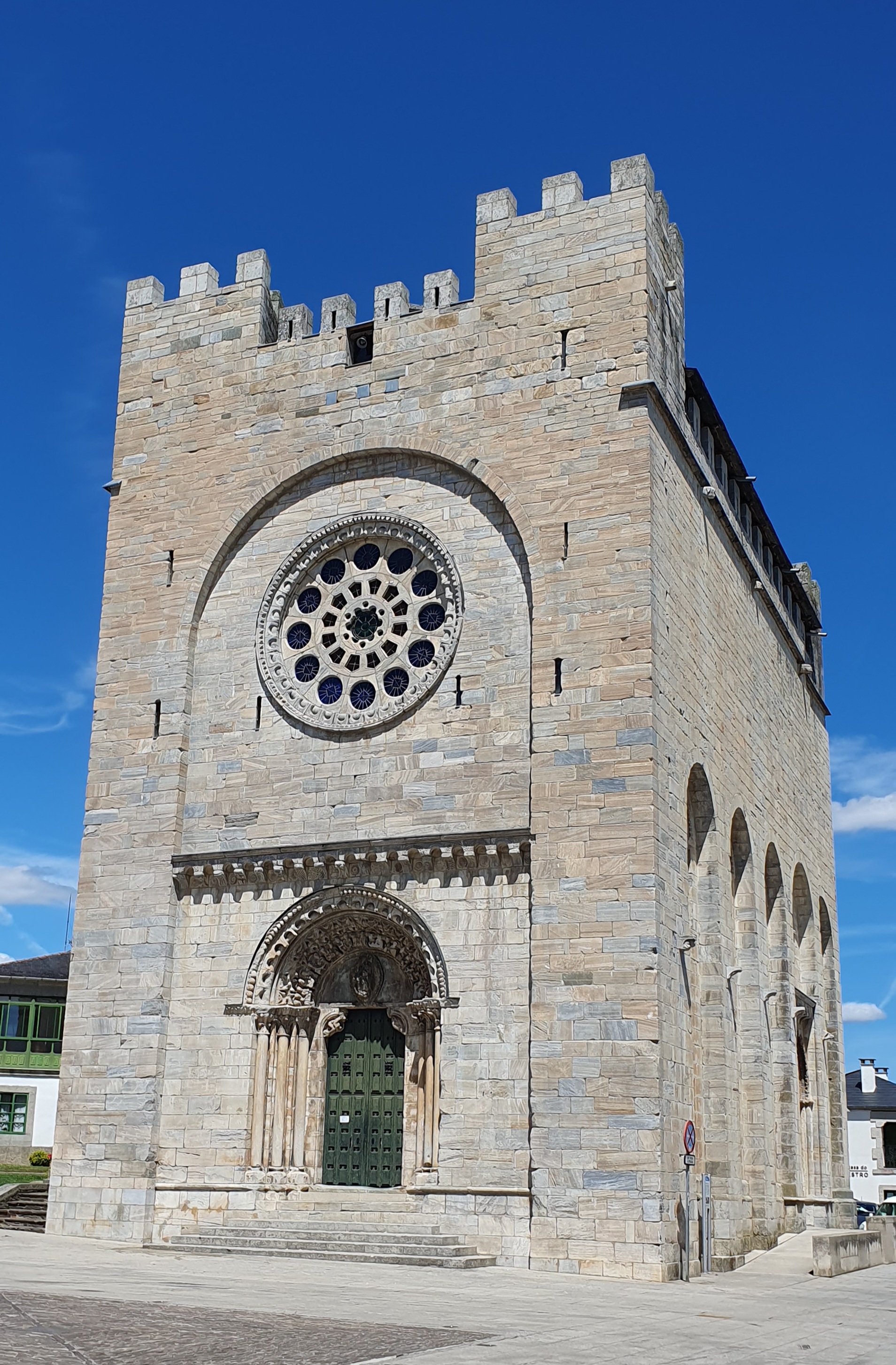
Once we had checked in to our hotel, Bridget and I walked for a couple of minutes to the Church of San Xoán where we collected another pilgrim stamp.

Before the flooding this church was rebuilt brick by brick and you can see the bricks on the side of the church that are still numbered.

This square in front of the church was quiet when we first arrived but livened up in evening with a band playing live music on the stage.

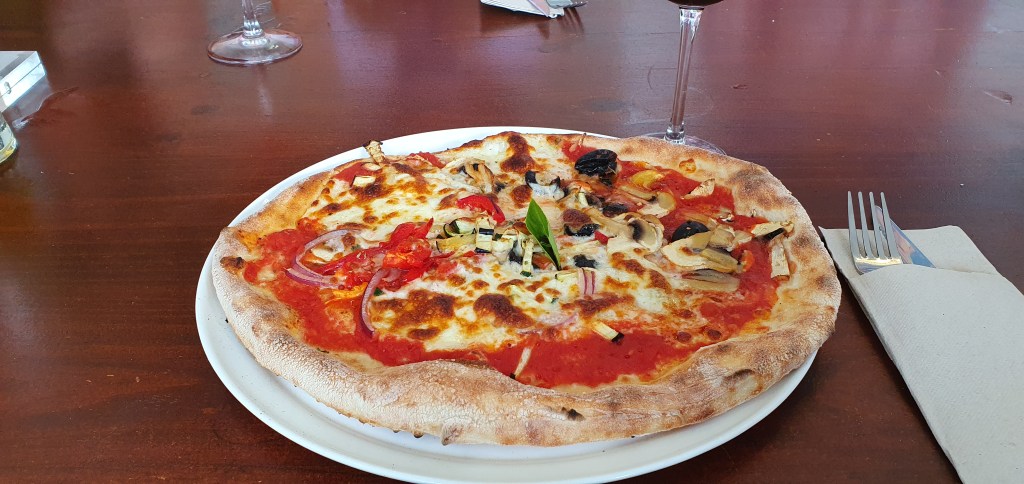
Later in the evening we set off in search of dinner. There were several food options and tonight Bridget and I sat at a large outside table in a delightful Italian restaurant with our new friends Marie, Rachel, Rushil, Sarah, Sam and Naomi.

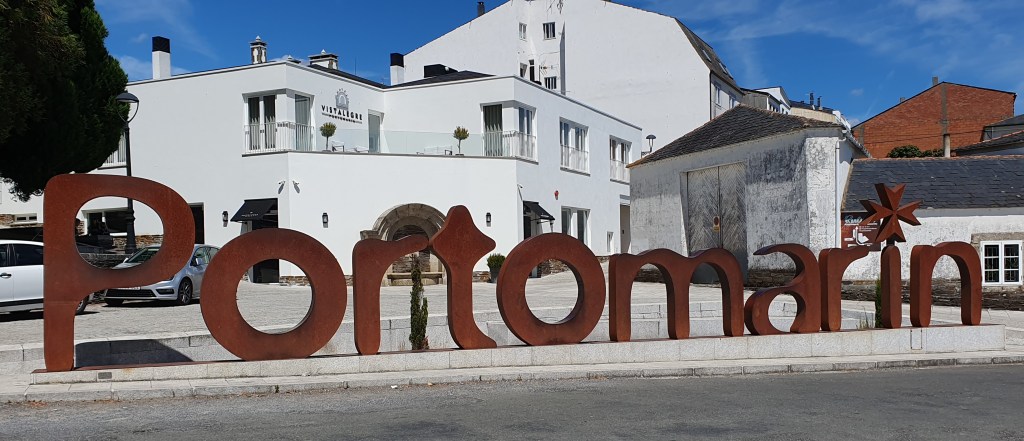
We stayed at the above hotel which was lovely! And white! Our large room with it’s 3 beds was decorated in white, had white bedding and white furniture… ideal for a couple of dusty pilgrims 🙂
 frombluetogreen.com
3 comments