

Novi Sad is Serbia’s second largest city and is located an hours’ drive north of Belgrade. On this day I visited Novi Sad and the small town of Stremski Karloci as part of a tour which I had pre-booked with Viator and which was run by Victor Tours. During this trip we had 3 main stops: the Krušedol monastery; Stremski Karloci and Novi Sad.

Krušedol monastery
I was collected from outside my Belgrade hotel in a fairly full large mini bus. We had one more stop at the Crowne Plaza in the new part of the city and the driver, together with guide Jelena (pronounced ‘Yellena’) and 14 other tourists set off for the day. We were driven for about an hour through flat cultivated countryside which (with the exception of the vineyards) reminded me of the Fens of the East of England. Jelena gave us some information during the journey and explained that Novi Sad is much more ‘laid back’ than Belgrade and has a very different culture.
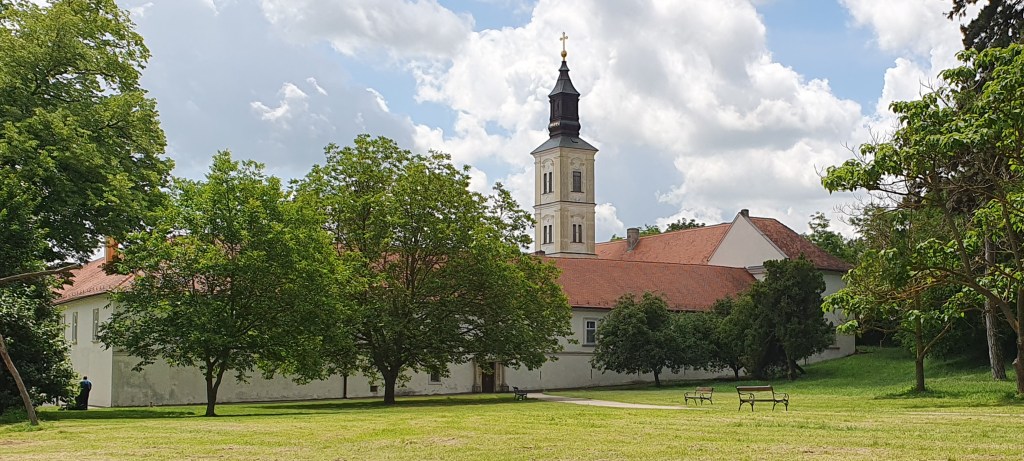
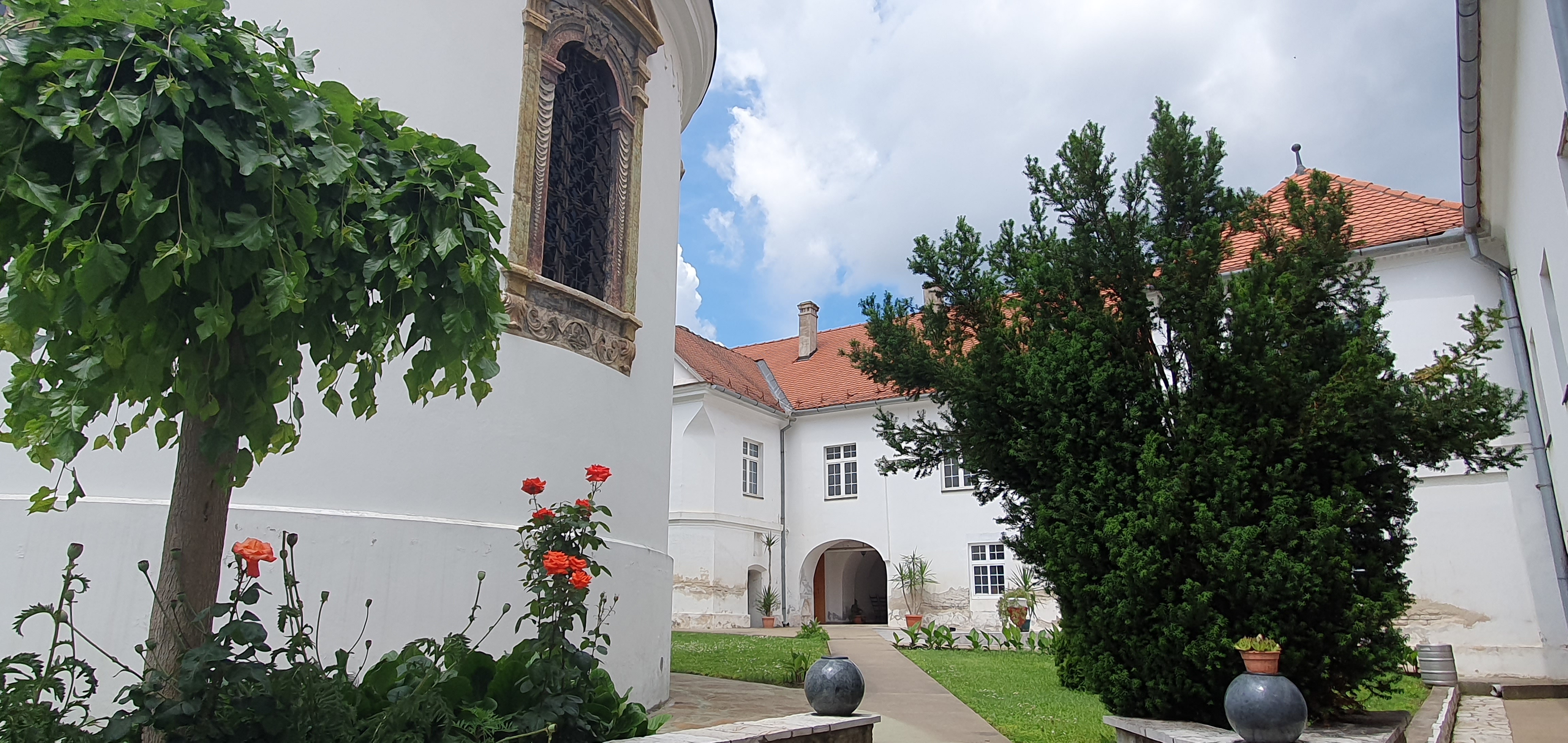
The Krušedol monastery is located in the Fruska Gora National Park, a few miles from Novi Sad and was built in the early 16th century.

We had a look in the church but were not permitted to take any photographs of the intricate frescoes inside this ornate building which were painted in 1545.


From the monastery we were driven further through the Fruska Gora national park and its green rolling ‘Tuscany-like’ hills for a short distance to the colourful and picturesque town of Stremski Karlovci.
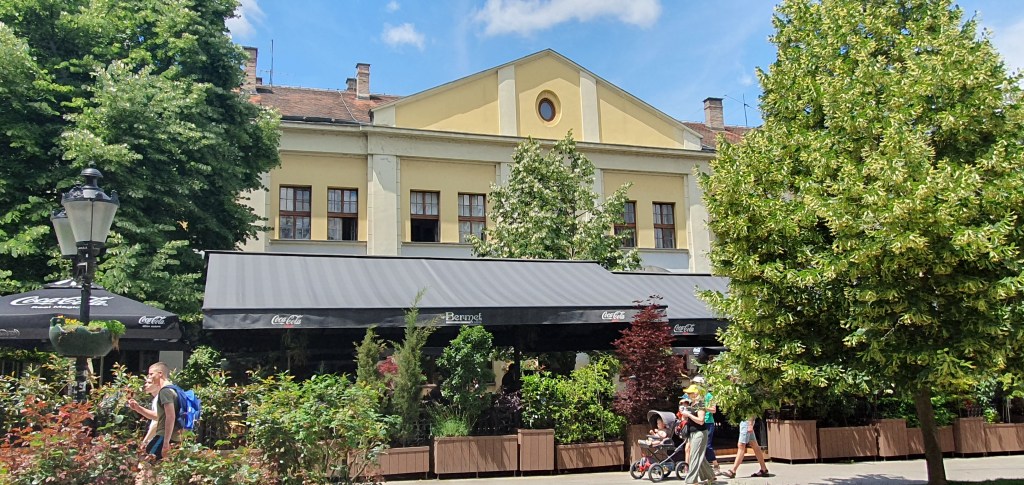
Stremski Karlovci is full of many historic buildings and being in a prime vineyard location there are several wineries.

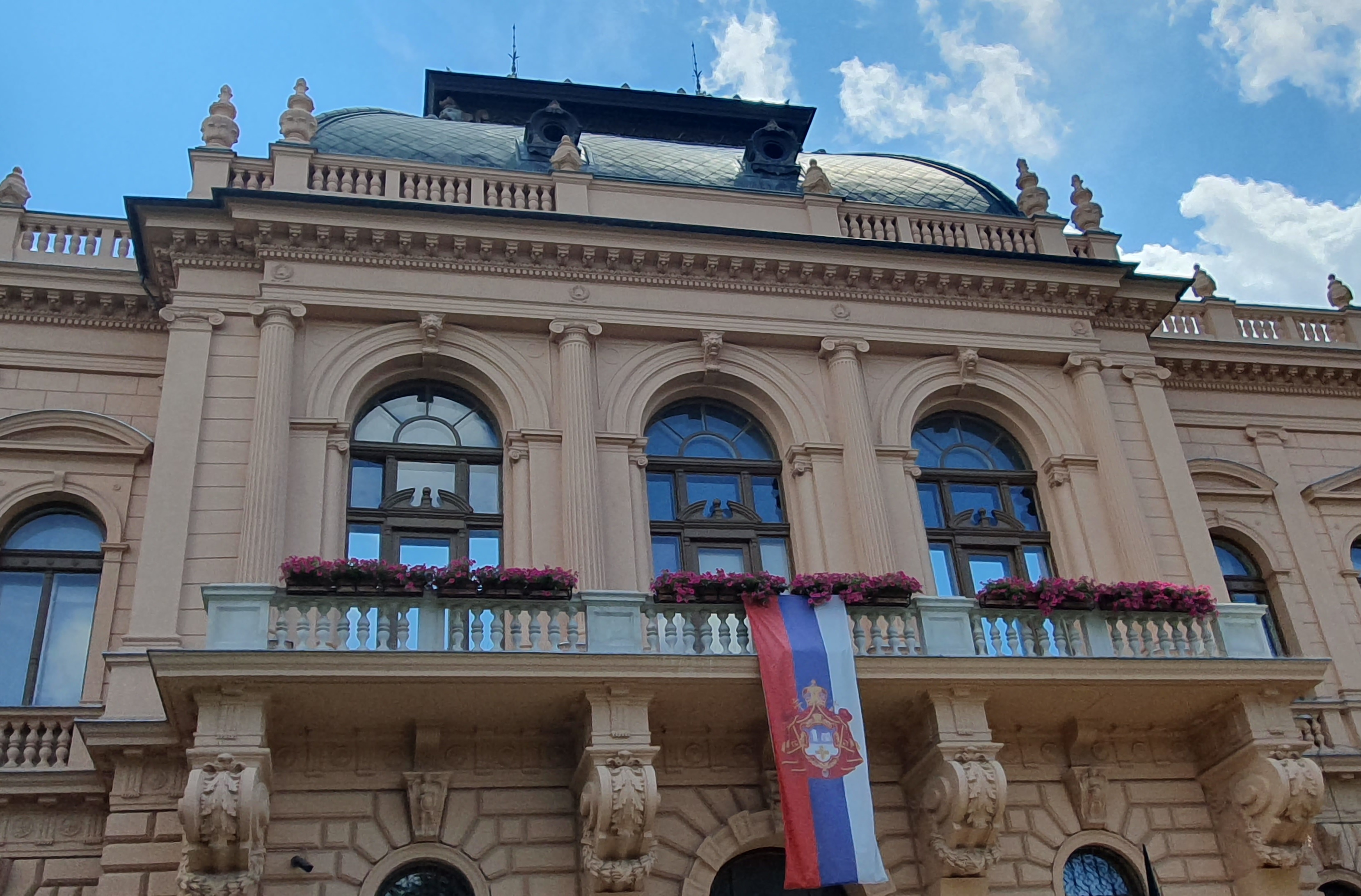
The Patriarchate Court is one such historical building.


Branko Radičević is the main square and is named after the town’s most famous poet who lived for most of his life in the town.

Above is the first Serbian Grammar School which was founded in 1791. Today it is a philosophical school where contemporary and classical languages are studied.
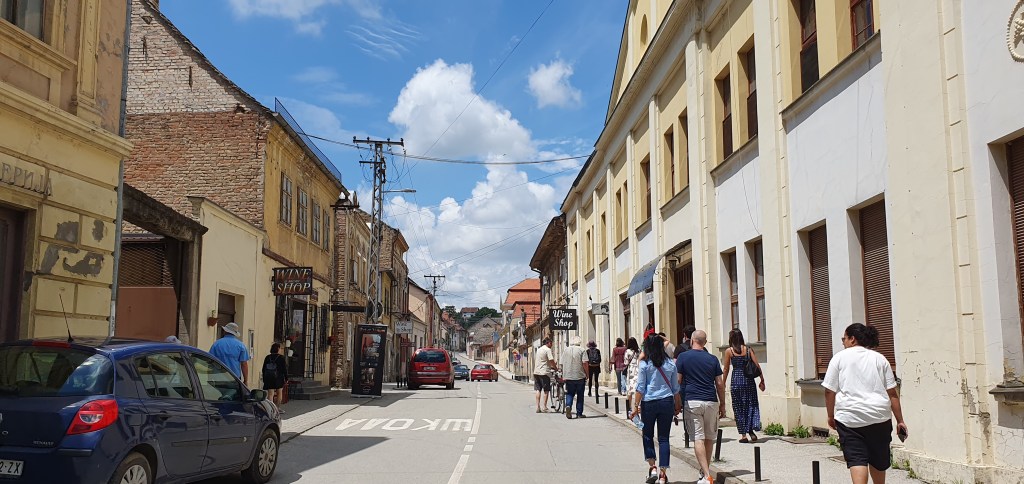
Once Jelena has given us a tour of the main historic buildings of the town she led us to a winery for wine tasting 🙂

This wasn’t exactly ‘proper’ wine tasting and was quite underwhelming… we were each given a large glass but only one small mouthful each of one local wine. The wine tasted sweet and heavy and reminded me of cold mulled wine. (And while us tour guests had our one mouthful, Jelena was blatantly given a glass of wine…).
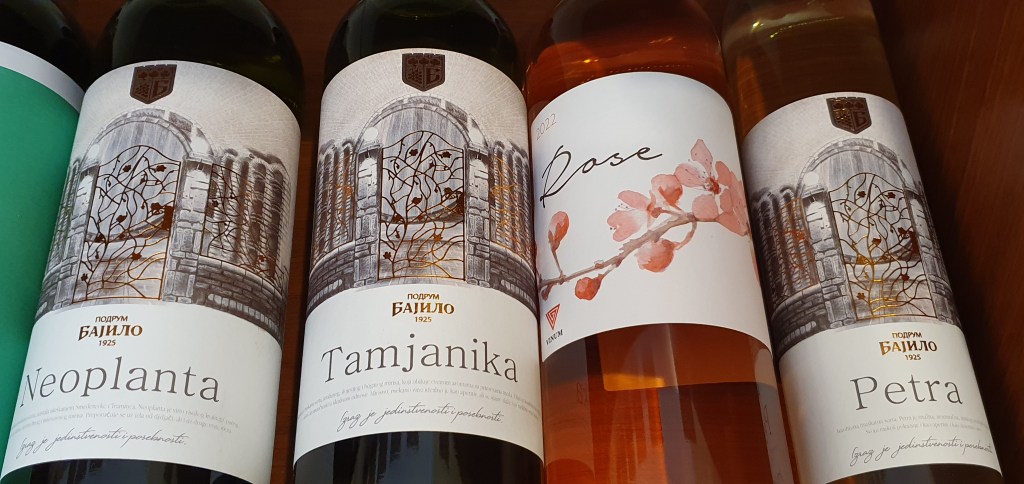
We were soon on our way walking back through the market stalls and towards the mini bus.

We passed a market stall selling local honey where some of my fellow tourists tasted and purchased some.


Novi Sad
From Stremski Karlovci we were driven a few miles to Novi Sad.

Our first introduction to Novi Sad was the Petrovaradin Fortress which is the second largest fortress in Europe.
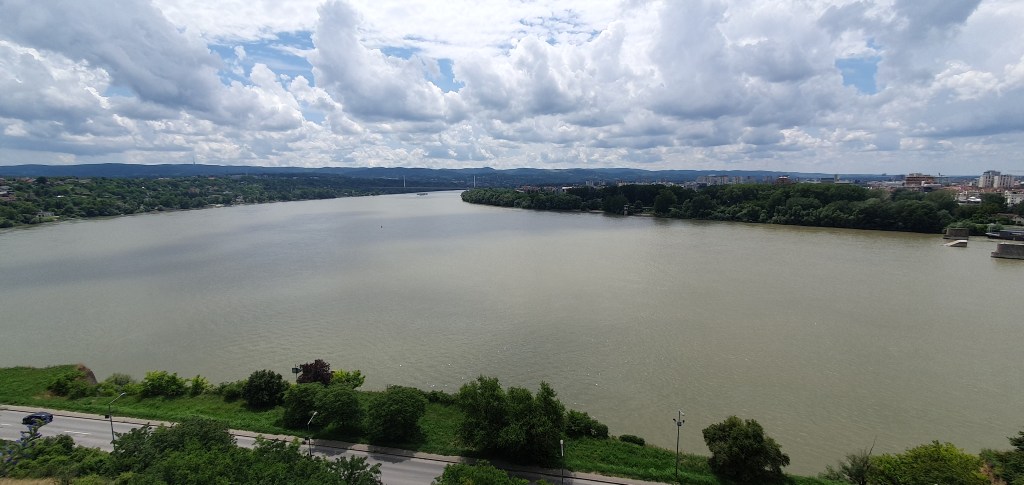
Jelena led us around the walls of the Fortress from which we had great views of the huge expanse and mightiness of the Danube River.
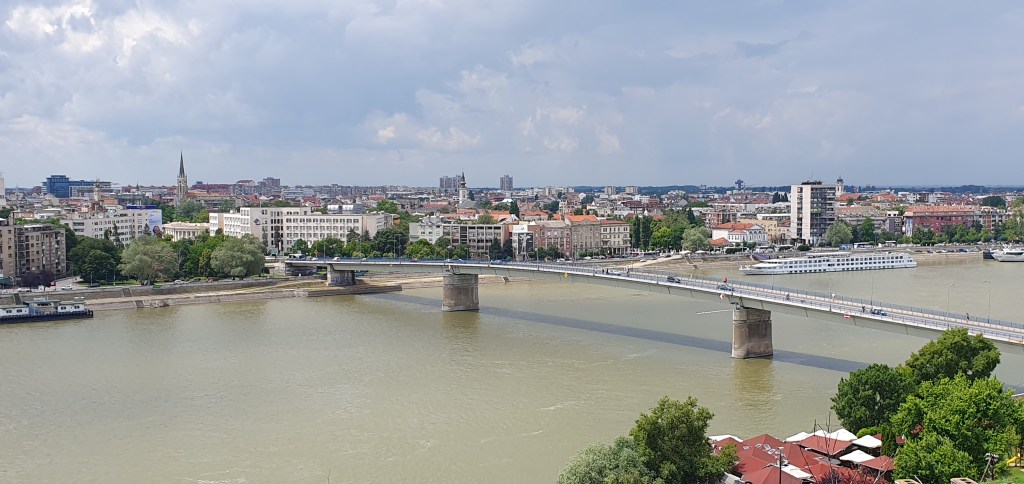
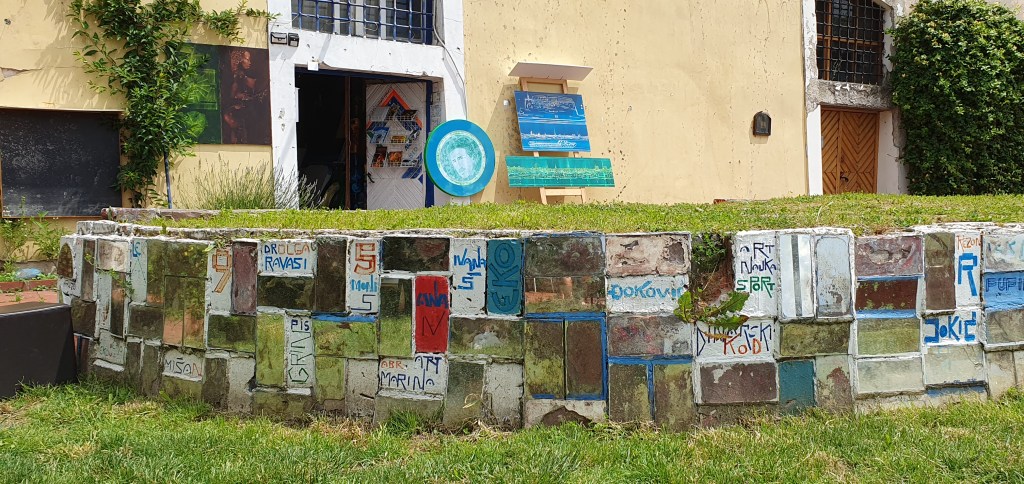


The mini bus was waiting for us and next drove us across the bridge over the River Danube to the centre of Novi Sad.

We were dropped off along Jevrejska Street at the Synagogue which is one of the largest in Europe and walked the short distance to Stari Grad, the Old Town.
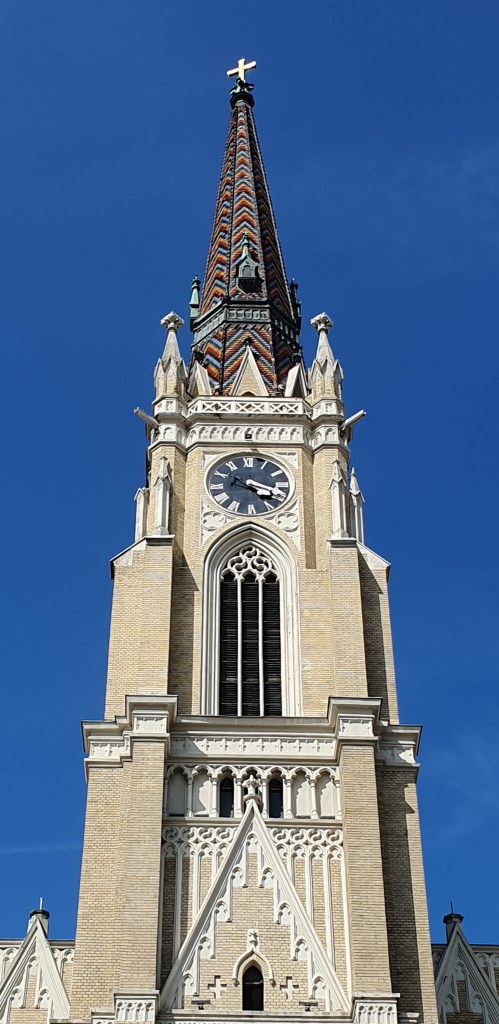

Novi Sad was founded in 1694 and its name means “new plantation” in Serbian. This is because Serbs were not allowed to build houses at the fortress and they had to move across the river. Today, as a university city there is a young population which frequent its many bars in the evenings.
Above is a video of Freedom Square, the buildings of which are similar to those found in Austria and Hungary as influenced by the Austrian-Hungarian Empire. This is different from those in Belgrade and much of Serbia which was ruled by the Ottomans.

Above left in Freedom Square is the Town Hall which was built in 1895 in Neo-Renaissance style. Jelena explained the architecture is similar to that of the Town Hall in Graz, Austria.
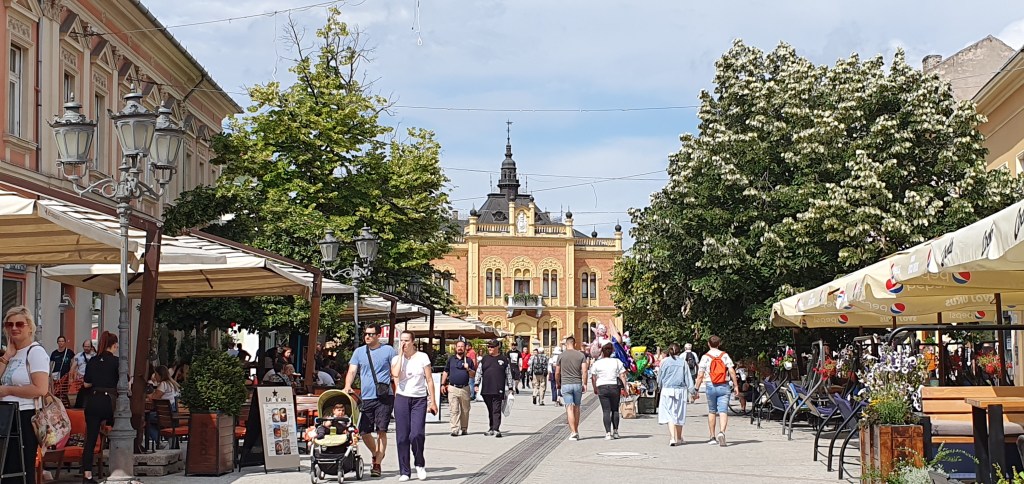
The main pedestrian streets are Zmaj Jovina and Dunavska which are lined with open air bars and restaurants.

Following a short orientation walk led by Jelena, we were given a couple of hours of free time to explore the city by ourselves. Everyone went off in different directions however I opted for lunch in Lazin Salas, a traditional restaurant recommended by Jelena.
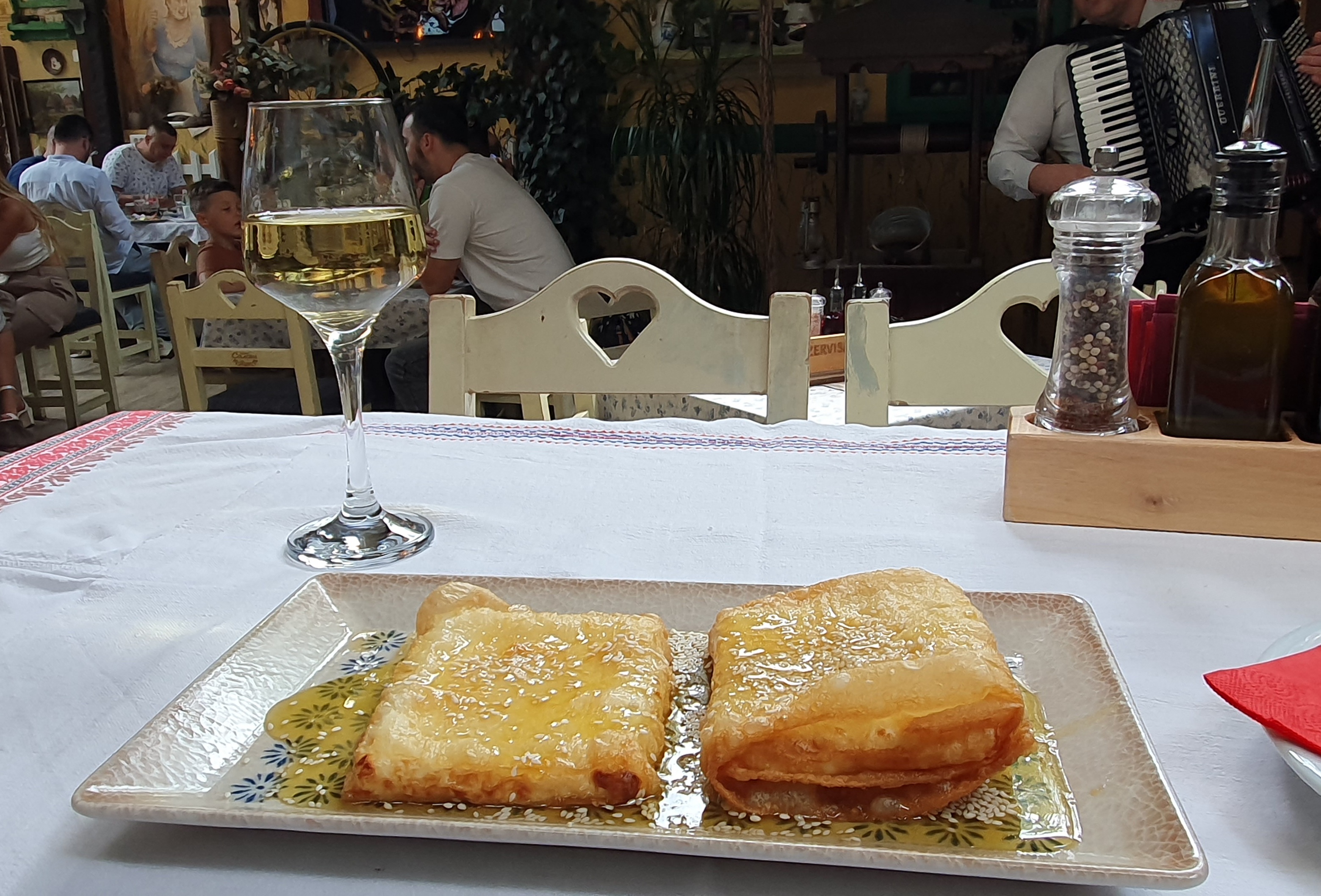

I ordered feta with honey and sesame seeds for a starter (above left) and white bean Serbian soup (above right). The feta slices were huge, the size of two thick slices of toast and probably hundreds of calories each! The bowl of soup was also huge. All of this, including a glass of wine was £12.60.
The Lazin Salas restaurant was quirky with an abundance of rustic features and the music was entertaining.

After lunch I left the restaurant and set off to explore more of the old quarter of the city.
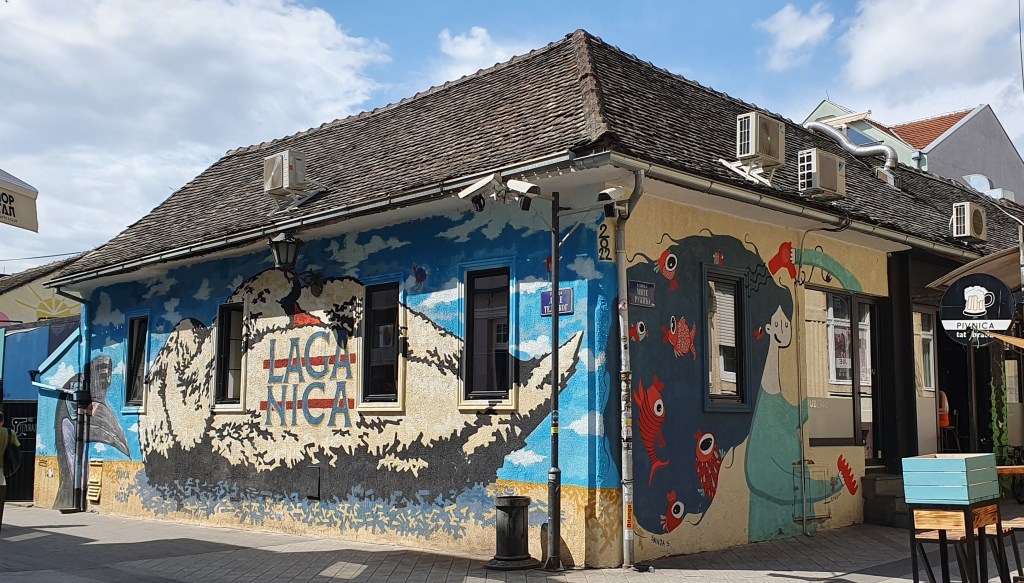
Novi Sad was the European Culture Capital of 2022, the first city of Serbia to obtain this recognition.
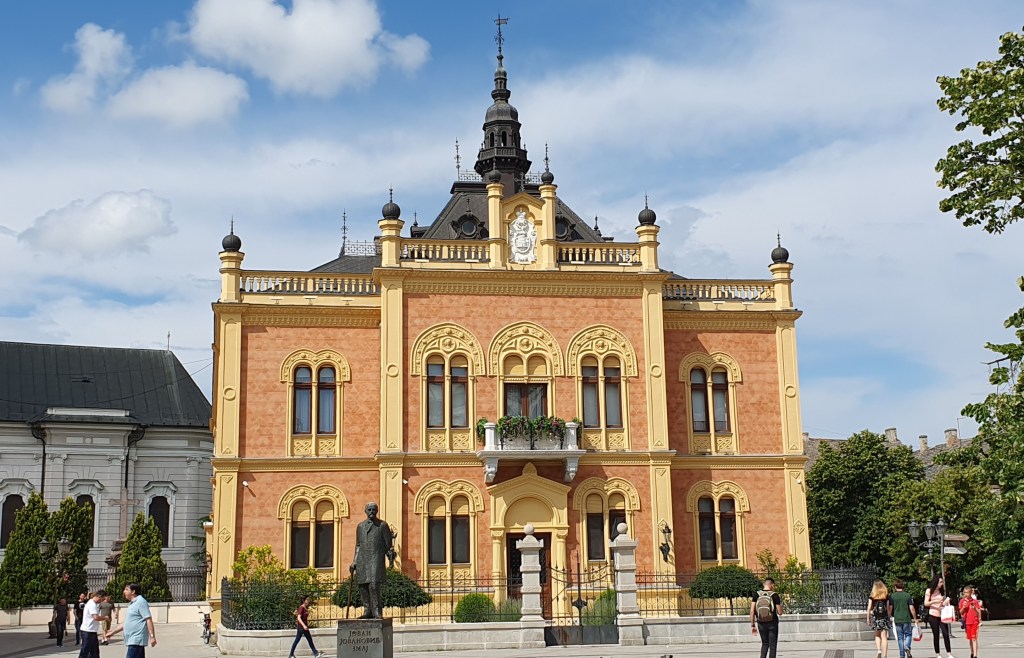
The Bishops Palace building can be found at the end of Zmaj Jovina Street and is considered an architectural masterpiece.


The peaceful open space of Danube park is just across a quiet road from the old town.

Summary
I had a fabulous day – both Stremski Karloci and Novi Sad were delightful and are well worth a visit. The dynamics of the group of 15 were not too great and the group didn’t really gel together. Most people seemed to be in two’s and three’s and were polite and pleasant but didn’t really speak to anyone other than those they were with. There was however a lovely woman from Saudi Arabia who was also travelling on her own and who was really interesting to chat with.
Once I was dropped off back in Belgrade I set off towards the centre of the old town in search of an early evening cocktail 🙂
 frombluetogreen.com
One comment